
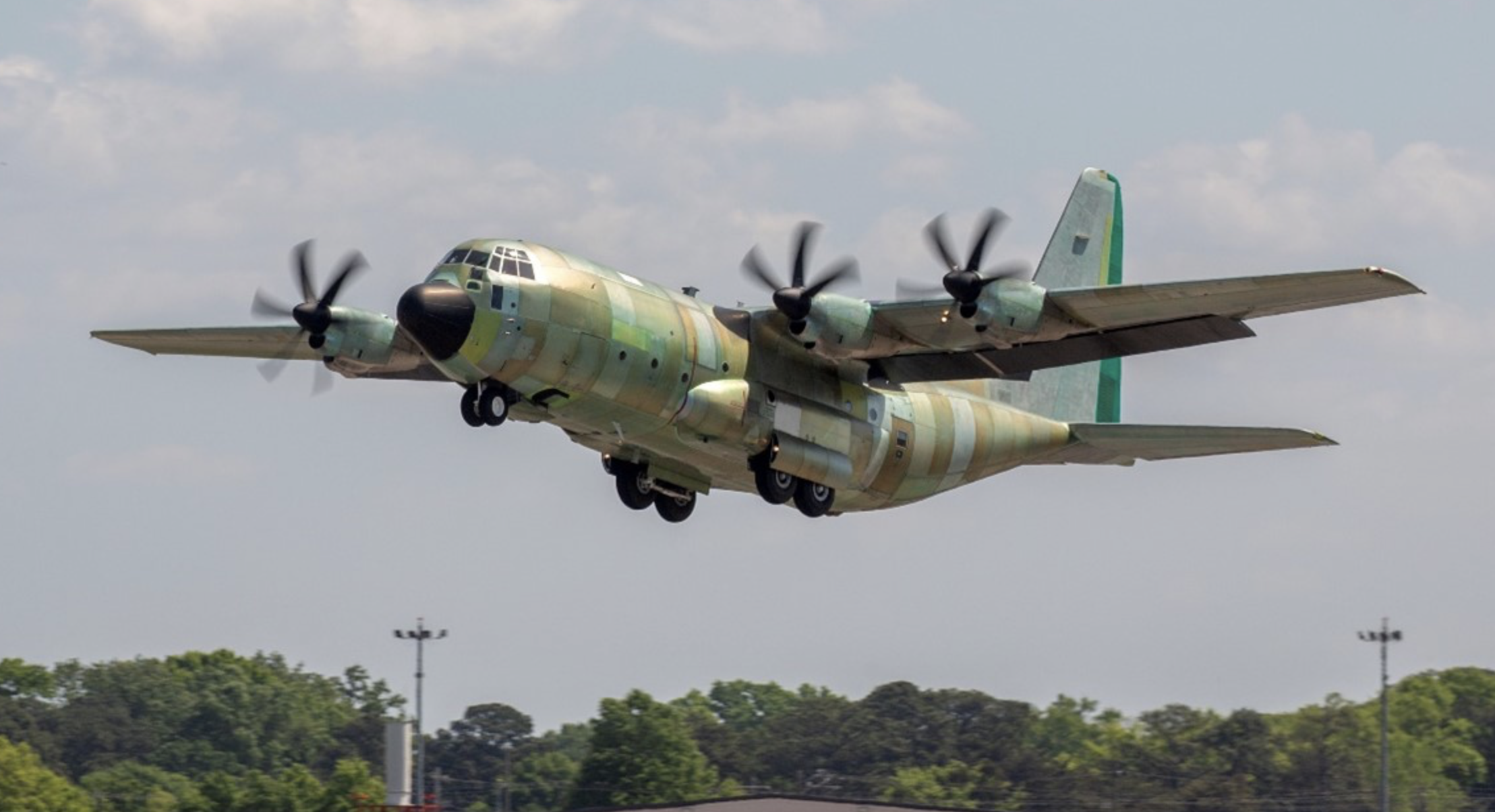
CGNR 2019 departs the Lockheed Martin Aeronautics facility in Marietta, Georgia, on April 14, 2026, for the Coast Guard Aviation Projects Acquisition Center in Elizabeth City, North Carolina, where warranty and logistics flights were conducted before the aircraft’s induction into the missionization process. Photo courtesy of Lockheed Martin.
Below is a CG HQ news release.
This represents an acceleration of an existing program to replace existing fixed wing aircraft, both C-130H and C-27Js, with C-130Js. Generally the Coast Guard had been purchasing one C-130J per year. Sometimes these were added by Congress when not included in the budget request. This bumps it up to two per year.
Not mentioned is the fact that these are also potentially important mobilization assets both as transports and potentially even as cruise missile carriers. The addition of Minotaur which is now standard on all Coast Guard fixed wing aircraft gives them advantages compared to unmodified C-130s.
There are currently only nine government owned C-130Js in Alaska and five of those are Coast Guard based at Kodiak. There is also a squadron of eight C-17s.
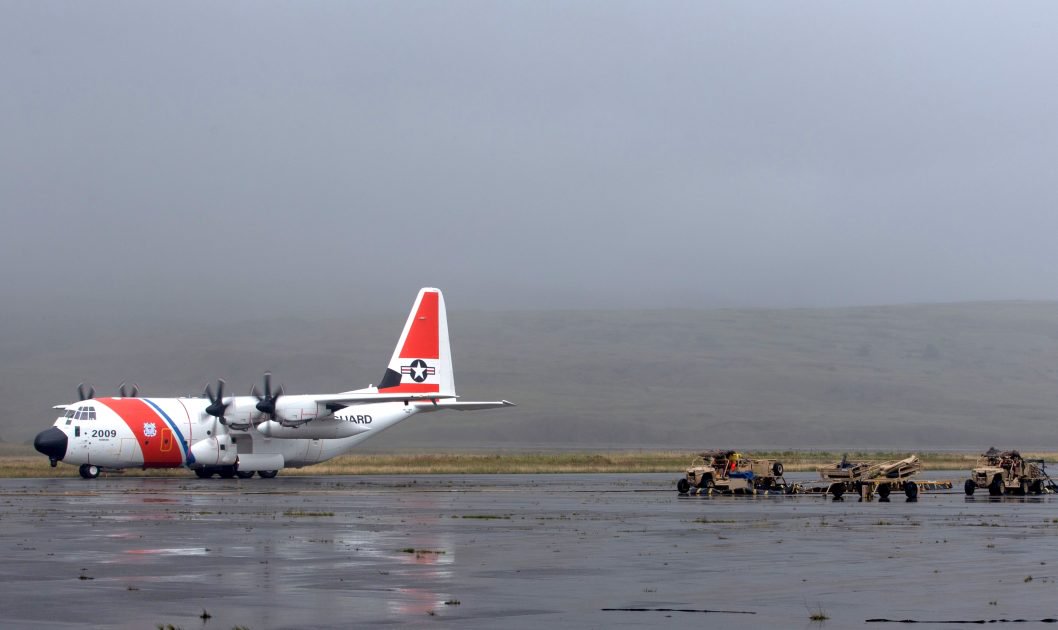
A U.S. Coast Guard C-130 participates in forward arming and refueling point (FARP) operations during Arctic Expeditionary Capabilities Exercise (AECE) in Adak, Alaska on Sept. 18, 2019. US Marine Corps Photo
The Air Force has developed the ability to deploy various weapons, including Quick Strike, from the back of C-130s and C-17s. The program is called Dragon Cart, formerly Rapid Dragon. There is no reason Coast Guard C-130Js should not be qualified, tested, and exercised to provide the capacity.
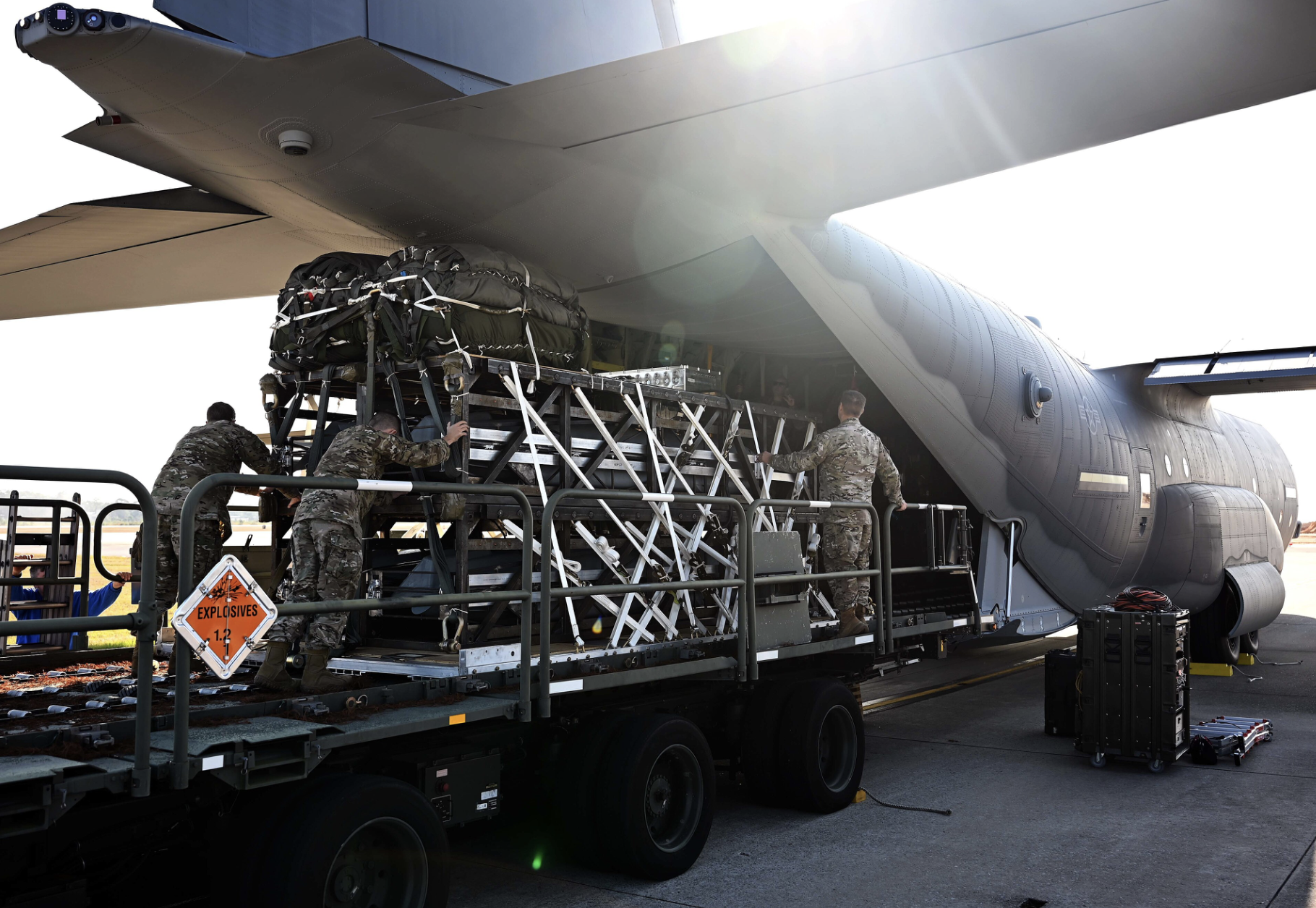
Airmen and Riggers with the 1st Special Operations Squadron Logistics Readiness Squadron load a Rapid Dragon Palletized Weapon System aboard an MC-130J Commando II at Hurlburt Field, Florida, Dec. 13, 2021. The Rapid Dragon system deploys weapons using standard airdrop procedures from cargo aircraft. Photo by Staff Sgt. Brandon Esau
Coast Guard orders six additional C-130J surveillance aircraft
WASHINGTON – On Sept. 24, 2026, the U.S. Coast Guard leveraged existing U.S. Air Force contracts to order six baseline C-130J long-range surveillance aircraft from Lockheed Martin Aeronautics in Marietta, Georgia.
This acquisition expands the Coast Guard’s C-130J program to 25 total aircraft. The Coast Guard expects to receive the first C-130J from Lockheed Martin in fiscal year (FY) 2028, with all six arriving by the end of FY 2030. Following delivery, the Coast Guard will award separate contracts to configure the aircraft to meet the Coast Guard’s mission requirements that designate the aircraft as HC-130Js.
These acquisitions continue the ongoing modernization of the Coast Guard’s aviation fleet. Compared with the legacy C-130H model, the new C-130J aircraft features a more advanced engine and propellers, yielding a 20% increase in speed and altitude, as well as a 40% increase in range.
HC-130J aircraft operate in core Coast Guard missions including counterdrug operations, alien interdictions, and search-and-rescue recoveries. The fleet is vital to the Coast Guard’s efforts to save lives, secure, control, and defend the U.S. border and maritime approaches, facilitate commerce vital to economic prosperity, and respond to crises and contingencies.
“The HC-130J is the largest and most capable airlift asset for the Coast Guard and the Department of Homeland Security,” said Michael Haycock, director of systems integration (CG-SI). “Expanding our fleet supports the most critical Coast Guard missions and those of our DHS partners.”
This procurement also supports the Coast Guard’s plans to expand its HC-130J operations to additional air stations, including Air Station Sacramento, California, which received its first HC-130J in July 2026. The Coast Guard currently operates the HC-130J out of three air stations: Elizabeth City, North Carolina; Kodiak, Alaska; and Barbers Point, Hawaii.
The Coast Guard funded this acquisition using up to $735 million of the $1.412 billion provided by the fiscal year 2025 One Big Beautiful Bill Act for fixed-wing aircraft. The FY 2025 One Big Beautiful Bill Act is part of a comprehensive strategy to invest in Coast Guard facilities and infrastructure, supporting execution of missions across the country. To date, the Coast Guard has awarded approximately $19 billion across reconciliation projects throughout the United States.


Since the USCG is working themselves out of the HC-27J Spartan business I am wondering if they will go to the Army?
I don’t think the Army will want them. Australia uses them and may want some more.
They would make great fire bombers. Lots of capacity, good short field take off and landing.
I read somewhere that Australia was divesting themselves of theirs.
@Torch, that is correct. https://www.asianmilitaryreview.com/2026/05/why-australia-is-retiring-its-c-27j-fleet-and-what-may-replace-it-foc/
I would not expect the Coast Guard to maintain the Rapid Dragon but they could go to an Air Force base to be armed.