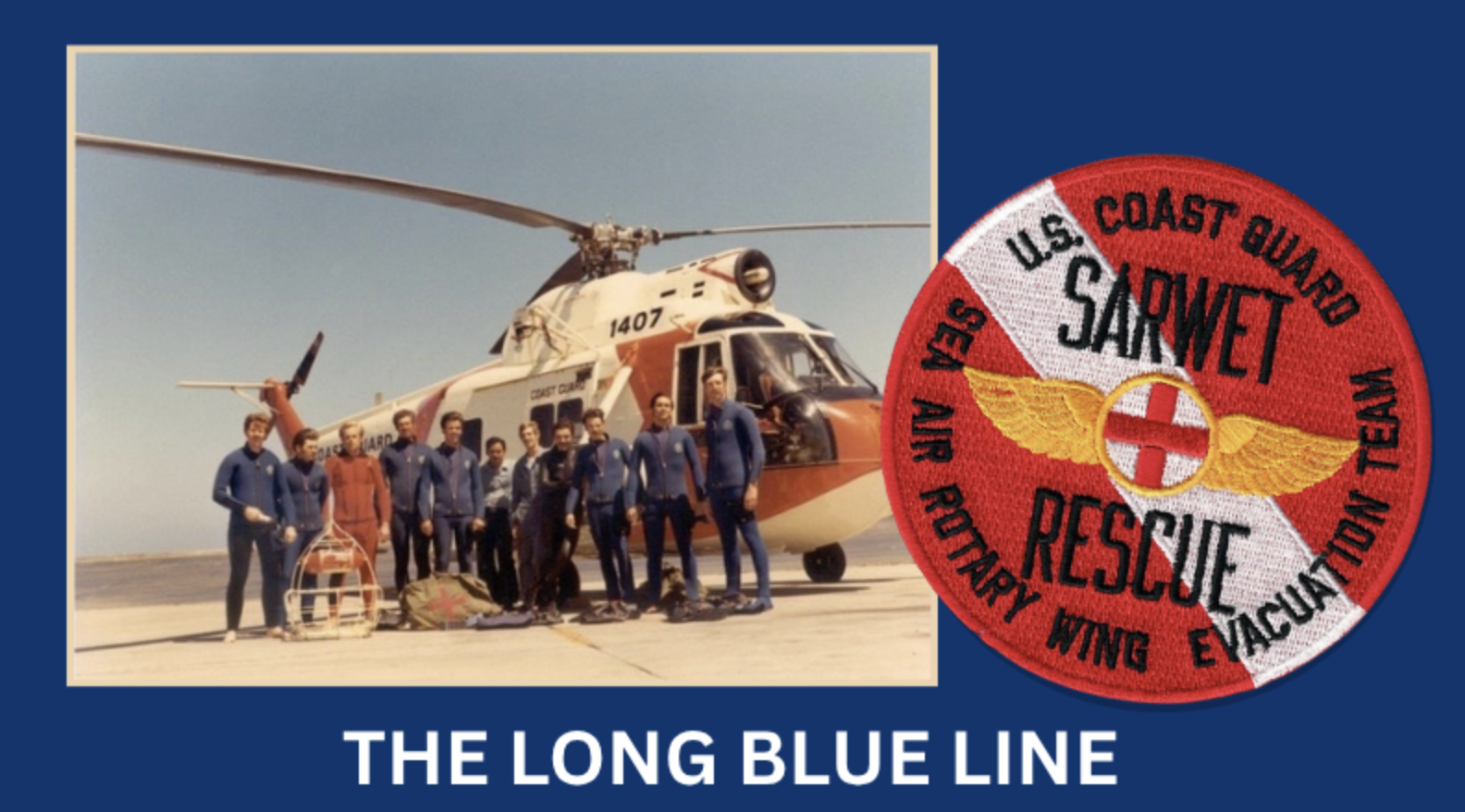
“MEDIA ADVISORY: Coast Guard to honor 9/11 hero with commissioning of Fast Response Cutter Jeffrey Palazzo in New York”

USCGC Vincent Danz (WPC-1162) and USCGC Jeffrey Palazzo (WPC-1163)

Below is a notification to media of the commissioning of USCGC Jeffery Palazzo (WPC-1163). The little ship will ultimately go to Guam, but for now it will mark the 25th anniversary of 9/11.


Sept. 6, 2026

MEDIA ADVISORY: Coast Guard to honor 9/11 hero with commissioning of Fast Response Cutter Jeffrey Palazzo in New York

NEW YORK — The Coast Guard is scheduled to hold a commissioning ceremony for Coast Guard Cutter Jeffrey Palazzo, Sept. 12, 2026.

WHO: Adm. Kevin Lunday, commandant of the Coast Guard, presiding official

WHAT: Commissioning ceremony for the Coast Guard’s 63rd Fast Response Cutter, Jeffrey Palazzo.

WHEN: Saturday, Sept. 12, 2026 at 12:00 PM – 2:00 PM

WHERE: Intrepid Museum and Pier 86 located in Hudson River Park at 46th Street and 12th Avenue in Manhattan, New York  and streamed online @uscgnortheast Facebook page.

Members of the media are requested to RSVP to the Coast Guard Public Affairs office by emailing PADETNY@uscg.mil no later than Friday, Sept. 11, 2026 at 6 P.M., to receive instructions for attendance. Media must have valid ID and media badge.

About the U.S. Coast Guard Cutter Jeffrey Palazzo:

Each Fast Response Cutter is named after an enlisted U.S. Coast Guard hero who performed extraordinary service in the line of duty. Jeffrey Palazzo of Rescue Company 5, was a New York City firefighter and U.S. Coast Guard reservist who made the ultimate sacrifice on Sept. 11, 2001, while responding to the attacks on the World Trade Center. Palazzo served in the Coast Guard Reserves as a Machinery Technician 1st Class aboard Coast Guard Cutter Cape Horn out of Station Rockaway, responding to many high-profile incidents and large-scale emergencies.
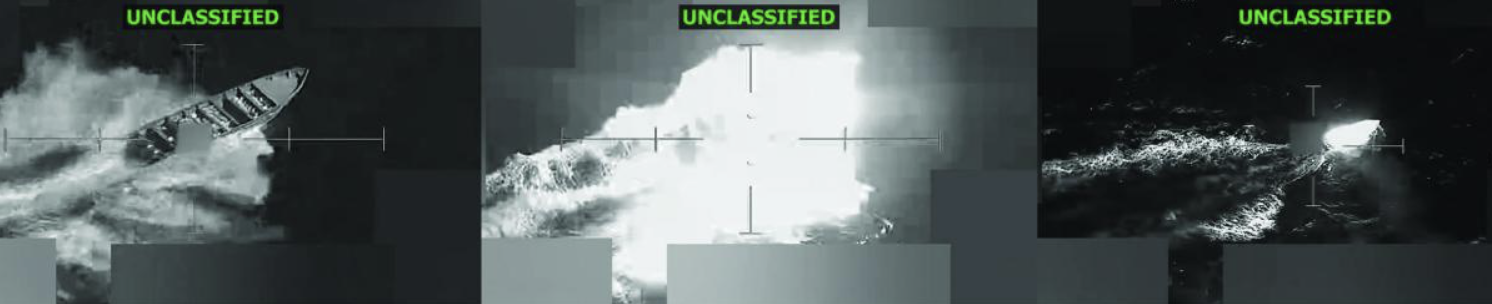
 

“Officials Provide Update On Operation Southern Spear 1 Year After Its Launch” –Seapower

Still frames from footage of a November 2025 lethal strike on a vessel in the eastern Pacific Ocean as part of Operation Southern Spear. U.S. Southern Command

The Navy League’s on line magazine, Seapower, reports,

“U.S. officials spoke to the media yesterday regarding the progress of Operation Southern Spear — the large-scale U.S. military and counter-narco-terrorism campaign in the Western Hemisphere — one year after the operation launched in September 2025, saying the mission has been largely successful thus far.

“Of note, one official said U.S. Southern Command’s counternarcotics operations over the past year have driven record reductions in illicit maritime activity, with a 65% reduction in the Western Caribbean, a 60% reduction in the Eastern Caribbean and a nearly 50% reduction in key areas of the Eastern Pacific.”

It does seem the conflict has changed. There was a two month period in which SOUTHCOM’s Southern Spear task force made no lethal kinetic strikes on purported drug smuggling boats, then on August 23 and August 25 lethal kinetic strikes were made. Since then there have been three reported interceptions of refueling vessels.

In at least two cases the vessels were towing several small boats. The reports did not indicate if any drugs were found on the refueling vessel of the towed small boats.

It may be too early to declare victory. As we have seen the past, squeeze the ballon in one place, it bulges out somewhere else.

RIMPAC SINKEX

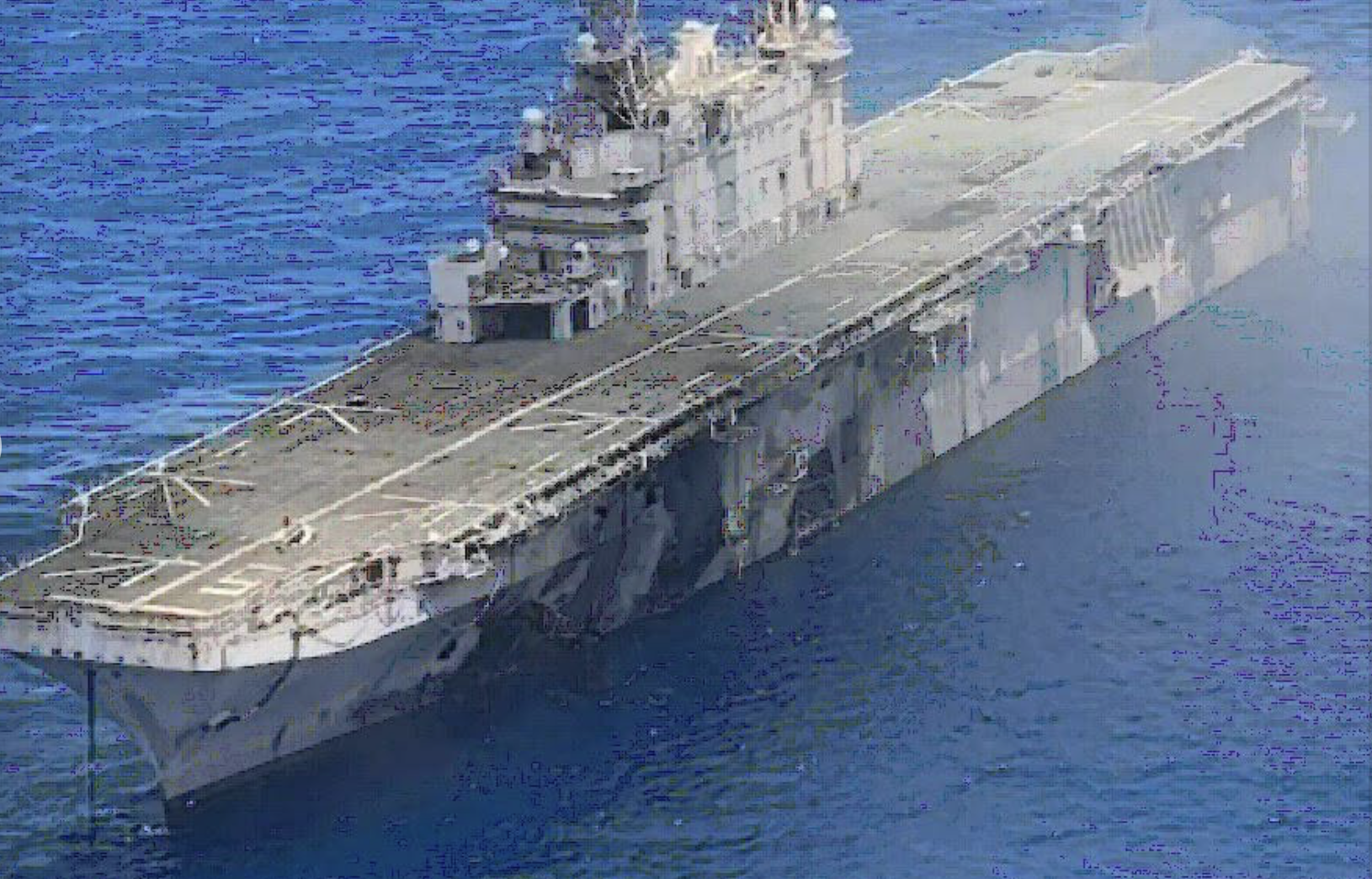
I have wanted to post about the two SINKEX that were included in RIMPAC 2026, but I was unable to find a comprehensive source identifying what was used and what effect the weapon, had. Rather there were numerous reports of individual weapons being used, but other than the fact that the Canadian submarine HMCS Corner Brook, using Mk48 torpedo, administered the coup de grâce to the former USS Mobile Bay (CG 53) it was had to link cause and effect with so many weapons being used particularly against the former USS Peleliu (LHA 5).

Weapons used:

  • At least four US Army guided 227mm rockets (GMLRS) from M142 HIMARS
  • Japanese Type 12 antiship missiles at the LHA
  • LRASM from an FA-18
  • At least four Harpoon missiles including two from USS Columbia (SSBN-826) and two from Spanish and Japanese surface ships.
  • Penguin missile from a New Zealand Navy helicopter
  • Spike NLOS from a US Army helicopter
  • Marte a smaller short range anti-ship missile
  • Mk48 torpedo (apparently only one)
  • Two unmanned kamikaze surface vessels.

I never saw a photo or video of the LHA sink. In fact I never saw a photo or video that seemed to show she had lost stability or that she had taken on a lot of water. Huge sections of the hull were ripped away but the ship never appeared to be sinking.

“CENTCOM Destroys 3 IRGC Oil Tankers After Iran Targets 2 U.S. Navy Warships” –CENTCOM

Below is a CENTCOM news release. 

The title of the release is not really accurate in that two of the tanker were immobilized while the third was destroyed.

It seems there is some messaging going on here. In the first two cases it appears the tankers were struck by Hellfire missiles targeting the stern so as to damage propulsion and/or steering while avoiding a massive release of oil. The third tanker was empty so destroying it did not result in a massive oil spill.

But the message was clear, we can destroy your tankers.

I would really like to know what weapons were used to destroy the third tanker. It may have been multiple Hellfires followed by secondary explosions.

I hope the Coast Guard is paying attention, because we need a ubiquitous weapon capable of forcefully stopping even large merchant ships that might be used a terrorist attack.


TAMPA, Fla. — U.S. Central Command (CENTCOM) forces struck three Iranian crude oil carriers, Sept. 5, after the Islamic Revolutionary Guard Corps (IRGC) launched ballistic missiles toward two U.S. Navy warships patrolling regional waters.

A U.S. aircraft carrier and guided-missile destroyer successfully evaded multiple unprovoked Iranian attacks. No American personnel were harmed.

Following Iran’s failed attacks, CENTCOM permanently disabled the IRGC crude oil carriers M/T Downy off the coast of Kharg Island and M/T Stark 1 near Jask. American forces also completely destroyed the unladen crude oil carrier M/T Kylo (also known as the “Noxen”) in the Gulf of Oman, striking the vessel in multiple critical locations to render it inoperable after the crew was directed to abandon ship.

The three Iranian crude oil tankers are part of a multibillion-dollar shadow network that funds the IRGC and its regional proxies. Iran has no means by which to defend them.

“Let the message to the IRGC be clear: If you shoot at two of our ships, we will impose an even higher economic cost —taking out three of yours,” said Adm. Brad Cooper, CENTCOM commander. “We will not hesitate to defend American forces, and if necessary, destroy Iran’s limited and exposed oil fleet.”

“The devastation of NSA Bahrain is a national security warning” –Defense News

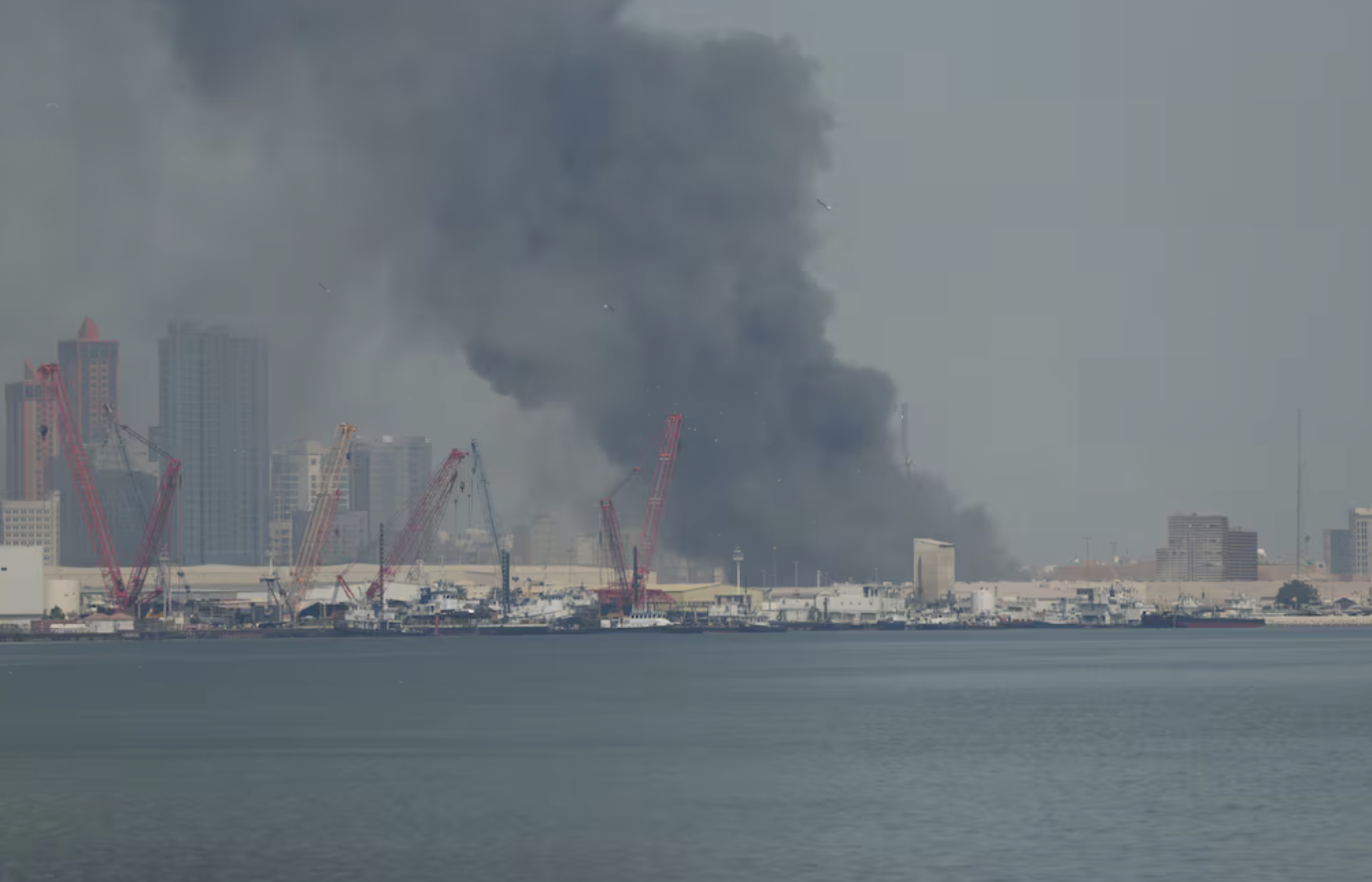
Smoke rises after Iran carried out a missile strike on the main headquarters of the U.S. Navy’s 5th Fleet in Manama, Bahrain. (Anadolu via Getty Images)

Defense News reports,

“”The more we learn about the attacks on the U.S. Naval Support Activity (NSA) in Manama, Bahrain, during the opening days of Operation Epic Fury, the clearer it becomes why the news of its near destruction was not initially reported or acknowledged.

“Extensive damage to one of our most significant forward bases in the Middle East is likely to have profound tactical and strategic repercussions that are only now coming into focus.”

What did we loose when the six patrol boats left 5th Fleet and the squadron became “expeditionary?”

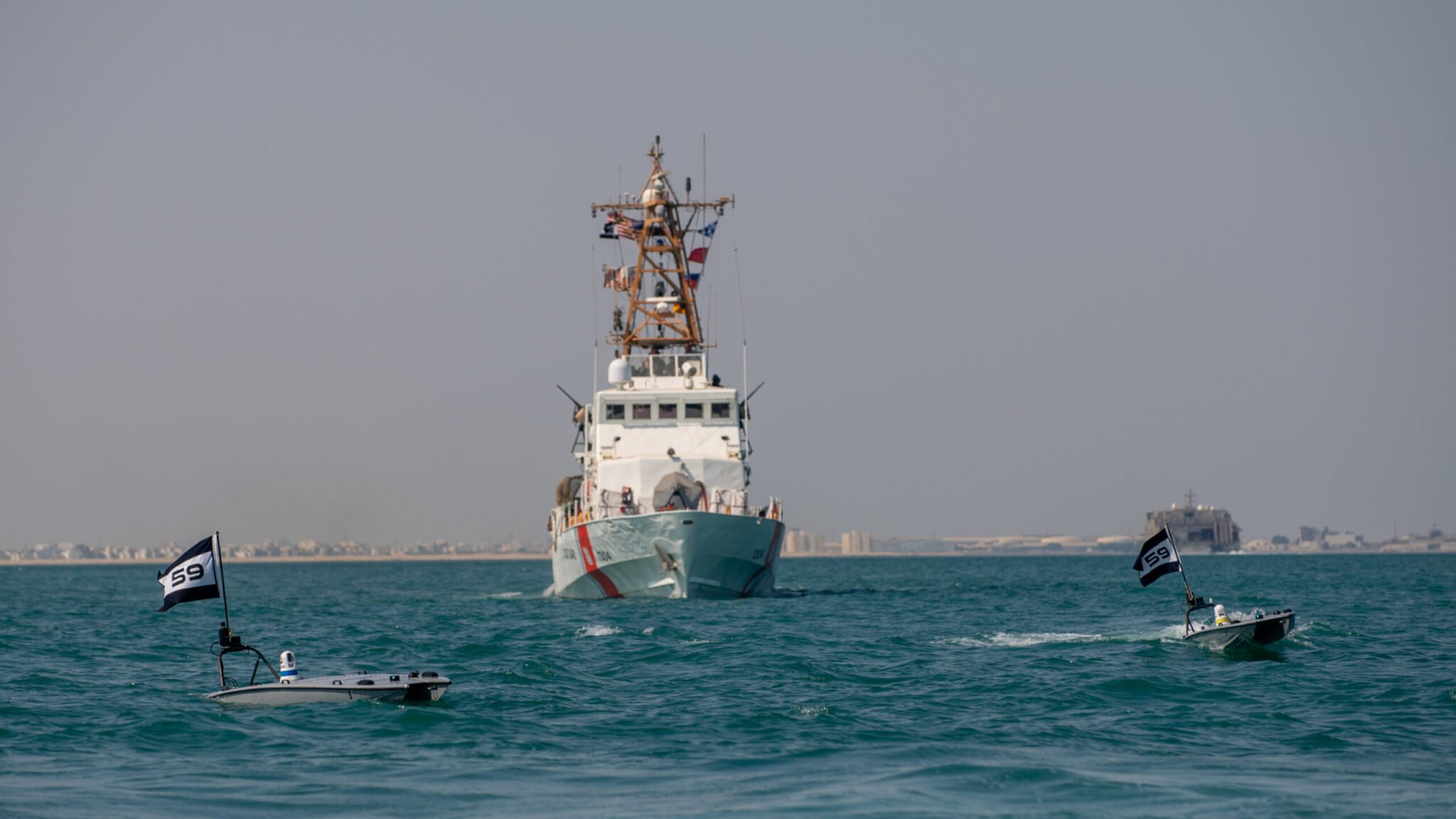
PATFORSWA was the largest Coast Guard unit outside the US. It included a training facility to train boarding parties and the patrol craft made a number of seizures including drugs (here and here) and arms being smuggling to Yemen (here and here). The cutters could be maintained in their homeport.

PATFORSWA had a long term continuing relationship with 5th fleet including Unmanned system experiments over many years.

Two MANTAS T-12 unmanned surface vessels operate alongside a U.S. Coast Guard patrol boat during exercise New Horizon in the Arabian Gulf. (U.S. Navy photo by Mass Communication Specialist 2nd Class Dawson Roth)

Birmingham Southern Campus Up and Running / FORCECOM Relocating There

Below is an HQ news release. Apparently teaching has already begun and FORCECOM is moving there, meaning it is going to be more than a training center. More info here.


Aug. 31, 2026

MEDIA ADVISORY: Coast Guard to commemorate first graduating class at TRACEN-Birmingham Southern

WASHINGTON – Adm. Thomas Allan, vice commandant, U.S. Coast Guard will preside over Training Center (TRACEN) Birmingham Southern’s first graduation ceremony and host a press gaggle.

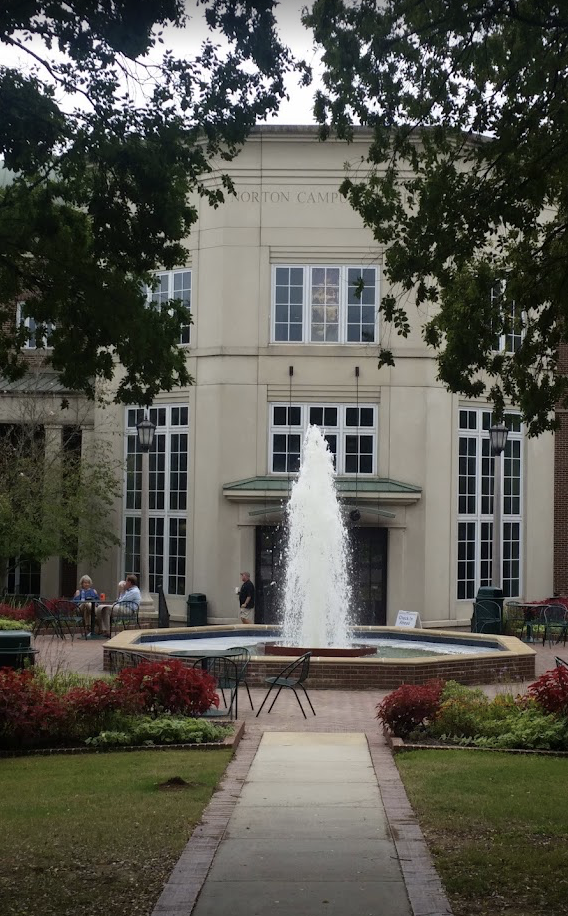
This Leadership and Management School graduation is a significant milestone for TRACEN Birmingham, which opened in June 2026. It follows on the heels of Rear Adm. M.T. Brown’s arrival in Birmingham and the flag raising ceremony held in his honor, a symbolic first step in the Coast Guard Force Readiness Command’s (FORCECOM) relocation from Norfolk, Virginia, and New London, Connecticut. Currently, 44 FORCECOM personnel are already serving in Birmingham full time.

Who: Adm. Thomas Allan, vice commandant, U.S. Coast Guard

What: Graduation ceremony for the first Leadership and Management School class

When: Friday, Sept. 4, 2026, at 11:30 a.m. (ceremony), 12:30 p.m. (press gaggle)

Where: Norton Theater, 900 Arkadelphia Road, Birmingham, Alabama

Setup: Media should arrive no later than 10 a.m. for equipment setup and badging.

Logistics: Event parking is available at Bill Battle Coliseum. Please bring a valid, government-issued ID for access.

RSVP by 11 a.m. on Wednesday Sept. 2 to Steven.D.Roth@uscg.mil.

Direct media inquiries to mediarelations@uscg.mil.

What a Little Ship Can Do / Junior Officer Experience

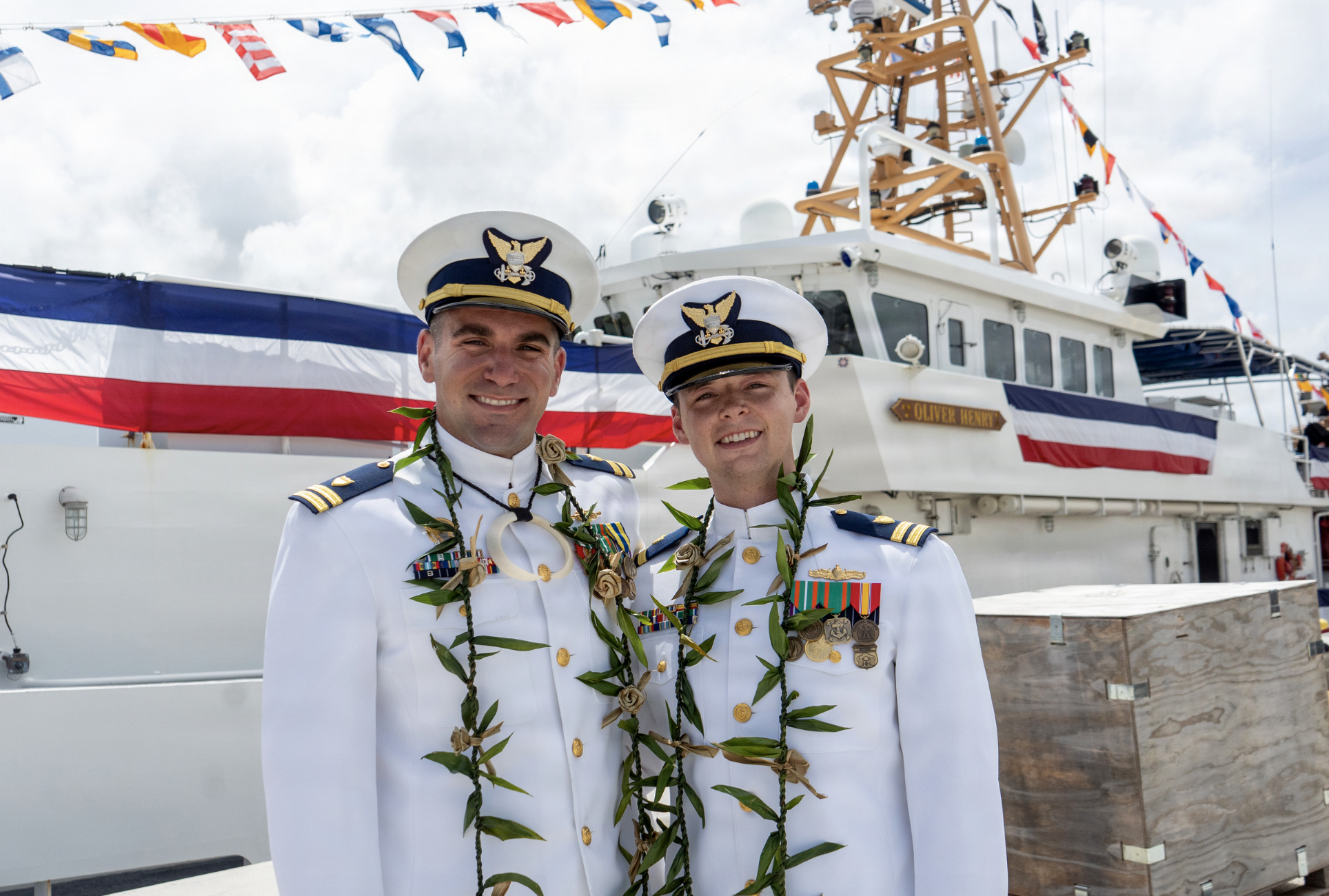
Coast Guard Lt. Raymond J. Cerrato III and Lt. John “Jack” P. Stone pose for a photo after the change of command of the Fast Response Cutter Oliver Henry (WPC 1140), Apra Harbor, Guam, Aug. 21, 2026. Stone, a native of Atlanta, relieved Cerrato as commanding officer of the Sentinel-class fast response cutter. Cerrato, a native of Melbourne, Fla., led Oliver Henry through more than 75,000 nautical miles of operations across Oceania and the Micronesian subregion. During his three years in command, Oliver Henry and crew conducted search and rescue missions, law enforcement, disaster response, diplomatic engagements and partner-nation operations in support of U.S. Coast Guard missions throughout the region. (U.S. Coast Guard photo by Chief Petty Officer Lisa Ferdinando)

Below is a news release from U.S. Coast Guard Forces Micronesia / Sector Guam.

I don’t normally pass along reports of Change of Command but I thought this one was remarkable in two ways, what this little ship has done in the last three years and the depth of experience the new commanding officer brings to the job. Lt Stone has been out of the Academy only a little more than four years but all that time was afloat.


Aug. 31, 2026

New commanding officer takes the helm of Fast Response Cutter Oliver Henry

SANTA RITA, Guam — Lt. John “Jack” P. Stone relieved Lt. Raymond J. Cerrato III as commanding officer of the Coast Guard Cutter Oliver Henry (WPC 1140) during a change of command ceremony in Apra Harbor, Aug. 21, 2026.

Cmdr. Grant Johnson, chief of response, U.S. Coast Guard Forces Micronesia / Sector Guam, presided over the ceremony.

Cerrato, a native of Melbourne, Fla., led Oliver Henry through more than 75,000 nautical miles of operations across Oceania and the Micronesian subregion. During his command, the cutter and crew conducted search and rescue missions, law enforcement, disaster response, diplomatic engagements and partner-nation operations in support of U.S. Coast Guard missions throughout the region.

During Cerrato’s three-year command, Oliver Henry and crew:

  • Rescued 28 people in multiple, multi-agency responses
  • Responded to Super Typhoons Mawar and Sinlaku, facilitating the reopening of critical ports in Rota and Tinian
  • Delivered more than 45,000 pounds of relief supplies to remote Pacific communities in support of Operation Rematau and in response to Super Typhoons Mawar, Sinlaku, and Bavi
  • Conducted more than 30 Western and Central Pacific Fisheries Commission boardings
  • Executed bilateral shiprider agreements with Palau, FSM, Marshall Islands and Kiribati to combat transnational criminal organization activity
  • Executed the first U.S.-Kiribati shiprider agreement patrol in 8 years
  • Made historic port calls, including the first U.S. ship visit to Nauru, also known as the Republic of Naoero, and the first Coast Guard Fast Response Cutter visits to Tarawa and Rota
  • Completed more than 60 professional exchanges with regional maritime police forces

Stone, a native of Atlanta, earned his commission in 2022 from the U.S. Coast Guard Academy, where he received a Bachelor of Science in management. He previously served aboard the Coast Guard cutter Mohawk (WMEC 913) as an electronics material officer, weapons officer and assistant operations officer. In 2024, he began a two-year assignment aboard the U.S. Navy Arleigh Burke-class guided-missile destroyer USS Bainbridge, where he served as a navigator.

Oliver Henry arrived in Guam Sept 2022, and is one of four Fast Response Cutters homeported in Guam, along with the Coast Guard cutter Frederick Hatch (WPC 1143), Coast Guard cutter Vincent Danz (WPC 1162), and Coast Guard cutter Myrtle Hazard (WPC 1139).

The cutter is named in honor of Oliver T. Henry, Jr., an African American enlisted Coast Guardsman who served from 1940 to1966. Henry broke the services color barrier after becoming the first African American to transfer from the mess steward rating, then an all-black rating, to another rating – motor machinist.

“Interdiction of Narco-Terrorist Refueling Vessel, Aug. 28, 2026” –SOUTHCOM

Below is a news release from SOUTHCOM.

I love it. They boarded the vessel and took custody of the crew before sinking the vessel. Hopefully they will be the source of additional intelligence.

The video above shows that they were towing four smaller vessels. Were these small boats carrying drugs? They don’t say.

The news release doesn’t say where this happened but since it was done in cooperation with Ecuador it had to have been in the Eastern Pacific. We have seen previous interceptions that happened in the Area of the Galápagos Islands which are Ecuadorian territory.

Other video on Youtube indicates a destroyer may also have been involved in the operation.

How the vessel was sunk is not indicated in the news release, but the video suggests that it was machine-gun fire rather than something like a Hellfire.


Aug. 28, 2026

Interdiction of Narco-Terrorist Refueling Vessel, Aug. 28, 2026

On Aug. 28, at the direction of U.S. Southern Command Commander Gen. Francis L. Donovan, and in coordination and collaboration with the Government of Ecuador, Joint Task Force Western Hemisphere (JTF-WHEM) successfully interdicted a vessel operating as a floating refueling station in support of illicit at-sea drug trafficking operations in international waters of the Eastern Pacific. Intelligence confirmed the vessel, previously identified and targeted under Department of the Treasury sanctions, was operating in support of the Los Choneros violent narco-terrorist organization.

U.S. Marines and Sailors, launched from USS San Antonio (LPD 17), interdicted, boarded, searched, and cleared the vessel without incident. Individuals removed from the vessel were safely escorted to Ecuador. Once cleared, U.S. forces sank the vessel.

This interdiction cuts off a critical node in the traffickers’ logistics chain and advances the goals of the Americas Counter Cartel Coalition (A3C) and JTF-WHEM to dismantle narco-terrorist networks. The Department of War and the A3C remain unwavering in their mission to defeat narco-terrorists in the Western Hemisphere and defend our homeland.

“Today’s operation is a stark example of the Americas Counter Cartel Coalition’s power to dismantle the sophisticated, clandestine narco-terrorist tactics and capabilities that have enabled the trafficking of dangerous drugs destined for American communities. Working together with our Ecuadorian partners, our coalition dealt a decisive blow to a narco-terrorist operation responsible for moving significant amounts of drugs through the region. Together with our regional partners, we are committed to defeating narco-terrorists in the Western Hemisphere.” — U.S. Southern Command Commander Gen. Francis L. Donovan

“Austal USA starts construction on USCGC Ingham” / Austal’s #3

Below is an Austal news release. This is the third of up to eleven Offshore Patrol Cutters to be built by Austal under the current contract.

Construction began on the first, the future USCGC Pickering (WMSM-919), on 29 August 2024. Keel was laid December 8, 2025. Delivery is expected in 2027.

Austal USA began construction of the future USCGC Icarus (WMSM-920) August 5, 2025.

The first three ships were to be delivered one per year. The remaining ships are to be delivered two per year.

Something has happened here that you may have missed. Ingham was to have been the third Eastern built OPC. The transfer of the name to Austal’s third ship is additional confirmation that Eastern’s #3 and #4 OPC will never be built.

I have seen no new contracts to complete USCGC Argus and Chase since the June 2026 cancellation of Eastern’s contract.


August 27, 2026

Mobile, Ala. – Austal USA has started construction on its third U.S. Coast Guard Heritage-class Offshore Patrol Cutter (OPC), the future USCGC Ingham, at the company’s Mobile, Ala. ship manufacturing facility. Ingham is being built under a contract that includes options for up to 11 cutters and has a current potential value of $3.3 billion.

“Each new OPC moving into production demonstrates how far our steel shipbuilding team has come,” Austal USA President Gene Miller said. “Ingham will give the Coast Guard the endurance, flexibility and offshore capability it needs to protect our nation’s maritime interests. We are committed to building a strong, serial production program for this important class of cutters.”

Austal USA uses a modular construction approach designed to increase production efficiency and allow a high percentage of each module to be outfitted before final assembly. The company’s engineering and production teams also developed a detailed 3D model of the cutter early in the design process to support planning, coordination and construction.

The OPC program will recapitalize the Coast Guard’s aging medium endurance cutter fleet and provide a capability bridge between the service’s national security cutters, which operate in the open ocean, and fast response cutters, which operate closer to shore.

The 360-foot OPC will provide the majority of the Coast Guard’s offshore presence, conducting missions including law enforcement, drug and migrant interdiction, and search and rescue. With a range of 10,200 nautical miles at 14 knots and a 60-day endurance period, each OPC will be capable of deploying independently or as part of a task group and serving as a mobile command-and-control platform for surge operations such as hurricane response and mass migration incidents. The cutters will also support Arctic objectives by helping regulate and protect emerging commerce and energy exploration in Alaska.

With the start of Ingham, Austal USA has three OPCs under construction: the future USCGC Pickering, USCGC Icarus, and USCGC Ingham. Together, these cutters anchor Austal USA’s growing steel shipbuilding portfolio, which also currently includes construction of four Landing Craft Utility vessels, three Navajo-class Towing, Salvage and Rescue Ships, an Auxiliary Floating Dry Dock Medium, and submarine modules supporting the Virginia- and Columbia-class submarine programs.