Modernizing Base Charleston and Base Seattle

240825-G-SG988-1089. U.S. Coast Guard Cutter Polar Star (WAGB 10) (left) sits moored next to U.S. Coast Guard Cutter Healy (WAGB 20) at Coast Guard Base Seattle, Aug. 25, 2024. The Polar Star and Healy are routinely deployed to Arctic and Antarctic locations to support science research or help resupply remote stations. (U.S. Coast Guard photo by Lt. Chris Butters)

Coast Guard News announces two new contracts to modernized Base Seattle and Base Charleston:

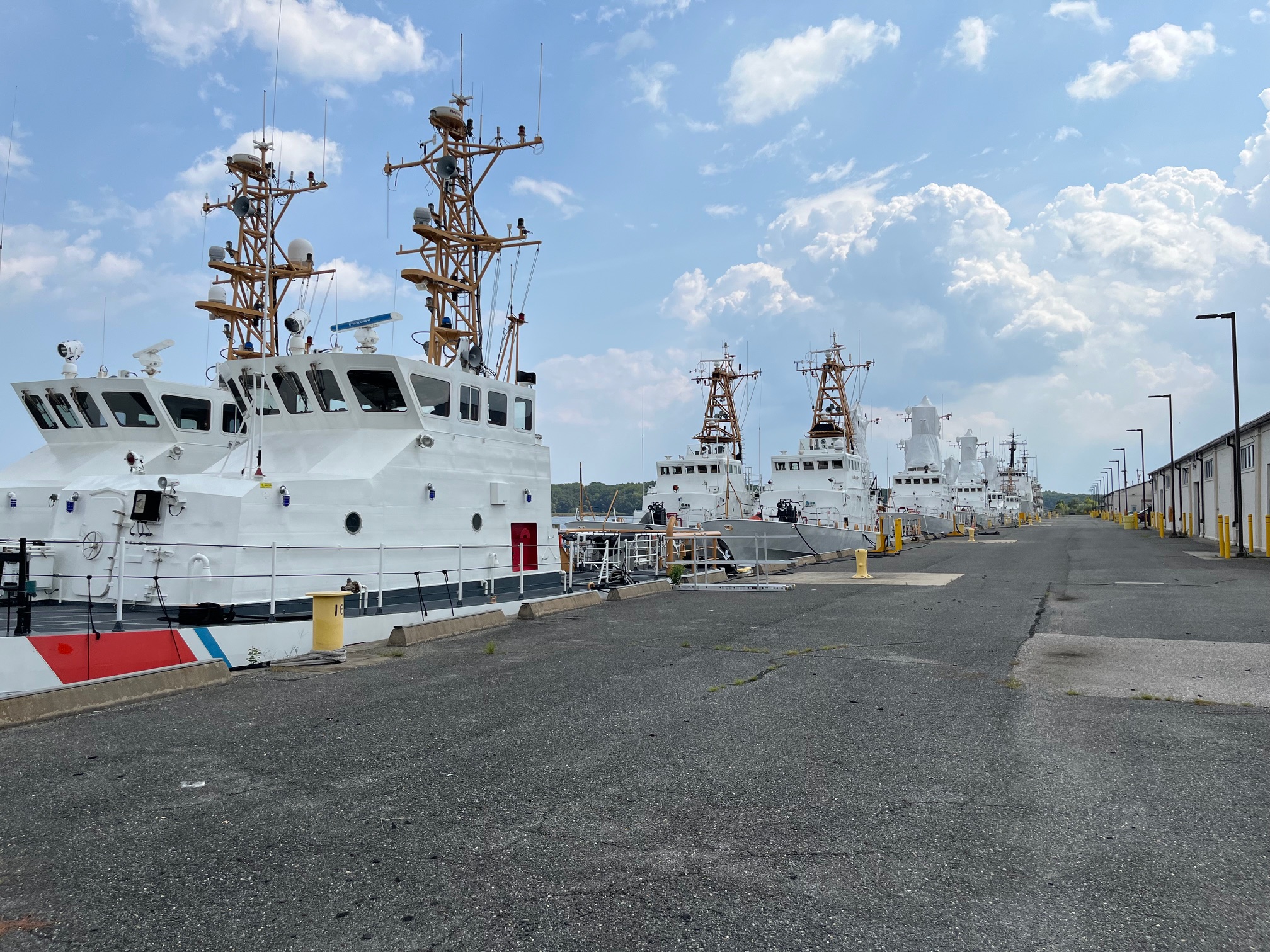
Reconstruction of Pier November (second from the bottom) continues July 23, 2025, at Base Charleston in North Charleston, South Carolina. The Coast Guard used funding made available under the One Big Beautiful Bill Act to modify an existing contract to remove submerged pilings in the vicinity of the piers to facilitate construction of new and modernized facilities to support Coast Guard major cutter operations. U.S. Coast Guard photo.

Liberator, Containerized Launcher for Torpedoes and Maybe More

Keyport Technicians working on a Mark 48 in early 1982. U.S. Navy Photograph No. DN-SC-86-00553.

Naval News reports,

A new line item in the U.S. Navy Fiscal Year 2026 budget is supporting a containerized Mark 48 Advanced Capability (ADCAP) torpedo launcher for use on unmanned surface vessels (USV) and small combatants.

But looks like there may be more to it than the very expensive Mk48 torpedo.

“Program Executive Office, Unmanned and Small Combatants (PEO USC) is leading the effort and will deliver a 3.5 hour presentation about Liberator and a related unmanned undersea vehicle (UUV) payload…The Liberator provides for the development of alternative methods for launching torpedoes or similar devices…”

The Mk48 is intended to be used against the most demanding (nuclear submarines) in the most hostile environment. They have to be fast and they need to be capable of surviving great pressure. For this reason they are extremely expensive. The basic design goes back to 1972 but there have been many improvements.

Torpedo tubes are already being used to launch and recover Uncrewed Underwater Vehicles (UUVs). Plus we have begun seeing new cheaper torpedoes.

I find this exciting because it looks like we might have a relative inexpensive anti-surface torpedo. It would allow a Patrol Boat to stop even a large ship.

“Helsinki Shipyard Begins Construction of Canadian Polar Icebreaker” –60 Degrees North

Canada’s Polar Max. I had the opportunity to attend the steel-cutting ceremony. Photo: Peter Rybski

60 Degrees North reports,

From an August 20th Davie press release:

In a historic milestone for the Canadian shipbuilding industry, Davie today officially began construction of the Polar Max icebreaker, a vessel that, once delivered by 2030, will redefine Canada’s Arctic capabilities.

Uniquely, Polar Max will be constructed through an innovative industrial collaboration between Canadian-controlled facilities in Helsinki, Finland and Lévis, Canada. Construction on the Polar Max hull will begin at Davie’s Helsinki Shipyard, which has built 100% of the complex medium to heavy icebreakers delivered from Finland over the past 25 years.

“U.S. Navy to Enhance APKWS with Air-to-Air Software” –Naval News

Ukrainian Armed Forces shoot down a Russian missile with APKWS for the first time (photo: 
© RBC-Ukraine

I think it is obvious that the Coast Guard needs a reliable counter-drone defense. We are seeking one.

APKWS 2.75 Guided Rocket, seems to be very versatile while not costing near as much as a dedicated air to air missile. They fit on patrol boats and helicopters.

There are other systems, Anduril’s Roadrunner, RTX’s Coyote. and the Lockheed Martin Hellfire, but don’t underestimate the APKWS.


“Coast Guard awards contract for next generation trailerable aids to navigation boats” –CG-9

Preliminary design of the second-generation trailerable aids to navigation boat. Rendering courtesy of Inventech Marine Solutions.

The Acquisition Direction reports,

“The Coast Guard Office of Boat Forces awarded a contract Aug. 27 to Inventech Marine Solutions to build up to 89 second-generation trailerable aids to navigation boats (TANB II) to replace the existing trailerable aids to navigation boats (TANB), which were introduced in 2006 and are at the end of their planned service lives. Coast Guard aids to navigation teams use the TANB to place, retrieve and maintain smaller buoys; provide support for fixed navigation aids; and for transferring crews and equipment to remote shore-based equipment. TANBs can be trailered to boat ramps, which can reduce transit times and allow for faster responses to aid discrepancies.”

“The firm fixed-price, indefinite delivery, indefinite quantity contract, valued at approximately $36 million, has a period of performance that extends through August 2032. The TANB II is based on a proven 27-foot parent craft design. The boats include an aluminum hull, a forward working deck, and a partially enclosed cabin that seats four crewmembers. The TANB II will be powered by twin outboards and outfitted with standard Coast Guard navigation and communication electronics. The TANB II will have the ability to tend buoys from the bow and alongside, and for the crew to access fixed aids from the top of the cabin. The capability provided by the TANB II will enhance the Coast Guard’s ability to safeguard the vital waterways of the Nation’s Maritime Transportation System, which supports more than $5.4 trillion in economic activity every year.”

“ABS Issues Full Class for Saildrone Surveyor Deep-water, Ocean-going USV” –Naval News

The Saildrone Surveyor is a 20-meter USV capable of long-endurance missions in the open ocean, collecting deep-ocean bathymetry and performing a wide range of maritime domain awareness tasks—from anti-submarine warfare (ASW) to trans-ocean cable route surveys. (Saildrone picture)

Naval News reports that,

“Saildrone announced that its Surveyor-class of unmanned surface vehicle (USV) has received full classification from the American Bureau of Shipping (ABS). This milestone follows the Voyager, Saildrone’s coastal and near-shore USV, which received ABS class in 2023.”

This is the first unmanned to do so.

“Coast Guard Awards Contract for Waterfront Homeport Improvements in Sitka, Alaska” –SEAPOWER

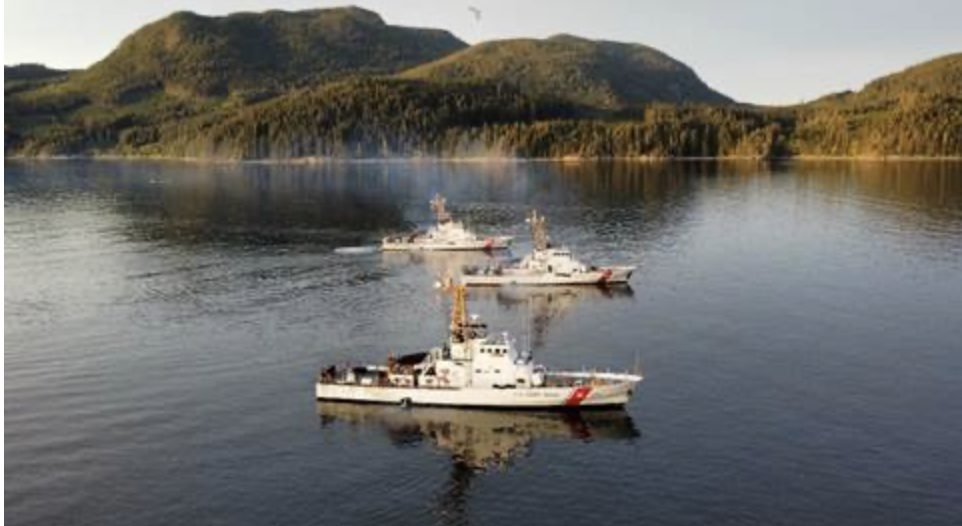
Photo from U.S. Coast Guard Cutter Douglas Denman Facebook Page

Sea[pwer reports

“The award, with a total potential value of $50.475 million, will construct waterfront facilities to support the arrival of one fast response cutter (FRC), Coast Guard Cutter Douglas Denman (WPC-1149), and improve waterfront facilities for one 225-foot seagoing buoy tender, Coast Guard Cutter Kukui (WLB-203), that is already homeported in Sitka.”


“Coast Guard achieves historic milestone with offload over 76,140 lbs. in illegal narcotics at Port Everglades” –News Release

The U.S. Coast Guard Cutter Hamilton offloads more than 76,140 lbs of illicit narcotics at Port Everglades, Florida, on August 25, 2025. This is the largest cocaine offload to date in Coast Guard history, with the assistance of partner agencies, during counterdrug operations in the Eastern Pacific Ocean and Caribbean Sea. (U.S. Coast Guard courtesy photo)

This is a long and detail tailed report. They not even in the same ocean. Hamilton got eleven, over two month. Dutch ship HNLMS Friesland got four. Navy got three. There will be more,


Aug. 25, 2025

Coast Guard achieves historic milestone with offload over 76,140 lbs. in illegal narcotics at Port Everglades

Coast Guard Southeast District – 786-367-7649

Editor’s note: All Coast Guard Southeast imagery can be found on DVIDS, here

Offload b-roll can be found, here.

Case imagery can be found: Eastern Pacific, Caribbean
Case video can be found: 
U.S. Coast Guard Cutter Vigilant interdicts over 1,615 pounds of illicit drugs in the Caribbean
U.S. Coast Guard Cutter Hamilton interdicts over 4,475 pounds of illicit drugs in Eastern Pacific

MIAMI – The U.S. Coast Guard achieved a historic milestone with the offload of 76,140 pounds of illicit narcotics, valued at $473 million, marking the largest quantity of drugs offloaded in Coast Guard history, in Port Everglades, Monday.

Coast Guard Cutter Hamilton’s crew offloaded approximately 61,740 pounds of cocaine and approximately 14,400 pounds of marijuana. 

This combined illegal narcotics offload prevented the maritime flow of approximately 23 million potential lethal doses from reaching the United States.

“The U.S. Coast Guard in partnership with our federal, DoD, and international partners are offloading 61,740 pounds of cocaine, and this represents a significant victory in the fight against transnational criminal organizations, highlighting our unwavering commitment to safeguarding the nation from illicit trafficking and its devastating impacts,” said Rear Adm. Adam Chamie, Coast Guard Southeast District commander. “To put this into perspective, the potential 23 million lethal doses of cocaine seized by the U.S. Coast Guard and our partners, are enough to fatally overdose the entire population of the state of Florida, underscoring the immense threat posed by transnational drug trafficking to our nation.”

The seized contraband was the result of 19 interdictions in international waters of the Eastern Pacific Ocean and Caribbean Sea.

On June 26, a maritime patrol aircraft spotted two suspicious go-fast vessels approximately 115 miles southeast of the Galapagos Islands, Ecuador. Hamilton’s embarked Helicopter Interdiction Tactical Squadron aircrew employed airborne use of force tactics resulting in Hamilton’s boarding team interdicting both vessels, seizing more than 8,800 pounds of cocaine.

On June 27, a maritime patrol aircraft spotted a suspicious go-fast vessel approximately 125 miles southeast of the Galapagos Islands, Ecuador. Hamilton’s embarked HITRON aircrew employed airborne use of force tactics allowing Hamilton’s boarding team to interdict the vessel, seizing more than 4,330 pounds of cocaine.

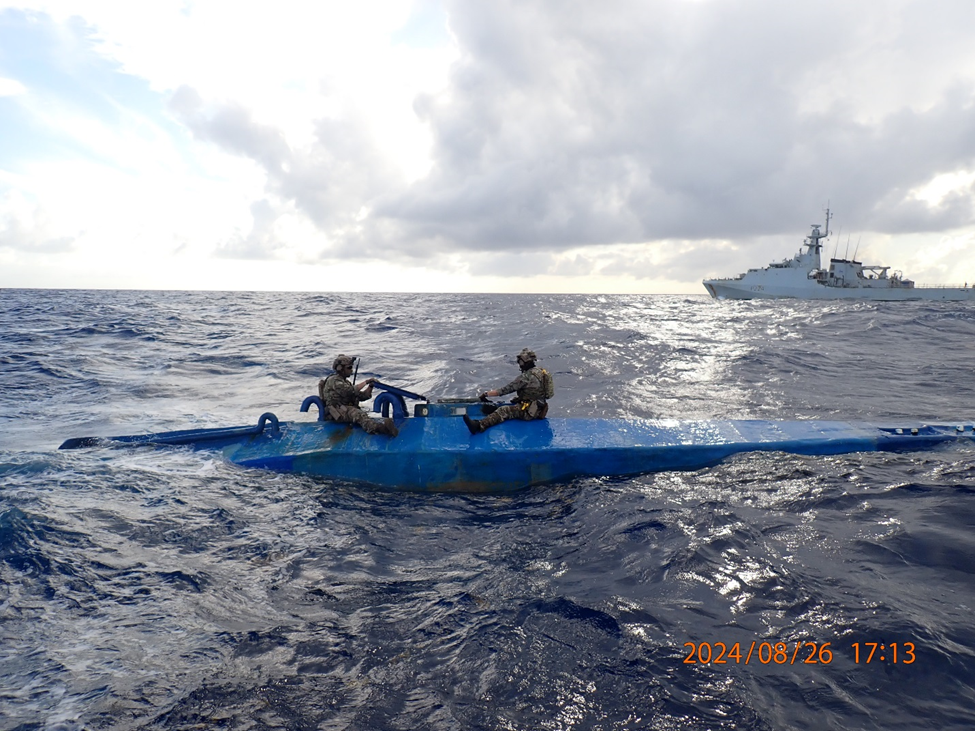
On June 30, a maritime patrol aircraft spotted a suspicious go-fast vessel approximately 87 miles north of Bonaire. A Coast Guard Law Enforcement Detachment 408 crew deployed on USS Cole interdicted the vessel, seizing approximately 2,425 pounds of cocaine.

On July 3, a maritime patrol aircraft spotted a suspicious go-fast vessel approximately 15 miles north of Aragua, Venezuela. A LEDET 404 crew deployed on the Royal Netherlands Navy ship HNLMS Friesland interdicted the vessel, seizing more than 5,450 pounds of cocaine.

On July 11, a maritime patrol aircraft spotted a suspicious go-fast vessel approximately 17 miles northeast of Silva, Venezuela. Friesland’s embarked HITRON aircrew employed airborne use of force tactics, and an embarked LEDET 404 boarding team interdicted the vessel, seizing 9,088 pounds of marijuana.

On July 21, Hamilton’s embarked unmanned aircraft system crew spotted suspicious go-fast vessel approximately 600 miles south of Acapulco, Mexico. Hamilton’s embarked HITRON aircrew employed airborne use of force tactics, and Hamilton’s boarding team interdicted the vessel, seizing more than 3,395 pounds of cocaine.

On July 23, Hamilton’s crew detected and boarded a suspicious go-fast vessel approximately 88 miles southeast of Socorro Island, Mexico. Hamilton’s embarked HITRON aircrew employed airborne use of force tactics, and Hamilton’s boarding team interdicted the vessel, seizing more than 9,160 pounds of cocaine.

On July 25, a maritime patrol aircraft notified Coast Guard Cutter Vigilant’s crew of a suspicious go-fast vessel approximately 180 miles south of the Dominican Republic. Vigilant’s boarding team interdicted the vessel, seizing more than 1,410 pounds of cocaine and 80 pounds of marijuana.

On Aug. 2, a maritime patrol aircraft spotted a suspicious go-fast vessel approximately 52 miles north of Carabobo, Venezuela. Friesland’s embarked HITRON aircrew employed airborne use of force tactics, and an embarked LEDET 404 boarding team interdicted the vessel, seizing 2,615 pounds of marijuana.

On Aug. 2, a maritime patrol aircraft spotted a suspicious go-fast vessel approximately 640 miles south of Acapulco, Mexico. Hamilton’s embarked HITRON aircrew employed airborne use of force tactics, and Hamilton’s boarding team interdicted the vessel, seizing more than 4,110 pounds of cocaine.

On Aug. 5, Hamilton’s embarked UAS crew detected a suspicious go-fast vessel approximately 543 miles southeast of Clipperton Island. Hamilton’s embarked HITRON aircrew employed airborne use of force tactics, and Hamilton’s boarding team interdicted the vessel, seizing more than 4,210 pounds of cocaine.

On Aug. 6, Hamilton’s embarked UAS crew detected a suspicious go-fast vessel approximately 625 miles southeast of Clipperton Island. Hamilton’s embarked HITRON aircrew employed airborne use of force tactics, and Hamilton’s boarding team interdicted the vessel, seizing more than 4,375 pounds of cocaine.

On Aug. 7, Coast Guard Cutter Diligence’s crew detected and boarded a suspicious go-fast vessel approximately 136 miles southwest of Negril, Jamaica. Diligence’s boarding team interdicted the vessel, seizing 1,500 pounds of marijuana.

On Aug 7, Hamilton’s embarked UAS crew detected a suspicious go-fast vessel approximately 750 miles south of Acapulco, Mexico. Hamilton’s embarked HITRON aircrew employed airborne use of force tactics, and Hamilton’s boarding team interdicted the vessel, seizing more than 20 pounds of cocaine.

On Aug 7, a maritime patrol aircraft spotted a suspicious go-fast vessel approximately 100 miles north of Aruba. A LEDET 108 crew deployed on USS Minneapolis Saint-Paul interdicted the vessel, seizing approximately 2,700 pounds of cocaine.

On Aug 8, Hamilton’s embarked UAS crew detected a suspicious go-fast vessel approximately 750 miles south of Acapulco, Mexico. Hamilton’s embarked HITRON air crew employed airborne use of force tactics, and Hamilton’s boarding team interdicted the vessel, seizing more than 4,145 pounds of cocaine.

On Aug 15, a maritime patrol aircraft notified Coast Guard Cutter Vigilant’s crew of a suspicious go-fast vessel approximately 35 miles southwest of Haiti. Vigilant’s boarding team interdicted the vessel, seizing more than 1,615 pounds of marijuana.

On Aug 18, a maritime patrol aircraft spotted a suspicious go-fast vessel approximately 130 miles south of Jamaica. USS Minneapolis Saint-Paul’s boarding team interdicted the vessel, seizing approximately 6,425 pounds of cocaine.

On Aug 18, HNLMS Friesland’s crew detected a suspicious go-fast vessel approximately 20 miles west of Curacao. Friesland’s boarding team seized approximately 700 pounds of cocaine.

The following assets and crews were involved in the interdiction operations:

  • U.S. Coast Guard Helicopter Interdiction Tactical Squadron (HITRON) Jacksonville
  • U.S. Coast Guard Tactical Law Enforcement Team-Pacific (PAC-TACLET)
  • U.S. Coast Guard Tactical Law Enforcement Team-South (TACLET-South)

“Team Hamilton with our partners, worked incredibly hard the last several months to safeguard the American public from the dangers of illicit narcotics entering the United States,” said Capt. John B. McWhite, commanding officer, Hamilton. “This outstanding group of professionals achieved unparalleled results in our nation’s fight against transnational criminal drug organizations. The crew interdicted 11 go-fast vessels, detained 34 suspected drug traffickers, and seized a record 47,000 pounds of cocaine. The commitment and sacrifice of our deployed service members and their families, who forego time together for the protection of our Nation, are to be celebrated.”

Detecting and interdicting illicit drug traffickers on the high seas involves significant interagency and international coordination because 80% of drugs are interdicted on the high seas. U.S. Southern Command’s Joint Interagency Task Force – South based in Key West conducts the detection and monitoring of aerial and maritime transit of illegal drugs. Once interdiction becomes imminent, the law enforcement phase of the operation begins, and control of the operation shifts to the U.S. Coast Guard throughout the interdiction and apprehension. Interdictions in the Eastern Pacific Ocean are performed by members of the U.S. Coast Guard under the authority and control of the Coast Guard’s Southwest District, headquartered in Alameda, California.

To protect the Homeland from ongoing trafficking of illicit narcotics from South America to the United States, the Coast Guard is accelerating our counter-drug operations in the Eastern Pacific Ocean in support of Operation Pacific Viper.

The Coast Guard continues increased operations to interdict, seize and disrupt transshipments of cocaine and other bulk illicit drugs by sea. These drugs fuel and enable cartels and transnational criminal organizations to produce and traffic illegal fentanyl, threatening the United States.

These interdictions deny criminal organizations more than half a billion dollars in illicit revenue. They provide critical testimonial and drug evidence as well as key intelligence for their total elimination. These interdictions relate to Panama Express Strike Force investigations in support of Operation Take Back America. PANEX identifies, disrupts, and dismantles the highest-level criminal organizations that threaten the United States using a prosecutor-led, intelligence-driven, multi-agency approach.

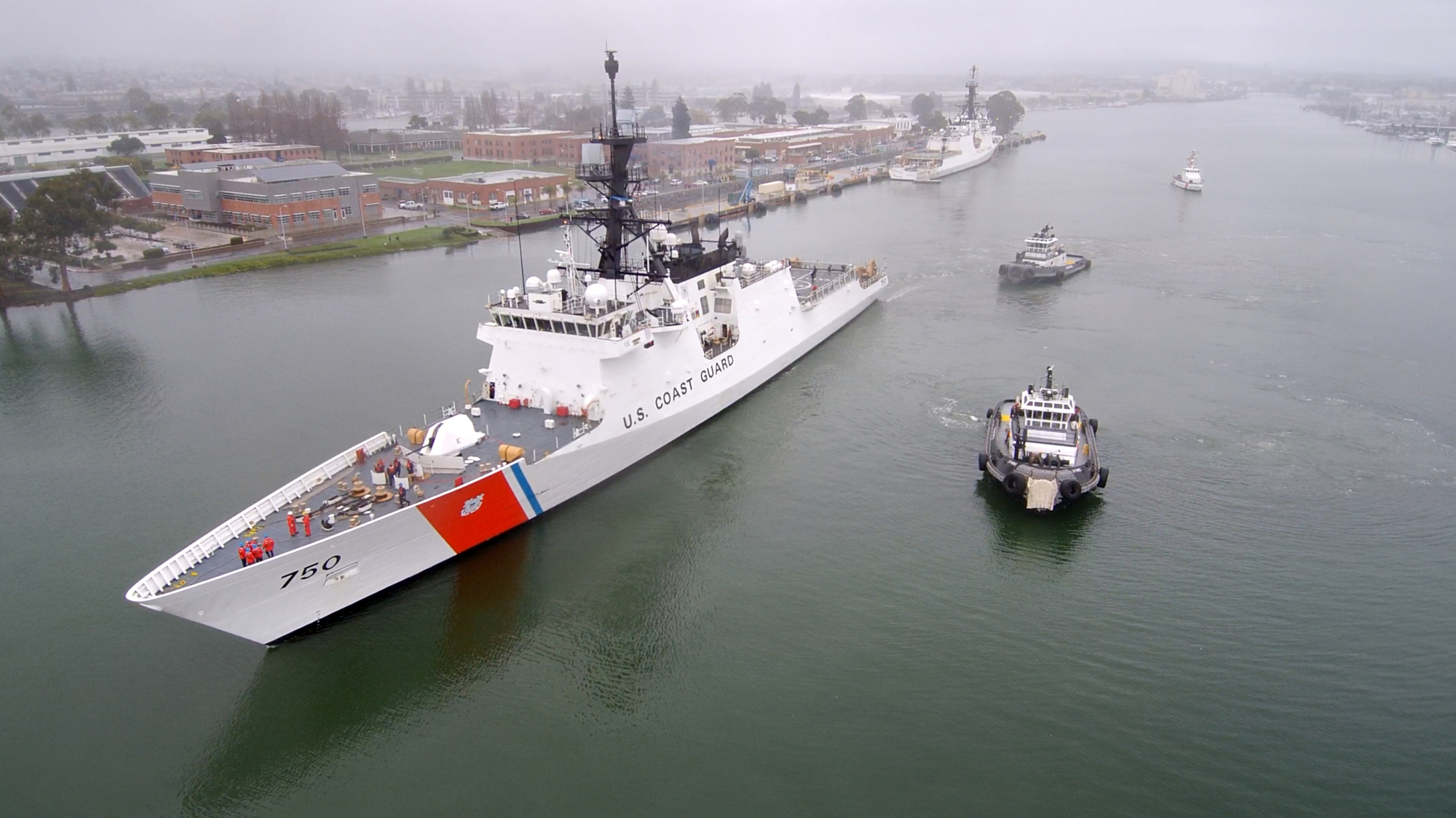
Hamilton is one of four 418-foot Legend-class national security cutters homeported in Charleston, South Carolina under U.S. Coast Guard Atlantic Area Command.

For more information, follow U.S. Coast Guard Southeast on “X” (formerly Twitter), Facebook and Instagram, and find U.S. Coast Guard Pacific Southwest on “X” (formerly Twitter), Facebook and Instagram.

Visit GoCoastGuard.com to learn about active duty and reserve, officer and enlisted opportunities in the U.S. Coast Guard. Information on how to apply to the U.S. Coast Guard Academy can be found here.

For breaking news, find press releases and contact information for our regional public affairs offices here: U.S. Coast Guard News by Region.

-USCG-