1893 Life-saving Station Keeper H .E. Wilcox of Cape Arago Life-Saving Station rescued 55 of 56 passengers of SS Emily that was capsizing in a raging sea. Persons were transported from the doomed vessel to the lifeboat via a life raft.
USCGC Polar Sea
1994 CGC Polar Sea departed from Victoria, British Columbia on operation Arctic Ocean Section 1994 and became the first U.S. surface vessel to reach the North Pole. She then transited the Arctic Ocean back to her homeport in Seattle, Washington.
N93119, a Trans World Airlines Boeing 747-131, pictured at Charles de Gaulle airport in May 1995. On July 17th, 1996, a year after this photo was taken, N93119 was operating as TWA Flight 800 when it exploded in mid-air and crashed off the coast of East Moriches, New York, United States. All 230 people on board were killed in the crash, which remains the third-deadliest aviation accident in American history.
1996TWA Flight 800 crashed off New York with no survivors. Numerous Coast Guard units conducted search and rescue operations and then aided in recovery operations.
1946 Pursuant to Executive Order 9083 and Reorganization Plan No. 3 the Bureau of Marine Inspection was abolished and became a permanent part of the Coast Guard.
The 82-foot patrol boats of Squadron One (RONONE) deploying from Subic Bay in the Philippines to the theater of operations in Vietnam. (U.S. Coast Guard)
1965 Coast Guard 82-foot patrol boats assigned to Division 12 of Coast Guard Squadron One (RONONE) departed Manila Bay on their own, bound for Vietnam and service with the Navy in Operation Market Time. The cutters had been brought to the Philippines “piggy-backed” on board freighters.
1870 Congress directed that the revenue cutters on the northern and northwestern lakes, when commissioned, shall be specially charged with aiding vessels in distress on the lakes.
1870 An Act of Congress (l6 Stat. L., 291, 309) directed the Lighthouse Board to mark all pierheads belonging to the United States situated on the northern and northwestern lakes, as soon as it was notified that the construction or repair of pierheads had been completed.
“…15 July 1967 after three days of tracking by patrol aircraft and the radar picket, USS Wilhoite. After playing a cat-and-mouse game for three days with TF115 units the trawler headed for the mouth of the Sa Ky Riveron the Batangan Peninsula late on 14 July. The trawler was directed by Point Orient to heave to, but the hail was answered with gunfire. The cutter returned fire along with Wilhoite and USS Gallup, USS Walker, and swift boat PCF-79. At 0200 15 July, the trawler was boxed in and ran aground 200 yards (180 m) from shore and the trawler was ablaze. Republic of Korea Marines directed artillery fire from the shore and at 0600 with the trawler apparently abandoned, a Navy demolitions expert from Walker boarded the trawler and defused 2,000 pounds of TNT charges that were designed to scuttle the craft. Found on board were several thousand rounds of rifle and machine gun ammunition, mortar and rocket rounds, anti-personnel mines, grenades, and several thousand pounds of C-4 plastic explosive and TNT. Weapons found included several hundred machine guns, AK-47 rifles, AK-56 rifles, and B-40 rocket launchers.”
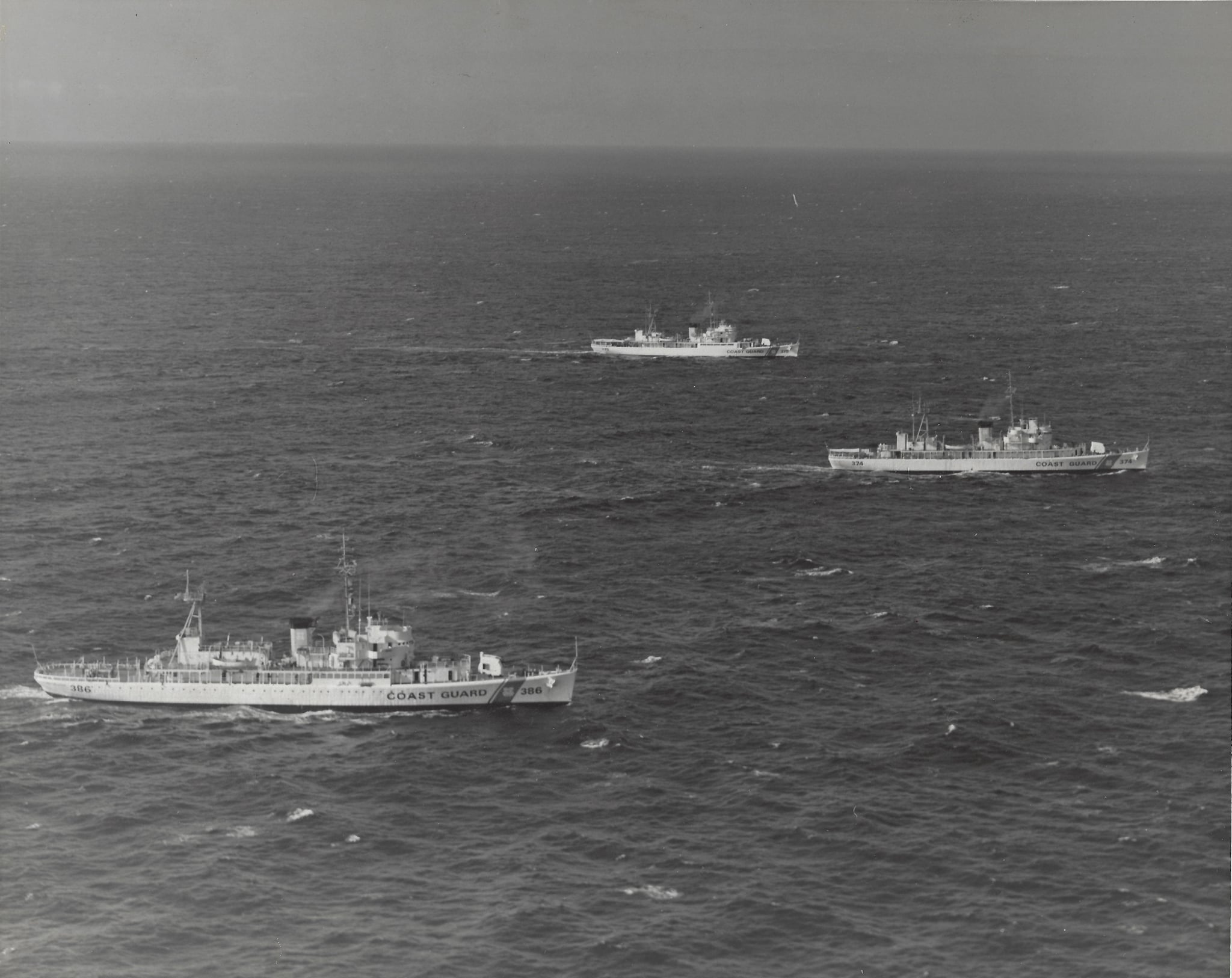
USCGC Absecon, Chincoteague, and McCulloch SquadronThree
1972 CGC Absecon was decommissioned and transferred to the South Vietnamese Navy. This was the last of the seven 311-foot Casco-class cutters to be transferred to the South Vietnamese. She was commissioned as the Tham Ngu Lao (HQ-15) on July 15, 1972. She was seized by the North Vietnamese when the South fell in 1975. The North Vietnamese gave her the hull number HQ-1, but did not apparently name her. She was refitted with two or possibly four SS-N-2 launchers. Her current status remains unknown.
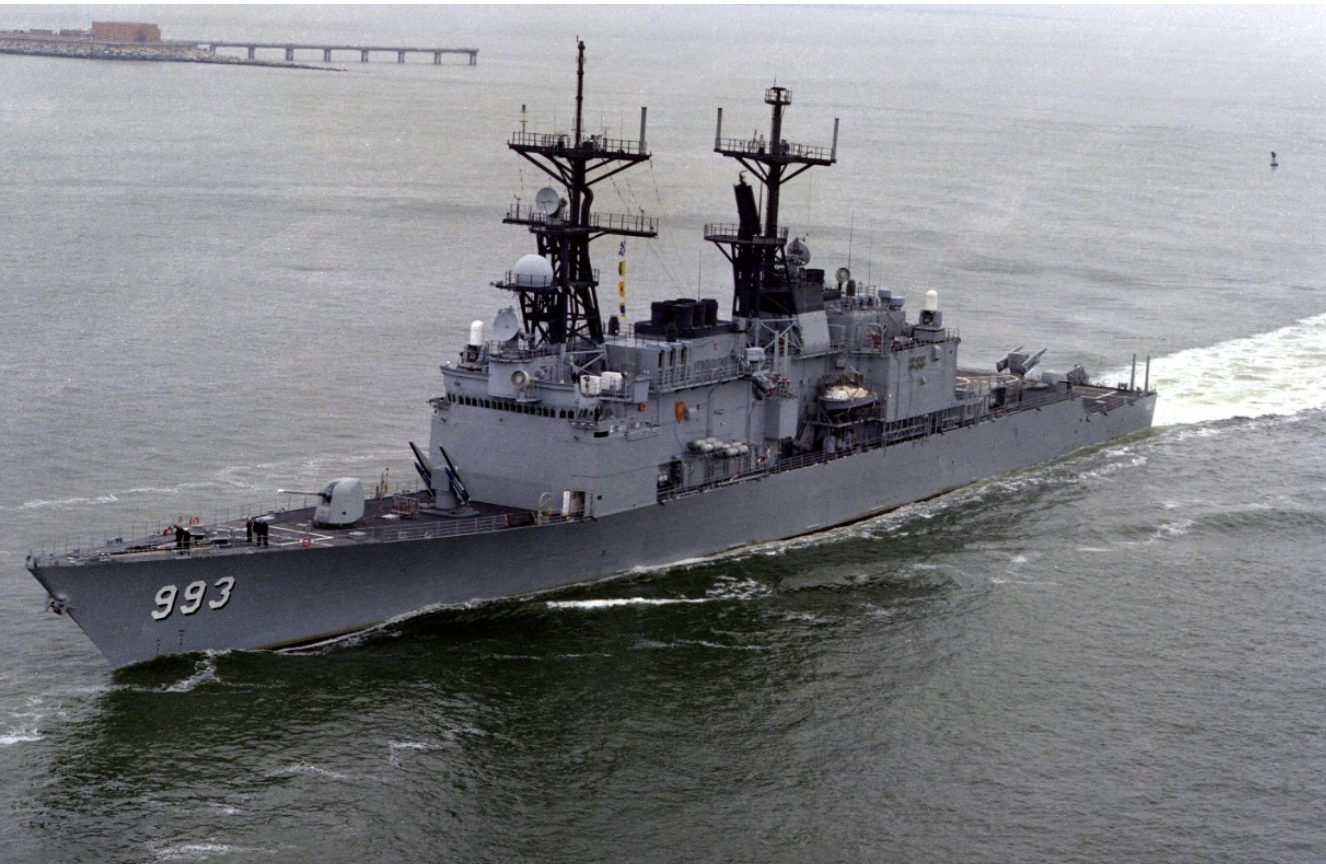
A port bow view of Kidd (DDG-993) crossing Thimble Shoals, 1 February 1984. (U.S. Navy Photo by PH2 K. Bates, DIMOC #DN-SC-88-09212)
1983 For the first time in history a U.S. Navy warship with a Coast Guard LEDET on board fired on a suspected drug-smuggling vessel to force it to heave to. On 15 July 1983, U.S. Navy destroyer USS Kidd fired on the “stateless” vessel Ranger with warning shots at first and when the vessel refused compliance the destroyer fired disabling shots, stopping Ranger without causing casualties. About 35 tons of marijuana were discovered on board and Ranger’s nine crew were arrested and the vessel seized. From “COUNTER-NARCOTERRORISM OPERATIONS IN THE EASTERN PACIFIC AND CARRIBEAN OPERATIONS AREAS FROM 1970 THROUGH 1990.”
“Some smugglers preferred to try their luck and run from the anti-narcotics forces. The smugglers knew that it would take time for the forces to get the necessary permissions to board their vessels, and even if permission was granted there were maneuvers that the smugglers could use in order to prevent the forces from boarding their ships. The only way for the forces to get the smugglers to stop was to disable their engines. The first time that the Navy used this method was in 1983 when the USS Kidd (DDG-993) used her .50 caliber machine guns to stop the M/V Ranger after receiving permission from the Coast Guard Headquarters.
Ranger had refused to stop and allow the search teams onboard after receiving an order to do so from Kidd. Once the Ranger was stopped the LEDET proceeded to search her and after finding over 57,000 pounds of marijuana onboard, they arrested her crew.”
The question now is, what is the administration going to do to accelerate replacement of long overage WMECs?
Will they accelerate production at Austal or seek a contract with a third yard to build OPCs? The news release states,
“The Coast Guard’s goal is to procure 25 OPCs — and that has not changed. The Coast Guard remains intent on acquiring and delivering the full OPC class as fast as possible to address the Nation’s security and safety needs.”
I feel strongly that the Coast Guard needs a different design, hopefully a smaller, faster ship that would be built in greater numbers and one readily adaptable to one or more wartime missions, to either replace some of the Argo Class or be built in parallel.
You can still call it an Offshore Patrol Cutter, it is just a job description, it is not a class. You can even designate it a WMSM, though I would prefer WPF (Coast Guard Patrol Frigate) or even WMEC, but it does not have to be an Argo class.
Secretary Noem Protects American Taxpayers Against Wasteful Contracts While Revolutionizing Coast Guard for the 21st Century
Release Date: July 11, 2025
“This Administration is unwavering in its commitment to the American taxpayer”
WASHINGTON – Today, United States Department of Homeland Security Secretary Kristi Noem announced the partial termination of a wasteful shipbuilding contract to protect American taxpayer dollars while revolutionizing the United States Coast Guard for the 21st century.
“This Administration is unwavering in its commitment to the American taxpayer and to a strong, ready Coast Guard,” said a Senior Homeland Security official. “We cannot allow critical shipbuilding projects to languish over budget and behind schedule. Our Coast Guard needs modern, capable vessels to safeguard our national and economic security, and we will ensure every dollar is spent wisely to achieve that mission. This action redirects resources to where they are most needed, ensuring the Coast Guard remains the finest, most-capable maritime service in the world.”
As part of that commitment, the Coast Guard is reviewing contracts which are failing to meet delivery agreements. An existing Offshore Patrol Cutter (OPC) contract with Eastern Shipbuilding Group (ESG) has been slow to deliver four OPCs, harming the U.S.’s defense capabilities and wasting American’s hard-earned money. In light of that, Secretary Noem partially canceled ESG’s contract for two out of the four OPCs expected from ESG in Panama City, Florida because it was not an effective use of taxpayer money.
ESG’s delivery of OPC 1 was initially due in June 2023 but will now be completed by the end of 2026 at the earliest. ESG missed its April 2024 delivery for OPC 2. The Coast Guard stopped work on OPCs 3 and 4 after ESG notified the service earlier this year they could not fulfill their contractual duty to deliver all four OPCs without unabsorbable loss. The money saved will redirected to ensure it’s actually benefiting the Coast Guard.
Due to decades of neglect by previous Administrations and Congress, the Coast Guard has been underfunded, underequipped, and ignored for too long. President Donald Trump is ending that era of neglect with the passage of the One Big Beautiful Bill and Force Design 2028 – Homeland’s plan to transform the Coast Guard into a more agile, capable fighting force. Now, a massive injection of nearly $25 billion is coming to the Coast Guard.
The Coast Guard’s goal is to procure 25 OPCs — and that has not changed. The Coast Guard remains intent on acquiring and delivering the full OPC class as fast as possible to address the Nation’s security and safety needs.
The OPC fleet will complement the capabilities of the Service’s National Security Cutters, Fast Response Cutters and Polar Security Cutters as an essential element of the Nation’s layered maritime security strategy. They will be especially critical to the counter-drug and migrant interdiction missions along the southeast border.
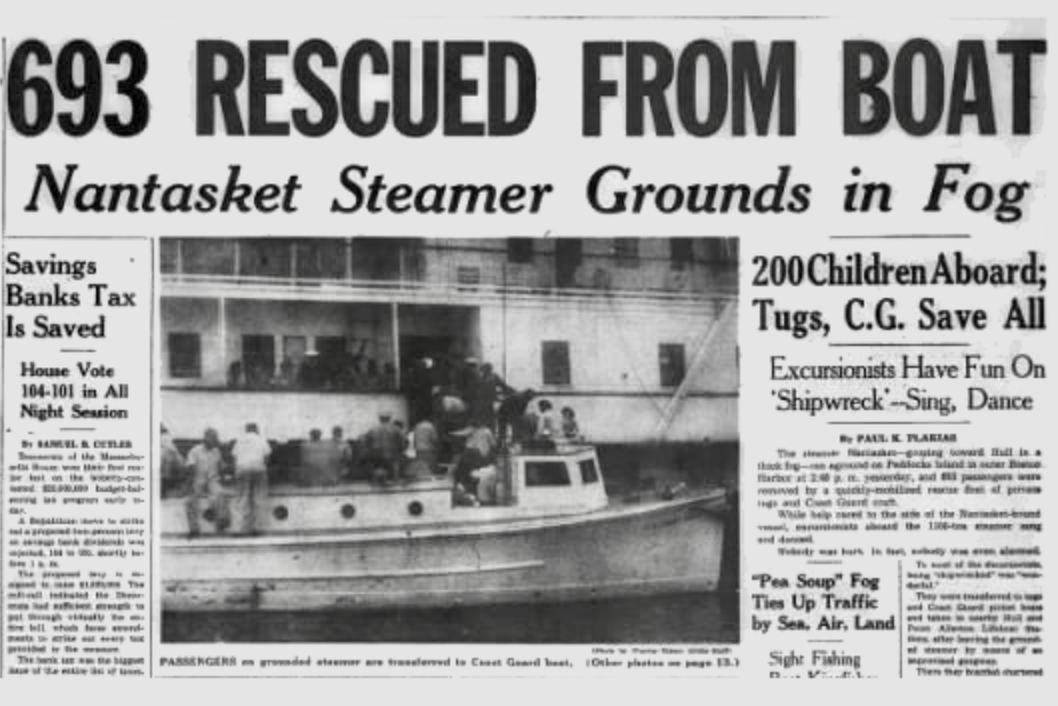
1949 U.S. Coast Guardsmen from Point Allerton and Boston Lifeboat Stations figured prominently in one of the largest rescue operations in the history of Boston Harbor, Massachusetts when they helped in removing 690 persons from the excursion steamer Nantasket, which had gone aground in a thick fog off Peddock’s Island.
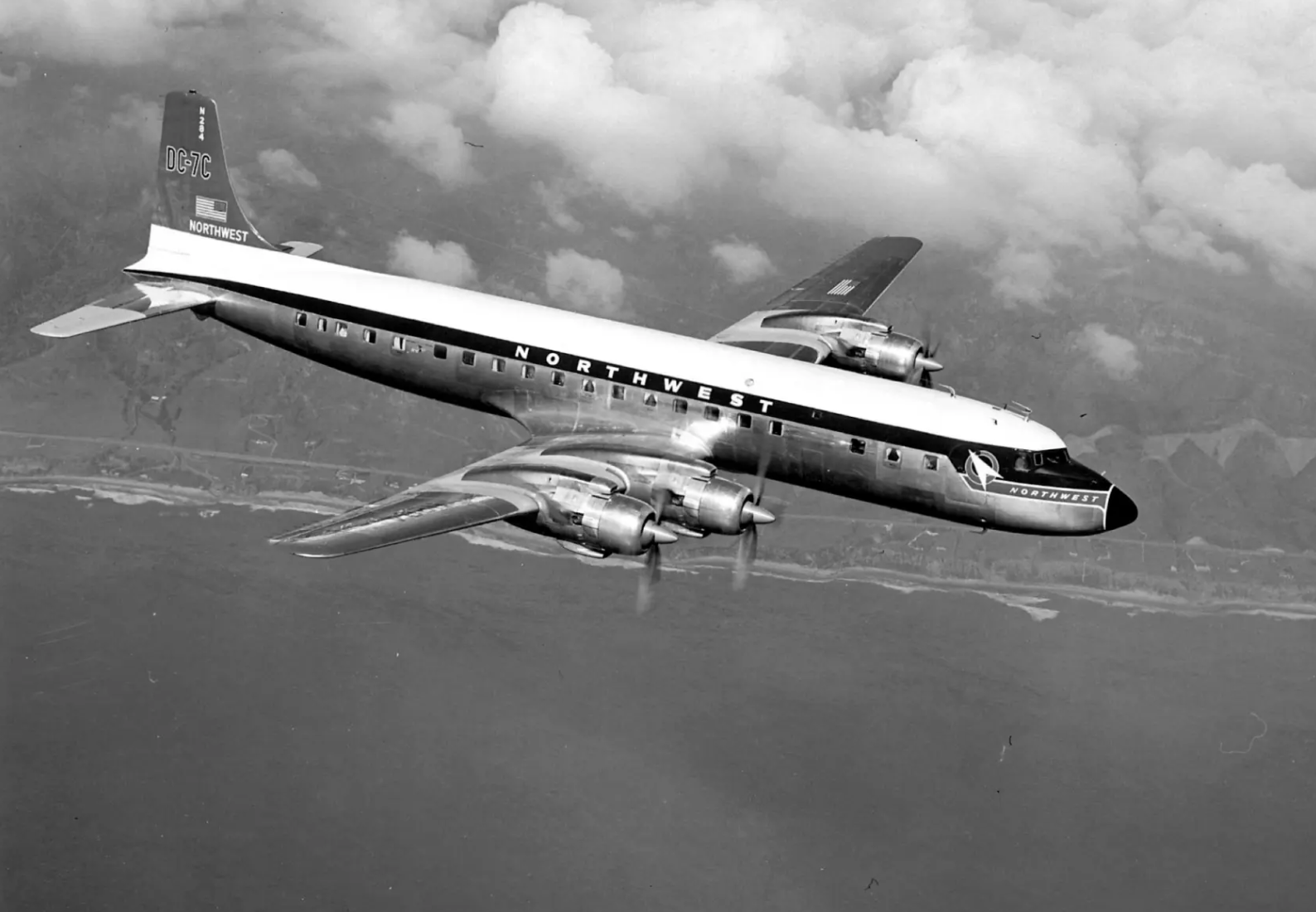
Northwest Orient DC-7C N284 in a March 1957 publicity photo shoot. From the James Borden Photography Collection.
1960 Following the loss of a propeller, which resulted in fuselage damage and an engine fire, a Northwest Airlines DC-7C airliner carrying 58 persons ditched in Philippine waters. During the Coast Guard-coordinated air search in the vicinity of the Polillo Islands, a Coast Guard UF amphibian aircraft sighted four life rafts, landed, and rescued 23 survivors. A U.S. Navy P5M seaplane, meanwhile, rescued 34 others and also recovered from the water the body of the only fatality, a woman killed when the engine no. 2 propeller slashed through the plane’s fuselage and struck her.
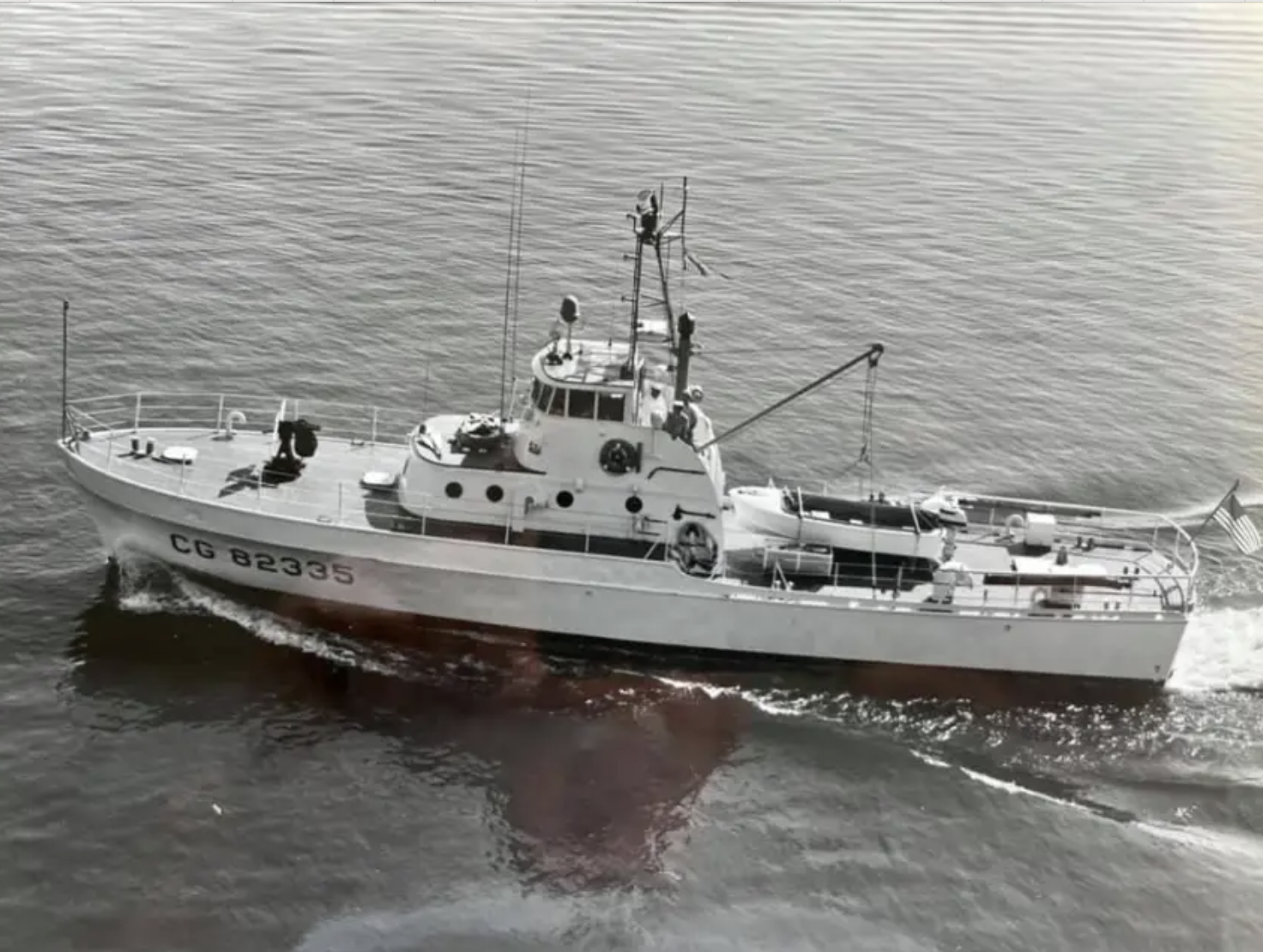
Point Glass in her original early 1960s configuration without the racing stripe.
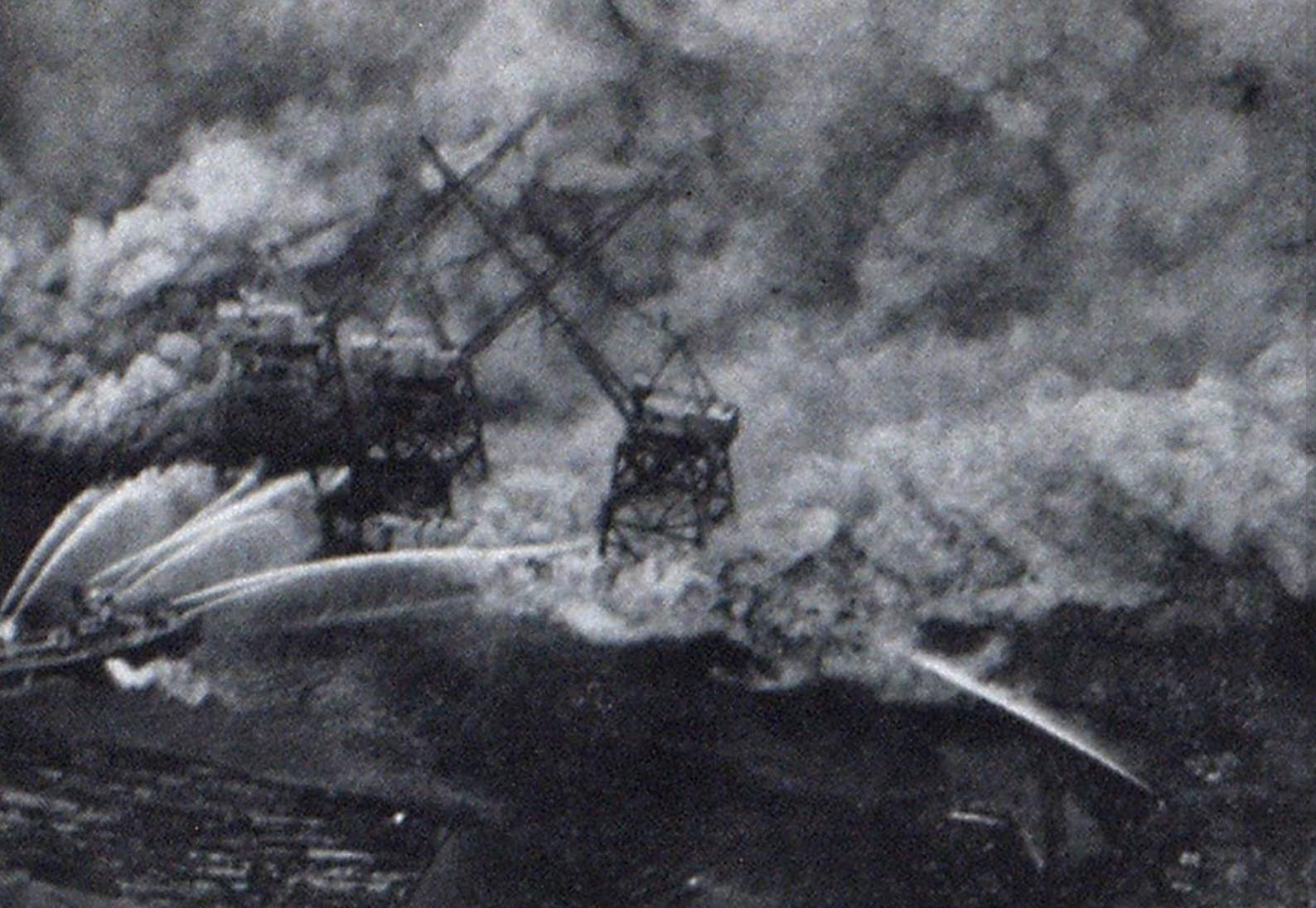
1963 Pier 7 at Tacoma, Washington was engulfed in flames. CG-82336 (later designated USCGC Point Glass (WPB-82336)), based at Tacoma, proceeded immediately to the scene to assist the first department in fighting the blaze. The cutter towed the M/V Sanyo Maru away from the pier and was relieved of the tow by a tug. CG-82336 returned to the pier and towed the M/V Kikulo Maru to safe anchorage. The Tacoma fire department then requested CG-82336 to coordinate firefighting efforts on the bay side of the pier, as the fire department was unable to cover the entire area because of the intensity of the fire. Unable to fight the fire under the pier, CG-82336 proceeded to a local boat mooring and acquired seven rental boats to assist. These boats, manned by local firemen and Coast Guard personnel, fought the fire under the pier. The fire was brought under control the next morning and Coast Guard units were secured. A fire Battalion Chief died and seven firemen were injured, but there were no Coast Guard casualties.
July 14, 1963 — Pier 7 at Tacoma, Washington was engulfed in flames.
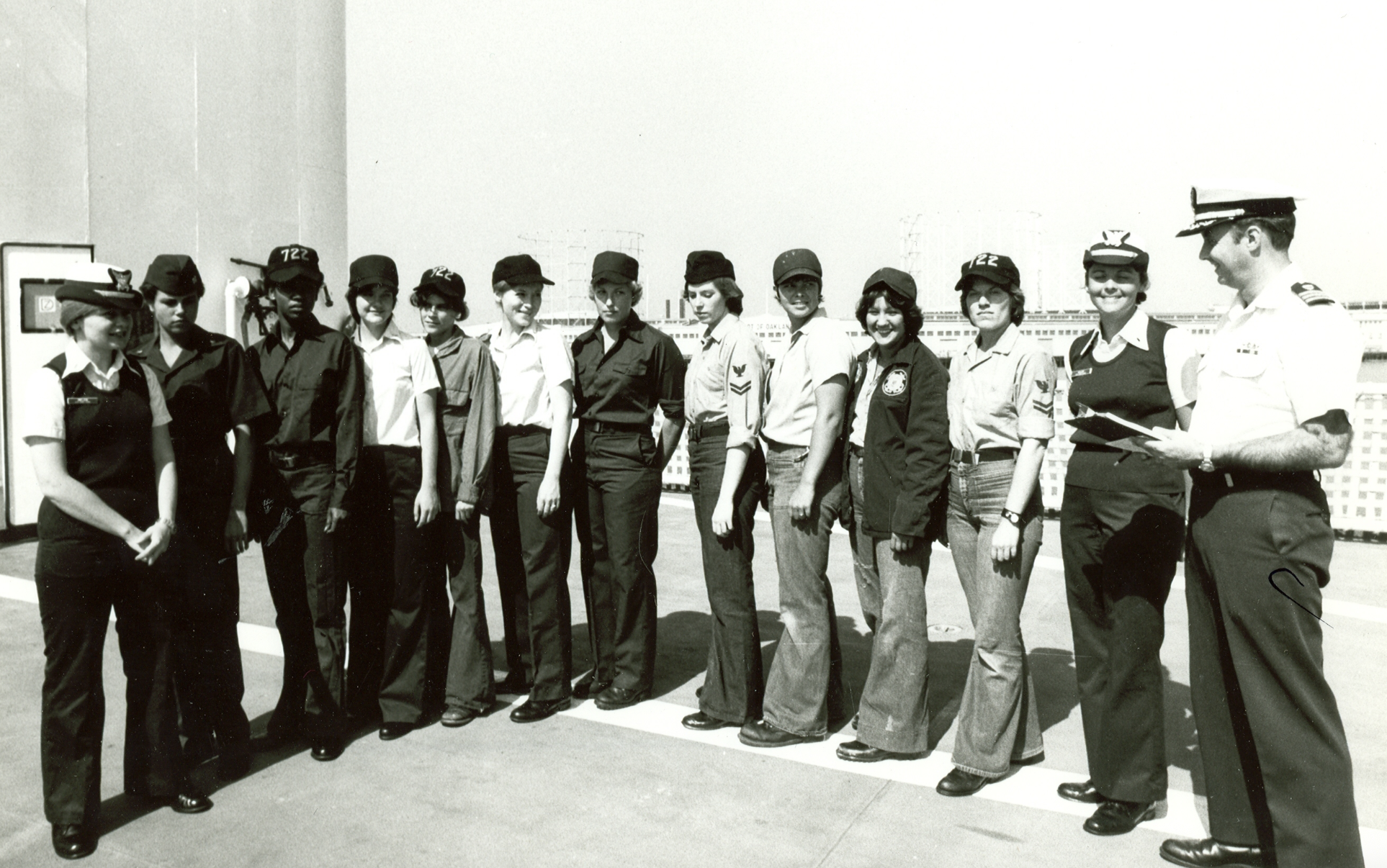
1977 Ten Coast Guard women were selected and ordered to CGC Gallatin to report aboard on October 26, 1977. “This action was in keeping with the Commandant’s most recent program of placing women in afloat assignments” on CGCs Morgenthau and Gallatin. Each of the women chosen were volunteers. They were: ET2 L. D. Canatore; RM2 J.K. Shawdah; SK2 R.G. Burright; BM3 D.K. Skinner; HM3 D.K. Cummings; RM3 V.L. Robillard; YN3 M.F. Kelly; SA A. Clark; SA D.A. Collins, and SA D.A. Hughes.
U.S. Coast Guardsmen from the Sentinel-class fast-response cutter USCGC Clarence Sutphin Jr. (WPC 1147) board a vessel suspected of smuggling illegal narcotics during Focused Operation Crimson Barracuda in the Arabian Sea, April 10, 2024.
Marine Link has a brief overview of boats used by the Coast Guard. It provides a brief description of nine types and reports how many are in the inventory, but I knew there were a lot more.
It left out a lot of different types, including the 22 foot Cutter boat, large (used on 210-foot medium endurance cutters, 225-foot seagoing buoy tenders, and Cutters Alex Haley and Mackinaw), the small RHIB used on 87 foot WPBs, the Transportable Port Security Boats, and several special purpose boats.
The first full rate production cutter boat large, hull 22335, is delivered to Coast Guard Cutter Dauntless in Pensacola, Florida, Feb. 7, 2022. U.S. Coast Guard photo.
So I went looking for where a complete listing of Coast Guard boat types might be found.
Absolutely the best, most comprehensive source I found was “Boats Of The United States Coast Guard,” Prepared by the Office of Boat Forces (CG-731), 2024. It list 43 different types, including a photo, specifications, and numbers built and inservice.
“The Coast Guard gave an overview of its boats fleet, including current and potential acquisition programs, during the International WorkBoat Show in New Orleans in November 2024.”
The overview included some very interesting statistics about Coast Guard boats and their operations.
I’d would also like to recommend the annual Almanac issue of the Navy League’s Seapower Magazine as a ready reference and not just for Coast Guard boats. Three pages cover 16 types of Coast Guard boats and in most cases it also indicates how many of each type are in use, but it also includes almost 200 pages covering systems and leadership for the Navy, Marine Corps, Coast Guard, Maritime Administration, and NOAA.
As I started writing this post, I went back through my photo library and pulled some photos. It’s not detailed. It certainly isn’t complete, but perhaps it will help to comprehend the diversity of the Coast Guard fleet of boats. Also included are four photos (the last four below) from the overview presentation at the International Workboat Show linked above.
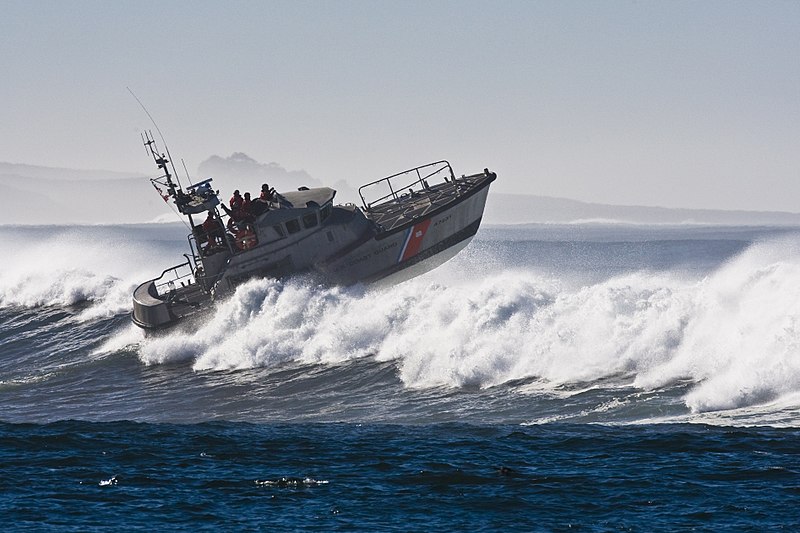
47-Foot Motor Life Boat (MLB) 47231 from Station Morrow Bay, 4 Dec 2007. Photo by Mike Baird
33-foot special purpose craft-law enforcement (SPC-LE) smallboat crew from Coast Guard Station Key West, Fla.,pulls alongside CGC Eagle in Atlantic April 13,2012.Several types of SPCs.SPC-LE ideal platform to interdict drug smugglers’ go-fast boats.can plane in under 3seconds top speed 60mph+.Enclosed heated air-conditioned cabin has shock mitigating seats,reducing fatigue, capable of operating more than 30 miles from shore. U.S. Coast Guard Petty Officer 1st Class Brandyn Hill
RIMPAC 2018 will also be the first time that US Coast Guard Maritime Security Response Team West (MSRT-W) participates in RIMPAC SOCAL. US Navy Photo
Long Range Interceptor and Over the Horizon Cutter Boat. Two small boat crews from Coast Guard Cutter Stratton are underway for operations in the Bering Sea, April 30, 2021. Cutter crews use the small boats to conduct a variety of missions including search and rescue and law enforcement. U.S. Coast Guard photo courtesy Ensign Molly Dolan.
Preliminary general arrangement drawing of the third generation of long range interceptor cutter boats to be made for the Coast Guard. Courtesy of MetalCraft Marine U.S. Inc.
A Coast Guard crew tests a newly delivered over the horizon V cutter boat near Cape May, New Jersey. U.S. Coast Guard photo.
Response Boat, Medium (RB-M). Photo from Vigor
Arctic Survey Boat
29-foot Response Boat – Small II (RB-S II) 29249 passing by Pier 9, Honolulu Harbor. 9 March 2024.
Cutter Boat, Large (22 foot)
A United States Coast Guard (USCG) Port Security Unit (PSU) boat crew fire blank ammunition from .50 caliber heavy machine gun and M240b medium machine guns mounted on a patrol vessel during training.
Photo of a Coast Guard Maritime port security unit patrolling in a TPSB boat
36 foot Special Purpose Craft, Law Enforcement II
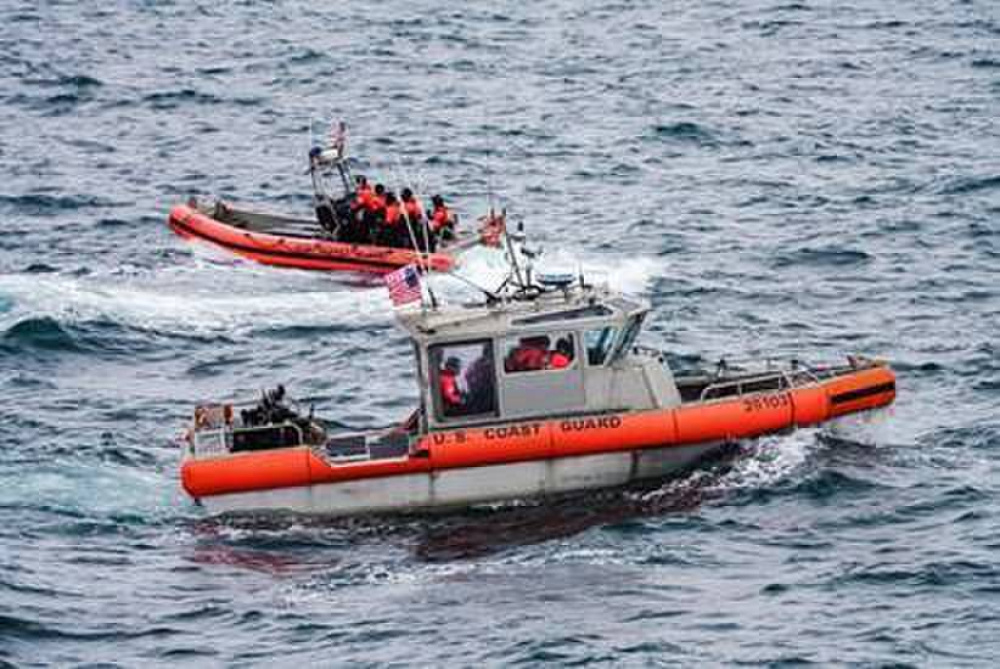
27’ Special Purpose Craft, Shallow Water II, by RECONCRAFT, 48 delivered
Trailerable Aids to Navigation Boat
Cutter Boat, AtoN, Small. Intended for the Waterways Commerce Cutters.
Sri Lanka Navy Offshore Patrol Vessel SLNS Gajabahu, former USCGC Sherman
2001 CGC Sherman became the third cutter to circumnavigate the globe when she returned to the United States from a six-month deployment to the Arabian Gulf in support of U.N. operations. During this cruise she conducted 219 queries, 115 boardings, and five diverts. Her crew saved 38 lives, including 11 Iraqi smugglers when their vessel sank in a storm off UAE. She towed a 33,000 ton carrier foundering in 50-foot seas off the Cape of Good Hope, saving 22 lives and keeping the ship from running aground at the entrance to Port Elizabeth, South Africa. Her crew also saved 5 Costa Rican fishermen found after they were adrift for 21 days. (CGC Eastwind was the first cutter to circumnavigate the globe on a cruise in 1960-1961 and Southwind followed in 1968-1969.)
1953 Coast Guard aircraft and surface craft of the Search and Rescue Group at Wake Island joined with a large naval task unit in conducting an intensive search for a Transocean Air Lines DC-6 aircraft, Flight 512, last reported about 300 miles east of Wake Island. The scene of the crash was located although there were no survivors.
MCKINLEYVILLE, CA, 07.10.2019, Photo by Petty Officer 2nd Class Jordan Akiyama, D 11
1994 Coast Guard HH-65 CG-6541 crashed in the early hours of July 12, 1994 near Shelter Cove, California, while responding to a sailing vessel in distress. When heavy pre-dawn fog made a visual approach impossible, the air crew performed several unsuccessful approaches to the sailing vessel, striking a shoreline cliff on the third attempt and taking the lives of all four crew members: LT Laurence Williams, LT Mark Koteek, ASMCS Peter Leeman, and AM1 Michael Gill.
Aerial view of Kotzebue, Alaska, U.S. U.S. Army Corps of Engineers, photographer not specified or unknown
2013 The Coast Guard opened its seasonal forward operating location (FOL) in Kotzebue on October 12, 2013 in preparation for the anticipated increase of maritime activities in Western Alaska and the Bering Strait. FOL Kotzebue, part of Coast Guard Arctic Shield 2013, consisted of one Kodiak-based MH-60 Jayhawk helicopter with supporting air and ground crews, and was based out of the Alaska Army National Guard Hangar in Kotzebue.
Northwest Arctic Borough Alaska incorporated and unincorporated areas Kotzebue highlighted. From Wikipedia by Rcsprinter123
Portrait of Hamilton authoring the first draft of the U.S. Constitution in 1787
1804 Vice President Aaron Burr mortally wounded Alexander Hamilton in a duel in Weehawken, New Jersey. Hamilton died the following day. Hamilton had been the first Secretary of the Treasury and had founded the Revenue Marine.
Revenue Cutter Dallas 1815
1818 The Revenue Cutter Dallas seized and libeled the Venezuelan privateer Cerony off Savannah for having violated the nation’s neutrality laws.
US Coast Guard crew of cutter Spencer watched as a depth charge exploded near U-175, North Atlantic, 500 nautical miles WSW of Ireland, 17 Apr 1943. Photo by Jack January
1941 Congress reconfirmed the military “status” of the Coast Guard, stating: “The Coast Guard shall be a military service and constitute a branch of the land and naval forces of the United States at all times and shall operate under the Treasury Department in time of peace and operate as part of the Navy, subject to the orders of the Secretary of the Navy, in time of war or when the President shall so direct.” (14 U.S.C. 1)
1942 The U.S. Maritime Service was transferred back to the War Shipping Administration after being under Coast Guard administration since February 28, 1942.
Here we have a post from Peter Rybski (prybski@gmail.com) thought many of my readers might find interesting. It’s reprinted with his permission.
It suggests that a partnership of Canadian and Finnish shipyards may be in the lead to provide two Arctic Security Cutters using the design for the Canadian Coast Guard’s Multi-Purpose Vessel, a light icebreaker, and that follow on ships of this class would be built in the US.
This is not the first time Peter’s analysis has appeared here:
Note also that Canadian Shipbuilder Davie has announced an intention to acquire and modernize Gulf Copper & Manufacturing Corporation with facilities in Port Arthur and Galveston.
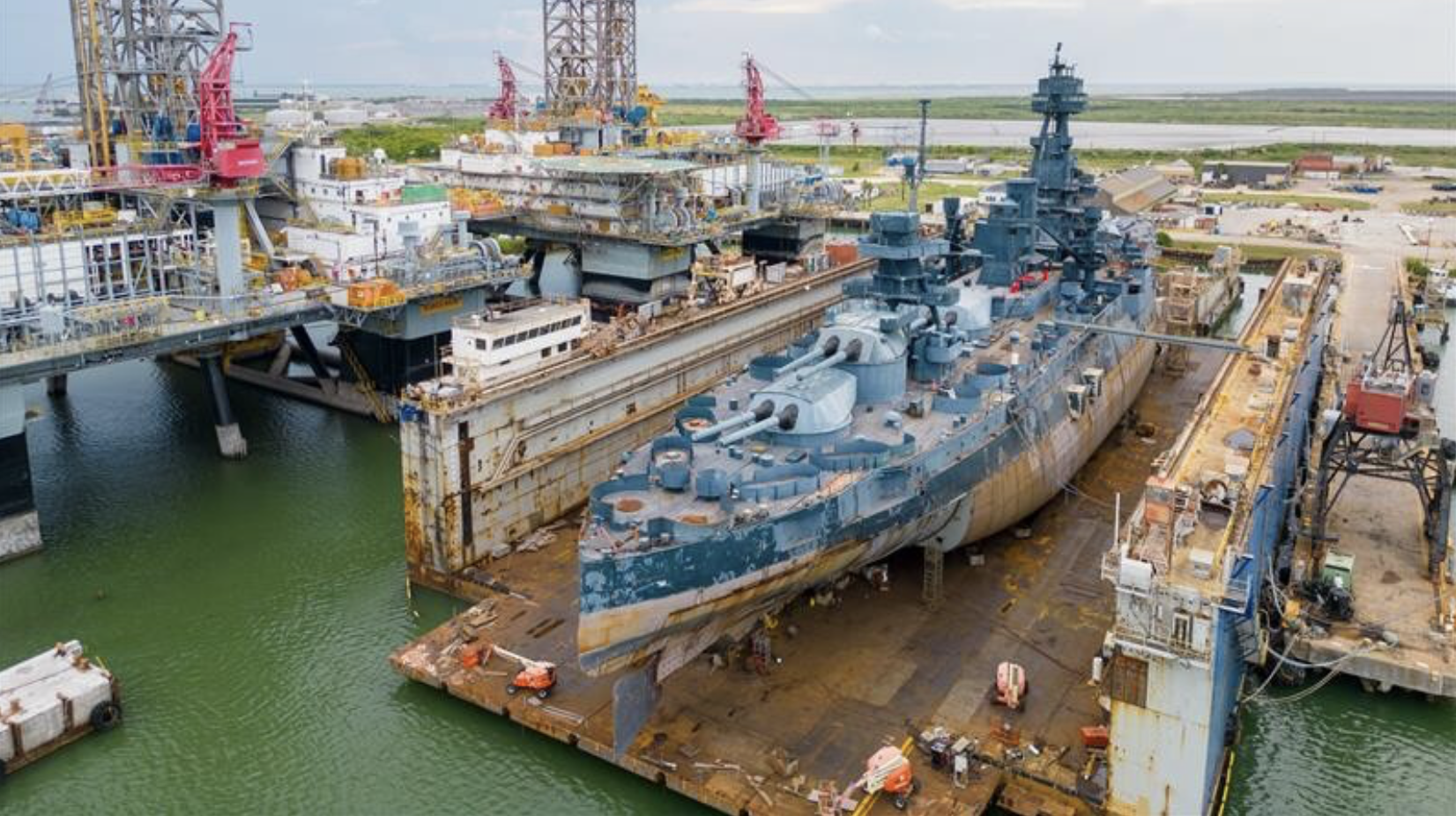
Aerial photo of Gulf Copper Dry Dock and Rig Repair in Galveston, Texas. In the dry dock is the former USS Texas, length 573 ft (175 m) (overall), beam 95 ft 2.5 in (29.020 m), displacement 27,000 tons, so big enough for a Polar Security Cutter. Shutterstock photo by Felix Mizioznikov.
Finnish and Canadian Firms Team Up to Offer Arctic Security Cutters to U.S. Coast Guard
According to the proposal, Seaspan’s Multi-Purpose Icebreaker design would be built in Finland by Rauma Marine Constructions (RMC), with Aker Arctic (who did the concept design) providing support.
I’m currently away from Finland, visiting family in the USA. Last week, while I was grilling hamburgers and hot dogs during a family Independence Day Barbecue, a regional Finnish newspaper (Satakunnan Kansa) ran a very interesting article:
RMC’s Nieminen returned from a sales trip to the USA: “Rauma Shipyard is Number One.”
RMC is part of a consortium that is offering two icebreakers to the U.S. Coast Guard, as well as extensive training.
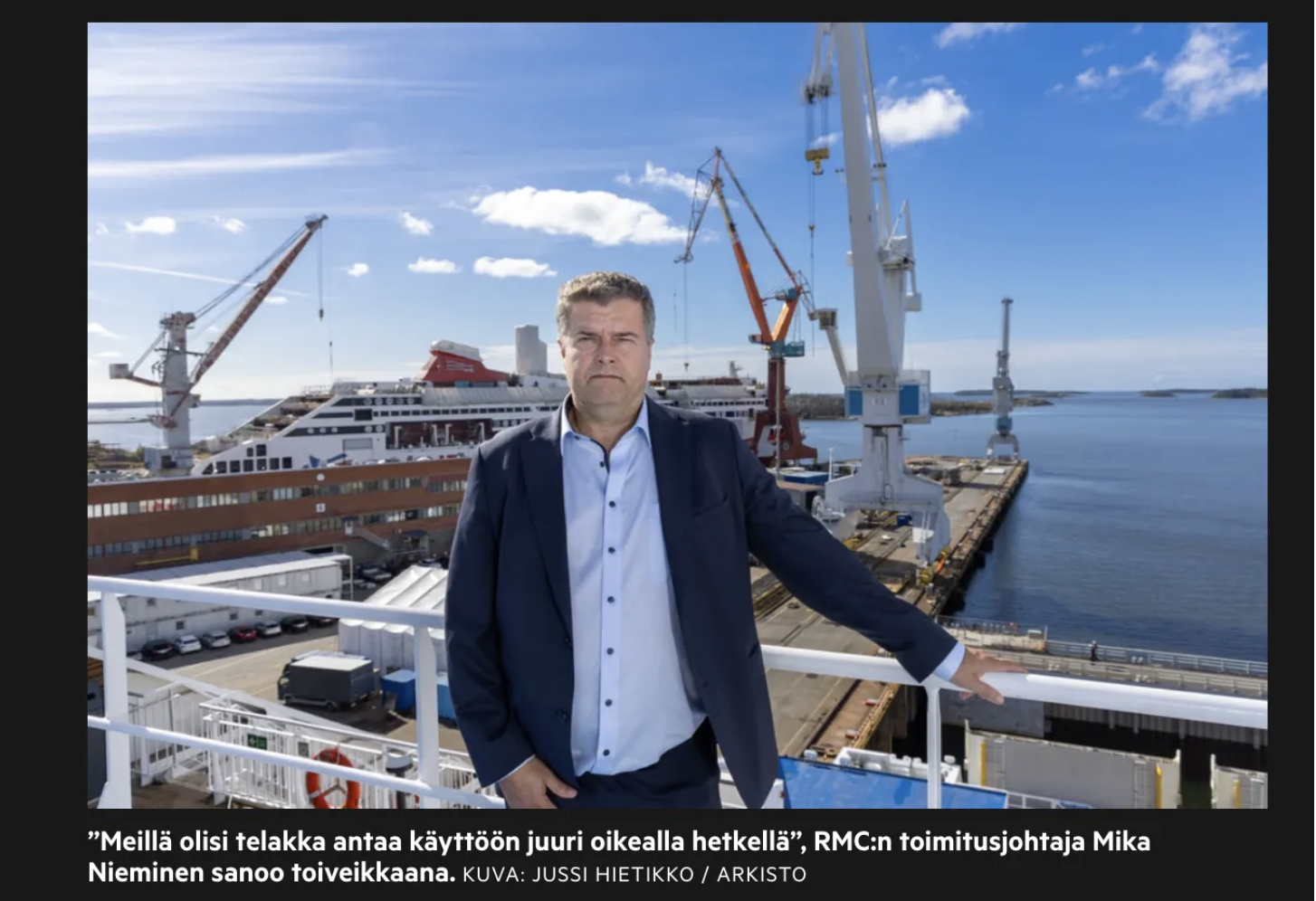
Caption: “We would have the shipyard ready for use at just the right time,” says RMC CEO Mika Nieminen hopefully.
(translation via google, with some corrections for clarification):
A satisfied man walked through Helsinki-Vantaa Airport on Thursday afternoon. RMC CEO Mika Nieminen returned from a sales trip to the USA, where he brought back some good news.
Nieminen was presenting the ship design of the consortium he represents to the US Coast Guard and the reception was excellent.
“Our ship design exceeded expectations and it is the design that the Coast Guard wants. The number one is the Rauma shipyard, which would also build it. The feedback was very positive.”
In addition to RMC, the consortium represented by Nieminen includes the Canadian shipbuilder Seaspan Shipyards and the Finnish ship design firm Aker Arctic Technology Oy.
The Canadian shipyard will start building medium-sized icebreakers based on the same model next year. Canada plans to build 16 icebreakers. This same ship model is now being offered to the US Coast Guard, but with RMC building the ships.
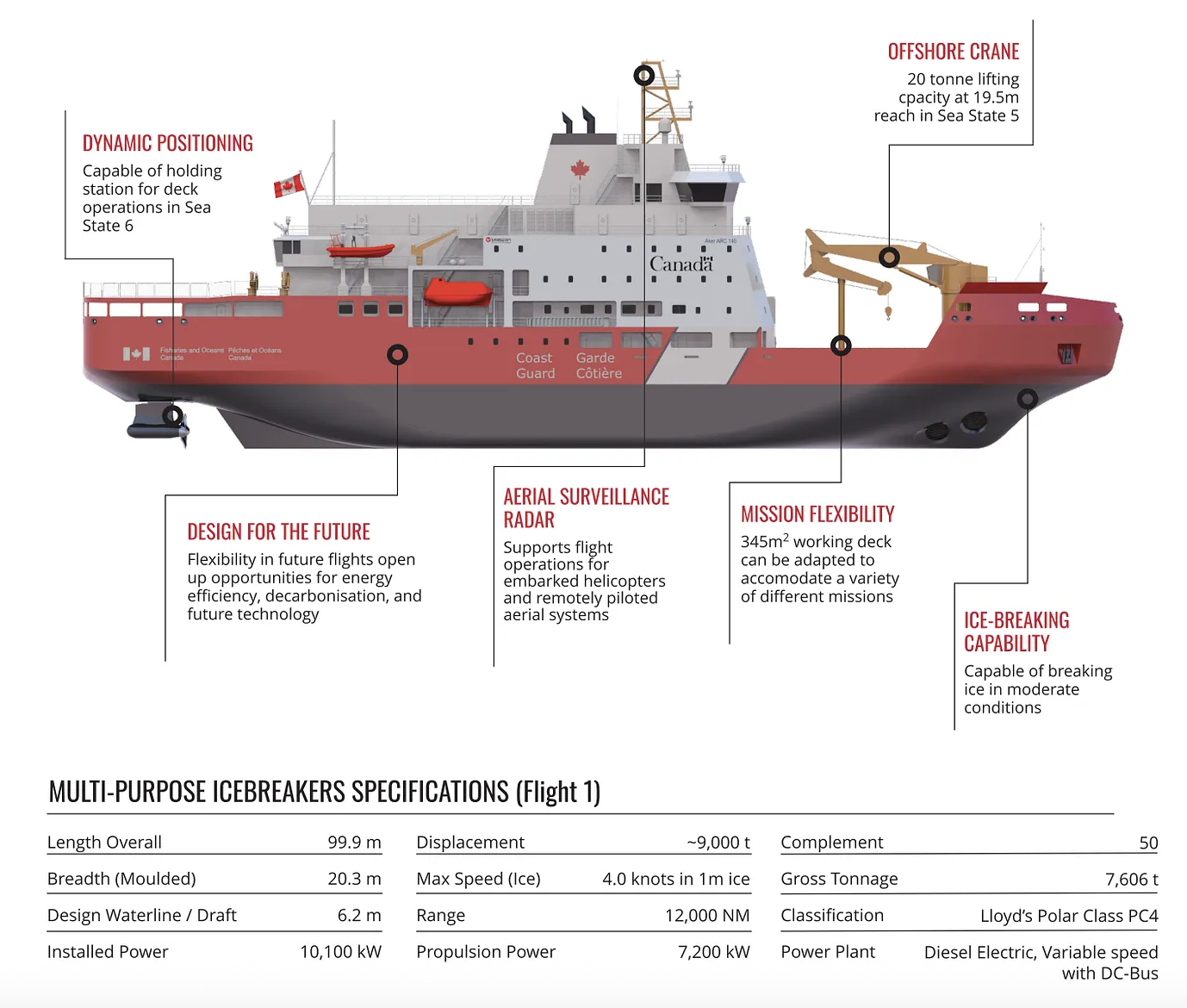
This is clearly referring to Seaspan’s Multi-Purpose Icebreaker (MPI) design, which I discussed in a recent article:
Analyzing the Arctic Security Cutter Request for Information
Canada’s Multi-Purpose Icebreaker (MPI, formerly known as the Multi-Purpose Vessel): Modern design that meets all of the listed requirements [for the U.S. Coast Guard’s Arctic Security Cutters]. The first flight of six vessels (of a planned sixteen) are scheduled to be built by Seaspan at their Vancouver shipyard….
Seaspan’s Vancouver Shipyard is at capacity through approximately 2029. While they will begin building MPIs for the Canadian Coast Guard, there is no room to build one for the U.S. Coast Guard in the relevant timeframe….
Building MPIs at RMC is an interesting idea, but I have no idea if that is actually under consideration.
It is more than just under consideration. According to the Satakunnan Kansa article, RMC would build the first two MPIs for the U.S. Coast Guard in Finland by 2028. The deal would also involve working with U.S. shipbuilders to ensure they had the training and skill to build subsequent vessels of the class in the USA. Cost information is not yet available.
Canadian Coast Guard Multi-Purpose Icebreaker (MPI). Source: Seaspan Note: The MPI image does not show the right propulsors; it will use Steerprop’s contra-rotating propulsors (CRP). Additionally according to Seaspan, the design could easily be upgraded to PC3. Confirmation from Seaspan and Aker Arctic.
In April, Finnish newspaper Helsingin Sanomat published an article about negotiations between the U.S. Coast Guard and RMC to build a significant number of icebreakers, but the details were not subsequently confirmed. Before publishing this article, I reached out to RMC, Seaspan, and Aker Arctic for comments. As of press time, Aker Arctic and Seaspan responded, confirming many of the details in the article.
Arto Uuskallio, Head of Sales at Aker Arctic, commented via e-mail:
It’s natural that we are involved, since the MPI is an Aker Arctic concept, and it’s good to have a partner onboard who understands the possibilities and limitations of the ship concept. More detailed comments will likely come from the shipyards.
Dave Hargreaves, Seaspan’s Senior Vice President for Strategy, Business Development, and Communication, provided the following comments via e-mail:
We have consulted with many U.S. and non-U.S. shipyards regarding their readiness and aptitude to build the MPI design for the U.S. Coast Guard ASC program including Rauma Shipyard in Finland.
Rauma has a track record of delivering ice-capable vessels in less than 36 months — including recent programs. As a fully capable, end-to-end shipyard, Rauma is the lowest risk and best option to meet the 36-month requirement. Unlike other shipyards, Rauma has an active panel line and block fabrication facility that is ready to start production today — it does not require any further investment or ramp up in workforce to begin construction. This significantly lowers the risk of meeting the schedule requirement.
Together, with Rauma and Aker, Seaspan has developed a comprehensive plan detailing how we will work with a U.S. shipyard to transfer the design, knowledge, expertise and build plans to enable future ASC vessels to be built in the United States. This approach will deliver a comprehensive, U.S.-built ASC fleet for the U.S. Coast Guard while enhancing domestic icebreaker shipbuilding — avoiding the delays, costs and risks of long-term, high-investment alternatives.
I take his comment about schedule risk as a subtle dig at Davie/Helsinki Shipyard. I’ve been reading these press releases and comments long enough to see the back-and-forth, sometimes subtle, between Seaspan and Davie, and RMC and Helsinki Shipyard. I expect to read more of this, but am much more interested in tracking the progress of ongoing ship construction (such as the Canadian Polar Icebreakers being built by Seaspan and Davie) than in following their rhetorical barbs.
Helsinki Shipyard has an excellent track record of delivering icebreakers in less than thirty-six months, as I noted here.
Rauma Marine Constructions was unable to provide additional comments by publication time, but did say that more information would be coming out soon.
Thoughts and Comments
The Multi-Purpose Icebreaker is a solid design, and Rauma Marine Constructions is a capable shipyard with a solid track record. As my goal in writing about icebreakers has always been to assist the U.S. Coast Guard in getting the ships that it needs in a relevant timeline, I view the Seaspan/RMC/Aker consortium’s proposal as a positive development.
Davie does not comment on any of its ongoing negotiations, but it seems likely that it is offering its MPPS-100 to the U.S. Coast Guard to be built first in Helsinki Shipyard, and later (perhaps) in Texas.
The only announced player without any information about its proposed design is the United Shipbuilding Alliance created by Bollinger and Edison Chouest Offshore.
May the U.S. Coast Guard get the best ships for its needs in the shortest amount of time and at a good price! I’ll certainly be tracking all of these details closely.
Thanks for reading. Be sure to subscribe and share so that you never miss an update on this fast-moving and important topic.









 Chuck Hill's CG Blog