New Offshore Patrol Vessels for Italy

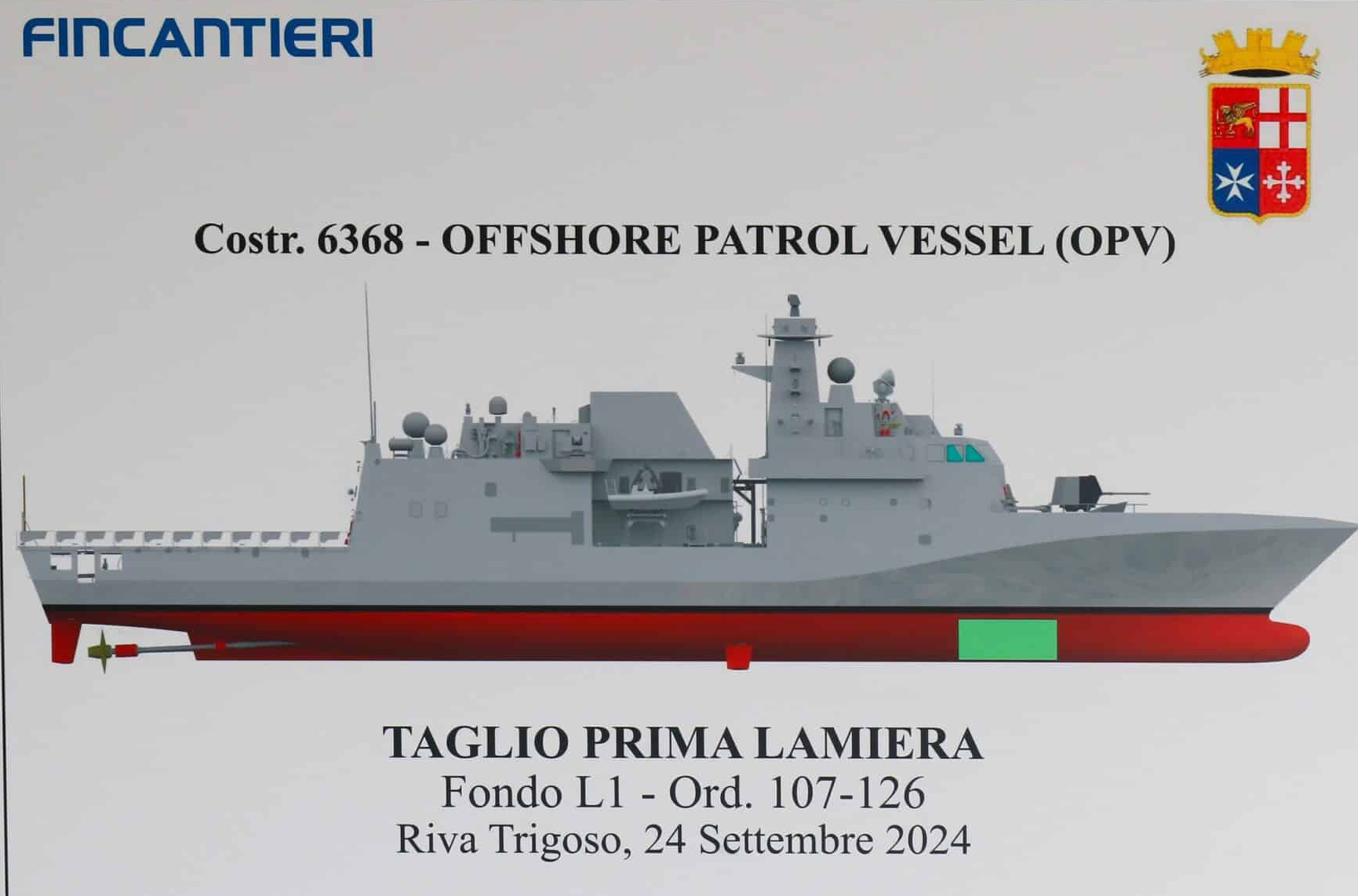
Below is a Fincantieri news release reporting steel has been cut for the first of a new class of Offshore Patrol Vessels for the Italian Navy.

Unlike the US, France, and the UK, Italy has no overseas territories. Their Exclusive Economic Zone is less than 1/22 the size of that of that of the US or France. Even so, they have 13 ships they classify as Offshore Patrol Vessels. Three of them are large at over 5,800 tons full load. (Seven more of these are planned.) In most navies they would be classified as frigates. The other ten are very different, about 1500 tons full load, and 80 (262′) to 89 meters (291′) in length, displacing about 300 tons less than a WMEC270.

Global data reports, “These four new OPVs will replace numerous warships still in service; some, such as the Lerici-class minehunters, have been in use for nearly 40 years…” There are twelve Lerici class, divided into two groups. The first four were commissioned in 1985, about seven years earlier than the remaining eight. Two of the first four were placed in reserve in 2012. Are the minehunters being used as patrol vessels or will the new ships have a minehunting capability? It is not clear if the new OPVs have provision for a stern ramp or for containerized mission modules.

The new ships are 2,400 tons full load and about 95 meters (312′), in length overall, so about 60% larger than what we might see as their existing medium endurance OPVs. Army Recognition’s Navy News reports that the new class is “equipped with a CODLAD (Combined Diesel-electric and Diesel) propulsion system, enabling speeds over 24 knots, with a range of 3,500 nautical miles at 14 knots.

The range is short by US Coast Guard standards, but Italian vessels don’t have the long transits US Coast Guard cutters have going to Alaska, the Eastern Pacific drug transit zone, or to the Western Pacific, and it might not be that bad after all. The Coast Guard gets a lot of long distance work out of the 154 foot fast response cutters that have a range of only 2,500 miles. 3500 miles at 14 knots suggests a 5,000 mile range at ten knots. A CODLAD power plant means these ships are likely to be very fuel efficient at slow speeds.

These ships, like the much larger Thaon di Revel class will have an “Integrated Naval Cockpit” in which the pilot and copilot (I think that means Officer of the Decky and Quartermaster of the Watch) have seated positions from which to control helm, throttles, and other systems including some forms of radar, navigation, communications and combat system functions. The captain will have a similar position behind the pilot and copilot.

Naval Cockpit, Commander sits behind the Pilot and Copilot. Source: Leonardo.

Notably, this class is being built by Fincantieri, owner of Fincantieri Marinette Marine which is currently building the new Constellation class FFGs for the Navy. They also built the Freedom class LCSs, the Juniper class WLBs, the Keeper class WLMs, and USCGC Mackinaw.


Fincantieri: works start on the first next-generation Offshore Patrol Vessel for the Italian Navy

24 September 2024

The steel cutting ceremony for the first of four next-generation Offshore Patrol Vessels (OPVs) that Fincantieri will build for the Italian Navy took place today at the Riva Trigoso shipyard (Genoa).

The ceremony was attended, among others, by the General Manager of Fincantieri’s Naval Vessels DivisionDario Deste, the Director of the Naval Armaments Directorate – NAVARMAdmiral Chief Inspector Giuseppe Abbamonte, and the CEO of Orizzonte Sistemi NavaliGiovanni Sorrentino.

This program, put in place to contribute to the modernization and renewal of the Italian Navy’s units, envisages the construction of four vessels, with an option for additional two, with the first delivery scheduled for 2027. The overall value of the first four ships, contracted by Orizzonte Sistemi Navali (OSN), a joint venture owned by Fincantieri (51%) and Leonardo (49%), is approximately 1.2 billion euros, including the related logistical support.

The OPV program responds to the need to ensure adequate capabilities for presence and surveillance, maritime patrolling, merchant traffic control, protection of lines of communication and the exclusive economic zone, as well as operations to protect against threats derived from marine pollution, such as toxic liquid spills.

With a length of about 95 meters long, a displacement of 2,400 tons and the capacity to accommodate 97 crew members on board, these new patrol vessels will be marked by a package of technological solutions, as well as standards of excellence in automation and maneuverability, that will make them suitable for operating in a wide range of tactical scenarios and weather conditions.

Among the most innovative features is the integrated naval cockpit, developed for the Italian Navy’s Multipurpose Offshore Patrol Vessels (PPAs), co-produced by Fincantieri NexTech and Leonardo. This represents a generational leap, allowing the control of engines, rudders, and platform systems, as well as some combat system functions, by just two operators – pilot and co-pilot – thus optimizing efficiency and safety.

The OPV program marks a major achievement for Fincantieri, further strengthening its position as a global leader in naval defense with its FCX product range, which includes these new patrol vessels. This project not only reinforces the company’s strategic role as a partner of the Italian Navy, but also deepens its collaboration with Leonardo through Orizzonte Sistemi Navali, showcasing Italy’s expertise in defense and in advanced naval integration.

This Day in Coast Guard History, September 29

Based on the Coast Guard Historian’s timeline, https://www.history.uscg.mil/research/chronology/
With inspiration from Mike Kelso

1898  The American steamer, Toledo with the barge Shawnee in tow, became water-logged 25 miles southwest of the station at Ship Canal, Michigan.  Her crew boarded Shawnee and sailed to the canal. There they engaged the steamer D. F. Rose to tow Toledo in and the surfmen assisted to lay her on the beach near the piers.  The keeper then telephoned for a tug and lighter, and upon their arrival all hands set to work until 11 p.m. saving about 1,000 feet of lumber. At this hour the wind came out west and the work had to be abandoned. Toledo broke up and became a total wreck on the 30th.

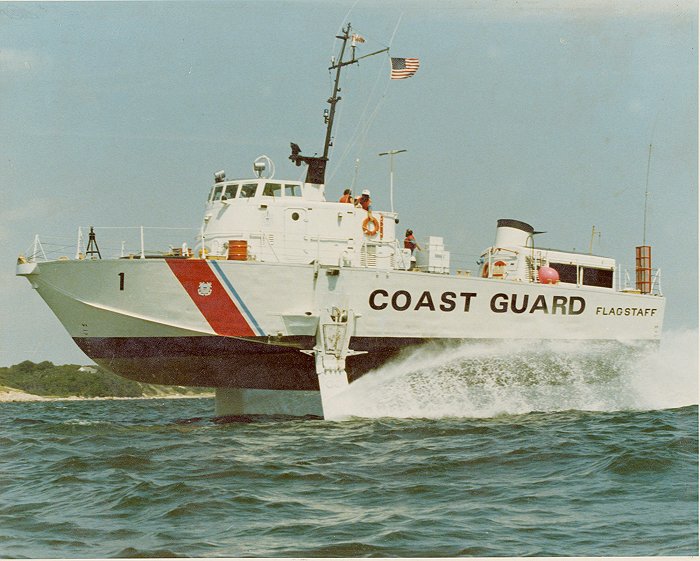
USCGC Flagstaff (WPBH 1) Undergoing Coast Guard evaluations. U.S. Coast Guard photo

1976  The Coast Guard accepted the hydrofoil USS Flagstaff from the U.S. Navy on this date in 1976 for operational testing.  The hydrofoil was based out of Station Woods Hole during the testing.  It was capable of speeds in excess of 45-knots and carried a crew of 13.

HH-60J Air Station Astoria

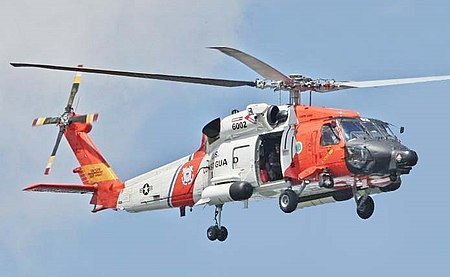
1986  Coast Guard officials signed the contract papers to acquire the Sikorsky H-60 series helicopter to replace the venerable HH-3F Pelicans.

LORAN STATION IWO JIMA

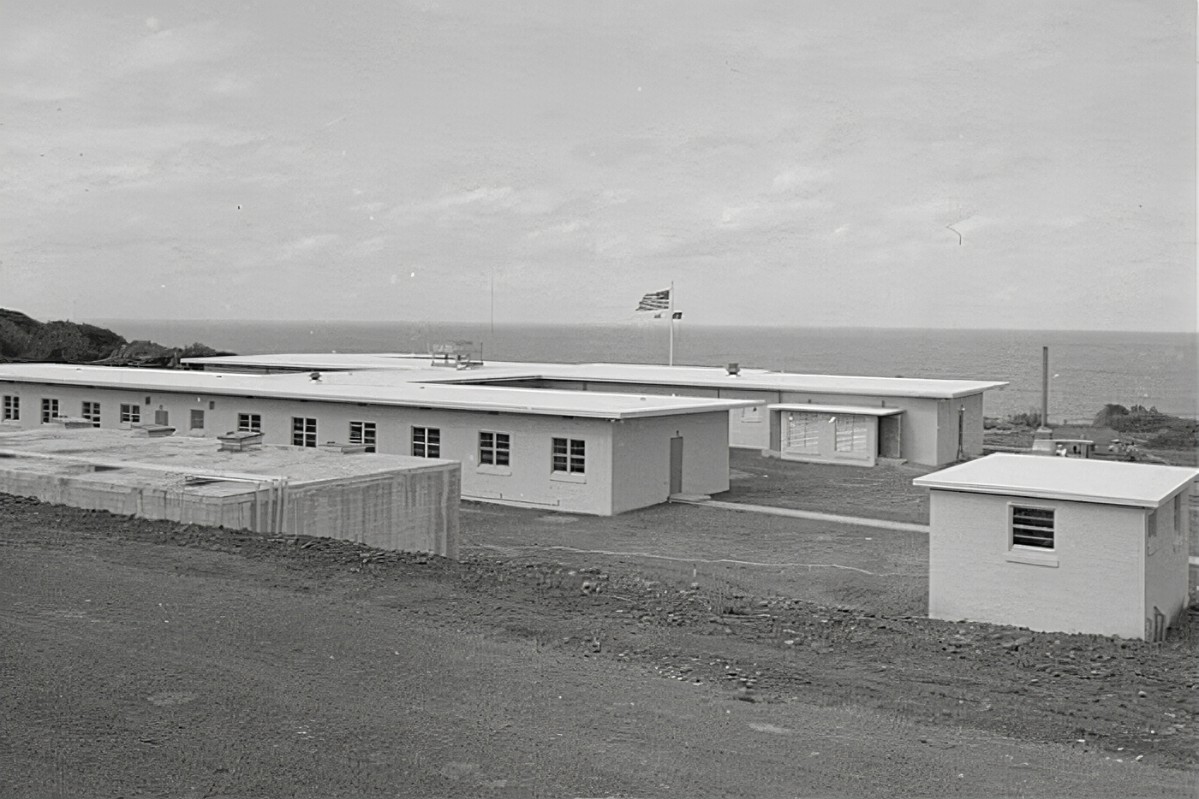
1994  The crew of Coast Guard LORAN Station Iwo Jima decommissioned their station and turned it over to a crew from the Japanese Maritime Safety Agency.  The turnover of all of the Northwest Pacific LORAN chain stations was arranged under a 1992 agreement between the U.S. and Japan.

2014  CGC Rush returned to its homeport of Honolulu, Hawaii, following a successful 72-day deployment in the Central and Western Pacific.  Rush departed in July 2014 and spent two months conducting operations in the Central and Western Pacific.  During the deployment, Rush’s crew coordinated with multiple countries and partner agencies to conduct fisheries boardings in support of the Coast Guard’s living marine resources mission.  Rush also participated in international engagement activities in American Samoa, the Republic of the Marshall Islands, Palau, and the Federated States of Micronesia.  To enhance detection of fishing vessels, Rush embarked a helicopter and aviation detachment from Coast Guard Air Station Barbers Point.  Rush’s crew participated in several community outreach and volunteer events during their patrol that included delivering hygiene and first aid supplies, in support of the U.S. Navy’s Project Handclasp, to several Pacific Island Nations.  Rush’s crew also built a garden to support an abused children’s shelter in Samoa and played sports and games with disabled children in Majuro, Republic of the Marshall Islands.

160730-N-KM939-031 PACIFIC OCEAN (July 30, 2016) – Coast Guardsmen, assigned to U.S. Coast Guard cutter Stratton (WMSL 752), make their way to the guided-missile destroyer USS Stockdale (DDG 106) for a rescue and assistance exercise during Rim of the Pacific 2016. Twenty-six nations, 40 ships and submarines, more than 200 aircraft and 25,000 personnel are participating in RIMPAC from June 30 to Aug. 4, in and around the Hawaiian Islands and Southern California. The world’s largest international maritime exercise, RIMPAC provides a unique training opportunity that helps participants foster and sustain the cooperative relationships that are critical to ensuring the safety of sea lanes and security on the world’s oceans. RIMPAC 2016 is the 25th exercise in the series that began in 1971. (U.S. Navy photo by Mass Communication Specialist 3rd Class David A. Cox)

2016  CGC Stratton returned to its homeport of Alameda after a 114-day deployment spanning the Pacific Ocean from Hawaii to the Arctic.  “Our crew logged more than 19,500 miles during this deployment,” said U.S. Coast Guard Captain Nate Moore, the Commanding Officer of Stratton.  “Their participation in a major international military exercise, support of the Coast Guard’s expanding role in the Arctic domain, and commitment to pursue excellence in mission execution has made this an extremely successful deployment.”  The crew of Stratton participated in two high profile exercises during this deployment: the Rim of the Pacific 2016 (RIMPAC) military exercises and Operation Arctic Shield 2016. Stratton was the third consecutive National Security Cutter to serve as commander of the Combined Task Force 175, a multinational task force comprised of nine ships and 13 aircraft from the United States, China, France, and Indonesia.  Participation in RIMPAC 2016 highlighted the Coast Guard’s unique capabilities and partnerships with Department of Defense entities and international partners along the Pacific Rim.  Stratton participated in training evolutions that included complex ship formations, joint flight operations with the U.S. Navy MH-60S Helicopter Sea Combat Squadron (HSC-21), an aviation detachment from San Diego; live fire exercises; personnel and logistics transfers, and maritime interdiction operations.  Successfully completing this integrated training with HSC-21 and deploying together for RIMPAC 2016 represent the first extended Navy aviation deployment aboard a Coast Guard cutter.  As part of Arctic Shield 2016, the Coast Guard deployed cutters, aircraft, and personnel to northern Alaska to engage in operations encompassing a variety of Coast Guard missions across the North Slope.

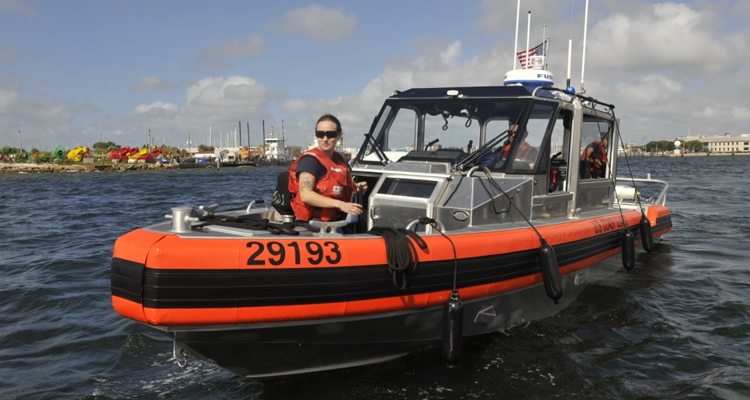
A response boat crew member steers toward the Coast Guard Cutter Reliance during a 52-day patrol in the Atlantic Ocean, Jan. 13, 2021. During the patrol, the crew traveled over approximately 8,631 miles, assisted in the transference of more than 12,564 lbs. of narcotics with an estimated combined street value of $250 million, intercepted 157 undocumented migrants and transferred eight suspected narcotics smugglers from other U.S. Coast Guard cutters operating in the region. (U.S. Coast Guard courtesy photo)

2021  The crew of CGC Reliance (WMEC 615) returned to homeport in Pensacola 29 September, after a 63-day Caribbean Sea patrol. Reliance crew supported the U.S. Coast Guard 7th District throughout their patrol, aiding in missions to interdict and disrupt the flow of illegal drugs and migrant trafficking while supporting national security and strengthening relationships with regional partners throughout the Caribbean.  “I am extremely proud of our crew for their adaptability and professionalism throughout the patrol. Regardless of the mission set, whether that was responding immediately to the aftermath of the devastating earthquake in Haiti by conducting critical port assessments or stopping the flow of illegal narcotics, Reliance was always ready to respond to the needs of our Service and our Nation,” said CDR Robert Hill, commanding officer. Significantly, the crew supported the relief efforts in response to the earthquake in Haiti in August, conducting two separate port assessments on Haitian ports to ensure the harbors were safe for vessels to deliver vital aid and assistance to the region following the disaster. During the patrol, Reliance’s crew intercepted one vessel attempting to smuggle approximately 1,132 lbs. of cocaine and detained a total of four suspected smugglers. Additionally, Reliance received more than 4,291 lbs. of cocaine, ten suspected smugglers, and 96 migrants from other U.S. Coast Guard cutters operating in the region. The crew also rescued 50 Dominican nationals from an unseaworthy vessel off the coast of Puerto Rico and repatriated 158 migrants to the Dominican Republic’s navy. The 63-day patrol was critical in allowing the cutter crew to work on shipboard training, qualifications, and proficiency to maintain operational readiness. This training enabled Reliance’s team to complete a five-day major shipboard training exercise in Mayport, which tested their readiness in all aspects of damage control, seamanship, and navigational procedure.

This Day in Coast Guard History, September 28

Based on the Coast Guard Historian’s timeline, https://www.history.uscg.mil/research/chronology/
With inspiration from Mike Kelso

Coast Guard Cutter Aspen crew reestablishes a buoy while conducting Aid to Navigation operations off the coast of Humboldt Bay. The crew of the Aspen traveled to Humboldt Bay to recover displaced aids to navigation and attempted to restore missing navigational aids to assist mariners in transiting the Humboldt Bay entrance in Samoa, California. (U.S. Coast Guard photo by Seaman Ryan Estrada /Released)

1850  An Act of Congress (9 Stat. L., 500, 504) provided for a systematic coloring and numbering of all buoys for, prior to this time, they had been painted red, white, or black, without any special system.  The act “prescribed that buoys should be colored and numbered so that in entering from seaward red buoys with even numbers should be on the starboard or right hand; black buoys with odd numbers on the port or left hand; buoy with red and black horizontal stripes should indicate shoals with channel on either side; and buoys in channel ways should be colored with black and white perpendicular stripes.”

1850  An Act of Congress (9 Stat. L., 500, 504) gave legal authority for the first time for the assigning of collectors of customs to lighthouse duty. Section 9 of this act authorized the Secretary of the Treasury to assign to any of the collectors of customs, the superintendence of such lighthouses, beacons, lightships, and buoys as he might deem best. The act also stipulated that no collector of customs whose annual salary exceeded $3,000 a year should receive any compensation as disbursing officer in the Lighthouse Establishment and, in no case, was the compensation of the collectors of customs for disbursements in the Lighthouse Service to exceed $400.00 in any fiscal year.

The Coast Guard cutter Boutwell,’ foreground, is seen escorting the Liberian-flagged vessel ‘Command’ Tuesday, Oct. 6, 1998, in international waters. AP Photo by US Coast Guard

1998  An oil spill along the coast of California off San Francisco was traced to the 717-foot Liberian-flagged tanker Command.  A Coast Guard boarding team took samples of her cargo and matched it to that found along the coast.  A Coast Guard spokesman noted: “This is the first time the Coast Guard has pursued an oil spill investigation into the international arena to the extent of stopping and boarding a vessel on the high seas, with permission of the vessel’s flag state.” (“Coast Guard investigators tracked the 717-foot ship and boarded it off the coast of Central America. They allegedly matched the chemical fingerprinting to oil collected from the first fuel leak with the slick that reached the San Mateo coast.”)

This Day in Coast Guard History, September 27

Based on the Coast Guard Historian’s timeline, https://www.history.uscg.mil/research/chronology/
With inspiration from Mike Kelso

Douglas Munro. “The Marines were being driven back to the beach and many did not have radios to request assistance. A single “HELP” spelled out in T-shirts on the ridge near the beach sent a loud and clear signal to those looking on.”

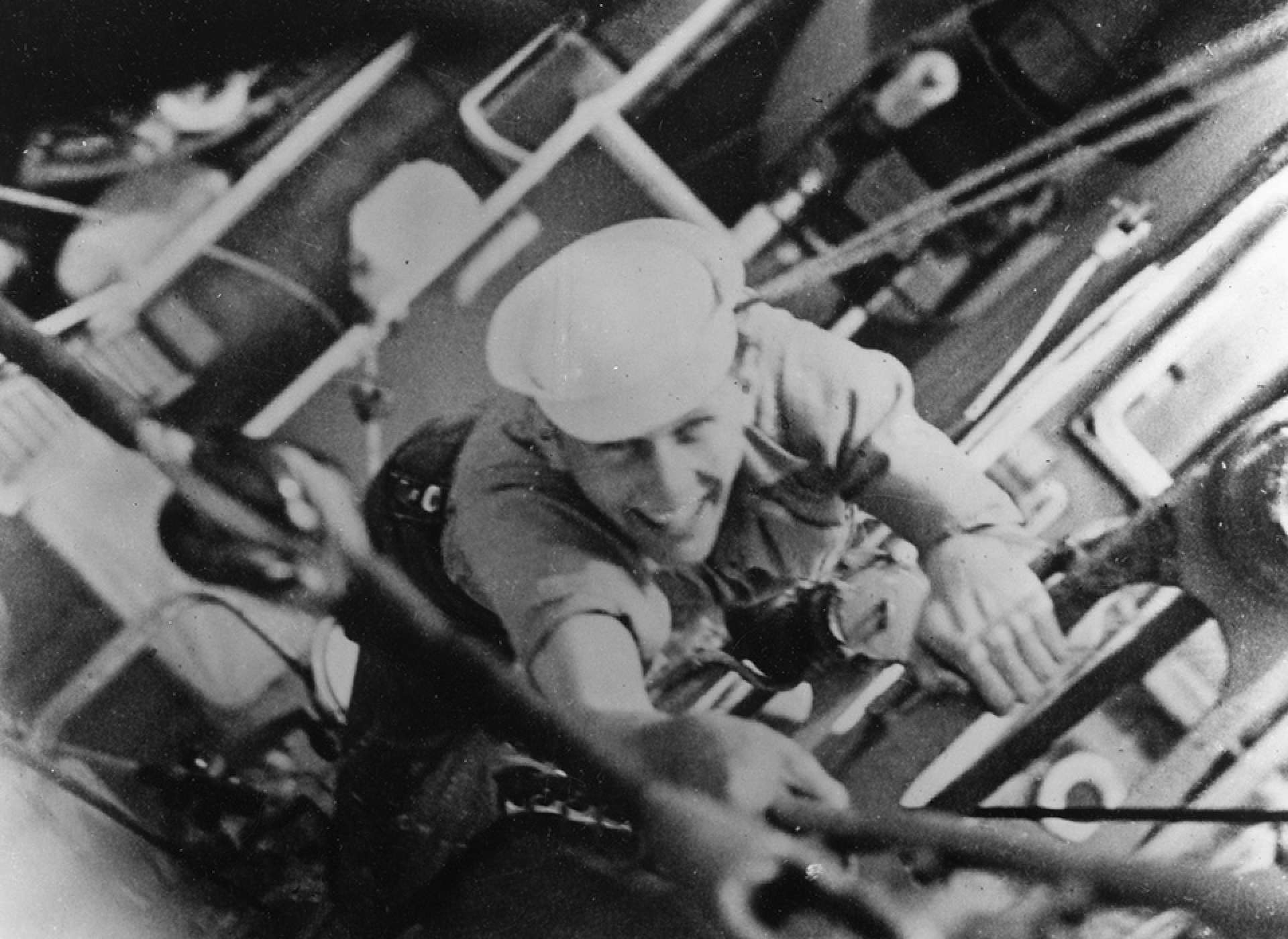
1942  Douglas A. Munro, Signalman 1/c, USCG, gave his life evacuating Marines of the 1st Battalion, 7th Marines, at Matanikau Point, Guadalcanal.  President Roosevelt posthumously awarded Munro the Medal of Honor, the only Coast Guardsmen to be awarded this decoration.  The medal was given to Douglas Munro’s parents, Mr. and Mrs. James Munro of South Cle Elum, Washington, by President Franklin D. Roosevelt in a ceremony at the White House on Thursday, May 27, 1943.  The citation read: “Awarded posthumously to DOUGLAS ALBERT MUNRO, SIGNALMAN FIRST CLASS, U.S. COAST GUARD ‘For extraordinary heroism and conspicuous gallantry in action above and beyond the call of duty as Office-in-Charge of a group of Higgins boats, engaged in the evacuation of a Battalion of Marines trapped by enemy Japanese forces at Point Cruz, Guadalcanal, on September 27, 1942.  After making preliminary plans for the evacuation of nearly 500 beleaguered Marines, Munro, under constant risk of his life, daringly led five of his small craft toward the shore.   As he closed the beach, he [signaled]the others to land, and then in order to draw the enemy’s fire and protect the heavily loaded boats, he valiantly placed his craft with its two small guns as a shield between the beachhead and the Japanese.   When the perilous task of evacuation was nearly completed, Munro was killed by enemy fire, but his crew, two of whom were wounded, carried on until the last boat had loaded and cleared the beach.  By his outstanding leadership, expert planning, and dauntless devotion to duty, he and his courageous comrades undoubtedly saved the lives of many who otherwise would have perished.  He gallantly gave up his life in defense of his country.'”

1950  For the purpose of alleviating attrition during the Korean War, Executive Order 10164 authorized the Coast Guard, in cases where enlisted personnel did not immediately reenlist in the Coast Guard, to extend enlistments for one year, if the date of expiration of enlistment occurred prior to July 9, 1951.  The Coast Guard, however, adopted a policy of permitting the discharge of men upon expiration of enlistment, provided they immediately enlisted in the Coast Guard Reserve.

47-Foot Motor Life Boat (MLB) 47231 from Station Morrow Bay, 4 Dec 2007. Photo by Mike Baird

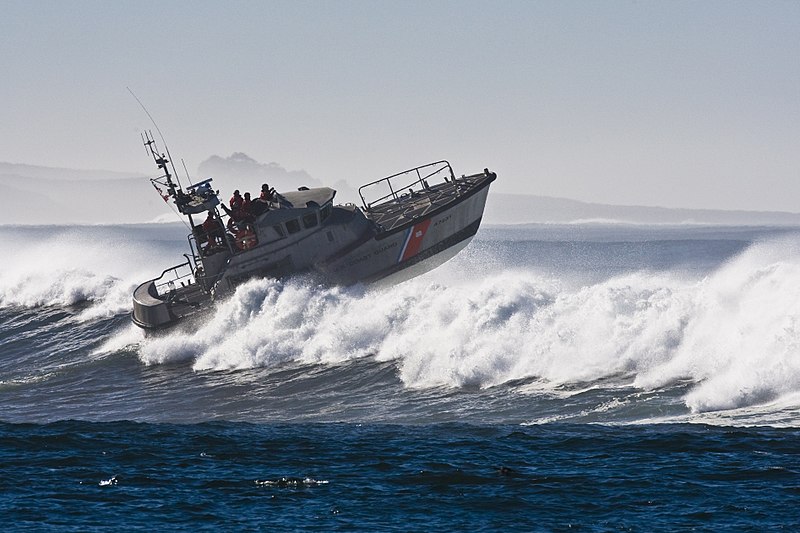
2013  Coast Guard Station Quillayute River, Washington, crews rescued three fishermen from their sinking vessel two miles west of James Island.  The three fishermen were safely transported to Station Quillayute River by one of two 47-foot MLBs that responded to the sinking 50-foot fishing vessel; the second vessel remained on scene until the fishing vessel sank at 11:23 a.m. in 103 feet of water.  The Coast Guard received a call for help from the crew of the fishing vessel Fjord Mist at 08:33 a.m., stating that the vessel was taking on water and sinking.  The two boat crews from Station Quillayute River and an MH-65 Dolphin helicopter crew from Air Station Port Angeles were directed to respond to the sinking vessel.  A dewatering pump was provided to the fishing vessel crew; however, the pump was unable to keep up with the flooding and for the crew’s safety they were removed from the sinking vessel.  The fishermen suffered no reported injuries.

USCGC Dependable (WMEC-626)

2016  CGC Dependable returned to its homeport following a successful 53-day patrol, which focused on training, counter-drug, and migrant missions.  The cutter patrolled from the Florida Straits and throughout the Caribbean Sea performing homeland security missions, which included stopping the flow of illegal migrants and illicit drugs into the United States.  During the patrol, Dependable worked closely with the Royal Bahamian Defense Force, the Navy of the Dominican Republic, and Dutch Caribbean Coast Guard air and surface assets to counter illegal drug smuggling and human smuggling.  On September 22, 2016, Dependable assisted the Royal Bahamian Defense Force in the rescue of nine survivors from a sailing vessel in distress.  Over the course of six hours, Dependable and the Royal Bahamian Defense Force searched for and located the sailing vessel Change of Life aground on a reef south of Great Inagua, Bahamas.  Less than 24 hours later, Dependable, along with Her Majesty’s Bahamian Ship Leon Livingston Smith rescued 10 Cuban migrants who had been stranded for 10 days on Anguilla Cay near Caysal Bank in the Florida Straits.

“MAN ES to provide propulsion systems for Canadian Coast Guard’s AOPSs” –Naval Today

Three AOPSs at pier before the commissioning ceremony for HMCS Margaret Brooke (AOPV-431). Canadian Navy photo

Naval Today reports,

“German manufacturer MAN Energy Solutions (MAN ES) has received a contract to provide propulsion systems for two Arctic offshore patrol ships (AOPSs) for the Canadian Coast Guard.”

The Coast Guard versions of the Arctic Offshore Patrol Ships apparently have the same propulsion system as the preceding six Navy versions, but there are details about the propellers in this announcement that I had not heard before.

“Finally, MAN Energy Solutions will deliver 2 × MAN Alpha-branded five-bladed, bolted propellers that meet PC5 rules and which can even be exchanged underwater. These cater for higher cavitation inception speeds, possible shock impacts, and mission-critical conditions requiring additional redundancy, silent operation with minimal hydro-acoustic signatures, and suppressed underwater-radiated noise, the company highlighted.”

I don’t know what a “bolted propeller” is, but the idea that they can be changed without dry docking sounds like it might be useful, particularly on a vessel that operates in ice where we have had some experience with damaged propellers.

Extreme (Rogue) Waves, an Unrecognized Threat

During rescue operations off Hinchinbrook Island in the Gulf of Alaska on 7 August
1981, a Sikorsky HH-3F helicopter crashed in heavy seas, killing four crew members.

There have been lots of stories of giant waves or walls water much higher than the significant wave height that was prevailing at the time.

I experienced one personally while on a cadet cruise. It was a beautiful summer day on USCGC Mackinaw (WAGB-83) in 1968. I believe we were on Lake Superior. I was sitting on a stool in the CIC, when the ship suddenly took a 54 degree roll. It came out of nowhere.

Only recently has there been scientific study of how and why they form.

The Draupner wave, a single giant wave measured on New Year’s Day 1995, finally confirmed the existence of freak waves, which had previously been considered near-mythical.

Here are some sources:

It now seems they are much more common than previously believed. Preceded by a deep trough, they can be much higher than previously thought, up to four time the significant wave heights, and they can appear suddenly from unexpected directions.

Wikipedia has some historical information, and pointed me to an excellent two-page, 2006 US Naval Institute article, “Monster Waves Threaten Rescue Helicopters” by Senior Chief Ken Freeze, U.S. Coast Guard, (Retired). It does not reflect the most recent research, but it does suggest that they may explain the loss of Coast Guard helicopters hovering low during SAR cases, the sinking of some of the “more than 200 large supertankers and container ships during the last two decades,” and the “estimated two large ships sink every week for undetermined causes.”

The USNI article includes the following,

“David Feit, Chief of Ocean Forecast Branch for the National Oceanic and Atmospheric Administration (NOAA) Ocean Prediction Center…puts the waves in two categories, non-dispersive and dispersive. “A non-dispersive wave is one you can see coming at you. It travels for 6 to 10 miles before it dissipates. [But] the dispersive wave is the one that gets you,” he said. “It is a wave that suddenly seems to come from no where and goes away just as quickly. These waves are the result of the interactions of many different elements taking place at the time and are as forcastable as where the next lightning strike might occur.”

This Day in Coast Guard History, September 26

Miami-class cutter USCGC Tampa photographed in harbour, prior to the First World War. Completed in 1912 as the U.S. Revenue Cutter Miami, this ship was renamed Tampa in February 1916. On 26 September 1918, while operating in the English Channel, she was torpedoed and sunk by the German Submarine UB-91. All 131 persons on board Tampa were lost with her, the largest loss of life on any U.S. combat vessel during the First World War. Official U.S. Navy photo NH 1226 from the U.S. Navy Naval History and Heritage Command

1918 The Imperial German Navy submarine UB-91 torpedoed and sank CGC Tampa with a loss of all hands. Tampa was steaming alone to Milford Haven, Wales, after being detached from ocean escort duty when attacked.  On board were 111 Coast Guardsmen, four U.S. Navy personnel, and 15 British passengers, bringing the total of men lost that night to 130.  One body was recovered and buried at sea while the bodies of two of the Coast Guard crew washed ashore in Wales and were buried in a small church yard in Lamphey, Pembrokeshire, Wales.  One body was returned to the family in the U.S. after the war while one, who was never identified, is still interred in Lamphey to this day.  Local residents care for the grave.

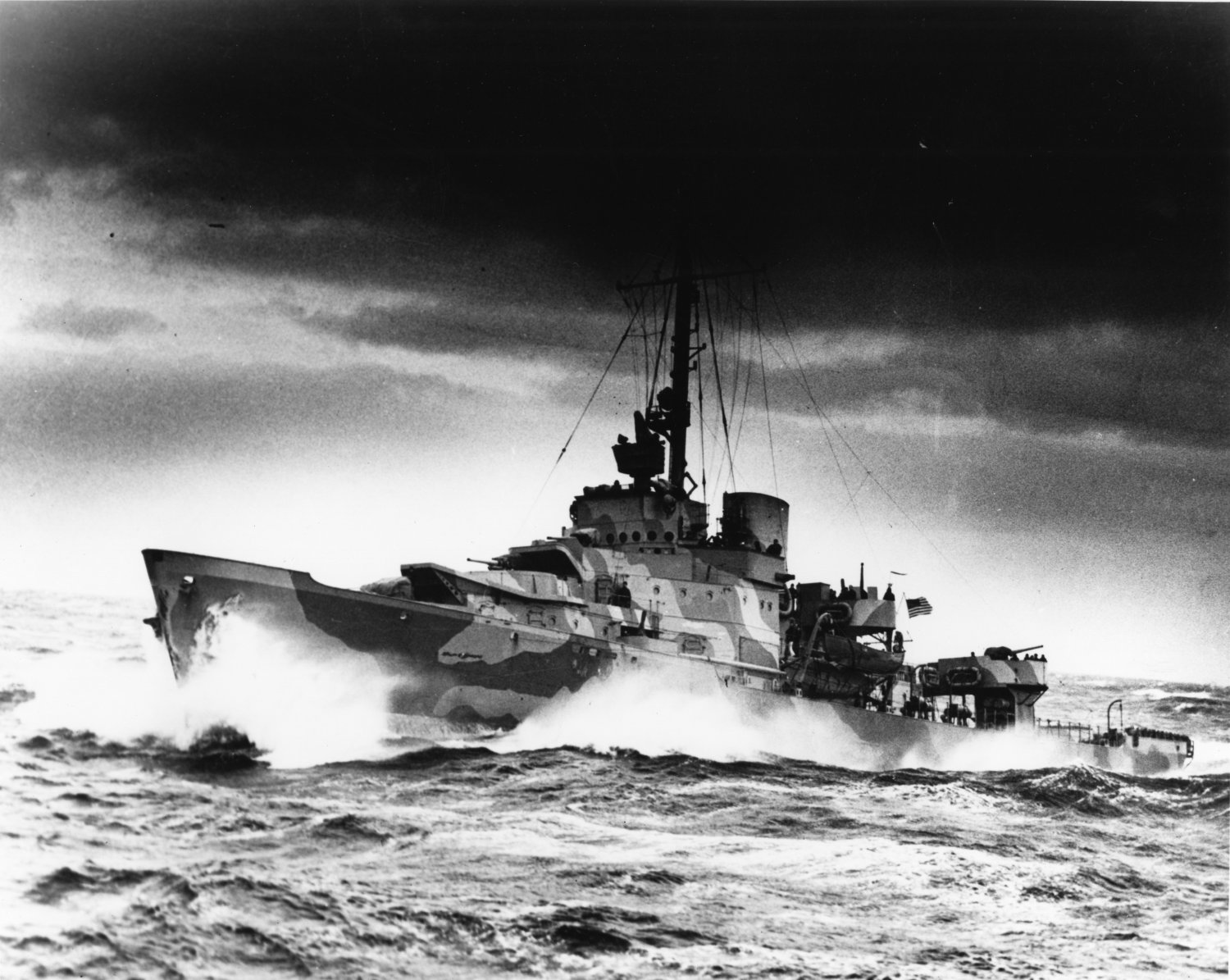
USCGC Ingham (WPG-35) underway in heavy seas, circa 1941-1944, location unknown.
US Coast Guard photo # 2000225945

1942 CGC Ingham rescued eight survivors from the torpedoed SS Tennessee.

1994 Coast Guard forces departed for Haiti in support of Operation Restore Democracy.

A boat crew from Coast Guard Station St. Petersburg, Florida, conducts training near the station on a new 29-foot response boat-small II Aug. 25, 2014. The Coast Guard placed a delivery order for 20 additional boats Jan. 12, 2018. U.S. Coast Guard photo by Seaman Meredith Manning.

2011 The U.S. Coast Guard awarded a delivery order on this date to Metal Shark Aluminum Boats for the production of 38 Response Boats-Small (RB-S). “The RB-S will have an approximate length of 28 feet, be capable of at least 40 knots, a minimum range of 150 nautical miles and accommodate a crew of four.  The RB-S will also have a standardized communications and navigation suite as well as an increased emphasis on ergonomics and crew comfort.  The current RB-S fleet was originally procured in 2002, following the attacks of September 11, 2001.  In addition to bringing a higher level of standardization to the Coast Guard’s small boat fleet, the RB-S has proven to be a tremendous asset in a wide variety of Coast Guard missions, especially ports, waterways and coastal security.”

Coast Guard Academy Cadets climb the rigging of Coast Guard Cutter Eagle (WIX 327) while underway July, 30, 2024. The Eagle serves as a classroom at sea for Academy Cadets and future leaders in the Coast Guard. (U.S. Coast Guard photo by Petty Officer 3rd Class Matt Thieme)

2014 CGB Eagle began the first phase of a four-year project to extend the cutter’s service life and recapitalize major ship systems at the Coast Guard Yard in Curtis Bay, Maryland.  The scheduled work included lead ballast replacement, berthing area renovations, and inspection and maintenance of the rudder, hull and rigging.  On this same day the Yard also marked the completion of the Mission Effectiveness Project (MEP) to modernize the Coast Guard’s medium endurance cutter fleet.

The Coast Guard Cutter Sapelo transfers 38 Haitian migrants to the Coast Guard Cutter Bear Sept. 9, 2013, north of the Dominican Republic as part of the repatriation process, which included a second transfer of the migrants, who repatriated, to the Coast Guard Cutter Vigilant and turned the migrants over to authorities in Cap-Haitien, Haiti, Sept. 12, 2013. The 38 migrants originally belonged to a group of 41 migrants interdicted by the Coast Guard Cutter Sapelo Sept. 7, 2013, near Mona Island, Puerto Rico. Three of the migrants, of Dominican Republic nationality, in the group were taken into custody by Customs and Border Protection authorities in Puerto Rico. (U.S. Coast Guard photo)

2014 CGC Bear returned to its homeport in Portsmouth, Virginia following a two-month long patrol in the Western Caribbean Sea. During the patrol, Bear’s crew coordinated with multiple countries in Central and South America, along with partner agencies to stem the flow of illegal drugs into the United States.  The unified effort resulted in the interdiction of multiple suspected drug smugglers and vessels transporting approximately 3,519 kilograms of cocaine.  In addition to its seizures, the crew of Bear saved two Nicaraguan fishermen that were stranded at sea for over two weeks.  Bear’s interdictions were a part of Operation Martillo, which is an international effort to counter illicit trafficking in the Caribbean Sea.

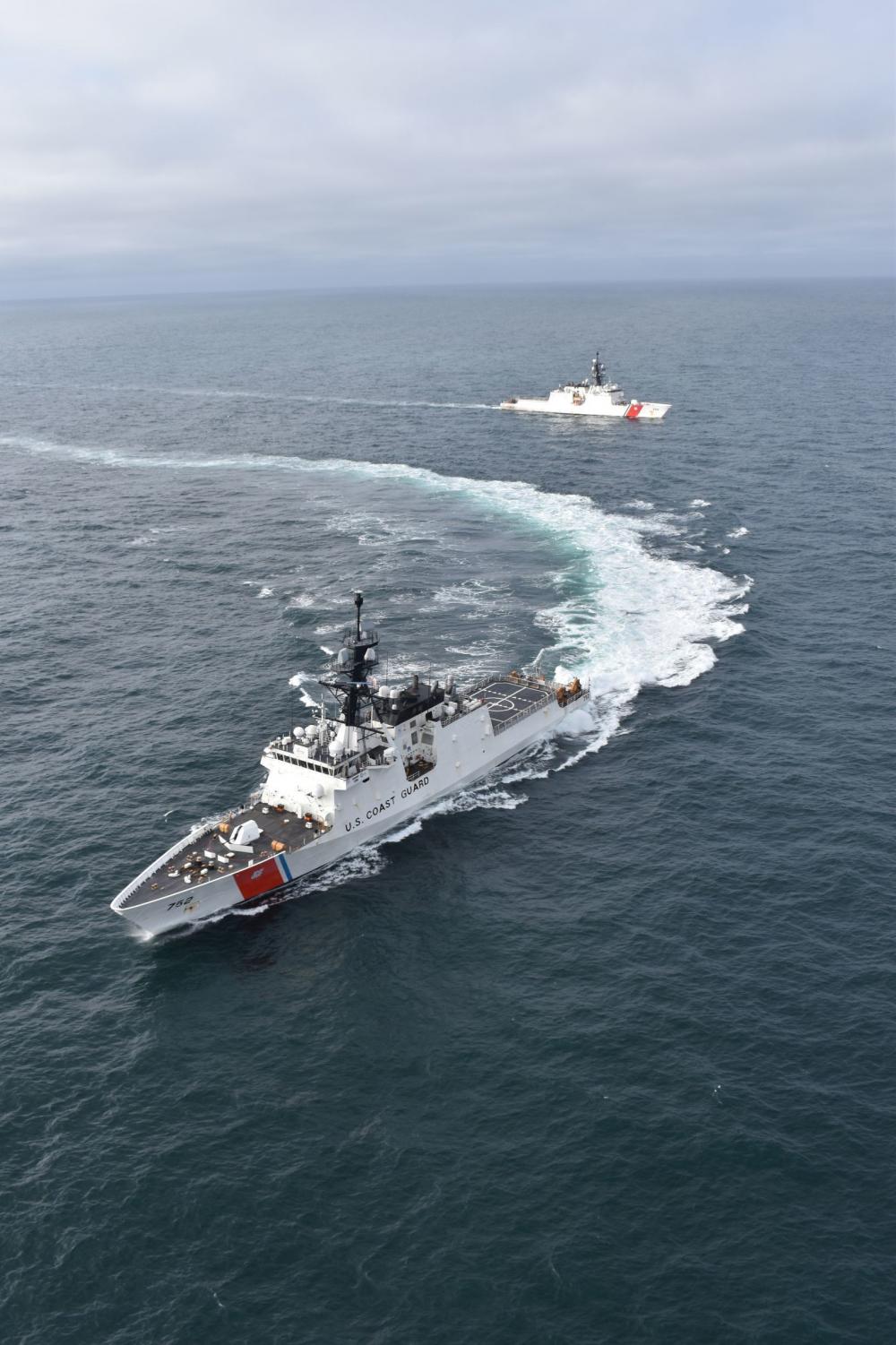
U.S. Coast Guard Cutters Stratton (WMSL 752) and Kimball (WMSL 756) steam in formation while patrolling the U.S.-Russian Maritime Boundary Line (MBL), in the Bering Sea, Sept. 26, 2022. This marked the first time two national security cutters jointly patrolled the MBL above the Arctic Circle. (U.S. Coast Guard courtesy photo).

2022 CGC Stratton (WMSL 752) and CGC Kimball (WMSL 756) jointly patrolled the US-Russian maritime boundary line in the Arctic Circle. Stratton and Kimball performed a series of tactical maneuvers following standard NATO phraseology. The operation furthered US national security strategy and projected US sovereignty in the Arctic Circle. Following the evolution, Kimball turned south to transit the Bering Strait and Stratton turned north towards the Chukchi Sea to continue on its patrol throughout the Arctic Ocean.

“Mission success! Coast Guard exceeds 2024 recruitment target” –MyCG

Coast Guard Chief Petty Officer Jenna Coffey, a production recruiter at Recruiting Office D.C., talks about enlistment opportunities and incentives in Washington, D.C., September 19, 2024. (U.S. Coast Guard photo by Petty Officer 1st Class Zachary Hupp)

Below is a story from MyCG that discusses how the success was achieved, but in some respects, it is not as detailed as an earlier report from CBS. For instance, it does not mention that the maximum age for admission has been raised from 27 to 42, but taken together the two reports provides a good picture of how this success was achieved. Compared to what has been happening in other armed services, this is a remarkable turnaround. That is why it was national news.


Sept. 25, 2024

Mission success! Coast Guard exceeds 2024 recruitment target

By Zach Shapiro, MyCG Staff

For the first time since 2007, the Coast Guard has achieved all its recruiting missions for enlisted active duty, the Reserve, and Non-Academy Officer Candidate School (OCS) accessions. Thanks to Coast Guard Recruiting Command’s perseverance and coordination, the Coast Guard has accessed over 4,400 active duty members.

“This achievement would not have been possible without the efforts of our workforce and senior leadership’s investment in this endeavor,” said Capt. Ben Keffer, commanding officer of Coast Guard Recruiting Command (CGRC). Updated Coast Guard policies on the maximum recruiting age and tattoos, among others, have empowered recruiters to cast a wider net in their efforts.

Since 2022, the Coast Guard has opened new recruiting offices and added 95 new recruiting billets to process applicants. Today, the service has 72 traditional recruiting offices, 13 detached duty recruiting offices, 389 production recruiters, and four virtual recruiters. “I joke with my recruiters that I’ve still recruited zero people, but they’ve done over 4,400, so it’s a huge shout out to them, because the level of effort it takes to recruit people is no small feat,” Keffer emphasized.

The Coast Guard workforce and community has also had a hand in this success. Through programs like Scout Talent and Refer (STAR), which provides $1,000 for any Coast Guard member or employee who refers a recruit, and the bonus structures and incentives for new applicants, members and civilian employees play a critical role in spreading the word about the service.

“By exceeding this year’s recruiting mission, we are building a stronger Coast Guard, leaving the service better prepared for tomorrow’s challenges,” Keffer noted. “But the work isn’t over. We need your help to build this success into 2025 and beyond. We encourage Coast Guard members and employees to keep telling your friends about careers in the Coast Guard and to keep up their great work, which represents the Coast Guard well in our communities and nationwide.”

-USCG-

In the news: 
Resources: 

This Day in Coast Guard History, September 25

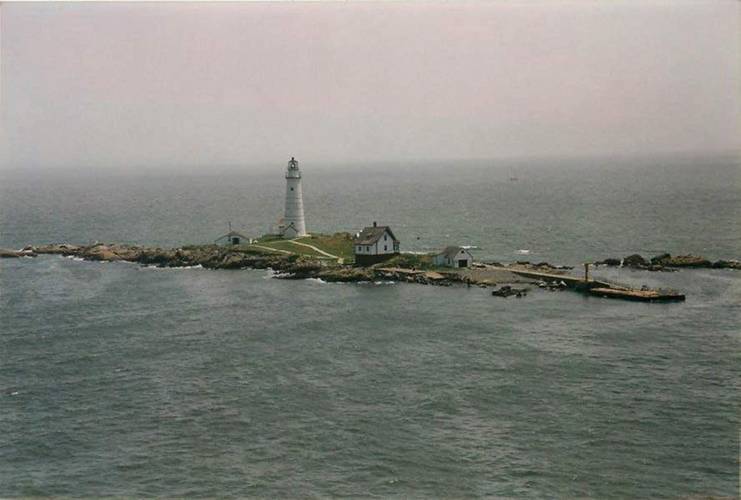
Boston Light, America’s First Aid to Navigation, now over 300 years old.

1916 The beginning of lighthouse work in the United States was commemorated, when a bronze tablet was unveiled at the Boston Light Station on the 200th anniversary of its establishment.

Cutter Yocona towing environmental bouy (EB-16) off of San Diego underway for deployment. May 19,1975.

1959 A U.S. Navy P5M seaplane that had ditched off the Oregon coast was located through radio contact by a Coast Guard UF-1G Albatross aircraft.  After sighting 10 survivors in two rafts 110 miles offshore, the Albatross crew directed CGC  Yacona to the scene, where a successful night rescue was affected.

“Coast Guard Cutter Forward and Coast Guard Cutter Bear, homeported in Portsmouth, Virginia, finish an at-sea transfer while underway on a two-month patrol. Coast Guard Cutter Forward returned to homeport on April 10, 2021.” (U.S. Coast Guard photo)

1980 CGC Bear was launched at Tacoma Boatbuilding Company, Inc., in Tacoma, Washington.  Bear was the first in its class of new 270-foot medium endurance cutters.  It was sponsored by Mrs. John B. Hayes, the wife of the Commandant. All thirteen ships of the class are still in Coast Guard service.

2014 The Commandant, ADM Paul Zukunft, signed the U.S. Coast Guard Western Hemisphere Strategy.  The Strategy emphasized that although the Coast Guard performs “diverse maritime missions over vast geographic areas” the Coast Guard’s primary operating area “will remain in the Western hemisphere.”

2016 The U.S. Coast Guard found an overturned boat following a boating incident on Government Cut that left three deceased, including Miami Marlins’ baseball pitcher José Fernández.  A boat crew from Coast Guard Station Miami was heading out on a law enforcement patrol at approximately 0330 when they passed a jetty along Government Cut and discovered an overturned 33-foot center console boat on the jetty with three deceased aboard.

“European navies chase the white whale of torpedo-busting torpedoes” –Defense News

Defense News reports on the progress, or lack of progress, on the European SeaSpider anti-torpedo torpedo.

I think my post “What Does It Take to Sink a Ship” may have been quoted,

“Torpedoes have historically been one of the main threats to surface vessels, with the weapon involved in more than half of sinkings of U.S. Navy ships during World War II, according to U.S. Coast Guard data cited by Dutch researchers at TNO, a government-linked research organization.”

My summary data on 92 sinkings of major US Navy surface warships during WWII was,

  • 38 by torpedoes alone (41.3%)
  • 16 by suicide planes (17.4%)
  • 12 Bombs alone (13%)
  • 11 by gunfire alone (12%)
  • 6 by torpedoes and gunfire (6.5%)
  • 5 by mines (5.4%)
  • 4 by torpedoes and bombs (4.3%)
  • 1 by bombs finished off by gunfire (1.1%)

As can be seen, torpedoes were involved in 48 of the 92 sinkings (52%).

With so little apparent progress on the European system I wonder if they are waiting to see if the Very Light Weight Torpedo, also called the Compact Rapid Attack Weapon (CRAW), will be successful as an anti-torpedo torpedo.

Unfortunately, I have not heard anything about the CRAW since early 2023 when Raytheon was awarded a contract to build 18 prototypes for use on submarines.