
With an amazing grasp for the obvious, the GAO has once again reported (pdf) that the Coast Guard is not getting, or expected to get, the money it needs to fund its program of record in a timely manner.
“…the Coast Guard’s acquisition needs are not affordable based on past and expected future funding levels.”
Basically they are repeating their findings for the past several years, and as always their solution to not making the goal, is to move the goal post.
“GAO found in June 2014 that budget officials have acknowledged that the Coast Guard’s current plan for developing new, more capable assets is not affordable given current and expected funding levels. For the past 5 years, GAO has found that the Coast Guard’s acquisition funding has fallen short of what it estimates it needs to fully recapitalize its assets. The Coast Guard has responded by annually delaying or reducing its capability. The Coast Guard and the Department of Homeland Security (DHS) have taken some steps to address these affordability issues, but as yet these efforts have not led to the types of significant trade-off decisions among resources and needs that would improve the long-term outlook of the Coast Guard’s acquisition portfolio.”
Frankly the Congressional Research Service, reports written by Ronald O’Rourke, are far more informative, and despite his position mandated neutrality, more supportive of the Coast Guard, but still this document does have some interesting observations.
Fixed Wing Aircraft
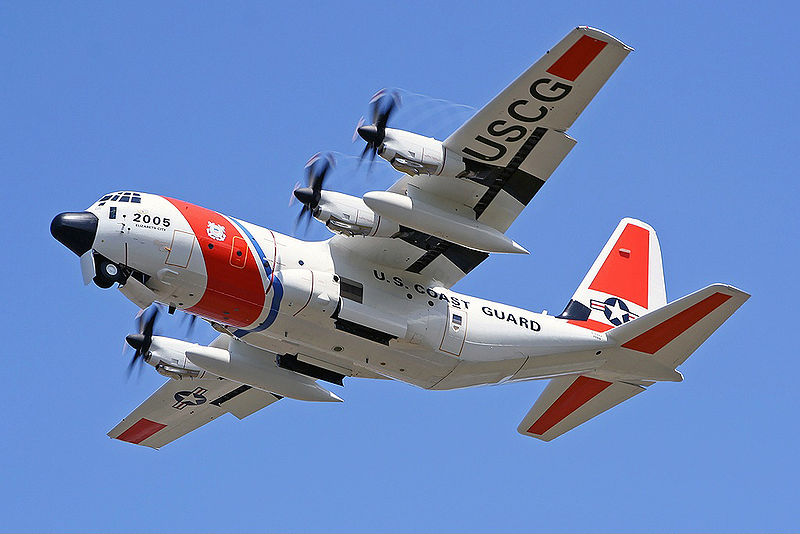
The Coast Guard has a Program of Record goal of 52,400 flight hours for its fixed wing assets. Currently the fleet performance is 38 percent short of this flight hour goal, but even if all currently planned assets are procured, we will still be 18 percent short of the flight hour goal. How come? First, instead of getting 36 C-144s we will be getting only 32 aircraft, 18 C-144s and 14 C-27J. The award winning C-144 acquisition program has been suspended even though the Coast Guard knew they were going to be at least four planes short. Second, instead of the 1,200 hours per year per Medium Range Search (MRS) Aircraft, the Coast Guard has decided it can expect only 1,000 hours per year.
The GAO reports the Coast Guard plans to complete a fixed-wing fleet mix analysis by 2019, which will revisit the current flight hour goal.
“The Coast Guard has begun to rewrite its mission needs statement and concept of operations and plans to complete this effort by 2016. The Coast Guard plans to complete its full fixed-wing fleet mix analysis, which includes the assets it estimates will best meet these needs, by 2019, but has not set forth specific timeframes for completing key milestones. We recommended in our March 2015 report that the Secretary of Homeland Security and the Commandant of the Coast Guard inform Congress of the time frames and key milestones for completing the fleet mix study, including the specific date when the Coast Guard will publish its revised annual flight hour needs and when it plans to inform Congress of the corresponding changes to the composition of its fixed-wing fleet to meet these needs. DHS concurred with our recommendation but did not provide specific time lines for meeting this recommendation. The bill for the Coast Guard Authorization Act of 2015, introduced in April 2015, requires a revised Coast Guard fixed-wing aircraft fleet mix analysis to be submitted to congressional transportation committees by the end of fiscal year 2015.”
OPCs/WMECs:
The report raises for the first time I have seen in official documentation, the possibility that some WMECs will have to be retired well before replacement. They report that currently there is no plan to extend the service life of these legacy assets and no money programmed in the five year capital investment plan. As a result the CG “faces a potentially significant capability gap.”
NSCs:
All though the National Security Cutters have all been funded, they may yet adversely effect future AC&I budgets.
As we also reported in June 2014, further changes may be needed due to issues discovered through operating the NSC, which could result in the Coast Guard having to spend even more money in the future to ensure the NSC fleet meets requirements and is logistically supportable.
“For example, the cutter is experiencing problems operating in warm climates, including cooling system failures, excessive condensation forming puddles on the deck of the ship, and limited redundancy in its air conditioning system affecting use of information technology systems. According to operational reports from a 2013 deployment, the Commanding Officer of an NSC had to impose speed restrictions on the vessel because of engine overheating when the seawater temperature was greater than 68 degrees. In addition, cold climate issues on the cutter include a lack of heaters to keep oil and other fluids warm during operations in cold climates, such as the arctic. Further, Coast Guard operators state that operating near ice must be done with extreme caution since the ice can move quickly and the NSC could sustain significant damage if it comes in contact with the ice. In June 2014 we reported that while senior Coast Guard officials acknowledged that there were issues to address, they stated that the Coast Guard has not yet determined what, if any, fixes are necessary and that it depends on where the cutter ultimately operates.”
Webber Class WPCs:
In April 2015, the Coast Guard accepted delivery of the 13th of 58 FRCs and now has 32 of the cutters on contract. As we reported in April 2015, the Coast Guard is introducing additional competition into this purchase by recompeting the construction contract for the remaining 26 vessels; this contract is planned to be awarded in fiscal year 2016. According to the Coast Guard, the FRC has already been used to rescue over 400 undocumented immigrants, seize nearly $20 million in contraband, and apprehend several suspected drug smugglers. The fiscal year 2016 Capital Investment Plan includes $1.47 billion over the next 5 years to continue purchasing these assets by which time the Coast Guard plans to have fielded 42 FRCs.
The Future:
As I noted earlier, we have to look beyond these programs and the GAO addresses this concern.
“…senior Coast Guard officials have stated a need for over $2 billion per year, but the Coast Guard has received $1.5 billion or less over the past 5 years. The President’s budget requests $1 billion for fiscal year 2016. In an effort to address the funding constraints it has faced annually, the Coast Guard has been in a reactive mode, delaying and reducing its capability through the annual budget process but without a plan to realistically set forth affordable priorities. The Coast Guard, DHS, and Office of Management and Budget officials have acknowledged that the Coast Guard cannot afford to recapitalize and modernize its assets in accordance with the current plan at current funding levels. Efforts are underway to address this issue, but so far, these efforts have not led to the difficult trade-off decisions needed to improve the affordability of the Coast Guard’s portfolio. We recommended in 2014 that the Coast Guard develop a 20-year fleet modernization plan that identifies all acquisitions needed to maintain the current level of service—aviation and surface— and the fiscal resources needed to buy the identified assets. We recommended that the plan should consider trade-offs if the fiscal resources needed to execute the plan are not consistent with annual budgets. The Coast Guard concurred with our recommendation, but its response did not fully address our concerns or set forth an estimated date for completion.
“In June 2014, we also reported that the Coast Guard faces a potentially expensive recapitalization of other surface assets, such as the polar icebreakers and its fleet of river buoy tenders, as these assets continue to age beyond their expected service lives and, in some cases, have been removed from service without a replacement. These issues pose additional potential challenges to the affordability of the Coast Guard’s overall acquisition portfolio.”
Icebreakers—According to program officials, due to funding constraints, the Coast Guard chose not to invest in either of its heavy icebreakers as they approached the end of their service lives. Thus, both heavy icebreakers were out of service from 2010 to 2013 and the Coast Guard could not complete missions, such as resupplying a science laboratory in Antarctica. The Coast Guard has recently returned one of these heavy icebreakers back to service, but still has one fewer heavy icebreaker than it has historically operated and several fewer than it needs, according to the Coast Guard’s June 2013 heavy icebreaker mission need statement. The fiscal year 2016 President’s Budget asks for $4 million for continued preparatory studies to develop a cost estimate, among other things. The associated fiscal year 2016 Capital Investment Plan contains $166 million for polar icebreakers over the next five years but does not identify what this money is for, though it is far short of the estimated $831 million needed to build the vessel. The Coast Guard is currently working with several U.S. government agencies to develop requirements and establish a plan to build a heavy icebreaker that could be jointly funded by the U.S. government agencies that need the asset to accomplish its missions.
River Buoy Tenders—”The Coast Guard is facing a gap in its river buoy tender fleet and has yet to formalize an acquisition project to replace this fleet—a project estimated to cost over $1.5 billion.”
HH-60 and HH-65 Helicopter Fleets—”The HH-60 and HH-65 helicopter fleets will approach the end of their lifespans between 2022 and 2026 and will need to either be replaced or have a service life extension performed to keep them operational. Regardless of the future path, significant acquisition dollars will be required to maintain annual flight hours for the next 20 years, according to Coast Guard program officials.”
Observations:
When the GAO says, “We recommended in 2014 that the Coast Guard develop a 20-year fleet modernization plan that identifies all acquisitions needed to maintain the current level of service (emphasis applied, Chuck)—aviation and surface— and the fiscal resources needed to buy the identified assets” it gives the impression they are not looking at the benefit side of the cost/benefit equation. It also looks like they may be ignoring the changes in the world since the legacy fleet was built. After all, when the 210s and 378s were built there, was no Exclusive Economic Zone and the territorial sea was 3 miles. 9/11 was still decades in the future. Our Navy was many times larger and it had units based all along the coast in almost every major port.
On the other hand they may be giving us a criteria for defining how fast existing resources should be provided. If we say resource hours should never drop below those provided by the legacy fleet, then really it looks like we need to build faster.
The units that the Coast Guard is currently building are obviously more capable than the units they are replacing and with the possible exception of the National Security Cutter (NSC), they are also going to be more expensive to man and operate.
The Bertholf class NSCs are about 50% larger than the 378s, but at least they have a smaller crew.
The OPC appear to be likely at least 50% larger than the 270 and possibly as much as three times the size of the 210s. They will likely have crews at least as large as the 270s, and significantly larger than the 210s.
The Webber class are more than twice as large as the Island class and have a crew almost half again as large.
I do believe there are reasons for this apparent growth, but it means the Coast Guard does need more money than it has in the past. Coast Guard leadership may have felt that they had been assured that funding for these more expensive assets would be available, given approval of the original Deepwater program and the revised post 9/11 upgraded Deepwater program, but while the money may come, the most expensive part of the program, the offshore patrol cutter, is only being funded in dribs and drabs.
Too often it seems we emphasize the good things the service has done for the country and left unsaid the failures, lost opportunities, and the very real risks we take when the service is not properly funded.
It appears that for several years, perhaps more than a decade, the resource hours from Coast Guard assets, may fall below those of the legacy fleet, either because assets must be decommissioned without replacement, or because of unplanned maintenance requirements. If we could establish a consensus that at least resources hours available should not be allowed to fall below those that were provided by the legacy fleet, we would have a convincing argument for more reasonable funding levels.



 Chuck Hill's CG Blog