No Helicopters on Cutters in Alaska / More Helicopters Will Operate from Forward Bases

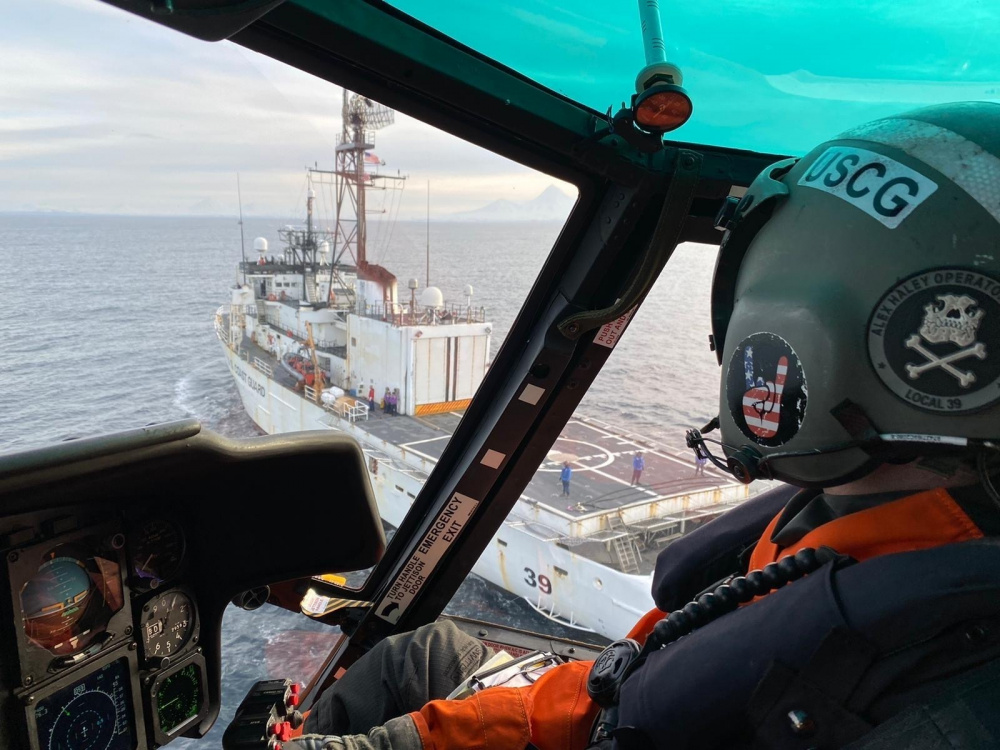
An MH-65 Dolphin helicopter crew based out of Air Station Kodiak and
deployed aboard Cutter Alex Haley, prepares for a helicopter in-flight refueling at sea evolution with the cutter crew during a search and rescue case near Dutch Harbor, Alaska, Wednesday, Dec. 30, 2020. The crew hoisted an injured fisherman from the vessel Magnus Martens and placed him in the care of awaiting Guardian Flight Alaska personnel for further transport to Anchorage. (U.S. Coast Guard photo by Lt. Benjamin DeGroot)

National Defense reports,

“With an aging aircraft fleet under scrutiny and the phase-out of an older airframe, the Coast Guard has stopped sending its cutters to sea in the Arctic with helicopters onboard.”

We are not just talking about icebreakers. When a US government entity says the “Arctic” they include the  Aleutians and Bering Sea, even though they are below the Arctic Circle so this really means no helicopters on any Coast Guard vessels in District 17 (Alaska).

http://www.state.gov/e/oes/ocns/opa/arc/uschair/258202.htm . This map of the Arctic was created by State Department geographers as part of the U.S. Chairmanship of the Arctic Council.

Cutters carried helicopters for two reasons, for reconnaissance and as a mobile SAR air station. All the National Security Cutters (NSC) now have unmanned air systems (drones) that are more effective search aircraft than helicopters. Hopefully USCGC Alex Haley (WMEC-39) (really a high endurance cutter) which is home-ported in Kodiak will also be so equipped if it is not already.

Rather than having helicopters on ships which are increasingly going North of the Bering Strait, far from most fishing vessels, the helicopters will be forward deployed.

“Coast Guard District 17 and Air Station Kodiak maximized aviation forward operating sites staffed by shipboard landing capable MH-60T crews in Kotzebue, Cold Bay and Prince William Sound, a model that streamlines search-and-rescue response and enables flexible movement of the helicopter crews in support of deployed Coast Guard cutters and seasonal mission demands,” officials said in a statement provided to National Defense.

This will keep the helicopters nearer the concentrations of population and fishing vessels. Because they are shipboard capable MH-60Ts, they will have longer range than the H-65s that had been deployed on ships, and will still be able to use cutters to extend their range by HIFR (Helicopter In Flight Refueling) or by transit on a cutter’s flight deck to get within range.

The announcement makes it sound like the Coast Guard will be less capable of responding than they were before, but really this seems to be a net improvement based on the incorporation of more capable assets–Unmanned Air Systems and more numerous longer ranged helicopters.

Officials with Coast Guard headquarters said the change was made in summer 2024 as Air Station Kodiak phased out four retiring MH-65 Dolphin helicopters and transitioned to the newer MH-60T Jayhawk. The base now operates six Jayhawks and will eventually have nine, officials said. (emphasis applied–Chuck)

The trade-off is that cutters will not have helicopters immediately available on board, but having a cutter with helicopter in the right place at the right time was always a matter of luck.

(I have to wonder why this information was not included in a Coast Guard news release. I looked for it as a CG news release and found nothing.)

Thanks to Peter for bringing this to my attention.

“Embracing opportunities for resilient logistical infrastructure in the Arctic” –The Watch

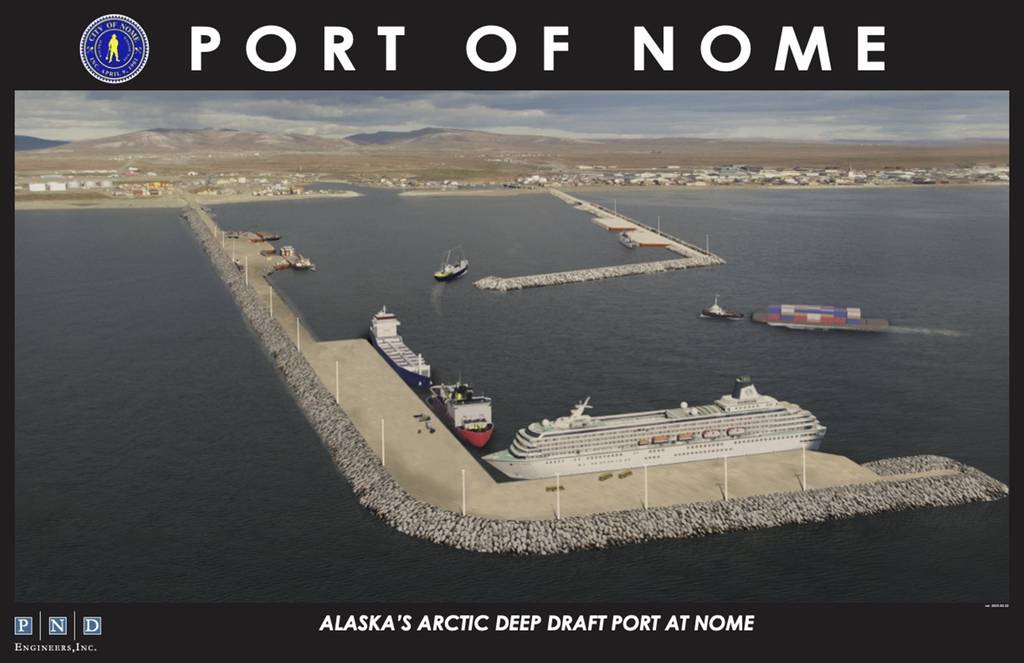
This rendering provided by the City of Nome shows how the Port of Nome, Alaska, will appear following an expansion project that will cost more than $600 million. Shipping lanes that were once clogged with ice for much of the year along Alaska’s western and northern coasts have relented thanks to global warming, and the nation’s first deep water Arctic port should be operational in Nome by the end of the decade. (PND Engineers Inc./City of Nome via AP)

Without offering much detail, the NORTHCOM on-line magazine “The Watch” reports the intention to invest in improvements in three Alaska ports, Port of Alaska (Anchorage), Valdez, and Nome.

None of these ports are above the Arctic Circle, but Nome is very close.

Only the development of a deepwater port at Nome appears to be driven by national security considerations, though modernization in Anchorage and Valdez may offer incidental logistical benefits.

We have been talking about a deepwater port in or near Nome since 2018.

I would not be surprised to see Nome as a future Coast Guard buoy tender homeport and seasonal air station.

Nome’s proximity to the Bering Strait and Russia, all within 150 miles, makes it strategically important.

Port of Alaska (Anchorage). Traveler photo submitted by 2013TravelinFool (Jul 2017)

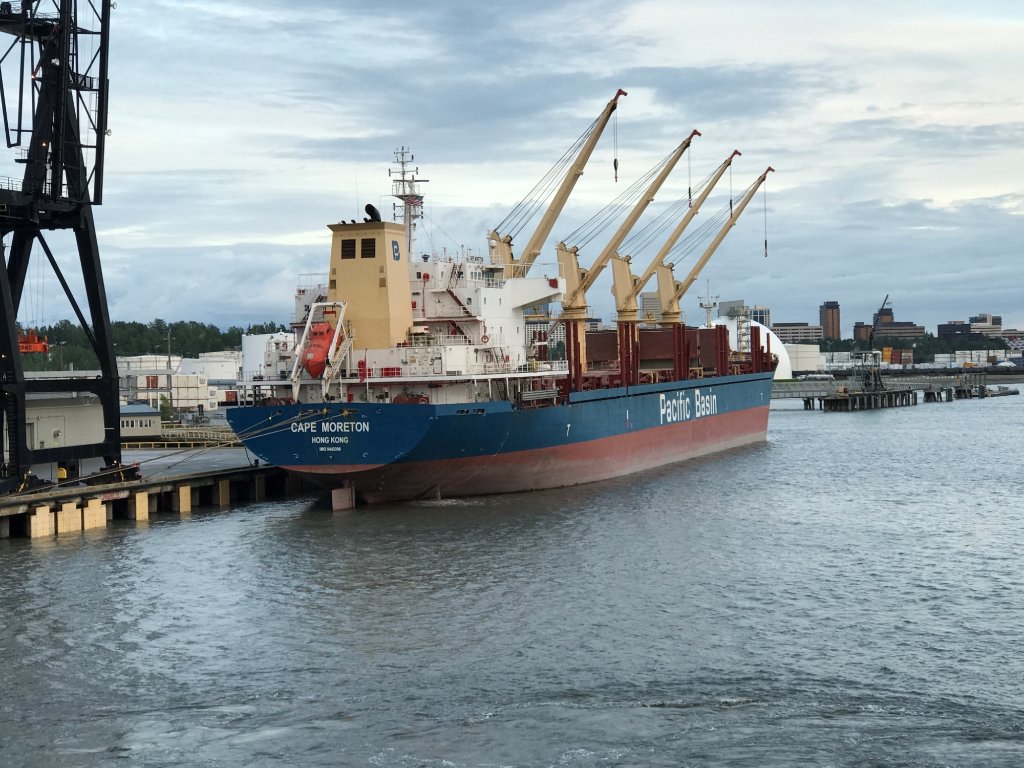
Port of Alaska (Anchorage) is the only designated Strategic Port in Alaska.  It appears the upgrades are replacements for existing facilities including updated technology.

There is a comprehensive, 121-page plan for Valdez on-line here. It includes some upgrades of the container port but envisions minimal Corps of Engineers support and involvement. Most of the work seems to be in support of tourism, fishing, and local marine industry.

“Preserving Alaska’s living marine resources” –D17

USCGC Bertolf class National Security Cutter off Unimak Island, Aleutians, Alaska

Below is a summary of District 17’s Living Marine Resources conservation and management efforts. There is also information about the Magnuson-Stevens Fishery Conservation and Management Act (MSFCMA), 1976, that resulted in the expulsion of foreign fishing vessels from a 200 mile Exclusive Economic Zone even before the United Nations Convention on Law of the Sea and about the North Pacific Regional Fisheries Training Center (NPRFTC) (one of five such centers) that “teaches the enforcement of Conservation and Management Measures on behalf of four international fisheries commissions and 62 signatory nations across North and South America, Asia, Oceania, Europe, and Africa, covering over 80 percent of the Pacific Ocean​.”


April 20, 2023

Preserving Alaska’s living marine resources

ANCHORAGE, Alaska — Alaska supports some of the most abundant and diverse marine ecosystems in the world. With more than 46,000 miles of shoreline – more than all of the lower 48 U.S. states combined – the ocean is an integral part of Alaska’s ecosystems, economy, history and culture. According to National Marine Fisheries Service’s (NMFS) Fisheries of the United States 2020 report, U.S. commercial fisheries landed 8.4 billion pounds of seafood valued at 4.7 billion dollars, 199-million saltwater recreational fishing trips were taken, and recreational anglers caught one billion fish with 65 percent released alive. According to the 2019 report, commercial and recreational saltwater fishing supported 1.8 million. Alaska produces more than half the fish caught in waters off the U.S. coast, provides jobs and a stable food supply for the nation, and supports a traditional way of life for Alaska Natives and local fishing communities. Protection of the state’s 5.7-billion-dollar domestic fishery has never been more crucial.  

The living marine resources (LMR) mission is one of two missions focused on protecting fisheries in and outside U.S. waters. The Coast Guard is responsible for enforcing LMR regulations on domestic, commercial, recreational, and charter fishing vessels. Tasked with enforcing applicable fisheries laws in partnership with the NMFS, the Coast Guard’s goal is to provide the at-sea law enforcement presence necessary to reach national goals for LMR conservation and management. Vessel boardings are a critical component to accomplishing this mission providing an opportunity for teams to inspect a vessel’s catch, gear, and other items to ensure regulatory compliance as well as safety.

“The 17th Coast Guard District’s LMR mission is to promote a level playing field in Alaska’s extremely valuable commercial fisheries, protect resources, and ensure safety of life at sea,” said Lt. Cmdr. Jedediah Raskie, D17’s domestic fisheries enforcement chief. “The LMR enforcement mission is a complex operation requiring in-depth planning, multilateral partnerships and inter-agency collaboration. A continued at-sea presence is crucial, and this is only accomplished through dedication and teamwork with our enforcement partners.”

Those partners include:

Coast Guard – Coast Guard Cutters from Alaska, Washington, Hawaii, and California, Sector Anchorage, Sector Juneau, North Pacific Regional Fisheries Training Center, Maritime Safety and Security Teams (MSSTs)

State – Alaska State Troopers, Alaska Department of Fish and Game (ADF&G), local law enforcement

Other Federal – NOAA’s Office of Law Enforcement (OLE), Department of State, U. S. Drug Enforcement Administration, Customs and Border Protection (CBP)

Collectively in 2022, D17 patrolled 10,723 NMs, conducted 654 federal LMR enforcement boardings (11 on foreign-flagged vessels), detecting 30 violations on 26 vessels, and seizing catch on three fishing vessels. The top five fisheries violations include logbook discrepancies, no Individual Fishing Quota (IFQ) permit onboard, expired or no federal fisheries permit (FFP) onboard, sea-bird avoidance gear not onboard or improperly constructed, and improperly marked buoys on fishing gear.

“Right now, our teams are heavily involved with enforcement surrounding the opening of Pacific halibut and sablefish season,” said Lt. Cmdr. Jedediah Raskie. “The Pacific halibut and sablefish Individual Fishing Quota (IFQ) program is the largest catch share program in the U.S. and comprises 90 percent of D17’s total fisheries boardings.”

With the IFQ program, each fisherman has a catch quota that can be used during the open season from March to November. The North Pacific Fishery Management Council developed this program to address issues associated with the race-for-fish that had resulted from the open-access and effort control management of the halibut and sablefish fisheries. Top IFQ violations include: not having an official logbook onboard, no IFQ permit and/or FFP onboard, illegally retaining and/or mutilating halibut, and failure to retain and/or log retaining Pacific cod and rockfish.

Background

The Magnuson-Stevens Fishery Conservation and Management Act (MSFCMA) is the primary law governing mariner fisheries management in U.S. federal waters. The act’s keys objectives are to prevent overfishing, rebuild overfished stocks, increase long-term social and economic benefits, and ensure a safe and sustainable supply of seafood. Prior to the MSFCMA, waters beyond 12 NM were international waters and fished by fleets from other countries.

This 1976 law created eight regional fishery management councils responsible for the fisheries that require conservation and management in their region. The councils are charged with conserving and managing fishery resources from 3 to 200 miles off the coast while the State of Alaska manages fisheries that occur within 3 NM from shore. To learn more, visit  About the MSA — U.S. Regional Fishery Management Councils (fisherycouncils.org)).

The North Pacific Fishery Management Council (NPFMC) is one of the regional councils established to oversee fisheries in the 200-mile Exclusive Economic Zone (EEZ). With a jurisdiction of approximately 1,025,000 NM, the council manages more than 140 species within 47 stocks and stock complexes, primarily groundfish in the Gulf of Alaska, Bering Sea, and Aleutian Islands, targeting cod, pollock, flatfish, mackerel, sablefish, and rockfish species harvested by trawl, longline, jig, and pot gear. The council also makes allocation decisions for halibut in concert with the International Pacific Halibut Commission that biologically manages the resource for U.S.-Canada waters. Other large Alaska fisheries for salmon, crab, and scallops are managed jointly with the State of Alaska. More at North Pacific Fishery Management Council – Managing Our Nation’s Fisheries Off The Coast Of Alaska (menlosecurity.com).

To better enforce the fishery council’s management plans, the Coast Guard determined that region specific training was necessary to ensure boarding officers received adequate instruction in enforcing the increasingly complex laws that govern our nation’s living marine resources. The Coast Guard’s five fisheries training centers are dedicated to providing training in LMR and protected marine species law enforcement to eliminate natural resource degradation associated with recreational boating, recreational fishing, commercial fishing, and illegal incursions by foreign fishing vessels into our EEZ.

The North Pacific Regional Fisheries Training Center (NPRFTC) in Kodiak trains students operating across the vast and harsh environments of the Seventeenth Coast Guard District, to include the Arctic Ocean, Bering Sea, Aleutian Islands archipelago, Gulf of Alaska, and the Inside Passage, an area that encompasses 3,853,500 SQ NM of sea and more than 47,300 miles of coastline. NPRFTC also teaches the enforcement of Conservation and Management Measures on behalf of four international fisheries commissions and 62 signatory nations across North and South America, Asia, Oceania, Europe, and Africa, covering over 80 percent of the Pacific Ocean​. NPRFTC personnel provide instruction to surface and aviation law enforcement crews, command personnel and supporting staff, and deployable specialized forces units. Upon completion of the training, boarding officers are then charged with carrying out the LMR by performing at-sea boardings to ensure compliance.

The nation’s waterways and their ecosystems are vital to the country’s economy and health. The Coast Guard’s LMR mission is to assist in preventing the decline of marine proteced species populations, promote the recovery of marine protective species and their habitats, partner with other agencies and organizations to enhance stewardship of marine ecosystems and ensure internal compliance with appropriate legislation, regulations, and management practices.

“United States and Russia sign Joint Contingency Plan for pollution response in the Bering and Chukchi Seas.” –D17 News Release

Northeast Russia and Alaska are in close proximity. Photo: Shutterstock

Below is a Coast Guard District 17 news release.


United States and Russia sign Joint Contingency Plan for pollution response in the Bering and Chukchi Seas.


News Release

U.S. Coast Guard 17th District Alaska
Contact: Coast Guard Headquarters Media Relations
Email: mediarelations@uscg.mil
17th District online newsroom

United States and Russia sign Joint Contingency Plan for pollution response in the Bering and Chukchi Seas.

WASHINGTON – The U.S. Coast Guard and the Russian Federation’s Marine Rescue Service recently signed the 2020 Joint Contingency Plan of the United States of America & the Russian Federation in Combating Pollution on the Bering & Chukchi Seas.

On Feb. 1, 2021, the Acting Director Andrey Khaustov of the Russian Federation’s Marine Rescue Service (MRS) and the U.S. Coast Guard’s Deputy Commandant for Operations, Vice Adm. Scott Buschman signed the 2020 update to the Joint Contingency Plan (JCP), which is a bilateral agreement focused on preparing for and responding to transboundary maritime pollution incidents. The updated JCP promotes a coordinated system for planning, preparing and responding to pollutant substance incidents in the waters between the U.S. and Russia. The U.S. and Russian Federation have shared a cooperative bilateral agreement on trans-boundary marine pollution preparedness and response in this area since 1989. The newest JCP revision requires joint planning and trans-boundary exercise efforts to be coordinated by a Joint Planning Group led by Coast Guard District Seventeen and is guided by a non-binding two-year work plan. In addition, the updated JCP creates the new International Coordinating Officer role to help facilitate the critical sharing of information during coordinated response efforts.

“This is an important agreement between the U.S and the Russian Federation that ensures coordination between respective authorities and actively promotes the protection of our shared interests in these environmentally and culturally significant trans-boundary waters,” said Vice Adm. Scott Buschman, U.S. Coast Guard Deputy Commandant for Operations. “We look forward to continuing our necessary and productive relationship with the Marine Rescue Service and the opportunity to conduct joint training and exercises in the near future in order to ensure the protection of our nations’ critical natural resources.”

The shared maritime boundary between the U.S. and Russia in the Bering and Chukchi seas has notoriously poor weather conditions and limited resources to respond to pollution incidents. This plan primarily addresses international collaboration matters and as such is meant to augment each Country’s national response system as well as state, regional, and sub-regional (local) plans. In the United States, the operational aspects of the plan fall under the responsibility of the U.S. Coast Guard’s Seventeenth District Commander and Sector Anchorage.

“New Year’s Eve Storm Breaks North Pacific Record” –gCaptain

Image NOAA

gCaptain reports,

” A Pacific storm of record proportions swept a remote stretch of Alaska’s Aleutian Islands chain on New Year’s Eve, battering a region…The center of what forecasters refer to as “bomb cyclone” was measured at a record-low barometric pressure of 921 millibars, equivalent to the eye of a Category 4 hurricane and the lowest documented over the Aleutians as far back as the 1950s.

The storm unleashed seas as high as 54 feet (16.5 meters) and winds topping 80 miles per hour (120 kph) – a force of Category 1 on the Saffir-Simpson hurricane wind scale – in the western Aleutians, the weather service said.

Someone had a rough ride. Shemya was in the epicenter of the storm. Seems we have been seeing increasing reports of unusually severe weather in Alaska and the Arctic.

“Military activity is picking up in the quiet waters between the US and Russia” and a Deep Water Port at Nome

Northeast Russia and Alaska are in close proximity and the U.S. Coast Guard will interact more and more as Russian maritime activity in the Arctic grows. Photo: Shutterstock

Business Insider gives us a post about the strategic importance of the Bering Sea and Aleutians. In addition, there is some news about the proposed “Arctic” deepwater port.

The US Army Corps of Engineers recently approved plans to expand the port of Nome, on Alaska’s Bering coast. That “will not only help from a national-security perspective but … help [local communities] to reduce the cost of living,” Alaska Sen. Lisa Murkowski said at another event in October.