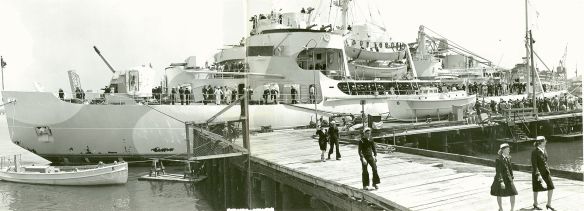
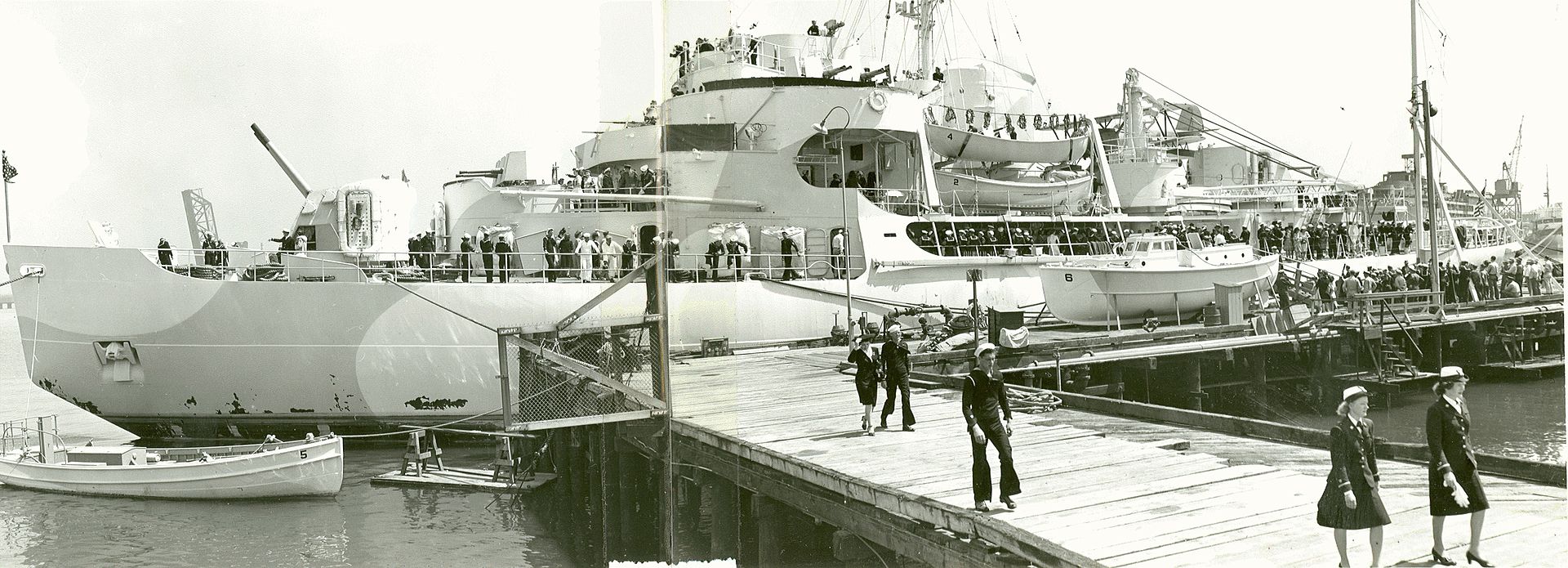
USCGC Southwind Commissioning.
This post is going to be a little strange, because it starts with a question no one has ask and it will not provide any real answer. It is more the start of a thought process about possibilities.
–
Does the Atlantic Fleet need icebreakers to support high latitude operations? Particularly US military icebreakers? And if so, could this support be provided by icebreakers that might also provide icebreaking services in the Great Lakes during peacetime?
–
I don’t know, but we do know that the Coast Guard’s first icebreakers were not based in the Pacific and they were not intended for Antarctic. They were used during World War Two in the Atlantic, particularly around Greenland.
–
We also know that NORAD and NORTHCOM are going to
need to start replacing the Dew Line Systems with more modern systems that are need to protect against, not just ballistic missiles and high altitude strategic bombers, but also surface skimming cruise missiles.
–
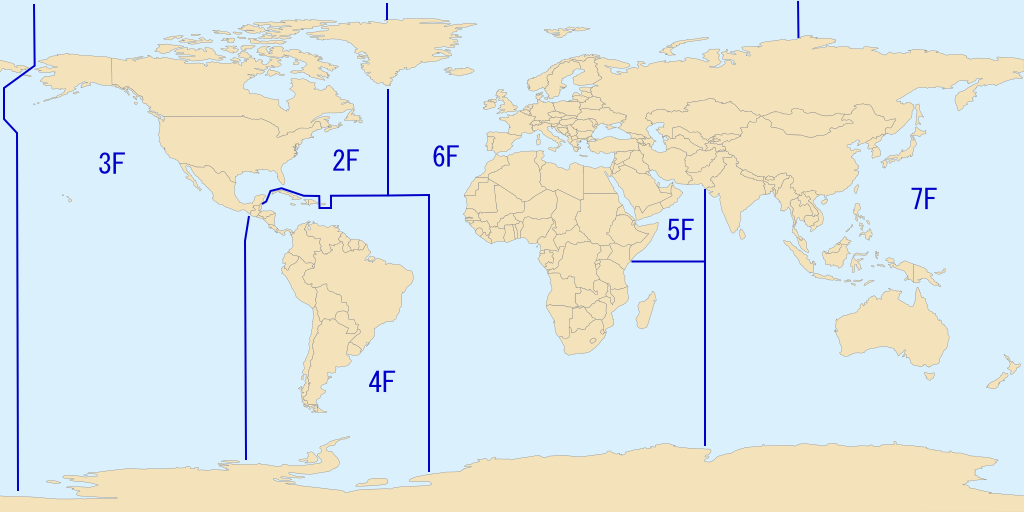
LANTFLT may not have considered the question They only recently operated a carrier strike group North of the Arctic Circle for the first time in almost three decades. The question may not have come up, or they may have assumed that when the Coast Guard gets new icebreakers some of them will operate in the Atlantic.
–
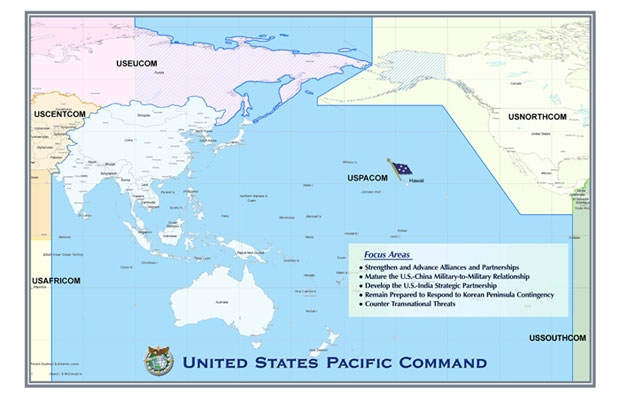
If the Coast Guard persists in its current pattern, all icebreakers, except small icebreaking tugs and those in the Great Lakes, will be homeported in the Pacific. Of course that makes some sense. The US Arctic coast is all in Alaska and most readily accessible from the Pacific. The US Antarctic base at McMurdo Sound is also most accessible from the Pacific.
–
Atlantic Area’s only icebreaking requirement for assets more capable than the 140 foot icebreaking tugs and the 2,000 ton, 6,200 HP, 225 foot
Juniper class buoy tenders is in the Great Lakes.
–
What kind of icebreaker might both operate in the Great Lakes and be available to support LANTFLT?
–
In World War II this was impossible. The
Saint Lawrence Seaway was not opened to ocean going traffic until 1959. The Saint Lawrence Seaway currently admits ship up to a
length 740 ft (225.6 m), a beam of 78 ft (23.8 m) and a draft of 26.5 ft (8.1 m) (SeawayMax). Clearly, it is the beam and draft which are the limiting parameters for any icebreaker design that is intended to operate alternately in both the Great Lakes and the Atlantic. The
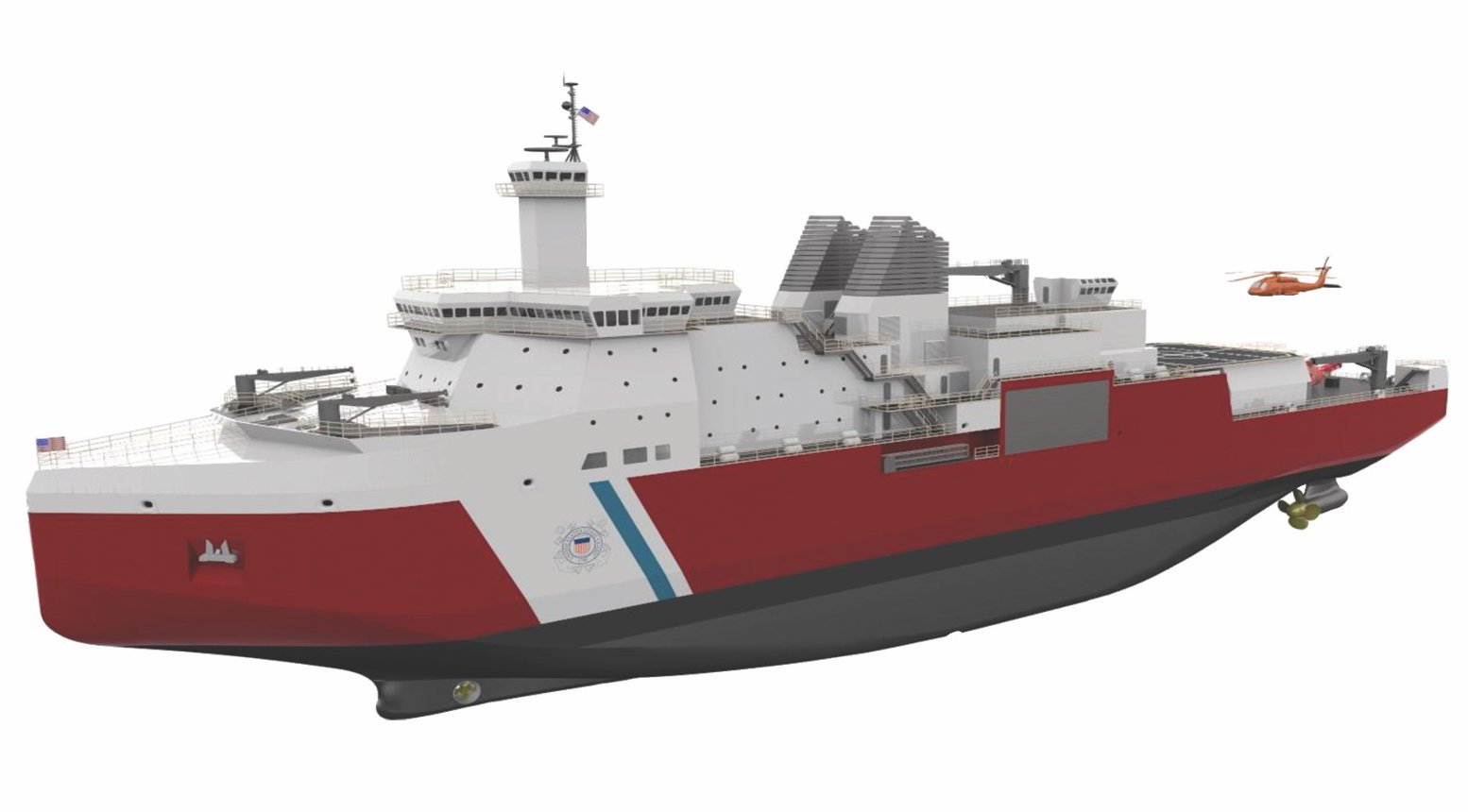
Polar Security Cutters with a beam of 88 feet are clearly too large, as would be the 13,623 ton
Polar Star, with its 83 ft 6 in (25.45 m) beam and the
Healey with its 82 foot beam.
–
In looking at what sorts of icebreaker might be usable in both the Great Lakes and the Atlantic, we have to recognize that draft will increase in fresh water because it is up to about 3% less dense but on the other hand the icebreaker could transit the locks in a lightened condition, at less than full load, reducing their draft. There may be a bit more flexibility relative to draft.
–
The newer
USCGC Mackinaw (WLBB-30) is not limited by the locks, with a d
isplacement of 3,500 tons, it has a beam of only 58.5 ft (17.8 m) and a draft of 16 ft (4.9 m). Even the much larger original Mackinaw would have fit, (Displacement:5,252 long tons (5,336 t), Length: 290 ft (88 m), Beam: 74.3 ft (22.6 m), Draft: 19.5 ft (5.9 m)) as would the
Wind class.
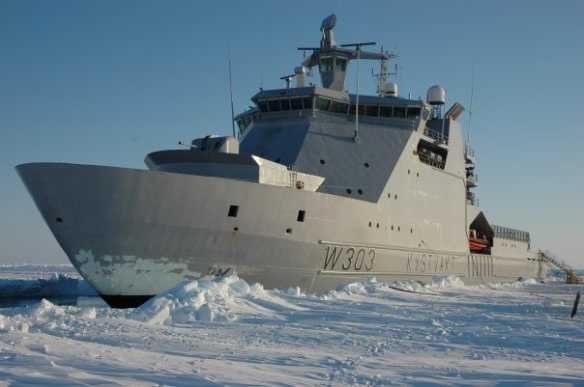
Norwegian Coast Guard Vessel Svalbard. Photo by Marcusroos
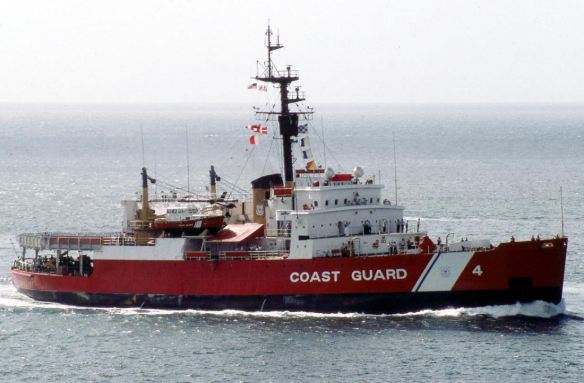
USCGC Glacier (WAGB-4)
USCGC Glacier (WAGB-4) (
8,449 long tons (8,585 t) full load) would be considered a medium icebreaker due to her 16,000 MW (21,000 HP) motors. Her draft appears too deep at
29 ft (8.8 m), but since her beam
74 ft (23 m) was well within the SeawayMax, it should be possible to make an at least comparably capable ship that could navigate the Seaway. Additional length over and above Glacier’s 309 ft 6 in (94.34 m) could provide space to meet additional requirements.
–
Conclusion:
–
It should be possible to make a reasonably capable class of medium icebreakers that could be homeported in the Great Lakes and also be available to support any LANTFLT operation requiring icebreaker support.
–
These ships might be seen as overkill relative to the requirements of the Great Lakes, but if they wish to extend the navigational season, the additional capability might be useful.
–
An ability to support naval operations might provide additional justification for these vessels. For peacetime operations on the Lakes, armament is unnecessary and might be seen as a treaty violation, but provision for adding armament in case of a future conflict might be a good hedge against an uncertain future.
–
Could the same design also serve as the Medium Icebreakers currently planned? This is less clear. There is also the possibility that the best course to provide the six icebreakers currently being discussed is to simply build six of the current design Polar Security Cutters.





 Chuck Hill's CG Blog