Canadian Coast Guard Multi-Purpose Vessel Recapitalization

Canadian CG MPV. Credit Aker Arctic.

Below is a press release from Seaspan Shipyards regarding a contract awarded for the Canadian Coast Guard’s Multi-Purpose Vessel program. We talked about these ships earlier. I am going to repeat some of that earlier post here. Much like USCG Juniper class buoy tenders or the Great Lakes Icebreaker Mackinaw, these Canadian ships are made to both tend buoys and break ice. But these ships will be a lot bigger than the Mackinaw and it appears they can also support a helicopter and probably UAS.

CHARACTERISTICS:

  • Displacement: about 8,500 tons
  • Length, overall: 99.9 meters (328′)
  • Beam: 20.3 meters (66.7′)
  • Draft: 6.2 meters (20’4″)
  • Propulsion: diesel-electric; two azimuthing propulsion units
  • Range 12,000 nautical miles

The relatively shallow draft was a design requirement. 

Canadian CG MPV. Credit Aker Arctic.

ICE CLASS: 

These ships will be Canadian Ice Class 4, meaning they will have the capability to maintain a speed of 3 knots through ice 4 feet thick. The Canadian Coast Guard will consider these heavy icebreakers. We don’t have any figures on horsepower, but they probably will have less than 20,000 HP which, in the USCG system, would classify them as light icebreakers.

Compared to the US Coast Guard’s “heavy” Great Lakes icebreaker, Mackinaw (3,500 tons and 73m), these will be more powerful and more than twice as large. These might be a good design for the planned second USCG Great Lakes icebreaker.

IMPLICATIONS FOR THE USCG:

Aside from possible use of the design for Great Lakes icebreaker, these might be pretty close to what the USCG needs for their planned medium icebreakers. Certainly, consultation with Canadian counterparts will sharpen the focus of the US design effort. We might also have reasons to limit beam and/or draft.

I might add that, ships like these could make good companions (tenders/mother ships) for support of distant FRC operations, carrying fuel, supplies, and air assets.


Seaspan Shipyards Progresses to Next Phase of Designing and Building Multi-Purpose Vessels for the Canadian Coast Guard

 March 26, 2024 – North Vancouver, BC – Seaspan Shipyards (Seaspan) has been awarded the Construction Engineering (CE) and Long Lead Items (LLI) contracts for the pre-construction work of the Canadian Coast Guard’s (CCG) first six Multi-Purpose Vessels (MPV).

Following the successful completion of the vessel’s Basic Design review in late 2023, Seaspan was awarded the CE and LLI contracts to complete the design and engineering work and to procure long lead-time material and equipment to ensure readiness to proceed with the construction of the first six ships of the up to 16 vessel fleet.

“This milestone demonstrates the tremendous capabilities in marine design and engineering that have been developed through the National Shipbuilding Strategy.  Our team, along with our partners from coast to coast, are excited to move to the next phase of this program, and ultimately provide the Canadian Coast Guard with the vessels they need to manage and safeguard Canada’s coastlines. A long run of ships like the MPV program enables Seaspan to continue to drive improvement and generate greater efficiencies, while ensuring we have stability for the next generation of shipbuilders, marine engineers and designers and supply chain in Canada,” said John McCarthy, Chief Executive Officer, Seaspan Shipyards.

“The designers and the ship builders of Seaspan Vancouver Shipyard – are playing key roles in taking the Canadian Coast Guard’s new multi-purpose vessels (MPVs) out of the drawing room and into the open ocean. The contracts announced today are an important milestone to getting these ships completed and represent an important investment in North Vancouver. This will secure good jobs while advancing the delivery of the MPVs to significantly expand the operational capacity of our Coast Guard for years to come.” – The Honourable Jonathan Wilkinson, Minister of Energy & Natural Resources and MP for North Vancouver.

The MPVs will be Polar Class 4 vessels, allowing them to carry out multiple missions including icebreaking in moderate ice conditions and assisting in shipping and flood control, search and rescue, environmental response, as well as maintaining Canada’s marine navigation system composed of approximately 17,000 aids to navigation. The new fleet of MPVs will replace the existing fleet of High Endurance Multi-Tasked Vessels and Medium Endurance Multi-Tasked Vessels.

“The Canadian Coast Guard saves lives at sea, maintains waterways open and safe for the movement of goods and services, protects the marine environment and supports Canadian sovereignty and security. The Multi-Purpose Vessels will be key assets for the Canadian Coast Guard’s future fleet, giving our personnel the modern, reliable tools they need to continue their vital work from coast to coast to coast,” said Mike Kelloway, Parliamentary Secretary to the Minister of Fisheries, Oceans and the Canadian Coast Guard.

Seaspan has already gained significant experience designing and building Polar Class vessels including three Offshore Fisheries Science Vessels which are now in service with the Canadian Coast Guard; an Offshore Oceanographic Science Vessel that is currently under construction; and a heavy Polar Icebreaker, the first of its kind to be designed and constructed in Canada in 60 years. Seaspan is preparing to cut steel on the Polar Icebreaker in late 2024 with the recent completion of a prototype block, ensuring that proper processes, procedures, and equipment are in place to build a vessel of this complexity.

QUICK FACTS ABOUT THE MULTI-PURPOSE VESSELS

  • With a displacement of 8,500 tonnes, the Multi-Purpose Vessels will be 99.9 metres long and 20.3 metres wide, and able to accommodate up to 50 personnel.
  • The area of operation for the MPV will include:
    • Year-round operations in Canada’s eastern and western seaboards, within Canada’s Exclusive Economic Zone (EEZ)
    • Year-round operations in the Gulf of St. Lawrence, the St. Lawrence River, and the Great Lakes
    • Seasonal (summer) operations in the western and lower Arctic
  • Under the NSS, Seaspan has become a major economic and job creation engine. According to an economic analysis conducted by Deloitte, Seaspan has contributed $5.7 billion to Canada’s GDP since 2012, while also creating or sustaining more than 7,000 jobs annually.

SOCIAL MEDIA

Twitter: @Seaspan
LinkedIn: Seaspan ULC
Instagram: @SeaspanULC
Facebook: Seaspan

ABOUT SEASPAN

Seaspan, a division of Seaspan ULC, is a leader in Canada’s ship design, engineering, building and ship repair industry. With modern facilities and a dedicated workforce of approximately 3,900 in North Vancouver and Victoria, the company has proven itself to be a trusted and strategic partner on a range of complex projects for both government and the private sector.

“Inside the U.S. Coast Guard patrols off Peru in mission to stop overfishing” –NBC News

NBC News reports on Coast Guard efforts to counter Illegal, Unregulated, Unreported fishing off Peru. The report is not really very clear in that it states the Chinese vessels are outside Peru’s territorial waters but is not clear if they are saying they are outside the 12 mile limit or they are outside the EEZ. The way it was phrased it sounded like they were referring to the 12 mile limit, but the distinction is frequently poorly understood by the media.

Previous Operation: PERU, 10.07.2023, Courtesy Photo, USCG District 11
The Coast Guard Cutter Alder approaches a squid fishing vessel while CG-2007, a C-130 from Air Station Barbers Point in Hawaii, flies over (upper left) during Operation Southern Shield 2023, October 2023. The Coast Guard recently completed the first high-seas boardings and inspections off the coast of Peru under a newly adopted multi-lateral agreement to monitor fishing
and transshipment operations within the South Pacific Regional Fisheries Management Organization (SPRFMO)Convention Area. (U.S. Coast Guard photo)

It is clear that USCGC Alder is off Peru. This is the second time the Pacific Area has used this buoy tender to conduct a distant fisheries patrol, having completed a previous similar patrol 29 November 2023. During the earlier patrol, enforcement was under the auspices of the South Pacific Regional Fisheries Management Organization (SPRFMO). That is probably the case here as well.

Thanks to Paul for bringing this to my attention.

USCGC Bayberry (WLI-65400) to be Decommissioned

Below is a news release

June 5, 2023

MEDIA AVAILABILITY: Coast Guard to hold special status ceremony for Cutter Bayberry

Editor’s note: Media interested in attending should contact the Coast Guard’s 5th District Public Affairs Office at 410-576-2541 no later than 10 a.m. Tuesday and include the names of those coming to attend the event.

WHO: Rear Adm. Shannon Gilreath, commander, 5th Coast Guard District, Capt. Baer, commander, Coast Guard Sector North Carolina, and Senior Chief Christopher Thompson, officer in charge, USCGC Bayberry.

WHAT: A special status ceremony will be held to recognize the accomplishments of the Cutter Bayberry and the change of the cutter’s operational status, signifying the beginning of being decommissioned from active Coast Guard service after 69 years.

WHEN: Wednesday, June 7 at 10:00 a.m.

WHERE: Station Oak Island, 300 Caswell Beach Road, Oak Island, NC 28465

PORTSMOUTH, Va. — The media is invited to attend a scheduled special status ceremony in preparation for removing the USCGC Bayberry from Coast Guard service.

The Bayberry was built by Reliable Welding Works in Olympia, WA, and spent its first 17 years in the San Francisco area, with a 3 year stay in Rio Vista CA, before returning to Seattle in 1971.

When it returned to Washington, it was retrofitted with a 60-foot barge for operations and was the only one of its kind. The cutter also became a primary deployer of the Vessel of Opportunity Skimming System, an oil spill recovery system. The Bayberry’s operations in Seattle spanned from 1971 until 2009 when it was relocated to Oak Island.

The Bayberry’s recent accomplishments include post-hurricane Dorian operations, where the crew led a waterways reconstitution mission, completed a complex voyage correcting 40 aids to navigation discrepancies, enabling the rapid resumption of ferry service, and facilitating the delivery of emergency supplies to 700 residents stranded on Ocracoke Island. In 2021, when extensive shoaling suddenly compromised Oregon Inlet Channel and no other capable asset was available to respond, the cutter led a 400-mile mission to the Outer Banks to retrieve and relocate five buoys that dangerously misled mariners, significantly enhancing the safety of this busy waterway, preserving search and rescue capabilities, and sustaining the local economy.

“Coast Guard awards contract for work on coastal buoy tenders” –CG-9

USCGC Ida Lewis

Below is a news release from the Acquisition Directorate (CG-9) about the next class of ships that will go through the “In-Service Vessel Sustainment Program,” the 175 foot, 840 ton, Ida Lewis or “Keeper” class 175 foot Coastal Buoy Tenders.

“…the primary objective of the MMA is to ensure that the 14 tenders reach the end of their 30-year designed service life…The 175-foot coastal buoy tenders were commissioned between 1996 and 2000. Work on the first hull, Coast Guard Cutter Ida Lewis, is scheduled to begin in July 2025 at Coast Guard Yard in Baltimore. The estimated project completion date for all 14 cutters is early 2036.”

There is a bit of double speak there, in that the program will not be finished until well after the “30-year designed service life” of all 14 tenders.  Even in the case of the first ship, USCGC Ida Lewis, she will have been in commission more than 28 years by the time her MMA starts and possibly 29 years before it is completed.

Obviously, these ships are expected to serve well past 30 years. That is not an unreasonable assumption. Many of the 180-foot WLBs built during WWII served more than 50 years, with the last, USCGC Acacia, decommissioned in 2006.

Nevertheless, with it taking 10 years from initial requirements to commissioning for new classes of ships, and both classes of large buoy tenders rapidly approaching 30 years in commission, it does seem like it may be time to start thinking about replacements.


Coast Guard awards contract for work on coastal buoy tenders

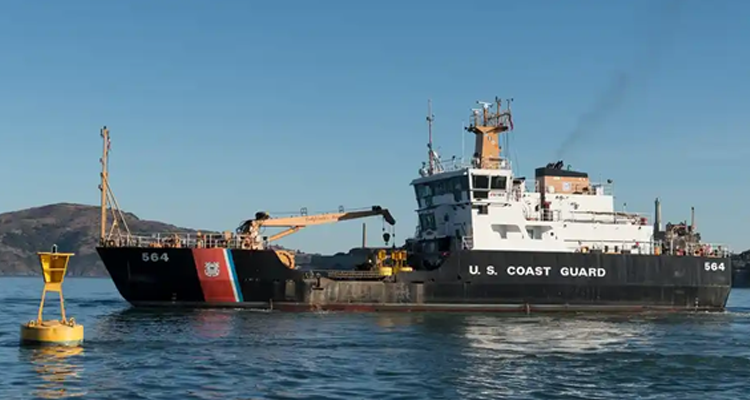
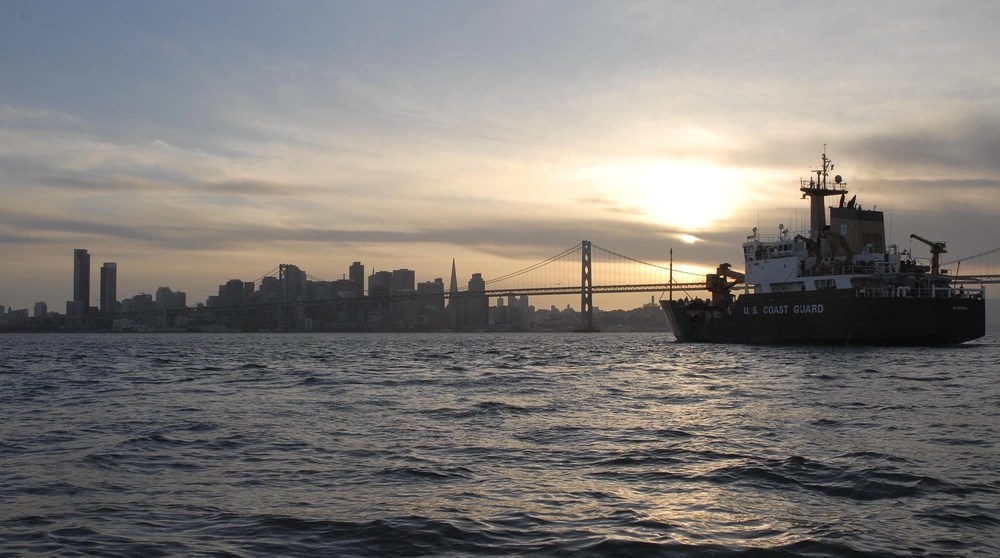
A 175-foot coastal buoy tender sets up a security zone for an event in San Francisco Bay. The 14 Keeper-class tenders will undergo a major maintenance availability starting in 2025. U.S. Coast Guard photo by Petty Officer 2nd Class Cory Mendenhall.


The Coast Guard awarded a contract to Adrick Marine Group of Cocoa, Florida, March 23 to procure HVAC systems as part of the upcoming 175-foot coastal buoy tender major maintenance availability (MMA). The contract has a total potential value of $5 million and supports continued operation of these Coast Guard surface assets through the remainder of each cutter’s expected service life.

This follows another important MMA contract awarded Dec. 19, 2022, for the main crane and central hydraulic system that was awarded to Appleton Marine of Appleton, Wisconsin, for $18.8 million.

A project of the In-Service Vessel Sustainment Program, the primary objective of the MMA is to ensure that the 14 tenders reach the end of their 30-year designed service life. MMA work facilitates fleet maintenance and increased mission availability during a cutter’s later years of service. MMA work focuses on hull and structural repairs and the replacement of obsolete, unsupportable or maintenance-intensive equipment.

The 175-foot coastal buoy tenders were commissioned between 1996 and 2000. Work on the first hull, Coast Guard Cutter Ida Lewis, is scheduled to begin in July 2025 at Coast Guard Yard in Baltimore. The estimated project completion date for all 14 cutters is early 2036.

Coastal buoy tenders play a vital role in directing the traffic of the nation’s Marine Transportation System and support the U.S. economy by maintaining aids to navigation critical in facilitating the safe and efficient flow of over $5.4 trillion worth of goods annually. These cutters also support the Coast Guard in various other missions including search and rescue, law enforcement, migrant interdiction, marine safety inspections, environmental protection and natural resources management. Keeper-class cutters are also used for light ice breaking operations.

For more information: In-Service Vessel Sustainment Program page

Whatever Happened to Buoy Tender Redbud (WLB-398)? Coast Guard, Navy, MSTS, Philippine Navy, Philippine CG

The U.S. Navy buoy tender USS Redbud (AKL-398) underway off Point Loma, California (USA), in 1949.

A small footnote on Coast Guard history, but it does illustrate how versatile buoy tenders are. A “C” class 180 transferred to the Navy becomes a AKL (Auxiliary Cargo, Light). Becomes a jack of all trades in support of DOD air bases, early warning radar systems, and even LORAN stations.

Redbud Class Light Cargo Ship:

  • Laid down, 21 July 1943, for the US Coast Guard as a lighthouse tender, at Marine Iron and Shipbuilding, Duluth, MN.
  • Launched, 11 September 1943
  • Commissioned, USCGC Redbud (WLB-398), 2 May 1944
  • Acquired on loan by the US Navy in 1949
  • Classified as a Light Cargo Ship and commissioned USS Redbud (AKL-398), 23 July 1949, LCDR. Francis E. Clark USN in command
  • Decommissioned and assigned to the Military Sea Transportation Service (MSTS), 28 February 1952
  • Placed in service as USNS Redbud (T-AKL-398)
  • Placed out of service and returned to the US Coast Guard, 10 November 1970
  • Struck from the Naval Register 20 November 1970
  • Transferred to the Philippines, 1 March 1972, renamed BRP Kalinga (AG-89)
  • Final Disposition, fate unknown

Guess the ice strengthened hull came in handy. More photos from Navsource.

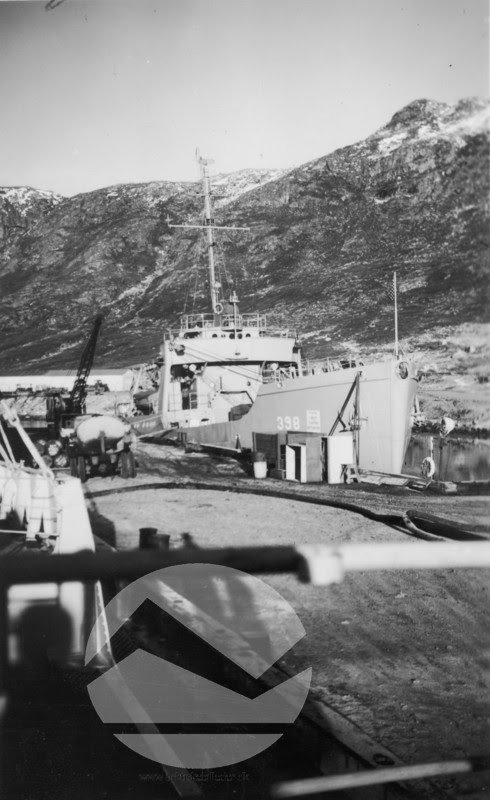
USS Redbud (AKL-398) moored pierside at Danish Naval Station Groennedal, Greenland, circa 1949 – 1950. Photo Source Arktisk Institut. Senior Chief, Erling Baldorf, Royal Danish Navy, retired

USNS Redbud (T-AKL-398) underway in the Arctic on a resupply mission from Thule Greenland to U.S. Coast Guard LORAN (Long Range Navigation Station) at Cape Athol, Greenland in 1967.
Photo by Lawrence Rodrigues

USNS Redbud (T-AKL-398), held immobile by the Arctic ice pack, January 1952. Photo Joe Radigan MACM USN Ret

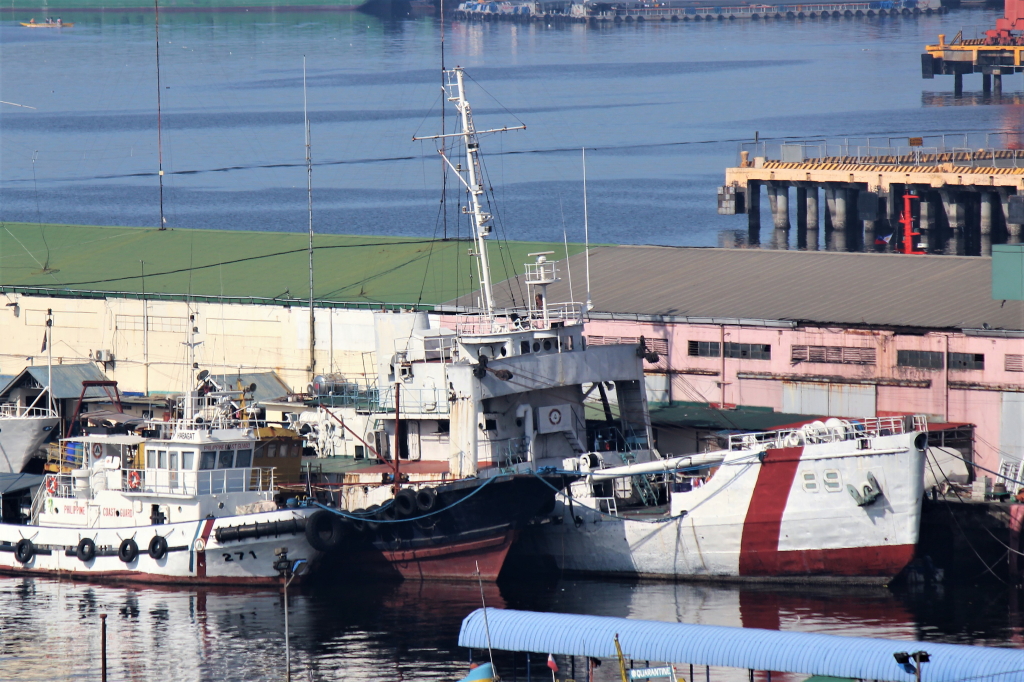
Ex-USNS Redbud (T-AKL-398) in Philippines Coast Guard service as BRP Kalinga (AG-89) moored in Manila South Harbor, 26 January 2020.

“Blount Boats delivers icebreaking buoy tender” –Marine Log

Marine Log reports,

Delivered earlier this year by the Blount Boats shipyard in Warren, R.I., an icebreaking buoy tender ordered in July 2020, the M/V Eddie Somers, is now in service with the Maryland Department of Natural Resources. Homeported at Somers Cove Marina port at Somers Cove Marina in Crisfield, Md., the 94 x 27 foot vessel will replace the M/V J. Milliard Tawes after nearly 50 years’ service.

There is a better description of the vessel in a 2020 post reporting the construction contract award.

I found this particularly interesting,

Under a cooperative agreement with Virginia and the U.S. Coast Guard, the M/V Somers will also provide this service to Tangier Island in Virginia when requested. During heavy ice seasons, all food, fuel, medicine, and emergency transport going to and from the islands are supplied by the vessel.

Frequently there is talk of the Coast Guard shedding missions. Domestic icebreaking is perhaps one of those that might be considered. Here is a state taking responsibility for at least some elements of domestic icebreaking and at least shallow water buoy tending. Domestic icebreaking might be seen as a Federal subsidy for areas that experience icing.

The Coast Guard, as the agent of domestic icebreaking, makes the most sense when it can be done by vessels that have other missions when icebreaking is not required. Federal funding of domestic icebreaking makes the most sense when it facilitates interstate and international commerce. Like this particular vessel, Coast Guard vessels frequently combine both domestic icebreaking and buoytending capabilities as in the 225 foot buoy tenders and USCGC Mackinaw.

Looking at this vessel, it looks a lot like our proposed Waterways Commerce Cutters. Makes me wonder if an icebreaking capability for at least some of them might be a good idea, if that is not already in the plan?

Thanks to a reader for bringing this to my attention. 

“Navy: Mine Countermeasures Mission Packages to Be Available for Vessels of Opportunity” –SeaPower/Coast Guard Connection?

USNS Hershel “Woody” Williams launches a Knightfish unmanned underwater vehicle (UUV) while at anchor in the Chesapeake Bay, Sept. 14, 2019. Photo: US Navy

The Navy League’s on line magazine, Seapower, reports,

“Capt. Mike Egan, branch head for mine warfare in the Office of the Chief of Naval Operations, speaking May 24 in Monterey, California, at the 2022 International Mine Warfare Technology Symposium of the Mine Warfare Association, said the MCM mission package is on track to achieve initial operational capability in the fall of 2022 and the Navy plans to procure a total of 24 packages.

“The Navy plans to equip 15 Independence-class littoral combat ships with the MCM mission package, which will leave an additional nine mission packages for use elsewhere.”

USN mine countermeasures ships are being decommissioned. Soon these mission packages will be the only US naval mine clearance assets. If a US port is mined, how will the mines be cleared?

Currently all Independence class LCS are based in San Diego. With the decision to shed all but six of the Freedom class LCS, none of which will be MCM capable, it is likely at least some Independence class will be based on the East Coast, presumably at Jacksonville. Aside from these 15 LCS mounted systems, it also appears the Navy will mount one on each of the five Lewis-B. Puller-class “Expeditionary Sea Bases” (ESB). That still leaves four MCM mission packages unclaimed.

LCSs based in San Diego and Jacksonville are still a long way from many US ports. In addition to transit time, the LCSs may be deployed or may not be available on short notice. The ESBs are all expected to be forward deployed, with one probably being assigned to each Geographic Combatant Commanders with the exception of Northern Command, e.g. Africa Command, Central Command, European Command, Indo-Pacific Command, and Southern Command, so they are unlikely to be available.

These four packages could provide mine clearance for US ports. One East Coast (perhaps Norfolk area), one West Coast (Seattle?), one Hawaii (Pearl?), and one in Alaska (Anchorage?) might be a logical distribution.

We know the disasterous effect of even short term port closures. Time is critical. The mission packages should be able to be deployed by air to the port(s) of interest. Some elements of the packages could certainly operate from shore. In many cases Coast Guard bases and air stations would be logical locations for temporary relocation of Navy assets. It is not unlikely Coast Guard fixed wing aircraft might be tasked with providing the air lift.

Some elements of the mission package, like the Unmanned Underwater Vehicles are still likely to require operation from floating units. Buoy Tenders would likely be able to fill this role. It might be worthwhile exercising this option, perhaps at RIMPAC.

“Coast Guard buoy tender departs Bay Area for last time as San Francisco-based cutter” –News Release

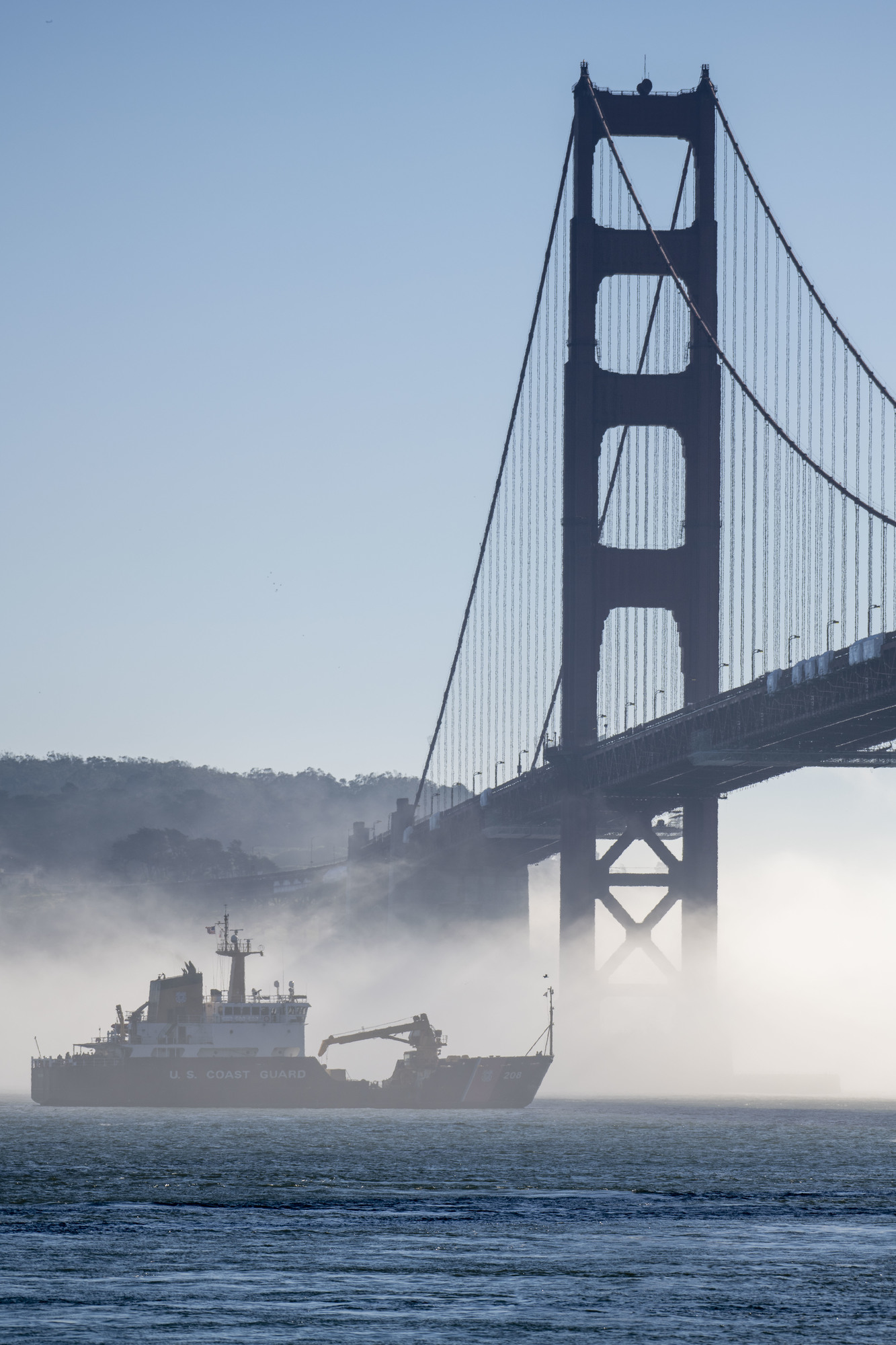
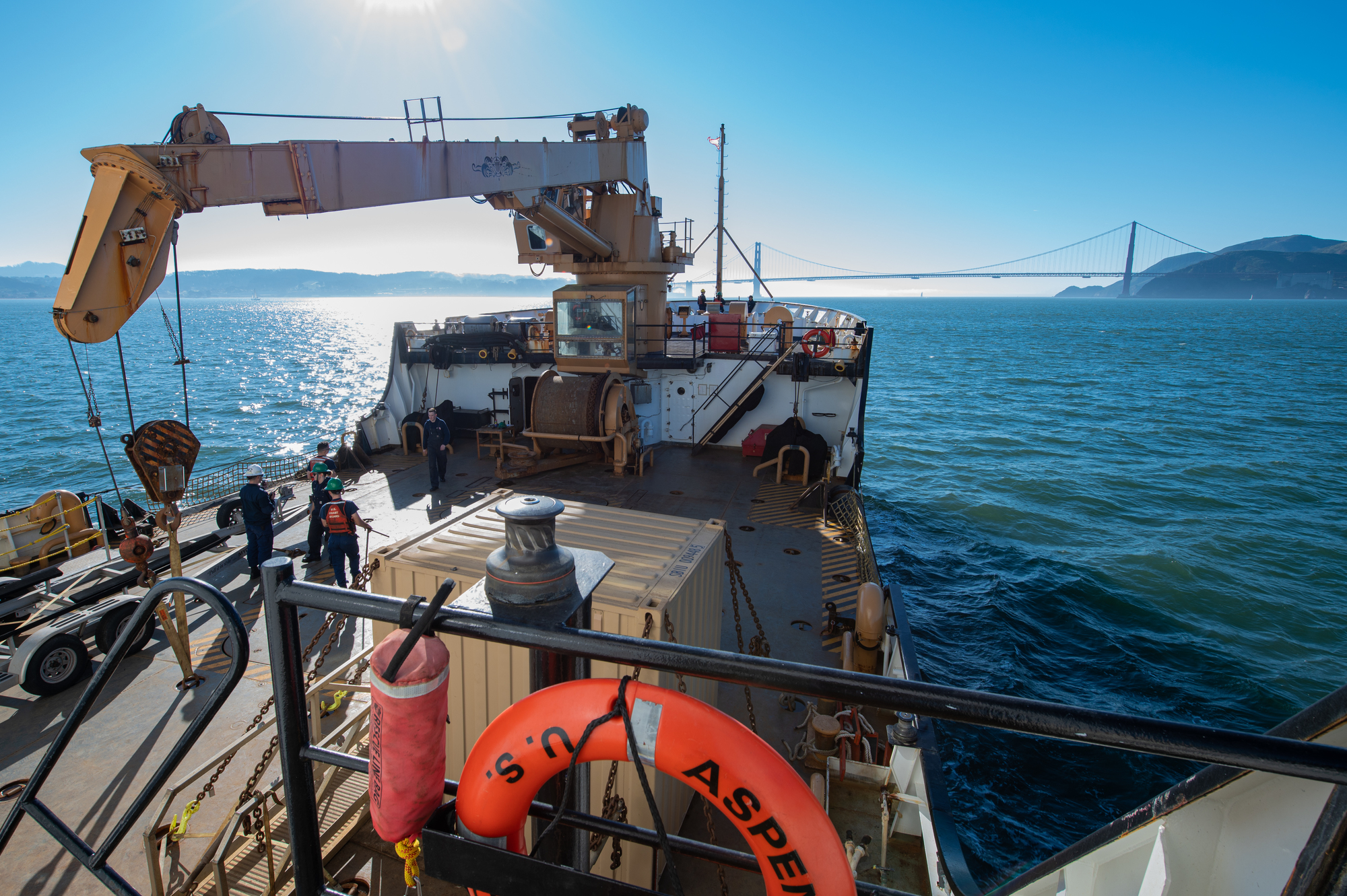
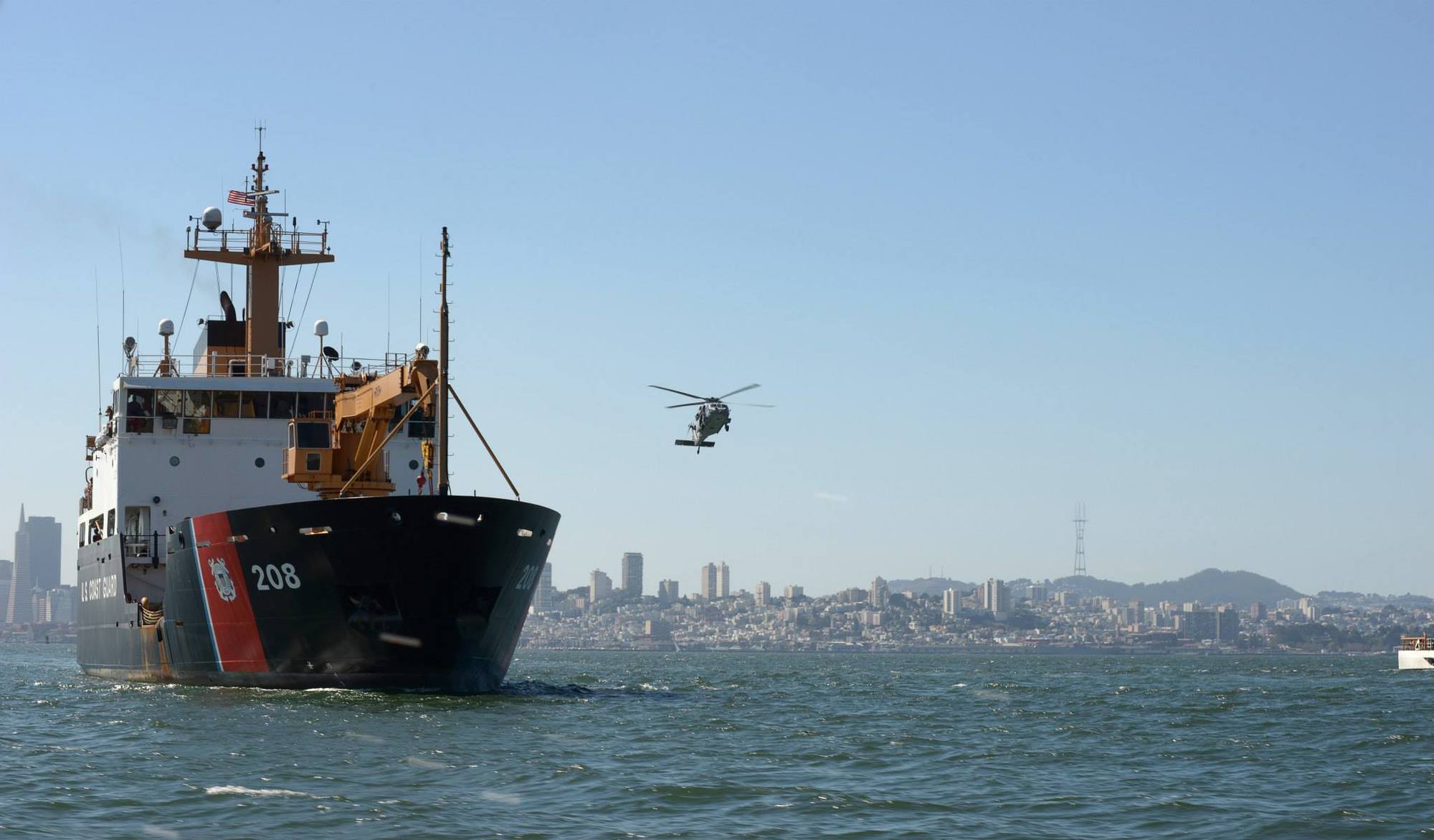
USCGC Aspen (WLB 208) transits through the San Francisco Bay, Wednesday, May 7, 2014. (U.S. Coast Guard photo by Petty Officer 3rd Class Loumania Stewart)

Continued progress on the WLB In Service Vessel Sustainment program. Very nice photoessay.

united states coast guard

News Release

U.S. Coast Guard 11th District Pacific Southwest

Coast Guard buoy tender departs Bay Area for last time as San Francisco-based cutter 

aspen aspen1 001
003 004 002

Editor’s Note: Click on images above to download full-resolution version.

ALAMEDA, Calif. — The Coast Guard Cutter Aspen (WLB 208) and crew departed the Bay Area Monday for the last time as a San Francisco-based cutter and are en route to the Coast Guard Yard in Baltimore to under-go major maintenance and overhaul.

This marks the end of two decades of service along the California Coastline for the Aspen as one of 16 of the nation’s Juniper class sea-going buoy tenders. The 225-foot ship and its 48-person crew have been stationed at Yerba Buena Island since Sep. 28, 2001.

Aspen’s area of responsibility encompassed the coastal areas from the Oregon-California border down to San Diego. In addition to its primary buoy tender operations, the cutter also has a long history in search and rescue, drug and migrant interdiction and marine pollution prevention and response missions. Since 2005, the cutter has worked with U.S. partners in Mexico to interdict tens of millions of dollars in illicit narcotics in support of SOUTHCOM and Joint Interagency Task Force South objectives, most recently interdicting $3.2 million worth of cocaine in 2017.  In 2007, Aspen responded to the Cosco Busan oil spill in San Francisco and the Deepwater Horizon oil spill in the Gulf of Mexico in 2010 to assist in oil spill cleanup efforts.

The crew is slated to travel approximately 6,000 miles over the course of 40 days and pass from the Pacific Ocean to the Atlantic Ocean by way of the Panama Canal. The Aspen is scheduled to undergo a $20 million, 12-month Major Maintenance Availability (MMA) overhaul.

The MMA is a planned dry dock event at the Coast Guard Yard, the first such major availability in the life of this class of ship. The availability will re-capitalize many of the ship’s critical systems, to include complete crane replacement, topside preservation work and technology modernization. The availability is designed to ensure that the cutter can reach its designed 30-year service life. Aspen will be the 11th 225-foot Juniper Class buoy tender to begin the MMA period.

This availability comes at a time when the Coast Guard is embarking on an unprecedented recapitalization of the cutter fleet. Major shipbuilding efforts throughout the county are underway, to include the National Security Cutter, Fast Response Cutter, Offshore Patrol Cutter, Polar Security Cutter and Waterways Commerce Cutter shipbuilding programs. The four 418-foot national security cutters, Bertholf, Waesche, Stratton and Munro stationed in Alameda, are the most visible local signs of these extensive programs.

The Coast Guard Cutter Alder (WLB 216) formerly homeported in Duluth, Minnesota, is slated to be brought back into service in summer of 2022 by the former Aspen crew and re-homeported in San Francisco. The Aspen’s scheduled final destination will be Homer, Alaska in early 2023. 

“It has been a privilege to serve along California’s rugged, oftentimes austere coastline; the beauty is without parallel, and the Pacific Ocean’s winds, current, fog and constant swells offshore continue to mold us as the stern teachers they are, said Lt. Cmdr. Paul Ledbetter, the Aspen’s commanding officer. “The U.S. is and always has been a maritime nation, and my crew relishes the challenges of keeping the maritime transportation system up and running in our capacity as a WLB. We look forward to continuing to serve this great country when we return to San Francisco aboard the Coast Guard Cutter Alder next year.”

Coast Guard Aids to Navigation Team San Francisco will be standing by to perform routine maintenance on the Aspen’s buoys throughout the Bay Area. Additionally, the Coast Guard Cutter George Cobb, a 175-foot buoy tender homeported in San Pedro, is slated to maintain all aids to navigation south of San Francisco and the Coast Guard Cutter Elm, a 225-foot buoy tender homeported in Astoria, Oregon, is also slated to assist throughout Northern California in spring of 2022.

Historical photos of the Aspen are included below:

CGC Aspen transits under Bay Bridge CGC Aspen crew cleans buoy
CGC Aspen marijuana interdiction
Aspen with helicopter photo

“Coast Guard Cutter Juniper completes patrol in Oceania” –D14

The crew of the Coast Guard Cutter Juniper (WLB 201) return to Honolulu after completing a 45-day patrol in Oceania in support of Operation ‘Aiga, Oct. 1, 2021. The Juniper is a 225-foot Juniper-Class seagoing buoy tender home-ported in Honolulu, the crew is responsible for maintaining aids to navigation, performing maritime law enforcement, port, and coastal security, search and rescue and environmental protection. (U.S. Coast Guard photo courtesy of Coast Guard Cutter Juniper)

Another out of the ordinary patrol and an indication of interest in both illegal, unreported, and unregulated fishing (IUU) and our Oceania partners.

Note also used to refuel Webber class WPC USCGC Oliver Berry, also involved in the operation.

united states coast guard

News Release

U.S. Coast Guard 14th District Hawaii and the Pacific

Coast Guard Cutter Juniper completes patrol in Oceania

Editors’ Note: Click on images to download a high-resolution version.

HONOLULU — The crew of the Coast Guard Cutter Juniper (WLB 201) returned to Honolulu after completing a 45-day patrol in Oceania in support of Operation ‘Aiga on Friday.

During the 10,000 nautical-mile patrol, the cutter’s crew conducted operations to counter illegal, unreported, and unregulated fishing (IUU) and strengthened relations with foreign allies while promoting the collective maritime sovereignty and resource security of partner nations in the Indo-Pacific.

Operation “Aiga,” the Samoan word for family, is designed to integrate Coast Guard capabilities and operations with our Pacific Island Country partners in order to effectively and efficiently protect shared national interests, combat IUU fishing, and strengthen maritime governance on the high seas.

“During our deployment in Oceania, Juniper conducted fisheries enforcement in an effort to counter and deter illegal fishing activities in the Central Pacific,” said Cmdr. Chris Jasnoch, the Juniper’s commanding officer. “We were able to establish a presence on the high seas and in the U.S. Exclusive Economic Zone (EEZ) in American Samoa while also patrolling our partner nation’s EEZs.”

The Juniper’s crew worked under the Western and Central Pacific Fisheries Commission (WCPFC), which strives to protect the region’s fish stocks on the high seas. The WCPFC has 26 member nations and 7 participating territories, 18 of which have enforcing authority. The United States is both a WCPFC member and an enforcing nation.

“We get to take part in a unique, rewarding mission in the Pacific,” said Lt. j.g. Ryan Burk, the operations officer on the Juniper. “We have the privilege of building and strengthening relationships with our Pacific Island partners, while protecting and preserving global resources.”

During the patrol the Juniper embarked a Mandarin linguist from the U.S. Marine Corps to query 11 foreign fishing vessels and board 4 fishing vessels, generating vital information reports for IUU in the region.

The crew also conducted joint operations with a French Navy Falcon-200 aircraft to identify and intercept vessels on the high seas. They also conducted a fueling evolution with the Coast Guard Cutter Oliver Berry’s crew, another participant in Operation ‘Aiga.

“We strengthened our joint capabilities with the French Navy in the fight against IUU fishing activities on the high seas in support of the WCPFC,” said Jasnoch.

To promote American Samoa’s maritime transportation system, the Juniper crew serviced vital aids to navigation in Pago Pago Harbor and in neighboring islands, demonstrating the cutter’s multi-mission capabilities.

In addition to normal buoy maintenance, Juniper accomplished the first Waterways Analysis and Management System Report for Pago Pago since 2003. This report integrates the opinions of Pago Pago Harbor’s regular users to review the relevance of existing aids and reevaluate where new aids would be useful, ensuring the sustainability and safety of the waterway.

Juniper’s crew also put together a donation box for the children in Pago Pago, including: sporting equipment, books and toys for the Boys and Girls Club of American Samoa.

“Despite COVID restrictions preventing an in-person event, it felt good to know that we made a difference,” said Ensign Elaine Weaver, the Juniper’s community relations officer.

The Juniper is a 225-foot seagoing buoy tender home-ported in Honolulu and is responsible for maintaining aids to navigation, performing maritime law enforcement, port and coastal security, search and rescue and environmental protection.

For breaking news follow us on twitter @USCGHawaiiPac

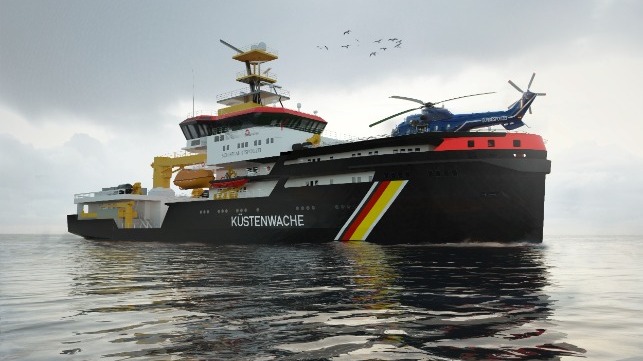
Is this a German Buoy Tender? Icebreaker?

SCHOTTEL Mehrzweckschiffe

It is always interesting to find that others deal with missions you perform in a very different way.

A Marine Link report on the new ship above piqued my curiosity about the parent agency. The German Federal Waterways and Shipping Administration (WSV),

“… is responsible for ensuring a safe, smoothly flowing and thus economically efficient shipping traffic. The tasks comprise the maintenance, operation as well as the upgrading and construction of the federal waterways including the locks, weirs, bridges and shiplifts.

The responsibility of the Federal Waterways and Shipping Administration extends to a total of 23,000 km² of maritime waterways and approximately 7,300 km of inland waterways. In addition, we maintain Vessel Traffic Service Centres at waterways in the coastal area and traffic control centres at inland waterways and we use special vessels for different specialist tasks (buoy laying, emergency missions, direction-finding etc.).

Around the clock, our experts on the water and ashore ensure safe traffic flows.

Our leitmotif is: “Facilitate mobility and protect the environment!”

Sounds like it has some of the Coast Guard’s missions and some Corps of Engineers missions.

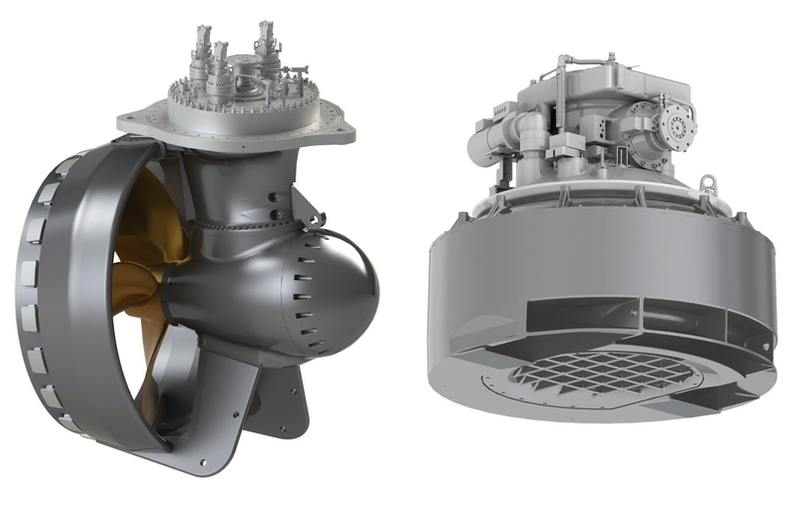
The ship itself is described as multi-purpose. Presumably it tends buoys, but it is far bigger and more powerful than any USCG buoy tender, at over 90 meters (290′) in length driven by two steerable propulsion units of 4,500 KW each (over 12,000 HP total). It also has a 2,990 kW (over 4,000 HP) pumpjet.  Our most similar ship seems to be USCGC Mackinaw. (240′ in length and 9,119 shp/6.8 MW).

Mackinaw is of course a domestic icebreaker, in addition to being able to tend buoys.  The new German ship looks like it might also be capable of light icebreaking. (Maybe Tups who comments here frequently would be able to tell us.)

SCHOTTEL RudderPropellers type SRP 750 (each 4,500 kW at 750 rpm) on the left. SCHOTTEL PumpJet type SPJ 520 (2,990 kW) on the right. Image: SCHOTTEL

The German ship also has a gas-tight “citadel” structure with a protective air supply, in order to carry out operations in hazardous atmospheres. In the Coast Guard only the National Security Cutters have this feature.