

Based on the Coast Guard Historian’s timeline, https://www.history.uscg.mil/research/chronology/
With inspiration from Mike Kelso
November 4
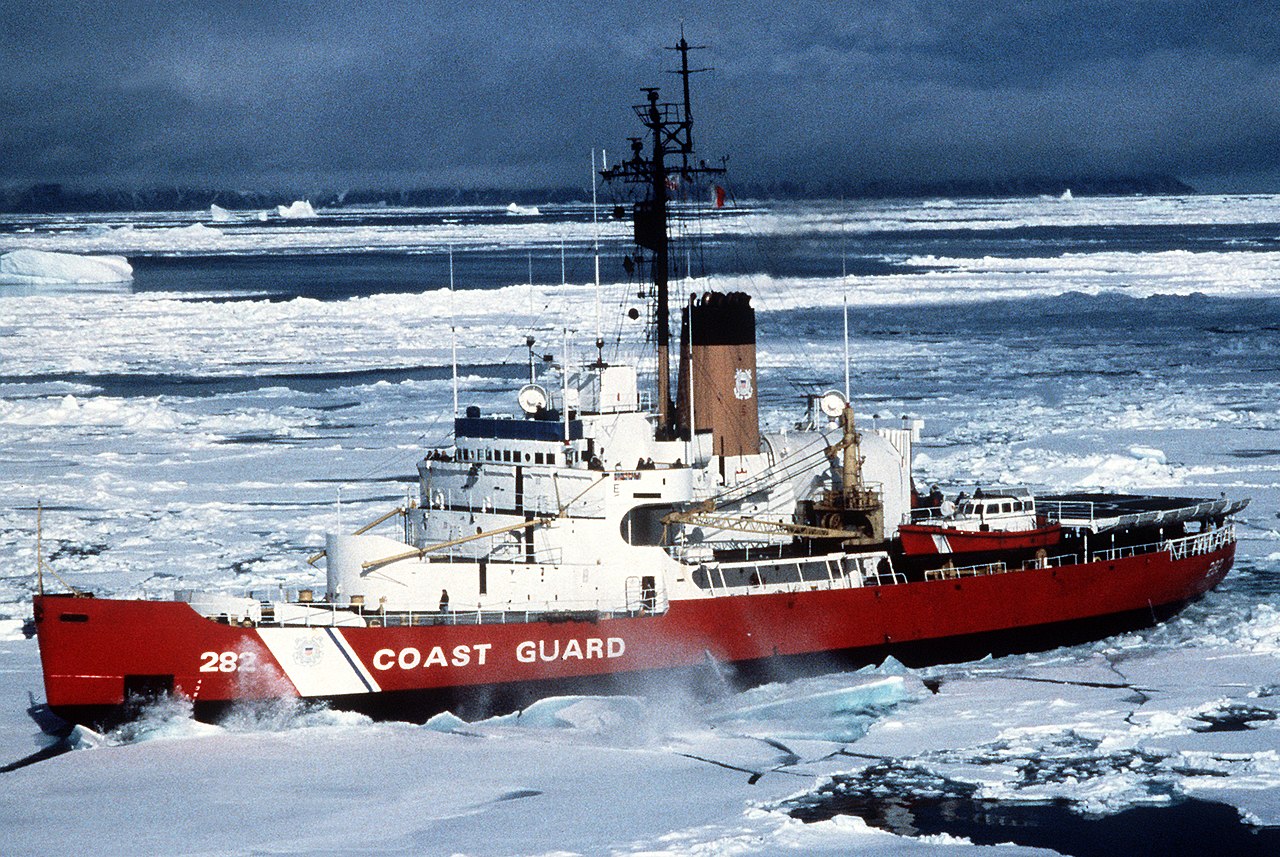
An elevated port bow view of the U.S. Coast Guard icebreaker NORTHWIND (WAGB-282) breaking through ice packs while participating in a joint Denmark-U.S. musk oxen relocation operation. Note the small craft, just aft of funnel, this is the Arctic Survey Boat or Greenland Cruiser.
1984 USCGC Northwind seized the P/C Alexi I off Jamaica for carrying 20 tons of marijuana, becoming the first icebreaker to make a narcotics seizure.
November 5
1897 Rescue from drowning Chicago, Illinois, Lake Michigan: At 9: 30 p.m., the north patrol saw a man run across the driveway and jump into the lake with suicidal intent. The surf knocked him down and was tossing him about when surfmen rushed in and hauled him out.

SAULT SAINT MARIE, Mich. –The Coast Guard Cutter Katmai Bay (WTGB 101) is tied to the pier at Group Sault Saint Marie, Michigan. USCG photo by PA1 Harry C. Craft III
1976 The Coast Guard awarded a contract to Tacoma Shipbuilding Company, Inc., of Tacoma, Washington, for the construction of four 140-foot WYTM icebreaking tugs.
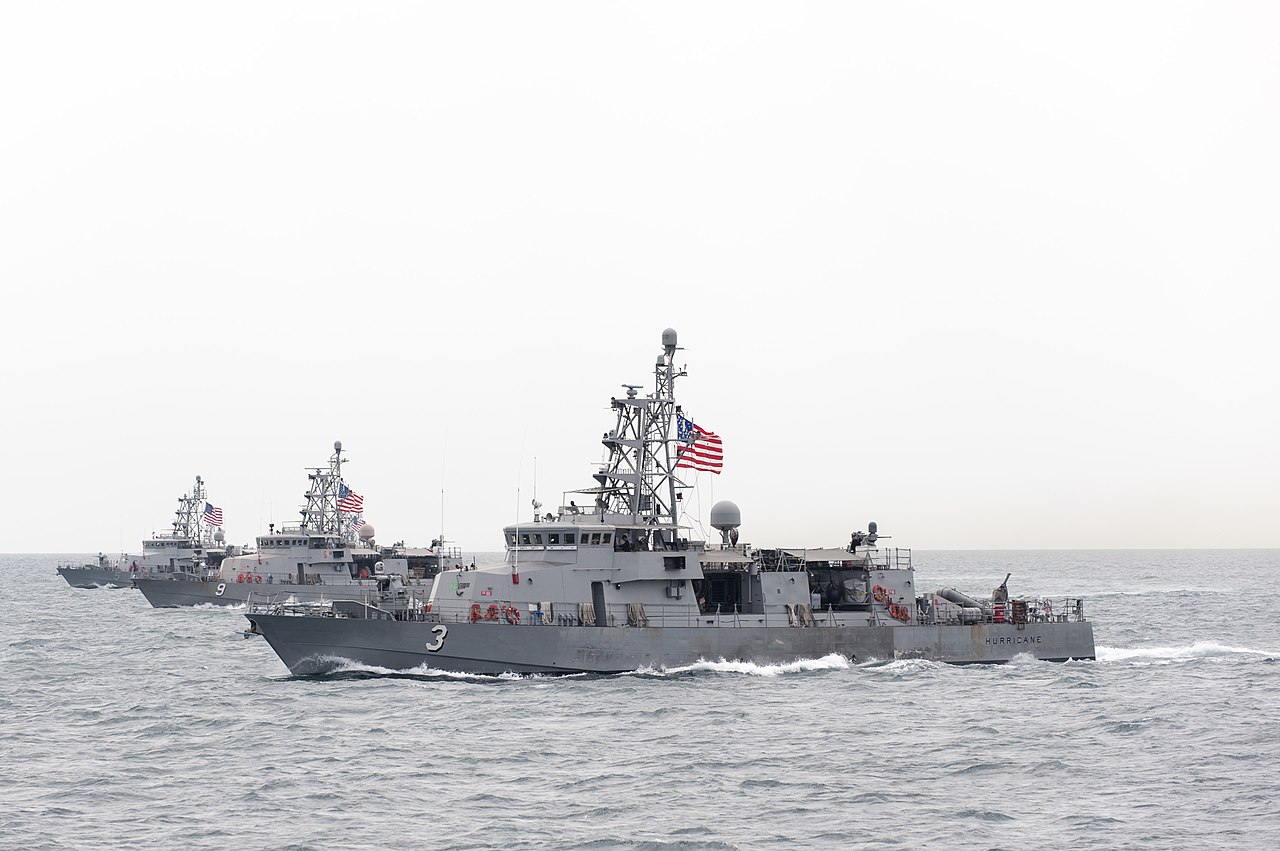
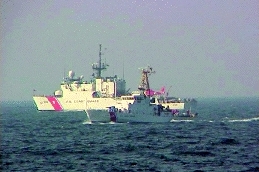
The U.S. Navy Cyclone-class coastal patrol ships assigned to Patrol Coastal Squadron 1 (PCRON 1), USS Hurricane (PC-3), USS Chinook (PC-9) and USS Typhoon (PC-5), transit in formation during a divisional tactics exercise in the Persian Gulf. PCRON 1 was deployed to the U.S. 5th Fleet area of responsibility supporting maritime security operations and theater security cooperation efforts.
2001 Six U.S. Navy Cyclone-Class patrol coastal warships were assigned to Operation Noble Eagle on November 5, 2001. This was the first time since World War II that U.S. Navy ships were employed jointly with the U.S. Coast Guard to help protect our nation’s coastline, ports, and waterways.
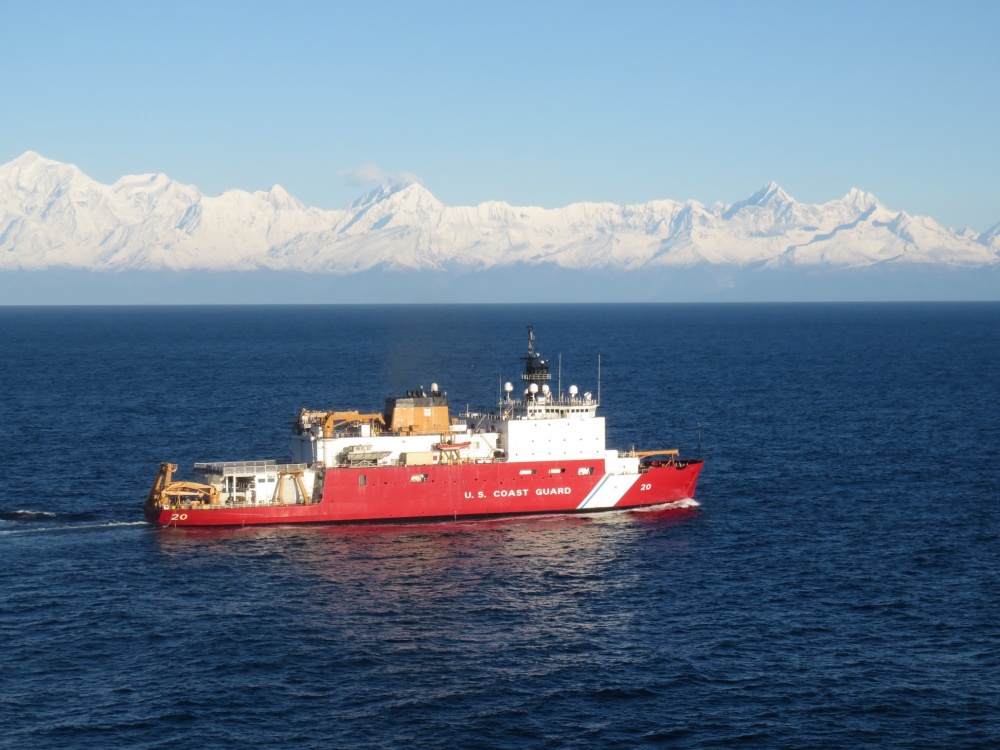
2013 USCGC Healy moored in Seattle, Washington, after completing a 117-day deployment in the Bering Sea, Chukchi Sea, Beaufort Sea, and Arctic Ocean. During that time, Healy’s crew of 88 successfully conducted three science missions and one Coast Guard mission to further the nation’s scientific knowledge of the Arctic. The first science mission was a multidisciplinary study sponsored by the Bureau of Ocean Energy Management 90 miles west of Barrow, Alaska, near Hanna Shoal. Science members collected pelagic and benthic chemical and biological samples, observed physical oceanographic properties, and analyzed the data to establish an ecological baseline for the highly productive and biodiverse area. The second science mission was a study sponsored by the National Science Foundation (NSF) along the North Slope in the Beaufort Sea and in Canada’s Amundsen Gulf. The science party focused on identifying geological evidence of a massive flood near the Mackenzie River that occurred about 13,000 years ago and had profound effects on global climate. The third mission was sponsored by the Coast Guard Research and Development Center and took place near and in the ice pack. This mission’s focus was to assess the ability of current technologies to respond to oil spills in the Arctic. The technologies included an unmanned aerial system, an unmanned underwater vehicle, an oil recovery skimmer, and a remotely operated vehicle. The fourth science mission of the deployment was sponsored by NSF and took Healy north of Barrow on the North Slope and as far east as Amundsen Gulf. The primary mission objectives were to recover, service, and redeploy a series of scientific moorings anchored to the seafloor.
















 Chuck Hill's CG Blog
