This Day in Coast Guard History, January 22/23

Based on the Coast Guard Historian’s timeline, https://www.history.uscg.mil/research/chronology/
With inspiration from Mike Kelso

January 22

USS PC-545

1944  Coast Guardsmen participated in Operation Shingle – the landings at Anzio-Nettuno, Italy.  Coast Guard units involved were USS PC-545 and LSTs 16, 326, 327, and 381.

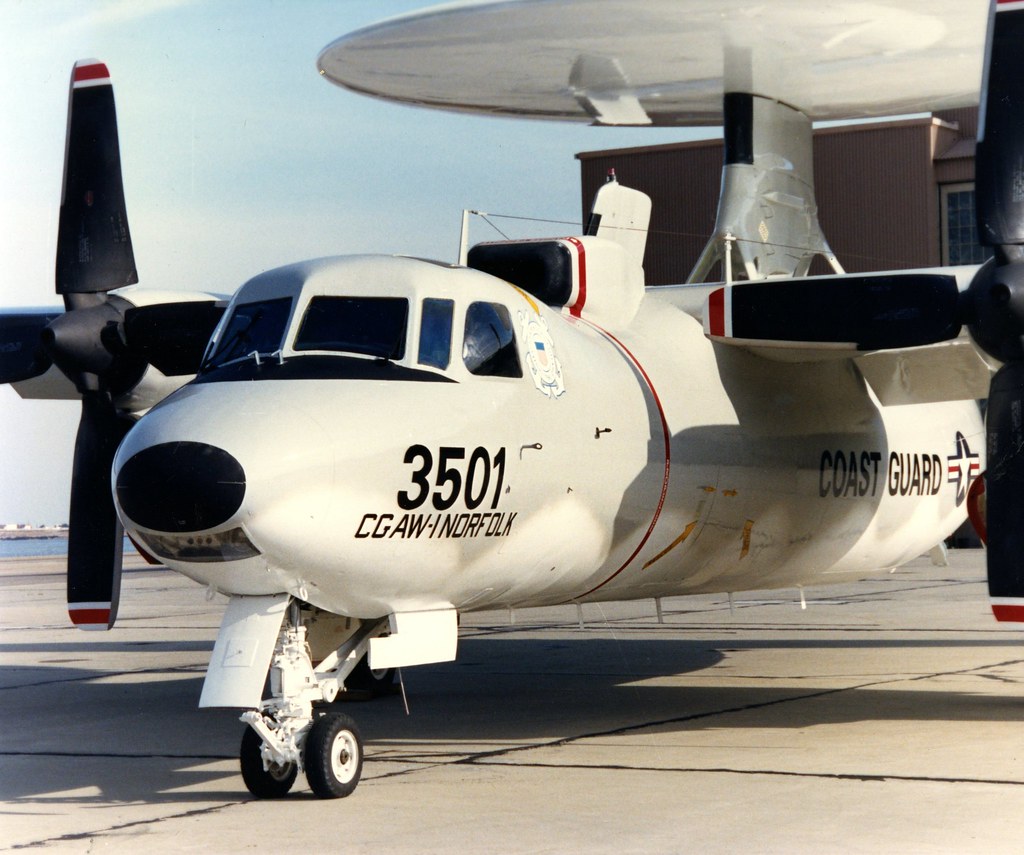
1987  The Coast Guard established the Air Interdiction Facility at Norfolk Naval Air Station.  The aircrews flew two loaned Navy E-2C Hawkeye aircraft on narcotics interdiction patrols.

January 23

1909  The schooner Roderick Dhu was discovered in distress on the bar by a Life-Saving Service patrol from the Point Bonita, California station. The schooner had been in tow by a tug, but parted hawsers when 5-1/2 miles SW of a LSS station.  She hoisted a signal, and the keeper reported her condition to the Merchant’s Exchange.  A tug was sent out and the schooner was towed to sea.  The next day she was towed into port, leaking badly, and convoyed by the USRC McCulloch.

Revenue Cutter USCGC McCulloch

This Day in Coast Guard History, January 21

Based on the Coast Guard Historian’s timeline, https://www.history.uscg.mil/research/chronology/
With inspiration from Mike Kelso

January 21

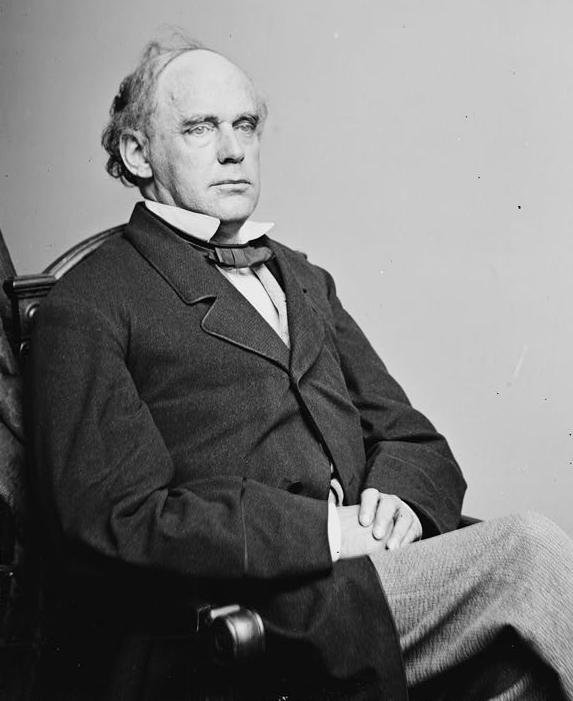
Chase as Lincoln’s Secretary of the Treasury. Library of Congress

1863 Appended to Circular to Collectors, January 21, 1863: “Sir: The question submitted by you [J. Lawrence Boggs, Collector at Perth Amboy, N.J.], whether free colored men are citizens of the United States, and competent therefore to command vessels engaged in our coasting trade, has been submitted to the Attorney General for his opinion, of which the concluding sentence is as follows: ‘And now, upon the whole matter, I give it as my opinion, that the free man of color mentioned in your letter, if born in the United States, is a citizen of the United States, and, if otherwise qualified, is competent, according to acts of Congress, to be a master of a vessel engaged in the coasting trade.’ You will advise the Commander of the Revenue Cutter ‘Tiger’ of this decision of the Attorney General, and direct him to conform to it in all future examinations of vessels engaged in the coasting trade. With great respect, Salmon P. Chase, Secretary.”

Tillamook Rock Lighthouse. An abandoned lighthouse near Tillamook Rock, Oregon, USA.

1881 The light was first shown at Tillamook Lighthouse, located 19 miles south of the Columbia River entrance.

USCGC Point Banks 14 foot Boston Whaler.

1969 CGC Point Banks, while on patrol south of Cam Rahn Bay, received a call for assistance from a nine-man South Vietnamese (ARVN) detachment trapped by two Vietcong platoons.  Petty Officers Willis Goff and Larry Villareal took a 14-foot Boston whaler ashore to rescue the ARVN troops.  In the face of heavy automatic weapons fire all nine men were evacuated in two trips. For their actions Goff and Villareal were each awarded the Silver Star. The citation stated, “The nine men would have met almost certain death or capture without the assistance of the two Coast Guardsmen.”

1982 “Streamlining” plans were put into place when the Commandant, ADM John B. Hayes, announced in ALCOAST 002/82 his plans to consolidate some operations and streamline others to comply with President Ronald Reagan’s goals of “greater efficiency in federal spending” and in accordance with Congressional appropriation levels.  The service eliminated 35 units, including the West Coast Training Center at Alameda, and consolidated all recruit training to TRACEN Cape May.

1984 The tanker Cepheus ran aground near Anchorage, Alaska, on the morning of January 21, 1984, spilling 180,000 gallons of jet fuel into Cook Inlet.  MSO Anchorage and the Pacific Strike Team responded to the incident and monitored the offloading of the damaged tanker and cleared its passage out of Alaska.  The light jet fuel evaporated with little environmental impact.

This Day in Coast Guard History, January 20

Based on the Coast Guard Historian’s timeline, https://www.history.uscg.mil/research/chronology/
With inspiration from Mike Kelso

The USCGC Champlain on the International Ice Patrol, circa mid-1930s. USCG photo.

1914  The International Ice Patrol Convention was signed.

Library of Congress description: Death on economy. U.S. “I suppose I must spend a little on life-saving service, life-boat stations, life-boats, surf-boats, etc.; but it is too bad to be obliged to waste so much money” / Th. Nast. Harper’s Weekly, 1877 Dec. 29, p. 1024.

1915  Congress passed the “Act to Create the Coast Guard” on this date in 1915 (38 Stat. L., 800).  The act combined the Life-Saving Service and Revenue Cutter Service to form the Coast Guard.  President Woodrow Wilson signed the act on January 28, 1915.

1961  During his inaugural parade, President John F. Kennedy noticed that there were no African-Americans in the Coast Guard Academy cadet unit marching in the parade.  He told his speechwriter, Richard Goodwin, “That’s not acceptable. Something ought to be done about it.  Goodwin called Secretary of the Treasury C. Douglas Dillon the next day and Dillon ordered the Academy “to scrutinize the Academy’s recruitment policy to make sure it did not discriminate against blacks.”

1984  Coast Guard units responded to a six-alarm fire along Boston’s waterfront.  The fire began early on the morning of January 20th on the Boston and Maine Railroad Bridge directly behind Boston Garden and North Station.  The Boston Fire Department requested Coast Guard assistance and MSO Boston coordinated the response.  Small boats from Station Boston responded while personnel from ATON Team Boston, Support Center Boston, Point Allerton Station, and CGCs PendantChaseWhite HeathNantucket I, and Nantucket II also assisted.

This Day in Coast Guard History, January 19

Based on the Coast Guard Historian’s timeline, https://www.history.uscg.mil/research/chronology/
With inspiration from Mike Kelso

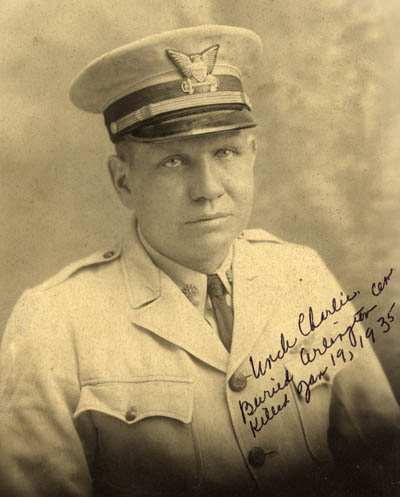
1935  Chief Warrant Gunner and Naval Aviation Pilot (CWO-GUN; NAP) Charles T. Thrun, USCG, Coast Guard Aviator Number 3, was killed when his Grumman JF-2 Duck crashed at Cape May.  CWO Thrun was the first Coast Guard aviator to die in the line of duty.

U.S. Army Corps of Engineers photo of Fourth Avenue in Huntington, WV 25 January 1937

1937  Coast Guard units began flood relief operations in the Mississippi and Ohio River valleys.  These operations lasted until March 11th and resulted in the rescue of hundreds of victims and thousands of farm animals.

1946  Staged jointly by the Coast Guard and the Navy, the first public demonstration of LORAN was held at Floyd Bennett Field in New York.
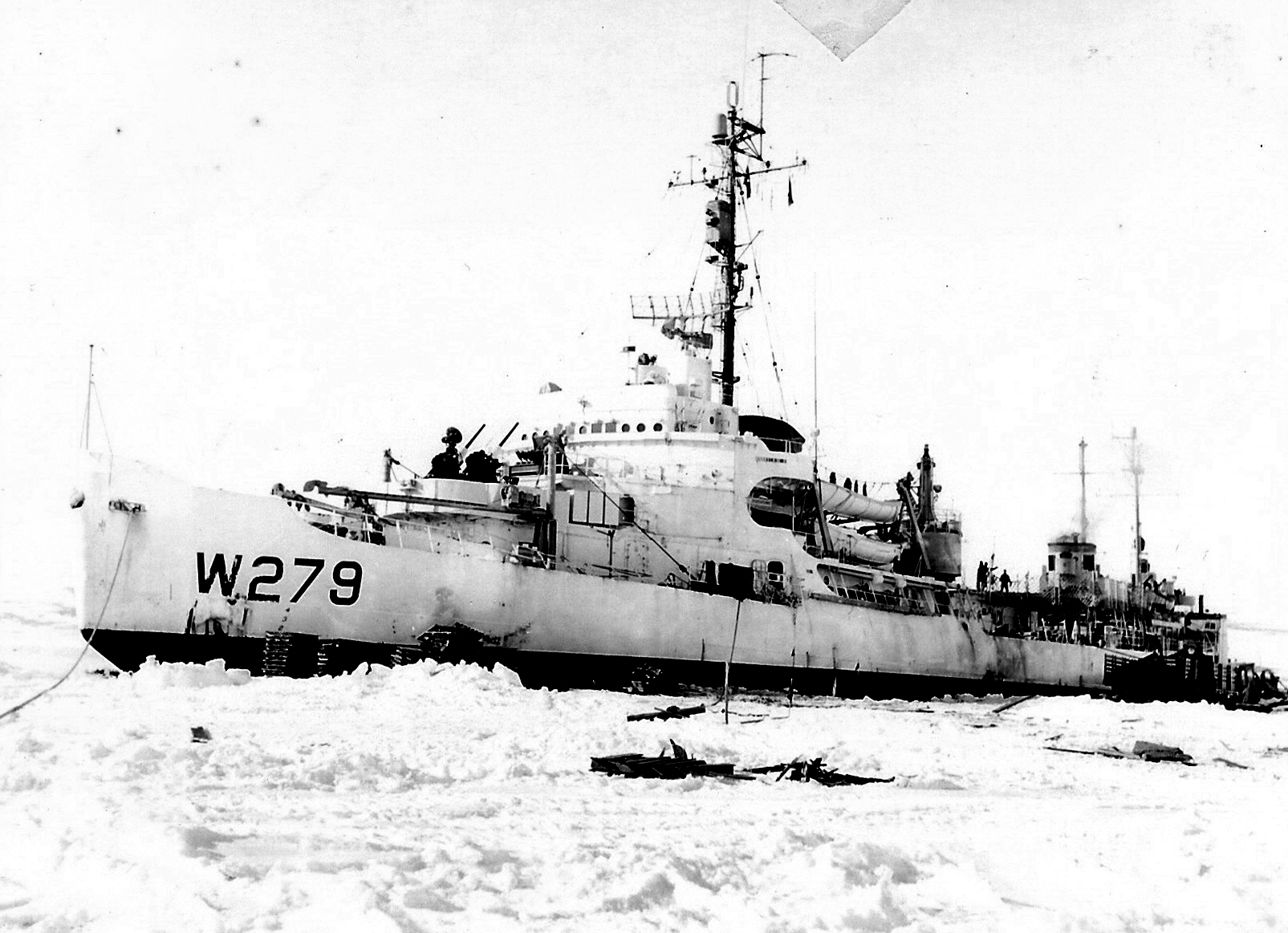
The U.S. Coast Guard icebreaker USCGC Eastwind (WAGB-279) was one of three icebreakers used by Operation Deep Freeze in the Ross Sea area, December 1955. US Navy photo.

1949  The tanker Gulfstream collided with icebreaker CGC Eastwind. The collision and resulting fire killed 13 of Eastwind’s crew, nine of whom were chief petty officers.

Haley, Alex. “Tragedy Stalks the Sea: An Account of the Eastwind Disaster.” –

“It was half-past four the morning of January 19th. Off Cape May, New Jersey, long, shapeless tendrils of fog converged to shroud in a vast milkiness the Gulf Oil tanker SS Gulfstream, travelling light from Philadelphia to the Persian Gulf, and the U.S. Coast Guard’s super-icebreaker Eastwind, Boston to Baltimore. At 4:35 they came together with a rasping snarl of steel on steel. Men catapulted from their bunks fought back terror. There came a second jolt when the Gulfstream bucked clear, her bow a huge, snaggled tooth that had left a gaping wound in the Eastwind’s starboard midsection. Almost immediately a fire broke out, filling compartments with stifling, acrid smoke. Through it more than a hundred bewildered Coast Guardsmen groped their way topside. Among them were ambulatory cases, men in varying stages of undress, men suffering from shock, guided more by instinct than reason….

“The United Fruit Company’s new, sleek SS Junior arrived as the Eastwind fire began to get the upper hand. Faced squarely with the possibility of even more appalling disaster should the magazines be set off, Captain John A. Glynn of the Eastwind ordered 83 of his men to board the Junior which would carry them to New York….

“As this is written the death toll has risen to 13. They were:

  • William E. Barnett, CSC
  • Ewell Busby, ENC
  • Harry F. Brown, HMC
  • Donald W. Bryson, BMC
  • Stanislaus Coindreau, SA       [Died in Marine Hospital, Staten Island, from injuries.]
  • Robert E. Connors, EN3
  • Louis Cywinski, DCC
  • Peter A. Everett, QMC
  • Kenneth S. King, SKC
  • Anthony G. Machansky, RMC
  • Rupert D. Midgette, ENC
  • John V. Kerr; FA
  • Albert P. Williams, SA…       [Died in Marine Hospital, Staten Island, from injuries.]

1969  CGC Absecon, while on ocean station duty, was directed to assist the sinking M/V Ocean Sprinter.  Absecon launched a small boat and rescued all of the merchant vessel’s crew.  The five Coast Guardsmen manning the small boat received the Coast Guard Medal for their actions.

USCGC Polar Sea

1977  The Coast Guard accepted delivery of CGC Polar Sea from Lockheed Shipbuilding and Construction Company, Seattle, Washington.  Polar Sea was placed “In Commission, Special” on January 31, 1977 under the command of CAPT Richard Cueroni.
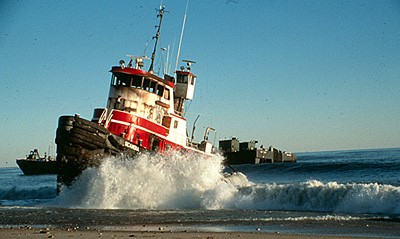
The tug Scandia and barge North Cape that ran aground on Moonstone Beach in South Kingstown, Rhode Island

1996  The tug Scandia and its barge, the North Cape, ran aground on the shore of Rhode Island, spilling 828,000 gallons of oil.  This was the worst spill in that state’s history.  The Coast Guard rescued the entire crew, pumped off 1.5 million gallons of oil and conducted skimming operations.

The North Cape oil spill took place on January 19, 1996, when the tank barge North Cape and the tug Scandia grounded on Moonstone Beach in South Kingstown, Rhode Island, after the tug caught fire in its engine room during a winter storm. An estimated 828,000 US gallons (3,130 m3) of home heating oil was spilled. Oil spread throughout a large area of Block Island Sound, including Trustom Pond National Wildlife Refuge, resulting in the closure of a 250-square-mile (650 km2) area of the sound for fishing.

Hundreds of oiled birds and large numbers of dead lobsters, surf clams, and starfish were recovered in the weeks following the spill. US federal and Rhode Island state governments undertook considerable work to clean up the spill and restore lost fishery stocks and coastal marine habitat. The North Cape oil spill is considered a significant legal precedent in that it was the first major oil spill in the continental U.S. after the passage of the Oil Pollution Act of 1990, resulting from the Exxon Valdez oil spill in Alaska on March 24, 1989.

This Day in Coast Guard History, January 18

Based on the Coast Guard Historian’s timeline, https://www.history.uscg.mil/research/chronology/
With inspiration from Mike Kelso

City of Columbus and Revenue Cutter Dexter. Drawn by: Schell and Hogan from a sketch by an officer of the United States Revenue Cutter Dexter 1884.

1884  USRC Dexter, under the command of CAPT Eric Gabrielson, came to the aid of the stricken steamer City of Columbus after it had grounded on the Devil’s Bridge rock outcropping off Martha’s Vineyard.  The cutter maneuvered around the wreckage and launched its small boats to effect rescues.  Second LT John U. Rhodes, First LT Warrington D. Roath, Third LT Charles D. Kennedy, and volunteers from the cutter’s crew distinguished themselves in their rescue efforts.  They worked in concert with lifeboats from the Massachusetts Humane Society’s Gay Head station.  All told 29 passengers and crew were saved out of 132 aboard City of Columbus.  A local newspaper reported that the Dexter’s “…officers and crew, from the captain to the cabin boy, acted the part of heroes, both at the scene of the wreck and afterwards in caring for the survivors.”

USCGC Bibb before WWII

1938  CGC Bibb returned to Norfolk after a 10-day post-trial run from Norfolk to the Virgin Islands and back again with the Commandant, RADM Russell R. Waesche, aboard.  During the run Bibb went to the aid of the four-masted schooner Albert F. Paul, which had lost its topsails and was leaking badly.  The Paul was taken in tow and Bibb proceeded under reduced speed.  CGC Sebago was contacted by radio and relieved Bibb of the tow.  During the cruise, “constant communication was maintained between Bibb and Radio Station Fort Hunt, Virginia (NMH).”

No caption/date/photo number; photographer unknown. On ramp in preparation for launch, crew is running to the PBM; view is forward quarter, port side. Note beaching gear and anchor with hoist.

1953  A Coast Guard PBM seaplane crashed off the Chinese coast near Swatow, China during takeoff after having rescued 11 survivors from a ditched U.S. Navy aircraft that had been shot down by Chinese anti-aircraft fire.  A total of nine servicemen lost their lives in this second crash, including five of the Coast Guard aircrew.  The survivors were later rescued by the USS Halsey Powell (DD-686).  The entire Coast Guard PBM aircrew were awarded the Gold Lifesaving Medal for their actions.

1974  Coast Guard units rescued 61 crewmembers from the 551-foot tanker Keytrader and the 657-foot Norwegian freighter Baune after the two vessels collided on the night of January 18, 1974 in dense fog.  Sixteen other crewmembers did not survive.  Keytrader was carrying 18,000 tons of fuel oil.  A 53-foot Coast Guard vessel assisted in fighting the ensuing fire.

2003  On January 18th, CGC Walnut departed from her homeport in Honolulu, Hawaii and began her 10,000 mile transit to the Persian Gulf in support of Operation Iraqi Freedom.  This 45-day transit was completed as quickly as possible with brief stops for fuel and food along the way in Guam, Singapore, and Kuwait.  The cutter deployed with an oil spill recovery system in the event the regime of Saddam Hussein committed any acts of environmental terrorism.  When those threats did not materialize, the cutter then conducted maritime interception operations enforcing U.N. Security Council resolutions, participated in the search for two downed United Kingdom helicopters, and patrolled and provided assistance to captured Iraqi offshore oil terminals being secured by Coast Guard port security personnel.   The cutter’s crew completely replaced 30 buoys and repaired an additional five along the 41-mile Khawr Abd Allah Waterway.  This ATON mission vastly improved the navigational safety of the waterway for humanitarian aid, commercial, and military vessels sailing to the port and was a critical step to economic recovery for the people of Iraq.

This Day in Coast Guard History, January 17

Based on the Coast Guard Historian’s timeline, https://www.history.uscg.mil/research/chronology/
With inspiration from Mike Kelso

1832  Treasury Secretary Louis McLane discontinued the practice of hiring unemployed Navy officers as senior Revenue Cutter Service officers.  All vacancies from that point forward were to be filled by promotions from within the service.  Secretary McLane’s actions brought a tremendous boost to morale among Revenue cuttermen as they had long complained about the slow line of promotion caused by unemployed Navy officers “grabbing up” senior positions.

USCGC STORIS moored alongside LAMUT.

1972  USCGC Storis seized two Soviet fishing vessels, the 362-foot factory vessel Lamut and the 278-foot stern trawler Kolyvan, for fishing inside the 12-mile U.S. contiguous zone.

In one of her more dramatic law enforcement missions, on January 17, 1972, STORIS found two Soviet fishing vessels within the territorial waters of the United States. Radar picked up the two vessels inside the protective zone and upon further investigation, STORIS found the 278-foot fishing vessel, KOLJVAN offloading its catch to the 362-foot fish processor LAMUT in violation of U.S. laws. STORIS sent armed boarding parties aboard each of the Soviet ships and ordered them to the naval base in Adak, Alaska.

While the ships were in route to Adak, LAMUT attempted to flee with the Coast Guard boarding party still on board. After an intense one-hour chase, STORIS’ CO, Commander William P. Allen, received permission from the commandant to fire a shot across the bow of LAMUT. STORIS sent a message to LAMUT that she was prepared to open fire and the Soviet vessel stopped. STORIS arrested both Russian masters and took them into custody aboard the cutter. All three ships arrived in Adak and charges were assessed against the two Russian ships.

1977  DOT Secretary William T. Coleman, Jr., issued licenses to LOOP, Inc., and Seadock, Inc., to own, construct, and operate deepwater ports in the Gulf of Mexico.  Both ports were designed to “handle” supertankers.

1994  Coast Guard units and family members assisted those in need after an earthquake hit Los Angeles, California.

This Day in Coast Guard History, January 16

Based on the Coast Guard Historian’s timeline, https://www.history.uscg.mil/research/chronology/
With inspiration from Mike Kelso

January 16

1920  Prohibition, later called the “noble experiment” by President Herbert Hoover, became the law of the land on January 16, 1920, one year after the 36th state ratified the 18th Amendment to the Constitution.  Enforcement of the law fell to the Department of the Treasury and the Coast Guard was charged with interdicting the flow of “Demon Rum” at sea before it reached American shores.

Sikorsky HNS-1 “Hoverfly”

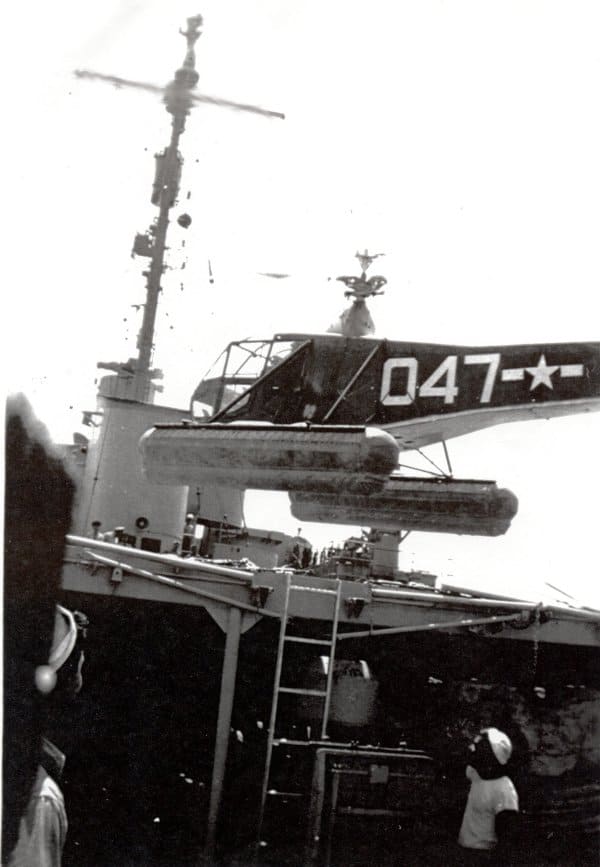
1944  LT Stewart R. Graham became the first person to make a helicopter take-off and landing aboard a ship underway at sea when he piloted a Sikorsky HNS-1 off of and back on the SS Daghestan in the North Atlantic.

1948  The list of nominations for appointments and promotions of Coast Guard officers transmitted to Congress by the President on this date represented the first permanent advancements of Coast Guard regular officers since the summer of 1942.

Coast Guard Cutter Northland (WMEC 904), Aug. 13, 2024, while underway in the Atlantic Ocean. (U.S. Coast Guard photo by Petty Officer 3rd Class Anthony Randisi)

1988  Coast Guard units responded to a report of a murder on board the container vessel Boxer Captain Cook.  The ship’s first officer reportedly murdered the captain and threw his body overboard.  A boarding party from CGC Northland, offloaded onto CGC Cape York, boarded the vessel while it was underway on the high seas and captured the suspected murderer and collected evidence of the crime.

U.S. Coast Guard units responded to a report of a murder on board the container vessel Boxer Captain Cook.
Crew members aboard the British-registered Boxer Captain Cook said that the First Officer, Remigio Hernando, went berserk and attacked the ship’s Captain, Alistair McKinnon. The slaying occurred about a week after McKinnon dismissed Hernando because of a piloting error that caused the ship to briefly run aground off Cuba. The first officer reportedly murdered the captain and threw his body overboard.
After the slaying, some crew members locked themselves in their cabins while others sealed the bridge, kept the ship under control and radioed the Coast Guard.
The U.S. Coast Guard Cutter Northland (WMEC-904), embarked a boarding party onto Cutter Cape York (WPB-95332), a 95-foot patrol boat, who came along side Boxer Captain Cook. The team boarded while the vessel was underway on the high seas. The boarding team captured the suspected murderer and collected evidence of the crime.
The Coast Guard searched unsuccessfully for Captain McKinnon’s body. The search was suspended on January 18th.
(Information courtesy of the Coast Guard Historian’s Office)–Foundation for Coast Guard History

Harpoon Missile Launch from USCGC Mellon

1990  CGC Mellon fired a Harpoon anti-ship missile in a live-fire test, becoming the first cutter to fire the missile.

This Day in Coast Guard History, January 15

Based on the Coast Guard Historian’s timeline, https://www.history.uscg.mil/research/chronology/
With inspiration from Mike Kelso

1836  A General Order from the Secretary of the Treasury prescribed that “Blue cloth be substituted for the uniform dress of the officers of the Revenue Cutter Service, instead of grey…” thereby ending a controversy that had brewed for years regarding the uniforms of the Service.

1947  The first helicopter flight to the base “Little America” in Antarctica took place.  The pilot was LT James A. Cornish, USCG and he carried Chief Photographer’s Mate Everett Mashburn as his observer.  They flew from CGC Northwind.

1966  When winds of 30 to 50 knots hit the southern California coast, surface craft off the 11th Coast Guard District rendered assistance to six grounded vessels, three disabled sailboats, and three capsized vessels. They also responded to seven other distress cases. A Coast Guard helicopter played a prominent role in one of the cases by evacuating the five-man crew of the vessel Trilogy that had gone aground and broken up on Santa Cruz Island.

1974  The first group of women ever enlisted as regulars in the Coast Guard began their 10-week basic training at the Coast Guard Training Center in Cape May.  Thirty-two women were in the initial group and formed Recruit Company Sierra-89.

USCGC Escape (WMEC 6) Operation Able Manner.

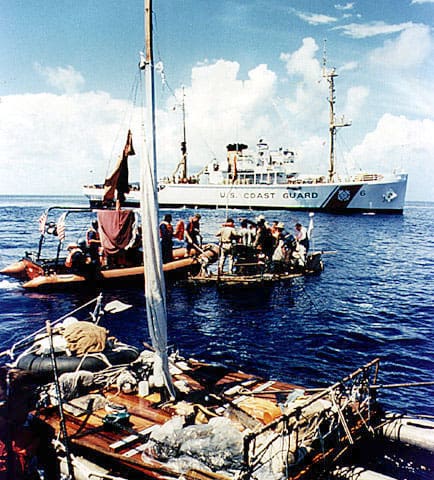
1993  In response to a massive increase in the number of Haitians fleeing their country by sea that began in October 1991, President-elect William Clinton ordered the commencement of Operation Able Manner on this date in 1993.  It was the largest SAR operation ever undertaken by the Coast Guard to that time.  Twenty-nine cutters were initially involved, as were aircraft from 10 air stations and five US Navy vessels.

This Day in Coast Guard History, January 14

Based on the Coast Guard Historian’s timeline, https://www.history.uscg.mil/research/chronology/
With inspiration from Mike Kelso

United States Revenue-Marine revenue cutter USRC Wolcott (1873) at her home port, Port Townsend, Washington.

1886 USRC Wolcott made the Revenue Marine’s first drug seizure when a landing party seized 3,011 1/2 pounds of opium hidden at the Kaasan Bay Salmon Fishery, in Alaska.  A detail of officers and crew from the Cutter had previously assisted Customs Inspectors with the seizure of 695 pounds of opium from vessel Idaho in Port Townsend.  When a disgruntled crewman later provided intelligence about the additional opium stored at Kaasan Bay, RC Wolcott’s crew ensued on a 695-mile race to beat Idaho to the concealed drugs, resulting in the RMS’s first and largest-ever opium seizure. Hot on the Opium Smugglers’ Trail | Naval History Magazine – October 2016 Volume 30, Number 5 (usni.org)

Coast Guard Hall PH-3 loading depth charges

1942  A Coast Guard aircraft, Hall PH-3 No. V-177, dropped food to a raft with six survivors of a torpedoed tanker in one of hundreds of such incidents carried out by Coast Guard aircraft during the war.  This tanker had been the victim of a German U-boat attack off the coast of the United States.

1985  Vice President George Bush made an official visit to Base Miami Beach to extend the thanks of the nation to those involved in Operation Hat Trick, an “all-out” effort to stop smugglers soon after they had left ports in Central and South America.  The vice president decorated 15 Coast Guardsmen.

U.S. Coast Guard Cutter THETIS (WMEC-910) , US Navy photo ID:J3103SPT95001725 / DNST9800595

2004  CGC Thetis rescued three shrimp fishermen from the fishing vessel Dona Nelly after they were in the water for 45 minutes after their vessel sank 15 miles off the coast of Brownsville, Texas.


This Day in Coast Guard History, January 11


Based on the Coast Guard Historian’s timeline, https://www.history.uscg.mil/research/chronology/
With inspiration from Mike Kelso

January 11

Portrait of Hamilton authoring the first draft of the U.S. Constitution in 1787

1755/57  Alexander Hamilton, the first Secretary of the U.S. Treasury and the “father” of the U.S. Coast Guard, was born on this day in either 1755 or 1757 in the town of Nevis, British West Indies.

1882  At 0900 during a thick snowstorm, the schooner A .F. Ames of Rockland, Maine, was bound from Perth Amboy to Boston with a crew of seven persons.  She stranded during a thick snowstorm five hundred yards east of Race Point and one mile and three-quarters west of Station No. 6, Second District.  The vessel was discovered by the patrol and the life-saving crew boarded her at 0915. She was leaking and pounding heavily.  The pumps were manned to keep the water down.  The vessel was floated on the rising tide and made sail.  She was piloted into deep water. The leak, however, was gaining rapidly.  After consulting with the captain, the vessel was put on the beach.  The crew was sheltered at the station until the 13th when the keeper sent them to Boston.

1991  Coast Guard units responded after receiving a distress call from F/V Sea King, a 75-foot stern trawler with four persons on board that was taking on water and in danger of sinking off Peacock Spit near the mouth of the Columbia River.  The Coast Guard units that responded included a prototype 47-foot MLB, two 44-foot MLBs, the 52-foot MLB CG-52314 Triumph II, and a Coast Guard helicopter.  Despite valiant efforts to save the vessel, it capsized and sank.  Three Coast Guardsmen who went aboard the vessel to assist were safely rescued from the water.  Another, MK1 Charles Sexton, an emergency medical technician who went aboard the Sea King to assist an injured crewman, was pulled from the water but died 50 minutes after his arrival at a local hospital.  MK1 Sexton was posthumously awarded the Coast Guard Medal.

“A Coast Guard Motor Lifeboat Crew had proceeded to the fishing trawler Sea King in motor lifeboat 44381, because the trawler had lost power off the Columbia bar and was taking on water. As the unit’s Emergency Medical Technician, Sexton was tending to a wounded fisherman’s injuries after bringing over dewatering pumps when the trawler unexpectedly turned over. Two of the trawler’s crew and a Coast Guardsman were thrown into the Ocean and were eventually rescued, but Sexton and two other crew members became trapped in the vessel’s pilot house and drowned.”

USCGC Charles Sexton (WPC-1108). US Coast Guard photo.

Petty Officer Charles Sexton lost his life helping to save fishermen off the Oregon coast.jpg