This Day in Coast Guard History, December 2

Based on the Coast Guard Historian’s timeline, https://www.history.uscg.mil/research/chronology/
With inspiration from Mike Kelso
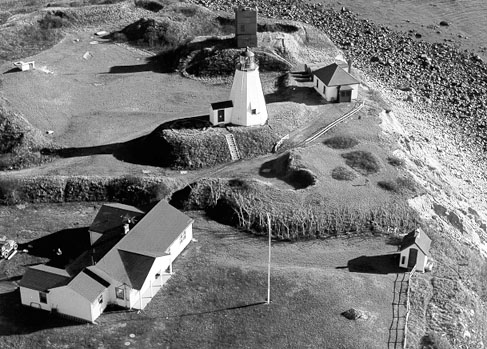
Gurnet Point Station. Plymouth Lighthouse, Plymouth, Massachusetts, USA showing the one remaining tower built 1842 in the earthworks of Civil War Fort Andrew.

1883  The schooner Champion with a crew of two men stranded on Dick’s Flat, Plymouth Harbor, near Duxbury Pier lighthouse, at about 6 am. The shoal where she struck was about three miles west-southwest of the Gurnet Point Station (Second District), and the crew of the station were not sure she was aground until about 10 o’clock.  The life-saving crew therefore arrived on board a little before 2 o’clock in the afternoon.  They found one of the men, the captain, at the pumps and the other bailing from the hatch.  The vessel was leaking badly.  The two men on board were wet, cold, and very glad of the assistance of the life-saving crew.  The keeper, at the captain’s request, took charge.  The pumps were manned while another gang went to work bailing.  When she began to right with the incoming tide, they shifted the booms over and canted her the other way, so as to bring the leaky seams out of the water to chinse them with oakum and nail canvas over all to stop the leaks.  After doing this and getting most of the water out, they carried out an anchor into the channel, set all sail and by heaving hard on the hawser, they brought her on an even keel.  She was hauled off the shoal at about 4 o’clock and got safely under way.  As the weather looked bad, the captain concluded to remain in port for the night and accordingly anchored.

2012  BMCS Terrell Horne, III, CGC Halibut’s Executive Petty Officer and Boarding Officer, was killed in action while carrying out law enforcement operations near Santa Cruz, California. The Coast Guard posthumously awarded BMCS Horne the Coast Guard Medal for his heroism that night.  His citation read, in part: “…Shortly after midnight, Senior Chief Petty Officer Horne deployed in HALIBUT’s cutter boat with three other crew members to investigate a vessel loitering in the area without navigation lights.  Upon approaching the unlit vessel and identifying themselves as law enforcement officers, the vessel ignored commands to stop and instead rapidly accelerated directly toward them.  The boarding team immediately maneuvered to avoid the oncoming vessel and fired side arms in self-defense.  When impact with the oncoming vessel became unavoidable, Senior Chief Petty Officer HORNE, disregarding his own safety in order to protect a fellow crewmember, forcibly pushed the coxswain from the helm, directly exposing himself to the oncoming vessel.  The violence of the subsequent collision forcibly ejected him from the boat, and despite immediate recovery from the water and application of first aid by his shipmates, he succumbed to the severe injuries received during the incident.  Senior Chief Petty Officer HORNE demonstrated remarkable initiative, exceptional fortitude and daring in spite of imminent personal danger.  His courage and devotion to duty are in keeping with the highest traditions of the United States Coast Guard.”

PERU, 10.06.2023, Courtesy Photo, USCG District 11
The crew of the U.S. Coast Guard Cutter Terrell Horne conducts a patrol in the Eastern Pacific Ocean in support of Operation Southern Shield 2023, October 2023. The Coast Guard recently completed the first high-seas boardings and inspections off the coast of Peru under a newly adopted multi-lateral agreement to monitor fishing and transshipment operations within the South Pacific Regional Fisheries Management Organization (SPRFMO) Convention Area. (U.S. Coast Guard photo)
This Day in Coast Guard History, December 1

Based on the Coast Guard Historian’s timeline, https://www.history.uscg.mil/research/chronology/
With inspiration from Mike Kelso


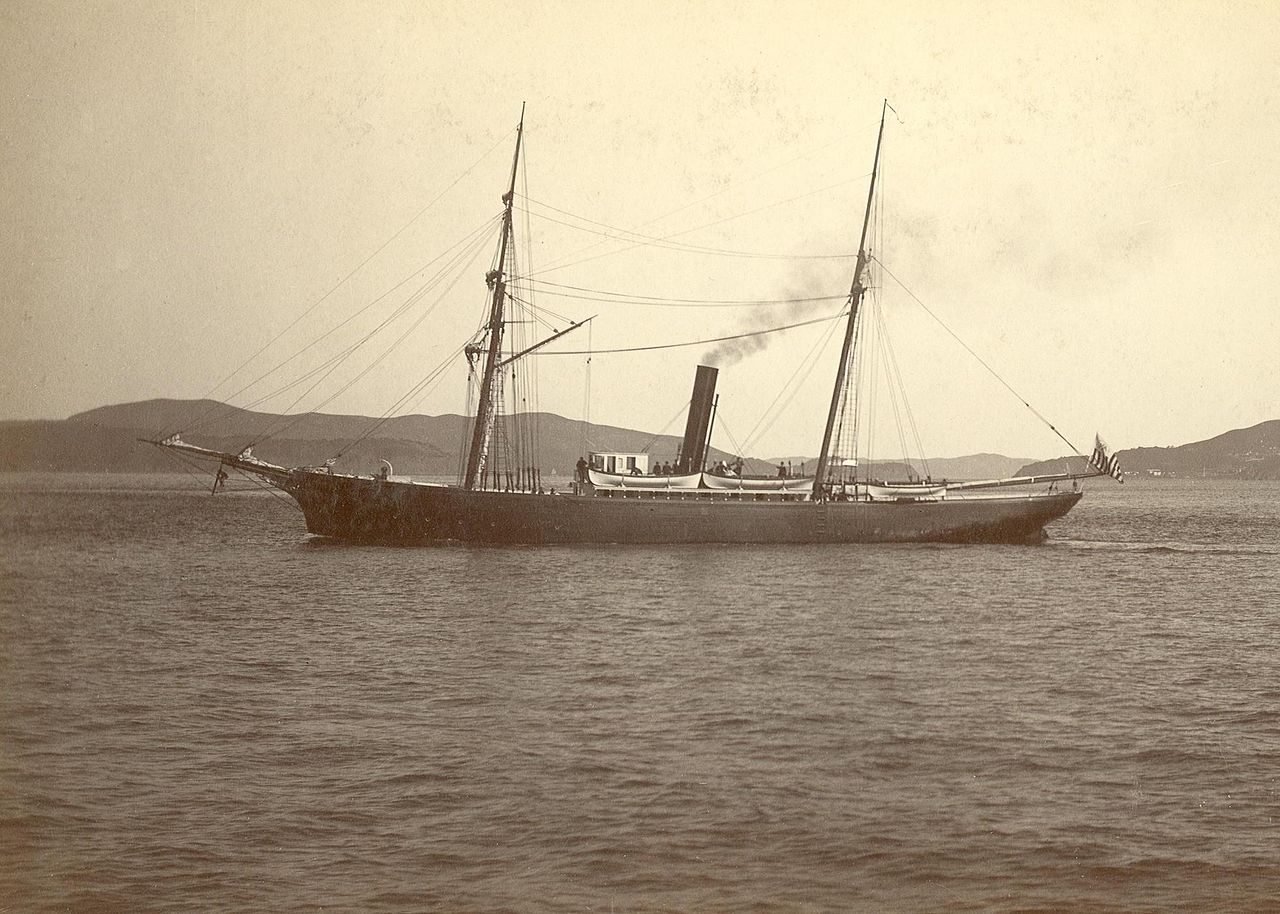
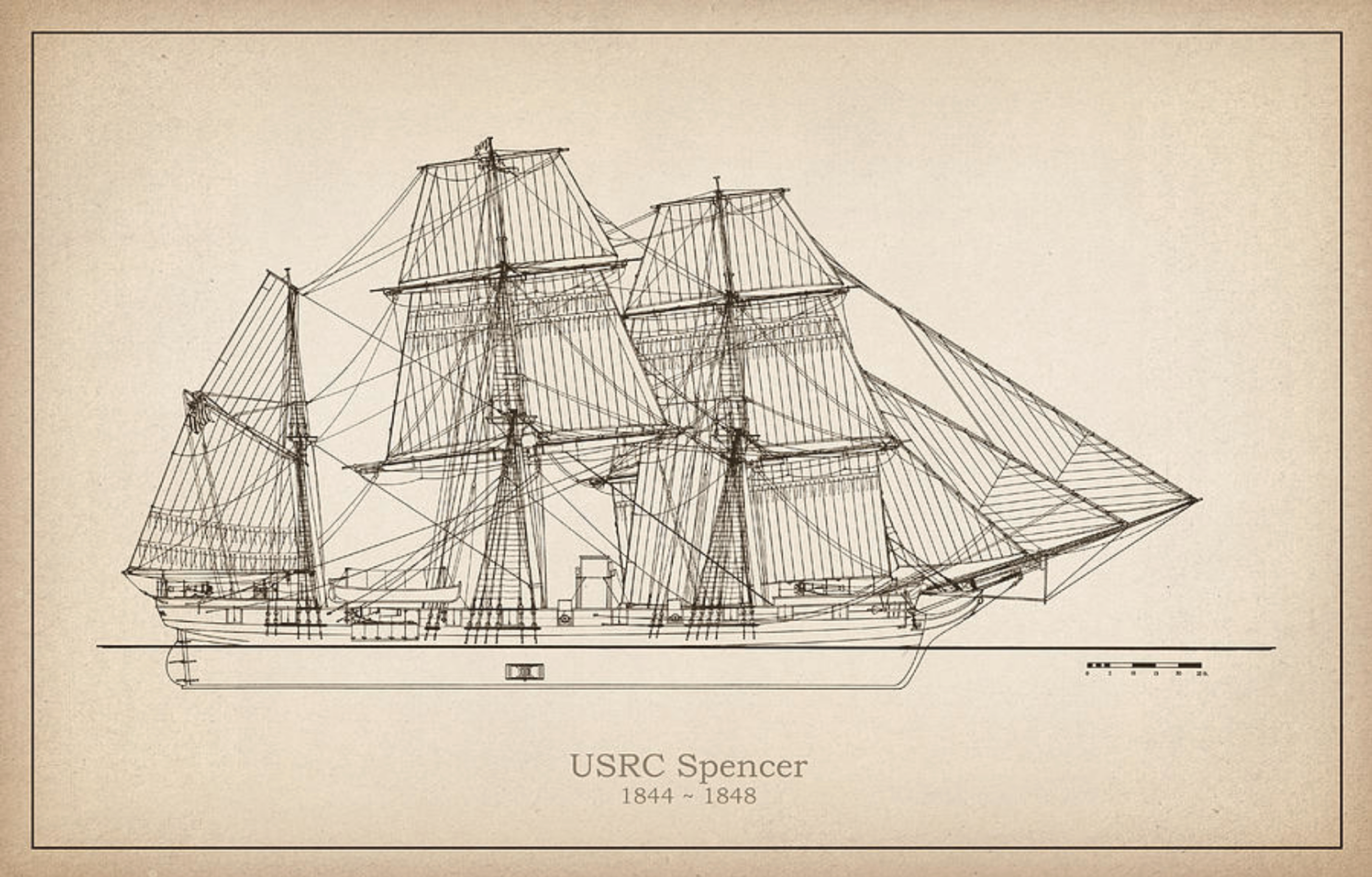
Revenue Cutter Spencer before conversion to Lightship R

1844  Captain Alexander Fraser, head of the Revenue Marine Bureau, reported to Congress on the failure of the service’s first steam cutters Spencer and Legare.

Admiral Russell R. Waesche, Sr., USCG

1916  Second Lieutenant Russell R. Waesche was designated as the first Communications Officer for the Coast Guard, an office established at Coast Guard Headquarters.  The office was renamed Chief, Communications Division, soon thereafter. Waesche went on to serve as Commandant 14 June 1936 to 31 December 1945. He was the longest serving Commandant in Coast Guard history.

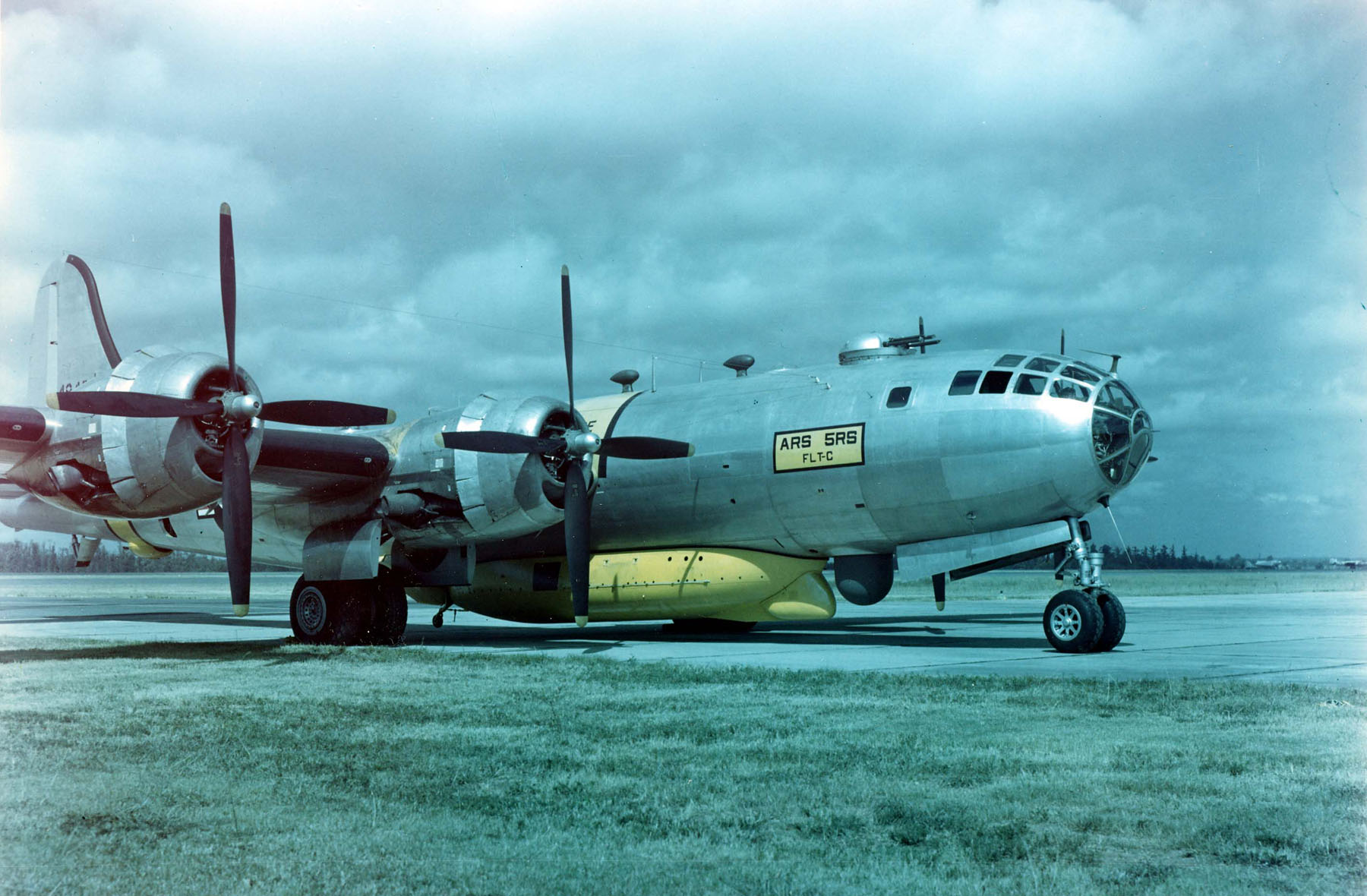
SB-29 “Super Dumbo”, a variant of the B-29 Superfortress, with an air-droppable EDO A-3 lifeboat rigged underneath. Fifteen B-29s and one B-29A were adapted for air rescue duty after World War II. Nicknamed “Super Dumbo” and designated SB-29. When a downed aircrew was spotted in the water, the lifeboat was released from the aircraft. The lifeboat, which descended by parachute, was equipped with watertight compartments, self-righting floatation bladders, an inboard engine, food and water.  The SB-29 remained in service throughout the Korean Conflict and into the mid-1950s. Photo: US Air Force

1944  The Office of Air-Sea Rescue was set up in the Coast Guard. The Secretary of the Navy, at the request of the Joint Chiefs of Staff early in 1944, established the Air-Sea Rescue Agency, an inter-department and inter-agency body, for study and improvement of rescue work with the Commandant of Coast Guard as its head.

This Day in Coast Guard History, November 30

Based on the Coast Guard Historian’s timeline, https://www.history.uscg.mil/research/chronology/
With inspiration from Mike Kelso

1837  Two early complainants on the efficiency of the American lighthouses, E. and G.W. Blunt, publishers of the famous Blunt’s “Coast Pilot,” submitted a statement to the Secretary of the Treasury. They argued that the whole lighthouse system “needs revision, a strict superintendence and an entirely different plan of operation.”

U.S.R.C. “Richard Rush,” on her departure Jan. 2d, 1886, in search of the “Amethyst.” Photo credit: Isaiah West Taber (1830–1912)

1886  USRC Rush made the service’s first drug seizure at sea, confiscating 350 lbs of opium from SS City of Rio De Janeiro near the entrance to San Francisco Bay. Only the opium was seized, as no connections to the ship’s owners, captain, or officers could be established. [The Nautical Beginnings of America’s War on Drugs, American History, November 17, 2019. https://www.historynet.com/online-exclusive-the-nautical-beginnings-of-americas-war-on-drugs/]

4 May 1943
Mare Island, CA
Starboard bow view during inclining experiment
U.S. Navy photo 2558-43. Source: Jon Burdett

1920  The Navy minesweeper USS Swan (AM-34, later AVP-7) ran aground on Duxbury Beach, Massachusetts.  Coast Guardsmen from three nearby stations rescued the minesweeper’s crew with a breeches buoy.  CGC Androscoggin assisted in the rescue.  USS Swan was refloated 22 Feb. 1921 and went on to assist in the search for Amelia Earhart and was present during the Attack on Pearl Harbor Dec. 7, 1941 and claimed to have shot down a enemy aircraft. She was decommissioned 1946 but was still in existence in 1988. Fate unknown. 

This Day in Coast Guard History, November 29

Based on the Coast Guard Historian’s timeline, https://www.history.uscg.mil/research/chronology/
With inspiration from Mike Kelso

1808  Secretary of the Treasury Albert Gallatin requested 12 new cutters at a cost of $120,000 to enforce “laws which prohibit exportation and restrain importations” to support the embargo ordered by President Thomas Jefferson.  President Jefferson had ordered an embargo against most European imports and exports to protest the harassment of U.S. sailors by warring European powers.  The embargo did not work.  The United States went to war with England in 1812 but the Revenue Marine got the new cutters.

1877  The first annual report of the U.S. Lifesaving Service was submitted in published form to the Secretary of the Treasury.

Courtesy Photo The German freighter Nordmeer, which ran aground on Nov. 19, 1966, is seen in this 1967 photo provided by the Thunder Bay National Marine Sanctuary.

1969  The German freighter Nordmeer ran aground on the Thunder Bay Shoal in Lake Huron. Most of her crew safely evacuated to a nearby ship but eight crewmen remained on board to attempt to save their vessel.  The weather quickly deteriorated, however, and they radioed for assistance.  A Coast Guard helicopter and the icebreaker Mackinaw responded and safely evacuated the eight men while the freighter broke up.

SAN FRANCISCO. The Coast Guard Cutter Waesche transits through the San Francisco Bay for the first time en route to its homeport of Alameda, Calif., Feb. 28, 2010. (U.S. Coast Guard photo by Petty Officer 3rd Class Kevin Metcalf)

2013  CGC Waesche returned from a 109-day deployment in the Gulf of Alaska, Bering Sea and Arctic Ocean to its homeport at Coast Guard Island in Alameda, California on November 29, 2013.  While on patrol Waesche’s crew conducted a broad range of operations including maritime law enforcement, search and rescue, maritime surveillance and community outreach.  While underway, the crew was on scene for the opening of the red king crab fishing season to help ensure the safety and security of fishermen conducting operations in the Bering Sea.  The crew also enforced fisheries laws and regulations to ensure sustainable fishing is practiced in the Gulf of Alaska and Bering Sea.  The crew responded to five search and rescue cases including a removal of 14 mariners from a disabled fishing vessel, Alaska Mist, some 160 nautical miles northeast of Dutch Harbor in mid-November.  In Unalaska, Alaska, the crew participated in helping with maintenance and upkeep at a high school and several other community relation projects.

This Day in Coast Guard History, November 26

Based on the Coast Guard Historian’s timeline, https://www.history.uscg.mil/research/chronology/
With inspiration from Mike Kelso

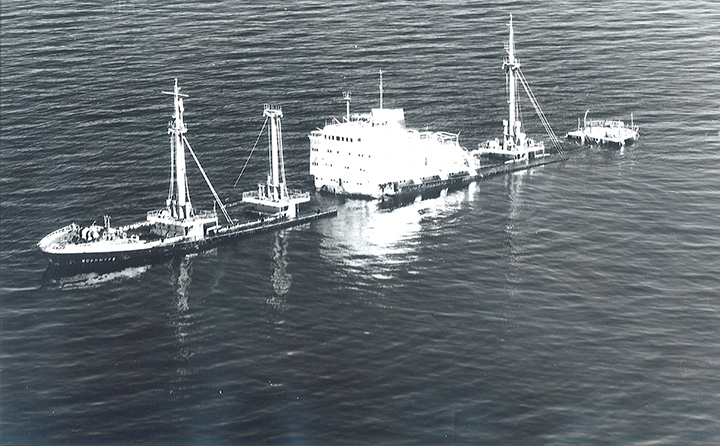
The aftermath of the collision shows the floating wreckage of the Stolt Dagali. U.S. Coast Guard photo.

1964  The Israeli passenger liner Shalom and the Norwegian tanker Stolt Dagali collided off Point Pleasant, New Jersey in a dense fog.  Nineteen tanker crewmen were killed in the collision which sliced the tanker into two pieces.  CGC Point Arden was the first on scene.  Five other cutters and “a fleet” of Coast Guard and Navy helicopters soon joined in the rescue and salvage operations, resulting in the rescue of 24 of the tanker’s crew.  One injured Shalom crewman was airlifted by a Coast Guard helicopter for medical treatment and survived.  No one else from the liner was injured.

“…the accident instantly put into motion one of the largest search-and-rescue operations of the time, combining 11 Coast Guard and Navy helicopters, six cutters, and even the crews of three passing Merchant Marine vessels acting as Good Samaritans. The operation was coordinated by Lt. Junior Grade Joseph DiBella, who was officer in charge at the Rescue Coordination Center in lower Manhattan. Functionally, the 24-year-old was fairly low-ranking for what was shaping up to be a massive effort. When his superior appeared and asked whether DiBella should be relieved, the message from top brass was: No, let him stay in control.” –Miami New Times, February 7, 2017


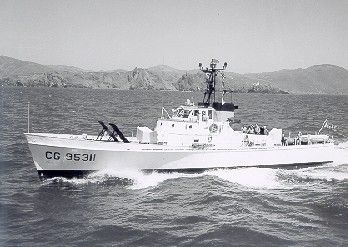
WPB 95311, Cape class cutter similar to USCGC  Cape Providence. 

1968  While en route from Apia, Western Samoa to Pago Pago, Polynesian Airlines Flight 5WFAA sighted the wreckage of an overturned vessel and reported it to the Federal Aviation Agency Flight Service at Tafuna, American Samoa.  CGC Cape Providence (WPB 95335), a 95 foot Cape class patrol boat, moored at Pago Pago on search and rescue standby, was notified of the sighting.  With an assist from the Polynesian airliner, the cutter located the disabled fishing vessel named Main Sun No.2 and found 17 survivors clinging to the overturned hull.  Despite the rough seas breaking over the hull, the Cape Providence rescued 13 of the survivors, while 4 more were retrieved from the water by the fishing vessel Chie Hong No.20, which had arrived on scene to assist.  Two members of the 19-man crew, however, had been trapped in the engine room on the capsized vessel and had perished.

1995  Coast Guardsman Michael E. Earley rescued a 12-year-old boy who had fallen from the Astoria-Megler Bridge into the frigid, swiftly flowing waters of the Columbia River.  Petty Officer Earley was on liberty and driving along the highway towards the bridge when he noticed several people on the bridge waving their arms.  When he stopped to offer assistance, he saw a young boy struggling to stay afloat in the strong flooding tide of the river.  Without hesitation, Petty Officer Earley hurried to the shoreline, tied a rope to his belt, and disregarding his own safety, plunged into the churning 52-degree water and rescued the young boy.  He was awarded a Gold Life-Saving Medal for his heroic action.

1996  A Coast Guard HC-130 located a grossly overloaded Haitian freighter off the coast of Haiti.  Crewmen from the cutters DauntlessChandelierMonhegan, and Nantucket helped to transfer the largest group of Haitians ever found on a vessel to CGC Northland.  One Haitian died of severe dehydration, the other 581 were repatriated.

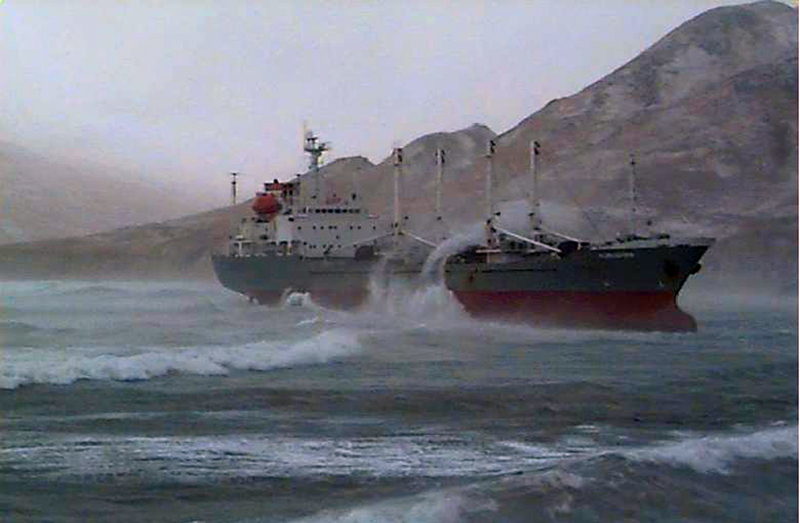
The 370-foot freighter M/V Kuroshima, ran aground in a heavy storm in Summer Bay, Alaska, in 1997. Image credit: USCG

1997  Two crewmen died when the Japanese freighter Kuroshima ran aground in a storm near Dutch Harbor. Bitter weather, with 90-m.p.h. winds and seas at 20 feet, made any air rescue impossible. Eighteen other crewmen were rescued by Coast Guardsmen who used a tow rope to haul a life raft to safety.  The Coast Guardsmen were from CGC Midgett that was fortuitously in Dutch Harbor for a mid-patrol break.  The freighter was later refloated.

2002  President George W. Bush signed into law a bill that created the Department of Homeland Security, the largest reorganization of the federal government in fifty years.  The Coast Guard was one of a number of agencies that transferred to the new Department; the transfer was scheduled to go into effect on March 1, 2003.

This Day in Coast Guard History, November 25

Based on the Coast Guard Historian’s timeline, https://www.history.uscg.mil/research/chronology/
With inspiration from Mike Kelso

November 25

1968  M/V Triple Crown foundered off the coast of Southern California with a loss of nine lives while retrieving the anchor and chain of a large offshore drilling rig. The Coast Guard investigated.

Elián González with his father and family members that was taken a few hours after their reunion at Andrews Air Force Base on April 22nd, 2000. It is described as “released by the government” on the website of the Public Broadcasting Station from where it is sourced. The Los Angeles Times reported second-hand that the photo was “taken by one of two federal agents who accompanied Elian from Miami and who were invited into the family’s quarters at Andrews Air Force Base.” CNN reported that the photo was released by the US Government. 22 April 2000

1999  Elian Gonzalez, a five-year old Cuban boy, was found on Thanksgiving morning clinging to an inner tube three miles off the coast of Fort Lauderdale, Florida.  He was among three survivors of a boating accident which killed 11 migrants fleeing Cuba.  The Coast Guard searched from Islamorada to Boca Raton, using a HU-25 and a HH-65 from Air Station Miami, a HC-130 from Air Station Clearwater, CGC Maui, and a 41-foot UTB from Station Fort Lauderdale.  The child later gained international notoriety when his father, a Cuban citizen, attempted to have him returned to Cuba, a desire that Elian’s relatives in the U.S. fought through the U.S. court system all the way to the Supreme Court.  The Court ruled in his father’s favor and the child was returned to Cuba.

This Day in Coast Guard History, November 24

Based on the Coast Guard Historian’s timeline, https://www.history.uscg.mil/research/chronology/
With inspiration from Mike Kelso

Faint lighting, suitable for pilots wearing night vision goggles, outlines the flight deck on board U.S. Coast Guard Cutter Bertholf (WMSL 750) in a ghostly green as the ship charts its course at twilight in the Yellow Sea June 2, 2019. The ship is engaged in a Western Pacific deployment in support of the U.S. Navy’s 7th Fleet. U.S. Coast Guard photo by Chief Petty Officer John Masson.

2015  CGC Bertholf returned to its homeport of Alameda after completing a 104-day multi-mission deployment in which the cutter seized over $455 million worth of illegal narcotics.  Bertholf was deployed to the Eastern Pacific Ocean in support of Joint Interagency Task Force-South (JIATF-S) Operation Martillo.  During this phase the cutter’s crew boarded and seized 11 smuggling vessels, detained 32 suspected narco-traffickers, and prevented more than 30,000 pounds of illegal narcotics from reaching U.S. shores.  The cutter’s success on the recent deployment showcases the stamina and flexibility of Bertholf’s hard-working crew, highlighted by the cutter’s interdiction of a self-propelled semi-submersible (SPSS).  Bertholf’s boarding teams achieved complete surprise in taking control of the stealthy vessel, and spent over two full days onboard the SPSS ultimately recovering over 15,000 pounds of narcotics.  At another point during the deployment, the cutter’s crew pursued nine different go-fast vessels on the high seas in less than seven days.  The successful interdictions were enabled by the cutter’s interoperability with other Coast Guard units, as well as assets from the Department of Defense and other agencies supporting the JIATF-S mission.  For a portion of the deployment, the cutter traveled to Valparaiso, Chile in support of UNITAS 2015, a multinational naval exercise, partnering with naval forces from 11 countries, including the U.S. Navy.  Bertholf ‘s boarding teams conducted joint interdiction operations with Chilean and Mexican forces, boarding simulated rogue merchant vessels to seize smuggled weapons of mass destruction components as part of an international task force.

This Day in Coast Guard History, November 23

Based on the Coast Guard Historian’s timeline, https://www.history.uscg.mil/research/chronology/
With inspiration from Mike Kelso

November 23

The staff of the Boston District personnel office celebrate VJ day.
[190530-G-G0000-3018]

1942  The Coast Guard Women’s Reserve, known as SPARs, was organized.

1970 – Editorial cartoon run during the Kudirka Incident. Credit New York Times

1970  Simas I. Kudirka, a Lithuanian seaman, attempted to defect from his Soviet fishing vessel to CGC Vigilant.  The incident occurred during a meeting near Martha’s Vineyard between the Soviets and the U.S. on fishing rights.  After consulting with the First District command, the cutter’s commanding officer allowed Soviet crewmen to board the cutter and forcibly remove Kudirka.

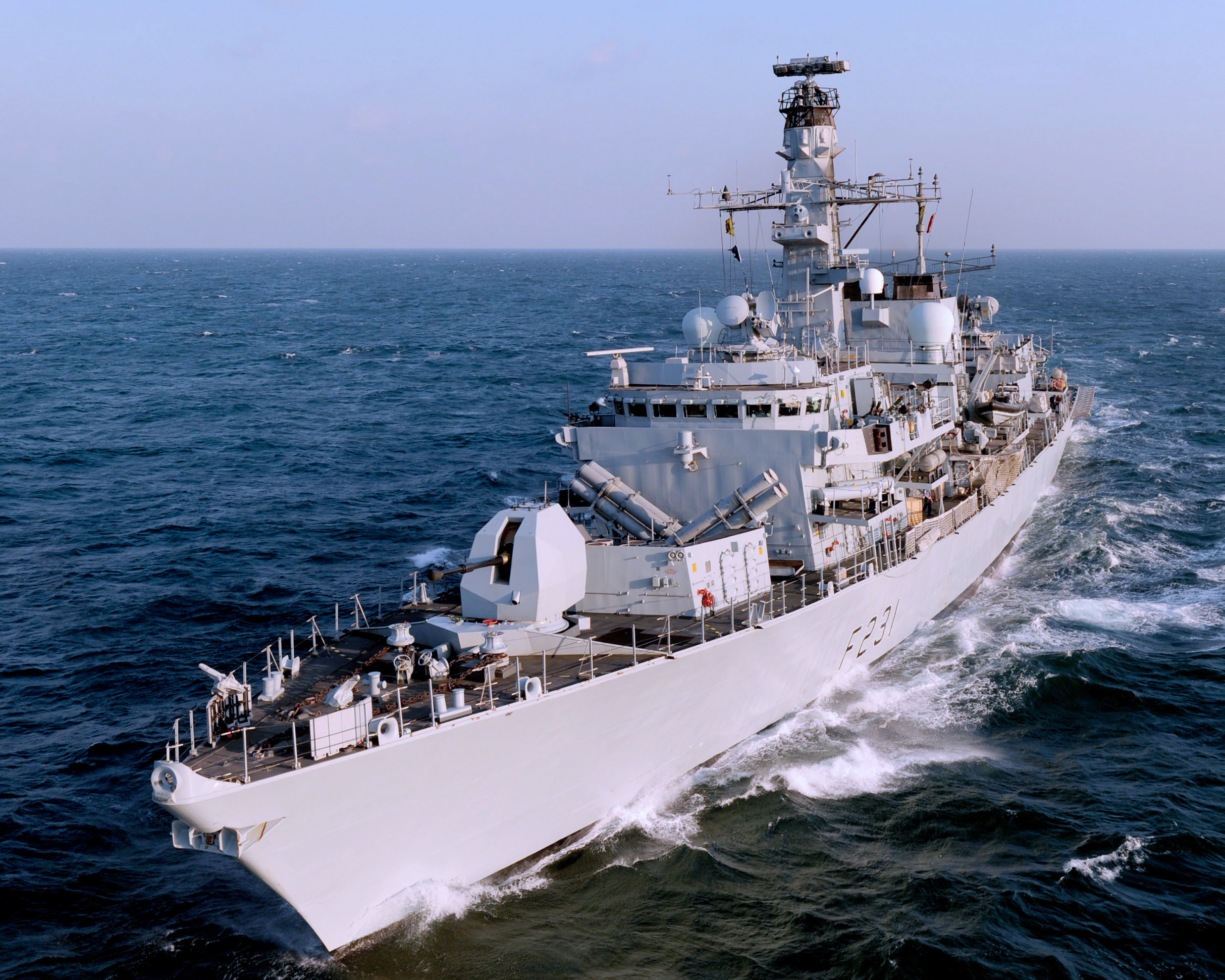
Royal Navy Type 23 frigate HMS Argyll is pictured at the end of Exercise Goalkeeper in the Middle East. Based in Plymouth, HMS Argyll was the longest-serving Type 23 frigate in the Royal Navy. Built in the late 1980s at the Yarrow Yard in Scotstoun on the Clyde (today part of BAE Systems), she was commissioned in 1991. She was decommissioned May 2024.

2014  While on a routine patrol, a Joint Interagency Taskforce South maritime patrol aircraft crew detected a go-fast vessel south of Haiti heading north at 15 knots with fuel barrels and possible contraband on board.  Watchstanders from the Coast Guard 7th District Command Center directed HMS Argyll to intercept and conduct a boarding of the vessel.  The go-fast began to jettison objects and Argyll launched both of its smallboats.  Shortly after, the go-fast vessel with four suspected smugglers aboard became compliant and was boarded by a U.S. Coast Guard law enforcement team assigned to Argyll.  The Royal Navy warship’s crew recovered 29 bales of contraband the suspects jettisoned into the water.  All bales later tested positive for cocaine.  The smuggling vessel was destroyed as a hazard to navigation.  In a separate case, the Coast Guard LEDET and crew of Argyll teamed to seize 216 kilograms of cocaine after a Dutch maritime patrol aircraft detected a suspect go-fast and vectored Argyll to the vessel’s location on November 23, 2014. The go-fast vessel was stopped and two suspects were taken into custody.  The contraband was offloaded in Mayaguez, Puerto Rico.

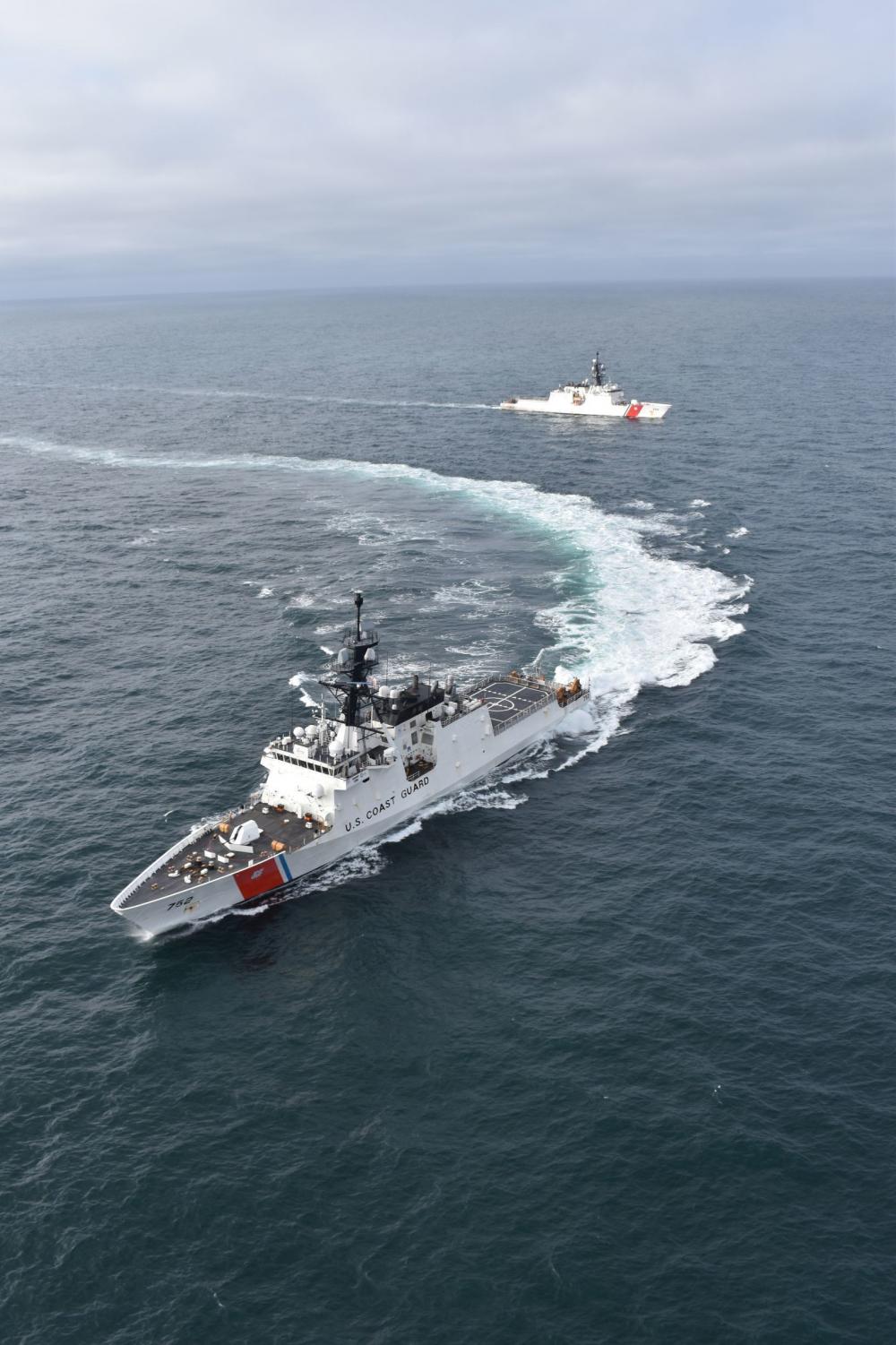
U.S. Coast Guard Cutters Stratton (WMSL 752) and Kimball (WMSL 756) steam in formation while patrolling the U.S.-Russian Maritime Boundary Line (MBL), in the Bering Sea, Sept. 26, 2022. This marked the first time two national security cutters jointly patrolled the MBL above the Arctic Circle. (U.S. Coast Guard courtesy photo).

2022  The Coast Guard Cutter Stratton (WMSL 752) and crew returned to Alameda, Wednesday, November 23, 2022 following a 97-day, multi-mission deployment to the Arctic Ocean and Bering Sea.  In August, the cutter and crew departed Alameda to project U.S. sovereignty throughout U.S. Arctic waters, provide search and rescue capabilities in the region, and meet with Alaskan communities. Stratton repeatedly operated along the length of the U.S.-Russian maritime boundary line (MBL) from the Diomede Islands to well above the Arctic Circle, while they patrolled within the U.S. Arctic zone. Stratton also patrolled the U.S.-Canadian MBL in the Beaufort Sea, demonstrating a presence in the distant regions of the Arctic. On September 26, 2024, Stratton and the Coast Guard Cutter Kimball (WMSL 756) became the first national security cutters to jointly patrol the U.S.-Russian MBL above the Arctic Circle. The operational intent was the protection of the sovereign rights of the U.S. and the promotion of international maritime norms through Coast Guard presence and influence in this increasingly strategic and competitive region. Stratton’s crew supported multiple search and rescue cases during their patrol, including rescuing two fishermen from a disabled vessel 180 miles off the Oregon coast while Stratton was transiting to the Arctic. The crew towed a 66-foot disabled fishing vessel toward shore and then transferred the vessel and survivors to a Coast Guard Station Coos Bay 47-foot Motor Lifeboat crew, approximately 45 miles offshore Coos Bay, Oregon. Stratton’s crew also coordinated with Air Station Kodiak aircrews and the Alaska State Troopers to help locate a family stranded on the remote shores of Kotzebue Bay, Alaska, after their boat capsized. Stratton and the Canadian Coast Guard Ship Sir Wilfrid Laurier crews conducted an Arctic search-and-rescue exercise near Point Hope, Alaska. The crews exercised bilateral coordination to locate a simulated vessel in distress using Stratton’s Scan Eagle unmanned aerial system and operations specialists aboard Stratton, who directed the Canadian small boat crew toward the distressed vessel while watching a live feed from the overhead drone. The Canadian small boat located, recovered, and returned the distressed vessel to Stratton. While operating near and above the Arctic Circle, Stratton’s crew conducted multiple outreach events with community members and key leaders in Kaktovik and Utqiagvik on Alaska’s North Slope. The crew also visited the village of Savoonga on Saint Lawrence Island, Alaska.


This Day in Coast Guard History, November 22

Based on the Coast Guard Historian’s timeline, https://www.history.uscg.mil/research/chronology/
With inspiration from Mike Kelso

1906  At the second International Radio Telegraphic Convention, which was held in Berlin, the attendees agreed to adopt the wireless signal “SOS” as the internationally recognized signal for distress at sea.  Their thinking was that three dots, three dashes and three dots could not be misinterpreted.

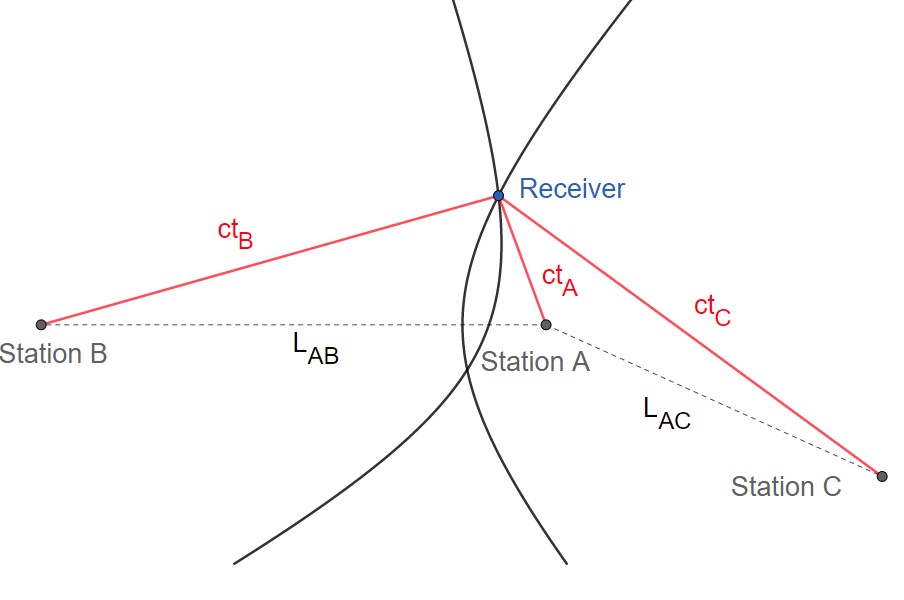
Hyperbolic navigation example (Image: Wikipedia)

1953  A great boon to ocean navigation for aircraft surface vessels was the completion of four new LORAN stations in the Far East.  The stations were built at Mikayo Jima, Ryuku Islands; Bataan and Cantanduanes Islands, Philippines; and Anguar, Palau Island in the Carolinas chain.

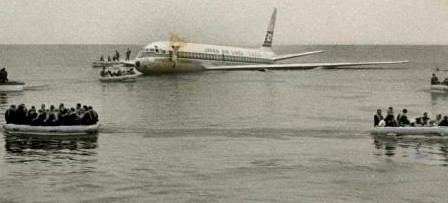
Japan Airlines Flight 2 in the water just short of San Francisco International Airport runway. 22 November 1968. US Coast Guard photo.

1968  A DC-8 with 107 persons on board disappeared from the radar during final approach to San Francisco International Airport.  Visibility was 3/4-mile in fog and the ceiling was 300 feet.  A Coast Guard helicopter located the aircraft in the water 6,100 yards from the runway with people on the wings boarding life rafts.  Within seven minutes, two additional helicopters and a Coast Guard boat were on the scene.  All 107 persons were saved.

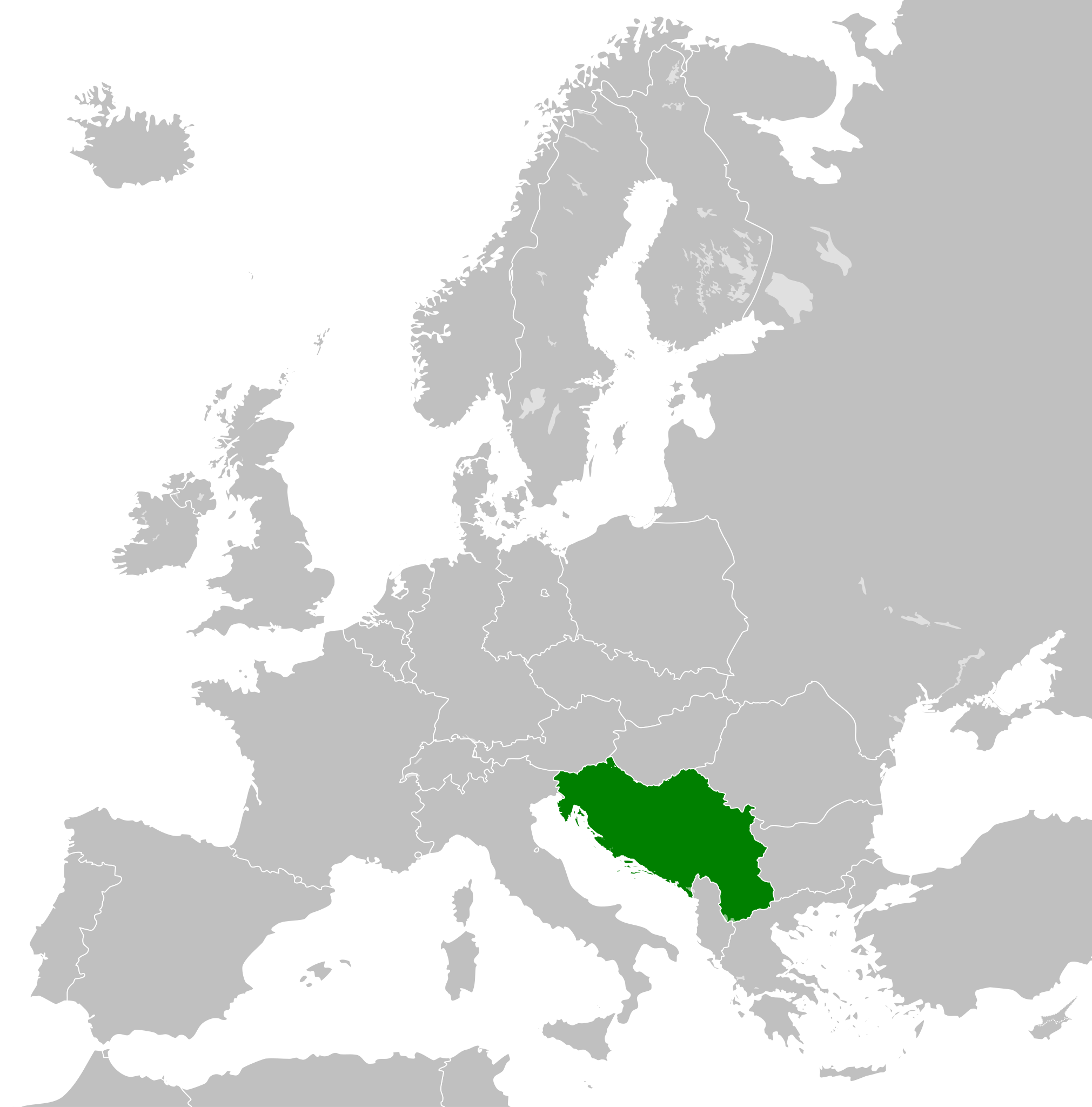
Map of Socialist Federal Republic of Yugoslavia as it was from 1945-1992. Surrounding countries accurate from 1956-1990.

1993  NATO began enforcing United Nations’ Resolutions 713 and 757 that set in place an embargo against the former Federal Republic of Yugoslavia (Serbia and Montenegro).  Four Coast Guard LEDETs were deployed to Southern Europe to support the operation and were placed aboard NATO warships.

SAN FRANCISCO. The Coast Guard Cutter Waesche transits through the San Francisco Bay for the first time en route to its homeport of Alameda, Calif., Feb. 28, 2010. (U.S. Coast Guard photo by Petty Officer 3rd Class Kevin Metcalf)

2015  CGC Waesche returned to its homeport at Coast Guard Island in Alameda after a 106-day deployment. Waesche departed Alameda in August on its 18,000-mile deployment ranging from the coast of Southern California to the Arctic Ocean, and the Bering Sea.  During this deployment, Waesche’s crew completed two weeks of weapons system testing and certification, patrolled the Arctic in support of Operation Arctic Shield, and enforced federal fisheries laws and safety regulations in the Gulf of Alaska and Bering Sea.  Law enforcement personnel aboard the cutter conducted numerous at-sea boardings of fishing vessels to ensure compliance with federal fisheries regulations and conduct spot checks of required safety equipment.  The cutter patrolled in the Arctic, furthering national strategic goals by enhancing maritime domain awareness and improving preparedness, prevention, and response capabilities in the region.  While in the Bering Sea, Waesche assisted in a search-and-rescue case that resulted in the successful medical evacuation of an ailing fisherman.  Waesche crewmembers worked closely with the communities of Dutch Harbor and Barrow, Alaska while in the area.  The crew hosted community leaders from Barrow aboard the cutter to discuss the rapidly evolving economic landscape in the Arctic and volunteered during their time ashore to complete several community service projects in the community of Dutch Harbor.

This Day in Coast Guard History, November 21

Based on the Coast Guard Historian’s timeline, https://www.history.uscg.mil/research/chronology/
With inspiration from Mike Kelso

November 21

USS ENDURANCE (MSO-435) cruises into position alongside the oiler USS MISPILLION (AO-105) for underway refueling, 5 January 1971. Catalog #: USN 1147566

1970  Two 378-foot cutters, CGC Sherman and Rush, combined with USS Endurance to attack and sink a North Vietnamese trawler attempting to smuggle arms into South Vietnam.

The Reliance-class medium endurance cutter USCGC Decisive (WMEC 629) conduct at sea engagements with the navy of Guatemala in the territorial seas of Guatemala on Oct. 25 – 26, 2021. The U.S. Coast Guard conducts routine deployments in the Southern Command area of responsibility, works alongside partners, builds maritime domain awareness, and shares best practices with partner nation navies and coast guards. (U.S. Coast Guard photo)

1995  CGC Decisive located and began tracking a 75-foot freighter packed with Haitian migrants 30 miles off the northwest coast of Haiti on November 19.  The cutter followed the freighter for two days as it maneuvered in and out of Cuban territorial seas, refusing to allow a boarding party aboard.  Finally, at noon, November 21, with  USCGC Northland having joined the chase, the captain of the freighter allowed a boarding team to come aboard where they discovered 516 migrants.   Using small boats from both cutters, the migrants were brought aboard Northland and were repatriated.

Coastal freighter Calypso

2014  Watchstanders at the Coast Guard 7th District command center received a report from a tug stating they heard a distress call from a vessel claiming to be taking on water off the coast of Great Inagua, Bahamas.  A Coast Guard MH-60 crew deployed in support of Operations Bahamas, Turks and Caicos (OPBAT) launched and located the coastal freighter Calypso approximately 50 miles off the coast of Great Inagua.  The helicopter crew lowered a rescue swimmer down with a dewatering pump.  Calypso began to slowly transit to the coast of Haiti to investigate the source of the flooding.  At approximately 12:30 p.m., CGC Charles Sexton arrived on scene and Coast Guard crewmembers were transferred to the freighter and assisted with the dewatering of the vessel.  The freighter began to list on the right side due to the amount of water in the lower compartments.  To ensure the safety of everyone aboard, all seven crewmembers were removed and transferred to the cutter Sexton with no medical concerns.  CGC Thetis arrived on scene at approximately 7 p.m. and safely transferred the seven crewmembers from Sexton to Thetis.  At approximately 7:30 p.m., crewmembers from the cutter Thetis reported seeing the freighter Calypso continue to list on the right side before sinking approximately 45 miles north of Cap Haitien, Haiti.