Different sort of Boat and Man-in-the-Water Recovery

There is an informational video here about a catamaran work boat. That may be interesting, but what I found most surprising was the system they have for lifting a man out of the water. It is shown near the end. A single crewman can both drive the boat and scoop an unconscious person out of the water. Not enough here to say it is a good idea, but certainly an unusual approach.

Thanks to Lee for the heads-up.

Denmark Supports China Permanent Observer Status at Arctic Council

Canadian media reports Denmark has told China that they support China’s application for permanent observer status on the eight member Arctic Council (Canada, Russia, Denmark, Finland, Iceland, Sweden and the United States).

As a great maritime trading nation, China certainly has an interest in the possibility of shortening the shipping route between Europe and Asia, but their interest goes beyond that:

Wright ( University of Calgary history professor David Wright)… points out that Chinese scholars are examining Canada’s claims of historical sovereignty over the Arctic, especially in regard to the Northwest Passage. China, he says, wants the Arctic, with its sea passages, oil and natural gas wealth, minerals and fishing stocks, to be international territory or the ‘shared heritage of humankind.’…Such a view is contrary to Canada’s insistence on its territorial sovereignty of the Arctic islands and the waterways between them.” (emphasis applied)

As noted earlier Canadian and US interest don’t exactly coincide here, with the Canadians claiming sections of the Northwest Passage as internal waters, while the US considers them an international strait. The Canadian position that they have the right to deny passage bears some resemblance to the position China has taken with regard to its EEZ. The Chinese position, claiming “indisputable” sovereignty over most of the South China Sea, while considering the Arctic the “shared heritage of humankind” smacks of the the old saying, “What’s mine is mine; what’s yours is negotiable.”

Shades of Douglas Munro–22 Jan., 1969

The Cutterman website and coastguardchannel.com are sharing a link to a story with many elements of Douglas Munro‘s rescue of Marines from a beach on Guadalcanal.

Troops were trapped, having been ambushed and surrounded, their backs to the sea. Unless rescued by boat, death seemed certain.

This time the troops were nine South Vietnamese soldiers; the enemy, an estimated two Viet Cong platoons (about 60 men); the boat that came to their rescue, the Point Banks’ small boat, a 13’4″ Boston Whaler armed with a single M-60 machine gun. The Coast Guardsmen were Gunner’s Mate First Class Willis J. Goff and Engineman Second Class Larry D. Villarreal. They made the trip twice, overloading the boat each time. Both were awarded the Silver Star for their actions. GMCM Bill Wells tells the story:

http://www.berthdeck.com/Articles/PointBanksHeroes.pdf

Sounds like two more potential Fast Response Cutter names.

Russia Opens Its Maritime Arctic-USNI

The Naval Institute has a good review of recent developments in the Russian Arctic, written by Captain Lawson Brigham, USCG (ret.).

Looks like the Russians are opening up this formerly closed area for commerce and exploitation. Moreover they have settled their boundary dispute with Norway and their handling of hydro-carbon deposit that straddles the new Russia-Norway EEZ boundary will provide precedence for handling other similar situations. The infrastructure appears to be growing rapidly and year round operations are planned.

(Note the US and Canada still have an outstanding dispute over a boundary line in the Arctic.)

Piracy Update–23 October, 2011

As noted previously, Somali pirates seem to be having a harder time this year. Additionally we continue to see both increased acceptance of the efficacy of armed security guards and increasing piracy in the Gulf of Guinea.

Eaglespeak shows how the piracy problem off Somalia has increased in recent years with an animated display of attacks on a yearly basis from 2005 to Oct. 2011 that dramatically shows both the increasing number of attacks and the progressively greater geographic distribution of attacks.

The good news is that while the number of attacks is up, the number of seizures is down from this time last year. “Only 24 vessels were hijacked this year compared with 35 for the same period in 2010.”

It is probably premature, but the Somalia Report is suggesting we may be seeing an end to piracy in the region as we have come to know it. Others are not convinced.

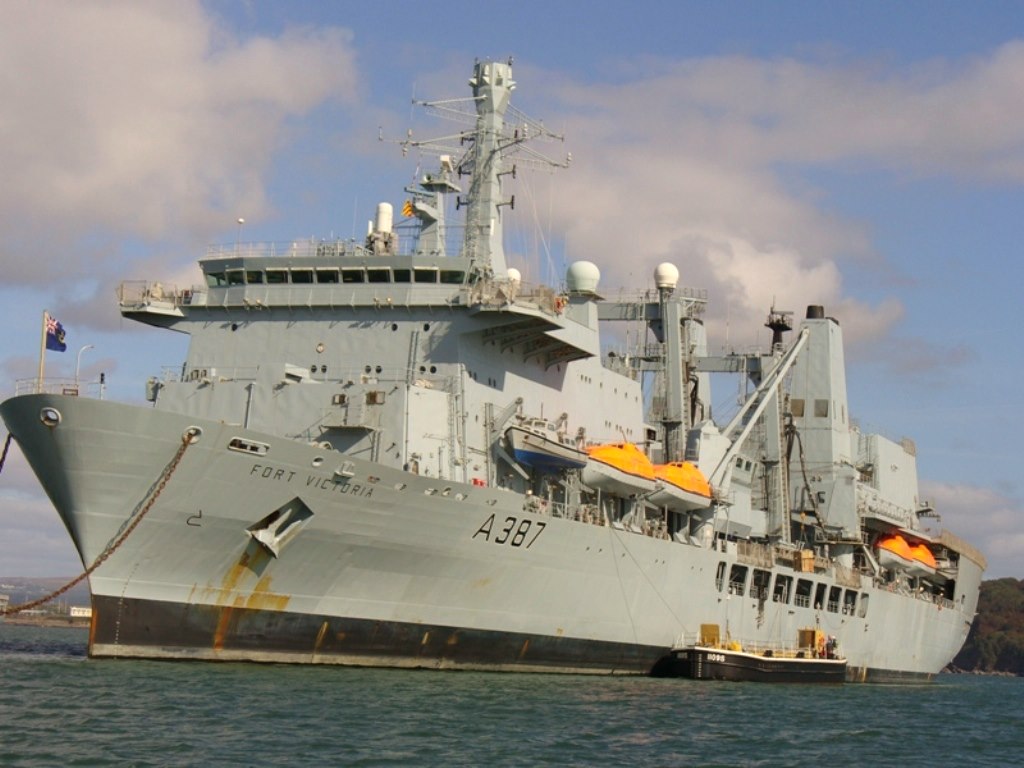
Since the last report, it has been a bad couple of weeks for Somali pirates. Looking at the NATO data base, there have been six attacks, but none have been successful. In fact, the period has been a net loss for pirates with one of their previously seized mother ships, the 100-ton fishing dhow Hibid Fidi, being recaptured by British commandos, freeing its Pakistani crew.  A few days earlier Brits from the RFA Fort Victoria, with support from a USN helicopter from the frigate USS De Wert, broke up an attack on an Italian vessel, the 56,000-ton bulk carrier Montecristo. The vessel’s crew of 23 had taken shelter in the ship’s citadel. Meanwhile Somali authorities claim to have captured 15 would be pirates.

File:FortVictoria Plymouth.jpg

 Royal Fleet Auxiliary Fort Victoria, from Wikipedia Commons,  by User:Sreejithk2000

Use of the Fort Victoria, an underway replenishment ship, shows again that, at least for this type of sea control, you do not necessarily need a frigate, any armed vessel with a helicopter, boats, and space for an armed boarding team can do the job.

There is more information on the Montcristo attack here including information that the crew may have been steering the ship toward assistance from inside the citadel.

Armed Security Teams: There is more evidence of the acceptance of private armed security teams. A Japanese Company is hiring private security, while the Japanese government considers placing military teams on Japanese flag ships, and Italy is forming ten teams of six soldiers each to guard Italian Flag ships.

Gulf of Guinea: Here the motivation and methods appear to be different, but the area is becoming increasingly dangerous. 19 attacks have resulted in eight tankers have been hijacked in 2011 compared with none in 2010. The attacks below reflect only the last two weeks. From the Office of Naval Intelligence’s Piracy website:

1. NIGERIA: Vessel (JOAN CHOUEST) attacked by pirates on 17 October near the offshore Oso oilfield, near Bonny. (Open Source)
2. NIGERIA: Offshore tug/supply vessel (WILBERT TIDE) boarded by pirates on 17 October while underway near the offshore Oso oilfield, near Bonny. The Bangladeshi master was kidnapped as 20 armed men from two speedboats boarded the vessel. (Open Source)
3. NIGERIA: Product Tanker (CAPE BIRD) was hijacked by pirates on 8 October approximately 90 nm south of Lagos, Nigeria, and was released on 13 October. No further information on whether a ransom was paid or the cargo of oil was stolen. (Open Source)

There is some indication of how piracy can work in an area where there is still a viable national government.

Ghana has ordered two 46 meter patrol boats from China (very similar in size to the Fast Response Cutter) in an effort to beef up their anti-piracy forces.

Crash and Collision, Recrimination and Rememberance

Two items today, recall the dark side of being a Coastie:

Navy Times reports that Commander Coast Guard District 17 charged, Lt. Lance Leone, the co-pilot and lone survivor of the crash of an MH-60 Jayhawk off La Push, WA, July 7, 2010, with negligent homicide, dereliction of duty, and destruction of government property on Sept. 30. “An Article 32 hearing to determine whether Leone will be court-martialed is scheduled for early December…Witnesses told local media at the time that the helicopter was flying at a low altitude and crashed into the Pacific after clipping power lines…The crew was flying the helicopter home to Sitka, Alaska, after it finished a maintenance and upgrade period in Astoria, Ore.” (Because Leone was co-pilot, and presumably not pilot-in-command, I’m curious why these charges were filed.)

The Coast Guard Compass remembers the sinking of the Cutter Cuyahoga, 33 years ago today with the recollections of Cmdr. Gordon Thomas IV (ret) who survived the collision as an officer candidate.

File:Cuyahoga Wreck2.jpg


Canadian Icebreaker, Arctic Offshore Patrol Ship, Shipyard “Rationalization”

As we noted earlier the Canadians are embarking on a major ship building program. A lot is riding on the choice of two shipyards that will be responsible for virtually all the work.

Most interesting for Coast Guard readers is that they will be building a large icebreaker for the Canadian Coast Guard and six to eight “Arctic Offshore Patrol Ships” which can operate in the North West Passage in the Summer months in addition to serving as conventional offshore patrol vessels based on the Norwegian Coast Guard ship Svalbard (These ships are going to the Navy).  Background here, here, and here.

The selection has been made and the Irving Shipyard in Halifax, NS, will get the contract for 15 combat vessels and the Arctic Offshore Patrol Ships, worth a total of about C$25B. Seaspan Shipyard, in Vancouver, BC, will build non-combat vessels, valued at approximately C$8B, including those for the Coast Guard as well as oceanographic and fisheries research vessels.

(A note of thanks to Ken White for keeping me up to date on this and providing the illustrations below.)

http://mail.aol.com/34290-111/aol-6/en-us/mail/get-attachment.aspx?uid=31908140&folder=OldMail&partId=3