What Might Coast Guard Cutters do in Wartime? Part 1, Navy Shortfalls

Many of the new generation cutters may be around for another 50 years so it is likely they will see some conflict as previous generations have. What might cutters be doing if we go to war? What sort of environments? What possible missions? What capabilities do they have? And what might we want to be added?

We need to start with the question, what limitations does the Navy have that might prompt them to call on the Coast Guard? Why would the US Navy, by far the most powerful in the world, need help from the Coast Guard? Let’s look at their missions and the forces available.

Navy Missions

The mission of the Navy is to maintain, train and equip combat-ready Naval forces capable of winning wars, deterring aggression and maintaining freedom of the seas.

Included in that might be:

Protecting the US and its allies from attack from the sea in any of a number of forms, overt or covert, by air, surface, sub-surface, or missiles (both cruise and ballistic).

Projecting power against hostile forces, by a similar diverse range of options.

Protecting US and friendly nations’ use of the oceans and the air above them for purposes including (but not limited to) both military and economic exploitation.

Denying that use to hostile powers.

Those objectives entail a huge range of subsidiary tasks. New missions, like defending population centers against ballistic missile attacks, have been added, but centuries old historic missions still must also be addressed.

Forces

The Navy currently has approximately 285 vessels, but not all these are combatant ships. The exact composition changes frequently but they have roughly:

  • 2 Fleet command ships
  • 11 aircraft carriers (there is talk that this may go down to 9. In the not to distant past 15 was the norm)
  • 28 Amphipbious assault ships (LHA/LHD/LPD/LSD)
  • 83 Guided missile Cruisers and Destroyers
  • 26 Frigates (soon to be decommissioned)
  • 2 Littoral Combat ships (LCS) (55 ships planned, expected to replace remaining frigates, the 14 mine countermeasures ships, and the 11 Cyclone class patrol craft)
  • 57 SSN and SSGN submarines armed with torpedoes and tactical missiles
  • 14 SSBN Strategic Defense Ballistic Missile submarines
  • 14 Mine Counter Measures Ships (MCM) (soon to be decommissioned)
  • 11 Cyclone Class Patrol Craft
  • 37 Underway replenishment ships

This is the fewest ships in the US Navy in almost a hundred years. Additionally in view of current budget limitations the size of the fleet is likely to shrink further. Nine cruisers and three LSDs are expected to be decommissioned including some as young as 20 years old, and since the “super committee” has failed to act, the entire LCS program may be in jeopardy, and the fleet may be reduce to approximately 230 ships.

Even if its budget is not cut, if it only remains static, the fact that ship prices are going up faster than inflation, and the Navy is choosing to concentrate more and more technology in fewer and fewer ships means the number of ships will likely continue to fall.

Shortfalls

Most of these ships are individually superbly capable, but the US Navy has some known weakness.

  • Inshore
  • Mine Counter Measures (MCM)
  • Anti-Submarine Warfare (ASW)
  • Naval Surface Fire Support (NSFS)
  • Sea Control
  • Base Security

INSHORE: The Navy has very few shallow draft patrol craft of a type useful for boarding and  inspecting coastwise traffic. This is why the Coast Guard has been in Iraq, and why 82s were sent to Vietnam. Fortunately recent requirements have been small because the Iraqi coast line is short. Almost anywhere else, controlling coastal traffic will be much more difficult.

MCM: Despite the fact that since WWII, mines have done more damage to US Navy ships than any other weapon, the US Navy’s MCM capability is modest and generally regarded as both more poorly equipped and less professional than their European counterparts. The LCS program has been expected to address this, but the mine countermeasures systems planned for the LCS are still a long way from maturity. Still the concept of add-on, portable, modular systems is appealing.

ASW: Anti-submarine Warfare capabilities were allowed to decline after the collapse of the Soviet Union. This was understandable under the circumstances, but now the ASW problem is reemerging. Historically ASW has been a “numbers” problem as well as a quality problem. Certainly the US Navy has the quality, but they no longer have large numbers. Not only is the number of escort vessels down dramatically including the impending total disappearance of specialized ASW escorts, carriers no longer have fixed wing ASW aircraft, and Maritime patrol aircraft numbers are way down. Reserve fleets have disappeared and additionally, allied fleets have also declined even more precipitously.

NSFS: Since the decommissioning of the Iowa Class battleships, there has been concern that there has not been enough Naval Surface Fire Support (NSFS) assets. This concern went as far as resulting in a Congressional mandate (Section 1011 of the National Defense Authorization Act for Fiscal Year 1996 (Public Law 104-106; 110 Stat. 421)). There have been several attempts to address this need including putting NLOS missiles on the LCS ships and a plan to build 32 “Land Attack” Zumwalt Class Destroyers with advanced gun systems. The NLOS missile has been canceled and the Zumwalt class has been truncated at only three ships. In a benign environment close air support can fill this void, but if there is an active air defense or air superiority is contested, NSFS may be essential.

SEA CONTROL: Julian Corbett was the disciple of Sea Control and as he would say, Battle force ships make sea control possible, but cannot be exercised by “battleships” alone. There is the question of simple numbers.  At the end of WWII the Navy had 6,768 ships, including 1,600 ships of over 1,000 tons, and those ships were complimented by similarly large numbers of allied vessels. The number of ships in the Navy has been steadily declining and it appears they may decline even more. Numerically this is the smallest US Navy since World War I, almost 100 years. Salt water covers approximately 69% of the earth’s surface or about 352,103,700 km²–roughly 100 million square nautical miles (rounding down a bit). That is roughly 352,113  sq. miles/ship. If we look at only cruisers, destroyers, and the projected LCS force (less than 140 ships) then that is about 715,000 square miles per ship. Spread evenly across the ocean they would be more than 800 miles apart, but of course ships are not spread evenly across the ocean and they are not all underway all the time, and they have missions other than sea control. Our attempts to control the flow of Narcotics by sea and attempts to prevent piracy off Africa demonstrate how truly hard Sea Control can be. The US and its close allies no longer control the majority of merchant and fishing fleets. Potential enemies control substantial numbers of ships that could damage the US and its allies in a number of ways including landing agents, smuggling weapons, laying mines, or directly attacking assets. Russian attempts to market the “Club-K” cruise missile as a containerized system that can weaponize any vessel with space for a standard 40 foot container highlights the potential dangers of failure to control enemy shipping.

BASE SECURITY: Once the US Navy was present in virtually every American port and there were a host of small ships that provided security for these bases. Navy resources are increasingly concentrated and the flotillas of small craft are gone. The Chinese vision of how to counter the US includes attacks on vulnerable rear area and logistical support. In Adm. Liu’s vision. “In applying tactics to ‘active defense’ operations, we would act on the guiding principle that we advance if the enemy advances. That is, if the enemy attacked our coastal areas, we would attack the enemy’s rear.”…Liu recounts addressing a June 1984 forum. He was gratified that the navy had embraced “a unified guiding ideology for its combat operations. It had made clear the combat principle of ‘active defense, offshore battles’ and the combat forms of ‘positional warfare for firm coastal defense, mobile sea warfare, and sabotage guerrilla sea warfare.’”

——-

When you start with only 120 to 140 surface combatants, after assigning ships to escort eleven carriers and ten Amphibious ready groups, assigning ships for Ballistic Missile Defense, and factoring in maintenance requirements, there simply is very little left for other missions.

NSC Projected Delivery

https://i0.wp.com/upload.wikimedia.org/wikipedia/commons/0/0f/USCG_National_Security_Cutter_BERTHOLF_%28WMSL-750%29.jpeg
NSC #3 STRATTON was delivered to the Coast Guard on Sept. 2, and is expected to depart INGALLS shipyard in Pascagoula on Saturday.
Expected delivery for NSC #4 is November 2014 and Sept. 2015 for NSC #5. If the Coast Guard does manage to get funding for one ship a year in 2013, 2014, and 2015, presumably we can expect the program to be completed, with the delivery of the eighth ship, at the end of FY2018.

A Novel “Solution” to a Rat Problem

As usual, success brings with it unexpected consequences. Munro seized a stateless drift net fishing vessel, but it was found to be infested with rats. Alaska doesn’t want the rats ashore and fears e-rat-acation would be incomplete, so what do you do?

“Demonstrate Coast Guard Firepower & Blow Up The Rats!” suggests Alaska Senator Mark Begich

–Sink the ship using a National Security Cutter’s new 57mm.

This could be a bit embarrassing if we run out of ammo before sinking the ship, but it would be instructive. (Admittedly even I think they would succeed, but it will take more than a few rounds and probably won’t happen quickly. There would probably be a fire first, barbecuing the little rascals. I can hear the PETA outcry.)

The incident does seem to provide more evidence that we need more patrols in the Western Pacific.

“New” Colombian Navy Corvette

Coast Guard forces working off the Colombian Coast may soon see a new Colombian Navy Corvette, donated by the South Korean Navy. The ship is the former  South Korean patrol ship Gunsan. She is one of 24 Pohang Class ships. One of the ships of this class was the Cheonan, believed torpedoed and sunk by a North Korean mini-sub with the loss of 46 crewmembers.

H-60s on National Security Cutters

HH-60_NSC-2

As I suggested in the recent review of news from the Acquisition Directorate (CG-9),  I did ask Master Chief Brett Ayer (MCPO for CG-9), “Why is the Coast Guard using a different helo haul down and traversing system from Navy?"(RAST) I thought perhaps he would answer in the newsletter, but instead he answered me directly:

"If you are talking about the ASIST system, it was installed on the first few NSCs under Deepwater. As you know Deepwater was a performance type contract with ICGS. We provided our performance requirements and it was up to them to figure out the best way to meet them.

"My understanding is that we did not specifically spec ASIST. The Coast Guard had a requirement for recovering helicopters and ASIST is what ICGS provided (it met requirements).

"As you know Deepwater is not longer a program, and we are now managing our own acquisitions (although a few Deepwater contracts are still in effect for a little while longer).

"Since the original Deepwater requirements were put together, a few things have changed, one of which is that the Coast Guard had decided that we will not deploy H60s on our cutters. This changes the helicopter handling requirements and somewhat negates the need for the ASIST (or similar) systems. I do not believe the MH65 (as configured) is compatible with either ASIST or RAST.

"Our needs for shipboard handing of helicopters in currently under review, and I have no doubt that we will look at the Navy and their systems as a possible option"

In response to his e-mail I mentioned the discussion in the comments section of an earlier post regarding the possibility of  H-60s could operate from the National Security Cutters. this was his response:

"I think the confusion has to do with the decision not to deploy H-60s on cutters. The NSC were initially designed to deploy HH-60s equipped with the ASIST system.

"However as I stated, the Coast Guard made the decision that the MH-65 would be the primary cutter deployed helicopter not the HH-60. Because of this the Coast Guard never outfitted our HH-60s with the ASIST hardware, they also removed the blade folding equipment from the HH-60s and added other external equipment that makes them incompatible with cutter deployment.

"So in short the HH-60 can operate off the NCSs, but it cannot use the ASIST system and there is no way to fold the blades. This is not a limitation of the NSC, but of the helicopter configuration and policy.

"I cannot answer the question about the Navy HH-60s, but I will ask someone who should have the answer"

I hope the decision not to use the CG MH-60 as a ship board helo does not mean the previous plan to provide accommodations for H-60s on Offshore Patrol Cutter will not be scaled back to accommodate only the H-65. The ability to operate and service H-60s is a potentially important military capability and also will allow the Coast Guard more options when it ultimately replaces the H-65.

New from CG-9

The Acquisitions Directorate (CG-9) website has been busy lately.

They are reporting the award of a  contract for the first 38 of what may ultimately be 500 “Response Boat, Small,” and award of a contract for eleven more “Response Boat, Medium.”

They also report on work on the helicopter haul down and traversing system to be used on NSC with the H-65.

They have also issued their new newsletter. This month it discusses CG infrastructure improvements, and Master Chief Ayer answers, “I don’t understand why the new Offshore Patrol Cutter (OPC) has to be so big. If it is replacing the Medium Endurance Cutter (WMEC), why is it as big as a High Endurance Cutter (WHEC)?”: Read the newsletter (pdf)>>

(Think I’ll ask MCPO Ayers why we aren’t using the Navy’s helicopter haul down and traversing system.)

China Goes to the Poles

China Defense Blog has a photo essay from China’s recent expedition to the Arctic, as well as pictures of their station in Antartica. Below is a photo of their large Russian built icebreaker from the post, with the Wiki link for the specs. Note in the link above, their helo looks an awful lot like an H-65. There is also some photos of their new support aircraft, a modified DC-3.

http://news.xinhuanet.com/english2010/china/2010-08/21/c_13455724.htm
ABOARD XUELONG, Aug. 21 (Xinhua) — A group of Chinese scientists reached the North Pole on Friday afternoon, extending their research on the Arctic Ocean to Earth’s northernmost point.

Fourteen Chinese scientists were flown in by helicopter from icebreaker the Xuelong, or Snow Dragon, which carried a Chinese exploration team and reached a point at 88.22 degrees north latitude and 177.20 degrees west longitude.

https://chuckhillscgblog.net/wp-content/uploads/2011/09/1282481690_28471.jpg?w=300

Photo: MV Xue Long

Operation Sail 2012

https://i0.wp.com/eastbaycouples.com/blog/wp-content/uploads/2008/07/CoastGuardCutterEagle.jpg

Looks like Operation Sail 2012 is shaping up nicely. Here is an announcement of the first seven tall ships committed to participate (Eagle leads the list of course) and projected schedule.

“Fuentes (chairman of Operation Sail, Inc.) said that tall ships from Russia, Spain, Argentina, Brazil, Ecuador, Mexico and the United States are the first confirmed participants in the multi-port commemoration which begins in April 2012.  Cities involved include New Orleans, San Juan, New York, Norfolk, Baltimore, Boston and New London.

“OpSail is partnering with the U.S. Navy to produce events next year that celebrate the bicentennial of the writing of The Star-Spangled Banner and commemorate the War of 1812.”

Iranian Warships off the US Coast?

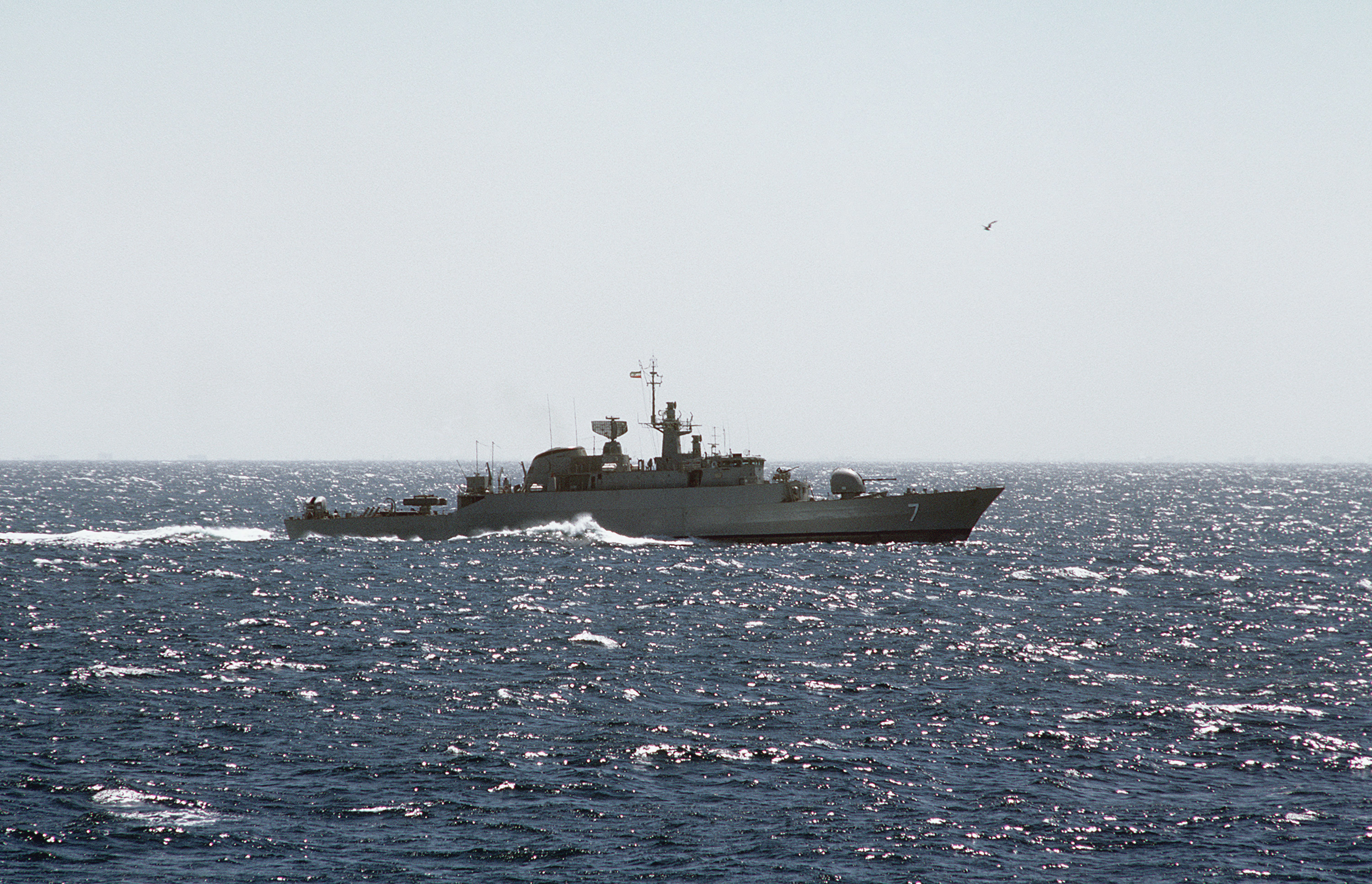
File:Iranian Alvand class frigat.JPEGThe Iranians have announced that they intend to send a naval task force to provide a “powerful” presence off the US coast. Iranian military pronouncements frequently seem to be meaningless chest pounding for domestic consumption, and in all probability the task force will consist of only one warship smaller than a 270, and a replenishment vessel, but there may be more to this than simple theatrics. Informationdissemination suggests that this may be a way of cirumventing the UN sanctions on Iran and that perhaps this is a way to allow technology transfer. Likely port calls are Cuba and Venezuela.

At the risk of appearing paranoid, I’ll try to think like the Iranian Revolutionary Guard Corp commander in charge of these vessels. I want to embarrass, degrade, and covertly attack the Great Satan in any way I can, as long as I don’t get caught. I might also have a opportunity to make a personal fortune. Might this be an opportunity to pass weapons, like shoulder launched SAMs, to terrorists already in the US by making rendezvous off shore, or to simply put agents ashore. It might be an opportunity make a substantial profit by delivering weapons to a drug cartel, maybe even a small submarine. There is of course the opportunity for technology transfers in both direction when port calls are made.

In November 2010 a German newspaper carried a story that the leaders of Iran and Venezuela had reached an agreement to establish a ballistic missile base in Venezuela armed with Iranian built IRBMs capable of reaching the US. This has been discounted by the State Department, but the logic of such an arrangement would have to be attractive to leaders of both Iran and Venezuela as a way of insuring against a US strike against either regime.

Should someone assign a shadow to these vessels while they are off the US coasts?

As informationdissemination notes, the Chinese are also expected in Caribbean Waters in the form of a hospital ship. If other, potentially hostile, navies start acting like the US Navy, keeping warships off our coasts, as they may in the not too distant future, how might the Coast Guard be different?

“20,000 Heat-Seeking Missiles” May be Missing

First, we had a report from The Telegraph that the Iranians had taken advantage of the chaos in Libya to steal dozens of sophisticated SA-24 Russian made shoulder launched surface-to-air missiles similar to “Stingers.”

Now Fox News reports there may be as many as 20,000 of these weapons on the loose.

While this high number sounds unlikely, it does look like the supply and demand curves for shoulder launched SAMs is now working in favor of the bad guys.