“Light ‘Em Up With the Laser”–It Could Happen

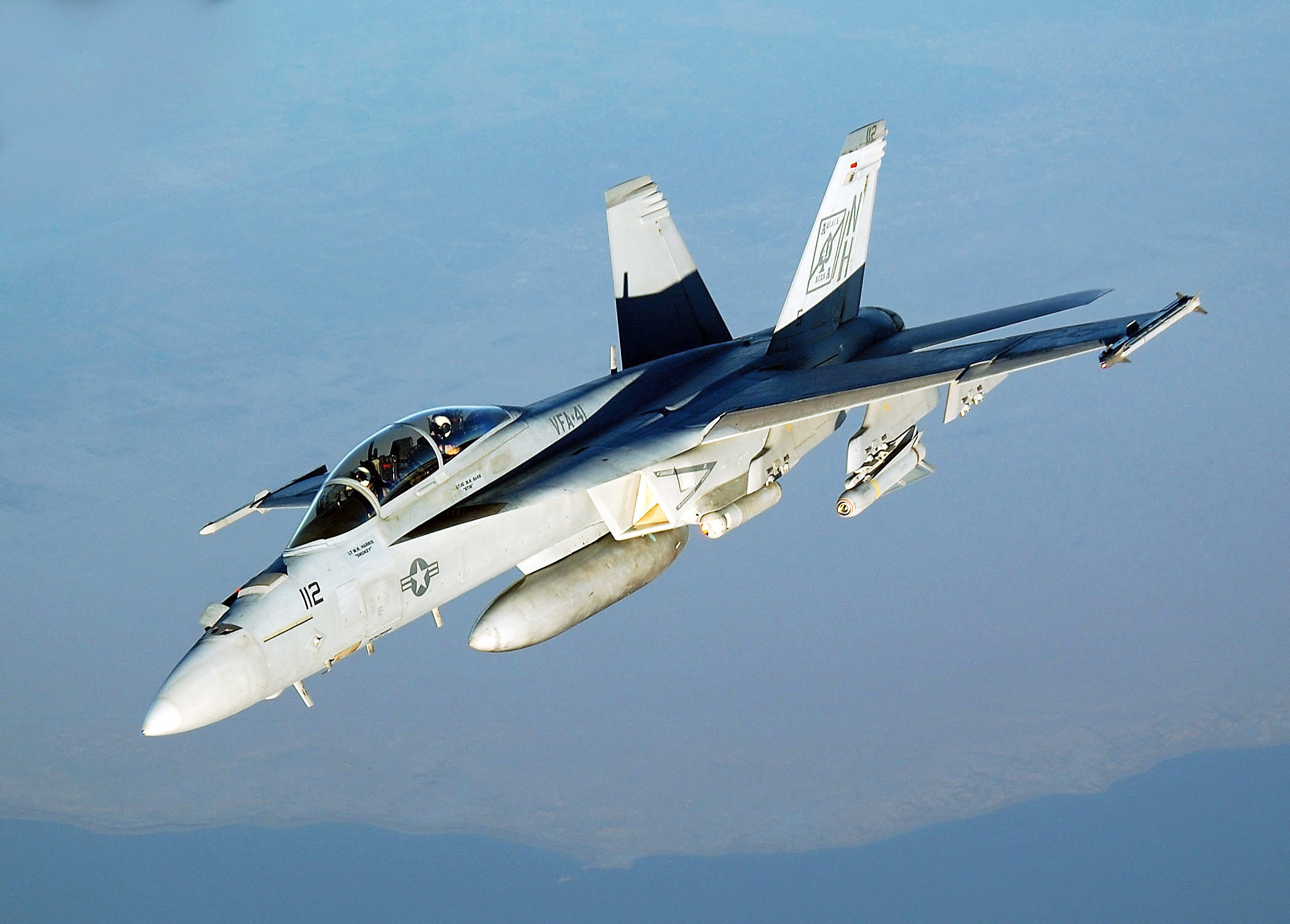
A new capability may become an option for the Mk 38 Mod. 2 gun mount that is equipping the Webber Class Fast Response Cutters. BAE and Boeing are looking at adding a 10 Kilowatt (13 HP) laser. More here.

“The Mk 38 Mod 2 Tactical Laser System couples a solid-state high-energy laser weapon module with the operational Mk 38 Machine Gun System. The addition of the laser weapon module brings high-precision accuracy against surface and air targets such as small boats and unmanned aerial vehicles. The system also provides the ability to deliver different levels of laser energy, depending on the target and mission objectives.”

I wonder if there is a “stun” setting?

Related: MK 38 mod2, 25 mm, More Than Just a Gun

Boeing and BAE Systems have teamed up to develop the Mk 38 Mod 2 Tactical Laser System for...

(Image: BAE Systems)

Deployable Specialized Forces

The Coast Guard Compass has announced the issuance of an ALCOAST  that provides initial information on the results of a “Stem to Stern” review of Deployable Specialized Forces and includes a link that provides the ALCOAST in pdf format. If you would rather not download the pdf, Ryan Erickson has provided the entire  text of the ALCOAST at  1790.us.

Below are specific actions the Commandant listed to be taken:

A. I WILL SOON PROMULGATE THE DSF OPERATING CONCEPT AND SNMR
CONOP. ONCE RELEASED, THE DSF OPERATING CONCEPT WILL DESCRIBE HOW
DSF ARE ORGANIZED AND EMPLOYED IN SYNCHRONIZATION WITH OTHER FORCES
TO ACCOMPLISH OUR MISSIONS, IN ALIGNMENT WITH THE QHSR. THE SNMR
CONOP WILL DESCRIBE HOW DSF WILL BE EMPLOYED IN SYNCHRONIZATION
WITH OTHER FORCES TO MEET SHORT-NOTICE MARITIME THREATS TO THE U.S.
B. I AM ENGAGED WITH AND BRIEFING DHS LEADERSHIP AND THE
CONGRESSIONAL OVERSIGHT COMMITTEES ON THE INTEGRATION OF DSF INTO
THE MARITIME TRIDENT OF FORCES UNDER THE OPERATIONAL AND
ADMINISTRATIVE CONTROL OF THE AREA COMMANDERS. THIS PLAN WILL
ENSURE THAT EFFECTIVENESS OF FRONT LINE OPERATIONS IS FULLY
SUSTAINED. THIS IS NOT A RETURN TO THE PAST, BUT A RECOGNITION
THAT UNITY OF COMMAND DEMANDS THAT THE AREA COMMANDERS, AS SENIOR
OPERATIONAL COMMANDERS, BE RESPONSIBLE AND ACCOUNTABLE FOR LEADING,
MANAGING AND EMPLOYING OPERATIONAL FORCES. THIS FOLLOWS A
FUNDAMENTAL PRINCIPLE OF SERVICE DOCTRINE.
C. DCO SHALL PROMULGATE AND MANAGE POLICY, REQUIREMENTS AND
CAPABILITY DEVELOPMENT FOR DSF, CONSISTENT WITH HOW THOSE FUNCTIONS
ARE MANAGED FOR ALL CG FORCES.
D. DCMS SHALL BE RESPONSIBLE FOR CAPABILITY ACQUISITION AND
PRODUCT LINE MANAGEMENT FOR SUSTAINMENT SUPPORT THROUGH THE DCMS
ENTERPRISE, CONSISTENT WITH HOW THOSE FUNCTIONS ARE MANAGED FOR ALL
CG FORCES. FORCECOM AND SUBORDINATE UNITS, INCLUDING JMTC, SHALL
BE RESPONSIBLE FOR DSF STANDARDIZATION, TTP/DOCTRINE DEVELOPMENT,
TRAINING AND EVALUATION. JMTC WILL BECOME A CENTER OF EXCELLENCE
(COE) FOR DSF TO DEVELOP, ACHIEVE AND SUSTAIN STANDARDIZATION,
TRAINING AND PROFICIENCY OF DSF. THIS WILL INCLUDE CREATION OF A
NEEDED HIGH-RISK TRAINING PROGRAM AND TRANSITION PRIMARILY TO COAST
GUARD INSTRUCTORS.
E. THE COAST GUARD WILL ESTABLISH A SECOND ENHANCED TEAM
(MSRT) ON THE WEST COAST, DRAWN FROM EXISTING DSF RESOURCES. THE
ENHANCED TEAMS WILL CONSIST OF COAST GUARDSMEN WHO HAVE ACHIEVED
THE HIGHEST LEVELS OF PROFICIENCY AND EXPERIENCE FROM PRIOR
ASSIGNMENTS TO OTHER DSF UNITS. THE ENHANCED TEAMS SHALL CONDUCT
OPERATIONS TO COMBAT TERRORISM, ENGAGE IN INTERDICTION, LAW
ENFORCEMENT, AND ADVANCED TACTICAL MARITIME SECURITY OPERATIONS TO
ADDRESS KNOWN OR POTENTIALLY ARMED SECURITY THREATS, INCLUDING NONCOMPLIANT
ACTORS AT SEA, AND PARTICIPATE IN HOMELAND SECURITY,
HOMELAND DEFENSE, AND COUNTERTERRORISM EXERCISES IN THE MARITIME
ENVIRONMENT.
F. MSSTS WILL CONTINUE TO PROVIDE OPERATIONAL COMMANDERS WITH
PROFICIENT WATERSIDE SECURITY SECTIONS TO MEET EMERGENT AND PLANNED
MISSION REQUIREMENTS. SIMILARLY, NATIONAL STRIKE FORCE, TACLETS,
PSUS AND REGIONAL DIVE LOCKERS WILL CONTINUE TO PROVIDE DEPLOYABLE,
SPECIALIZED CAPABILITIES TO ENSURE OUR OPERATIONAL COMMANDERS AND
INTERAGENCY PARTNERS HAVE THE CAPABILITIES NEEDED TO MEET THE
NATIONS MARITIME RESPONSE REQUIREMENTS.
G. DCO SHALL IMMEDIATELY CHARTER AND LEAD A DSF STS
IMPLEMENTATION TEAM (I-TEAM) TO EXECUTE THESE DECISIONS AND WAY
FORWARD.
H. PERSONNEL SUPPORT COMMAND (PSC) SHALL ESTABLISH A
SELECTION AND SCREENING PROCESS FOR CERTAIN DSF BILLETS, TO INCLUDE
CENTRALIZED SCREENING BY PSC-OPM FOR ALL DSF COMMANDING OFFICER
POSITIONS. THIS FOLLOWS MY BROADER DIRECTION THAT PSC-OPM PREPARE
AND CONDUCT CENTRALIZED SCREENING OF CANDIDATES FOR ALL COMMANDING
OFFICER POSITIONS THROUGHOUT THE SERVICE, STARTING AFTER AY12.
I. PSC-EPM WILL IMPLEMENT 6 YEAR TOUR LENGTHS FOR ENLISTED
BILLETS AT SELECT DSF UNITS THAT REQUIRE SUSTAINED PROFICIENCY IN
ADVANCED TACTICAL OPERATIONS.
J. THE COAST GUARD WILL IMPLEMENT THE RECOMMENDATIONS OF THE
TACTICAL FLOTATION AND BUOYANCY WORKING GROUP, INCLUDING
STANDARDIZING THE TACTICAL OPERATOR EQUIPMENT KIT (INCLUDING
MAXIMUM WEIGHT) AND ADOPT A STANDARD AUTO-MANUAL SELECTABLE
TACTICAL FLOTATION SURVIVAL SYSTEM FOR DSF UNITS.

Russia and Canada in the Arctic

https://i0.wp.com/upload.wikimedia.org/wikipedia/commons/a/ab/KV_Svalbard.jpg

Interesting Article here from Christian Science Monitor updating the Russian (and Canadian) positions on claims in the Arctic, including an expected 380,000 square mile continental shelf claim by the Russians and a statement that they are planning on building six new icebreakers.

This is a bit older, but talks about Canada’s ship building plans including a new icebreaker, CCGS_John_G._Diefenbaker, and up to eight ice strengthened Arctic Patrol Ships.

Photo left: Norwegian Svalbard, basis of the design for Canada’s Arctic Patrol Ships.

Related: Arctic Patrol Cutter State of the Art

Deepwater program “Unachievable”–GAO, Part Two

As I noted in part one, GAO has found the Coast Guard’s Deepwater program “unachievable.” Basically, they see a mismatch between the historic funding levels and the anticipated funding requirements. This in turn has impacted the delivery schedule, which in turn further adversely effects cost. Additionally significant questions still remain regarding the C4ISR (Command, Control, Communications, Computers, Intelligence, Surveillance, and Reconnaissance) system that was intended to tie the “system of systems” together. There also remains a significant unknown in the form of the Offshore Patrol Cutter (OPC) which, as the most costly single system in the program, constituted a third of the total “Deepwater” Program’s estimated cost in the 2007 Baseline.

I’m not sure I would call that “unachievable,” rather it is simply more expensive and more difficult than the Coast Guard was lead to believe, and four years later the plan is already well out of date. The Cost overruns are significant, but no more so than a lot of procurements and pale in comparison to the F-35 and Littoral Combat Ship cost overruns.

Costs

This is the cost growth GAO has seen. From Table 2 (page 12), “Increased Total Acquisition Cost Estimates for Deepwater Assets with approved baselines as of May 2011 (Then year dollars in millions)”:

Asset                                                    2007 Baseline                Revised Baseline                 % Change

NSC                                                             3,450                                 4,749                                  38
FRC                                                             3,206                                 4,243                                  32
OPC                                                             8,098                         Not yet revised                         —
Cutter Small Boats                                       110                          Not yet revised                         — (see b. below)
MEC Sustainment                                        317                                       321                                    1
Patrol Boat Sustainment                             117                                       194                                 66
MPA                                                             1,706                                  2,400                                  41
C-130J                                                               11                                       176                             1,500 (see c. below)
C-130H                                                            610                                      745                                  22
HH-65                                                             741                                    1,242                                  68 (see d. below)
HH-60                                                             451                                       487                                    8
UAS (unmanned air system)                     503                           Not yet revised                         —
C4ISR                                                            1,353                                   2,522                                  86
Other Deepwater                                        3,557                           No revision expected              — (see e. below)
—————————————————————————————————————————————————–
Total                                                           24,230                                   29,347                                21

There were some notes with this, including some that explained some of the increased costs:

If the revised baselines present both threshold costs (the maximum costs allowable before a
breach occurs) and objective costs (the minimum cost expected), threshold costs are used. An
acquisition program baseline breach of cost, schedule, or performance is an inability to meet the
threshold value of the specific parameter.

a. When a revised baseline is not available, the 2007 baseline cost is carried forward for calculating
the total revised baseline cost.

b. The cutter small boat program includes two different versions of small boats. Only one had an
approved revised baseline as of May 2011.

c. The acquisition costs are related to the mission system. The original HC-130J baseline only included
costs associated with the fleet introduction of missionized aircraft and did not include the cost of
acquiring the mission system and logistics support of the first six aircraft, and the revised baseline
corrected this omission.

d. The 2007 approved baseline did not include airborne use of force, National Capital Region Air
Defense, and the surface search radar for the HH-65. The addition of these capabilities constitutes
about $420 million of the revised costs.

e. Includes other Deepwater costs, such as program management, that the Coast Guard states do not
require a new baseline.

Additional note from page 13, “The original 2007 estimate for one OPC was approximately $320 million. However, the Coast Guard’s fiscal years 2012-2016 capital investment plan cites a planned $640 million in fiscal year 2015 for the lead cutter. Coast Guard resource and acquisition directorate officials stated that this $640 million is a point estimate for the lead cutter, some design work, and project management”

If we look at only the programs that have had revised baseline (these make up 64% of the 2007 baseline), the cost growth has actually been 33% and even that cost is not really reliable since, in some cases, prices have increased since the revised baseline. The true cost of the eight NSCs for which good cost information is now available is expected to be approximately $5.6B, a 62% increase over the 2007 baseline. There is also still considerable uncertainty about the final cost of the unmanned air systems and the C4ISR systems.

Scheduling

The second dimension that GAO regards as unachievable is projected delivery schedule. Figure 3 on page 16 shows scheduled deliveries of the final item in each of the several projects, as originally scheduled in the Baseline document approved in 2007, as approved in subsequent baseline revisions, and as projected in the FY2012-2016 Capital Investment Plan (CIP) and the projected delay, comparing the 2007 baseline and the 2012-2016 CIP. Because the projected costs exceed likely funding, they believe that even the FY2012-2016 Capital Investment Plan schedule is “unachievable.”

Asset                                                    2007 Baseline    Revised Baseline      2012-2016 CIP     Projected Delay (years)
—————————————————————————————————————————————————–
NSC                                                              2014                        2016                       2018                            4
FRC                                                              2016                        2021                       2022                            6
MEC Sustainment                                    2016                        2017                       2014                     (2 years early)
Patrol Boat Sustainment                         2013                        2014                           —                               ?
MPA                                                            2016                        2020                      2025                             9
C-130J                                                        2009                        2011                       2011                              2
C-130H                                                       2017                         2017                       2022                             5
HH-65                                                        2013                        2020                      2020                             7
HH-60                                                       2019                        2020                      2020                              1
C4ISR                                                        2014                        2027                       2025                             11
OPC                                                            2021                          —                          2031                              10
—————————————————————————————————————————————————–

You might note that the Cutter boats and Unmanned Air Systems are not included in this table.

Capabilities

Beginning on page 30 the study notes, “Key Decisions Remain for Assets in Design to Ensure Promised Capabilities Are Achieved.”

The primary technical risk appears to be the C4ISR system which was to tie the “system of systems” together and allow the service to perform the missions with few (but more capable) assets. The CG has apparently already backed away from the concept of providing all units a common operational picture. The all singing, all dancing NTDS with pictures now appears both unnecessary and too expensive. The additional overhead in maintaining classified material may also a consideration. What the Coast Guard will ultimately choose was undecided when the study was written.

By far the largest chunk of  “Deepwater” AC&I money is expected to go for the twenty-five Offshore Patrol Cutters (OPC). “DHS approved the OPC’s requirements document in October 2010 despite unresolved concerns about three key performance parameters—seakeeping, speed, and range—that shape a substantial portion of the cutter’s design. For example, DHS questioned the need for the cutter to conduct full operations during difficult sea conditions, which impact the weight of the cutter and ultimately its cost. The Coast Guard has stated that limiting the ability to conduct operations during difficult sea conditions would preclude operations in key mission areas. While it approved the OPC requirements document, DHS at the same time commissioned a study to further examine these three key performance parameters. According to Coast Guard officials, the study conducted by the Center for Naval Analysis found that the three key performance parameters were reasonable, accurate, and adequately documented.”–That is the good news–The GAO again took the CG to task because it has not completed a Fleet Mix Study that can be used for determining trade-offs (page 45/46), but noted that DHS is doing one that includes an updated 270 and the Littoral Combat Ship as alternatives.

The report talks about a number of remaining issues, some of which have already been corrected, some of which sound like typical teething problems for new systems. One that does bother me is that the helo haul down and traversing system referred to as “ASSIST,” has been found unsatisfactory. The CG, having already bought four systems and equipping one helicopter, is now looking at the system the Navy uses (p. 40). I’m a bit surprised we didn’t go to the Navy system first for the sake of commonality.

Conclusion

The Deepwater systems are not “unachievable” in the literal sense. The question remains, will it be pursued? and will it be pursued in a reasonably expeditious fashion?

The decision to “outsource” to ICGS (Integrated Coast guard Systems) was a mistake, but it was what the government was encouraging at the time. The 2007 baseline was the best the CG could do at the time, but it was inevitably flawed having been tainted by the “puffing” of contractors who were at best overly optimistic.  Actual costs have exceeded estimates but they are not out of line compared to similar DOD programs. As I understand it, the Coast Guard engineering staffs had been gutted in previous economy moves so it is not surprising they did not get it 100% correct first try. To hold the CG to the 2007 baseline is simply unrealistic. The Question remains, does the nation want the CG to have a presence in the offshore regions? The Navy is shrinking and will not fill that void.  Dragging out the procurement will only result in higher prices in the end.

Related:

Piracy Update, 1 Sept., 2011

Background:

If you are new to this topic there is some good background here in the form of advice from the International Sailing Federation intended primarily for yatchsmen. “ISAF Warning Letter”.

Changing Tactic:

Too early to tell if this is a trend, but the pirates seem to be changing their tactics attempting to swamp the defenses of even armed vessels by using as many as twelve skiffs, “Pirates Hunting in Packs.” Chart here. This incident took place near Somali shores where it is easier to gather a large number of boats.

Frustrated by an armed guard while it was under way, pirates subsequently seized a chemical tanker after the armed guard had left, while the ship was anchored in port in Oman, taking 21 hostages. Chart here.

Geographic spread:

The pirates seem to be extending their reach to operate beyond the waters patrolled by naval forces. There is a report that they may now be exploiting a business arrangement with the remnants of the Tamil insurgency to allow them to operate south of India in the vicinity of Sri Lanka, “Recommended Reading “Deadly Business”-at American Shipper.”

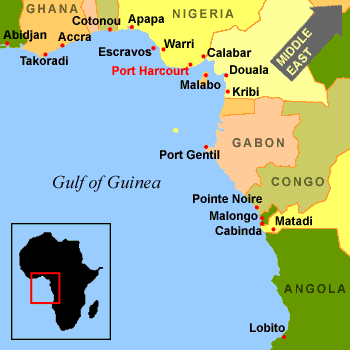
Piracy also seems to be spreading to the Gulf of Guinea on Africa’s Atlantic coast where oil is the prize.
Gulf of Guinea map

 A report carried by the Associated Press quoted Bergen Risk Solutions, a Norway-based consultancy:

“Our investigations indicate that the organized group responsible is based in Nigeria and has high-level patronage in that country,” it said, with prominent Nigerians having often been accused of involvement in the lucrative black market for oil and fuel.  This cargo, Bergen suggests, has been sold in: “several West African ports, possibly including Abidjan in Cote d’Ivoire and Port Gentil in Gabon.”

There are some indications that there is a recognition of the problem and a desire to address it, “Steps toward and Iintegrated African Coastguard” and “West African Piracy Cooperation.”

Some successes:

The Naval Institute blog has a “feel good” story of how an attack was thwarted by the cooperative efforts of British and American forces, “MV Caravos Horizon Rotorheads and the Royal Navy in Maritime Security Operations,” by LCdr B. J. Armstrong. If you want to know more about the Navy’s MH-60S which was involved, there is more info here. The unfortunate aspect, is that these pirates are still free to go on to molest other ships. Another telling of the story here.

Prosecuting pirates has been difficult. The US has done it, but many countries operate under a “catch and release” philosophy. At least the Dutch have begun to act forcefully.

Armed Security Teams:

Their record remains unblemished, in that no ship with an armed security team has ever been taken by 21st century Somali pirates. In regard to the use of armed teams on merchant ships, the most common counter-argument is that this will raise the level of violence. Here is a counter to that, pointing out, that has not been the case, and in fact if the level of violence is increasing, it has been due to the actions of military forces in the area. “Lloyds List, Piracy and the Armed Deterrent.”

Is Congress more of a threat than pirates?:

There was an interesting discussion here that puts the piracy problem in perspective, “Pirates vs. Congress: How Pirates Are a Better Bargain.”

 Getting at the root of the problem:

There is some indication that the US may be attempting to get at the roots of the piracy problem, which are of course on shore in Somalia. “U.S. steps up clandestine operations in Somalia


NOB Cactus, Guadalcanal, 1942

Sixty-nine years ago today, eight months to the day after the attack on Pearl Harbor, the US and her allies went on the Offensive against Japan, and the Coast Guard was there. Eagle1 has a good intro to the operation here. Most of us already know the story of Douglas Munro, leading boats in to rescue of a Marine unit ambushed by the Japanese. Here is an interesting bit of history that both provides background to the story and shows the resourcefulness and adaptability Coast Guardsmen are known for: LCdr. Dwight Hodge Dexter: Guadalcanal’s “Naval Operating Base Cactus”, by William H. Thiesen, Ph.D., Atlantic Area Historian, United States Coast Guard


In November 1945, the U.S. Postal Service issued the
Coast Guard stamp to commemorate the service’s role in amphibious combat operations.

It’s the story of a small unit, about 50 men, and it’s CO, operating in primitive conditions, frequently under fire,

“During Dexter’s tenure as commander of NOB Cactus, from August 8 to November 5, 1942, Coast Guard personnel received a considerable number of combat awards and official recognition. These medals and ribbons included, Dexter’s Silver Star Medal and four Silver Stars awarded to Coast Guard coxswains for combat landing operations in neighboring Tulagi. Official recognition received by other NOB personnel included the only Medal of Honor awarded to a Coast Guardsman, two Navy Crosses and a Bronze Star Medal. All who served at NOB Cactus received the Presidential Unit Citation due to their temporary assignment to Guadalcanal’s First Marine Division commanded by Major General (later Marine Corps Commandant) Alexander Vandergrift.”

(When you read this story, see if it doesn’t sound an awful lot like working with Navy MIUW.)

There is another name associated with this unit, Samuel B. Roberts. The name might be familiar because of his namesakes, DE-413, a little destroyer escort that fought a battleship and heavy cruisers at the Battle of Samar, Oct.25, 1944, and FFG-58 which was saved by the efforts of her crew after striking a mine in the Persian Gulf. Roberts was also a coxswain in the unit and died in the same operation that took the life of Munro under almost identical circumstances.

Deepwater program “Unachievable”–GAO, Part One

The GAO has issued a status report on the Coast Guard’s “Deepwater” programs. The Navy Times has a pretty good summary. (Note the Coast Guard has requested that the “Deepwater” designation be dropped, but it had not happened when the report was issued.)

Based on the the GAO report, we can expect that the programs will both cost more and take longer than planned. In fact these two problems appear to be mutually reinforcing. Because the costs are higher, the schedule is stretched out. Because the schedule is stretched out, the cost goes up.

Illustration below: The plan–six years ago

https://i0.wp.com/www.uscg.mil/ACQUISITION/deepwater/congressional/baseline.jpg

You can see the entire GAO report (pdf format) here. Below is the GAO’s own summary of the report taken from the “recommendations” page associated with this report on their web site.

“The Deepwater Program includes efforts to build or modernize ships and aircraft, including supporting capabilities. In 2007, the Coast Guard took over the systems integrator role from Integrated Coast Guard Systems (ICGS) and established a $24.2 billion program baseline which included schedule and performance parameters. Last year, GAO reported that Deepwater had exceeded cost and schedule parameters, and recommended a comprehensive study to assess the mix of assets needed in a cost-constrained environment given the approved baseline was no longer feasible. GAO assessed the (1) extent to which the program is exceeding the 2007 baseline and credibility of selected cost estimates and schedules; (2) execution, design, and testing of assets; and (3) Coast Guard’s efforts to conduct a fleet mix analysis. GAO reviewed key Coast Guard documents and applied criteria from GAO’s cost guide.

“The Deepwater Program continues to exceed the cost and schedule baselines approved by DHS in 2007, but several factors continue to preclude a solid understanding of the program’s true cost and schedule. The Coast Guard has developed baselines for some assets that indicate the estimated total acquisition cost could be as much as $29.3 billion, or about $5 billion over the $24.2 billion baseline. But additional cost growth is looming because the Coast Guard has yet to develop revised baselines for all assets, including the OPC–the largest cost driver in the program. In addition, the Coast Guard’s most recent capital investment plan indicates further cost and schedule changes not yet reflected in the asset baselines, contributing to the approved 2007 baseline no longer being achievable. The reliability of the cost estimates and schedules for selected assets is also undermined because the Coast Guard did not follow key best practices for developing these estimates. Coast Guard and DHS officials agree that the annual funding needed to support all approved Deepwater baselines exceeds current and expected funding levels, which affects some programs’ approved schedules. The Coast Guard’s acquisition directorate has developed action items to help address this mismatch by prioritizing acquisition program needs, but these action items have not been adopted across the Coast Guard. The Coast Guard continues to strengthen its acquisition management capabilities, but is faced with several near-term decisions to help ensure that assets still in design will meet mission needs. For example, whether or not the planned system-of-systems design is achievable will largely depend upon remaining decisions regarding the design of the command and control system. Important decisions related to the affordability, feasibility, and capability of the OPC also remain. For those assets under construction and operational, preliminary tests have yielded mixed results and identified concerns, such as design issues, to be addressed prior to initial operational test and evaluation. The Coast Guard is gaining a better understanding of cost, schedule, and technical risks, but does not always fully convey these risks in reports to Congress. As lead systems integrator, the Coast Guard planned to complete a fleet mix analysis to eliminate uncertainty surrounding future mission performance and produce a baseline for Deepwater. This analysis, which the Coast Guard began in 2008, considered the current program to be the “floor” for asset capabilities and quantities and did not impose cost constraints on the various fleet mixes. Consequently, the results will not be used for trade-off decisions. The Coast Guard has now begun a second analysis, expected for completion this summer, which includes an upper cost constraint of $1.7 billion annually–more than Congress has appropriated for the entire Coast Guard acquisition portfolio in recent years. DHS is also conducting a study to gain insight into alternatives that may include options that are lower than the program of record for surface assets. A DHS official stated that this analysis and the Coast Guard’s fleet mix analysis will provide multiple data points for considering potential changes to the program of record, but Coast Guard officials stated they have no intention of examining fleet mixes smaller than the current, planned Deepwater program. GAO is making recommendations to the Department of Homeland Security (DHS) that include identifying trade-offs to the planned Deepwater fleet and ensuring the Offshore Patrol Cutter (OPC) design is achievable and to the Coast Guard that include identifying priorities, incorporating cost and schedule best practices, increasing confidence that assets will meet mission needs, and reporting complete information on risks to Congress in a timely manner. DHS concurred with the recommendations.”

For those of you who don’t want to wade through the entire report, I’ll be revisiting this topic to highlight GAO’s reservations regarding costs, scheduling, and capabilities.