Chuck Hill's CG Blog

Chuck Hill's CG Blog

Is the Coast Guard Really Smaller than the NYPD?

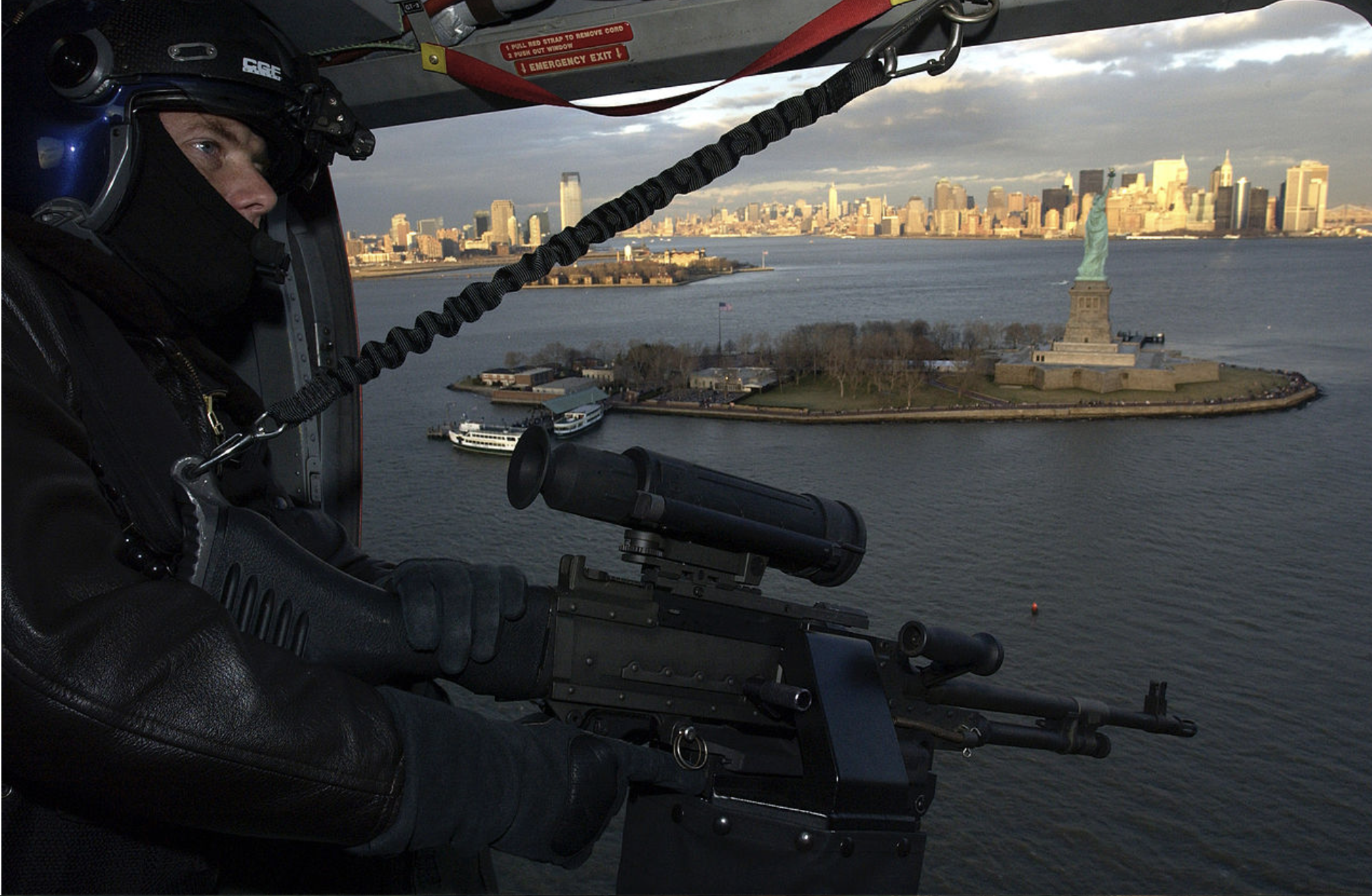
HITRON member from Jacksonville, Fla., mans an M-240 machine gun on board a Stingray MH-68A helicopter during a homeland security patrol around New York City

I keep hearing that the Coast Guard is smaller than the NYPD. Is it true?

I don’t like hearing this because, it seems to demean the service and may cause some to dismiss it as unimportant.

In fact, for at least the last 30 years the size of the Coast Guard has increased while the size of other armed forces has declined.

The NYPD also has trouble recruiting, but, even so, crime statistics in New York City are way down, so the NYPD is not greatly under strength. An 11 March 2025 report states, “…recruitment has become difficult… NYPD ranks dropping from 37,000 uniformed officers in 2018 to 33,000 today.” According to Wikipedia, “As of October 2023, the NYPD’s current authorized uniformed strength is 33,536. There are also 19,454 civilian employees, including approximately 3,500 traffic enforcement agents, 4,500 auxiliary police officers (unpaid volunteers–Chuck), and 5,500 school safety agents (these are professional peace officers with at least 20 weeks of training, not crossing guards–Chuck) are presently employed by the department as well as being deployed on the streets.” The total work force is over 52,000 of those about 48,000 are paid positions.

By comparison the Coast Guard work force is about 51,000 paid employees, including about 9500 civilian employees. In addition there are over 20,000 in the auxiliary.

Let’s put this old saw to bed. The Coast Guard is not smaller than the NYPD.

So, how big is the U.S. Coast Guard?

Within the Department of Homeland Security

The Department has about 240,000 employees. The Coast Guard is no longer the largest agency in the Department, as I think it was when the Department was initially formed.

Not as large as Customs and Border Protection: CBP has more than 58,000 employes.

Not as large as the Transportation Security Administration: TSA has about 58,600 employees, but the Coast Guard’s budget is larger.

Bigger than Citizenship and Immigration Services: About 24,200 employees. 

Bigger than Immigration and Customs Enforcement: “ICE now has more than 20,000 law enforcement and support personnel…”

Bigger than FEMA but with a smaller budget. about 17,300 employees

Bigger than the Secret Service: Secret Service has about 8,300 employees

Maritime Agencies in the Federal Government

Bigger than NOAA: “In 2021, NOAA had 11,833 civilian employees. Its research and operations are further supported by 321 uniformed service members, who make up the NOAA Commissioned Corps.” The Coast Guard budget is almost twice that of NOAA.

Bigger than Military Sealift Command: Their workforce is less than 10,000 including some US Navy personnel.

Bigger than the US Merchant Marine: The US merchant Marine has about 13,000 mariners  including almost half in Military Sealift Command.

Way bigger than the Maritime Administration: MARAD has about 800 employees. Coast Guards budget is an order of magnitude larger than that of MARAD.

Compared to International Navies

The US Coast Guard has no aircraft carriers, submarines, or well armed aircraft but it does have a relatively large number of ships, aircraft, mariners and air crewmen. There are several medium sized navies that are larger than the US Coast Guard, but the Coast Guard is still a significant force.

Bigger than the French Navy, with more personnel, more ships, and more aircraft.

Bigger than the UK’s Royal Navy, with more personnel, more ships, and more aircraft.

National Security Implications:

“Convoy WS-12: A Vought SB2U Vindicator scout bomber from USS Ranger (CV-4) flies anti-submarine patrol over the convoy, while it was en route to Cape Town, South Africa, 27 November 1941. The convoy appears to be making a formation turn from column to line abreast. Two-stack transports in the first row are USS West Point (AP-23) — left –; USS Mount Vernon (AP-22) and Coast Guard manned transport USS Wakefield (AP-21). Heavy cruisers, on the right side of the first row and middle of the second, are USS Vincennes (CA-44) and USS Quincy (CA-39). Single-stack transports in the second row are Coast Guard manned transports USS Leonard Wood (AP-25) and USS Joseph T. Dickman (AP-26).”

When the President Roosevelt asked Congress to declare war on the Empire of Japan, The Coast Guard was already expanding rapidly, escorting convoys, and manning Transports for the US Navy bound for a combat zone.

The US has a serious shortage of Mariners needed to provide logistics support for any overseas military operation. The Coast Guard is a major reservoir of trained mariners and air crewmen. If there is a major conflict, the Coast Guard will called upon to protect, rescue, and perhaps stand in for the American merchant marine.
Ageism? “Coast Guard veterans wrongly forced into retirement by service now fighting in court for backpay” – Stars and Stripes

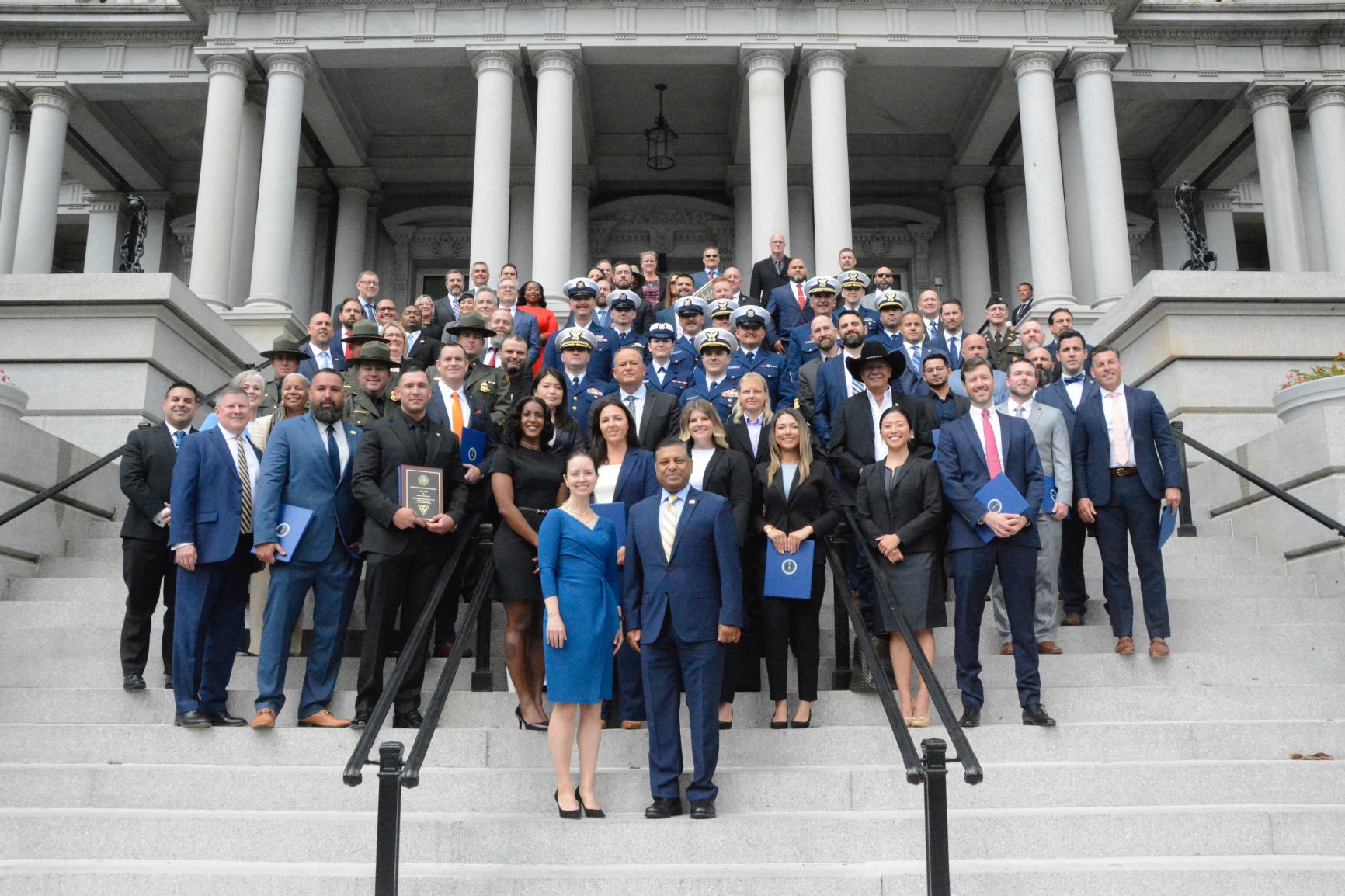
Coast Guard Cutter James (WMSL 754) personnel pose for a photo with other law enforcement agency officials, July 19, at the White House in Washington, D.C. for the annual United States Interdiction Coordinator Awards. James’ crew was recognized with the top maritime interdiction during the awards ceremony. (Photo courtesy of the White House)

I don’t normally comment on personnel questions, but I found this story somewhat ironic after all the stories about the Coast Guard failing to meet recruiting goals.

The Commandant has taken some steps to remove barriers to service associated with “ageism,” but it is systemic in the military. Of all the military services the Coast Guard may be the one that can benefit the most from continuity and long-term experience.

I particularly remember our Chief of the Boat on Duane, an engineer. He was old, he was experienced, he loved that old ship. He knew every detail of its strengthens and weaknesses and because of his expertise. that 47-year-old ship was always ready to answer all bells.

You can’t afford to throw that kind of experience away.

“Mission success! Coast Guard exceeds 2024 recruitment target” –MyCG

Coast Guard Chief Petty Officer Jenna Coffey, a production recruiter at Recruiting Office D.C., talks about enlistment opportunities and incentives in Washington, D.C., September 19, 2024. (U.S. Coast Guard photo by Petty Officer 1st Class Zachary Hupp)

Below is a story from MyCG that discusses how the success was achieved, but in some respects, it is not as detailed as an earlier report from CBS. For instance, it does not mention that the maximum age for admission has been raised from 27 to 42, but taken together the two reports provides a good picture of how this success was achieved. Compared to what has been happening in other armed services, this is a remarkable turnaround. That is why it was national news.


Sept. 25, 2024

Mission success! Coast Guard exceeds 2024 recruitment target

By Zach Shapiro, MyCG Staff

For the first time since 2007, the Coast Guard has achieved all its recruiting missions for enlisted active duty, the Reserve, and Non-Academy Officer Candidate School (OCS) accessions. Thanks to Coast Guard Recruiting Command’s perseverance and coordination, the Coast Guard has accessed over 4,400 active duty members.

“This achievement would not have been possible without the efforts of our workforce and senior leadership’s investment in this endeavor,” said Capt. Ben Keffer, commanding officer of Coast Guard Recruiting Command (CGRC). Updated Coast Guard policies on the maximum recruiting age and tattoos, among others, have empowered recruiters to cast a wider net in their efforts.

Since 2022, the Coast Guard has opened new recruiting offices and added 95 new recruiting billets to process applicants. Today, the service has 72 traditional recruiting offices, 13 detached duty recruiting offices, 389 production recruiters, and four virtual recruiters. “I joke with my recruiters that I’ve still recruited zero people, but they’ve done over 4,400, so it’s a huge shout out to them, because the level of effort it takes to recruit people is no small feat,” Keffer emphasized.

The Coast Guard workforce and community has also had a hand in this success. Through programs like Scout Talent and Refer (STAR), which provides $1,000 for any Coast Guard member or employee who refers a recruit, and the bonus structures and incentives for new applicants, members and civilian employees play a critical role in spreading the word about the service.

“By exceeding this year’s recruiting mission, we are building a stronger Coast Guard, leaving the service better prepared for tomorrow’s challenges,” Keffer noted. “But the work isn’t over. We need your help to build this success into 2025 and beyond. We encourage Coast Guard members and employees to keep telling your friends about careers in the Coast Guard and to keep up their great work, which represents the Coast Guard well in our communities and nationwide.”

-USCG-

In the news: 
Resources: 

“Coast Guard response to Key bridge collapse reveals a strained service” –DefenseNews

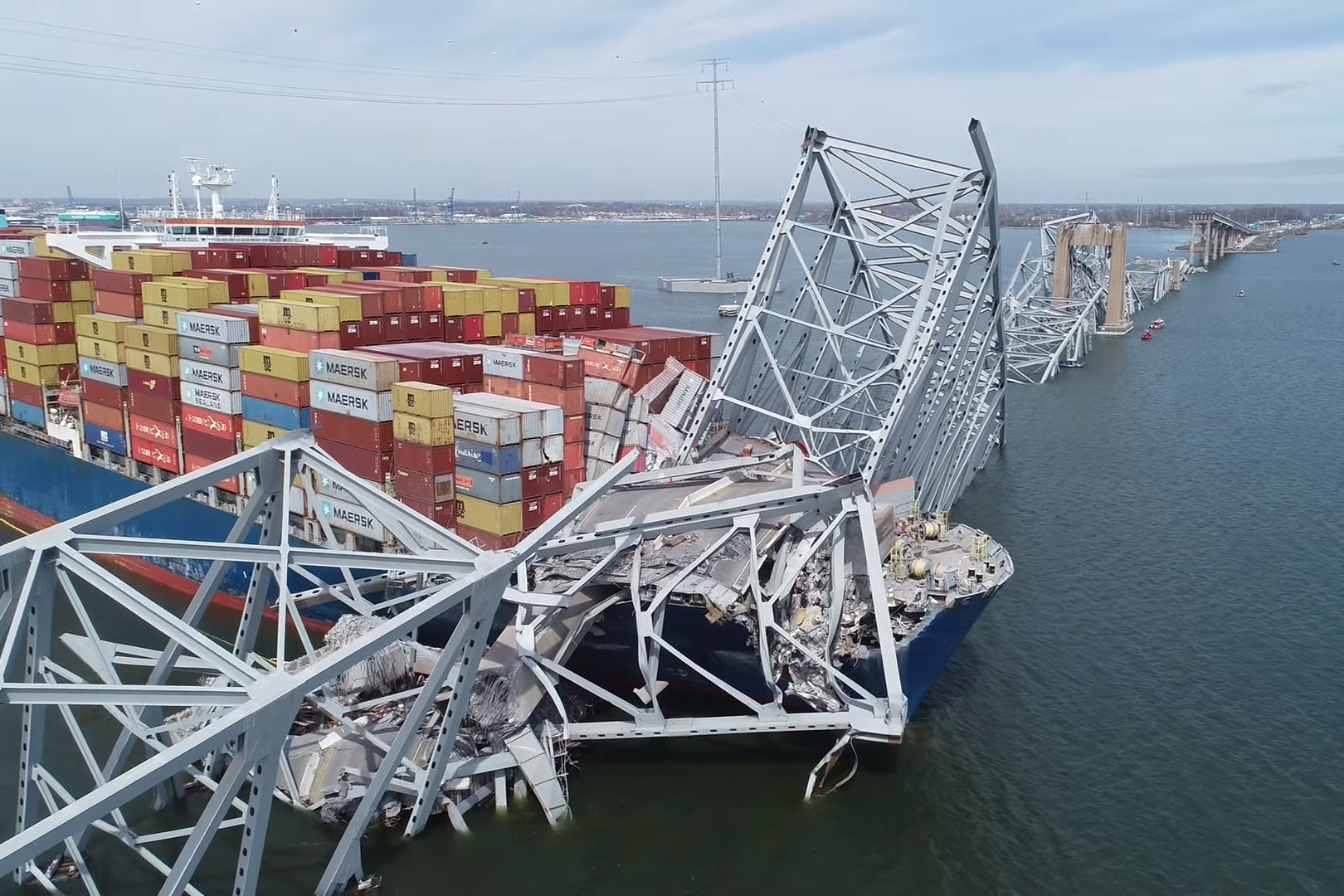
NTSB drone image of Francis Scott Key Bridge and Cargo Ship Dali, 26 March 2024

Defense News reports on the Coast Guard response to the allision that brought down the Key bridge in Baltimore and how it strained the service’s resources.

“…four Coast Guard cutters, at least 10 boats…27 Coast Guard civilians, 23 volunteers, 275 active duty service members and 82 reservists…These employees have been drawn from their home stations all over the country, including some as far as Alaska and California. That also means these stations are donating staff to the recovery effort in Maryland, and the Coast Guard’s operations lead said the service doesn’t have much to spare as it is.”

It is a story of an organization that, while under stress, responded successfully. It is also a cautionary tale that if we had two such emergency operations simultaneously, full response might not be possible.

It should also be seen as a testament to the Coast Guard’s agility, responsiveness, and resilience in spite of current personnel shortages.

There is also some encouraging news about steps being taken to close the Coast Guard’s current personnel shortages.

Congress has shown its intent to take action. The House cleared a bill on May 14 to authorize $12 million to fund recruiters and offices for the Coast Guard Recruiting Command and an additional $9 million for recruiting capability in fiscal 2025. That passed in a 376-16 vote.

The bill also aims to improve quality of life for Coast Guard service members, a factor that, like pay competitiveness and work-life balance, may give the private sector an edge.

With a particularly bad Hurricane season predicted, it’s good to remind the Administration and Congress that we have to be ready to do more than normal day to day operations. The Coast Guard is more than a first responder. The Coast Guard moves resources in anticipation of disaster.

Incidentally the bill linked in the quote above is H.R.7659 – Coast Guard Authorization Act of 2024. It is very interesting as evidence of Congress’s intentions. Take a look but be aware the Authorization is separate from the budget and even if signed into law, the authorization does not mean projects are actually funded.

“Down 2,500 Recruits, Coast Guard Overhauls Talent Management” –USNI

The US Naval Institute News Service reports on how the Coast Guard is attempting to remedy its personnel shortage.

Recruiting had never been an issue for the Coast Guard, Vice Adm. Paul Thomas, deputy commandant for mission support, said at separate Sea Air Space panel. People would come to the service, and they met the necessary numbers with little effort. Now, the service has to revamp its approach.

The Commandant has asked people to think outside the box and it looks like we are beginning to see results. We can’t expect that every new idea will work, but at least the Coast Guard is trying new ideas.  

“Coast Guard Commandant challenges workforce to move the service forward” –MyCG

Just passing this along from MyCG (looks like access to the townhall video is limited). This seems to be a promising sign that the leadership does not expect all solutions to come from the top down.


Coast Guard Commandant challenges workforce to move the service forward

By Kathy Murray, MyCG Senior Writer

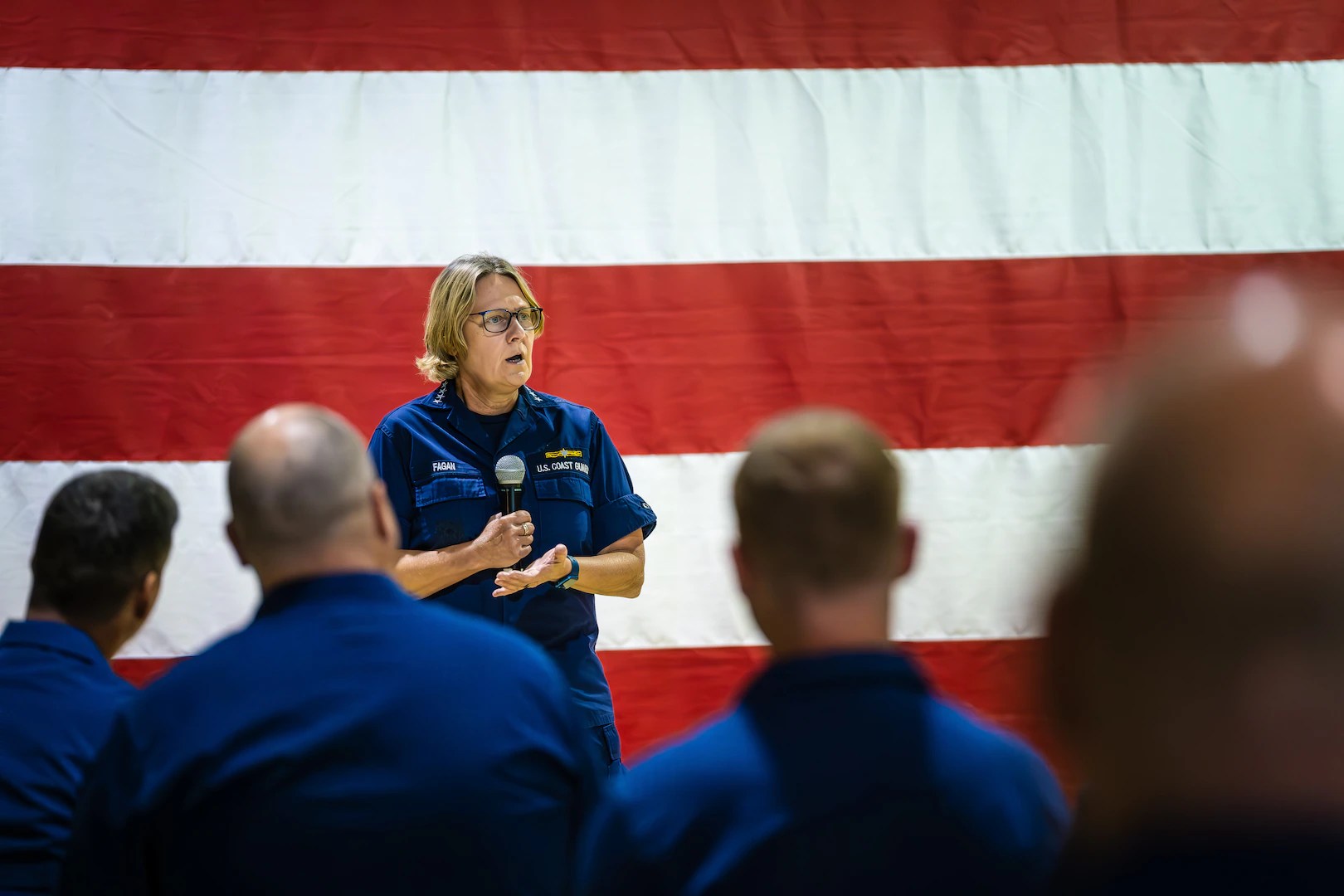
The U.S. Coast Guard Commandant Adm. Linda Fagan encouraged members to help her improve the service during a Workforce Town Hall on Wednesday.  Here’s the link: workforcetownhall.mov (sharepoint-mil.us)

“We’re all in different places in the team, but each and every one of us contributes to the well-being and organizational success of the Coast Guard,” Fagan said. “It’s OUR Coast Guard. It’s not mine, it’s not somebody else’s. There is no they or them. It’s us, ours, collectively. And so together we – WE – make the changes. Together we create the opportunity and together we create the culture that we aspire to.”

Adm. Fagan described her vision of a modern service, with a thriving, efficient, effective workforce.

According to Fagan, too many talented people with the Coast Guard are stuck trying to create success around inefficient processes. She challenged members to think in new and creative ways.  “Like if somebody comes to you and says, ‘We’ve always done it this way,’ that is a red flag, right? It may have served Joshua James well, but it doesn’t serve us well now. And so do not be burdened or encumbered by a legacy view when that [view is no longer] right.”

“The status quo is the risk position,” Fagan said.

Fagan took questions with Master Chief Petty Officer of the Coast Guard, Master Chief Heath Jones, during the hour-long event which was live-streamed from a packed auditorium at Coast Guard Headquarters. The pair answered questions submitted online in advance and from in-person attendees.

Sexual harassment remained a top concern. Two attendees shared their personal experiences with sexual assault, and concerns about access to resources for both military members and civilians.

Fagan thanked them and reiterated the steps the service has taken to address sexual assault, by creating a world-class Sexual Assault Prevention, Response and Recovery program available to both military members and civilians. But there’s more to do. “I want an environment where everyone always experiences a workplace that is free from harm,” she said, and noted the Service was engaged in a long-term effort to strengthen service culture.

“We have the devotion part down,” Fagan said, noting that more than 200 servicemembers are currently supporting the Baltimore bridge collapse. “When the Coast Guard is at its best,” she added, “we work together. We hold each other accountable. We hold each other up.”

Additional highlights:

  • On managing workforce shortages and decommissioning of vessels:   Although Jones noted improvements in recruiting, Fagan said she expects workforce shortages to persist and that more ships could be tied up in upcoming assignment years. “I see it as an opportunity to challenge some operating assumptions,” she said, mentioning ways we are working differently to conduct missions and avoid putting members at risk, but she reiterated that the Service, “cannot do the same with less.”
  • On the impact of budget-related stress on less senior employees:  Jones said he thinks members across every level of the workforce are impacted by the Coast Guard’s budget, as well as federal shutdowns and continuing resolutions. He said he is encouraged by a bill that currently seems to have bipartisan support that would continue to pay all military members in the event of a shutdown. Fagan added that since the 2019 shutdown, the Coast Guard has learned ways to mitigate some of the pay issues, if necessary.
  • On reducing civilian hiring delays: Fagan agreed that the process was not nimble enough. She said leaders are working to find ways to make it more efficient and advocating for budget increases to hire more human resources staff. But she asked for help in finding efficiencies and different ways to speed the process while generating, “the most robust talent pool we can find.”
  • What encouragement would MCPOCG offer to E-6 and below: “Don’t ever close the door to any opportunity in your career,” Jones said. He confessed that late in his career he almost missed a great opportunity that way.

Over 100 members of the workforce submitted questions before the Town Hall, and the Commandant and MCPOCG plan to respond to the remaining questions directly or on their social media platforms in the coming weeks.

“COAST GUARD Asset, Workforce, and Technology Challenges Continue to Affect Law Enforcement Missions” –GAO

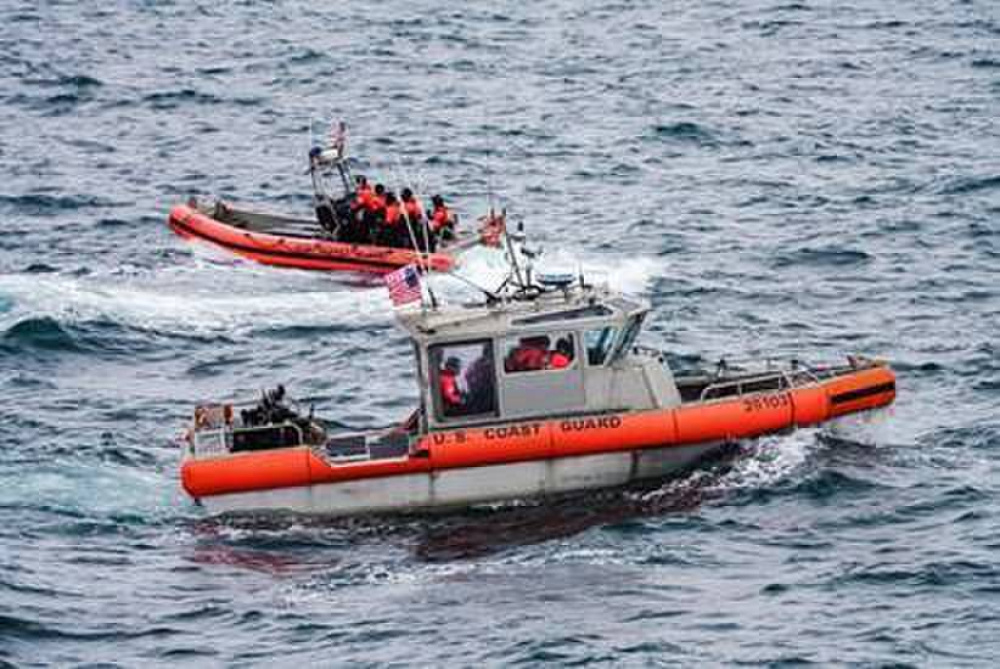
Two small boat crews from Coast Guard Cutter Stratton are underway for operations in the Bering Sea, April 30, 2021. Cutter crews use the small boats to conduct a variety of missions including search and rescue and law enforcement. U.S. Coast Guard photo courtesy Ensign Molly Dolan.

As if we did not know, the GAO is telling us the Coast Guard (unlike the rest of the Government) is having problems–OK I will stop being snide.

I really have not read any more than the highlights of this report, but there is something troubling here that might be turned to an opportunity.

GAO has found that the Coast Guard has not adequately determined its workforce needs. The Coast Guard has reported to Congress that it faces challenges meeting its daily mission demands because of workforce shortfalls. For example, in February 2020, GAO found that the Coast Guard had assessed a small portion of its workforce needs. GAO recommended that Coast Guard update its workforce plan with timeframes and milestones to meet its workforce assessment goals. As of May 2023, Coast Guard officials said they had not yet taken these steps but indicated it could be feasible to develop a rough estimate of how many positions it plans to assess in the next five years.

What I think this means is that not only has the Coast Guard been unable to fill its authorized billets, but the number of billets may be less than it should be. It may also mean the distribution of personnel may put too many people in some places and too few in others.

I think we have all seen this happen, no matter where we work.

But GAO is saying tell us what you really need. No doubt we should have been doing that all along, but it’s hard, and apparently it will take years to get an approximation.

“Commandant’s Letter to the Workforce”

This is from MyCG. It reflects what we were taught on the Eagle, “One hand for the ship, and one hand for yourself.” Or as we are told when on commercial air travel, put on your own oxygen mask before trying to assist others.

The original release includes a nice video I was not able to reproduce here.


Aug. 28, 2023

Commandant’s Letter to the Workforce

By ADM Linda Fagan, Commandant

For over 233 years the Coast Guard has served our Nation. Today we answer the call to protect our national security and promote our economic prosperity in a rapidly changing world. Earlier this summer we launched an unprecedented search and rescue effort to locate people aboard a missing deep-sea submersible. More recently, we rescued people who escaped the wildfire on Maui by sheltering in the water. Our marine inspectors continue to adapt to new technology in the maritime industry, such as alternative fuels and onboard automation. And our cutter crews face unprecedented challenges as they operate in the Caribbean, Strait of Hormuz, Arctic, and Western Pacific.

We complete these changing missions by applying principles of operations sharpened over centuries, including clear objective, unity of effort, and on-scene initiative. We align our actions to our core values of Honor, Respect, and Devotion to Duty. And our Ethos guides us to protect, defend, and save others. Our strong Service culture drives our operational success.

However, it is clear to me that we are not fully applying our core values, principles of operation, or Ethos to our own workplaces. In some places in our Coast Guard, there is an unacceptable disconnect between the workplace experience we talk about, and the experience our people are actually having.

The Operation Fouled Anchor investigation revealed clear evidence of that disconnect in the Coast Guard Academy’s past, which left victims to carry their pain in silent isolation.

Disconnection from our core values can occur anywhere in our Service. It is revealed by reports of sexual assault, harassment, hazing, bullying, retaliation, discrimination, and other harmful workplace behaviors. Today, there are victims of these betrayals grieving at our units. We must not let them suffer in silence.

Any disconnect between the core values we revere and the actual experience of each member of our workforce harms our people, erodes their trust in leaders, and undermines our ability to execute our missions.

In the past we may have thought about operational challenges and workforce climate as two distinct elements of our responsibility. There is no distinction. Our operational success depends on our people, and our people are sustained by a positive workplace experience.

The Coast Guard has a cultural norm of transparency and attention when things go wrong operationally. We investigate mishaps, determine root causes, and aggressively share what happened with others. Our command cadre courses share the lessons learned with each new generation of leaders. Today cutters operate safely after learning from the BLACKTHORN, as our boat crews remember Station Quillayute River, our marine inspectors the CAPE DIAMOND, the Deployable Specialized Forces community ME3 Lin, and our aircrews the CG 6505, to mention only a few examples. Our crews are comfortable speaking up when they see risky situations developing as they perform their missions.

Conversely, we do not have a cultural norm for transparency and attention around sexual assault or harassment, hazing and bullying, toxic leadership, discrimination, or other negative workplace experiences. We do not discuss incidents and do not encourage leaders throughout the Coast Guard to learn from them. Our people do not feel as confident speaking up about workplace behaviors as they do operational risks.

We must give our workplace climate the same transparency and attention as we do our operational missions. Leaders must be comfortable talking about workplace experiences with their crews, so that our crews feel comfortable reporting concerns. Leaders must then have the courage and discipline to act. As we demonstrate clear objective, unity of effort, and on-scene initiative in every operational mission, we must also apply those principles to care for our own workforce.

Trust and respect thrive in transparency but are shattered by silence. Through greater transparency, we will ensure every Coast Guard workplace has a climate that deters harmful behaviors and gives everyone the positive Coast Guard experience they expect and deserve.

This work will strengthen our readiness. We will live up to our Ethos to protect, defend, and save the American people by first protecting, defending, and saving each other.

In July I initiated a 90-day Accountability and Transparency Review to assess the Service’s authorities, policies, processes, practices, resources, and culture. The Review will plot a course for the way ahead. We will match our commitment to operations in our commitment to a culture of respect. I expect all Coast Guard leaders to provide all members of our workforce a positive experience reflective of our core values. Our mission success depends on it.

Editor’s Note: This letter is also published in the Coast Guard Academy Alumni Association Bulletin August/September issue.  

“The Elephant in the Engine Room” –USNI

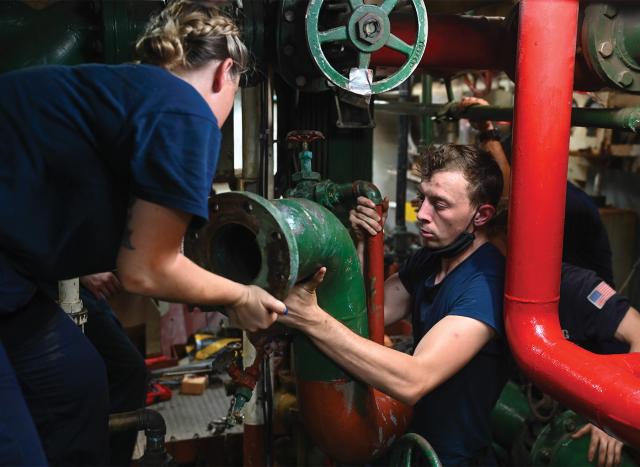
Engineers on board the USCGC Thetis (WMEC-910) work to replace a seawater pump to get the cutter fully mission capable. One way to increase skills and knowledge in the engine room would be platform specialization—having mechanics trained on specific engine models and continuing to work on those models in subsequent tours. U.S. Coast Guard (John Hightower)

The US Naval Institute Proceedings for August 2023 has what appears to be an important discussion of current problems with the way Coast Guard engineers are trained and treated. It was the first prize winner in this year’s Coast Guard essay contest.

The Coast Guard is aware that the surface asset classes coming online have roughly four times as many pieces of equipment installed as the classes they are replacing. The service is beginning to understand the effects of four times as many shipboard points of failure and orders-of-magnitude-more logistics support requirements. Senior leaders are hesitantly embracing the reality that the new ships also are more technically complex, with industrial IT systems connecting every pump, purifier, compressor, and propulsion component.

Some changes are proposed. I would only add that, maintainability and redundancy should be important considerations in ship design, and in regard to this,

 “Cutter crews avoid performing substantial planned maintenance on individual pieces of equipment while underway for fear of being anything less than fully mission capable when tasked with a new and urgent case.”

Most of our ships have redundancies. We need to keep maintenance current even if it means doing it underway and perhaps losing a few knots max speed. These limitations should of course be reported, but they should be expected. National security cutters for instance can take still make 22 to 24 knots even if their gas turbine is taken out of service. They are probably still capable of 26 knots if one of their diesels is down. The OPCs should still be capable of 18 knots if one of their diesels is down.