“U.S. Navy Sets Sights on Fleet-Wide Anti-Torpedo Weapon Rollout in Coming Years” –Naval News

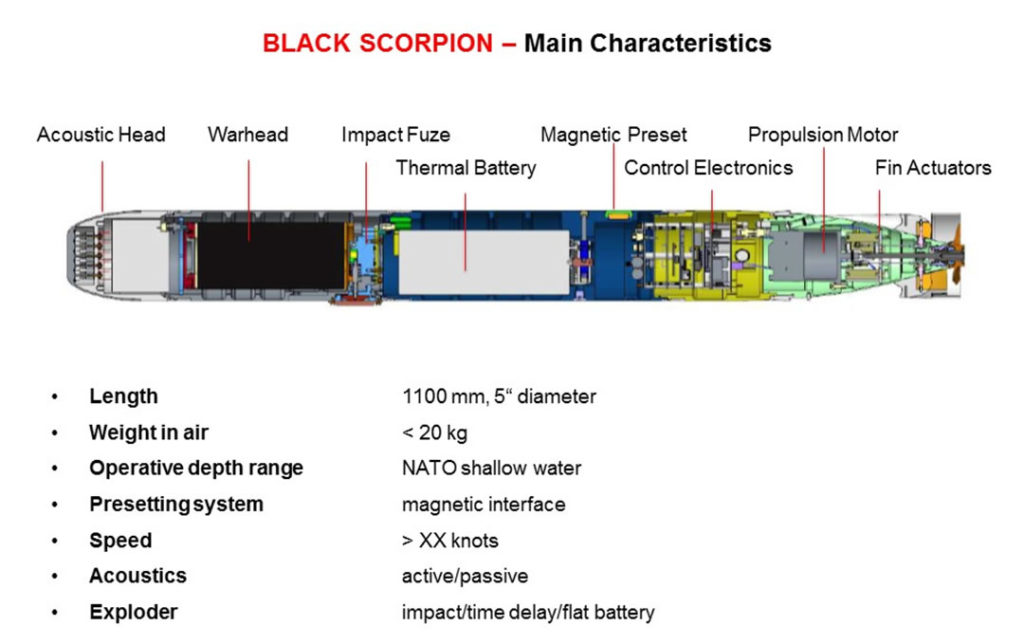
A Navy briefing slide showing the internal components and describing the various features of the PSU_ARL Common Very Light Weight Torpedo (CVLWT) design

Naval News reports a FY2026 budget document states,

“The FY 2026 increase includes support SLQ-25E countermeasures capability improvements, and support for development of an anti-torpedo torpedo defense hard kill capability… …integration and testing the Hard Kill Program will be developed through FY 2030. The US Navy plans to install this torpedo hard-kill countermeasure on over 165 different surface ships.”

“Development will also include improvements to the NIXIE winch to enable the integration of the TWS system, the design and development of a launching system that will launch the Compact Rapid Attack Weapon (CRAW) variant designed for torpedo defense. The launcher will be designed to have the capability to launch ADC-MK2 Acoustic countermeasure devices along with the CRAW countermeasure.”

Sounds like they are going to put it on every ship that has a NIXIE, which would include the National Security Cutters and perhaps the Offshore Patrol Cutters as well.

We have seen this weapon before:

Jan. 13, 2023 Seapower magazine reported that Raytheon was building 18 CRAW prototypes.

These cannot enter the fleet too soon.

What isn’t clear is if the multi-mission nature of the weapon was retained. Apparently the Mk58 torpedo can also be used against submarines as well as inbound torpedoes. Can it be used against surface ships? If so, can it target the stern/propellers/rudder? If so, it could give small cutters an effective way to forcibly stop even large ships, a capability they need for the Ports, Waterways, and Coastal Security mission.

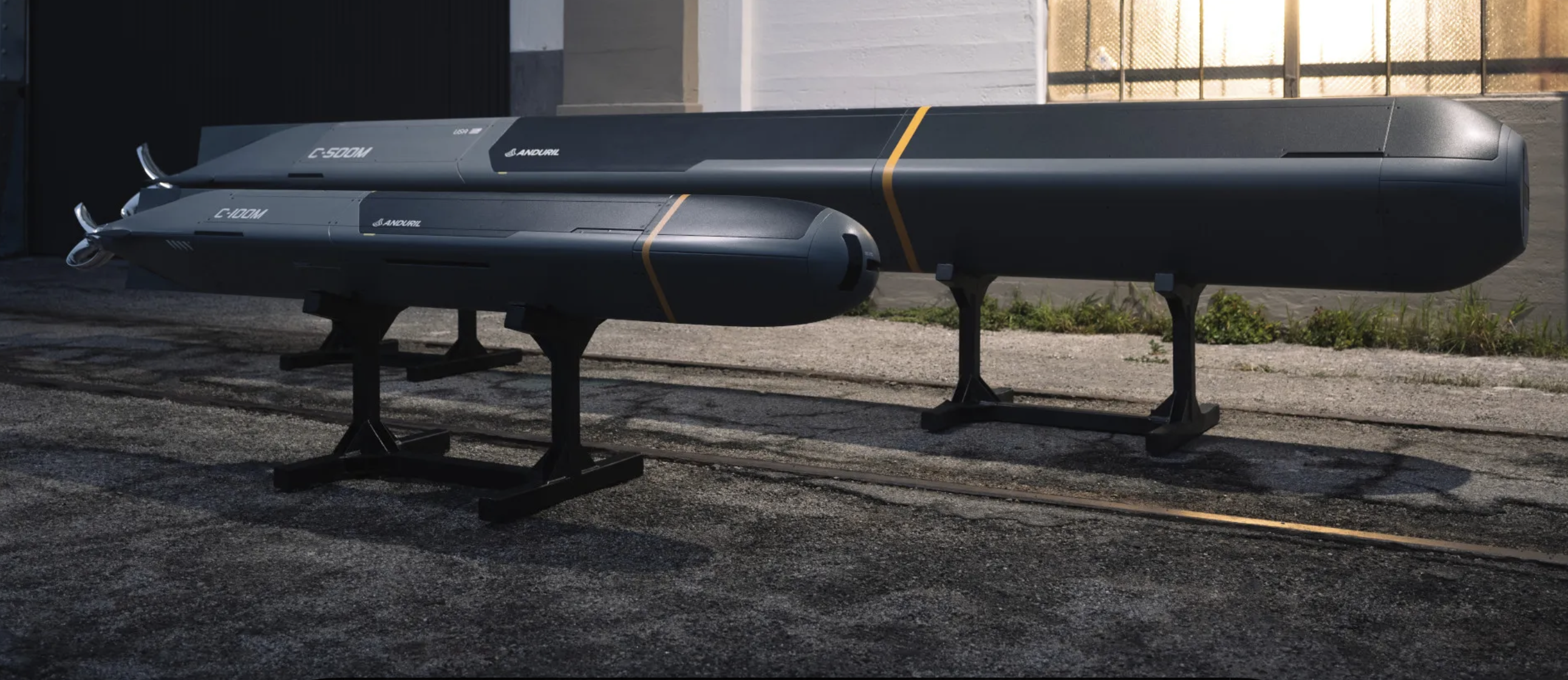
“Copperhead Torpedo-Like Underwater Kamikaze Drones Rolled Out By Anduril” –TWZ

Copperhead torpedo like UUV

If you are a regular reader, you know, the Coast Guard has a requirement implicit in its missions to be able to forcibly stop any vessel, regardless of size, particularly in response to unconventional maritime attacks. This ability needs to be widely and readily available. The Coast Guard does not have that ability with regard to larger ships. Torpedoes can fill this requirement reliably and economically. The Coast Guard might logically also be called upon to enforce blockades in wartime and would require a similar capability.

Unfortunately, the only torpedoes in the US inventory are designed for much more demanding missions than the Coast Guard requires for its peacetime missions–attacking high speed submarines that move in three dimensions at great depths. This has made them much more expensive than they need to be for the Coast Guard missions.

It now appears, we may have a low cost alternative.

The War Zone reports,

Anduril has rolled out a new family of modular torpedo-like uncrewed underwater vehicles (UUV) called Copperhead. This includes kamikaze types…The Copperhead family of UUVs, which Anduril also refers to as autonomous undersea vehicles (AUV), currently consists of the 100 and 500-pound-class types, as well as “M” munition subvariants of each. The Copperhead-100 has an overall length of just under nine feet (approximately 2.7 meters) and is 12.75 inches in diameter, while the Copperhead-500 is just over 13 and a half feet (just over four meters) long and 21 inches wide…. the company says they can both reach top speeds in excess of 30 knots.

While there are probably other ways to launch, these systems are clearly designed to fit in existing torpedo tubes. Existing torpedoes have been autonomous Unmanned Underwater Vehicles (UUV) all along. Anduril is taking the basic torpedo form and broadening its application, while retaining the option of employing the UUV as a weapon.

The 500 and 100 designations refer to the approximate payload weight, not the weight of the device.

Copperhead 100 is 12.75″ “in diameter” and 106″ in length. These outer dimensions are essentially identical to that of the Mk54 but the diamond (square cross section) shape and the need to maintain near neutral buoyancy suggests it will be lighter, probably about 450 pounds.

Copperhead 500 with a 21-inch diameter and 163-inch length is short for a heavy weight torpedo. It probably weighs about 1700 pounds, a bit less than the USN air launched Mk13 Mod 0 (1,949 lbs. or 884 kg) and about half that of the 288 inch long surface launched Mk15 Mod3 (3,841 lbs. or 1,742 kg) torpedoes of WWII.

The speed for both systems is reported as greater than 30 knots. That is slow for a modern torpedo, but faster than nearly all commercial ships, military auxiliaries, and offshore patrol vessels.

As reusable systems, I would assume these are powered by rechargeable batteries like the SAAB Torped 47. Torped 47 is larger than Copperhead 100 but substantially smaller than Copperhead 500. Torped 47 as a reported range of at least 20 km so I would expect the 100 to have a bit shorter range and the 500 to have a longer range.

Among other things, Copperhead 500 UUVs could be used as a mobile mine. At slow speed it could go at least ten miles on its own, based on the old tech Mk37 based Mk67 mobile mine, so probably substantially further.

They might also be able to do Q-route surveys, checking port approach and departure routes for mines.

The Coast Guard might want to employ these systems as scientific or surveillance assets as well as weapons.

Coast Guard manned Destroyer Escort USS Menges, victim of a German Acoustic Homing Torpedo, May, 1944

Copperhead 100M would probably be adequate to immobilize most ships if the warhead exploded below the propeller(s) and rudder(s), but if the target managed to limp along after the first hit, a second might be necessary. If it is necessary to sink a target of over 1000 tons, then you would probably need the larger warhead of the 500M and/or multiple hits. 

Equipping FRCs and larger cutters to support two Copperhead 100s and one Copperhead 500 might both answer the need for an effective ship stopper and also provide options for otherwise employing UUVs.

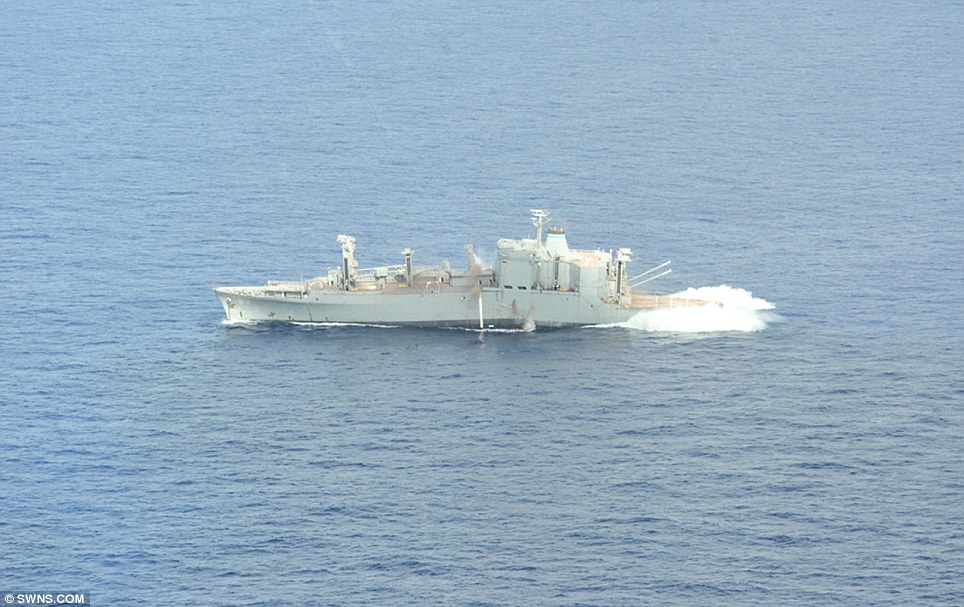
USNS Kilauea breaks in half after being hit by the torpedo.

“Sweden Tests Torpedo 47 on Combat Boat 90 Highlighting Mobile Littoral Warfare Capability” –Navy News

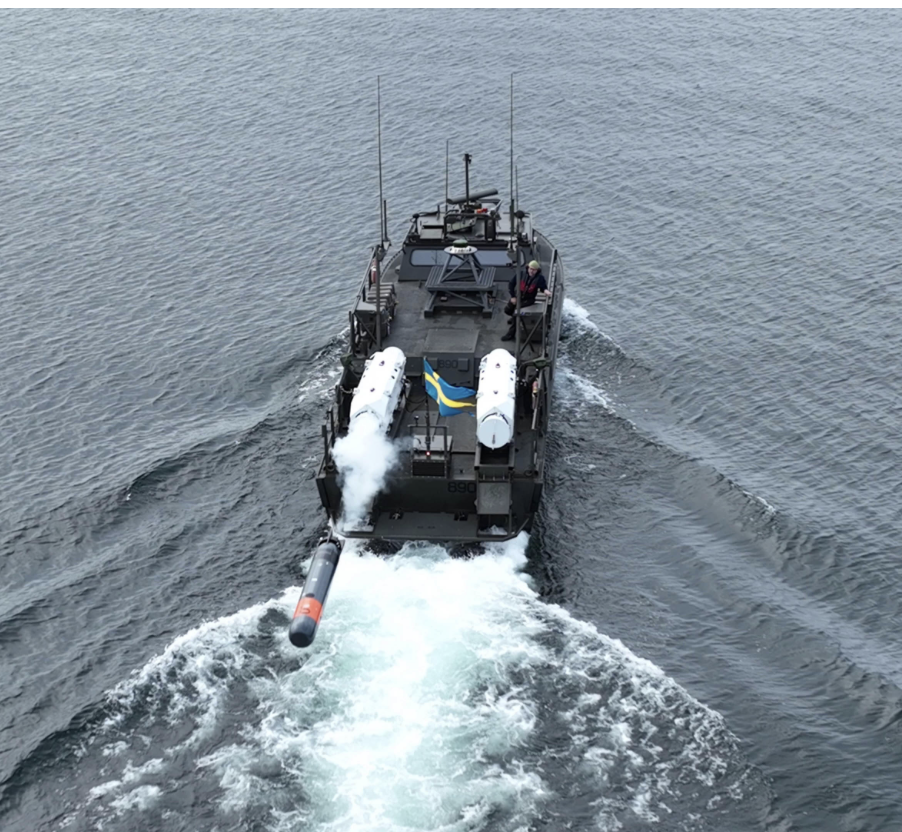
A Torped 47 is launched from a Combat Boat 90

Army Recognition’s Navy News reports

On March 28, 2025, the Swedish Defence Materiel Administration (Försvarets Materielverk – FMV) announced that it had successfully conducted a live-fire sea trial of the lightweight Torpedo 47 (Tp 47), deployed from a non-traditional naval platform, specifically a Combat Boat 90 (CB90). The test was carried out in cooperation with the Swedish Armed Forces and defence company Saab as part of an initiative to explore the possibility of deploying the weapon system beyond its original operational scope.

It should be no surprise that small vessels can carry torpedoes. Torpedoes have allowed small craft to be giant killers since the Civil War, sinking battleships in the Russo-Japanese War and World War I.

MIR USV firing torpedo (Screenshot from SSB video)

Even so, thought it was worth passing this along. We have seen photos of Unmanned Surface Vessels (like the ones above and below) launching light weight torpedos, but this is the smallest modern manned vessel I have seen equipped with torpedoes of any kind.

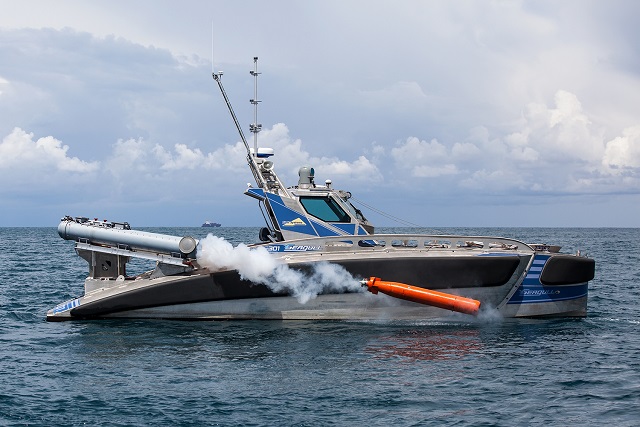
Elbit Systems’ Seagull unmanned surface vessel (shown firing a torpedo) recently exhibited its anti-submarine detection capabilities using a dipping sonar rig and proprietary software.

The Torped 47 is a light weight torpedo, a bit larger than the NATO standards like the Mk54, 400mm in diameter vs 324mm and about 140 pounds heavier. It is unique among light weight torpedoes in having wire guidance, like the larger heavy weight torpedoes, allowing mid-course corrections and is designed to engage both surface and subsurface targets.

Torped 47 is used by Sweden, Finland, and Ukraine.

The Combat Boat 90 has an overall length of only 52 feet and displaces less than 23 tons full load, one 15th the size of a Webber class FRC and about one quarter the size of an 87 foot WPB.

While there are other weapons that might work, a torpedo that targets propellers, is the only weapon I feel confident would allow a small cutter to reliably, forcibly stop a ship. It also has the advantage of not endangering anyone on an adjacent shore. Used against medium to large ships, it would be unlikely to release the ship’s cargo such as oil or Natural Gas.

“Chinese Submarine’s Torpedo Destroys Amphibious Landing Ship During Exercise” –The War Zone / More on Why the CG Needs Torpedoes

The War Zone has an article including the video above that appears to be a wake homing torpedo exploding under the stern of a small (800 tons, 191′) LST (Landing Ship Tank).

It also includes a discussion of wake homing torpedoes and their capabilities. This is assumed to be a typical heavy weight (21″/533mm) torpedo. Russia and China also have much larger 25.6″/650mm torpedoes. Of course, they have or have had smaller (450, 400, 355, and 330mm) torpedoes too.

Wake homing torpedoes are problematic for the defense because decoys and acoustic countermeasures like Nixie don’t work against wake homing torpedoes. The Navy has been working on developing a hard kill countermeasure.

How is this related to the Coast Guard?

As I have contended the Coast Guard’s missions, particularly counter terrorism, require the ability to forcibly stop any ship regardless of size. For medium to large ships, getting a “mobility kill” with a gun is very difficult since most of the propulsion machinery is below the waterline and large marine diesels are extremely tough.

A torpedo that destroys the propellers and/or rudder may be the answer. It could be either wake or acoustic homing, as long as it blows up under the stern, like the one in the video above.

It is not like the Coast Guard is going to use a lot of torpedoes. A marine terrorist attack is an unlikely event, but the consequences of a successful attack could be catastrophic, perhaps leading to a war as happened after 9/11.

By my calculations, we have 31 individual ports or port complexes that might be targeted. The Webber class WPCs appear the most appropriate asset to arm for the purpose of protecting those ports, since they, are most likely to be underway or at least ready to move, and near the ports that might be threatened. We expect to build a total of at least 67. Assuming two torpedoes per WPC, that would be 134 torpedoes and probably less, since some cutters will not be in a position to use them, and some will be in maintenance status.

This is important.

The Navy does not have to buy torpedoes for the Coast Guard, they just need to loan the Coast Guard torpedoes from war reserve stock, and if a war starts the Navy can have their torpedoes back.

We don’t need the most expensive torpedoes. 

The standard US Navy heavy weight torpedo, the Mk 48, is very large, heavy, and extremely expensive, and the Navy can’t make enough of them, but we don’t necessarily need a large warhead or great range, nor do we need a torpedo that can operate at great depth against submarines.

There are three possibilities for torpedoes that the Coast Guard might use, existing light weight torpedoes, new very light weight torpedoes, or new heavy weight torpedoes.

New Heavy Weight Torpedo: Reportedly the Navy is fast tracking a new heavy weight torpedo with a target price of $500,000, much less than the cost of the Mk48 ($4.2M) and even less than the cost of the Mk54 light weight torpedo ($839,320 in 2014). They don’t say so, but this may be explicitly a wake homing anti-surface vessel torpedo. It might also be smaller than the Mk48. If the torpedo is made significantly shorter than the Mk 48, it might permit Submarines to carry more torpedoes. More war shots would be an advantage.
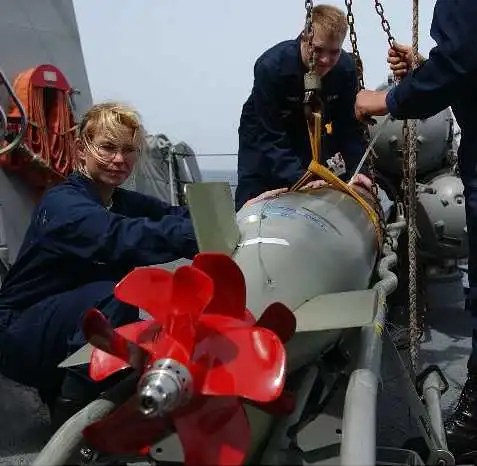
Mk 46 Light Weight Torpedo

Light Weight Torpedo: For at least three decades as many as 36 US Coast Guard WHECs (aka WPGs) were equipped with light weight torpedoes. Throughout their lives, the 378s had two sets of triple light weight torpedo tubes and a torpedo magazine in the superstructure for additional torpedoes, so the Coast Guard has had these in the past.  At least some Light Weight ASW torpedoes, beginning with the Mk46 Mod5 (1984), still a NATO standard, are reported to have an anti-surface capability. Reportedly 26,000 Mk46 torpedoes, including more than 6000 Mod 5s have been produced. The Navy has also produced more capable Mk50 and Mk54 light weight torpedoes, but for the counter terrorism mission the Coast Guard does not need their additional ASW capabilities.
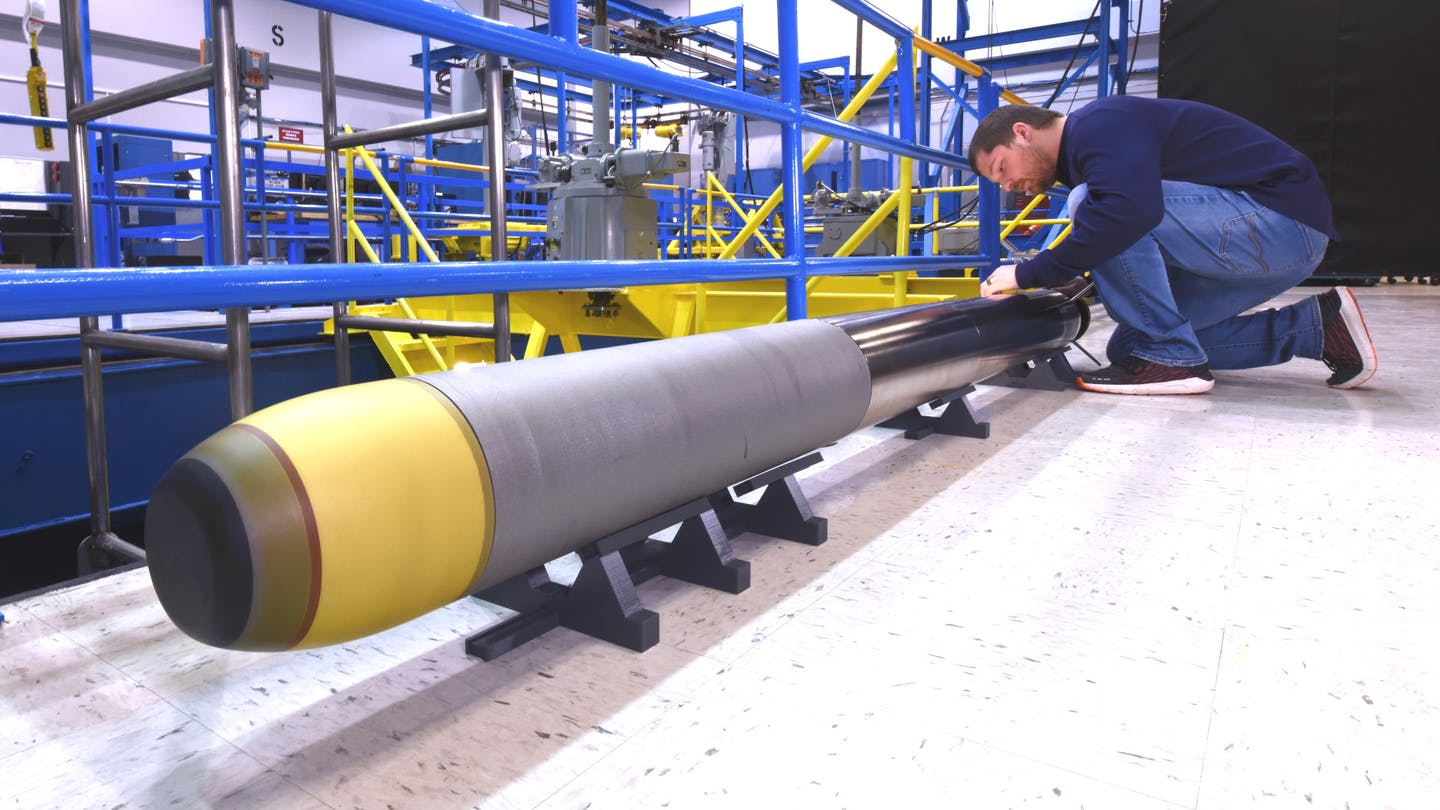
Very Light Weight Torpedo

Very Light Weight Torpedo: 

The Navy has contracted Raytheon for a new class of torpedo, 6.75″ in diameter (171.45mm), about 85″ in length, and weighing about 220 pounds (100 kilos). More here.

While this Common Very Light Weight Torpedo (CVLWT), also known as Compact Rapid Attack Weapon (CRAW), is reportedly effective in both defense (as an anti-torpedo torpedo) and offense against both surface and subsurface targets, by submarines, surface vessels, and aircraft, the initial purchase is only for US submarines.

We may see additional applications for this weapon. There may be good arguments for increasing the production to include defense for surface vessels and offensive use by ASW helicopters and Unmanned surface and subsurface systems.

While the warhead is only half the size of that for the Mk46 and about one twelfth that of the Mk48, it is probably enough to disable even large ships and its small size means more can be carried in the same space.

A Navy briefing slide showing the internal components and describing the various features of the Penn State University’s Applied Research Lab (PSU/ARL) Common Very Light Weight Torpedo (CVLWT) design

It seems the Navy, after a long period of apparently coasting, is showing renewed interest in developing torpedoes and torpedo countermeasures. In addition to the Common Very Light Weight Torpedo, and the new Heavy Weight Torpedo, the Navy is also developing an improved Light Weight ASW torpedo, the Mk54 Mod2.

New weapons may provide an opportunity to repurpose older weapons.

“Navy Wants A Cheap Heavy Torpedo That Can Be Stockpiled Fast” –The War Zone

WWII surface torpedo launch

The War Zone reports,

Rapid Acquisition Procurable Torpedo, or RAPTOR…early in the testing stages…could provide the service with quick-delivery and inexpensive submarine munitions that may be transferable to other platforms as well. (Emphasis applied–Chuck) Capt. Chris Polk, the Navy’s program manager for undersea weapons, detailed the effort …The goal…was to have a torpedo that costs $500,000 or less, with all components acquired and produced within a year. For comparison, the current unit cost of a Mk 48 Mod 7 torpedo is approximately $4.2 million…”

Why would the Coast Guard care?:

For quite a while, I have contended that Coast Guard cutters do not have a capability implicit in their mission set, the ability to forcibly stop vessels regardless of size. Simply put, we need a ship stopper.

With the increase in vessel size, it has become extremely unlikely we would be able to stop even a medium sized vessel, manned by a determined crew, in anything like a timely manner, using the guns being installed on cutters.

To stop a ship, the logical targets are rudder, propeller, or engines. All three are mostly or completely below the waterline, making a torpedo the logical weapon of choice. The last time I looked, we had 31 critical ports that needed protecting. Distributing enough of the US Navy’s only, very expensive, Mk48 heavy weight torpedoes to protect 31 ports was a non-starter, so I have suggested that we use lightweight torpedoes (the Navy has a lot more of them) with the idea that cutters would generally just serve as another place to store them since, if we are lucky, they would never be used. Even if an attack occurred, most would go unused. The ones issued to the Coast Guard could come out of the reserve stock until the Navy decides they need them in wartime.

The US Navy has not introduced a totally new heavy weight torpedo in more than 50 years. Some foreign surface combatants still carry heavy weight torpedoes, but the US Navy has not built surface combatants with heavy weight torpedo tubes since the 1960s. (Brooke and Garcia class Destroyer Escorts–later frigates–were the last classes.)

If this new torpedo does cost less than $500,000, it would be less than the reported cost of the Mk54 light weight torpedo ($839,320 in 2014).

It seems, the Navy may have decided they need a way to sink ships, maybe a lot of ships, including large ships, that may not be top of the line combatants, without having to empty their magazines of expensive, exotic munitions.

If that is the case, hopefully they will make enough to allow placing some on cutters, including small cutters like the FRCs or the WPB replacement. FRCs are almost seven times larger than the PTs boats of WWII and the PTs carried four heavy weight torpedoes. I would be happy to see cutters carrying two.

former USNS Kilauea breaks in half after being hit by the torpedo.

“Army 2023: Russian firm Gidropribor displays new torpedo” –Navy Recognition

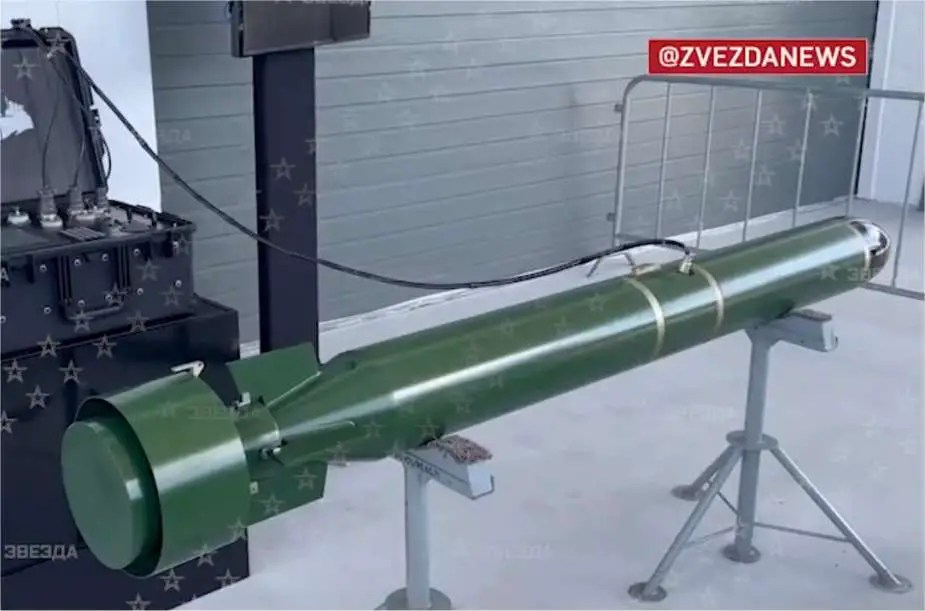
New torpedo on the Gidropribor booth at Army 2023. (Picture source: Zvezda)

Navy Recognition reports, a Russian firm has developed a compact torpedo,

“It can target submarines, unmanned underwater vehicles, which is very relevant today, and surface ships…220mm in caliber, varies in length from 2.1 to 2.4 meters and weighs between 100 and 140 kg.”

I suspect the Russians saw what the US was doing with the Common Very Light Weight Torpedo (CVLWT) and figured we had a good idea.

The CVLWT is reportedly 6.75″ (171mm) in diameter, about 85″ (2.16 meters) in length, and weighs about 220 pounds (100 kilos).

I contend the Coast Guard could use the CVLWT to forcibly stop even large merchant ships that might be used by terrorists or for other nefarious purposes, probably without sinking it, which might lead to serious unintended consequence.

“Turkish “MIR” USV Test-Fires Torpedo For The First Time” –Naval News

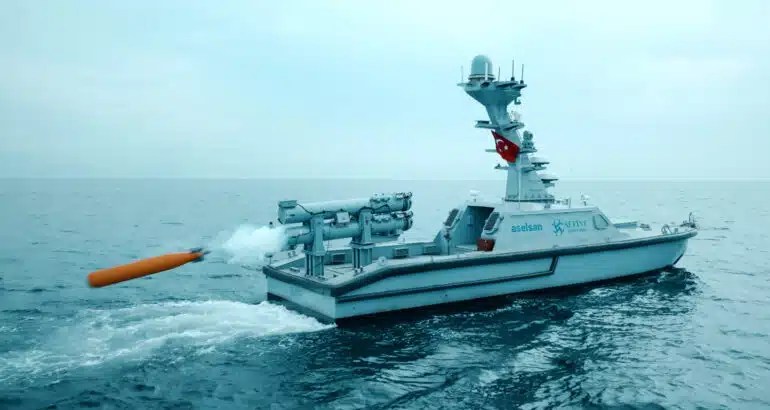
MIR USV firing torpedo (Screenshot from SSB video)

Naval News reports,

On April 18, 2023, the Turkish armed unmanned surface vessel (USV) “MIR” fired a light torpedo from a double torpedo tube at the stern of the ship. The test firing was the first torpedo launch from a Turkish USV.

This is offered as an ASW system, but if you are a regular reader here, you know I had to show the photo to illustrate how even a very small vessel can launch light weight torpedoes. (Of course, we have had previous examples, see photos at the end of the post.)

This is important because the Coast Guard has an unaddressed Required Operational Capability implicit in its Ports, Waterways, and Coastal Security Mission, that the Coast Guard needs to be able to forcibly stop any vessel regardless of size. A lightweight torpedo that targets a ship’s propeller(s) seems to be the best solution for stopping larger vessels (hopefully without sinking it and causing a major pollution incident).

Existing lightweight ASW torpedoes, like those launched from the USV illustrated above, might do the job if they also have an anti-surface capability. Distribution to Coast Guard units might be thought of as a storage option for a war reserve, in that, while the Coast Guard would need to have them widely distributed, even in the worst case the Coast Guard would actually use very few.

The author notes,

“…submarines are unlikely to engage these small units because of the limited minimum depth of some torpedoes or the limited amount of torpedoes the submarines have loaded.”

But if USVs become a threat to submarines, it will not be long before there is a counter. In fact, the already existing 6.75″ diameter (171.45mm), 220 pound (100 kilos), Very Light Weight Torpedo that would not displace any existing submarine weapons might anticipate this need. This weapon system might meet the Coast Guard’s needs.

A Navy briefing slide showing the internal components and describing the various features of the PSU_ARL Common Very Light Weight Torpedo (CVLWT) design

Camera drone’s-eye view of IRGC boats on display, March 2023. A) The air defense boat. B) Light missile boat with Bladerunner hull. C) light missile boats on Interceptor hull. D) light missile boats on Interceptor hull (alternative design). E) Missile boat, with type of missile unclear. F) RIB, possibly explosive boat or uncrewed. G) RIB with lightweight anti-ship torpedoes, can be carried aboard a Shahid Soleimani-class missile corvette. H) Interceptor boat. I) Interceptor boat with new type of missile.

Elbit Systems’ Seagull unmanned surface vessel launching a lightweight torpedo. 

Video: Northrop Grumman Showcases Very Light Weight Torpedo At Sea Air Space 2021″ –Naval News

Our friends at Naval News have an update on the Very Light Weight Torpedo program. It seems to be progressing rapidly. Apparently this is seen as an urgent requirement.

The discussion in the video talked about the anti-torpedo and anti-submarine capabilities, but no discussion of use against surface targets. I suspect this is because those capabilities are the primary selling points for the Navy. It may not be that it is incapable of attacking surface vessels, which should be easier targets.

We talked about this weapon earlier, in greater depth, including potential Coast Guard use.

Full scale production should drive to price down to a point, it might even find its way into the Coast Guard.

(There does seem to be an error in the written portion of the Naval News post in that it says the diameter of the weapon is 121 mm while the video discussion indicates 171 mm. The figures I had seen earlier were:  6.75″ in diameter (171.45mm), about 85″ in length, and weighs about 220 pounds or about 100 kilos).


“Euronaval 2020: Black Scorpion small-size torpedo from Leonardo” –Navy Recognition

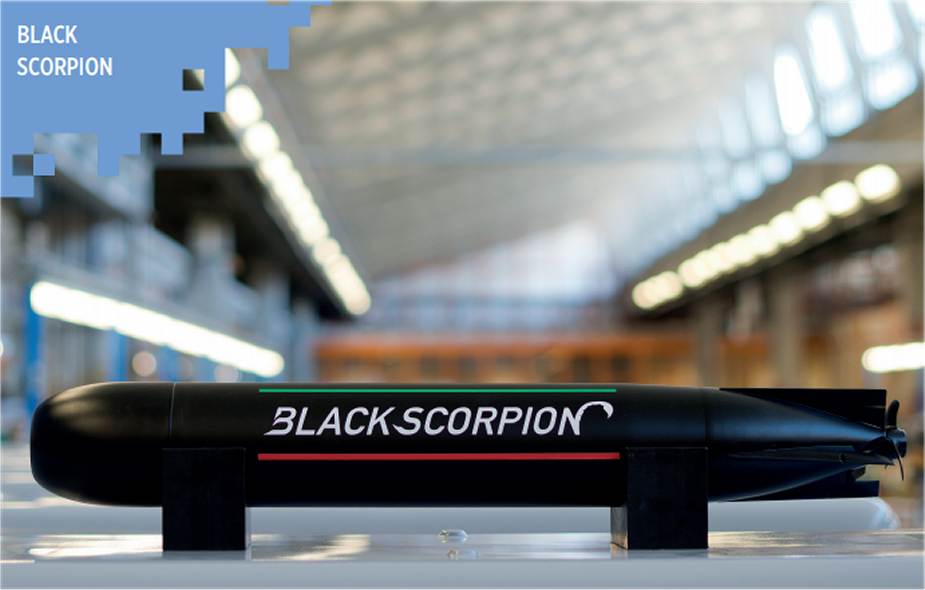
Black Scorpion small-size torpedo from Leonardo (Picture source Leonardo)

We saw this earlier but Navy recognition has another report on the Leonardo Black Scorpio, a truly very small torpedo, 127mm (5″) in diameter and 1.1 meters (43.3″) in length. The report provides a bit more insight into how it is expected to be used.

Much as I see the need for the Coast Guard to have a light weight torpedo, this may be too small to have anything more than very limited utility. A 21″ (533mm) heavy weight torpedo is 80-100 times heavier. A 12.75″ (324mm) light weight torpedo is 11 to 12 times larger. Even Grumman’s “Common Very Light Weight Torpedo” is five times as large.

But I am still curious. Range? Speed? Sensor range? Usable against surface ships? Midget submarines? Moored mines?

Graphic from Leonardo


SAAB’s Light Weight Torpedo

Dmitry Shulgin reports the successful testing of a new light weight torpedo from SAAB that offers some unique feature un-available on US Navy light weight torpedoes.

While American light weight torpedoes are explicitly anti-submarine weapons that at least, in the case of the Mk46 mod5, might have an incidental anti-surface capability, these are expressly identified as being for both anti-submarine and anti-surface use. Unlike USN light weight torpedoes, it has the option of wire guidance. It is designed specifically for operation in  difficult littoral environments while also being usable in deeper water.

This new torpedo is designated the Torped 47, it replaces an earlier type with similar characteristics, the Torped 45. Compared to the US Navy’s Mk54, they are longer (2.85 m (9.35′) vs (2.72m (8.91′), heavier (340 kg (750 lb) vs 276 kg (608 lb)), and of greater diameter (400mm (15.75″) vs 324mm (12.75″)).

Finnish_Navy_conducts_first_torpedo_firing_from_Hamina-class_fast-attack_craft

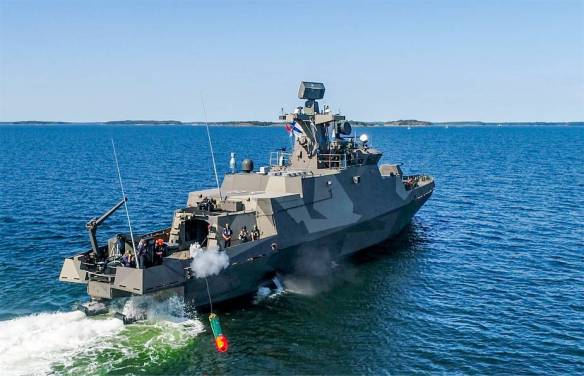
Finnish Navy conducted its first torpedo firing from FNS Tornio Hamina-class fast-attack craft in the Archipelago Sea with a TP45 torpedo. (Picture source Finnish Navy)

They use a LiFPO4 battery which is rechargeable, so it is likely practice torpedoes can be used numerous times and quickly returned to service. Believe this is more difficult with the Otto fueled USN torpedoes.