DHS, Coast Guard Launch $255K ‘Ready for Rescue Challenge’ to develop new boater safety solutions

This is a news release, quoted in full. 

Sept. 5, 2018

DHS Science & Technology Press Office: John Verrico, (202) 254-2385

USCG RDC Press Representative: Loretta Haring (202) 475-5523

DHS, Coast Guard Launch $255K ‘Ready for Rescue Challenge’ to develop new boater safety solutions

WASHINGTON – Today, the U.S. Department of Homeland Security (DHS) Science and Technology Directorate (S&T), in collaboration with the U.S. Coast Guard Research and Development Center (RDC), launched the U.S. Coast Guard Ready for Rescue Challenge, a $255,000 prize competition that seeks boater safety solutions that will help make it easier to find people in the water.

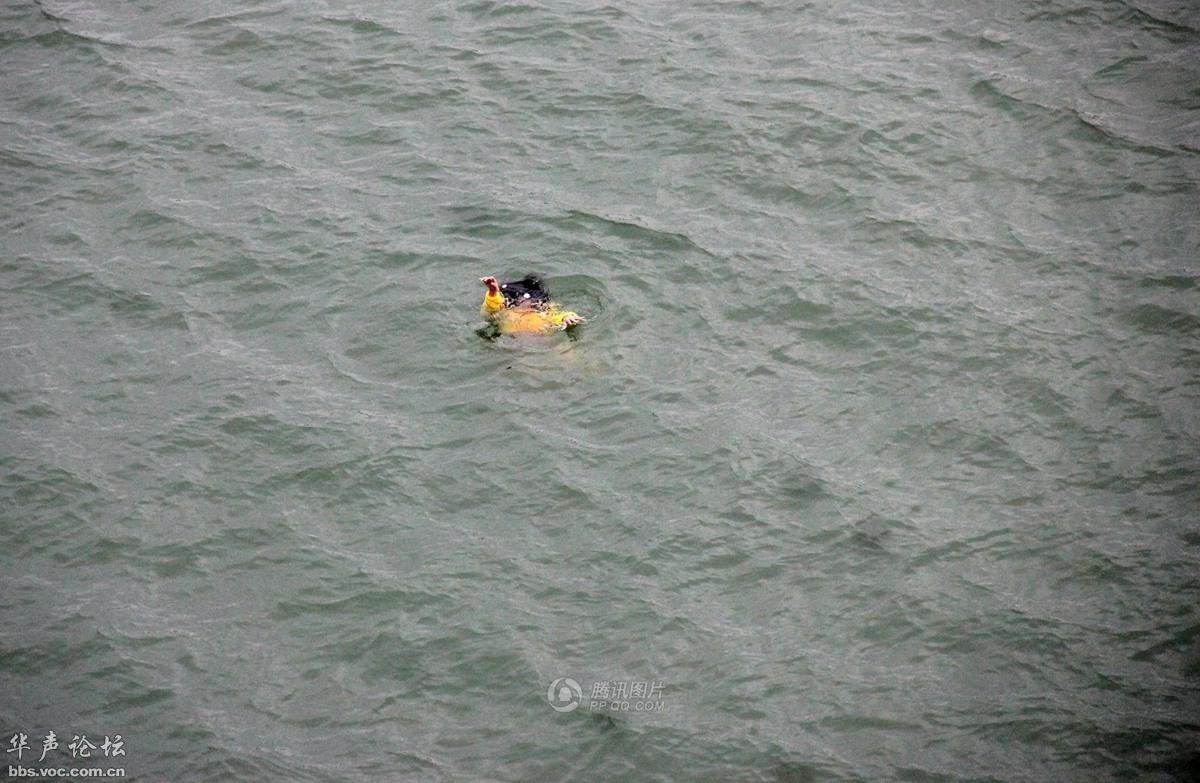
When a person is separated from their boat or other watercraft, they can be left isolated in open waters. A life jacket or personal flotation device (PFD) keeps a person afloat while they seek safety. However, a person in the water is a small, moving target, and even in a successful rescue mission, locating the person can take hours.

“Boater safety solutions that harness new designs and technologies can improve the chance of a successful rescue,” said William N. Bryan, DHS Senior Official Performing the Duties as Under Secretary for Science and Technology. “New, innovative solutions are critical. We are proud to support our nation’s maritime first responder with this important, life-saving effort.”

This call for concepts is the first phase of an anticipated three-phase prize competition. Phase I concepts could include a new or updated life jacket or PFD, an attachment to a life jacket or PFD, or an additional device for boaters. The best concepts will be effective, affordable, and hold the potential for wide adoption by recreational boaters.

Those interested in participating in the Challenge should submit their concept by 4:59 p.m., ET, Monday, Oct. 15, 2018. The judges will evaluate the submissions and will select up to five monetary prize winners and up to five non-monetary honorable mention award winners. A total of $25,000 will be distributed evenly among each of the Phase I monetary prize winners.

“The U.S. Coast Guard is devoted to helping boaters in distress,” said Bert Macesker, RDC Executive Director. “One critical challenge is finding people in the water. Partnering with DHS S&T allows us to increase the Coast Guard’s access to innovations that make people in the water more detectable. We hope to build off of the success of our previous prize competition partnership for environmentally friendly mooring.”

In Phase II, selected participants from Phase I will participate in a “Piranha Pool” to pitch their solution and compete for a total prize pool of $120,000. This prize will assist each monetary prize winner in developing their concept into a working prototype. In Phase III, the Coast Guard will field test prototypes alongside standard Coast Guard approved safety equipment. At the conclusion of Phase III, the judging panel may award a total $110,000 in additional monetary prizes.


For more information about the Coast Guard Ready for Rescue Challenge, visit readyforrescuechallenge.com.
“Moving North–Arctic Capable Ships Enable Navies, Coast Guard to Patrol Extreme Latitudes”–Seapower

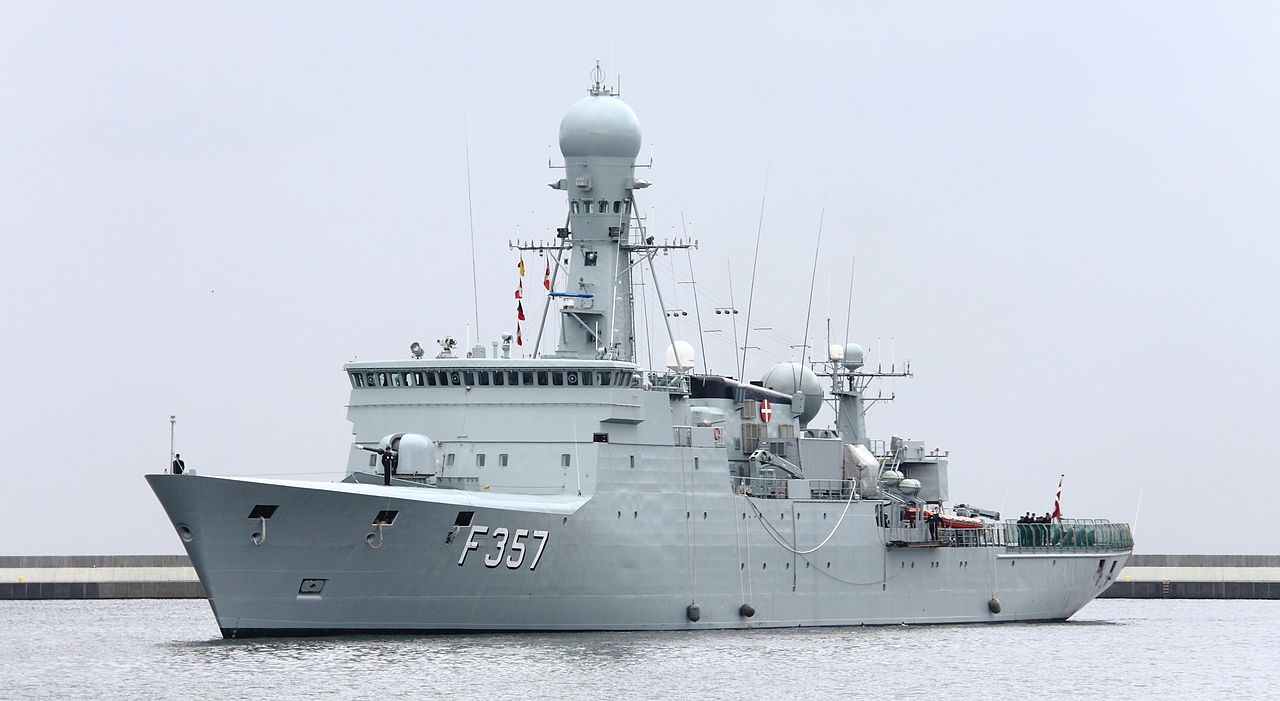
Thetis-class ocean patrol vessel belonging to the Royal Danish Navy. (Similar in size to the OPC.) Source: konflikty.pl, Author: Łukasz Golowanow

The September 2018 issue of the Navy League’s Magazine, Seapower, has an article about ice strengthened Patrol Vessels. The entire issue is available on line. You will find the article on page 32.

P570 Knud Rasmussen. The first of  three Danish navy Knud Rasmussen-class ocean patrol crafts. Commisioned in 2008. Photo from Flemming Sørensen

The article looks at the Danish Knud Rasmussen and Thetis classes, the Norwegian Coast Guard vessel Svalbard, and the Canadian HMCS Harry DeWolf class Arctic Offshore Patrol Ship (AOPS). It talks about why the ships were designed the way they were, and the features that allow them to operate successfully in the Arctic.

These are not icebreakers, they are hybrids, offshore patrol vessels adapted to work in both Arctic and ice free environments. The Danish vessels thanks to the StanFlex mission modules system can fill the role of warships, mounting ASW torpedoes or Evolved Sea Sparrow AAW Missiles.

Norwegian Coast Guard Vessel Svalbard. Photo by Marcusroos

Former USCGC Sherman to Sri Lankan Navy

060520-N-4104L-005
White Beach, Okinawa (May 20, 2006) – The U.S. Coast Guard Cutter Sherman (WHEC 720) leaves the White Beach Naval Facility, Okinawa pier to begin its participation in exercise Southeast Asia Cooperation Against Terrorism (SEACAT) 2006. SEACAT is a weeklong at-sea exercise designed to highlight the value of information sharing and multi-national coordination with participating navies during practical maritime interception training opportunities. USCGS Sherman is homeported in Alameda, Calif. U.S. Navy photo by Senior Chief Journalist Melinda Larson (RELEASED)

Janes is reporting that the former USCGC Sherman was handed over to the Sri Lanka Navy on 27 August in a ceremony in Honolulu.

This is the second cutter Sri Lanka has received. They still operate the former the former USCGC Courageous (WMEC-622) decommissioned 19 Sept. 2001 and inducted in the Sri Lankan Navy as P-621 SLNS Samudura 19 Feb. 2005. (Anyone know why she was decommissioned?)

They also have a couple of new 2,200 ton Indian built OPVs, but the former USCGC Sherman will be the largest vessel in the Sri Lanka Navy.

House Coast Guard Subcommittee Chairman In Trouble

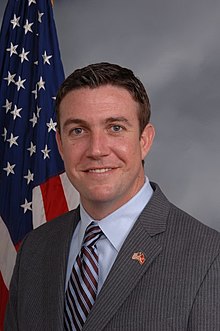
Representative Duncan Duane Hunter, Official Portrait

Defense News reports, 

The Tuesday indictment of Rep. Duncan Hunter on corruption charges could have an impact on a number of defense-related pet projects for the Republican lawmaker, including the potential sale of military drones to Jordan.

The indictment charges that Hunter and his wife, Margaret, who served as a campaign consultant, stole more than $250,000 in campaign funds to pay for overseas vacations, bar tabs, dental work and other personal purchases, despite objections from staff.

Hunter, a 41-year-old California Republican, has repeatedly denied the charges, and indicated Wednesday he intends to continue to run for re-election in November.

But following his indictment, House Speaker Paul Ryan, R-Wis., announced that Hunter’s committee assignments would be revoked while the criminal case is pending (emphasis applied, Chuck) — including his seat on the House Armed Services Committee.

I hate to see this happen. As chair of the House Coast Guard and Maritime Transportation Subcommittee, Representative Hunter has been a strong advocate for the Coast Guard. With funding for the Icebreaker in the balance it is a bad time to weaken a strong pro-Coast Guard voice. 

Coast Guard Celebrates NAIS Full Operational Capacity Milestone–CG-9

The Acquisitions Directorate (CG-9) is reporting a major milestone in improved Maritime Domain Awareness. Here is their press release quoted in full. 

The Coast Guard’s Nationwide Automatic Identification System (NAIS) achieved full operational capacity (FOC) on May 24, 2018.

Jewuan Davis, program manager for the NAIS program (CG-9332), explained that FOC was achieved when the capability had been “deployed and accepted at the 58 critical ports and 11 waterways identified in the NAIS Operational Requirements document.” Currently, permanent transceiver systems are deployed and fully operational at 134 total regional sites, providing operational coverage of the 58 critical ports and 11 waterways. On a daily basis, NAIS receives an average of over 264 million vessel messages and provides data feeds to over 80 Coast Guard and other government agency systems worldwide.

The milestone was recognized during a ceremony at Coast Guard Headquarters on July 26, 2018. In attendance were Rear Adm. Michael Ryan (CG-7), Rear Adm. Michael Johnston (CG-93) and Rear Adm. Michael Haycock (CG-9). During the ceremony, the flag officers shared real stories of how NAIS was used to enhance maritime domain awareness (MDA) across the Coast Guard.

The NAIS acquisition stemmed from the Maritime Transportation Security Act of 2002 which directed requirements to establish a system of effective maritime domain awareness and security for every port act of 2006. MDA is defined as the effective understanding of anything associated with the maritime domain that could impact the security, safety, economy or environment. “The Coast Guard is the lead federal agency for maritime security, maritime safety, maritime mobility, national defense in U.S. coastal waters and protection of natural resources in U.S. coastal waters,” said Davis, “NAIS is critical to the Coast Guard’s ability to fulfill its responsibilities in those areas.”

NAIS enables the Coast Guard to maintain MDA by providing a comprehensive view of the nation’s waters. As a result, decision makers are better positioned to respond to safety and security risks; improve the safety of vessels and ports through collision avoidance; and strengthen national security through the detection, identification, and classification of potential threats from offshore.

The NAIS program started in 2004. Reflecting on the process 14 years later, Davis said, “A lot of detailed planning, interagency coordination, and hard work was invested into the successful completion of this milestone and full delivery of this capability to the Coast Guard’s operational users.” There are many contributors to thank for the success including the entire NAIS Program Management Office team and previous program managers and team members who put hard work and diligence into the early stages of developing NAIS. Davis extends a special thanks to the Office of Command, Control, Communications, Computer and Sensors Capabilities (CG-761); Sustainment Manager (CG-681); NAIS product line team at Command, Control, and Communications Engineering Center and all operational users for “helping us continually improve and refine the tool into the critical asset it is today.”

The next major milestone for the NAIS acquisition program will be the completion of acquisition decision event 4, acquisition gate review and transition of management responsibility for NAIS from acquisitions to the sustainment community, scheduled to occur in the fourth quarter of fiscal year 2018. After that point, the sustainment community will assume responsibility for the continued maintenance of NAIS and managing technical refreshes of the capability to keep the system up to date.

For more information: Nationwide Automatic Identification System program page   

New Military Law Concerning Domestic Violence and Sexual Assault

I  am quoting here some information received via email from the Service Women’s Action Network (SWAN) regarding legislation signed into law on August 13, 2018 as part of the John S. McCain National Defense Authorization Act (NDAA) for Fiscal Year 2019.  Changes include:

  • Adding a new punitive article dealing with domestic violence to the Uniform Code of Military Justice (UCMJ).
  • Requiring a report of the feasibility of extending Special Victim Counsel availability to victims of domestic violence.
  • Establishing a uniform Command Action Form for reporting the final disposition of sexual assault offenses when the perpetrator is subject to the UCMJ and the victim has filed an unrestricted report.
  • Standardizing of policies across the Services related to expedited transfer in cases of sexual assault or domestic violence.
  • Requiring the development of a plan for implementation of oversight of DoD’s Sexual Harassment Prevention and Response policy.
  • Requiring oversight of the Registered Sexual Offenders’ Management Plan.
  • Requiring the DoD and the Department of Labor’s Veterans Employment and Training Service to update the Transition Assistance Program (TAP) to establish new pathways for more individualized counseling.  Also, all those departing the military will receive information on resources available to them in the local community where they have chosen to reside to include resources for those suffering from Military Sexual Trauma (MST).

“Ready, Responsive, Relevant?” a Public Affair Critique, USNI

USCGC Rollin A. Fritch (WPC-1119)

August has brought the US Naval Institutes annual “Coast Guard Issue” of their magazine, Proceedings, which is mostly not about the Coast Guard. Never the less there are Coast Guard related articles included and there is one on this side of the pay wall that really deserves the service’s attention, “Ready, Responsive, Relevant?” It looks at the Coast Guard’s Public Affairs program. Its written by Lieutenant Commander Krystyn Pecora, USCG, XO on Seneca (WMEC-906), an Academy graduate and permanent cutterman, a former external affairs officer for District Five with a master’s degree in media and communications studies.

She needs to be listened to, because as she points out, the Budget is linked to Public Perception of Value. 

She found that the program lacked focus, leadership, and resources.

Considering “focus”:

In her examination of focus, she refers to a 2001 USNI article, “Branding the Coast Guard” also worth a read. It points out.

“Never has a governmental agency been such a success and failure at the same time. The Coast Guard is lauded daily in the nation’s press for spectacular operational successes, yet is chronically unable to obtain an adequate budget from the nation it serves. This dichotomy was illustrated quite graphically in March 2000 when the Coast Guard won the accolades of Government Executive magazine for being the nation’s most efficient and best run federal agency but was ridiculed in the same article for its naiveté and repeated failures in the budget process. “

His solution:

“The Coast Guard’s travails will never be addressed adequately until it abandons the myth that it is a single, monolithic organization and accepts the reality that it is a “holding company” for a number individual, mutually supporting, maritime service organizations. It also must focus on the individual services, not the holding company, in the competition for federal dollars and support.”

In a modern interpretation of the argument LCdr Pecora suggests, 

if 11 strategic teams were developed, each devoted to defining and promoting one of the Coast Guard’s missions. All 11 missions have millions of constituents interested in the specific services the Coast Guard provides. For example, northern constituents care more about domestic icebreaking capabilities compared to constituents in warmer climates. Realistically, the Coast Guard cannot use the same communications playbook for each of these constituent groups. Strategic teams translating national intent to regional audiences through the district external affairs offices would ensure each mission receives ongoing attention to daily operations, akin to the U.S. Navy’s type commander construct.

This dedicated effort would be a far cry from today’s whack-a-mole operations in which the service focuses its efforts on the mission currently most in need of acquisition funding. Instead of having missions fighting for pieces of the funding pie, the Coast Guard could grow support for funding all constituent interests concurrently. In addition, this construct takes advantage of the current information environment, in which audiences select news sources that resonate with their personal interests rather than relying on traditional media outlets. It would not matter which brand image is imagined when asked to envision a Coast Guardsman; that brand image would have been a result of calculated microtargeting based on a person’s region and interests.

Considering Leadership:

Compared to the professionalism of DOD public affairs.

“The experience disparity for the Coast Guard is substantial; this is the second public affairs–related tour for its current Chief of Public Affairs. His predecessor served his first public affairs tour in this leadership position. This lack of experience is a service-wide failure. The Coast Guard would not place a novice in charge of any operational program but consistently accepts this scenario for its communications program. “

Considering Lack of resources: 

There is much more in the article, but a single paragraph,

“On average, there is one enlisted public affairs watchstander representing 22 Coast Guard units of varying size, in geographically diverse locations, often across multiple states, with varied missions. The folly of the current footprint was identified by the service’s own reports in the aftermath of both the Cosco Busan (2007) and Deepwater Horizon (2010) oil spills. These reports called for the public affairs program to be increased in size to decrease public affairs response times to sustain messaging during long-term events. 11 For context, the public affairs response to the 2017 Atlantic hurricane season consisted of half the rate, leaving skeleton crews across the nation to cover daily operations. The program simply cannot handle two national-level events at the same time. “

Please read the entire article, there is much, much more. 


ALCOAST 269/18 – AUG 2018 SOLICITATION FOR RESEARCH DEVELOPMENT TEST AND EVALUATION (RDT&E) IDEA SUBMISSIONS

The following ALCOAST is quoted directly with minor reformatting to better fit the page..

R 020955 AUG 18
FM COMDT COGARD WASHINGTON DC//CG-9//
TO ALCOAST
UNCLAS//N07044//
ALCOAST 269/18
COMDTNOTE 7044
SUBJ: SOLICITATION FOR RESEARCH DEVELOPMENT TEST AND EVALUATION (RDT&E) IDEA SUBMISSIONS
1. The RDT&E Program is calling all Coast Guard Innovators to submit new potential project ideas for the FY20 R&D portfolio! Do you have a creative or innovative idea that could help address a current operational challenge or improve mission effectiveness? Now is the time to share them! All active duty personnel, civilians, contractors, and key stakeholders are encouraged to submit. Please check out our current portfolio and website here:http://www.dcms.uscg.mil/acquisition/rdte.
2. We will be collecting ideas through the CG_Ideas@Work website (https://cg-ideasatwork.ideascale.com), the Coast Guard’s idea crowdsourcing platform. You can submit your ideas directly to: https://cg-ideasatwork.ideascale.com/a/ideas/top/campaigns/21252. You can also upload a video (up to 1 minute in duration) to accompany idea submissions. If you do not yet have a CG_Ideas@Work account, you will need to register using your ‘.mil’ email address. If you are unable to access the idea submission form, you can submit your idea via email to: innovation@uscg.mil. Be sure to include the title, the problem statement, operational impact, and your contact information.
3. The deadline to submit ideas for the FY20 Project Portfolio is 12 September 2018. Submitted ideas will be reviewed and ranked according to their potential impact on CG missions; regardless of funding, feasibility, or policy. Stakeholders from across the service will meet 17-18 October 2018 to conduct the annual Idea Submission Review (ISR). ISR rank-ordered results are critical to the process of building the annual RDT&E Project Portfolio.
4. POC: Ms. Alexandra Swan, COMDT (CG-926), at: 202-475-3056 or Alexandra.P.Swan@uscg.mil.
For any questions or assistance with CG_Ideas@Work, please contact innovation@uscg.mil.
5. RADM M.J. Haycock, Assistant Commandant for Acquisition and Chief Acquisition Officer, sends.
6. Internet release authorized.