This Day in Coast Guard History, April 26

Based on the Coast Guard Historian’s timeline, https://www.history.uscg.mil/research/chronology/
With inspiration from Mike Kelso

April 26

USRC HUDSON

USRC HUDSON At the Norfolk Navy Yard, Portsmouth, Virginia, 21 April 1898 being outfitted for service in the Spanish-American War, which included adding additional armament, armor plating, and a new coat of “war paint” U.S. Coast Guard History website

1898  During the Spanish-American War, cutters Morrill, Hudson (hero ship of Cardenas Bay), and Hamilton, formerly revenue cutters and recently armed for service in the so-called “Mosquito Fleet,” passed through Hampton Roads and after asking formal permission of the Commodore, proceeded to Key West.  From that point, they joined the Navy ships of the Cuban blockading fleet.

USRC MORRILL. Photographed by the Detroit Photographic Co. Library of Congress photo No. LC-D4-9016

1899  The Revenue Cutter Service signed a lease with two prominent Baltimore landowners for 36 acres of farmland surrounding Arundel Cove, Maryland. Two months later, LT John Moore, USRCS, arrived aboard the side-wheeler Colfax to establish the “Revenue Cutter Station at Curtis Bay,” today’s United States Coast Guard Yard.

USRC Mohawk

1912  President William Howard Taft boarded the USRC Mohawk on this date in 1912.  The cutter took the president from New York City’s Recreation Pier on “West 50th Street” to Governors Island and back for the funeral of MAJGEN Frederick Dent Grant, son of former President Ulysses S. Grant.

BAE Bofors 40mm Mk4 / and Palletized Weapon Systems

Naval News reports,

Following the trend of U.S. Navy ‘containerized’ solutions for various platforms, BAE Systems is pitching its Bofors 40 Mk 4 as another containerized system for counter-UAS, counter-USV, and point-defense missions. The gun was shown for the first time at Sea Air Space 2025 as part of a broader effort to introduce the gun and its ‘3P’ all-target ammunition to the U.S. audience.

The gun is certainly interesting, but we have looked at the system before. Perhaps the biggest news from the video is that the Navy is seeking palletized weapon systems. Potentially any 8×20 or 8×40 foot clear deck space could become a weapon station.

Presumably the Navy is thinking about arming merchant ships and MSC logistics ships that are currently essentially unarmed, but Coast Guard vessels may benefit as well.

The BAE Bofors 40mm Mk4 

BAE Bofors 40mm/70 mk4

The 40mm/70 has a long and successful history. The earlier 40mm/56 was the best medium caliber anti-aircraft gun of WWII. The air cooled single 40mm/56 mount was used on Coast Guard cutters post war including 125 foot Active class cutters and B-class 95 foot Cape Class patrol boats. Twin and quad water-cooled mounts were used on larger cutters e.g. 255s, 311s, 327s, and icebreakers. The US Navy moved from the 40mm to the 3″/50 at the end of WWII because it did not have room for a proximity fuse. Miniaturization now allows the 40mm to have the same sophisticated sort of 3P fuse available for the 57mm Mk110.

Other than small arms, the Coast Guard only uses weapons that are in the US Navy inventory so, unless the Navy adopts it, the following comments are just speculation. For what it is worth, I’ll offer my opinion.

Compared to the 76mm and 57mm, the 40mm has a shorter range, and no guided or extended range projectiles, as are now available for the 76mm and to a lesser extent the 57mm. For that reason, the 40mm is no substitute for the larger guns even though it does have a higher rate of fire.

The 40mm might be considered a substitute for the Phalanx CIWS. It weighs about half as much, and shoots much further. The British apparently think it can be used as a CIWS; they are putting two on each of their Type 31 frigates. The Italians used 40mm guns as their CIWS until they started using the Strales 76mm with DART ammunition in a much expanded CIWS role. The SeaRAM system should also be considered an alternative to Phalanx or the 40mm. It looks like a more likely candidate for large cutters. The 25mm Mk38 installation planned for the OPC appears to have an extremely restricted field of fire. Replacing it with the an elevated 40mm might help. SeaRAM would improve capabilities immensely.

The 40mm could be an alternative to the 25mm Mk38 mount currently on the Webber class WPCs, if the ships can take the extra 3200 pounds–guns as large as 76 are frequently seen on similar sized vessels–68% more range (13,670 yards (12,500 m) vs 7,450 yards); more than 5 times larger projectile (2.15 lbs. (0.975 kg) vs 0.406 lbs.); a 50% higher rate of fire (300 vs 200) and air bust ammunition. On the other hand we could get similar capability by adding small missiles like APKWS, Hellfire or JASM.

This Day in Coast Guard History, April 25

Based on the Coast Guard Historian’s timeline, https://www.history.uscg.mil/research/chronology/
With inspiration from Mike Kelso

April 25

1819  USRC Active captured the pirate vessel Irresistible in the Chesapeake Bay.

An engraving of the explosion that destroyed the Moselle. Courtesy of the Cincinnati & Hamilton County Public Library. Via Ohio Memory.

1838  The steamboat Moselle, with more than 265 passengers and crew aboard, departed from a landing near Cincinnati, Ohio for St. Louis.  Her boilers exploded soon after casting off, killing 136.  This was one of three catastrophic steamboat boiler explosions within as many months that forced the Federal Government to begin regulating merchant steam vessels.

1956  The U.S. Coast Guard issued new regulations for security screening of merchant seamen.  Changes in the screening program were made for the purpose of conforming with a recent U .S. Court of Appeals ruling (Parker V. Lester) which held that procedures used by the Coast Guard did not meet the minimum requirements of due process of law.  The legal background for the Coast Guard security program stems from the Magnuson Act, which authorized the President to issue rules safeguarding vessels and waterfront facilities when he found security endangered by a subversive activity. The President made such a finding in 1950 by Executive Order No. 10173 and directed the Coast Guard to set up and conduct the program.

About the Windward Passage and Navassa Island

In the illustration above we have Cuba at the top, Haiti to the right, Jamaica to the left and in the center, a tiny piece of the USA, Navassa Island. 

While preparing the post on USCGC Seneca’s recent patrol, I had an occasion to look up the Windward Passage. It lies between the Eastern end of Cuba and the West end of Hispaniola (Haiti and the Dominican Republic). It is only 80 kM (43 nautical miles) wide.

Navassa Island “with a few infos added: Lulu Town, Navassa Island Light, peak (77 m)” Credit: Wikipedia user: Indolences

Surprisingly it includes a bit of the US, its territorial sea, and Exclusive Economic Zone. Little Navassa Island has a Coast Guard connection.

From 1917 to 1996, Navassa was under the administration of the United States Coast Guard.

In September 1999, the United States Fish and Wildlife Service established the Navassa Island National Wildlife Refuge, which encompasses 1,344 acres (5.44 km2) of land and a 12 nautical mile (22.2 km) radius of marine habitat around the island. Later that year, full administrative responsibility for Navassa was transferred from the Office of Insular Affairs to the U.S. Fish and Wildlife Service.

That may be reason enough to cruise by once in a while. Not sure anyone would be allowed ashore.

Navassa Island’s lighthouse with the light keeper’s quarters in the foreground

This Day in Coast Guard History, April 24

Based on the Coast Guard Historian’s timeline, https://www.history.uscg.mil/research/chronology/
With inspiration from Mike Kelso

April 24

An aerial view of upper New York Bay from over Staten Island and looking North towards Manhattan. Statue of Liberty is in the upper left. The Caven Point Pier is visible in the center-left of the photo with four MSTS Troopships tied up at the pier. The Berthing location of the El Estero on the day of her fire is highlighted by the Red arrow. Pic courtesy of https://tugster.wordpress.com/

1943  While loading a cargo of ammunition at a Bayonne, New Jersey pier, the freighter El Estero caught fire, threatening downtown Manhattan with devastation should the ship’s cargo explode.

“Though public knowledge about Caven Point’s additional duties would remain non-existent until the end of the war in Europe, the FDNY Marine Division was well briefed on the nature and scale of operations carried out at the facility. Every ship calling at Caven Point to load munitions was required to tender a copy of its blueprint and cargo hold plans to the Marine Division, so that in the event of an emergency, first responders could quickly and easily access, contain, and fight fires on any ammunition-laden ship. In addition to these measures, the U.S. Coast Guard maintained an active fire watch and sizeable fleet of pump-equipped patrol boats on a 24-hour alert around the pier, and the Bayonne Fire Department kept a fast reaction squad on alert as well. Every commercial tugboat calling the pier complex for ship-assist duties was required to have substantial external firefighting capabilities, to provide near-immediate response in the event of fire. Due in large part to these precautions, operations at Caven Point proceeded smoothly despite the hectic nature of operations at the now combined-use facility through 1942 and into 1943, when the buildup of men and material bound for England and Africa began to greatly swell the number of ships loading men, materials and munitions at the pier.”

Coast Guardsmen under the command of LCDR John T. Stanley responded immediately and were soon reinforced by local firefighters.  Two Coast Guard fireboats along with commercial and New York City firefighting tugs headed to the area.  LCDR Stanley boarded the freighter which was now burning out of control and he was joined by LCDR Arthur F. Pfister who was in charge of the Coast Guard vessels.  Upon consultation with the Captain of the Port of New York, Third District commander RADM Stanley V. Parker, they decided to scuttle the ship.  However, the sea cocks were not accessible and so they decided to fill the vessel with water.  While firefighting teams fought the blaze aboard the El Estero, the tugs arrived and took the freighter under tow, heading to deeper water away from New York City.  The tugs and firefighting vessels began spraying their water cannons on the freighter, filling her holds with water.  The residents of the city were warned to expect an imminent explosion.  Fortunately, the vessel began listing to starboard and soon thereafter sank northwest of the Robbins Reef Light, extinguishing the fires.  All of the men aboard the vessel escaped harm.  The fire was later ruled as accidental.

CG Squadron 3 enroute Subic Bay, 1967, Vietnam War

1967  At the request of the U.S. Navy, five Coast Guard Casco class high endurance cutters (WHECs) were commissioned as Coast Guard Three (RONTHREE) at Pearl Harbor for service in Vietnam.

Squadron Three in Subic Bay, WHECs  Half Moon (W378), Yakutat (W380), Barataria (W381), Bering Strait (W382), and Gresham (W387) along side repair ship USS Jason (AS-8).

ARLINGTON NATIONAL CEMETERY, Va. (MAY 7, 2004) — Pall bearers carry the casket of DC3 Nathan Bruckenthal during his interment ceremony. Bruckenthal was the first Coast Guard casualty in Operation Iraqi Freedom. USCG photo by PA2 Fa’iq El-Amin.

2004  Damage Controlman Third Class Nathan Bruckenthal, USCG, from Smithtown, New York, and two U. S. Navy sailors were killed in the line of duty while conducting maritime intercept operations in the North Arabian Gulf.  He and six other coalition sailors attempted to board a small boat near the Iraqi Khawr Al Amaya Oil Terminal.  As they boarded the boat, it exploded.  Petty Officer Bruckenthal died later from injuries sustained in the explosion.  Petty Officer Bruckenthal was the first Coast Guardsman killed in action since the Vietnam War.  He was assigned to Tactical Law Enforcement South in Miami, Florida and deployed with Coast Guard Patrol Forces Southwest Asia aboard the USS Firebolt.  This was his second deployment to the Arabian Gulf for Operation Iraqi Freedom.

The crew of the Coast Guard Cutter Bruckenthal (WPC-1128) participates in a fueling exercise with the Coast Guard Cutter Campbell on the Chesapeake Bay, April 11, 2020. The Coast Guard acquired the first Sentinel Class cutter in 2012, with the namesake of each cutter being one of the service’s many enlisted heroes. (U.S. Coast Guard photo by Petty Officer 3rd Class Isaac Cross)

“U.S. Coast Guard Cutter Kimball drug interdiction in the Eastern Pacific” –D11

Below is a press release from U.S. Coast Guard District Eleven. Along with it came some great video showing how drug interdiction is done. The video above is a Youtube mashup of the two videos included in the news release. 


April 23, 2025

MEDIA ADVISORY: Coast Guard to offload more than $214 million of cocaine in San Diego

Who:  Rear Adm. Joanna Hiigel, acting deputy commander, Coast Guard Pacific Area, U.S. Coast Guard, Capt. Robert Kinsey, U.S. Coast Guard Cutter Kimball commanding officer and crew, Mr. Brian Clark, special agent in charge, DEA, San Diego Field Office; Mr. Kevin Murohy, deputy special agent in charge, Homeland Security Investigations, San Diego Field Office.

What: U. S. Coast Guard Cutter Kimball (WMSL 756) crew to offload approximately 18,898 pounds of cocaine, with an estimated value of more than $214.3 million.

When: 9:00 a.m., Thursday

Where: 10th Ave Marine Terminal – 1800 Crosby Rd, San Diego, CA 92101

*Media wishing to attend should arrive no later than 8:30 a.m., with media credentials, a valid driver’s license, and proof of insurance. Please call +1 (619) 252-1304 and email Coast Guard District 11 public affairs at padetsd@uscg.mil to RSVP.   

SAN DIEGO — The crew of the Coast Guard Cutter Kimball (WMSL 756) will offload approximately 18, 898 pounds of cocaine with an estimated value of $214.3 million, on Thursday in San Diego.

The offload is a result of six separate suspected drug smuggling vessel interdictions or events off the coasts of Mexico and Central and South America by the Coast Guard Cutter Kimball and Coast Guard Cutter Forward during the months of February through April.

The Coast Guard Cutter Kimball is one of two multi-mission national security cutters, homeported in Honolulu, Hawaii.

This Day in Coast Guard History, April 22 / 23

Based on the Coast Guard Historian’s timeline, https://www.history.uscg.mil/research/chronology/
With inspiration from Mike Kelso

April 22

1944  Coast Guardsmen participated in the invasions of Aitape and Hollandia in Dutch New Guinea.

The 82-foot patrol boats of Squadron One (RONONE) deploying from Subic Bay in the Philippines to the theater of operations in Vietnam. (U.S. Coast Guard)

1965  The Coast Guard and the Navy agreed on the deployment of 82-foot patrol and 40-foot utility boats to support Operation Market Time in Vietnam.

CG Squadron 3 enroute Subic Bay, 1967, Vietnam War

April 23

1790 The Secretary of the Treasury Alexander Hamilton submitted a report to Congress suggesting the utility of building “ten boats for securing the collection of the revenue.” Hamilton’s suggestion was accepted and passed into law on 4 August 1790 after the bill was signed by President George Washington.

1880 Captain Jerome G. Kiah and his crew of six surfmen from the Point Aux Barques Life-Saving Station responded to a distress signal from a stranded scow in Lake Huron.  They departed their station in their pulling surfboat but the boat capsized a number of times in the icy water, eventually causing the six surfmen to perish from hypothermia.  Only Captain Kiah survived the ordeal, but was severely injured from the cold water and forced to resign from the Service.  He carried the psychological scars of the disaster for the rest of his life, but rejoined the Life-Saving Service later that year as District Superintendent.

1924  A tube transmitter for radio fog-signal stations, developed to take the place of the spark transmitters then in use, was placed in service on the Ambrose Channel Lightship and proved successful.

2007  The Intelligence Specialist (IS) rating was launched with a special ceremony at Coast Guard Headquarters.

“Coast Guard Cutter Seneca returns home after 54-day maritime border security patrol in the Windward Passage” –News Release

Coast Guard Cutter Seneca (WMEC 906) patrols off coastal Haiti, March 1, 2025. The crew of Seneca conducted a 54-day maritime border security patrol in the Windward Passage. (U.S. Coast Guard photo by Seaman Solana Laughlin). Note the shelter on the flight deck for migrants. 

Below is a news release from Coast Guard News.

I look at both this news release and an April 14 release about USCGC Spencer’s 92 day deployment to the Florida Straits, and it doesn’t look like much is happening.  146 Medium Endurance Cutter days and only one migrant interdiction. Zero drug interdictions. Is this the best allocation of resources?

As I noted in an earlier report passing along an April 1, 2025 news release about the repatriation of the 99 migrants mentioned in the news release below.

“Since the beginning of fiscal year Oct. 1, 2025, Coast Guard crews have repatriated a total of 412 aliens to Haiti, compared to 857 aliens repatriated to Haiti in FY24.”

412 repatriated over six months vs 857 over twelve month, it appears that intercepts are being made at about the same rate, or perhaps a bit lower rate, than in FY24. The Coast Guard was on the job then, as it is now.

That is not a flood of immigrants, and a lot of assets are being employed.

Even the Navy is helping out in Caribbean. This release mentions, Cutters James (WMSL 754), Vigilant (WMEC 617), Valiant (WMEC 621), Tampa (WMEC 902), but no mention of Spencer or of any of the 20 Webber class cutters assigned to 7th District.

Even if Seneca had not intercepted the 99 immigrants 35 miles North of Cap-Haitien (at least 450 nautical miles from Florida and about 300 nautical miles from Puerto Rico) isn’t it likely some other cutter would have intercepted them?

Meanwhile in the Eastern Pacific Drug transit zones USCGC James makes 11 drug interceptions and USCGC Stone makes 12 interdictions, but still the vast majority of drugs are getting through.


April 22, 2025

Coast Guard Cutter Seneca returns home after 54-day maritime border security patrol in the Windward Passage

PORTSMOUTH, VA — The crew of Coast Guard Cutter Seneca (WMEC 906) returned to their home port in Portsmouth, April 11, following a 54-day maritime border security patrol in the Windward Passage.

Seneca deployed in support of Homeland Security Task Force – Southeast (HSTF-SE) and Operation Vigilant Sentry (OVS) while underway in the Seventh Coast Guard District’s area of responsibility. Crew members directly contributed to safeguarding America by patrolling U.S. maritime borders and conducting alien interdiction operations.

While underway in the Windward Passage, Seneca’s crew interdicted an unsafe and illegal voyage with 99 aliens on board. A U.S. Customs and Border Protection – Air and Marine Operations aircrew initially detected the vessel. Seneca crew members launched a small boat, interdicting the voyage and transferring the aliens aboard Seneca before their repatriation to Haiti.

During the deployment, Seneca’s crew worked with many partners to include Coast Guard Cutters James (WMSL 754), Vigilant (WMEC 617), Valiant (WMEC 621), Tampa (WMEC 902), the Coast Guard Helicopter Interdiction Tactical Squadron and the Royal Netherlands Navy. Their joint efforts included counter-drug operations and advanced shipborne helicopter training, increasing joint interoperability between interagency and international partners.

“The integrity of our maritime borders is vital to national security, and I am proud of our crew’s hard work and determination throughout this deployment. Their dedicated commitment to deterrence of alien maritime migration saved lives from dangerous ventures at sea while safeguarding our borders,” said Cmdr. Lee Jones, commanding officer of Seneca. “Together with our partner agencies, we were able to effectively enforce United States customs and immigration laws against illegal entry.”

The Coast Guard, along with its HSTF-SE partners, maintains a continual presence with air, land, and sea assets in the Florida Straits, the Windward Passage, the Mona Passage, and the Caribbean Sea in support of OVS. The HSTF-SE combined, multi-layered approach is designed to protect the safety of life at sea while preventing unlawful maritime entry to the United States and its territories.

Seneca is a 270-foot, Famous-class medium endurance cutter. The cutter’s primary missions are alien interdiction, counter-drug operations, enforcement of federal fishery laws, and search and rescue in support of U.S. Coast Guard operations throughout the Western Hemisphere.

For information on how to join the U.S. Coast Guard, visit Go Coast Guard.com to learn about active duty and reserve, officer and enlisted opportunities. Information on how to apply to the U.S. Coast Guard Academy can be found here.

This Day in Coast Guard History, April 21

Based on the Coast Guard Historian’s timeline, https://www.history.uscg.mil/research/chronology/
With inspiration from Mike Kelso

April 21

1838  The passenger steamboat Oronoko suffered a catastrophic boiler explosion while tied up at Princeton, Mississippi that killed over 100 passengers.  This was one of three fatal steamboat boiler explosions within as many months that forced the Federal Government to begin regulating merchant steam vessels.

Men killing fur seals on St Paul Island, Alaska, 1890s.

1910  The U.S. Government took over the sealing operation of Pribiloff Islands from private lessees.

1928 photo of United States Coast Guard destroyers moored at New London, Connecticut. All are former US Navy destroyers loaned to the Coast Guard for Prohibition Service. Shown here are the Trippe (CG-20/DD-33), Wainwright (CG-24/DD-62), Downes (CG-4/DD-45), Beale (CG-9/DD-40) and Abel P. Upshur (CG-15/DD-193). Source: National Aviation Museum Collection, Photo No. 2009.006.001.

1924  In an effort to increase the number of cutters available for Prohibition enforcement, Navy destroyers were transferred to the Coast Guard for law enforcement purposes.  The Coast Guard was also authorized to commission temporary officers.

Coast Guard destroyers Circa 1924-1930. (L-R) USS Jouett (CG-13) ex DD-41, USS Paulding (CG-17) ex DD-22 and USS Beale (CG-9) ex DD-40. Leslie Jones Collection, Boston Public Library. From Navsource.

U.S. Coast Guard cutter USCGC Campbell (WPG-32) underway off New York Harbor, in 1963. Note that she still carries her World War II SC radar on the masttop. 20 August 1963. Photo by PHC Borzage, USCG

1963  While returning home from duty on Ocean Station Charlie, CGC Campbell diverted to assist the sinking M/V Helga Smith 50 miles southeast of Cape Race, Newfoundland.  Upon arrival, Campbell prepared to put a repair party aboard the merchantman but the master of Helga Smith ordered his crew to abandon ship due to the seriousness of the flooding.  With Campbell’s searchlights illuminating the scene, the crew abandoned ship in a motor lifeboat.  The boat’s motor would not start so the crew pulled away from the ship with oars.  A lifeboat from Campbell then towed them alongside the cutter where the survivors were assisted aboard by a rescue party in a rubber lifeboat.  Two commercial tugs arrived on the scene and commenced towing Helga Smith to St. John’s, Newfoundland, with Campbell escorting.  While enroute though Helga Smith settled by the bow and sank.  Campbell then proceeded to Argentia, Newfoundland with the survivors.

1980  Boats with Cuban migrants on board began departing Mariel, Cuba.  The first two boats arrived in Miami the same day, marking the beginning of the largest Cuban migration to the U.S. to date.  Cuban leader Fidel Castro declared the port of Mariel “open”, increasing the number of boats involved in the exodus and giving the exodus its name.  This became the largest Coast Guard operation ever undertaken to date since World War II.  The Coast Guard coordinated a three-wave operation.  Coast Guard high endurance cutters operated closest to Cuba.  U.S. Navy ships operated in the inner-wave and Coast Guard small cutters, 95 and 82-footers, served the waters closest to Florida.  Over 660 Coast Guard Reservists were called to replace boat crews and maintenance and repair teams.  The Coast Guard Auxiliary lent support in many areas, including radio communications.  Over 117,000 people in more than 5,000 boats were assisted by the Coast Guard and Navy forces during the Mariel Boatlift.

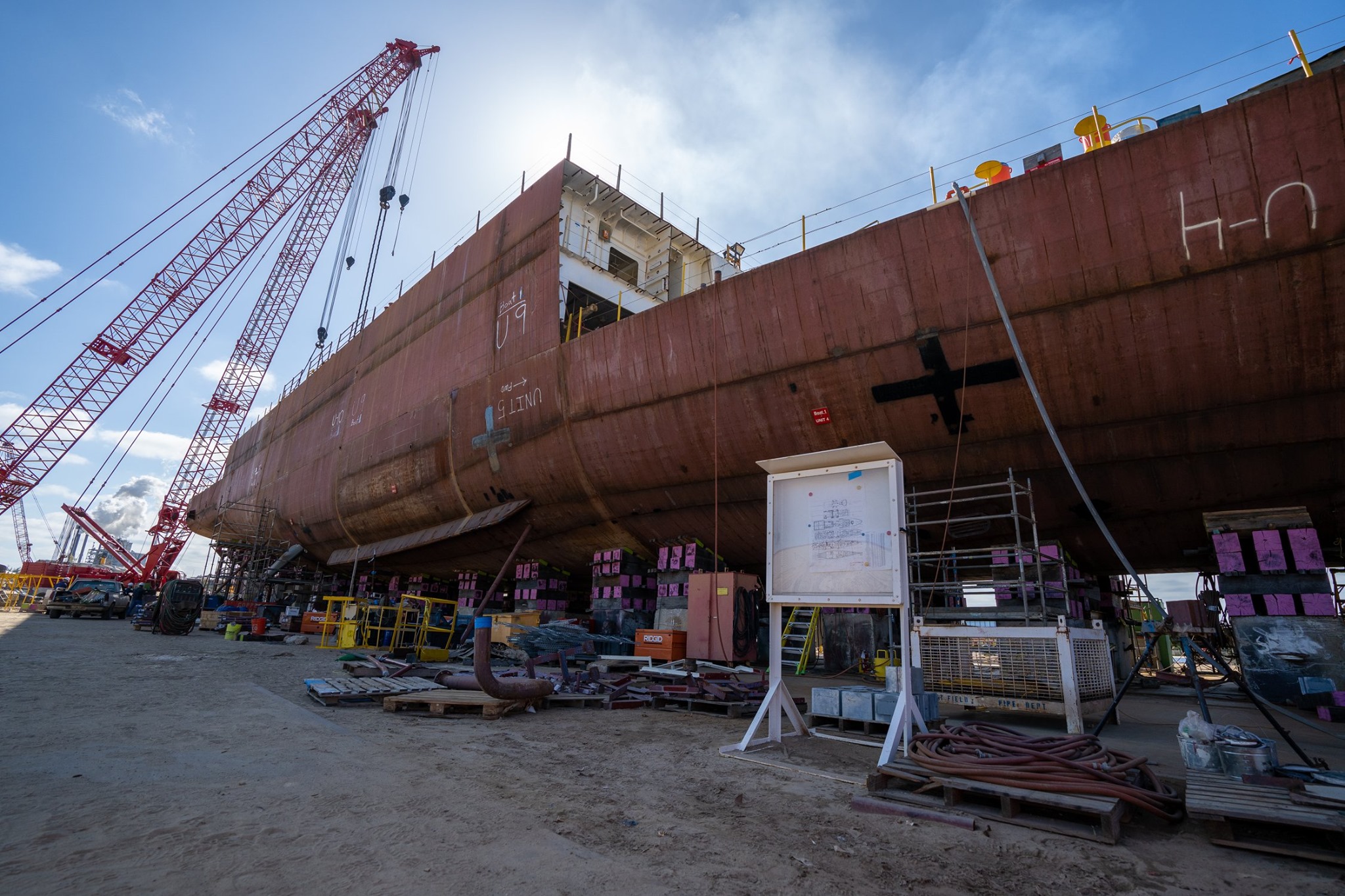
2011  The Coast Guard’s first 154-foot Fast Response Cutter, CGC Bernard C. Webber, “entered the water” at Bollinger Shipyards in Lockport, Louisiana.  During a three day evolution, the cutter was towed from the fabrication facility, lifted on a crane and then successfully placed in the water.

SAN FRANCISCO. The Coast Guard Cutter Waesche transits through the San Francisco Bay for the first time en route to its homeport of Alameda, Calif., Feb. 28, 2010. (U.S. Coast Guard photo by Petty Officer 3rd Class Kevin Metcalf)

2013  CGC Waesche returned to its homeport at Coast Guard Island in Alameda, California after a 91-day deployment to the Eastern Pacific Ocean. Departing on January 20, 2013, Waesche completed an 18,000-mile patrol in support of joint counter-drug operations off the coast of California and in the Eastern Pacific Ocean.  During that time the cutter and crew demonstrated their capability as a multi-mission unit.  During their patrol, Waesche’s crew assisted two boaters in distress when their 12-foot sailboat began taking on water approximately three miles west of San Diego.  Earlier in their patrol, Waesche participated in a search and rescue mission assisting two mariners 90 miles west of San Diego when their sailboat began taking on water.  Also in January, law enforcement crews aboard the cutter seized more than 2,400 pounds of marijuana from a boat approximately 300 miles west of San Diego, apprehended three suspects, and recovered 70 bales which tested positive for marijuana.  Additionally, during the mid-patrol break in Panama City, Panama, Waesche crewmembers participated in a community relations project by painting and restoring a local school.

2014  The Coast Guard concluded icebreaking operations on the lower Great Lakes, more than four months after it started on December 15, 2013.  Operation Coal Shovel is a bi-national domestic icebreaking effort covering the St. Lawrence Seaway, Lake Ontario, Lake Erie, the Detroit/St. Clair River System, and southern Lake Huron.  Crews aboard CGCs Mackinaw, Hollyhock, Bristol Bay, Neah Bay, and Morro Bay were joined by crews from Canadian Coast Guard Ships Samuel Risley, Griffon, and Des Groseilliers.  In total, the Coast Guard crews conducted more than 2,100 icebreaking hours during the 128 days of Operation Coal Shovel.  Also assisting the ships with ice reconnaissance were aircrews from AIRSTA Traverse City and AIRSTA Detroit.  During Operation Coal Shovel, U.S. and Canadian Coast Guard crews assisted 184 vessels and provided harbor breakouts to relieve or prevent flooding in four U.S. and one Canadian community.

Coast Guard Destroyers During Prohibition

Coast Guard destroyers Circa 1924-1930. (L-R) USS Jouett (CG-13) ex DD-41, USS Paulding (CG-17) ex DD-22 and USS Beale (CG-9) ex DD-40. Leslie Jones Collection, Boston Public Library. From Navsource.

Prohibition was enacted January 16, 1919 and repealed December 5, 1933.

I had known the Coast Guard had borrowed US Navy destroyers to help enforce Prohibition, but I had not realized how many. From the summer 1924 to mid-1933 the service used 31 different destroyers, from six different classes, and three distinct groups–13 “flivvers,” 12 “thousand tanners,” and six “flush deckers.”

20 destroyers were transferred in 1924 and five more in 1926. In 1930 six newer, flush deck Clemson class destroyers replaced six of the oldest and smallest ships from the original group of 20. It appears the torpedo tubes were removed from all destroyers during their period of Coast Guard service. The first 25 all had a raised Foc’sle.

Paulding class Coast Guard destroyer Beale (CG-9) former DD-40.

13 of the original 20 ships were Paulding class, built between 1909 and 1912; smaller than a 210 foot medium endurance cutter at 887 tons full load; 293 ft (89.31 m) overall; with a beam of only 26 ft 3 in (8.00 m); but they did have 12,000 HP and a speed of 29.5 knots. As newer larger ships were built these ships were referred to as “flivvers” a name previously given to the Model T Ford.

Tucker class Coast Guard destroyer Conyngham (CG-2) a thousand tanner.

Seven of the original group and all five of the group of five added in 1926 were from a group of 26 ships called thousand tonners. These twelve ships included three Cassin class;  two O’Brian class; four Tucker class; and three Sampson class all built between 1912 and 1917. These ships were about the same size as a WMEC210. Full load displacement ranged from 1,139 tons to 1,225 tons; length from 305 ft 3 in (93.04 m) to 315 ft 3 in (96.09 m); with a beam of 30 ft 4 in (9.25 m) to 30 ft 7 in (9.32 m). They had at least 16,000 HP and a speed of at least 29 knots.

Clemson class Coast Guard destroyer Semmes (DD-189)

In 1930 six Clemson class destroyers replaced six of the Paulding class. These ships were from the newest class of USN destroyers at the time. They displaced 1,308 tons (full load); were 314 ft 4.5 in (95.822 m) in length overall; with a beam of 30 ft 11.5 in (9.436 m). They developed up to 27,600 hp (20,600 kW) for a speed of 35 knots.

Coast Guard destroyer WELBORN C. WOOD (DD-195). To Britain September 9 1940, renamed HMS Chesterfield (I28)

There is a first hand account of what it was like here.

1928 photo of United States Coast Guard destroyers moored at New London, Connecticut. All are former US Navy destroyers loaned to the Coast Guard for Prohibition Service. Shown here are the Trippe (CG-20/DD-33), Wainwright (CG-24/DD-62), Downes (CG-4/DD-45), Beale (CG-9/DD-40) and Abel P. Upshur (CG-15/DD-193). Source: National Aviation Museum Collection, Photo No. 2009.006.001.

Below is a list of the Coast Guard destroyers including their US Navy hull numbers keyed to their Coast Guard numbers.

CG#/name/Navy hull# as built/class: Paulding (P), Cassin (Ca), O’Brian (O), Tucker (T), Sampson (S), Clemson (Cl)

  1. Cassin (DD-43) Ca
  2. Conyngham (DD-58) T
  3. Cummings (DD-44) Ca
  4. Downes (DD-45) Ca
  5. Ericsson (DD-56) O
  6. McDougal (DD-54) O
  7. Porter (DD-59) T
  8. Ammen (DD-35) P
  9. Beale (DD-40) P
  10. Burrow (DD-29) P
  11. Fanning (DD-37) P
  12. Henley (DD-39) P
  13. Jouett (DD-41) P
  14. McCall (DD-28) P
  15. Monaghan (DD-32) P replaced by Abel P. Upsur (DD-193) Cl
  16. Patterson (DD-36) P replaced by George E. Badger (DD-196) Cl
  17. Paulding (DD-22) P replaced by Herndon (DD-198) Cl
  18. Roe (DD-24) P replaced by Hunt (DD-194) Cl
  19. Terry (DD-25) P replaced by Welborn C. Wood (DD-195) Cl
  20. Trippe (DD-33) P replaced by Semmes (DD-189) Cl
  21. Davis (DD-65) S
  22. Shaw (DD-68) S
  23. Tucker (DD-57) T
  24. Wainwright (DD-62) T
  25. Wilkes (DD-67) S

Members of the crew of the Coast Guard Cutter George E. Badger (CG-16) pictured on board the ship while in the Marine Railway at the Boston Navy Yard, May 1933. Photo courtesy of the National Naval Aviation Museum.