“Five Key Facts About the SHIPS for America Act” –Podcast

The “What’s Going On With Shipping” podcast is not normally about the Coast Guard but it is about the Marine Transportation System with which the Coast Guard is intimately intertwined so inevitably the Coast Guard will be mentioned from time to time.

For some reason I didn’t publish this when it came out, but the act, “The Shipbuilding and Harbor Infrastructure for Prosperity and Security (SHIPS) for America Act December 19, 2024,” has yet to be signed into law and it is expected to resurface in the near future.
This particular edition has a lot to say about the Coast Guard administered mariner credentialing beginning at time 14:45. The contention is that it is much more difficult than it should be.

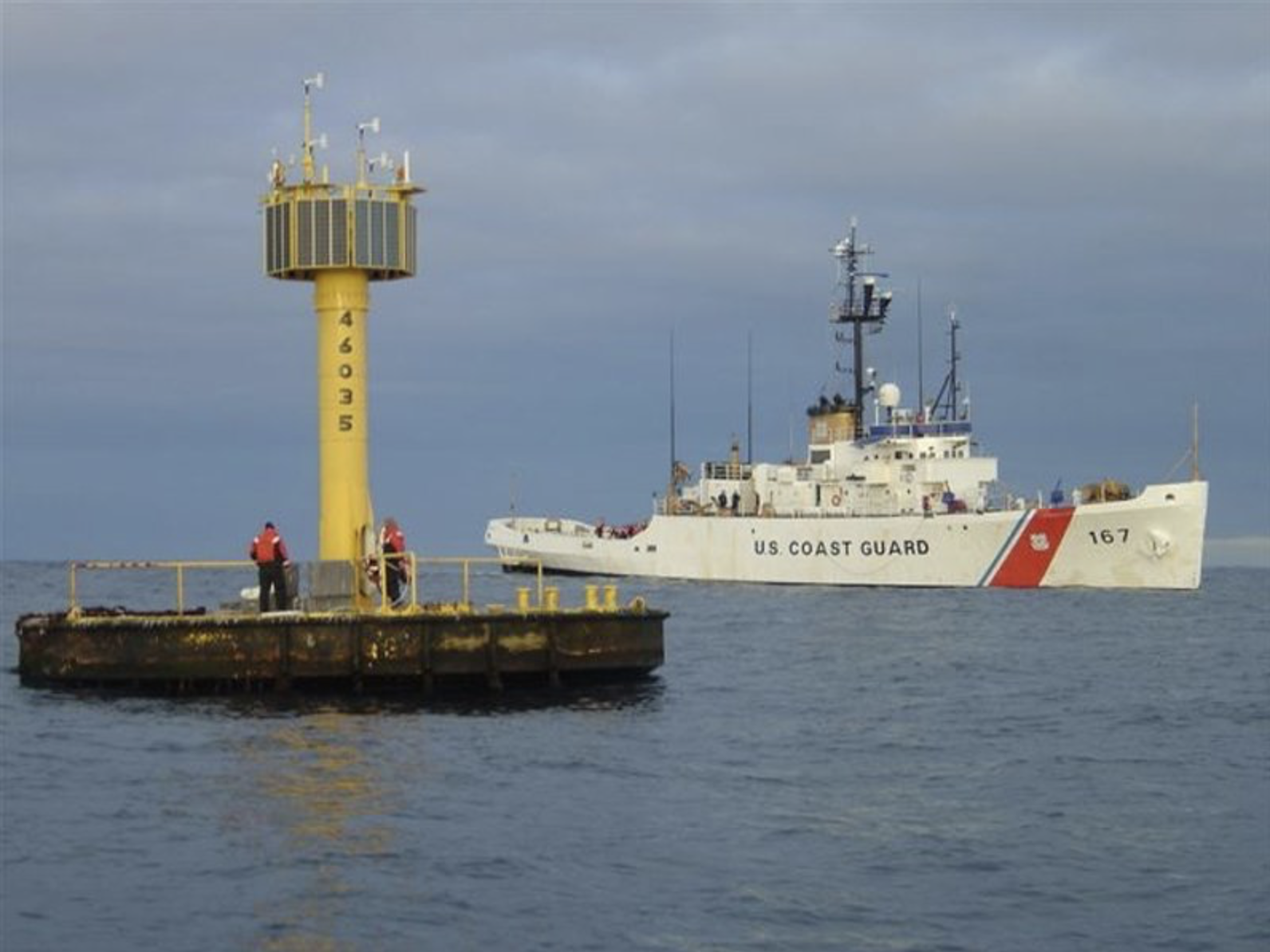
“USCGC Katmai Bay making a path through the ice for Algonova going to the Soo on Jan 31st, 2025” –Video

A regular reader wanted to share this video. This was his comment.

I did not know where to put this, so I found one of the stories about the 140′ Ice Breaking Tugs in the Great Lakes

Below is a YouTube link of the USCGC Katmai Bay breaking ice up in Sault Ste. Marie as it was escorting a tanker.

Beautiful close up shots of her after the 20min mark, and you can clearly see her bubbler system working as she slices through the ice.

Just wanted to share this, as these 140’s are a unique asset in the Great Lakes – Very well made ships that still look strong (where’s the 140′ Replacement Program Congress!!).

Are we not allowed to post YouTube Links?? In not, please go search on YouTube for: “USCGC Katmai Bay making a path through the ice for Algonova going to the Soo on Jan 31st, 2025”

So I am passing it along.

What About Panama?

My previous post included a discussion about the US interests in the Panama Canal and the President’s stated aim of retaking the canal. The discussion suggested that talk of a complete takeover might be a negotiating tactic. In any case it suggests that US forces may make a return to the Canal Zone.

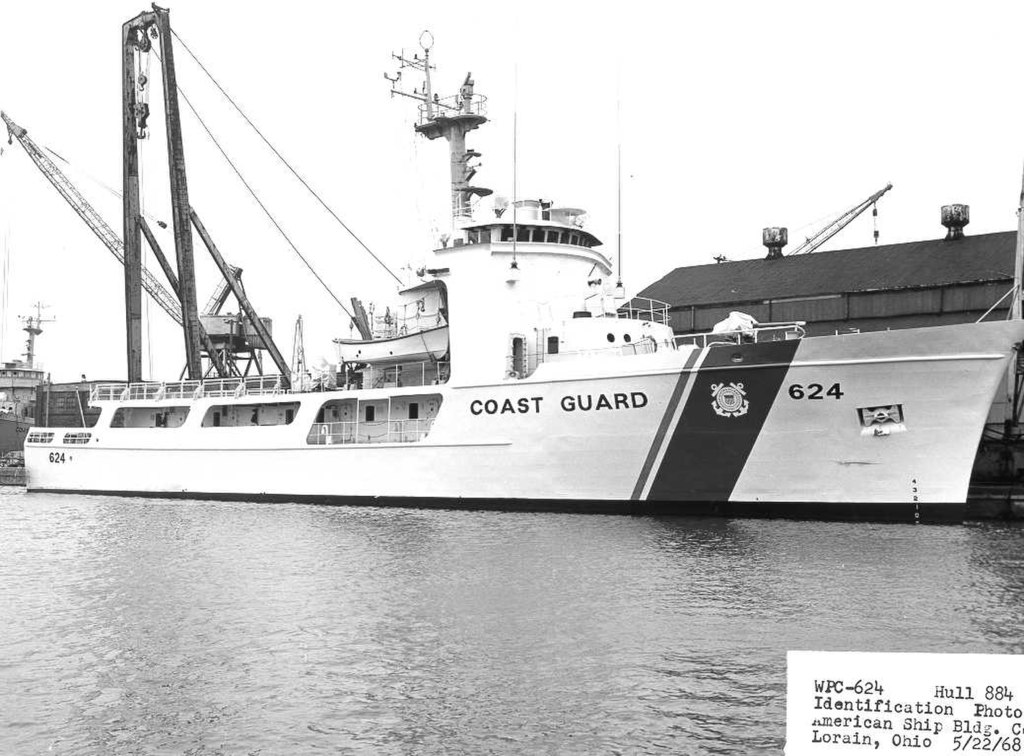
This could be significant for the Coast Guard. The Coast Guard might replicate PATFORSWA with a squadron of Webber Class WPCs that would be very useful in interdicting drug traffic in the Eastern Pacific Transit Zone–PATFORCENTAM.

A Coast Guard base and support center, hosting perhaps a reinforced company of Marines, tasked with doing training in Central America, might be enough to satisfy US concerns about the security of the canal.

A Coast Guard base would also probably be more welcomed by Panama than a DOD base that would look like an occupying force. After all, both the US and Panama share an interest in maritime law enforcement and the security of the canal.

“What the Ship (Ep116) | Maritime Leaders | Tariffs & Review | Panama Canal | Wind Leases | Red Sea”

“What the Ship” is usually interesting, but this episode is more Coast Guard centric than most.

I would say the Coast Guard needs to stop talking about how small it is. The US Coast Guard does not have aircraft carriers or submarines but has more uniformed personnel, more vessels, and more aircraft than either the British or French Navies. The Coast Guard could make a significant contribution to national security if the country made relatively inexpensive additional investments in it.

“The Propulsion Disabler Will Be a Strategic Weapon” –USNI

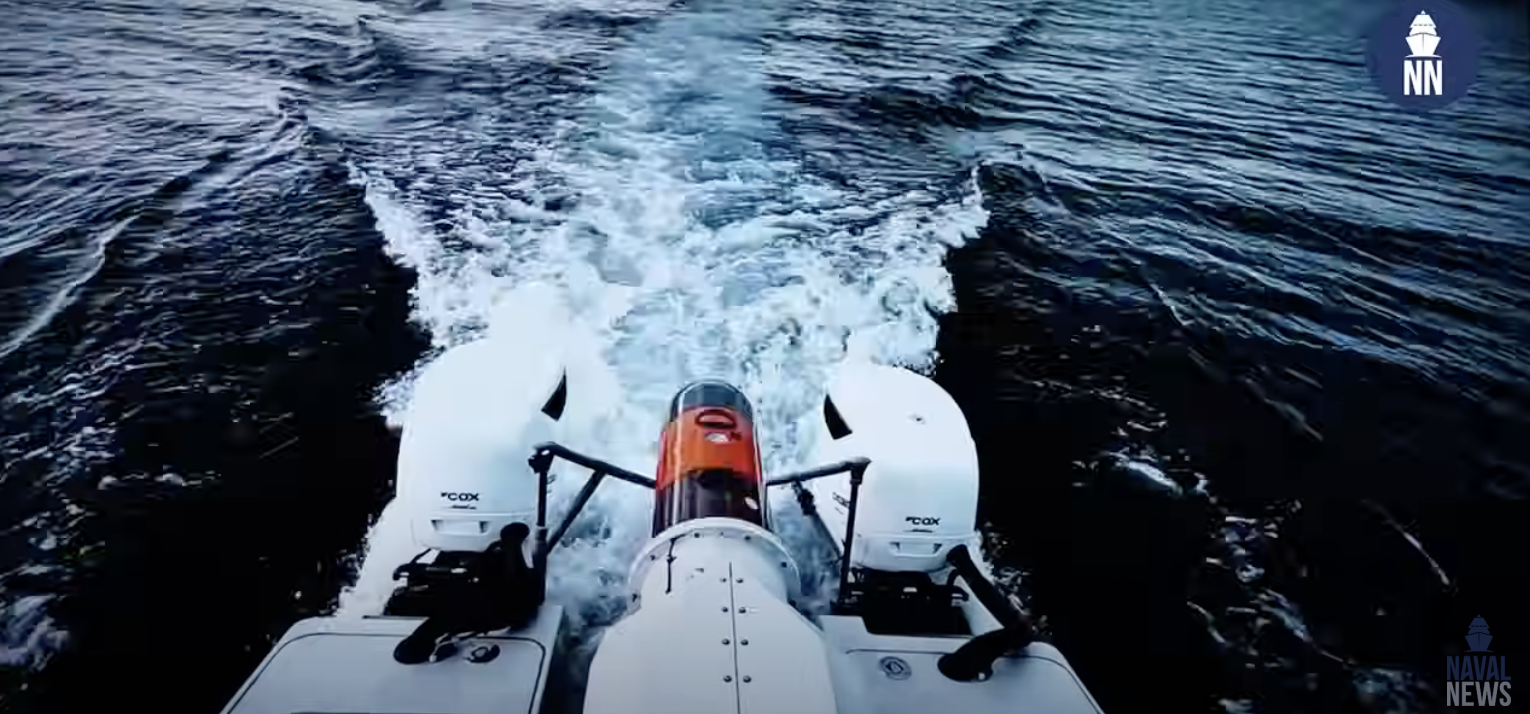
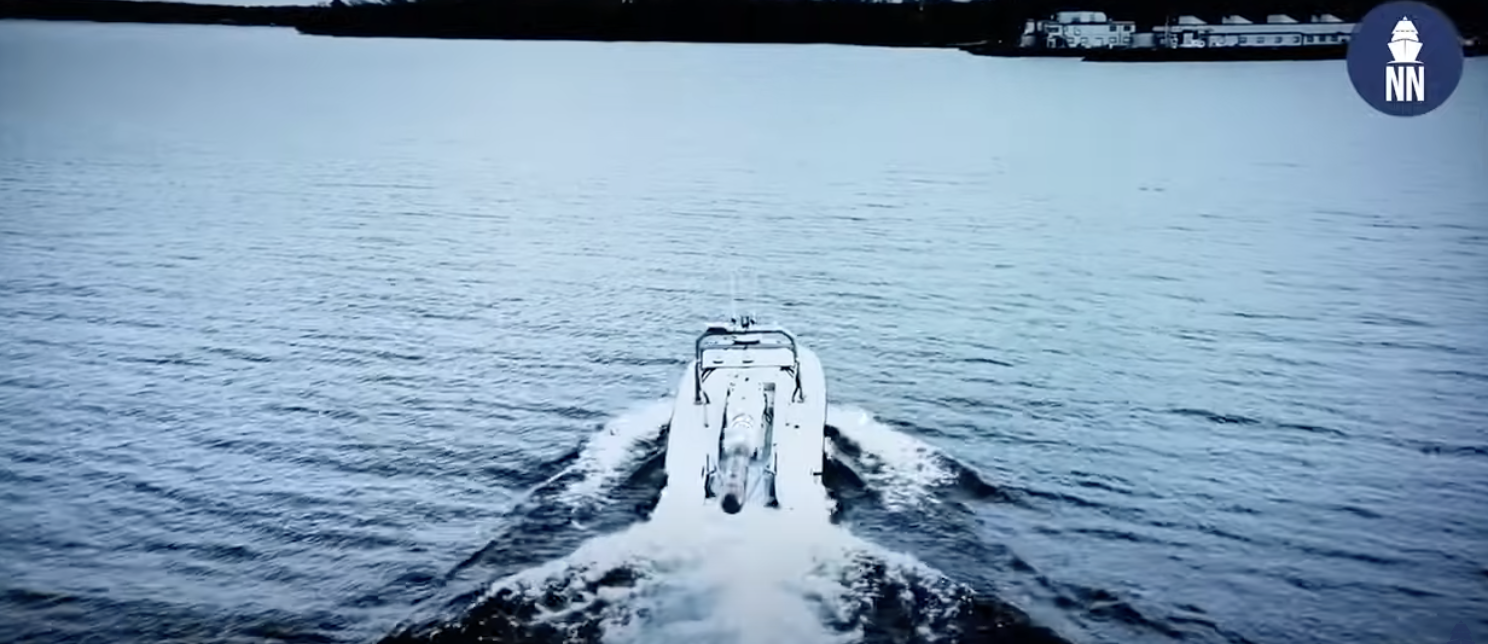
A Navy briefing slide showing the internal components and describing the various features of the PSU_ARL Common Very Light Weight Torpedo (CVLWT) design

The January 2025 US Naval Institute Proceedings includes an article suggesting the development of “Propulsion Disablers.”

A propulsion disabler (PD) is a small, passive, torpedo-like device that serves as a cheap, non-lethal mine and torpedo warhead. The proposed munition’s purpose is to destroy a ship’s external propulsion or direction-control mechanisms, leaving the vessel stationary. Production of PDs is possible with today’s emerging robotics technologies. Future PD devices could be used in an autonomous swarm that combines the smallest explosive charge with the greatest disabling effect by attacking a ship at its most vulnerable point.

I have been advocating for a propulsion disabler (ship stopper) since at least 2011, since Coast Guard missions imply a requirement to be able to forcibly stop any ship, regardless of size. This article is the first I have seen that suggests the Navy may see a need for a similar weapon.

The Very Light Weight Torpedo pictured above appears to be a likely basis for a propulsion disabler.

One potential scenario where this capability might be required is in the case of an effort to impose a blockade. The linked post discusses this in relationship to a blockade of China.

The propulsion disabler concept first emerged in the search to make a Western blockade strategy affordable and sustainable, and to solve the moral, political, and legal problems involved in a blockade

Another US Naval Institute article explains the problems that might be encountered in the imposition of a blockade,

Legally, deliberately targeting neutral merchants and civilians would be an excellent way to get hauled before the International Court of Justice at the Hague while alienating not only the neutral state but also the home nations of the crew. Ethically, it constitutes a direct attack on civilians. Tactically, attacking and sinking merchantmen would involve the expenditure of an unacceptable number of heavyweight torpedoes or advanced antiship cruise missiles (ASCM) better employed against high-end enemy combatants or troop transports. The economic damage to fisheries caused by the sinking of a single supertanker would devastate coastal nations. Strategically, it could turn neutral-friendly nations into neutral-hostile nations.

The second USNI article makes no mention of Coast Guard assets in the execution of a blockade of China, but that does seem like a likely mission for Coast Guard units and special teams.

“First of 3 new Coast Guard cutters arrives to homeport in Kodiak, Alaska” –Coast Guard News

One of the U.S. Coast Guard’s modern Fast Response Cutters underway. (U.S. Coast Guard) Below is a news release from CG News. We knew this was coming. There are only three WPB110s left in the USCG, all in Alaska. Presumably, this will be their last year.

What I found most interesting here was this statement, “… they will operate throughout the 17th Coast Guard District to include the U.S. Arctic, Gulf of Alaska, and Bering Sea.”

We have already seen Alaska based FRCs operating in the Aleutians. The US considers the Bering Sea as part of the Arctic, though it is below the Arctic Circle, so it may not mean they will operate North of the Bering Strait, but that’s what it sounds like.

Earlier story about Captain Witherspoon here.

The crew of U.S. Coast Guard Cutter John Witherspoon (WPC 1158) arrives to their homeport in Kodiak, Alaska, aboard their cutter for the first time, Jan. 28, 2025. (U.S. Coast Guard photo by Petty Officer 1st Class Shannon Kearney)


 Jan. 29, 2025

First of 3 new Coast Guard cutters arrives to homeport in Kodiak, Alaska

D17 Public Affairs

KODIAK, Alaska — The crew of Coast Guard Cutter John Witherspoon (WPC 1158) arrived at the cutter’s new homeport in Kodiak, Tuesday.

The cutter is scheduled to be commissioned during a ceremony in April.

The Witherspoon is the first of three Fast Response Cutters (FRCs) scheduled to be homeported at Coast Guard Base Kodiak and is now the fourth FRC currently based in Alaska. While these ships will be homeported in Kodiak, they will operate throughout the 17th Coast Guard District to include the U.S. Arctic, Gulf of Alaska, and Bering Sea.

The crew of the Witherspoon will carry out integral Coast Guard missions such as maritime law enforcement and security, living marine resources, and search and rescue. They will provide security for Alaskan coastal communities as they continue to utilize the ocean for their livelihoods while preserving Alaska’s living marine resources in conjunction with our partner agencies.

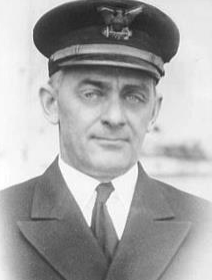
“The crew is humbled to be associated to a namesake honoring Capt. John G. Witherspoon, a trailblazer who found enjoyment and purpose in leading and mentoring others,” said Lt. Cmdr. Adam Young, commanding officer of the Witherspoon. “It is fitting that the cutter’s first sail was no tall order, stretching more than 7,000 nautical miles from Key West to Kodiak. Throughout the last five months, the crew displayed remarkable teamwork and resilience, a true testament to the core values Capt. Witherspoon epitomized throughout his illustrious career. I couldn’t be prouder of the team we have onboard, and I look forward to experiencing the beauty of Alaska once again.”

The new FRCs arriving in Alaska are designed to replace the service’s fleet of 110-foot cutters that are projected to be decommissioned this year. The Coast Guard is currently scheduled to have six FRCs operating throughout Alaska by the end of 2025 to reinforce our maritime boundaries and shorten on-scene response times to support search and rescue efforts and better serve the people of Alaska.

FRCs feature advanced command, control, communications, computers, intelligence, surveillance and reconnaissance equipment as well as over-the-horizon response boat deployment capability and improved habitability for the crew. The ships can reach speeds of 28 knots and are equipped to coordinate operations with partner agencies and long-range Coast Guard assets such as the Coast Guard’s National Security Cutters.

FRCs are 154-foot multi-mission ships designed to conduct drug and migrant interdictions; ports, waterways and coastal security operations; fisheries and environmental protection patrols; national defense missions; and search and rescue. Each cutter is designed for a crew of 24, has a range of 2,500 miles and is equipped for patrols up to five days. The FRCs are part of the Coast Guard’s overall fleet modernization initiative.

Coast Guard, multiple partner agencies, responding to plane crash in Potomac River

Jan. 30, 2025

Coast Guard, multiple partner agencies, responding to plane crash in Potomac River

WASHINGTON — The Coast Guard is coordinating with local, state and federal agencies in response to the aircraft collision which occurred Wednesday evening over the Potomac River in Washington.

Coast Guard Sector Maryland – National Capital Region command center watchstanders received a report at approximately 8:55 p.m. reporting a helicopter and a commercial passenger aircraft collided in the vicinity of Ronald Reagan Airport.

Response boat crews from Coast Guard stations Washington, Curtis Bay, Annapolis, St. Inigoes, Oxford and Crisfield have deployed to the incident to conduct searches in coordination with local partners and enforce a safety zone. Cutters Sailfish, Bruckenthal, Kennebec and Frank Drew are enroute to assist.

An Urgent Marine Information Broadcast was issued regarding the incident and a safety zone has been established, securing all vessel traffic from the Woodrow Willson Bridge heading north along the Potomac River. Mariners are urged to avoid the area.

Coast Guard pollution crews have mobilized and are pre-staged to respond to any pollution caused by the incident.

The Coast Guard is working with the Army Corps of Engineers and Navy’s Supervisor of Salvage and Diving to coordinate removing the wreckage and restoring the waterways once able to do so.

USCGC Alexander Hamilton (WPG-34) Lost January 30, 1942

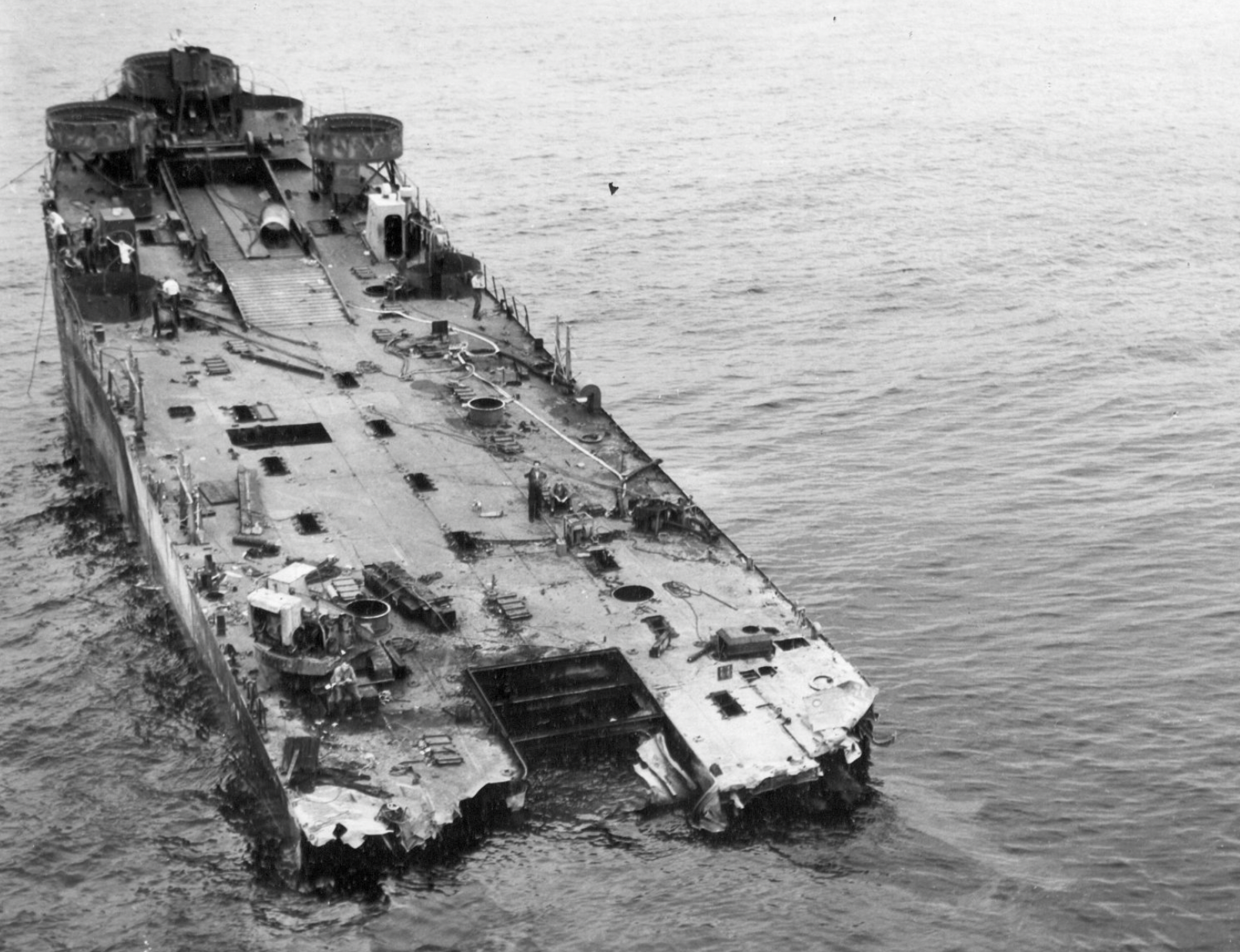
Today is the 83rd anniversary of the sinking of USCGC Alexander Hamilton (WPG-34), January 30, 1942. She was the Coast Guard’s first loss of World War II and the first US warship sunk in the Atlantic after the US entered the War.

USCGC Hamilton (WMSL-753)’s web site has the story of her sinking which I have reproduced below.

There is a “Booklet of General Plans” as originally built here, and contract plans here.

U-132, which torpedoed Alexander Hamilton, also sank ten other ships but was “Sunk on 4 November 1942 in the North Atlantic south-east of Cape Farewell, in approx. position 55.38N, 39.52W, when the British ammunition ship Hatimura blew up in a huge explosion. U-132 had torpedoed this ship earlier and was probably waiting nearby for her to sink when caught in the lethal radius of the explosion. 47 dead (all hands lost). (FDS/NHB, January 1985).”

Found some photos of Cutter Alexander Hamilton on Facebook that were taken only five weeks before she was sunk. She is much better armed then when she was built, with three 5″/51s and three 3″/50s, but does not have some of the equipment seen on other ships of her class in pictures taken in 1942/43, no radar, no High Frequency Direction Finder (HF/DF), a Y-gun in the photo immediately but no K-Gun depth charge launchers.

U.S.C.G.C. Alexander Hamilton view from stern looking forward, Norfolk Navy Yard Portsmouth, VA. Photo Serial 2430(41) Dec. 27, 1941.

U.S.C.G.C Alexander Hamilton STBD. Side Norfolk Navy Yard Portsmouth, VA Photo Serial 8482(41) Dec 27, 1941″


THE FIRST LOSS; THE SINKING OF THE ALEXANDER HAMILTON
by Dr. Robert M. Browning Jr.

When the United States entered World War II, the Coast Guard had already demonstrated its value in this country’s national defense.  For over a year the Coast Guard, with its large cutters and experienced seamen, had protected American interest in the North Atlantic.  They had maintained patrols in Greenland and took a prominent role in the protection of America’s seaborne commerce in this area.  The 327 foot cutters in particular were well-suited for convoy duty in the North Atlantic. Because of their long-range and good sea-keeping qualities along with their speed and armament, the Navy Department put the entire class into naval service before the war began.  The Alexander Hamilton, participating with the ocean escorts in the icy North Atlantic, became the Coast Guard’s first loss of the war.

The Alexander Hamilton was one of the newest ships in the service.  Built at the New York Navy Yard, this twin-screw, geared-steam-turbine-propelled cutter was commissioned in March 1937.  The Alexander Hamilton was initially stationed in Oakland, California and performed patrols to the Bering Sea. All the vessels in the class carried their full names when commissioned, but these were shortened in 1937 to their surnames only.  The Navy requested that the Hamilton use its full name so as not to be confused with the Navy’s U.S.S. Hamilton.  In January 1942, the cutter resumed its full name once again.

When war began in Europe the cutter was ordered to Norfolk Virginia to perform Neutrality Patrol duties. The Alexander Hamilton also operated with the Grand Banks Patrol and made ten cruises on weather observation patrol. On 27 December, just three weeks after Pearl Harbor, the Alexander Hamilton reported for special naval duty in the North Atlantic. Mixed groups of U.S. Navy, Coast Guard and Royal Canadian Navy escorts had begun to escort fast and slow convoys between rendezvous points off the coast of Newfoundland and mid-ocean meeting points (MOMP). At this point British escort groups protected the merchantmen eastward. The 327 foot Campbell was the first cutter to perform this duty, followed by the Ingham and on January 15th 1942, the Alexander Hamilton.

After helping to screen convoy HX 170 to the MOMP, the Alexander Hamilton was tasked to tow the disabled storeship Yukon to Iceland. A destroyer, USS Gwinn, steamed ahead to act as an escort. The British rescue tug Frisky arrived later to take over the tow. At about 1:00 pm, the Alexander Hamilton handed off the tow to Frisky and steamed ahead to screen the other ships.

Unknown to all the allied ships, the German submarine U-132 had detected these ships at a vulnerable moment and maneuvered to a favorable position to attack.  Instead of singling out the crippled and near motionless 12,546 ton storeship Yukon, the U-132 fired a spread of torpedoes at the Alexander Hamilton.  The cutter had meanwhile worked up to 15 knots and passed the Yukon as the torpedoes sped past the storeship.  One torpedo passed ahead of the Yukon and struck the Alexander Hamilton on the starboard side between the fireroom and the engine room.(Right: crew of the Alexander Hamilton abandons ship after being torpedoed.)

Crew of the Alexander Hamilton abandons ship after being torpedoed.

The Alexander Hamilton was fatally wounded.  The explosion wrecked both the engine room and the fire room, initially killing seven men and burning and injuring many others.  The cutter immediately lost way and settled 4 feet in the water but was counter-flooded to trim the vessel. Afraid that the submarine might fire another torpedo, the crew began to abandon ship.  Thirty minutes after the attack, four boats began transferring the injured and some of the crew to the Gwin.  Three Icelandic fishing trawlers, responding to the distress signals, also came to help remove the “Hamiltons”.  The torpedo claimed 26 lives, including 6 who later died of burns. While attempting to rescue the damaged cutter, as many as 14 destroyers from the nearby base at Hvalfjordur searched unsuccessfully for the U-132.

The cutter remained afloat.  That evening the British tug Restive tried for two hours to take the Alexander Hamilton in tow.  The Frisky returned from Reykjavik after towing the Yukon and joined the ex-Coast Guard tug Redwing and the Restive in the attempt to save the cutter.

Darkness and rough seas, however, prevented salvage throughout the night.  Just after 10:00 am on the morning of 30 January, the weather moderated enough for the Frisky to take the Alexander Hamilton in tow. The cutter’s list had increased to nearly 20 degrees as seas broke over the starboard side aft while the bow rode out of the water.  The Frisky towed the Alexander Hamilton about 18 miles when the cutter suddenly capsized and floated bottom up.  The life of the gallant cutter ended at 7:57 pm when gunfire from the U.S.S. Ericksson sent it to its final resting place in forty fathoms of water, 28 miles off the coast of Iceland.

“Teledyne FLIR Defense Awarded $74 Million IDIQ Contract to Modernize U.S. Coast Guard Surveillance Systems” –Teledyne News Release

#USCG members of Maritime Security Response Team West, Maritime Safety and Security Team 91101, Port Security Unit 313, and a Sector Columbia River MH-60 Jayhawk helicopter crew conducted a maritime security exercise near Fox Island, WA recently. Photo by PA3 Michael Clark

Below is a Teledyne news release:

Sounds like all operational H-60s and H-65s will receive this system.


BOSTON, Mass., January 13, 2025 ― Teledyne FLIR Defense, part of Teledyne Technologies Incorporated (NYSE:TDY), announced it has been awarded a five-year Indefinite Delivery Indefinite Quantity (IDIQ) contract worth up to $74.2 million to provide modernized imaging surveillance systems to the United States Coast Guard (USCG).

FLIR Defense will deliver more than 125 Electro-Optic Sensor System-Modernized (ESS-M) systems for use on USCG rotary wing aircraft, specifically the MH-60 and MH-65. The advanced ESS-M platform features a full-HD sensor suite and updated user interfaces, as well as advanced processing capabilities and software enhancements that will support future growth.

The ESS-M systems provide operators with high-definition daylight, low light, and infrared imagery and will be used in support of all Coast Guard missions, with an emphasis on search and rescue, living marine resources, and law enforcement. The new technology also will augment coastal security, drug and migrant interdiction, ports and waterways protection, and other Coast Guard rapid response needs.

Teledyne FLIR Defense has been delivering and supporting legacy ESS systems for USCG medium- and short-range recovery aircraft since 2005.

“The significant updates through ESS-M will enable the U.S. Coast Guard to stay on technology’s cutting edge while conducting its wide range of key maritime operations,” said Dr. JihFen Lei, president of Teledyne FLIR Defense. “We’re proud to extend our history of support and look forward to building our relationship across all missions areas.”

Deliveries will begin in Q4-2025. For more on Teledyne FLIR’s maritime surveillance solutions, visit us online.

“Coast Guard conducts alien expulsion flight operations between California and Texas” –News Release

People on a Coast Guard flight being transported to Texas and California. U.S. Coast Guard photo.

Below is a news release. More on this operation here.

I have to wonder if we are using Minitour equipped aircraft for this? If so, is this the best use for aircraft that have been modified at great expense in time and money for maritime patrol, including supporting Alien Migrant interdiction?

I think we still have some unmodified HC-130Hs at Clearwater. Are they the ones doing this? “Inquiring Minds Want to Know?”


 Jan. 28, 2025

Coast Guard conducts alien expulsion flight operations between California and Texas

SAN DIEGO – Jan. 28, 2025, the Coast Guard conducted Alien Expulsion Flight Operations between California and Texas, in coordination with U.S. Customs and Border Protection.

In accordance with the President’s Executive Orders, these flights continue the Coast Guard’s actions to enforce the immigration laws of our country. Through these ongoing operations, and in close cooperation with our Department of Homeland Security and Department of Defense teammates, the Coast Guard is detecting, deterring, and interdicting aliens, drug smugglers, and individuals intent on terrorism or other hostile activity before they reach our border.

Led by the Eleventh Coast Guard District in California, the Coast Guard is coordinating the actions of multiple units in support of this operation. The Coast Guard is surging assets and personnel from around the nation – including Air Stations Elizabeth City, Kodiak, Sacramento, San Diego, and Hawaii – to support this Department of Homeland Security-led operation.

The Coast Guard’s current role is to assist with the national transport of aliens to designated locations in Texas and California, where the Department of Defense will transport the aliens internationally.

For more information about the Coast Guard, visit www.uscg.mil.