RFI for Towing and Assessment, Sounds Like an OPC

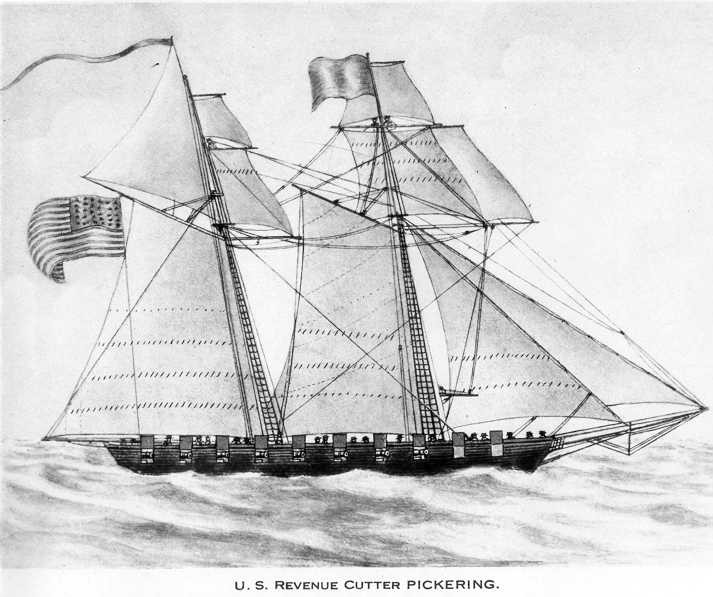
Future USCGC Pickering (Image: Austal USA)

I have to apologize because I somehow lost the comment that brought this to my attention, so I can not thank the source by name, but thank you.

The Department of Homeland Security has submitted a Request For Information that I believe could only be in reference to the OPCs.

This is the description of the vessel:

It apparently refers to a request to tow a vessel from its current location to shipyard, followed by an assessment and presumably completion.

“Note the vessels may require repairs to facilitate towing and technical assessment. These repairs may include, but are not limited to, lighting and temporary structural ensure watertight integrity. Discuss your company’s ability to quickly mobilize to do this work on a vessel that may not have an operational powerplant or a completed electrical distribution system.”

Technical Assessment: Provide capabilities, pricing structures, and timelines to assess the vessel while docked to produce:

a. Scope of work necessary to complete all remaining construction activities, technical scope, systems integration, and testing and trials for the vessel to ensure the vessel meets performance requirements.

b. Holistic execution strategy that would enable a complete assessment and would produce a final work completion plan within 30 days of vessel arrival at your facility.

Specifically discuss the following:

o Size and skillset of technical workforce including designers, tradesmen, technical writers, engineers, etc. available to assess the vessel.

o Ability to rapidly translate as-built physical conditions onboard the ship to 2D and 3D documents, models and drawings as appropriate to facilitate creation of repair specifications.

o Familiarity with government vessel requirements including USCG, USN and ABS NVR rule sets for new construction and overhauls to facilitate creation of repair specifications.

o Ability to identify long-lead items (requiring greater than 30 days from order) that may be needed to complete work.

o Capacity to perform the work, to include time when the work would start, competing demands, and space availability

No current location is listed, but sounds like this could be either OPC #1 or #2.

Responses were due by June 10, 2025..


This Day in Coast Guard History, June 12

Based on the Coast Guard Historian’s timeline, https://www.history.uscg.mil/research/chronology/
With inspiration from Mike Kelso

June 12

Revenue cutter Surveyor, at anchor in the York River, Virginia, was surprised by a three-barge attack force launched from the Royal Navy frigate HMS Narcissus

1813  Revenue cutter Surveyor, at anchor in the York River, Virginia, was surprised by a three-barge attack force launched from the Royal Navy frigate HMS Narcissus.  Outnumbered 50 to 15, the cuttermen wounded seven and killed three of the enemy before the cutter was captured.  The British commanding officer of Narcissus was so impressed by “the determined way in which her deck was disputed, inch by inch,” in hand-to-hand combat, he returned to Revenue Captain William Travis, the commanding officer of Surveyor, “the sword you had so nobly used.”

1917  An Act of Congress appropriated $300,000 to enable the U .S. Coast Guard to extend its telephone system to include all Coast Guard stations not then connected as well as the most important light stations with no means of rapid communication.  The Life-Saving Service had pioneered the use of the telephone beginning in the 1880s, linking the various stations along the nation’s coast with the new communication device.

HURON (lightship) now a museum ship- Port Huron, Michigan, 13 April 2012, photo credit: Notorious4life via Wikipedia

1925  Lake Huron Lightship radio fog signal was placed in commission, being the first signal of this kind on the Great Lakes.

Hyperbolic navigation example (Image: Wikipedia)

1942  The U.S. Navy makes its first operational test with LORAN equipment with a LORAN receiver mounted in a K-2 airship on a flight from Lakehurst Naval Air Station.

USCGC Vigorous

1975  CGC Vigorous seized the Bulgarian F/V Argonaut off the coast of New England.  More than 500 pounds of lobster were reported found aboard the fishing vessel by the Coast Guard boarding party.  Lobster was protected from foreign fishing by the Continental Shelf Fishery Resource Law.

1999  The small cruise vessel Wilderness Adventurer ran aground in Glacier Bay National Park in Alaska.  All passengers and crew were safely evacuated from the stranded vessel.  The responders from the Alaska Department of Environmental Conservation, Coast Guard, and Glacier Bay Tours and Cruises (which operated the vessel) then successfully refloated her and towed her to drydock.  Oil containment booms contained the 300 gallons of fuel that leaked from the vessel.  A Coast Guard spokesman later stated “This is the best-run multi-agency operation I’ve seen in my career.  It went well.  We still have a damaged vessel to take care of, but at least it’s not at the bottom of the ocean in a national park.”  The Coast Guard also investigated the accident.

This Day in Coast Guard History, June 11

Based on the Coast Guard Historian’s timeline, https://www.history.uscg.mil/research/chronology/
With inspiration from Mike Kelso

June 11

Sandy Hook Lighthouse, National Park Service Photo.

1764  Sandy Hook Lighthouse, at the south point of the entrance to New York Harbor, was first lighted.  Today, its octagonal tower, built by Mr. Isaac Conro of New York City with money collected by a group of New York merchants, is the oldest original light tower still standing and in use in the United States.

USCGC Taney tied up at Pier 4 in Honolulu Harbor, Hawaii, circa 1940
VIRIN: 220509-G-G0000-002.JPG, Photo by: USCG Historian’s Office

1942  After the Battle of Midway (4–7 June), CGC Taney anchored at Midway Island after escorting USS Regulus (AK-14) there.  For the next four days Taney conducted SAR operations in the waters around Midway, the island itself, and then “went out into the Pacific Ocean to look for survivors reported by plane.”  Taney departed Midway Island on June 16 and escorted Regulus back to Honolulu.

Cape Kubugakli, Alaska

1966  Finding itself disabled and adrift two miles from Cape Kubugakli, Alaska, the fishing vessel Katy C radioed for assistance.  A Coast Guard helicopter, after ascertaining that the ship was unable to anchor by herself, took her in tow until she was out of danger.

This Day in Coast Guard History, June 10

Based on the Coast Guard Historian’s timeline, https://www.history.uscg.mil/research/chronology/
With inspiration from Mike Kelso

June 10

Side view of the Old Harbor Life Saving Station at Cape Cod National Seashore’s Race Point Beach

1872  Congress ordered that Life-Saving stations were to be erected “under supervision of two captains of the revenue service.”  An Act of Congress authorized government life-saving stations on Cape Cod and Block Island.

New Shoreham Life Saving Station, formerly located on Block Island, now at Mystic Seaport

1922  Congress readjusted pay and allowances of Coast Guard commissioned and enlisted personnel on basis of equality with other services.  Until this time a Coast Guard captain was equivalent to a Navy lieutenant commander.

Command, Control, Communications, Computers, Cyber, and Intelligence Service Center (C5ISC)

2020  The Command, Control, Communications, Computers, and Information Technology Service Center (C4ITSC) was disestablished and the Command, Control, Communications, Computers, Cyber, and Intelligence Service Center (C5ISC) was established at a commissioning ceremony held on 10 June 2020 on grounds of the Coast Guard property in Alexandria, VA, formerly known as USCG Washington Radio Station (NMH) and later TISCOM.  The facility was formerly renamed COGARD C5ISC Alexandria VA.

Center for Maritime Strategy

The Center for Maritime Strategy is a relatively recent addition to my Recommended Blogs list, but it does seem to have some thoughtful posts directly related to the Coast Guard. Here are a couple you might find interesting.

This Day in Coast Guard History, June 9

Based on the Coast Guard Historian’s timeline, https://www.history.uscg.mil/research/chronology/
With inspiration from Mike Kelso

June 9

1910  Congress passed the Motor Boat Act (Public Law 61-201, 36 Stat. 462).  The Federal authority to regulate uninspected vessels originated with the passage of this Act, which established standards with respect to navigation lights, machinery requirements, life preservers, and for the licensing of operators on small vessels (under 65-feet in length) carrying passengers.  It applied only to vessels “that are propelled by machinery other than steam.”

Lt. Jack C. Rittichier, HONORED ON PANEL 58W, LINE 14 OF THE WALL, born 08/17/1933, killed in action 06/09/1968, QUANG TRI Province, Vietnam

1968  LT Jack C. Rittichier was shot down and killed in action along with his Air Force crew while flying a combat SAR mission as an exchange pilot with the Air Force’s 37th Aerospace Rescue and Recovery Squadron (ARRS) in Vietnam.

Galveston, TX–Coast Guard, tugboats, and fireboats attempt to out a fire that engulf the Swedish motor tanker Mega Borg after it exploded 60 miles southeast of Galveston, TX. USCG photo by KALNBACH, CHUCK PA1

1990  The 853-foot Norwegian tanker Mega Borg exploded near Galveston, Texas, killing two of her crew.  Coast Guard units consisting of 500 Coast Guardsmen fought the fires and cleaned up the resulting oil spill.  The units included CGCs Buttonwood, Point Spencer, Steadfast, Valiant, and CushingSteadfast became the on-scene commander and maintained communications between the operations center at MSO Galveston and personnel fighting the fire.  Salvia worked with Navy skimmers seven miles from shore in the Sabine Pass area.  The Atlantic and Pacific Strike Teams brought people and equipment from across the country and MSOs in Houston, Mobile, Morgan City, New Orleans, and Port Arthur sent personnel to assist MSO Galveston.

2001  Coast Guard Group Operations Center in Galveston, Texas, was inundated with calls for assistance after Tropical Storm Allison dumped over 36 inches of rain in a three-day period, causing massive flooding in and around Houston.  Coast Guard flood punts and helicopters rescued over 220 persons.

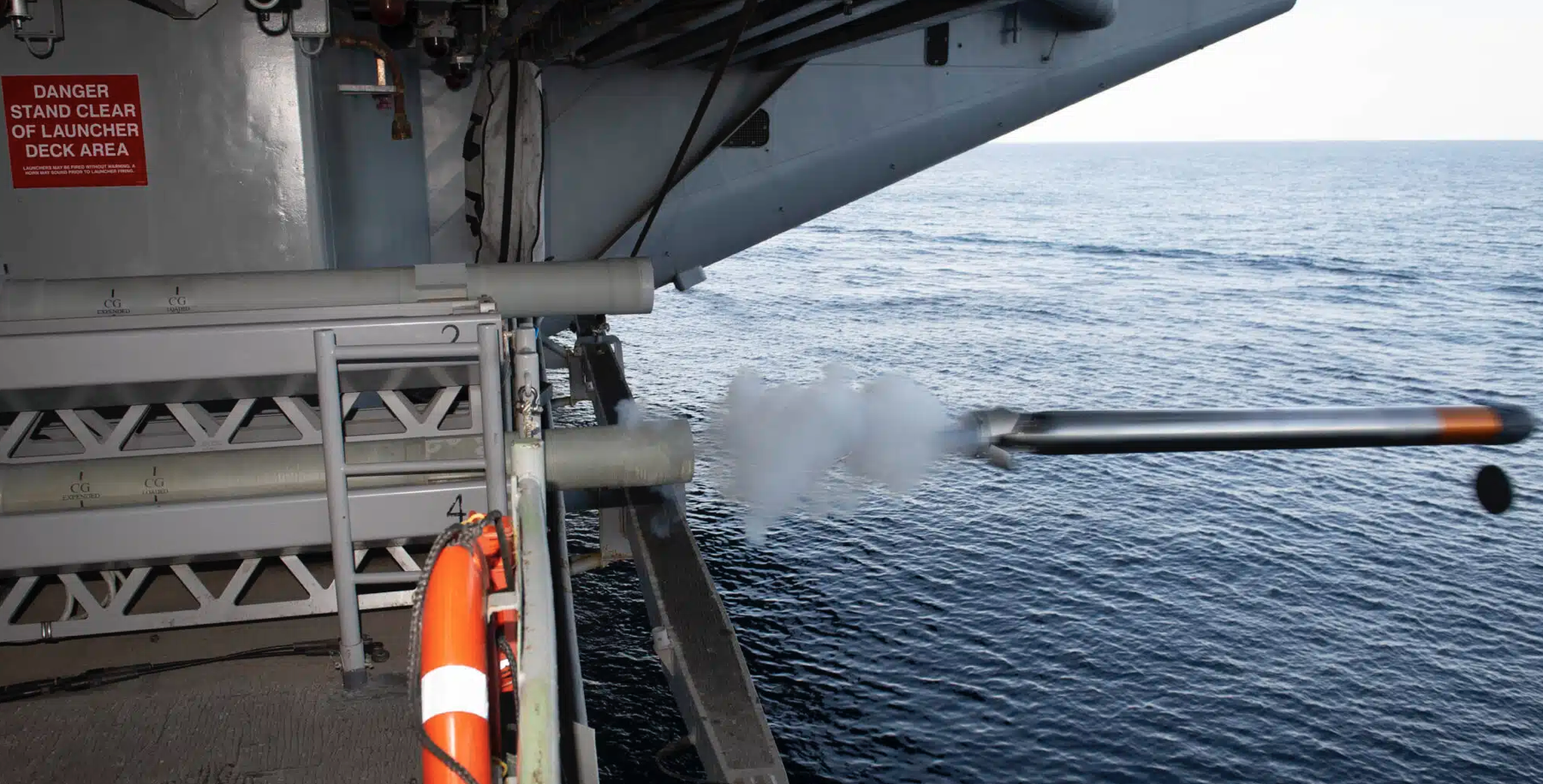
2009  The U.S. Coast Guard’s first National Security Cutter, Bertholf (WMSL 750), conducted a structural test fire of its missile decoy launching system in the Southern California Operations Area of the Pacific Missile Range Facilit. The crew of CGC Bertholf, the Naval Surface Warfare Center Dahlgren Division, and the Navy Research Lab successfully launched two rounds from the Nulka Anti-Ship Missile Defense System.  These MK-234 Nulka rounds hover in the air while attracting incoming anti-ship missiles.  This is the first time that a Nulka round has been launched from a Coast Guard cutter. The successful completion of the test fire was the first phase of the crew’s two-month multi-mission patrol which includes a counter drug patrol in the Eastern Pacific under the tactical control of Commander, Joint Interagency Task Force South for detection and monitoring, and under the tactical control of Commander, Coast Guard District Eleven for interdiction and apprehension.

The U.S. Coast Guard high endurance cutter USCGC Gallatin (WHEC-721) lies tied up at a pier at Naval Station Roosevelt Roads, Puerto Rico, during exercise “Ocean Venture ’88”, on 30 March 1988.

2013  CGC Gallatin returned to homeport of Charleston, South Carolina following a successful three-and-a-half month patrol in counter-drug missions, search and rescue, maritime exercises, and community outreach.  Gallatin’s counterdrug operations for this patrol resulted in the collective seizure of more than 2,200 pounds of cocaine and 3,500 lbs. of marijuana.  Gallatin’s  patrol highlights include: three cocaine seizures and four go-fast vessel disruptions; transfer of marijuana seized May 10 by a Coast Guard Law Enforcement Detachment aboard the Royal Netherlands Navy Vessel HNMLS Friesland; search and rescue mission of passengers aboard a sinking panga March 15; maritime exercises and professional exchange missions with Dutch Naval Vessel HNMLS Friesland and U.S. Navy’s Mayport, Florida-based HSV Swift; and port calls in Guantanamo Bay, Cuba; Bocas Del Toro, Panama; and Roatan, Honduras. During the port calls, Gallatin’s crew enthusiastically worked several community outreach projects which included ship tours for more than 400 school children and their teachers in Guantanamo Bay and Roatan.  The crew also painted, plumbed, and did electrical work in local hospitals and churches.

HNLMS Friesland (P842), a Holland-class offshore patrol vessel operated by the Royal Netherlands Navy, moors at Naval Air Station Key West’s Mole Pier.


This Day in Coast Guard History, June 8

Based on the Coast Guard Historian’s timeline, https://www.history.uscg.mil/research/chronology/
With inspiration from Mike Kelso

June 8

1882  The sloop-rigged yacht Circe, of Cleveland, was dismasted at 1 o’clock in the afternoon about a mile outside of Cleveland Harbor.  The crew of Station No. 8, Ninth District (Cleveland), discovered the accident and towed her safely into the harbor.

On 8 June 1973, OCS Class 2-73 graduated from their training at Yorktown, Virginia.
The entire class was twenty-nine strong. In their ranks at graduation for the first time were five women. One of those women graduates was Margaret R. Riley. During
her thirty-year career CAPT Riley served as the Executive Officer of the Integrated
Support Command, Boston, Massachusetts and was later assigned to the Coast
Guard Headquarters in Washington, DC. She also served as the Commanding Officer
of the Supply Center, Baltimore, Maryland; and the Commanding Officer of the
Integrated Support Command, Boston and retired in 2003 as Director of the
Leadership Development Center at the U.S. Coast Guard Academy in New London,
Connecticut. CAPT Riley died in January 2008 following a long illness.

1973  The first women since World War II graduated from the Reserve Officer Candidate Program (OCS) and were commissioned ensigns.  They trained aboard CGC Unimak for a two-week cruise, thereby becoming the first women to see service afloat.

USCGC Unimak (WHEC-379) underway, 8 June 1987. US Coast Guard photo


This Day in Coast Guard History, June 7

Based on the Coast Guard Historian’s timeline, https://www.history.uscg.mil/research/chronology/
With inspiration from Mike Kelso

June 7

1902  The Alaskan Game Law was  passed and it was to be enforced by the Revenue Cutter Service “on request” of the Secretary of Agriculture.  It was not effectively enforced by Coast Guard until 1925, however.

1924  Congress passed the Oil Pollution Act and the enforcement responsibility was assigned to the Coast Guard.

An over-the-horizon-IV cutter boat from Coast Guard Cutter Valiant transports people and their
belongings from St. Thomas to the cutter during Hurricane Irma relief efforts in the U.S. Virgin Islands Sept. 12, 2017. Valiant crewmembers transported more than 95 adults, children and pets that day. U.S. Coast Guard photo

2011  The Coast Guard awarded four firm fixed-price production contracts to deliver the first test boats for the seven-meter Cutter Boat Over-The-Horizon-IV (CB-OTH-IV) project.  The contracts were awarded to MetalCraft Marine U.S. (Clayton, New York), SAFE Boats International (Port Orchard, Washington), Silver Ships, Inc. (Theodore, Alabama), and William E. Munson Company (Burlington, Washington).  The Coast Guard planned to acquire up to 71 seven-meter CB-OTH-IVs.  The acquisition also included up to 20 boats for Customs and Border Protection and 10 boats for the U.S. Navy, for a total of up to 101 boats.  SAFE Boats won the competition.

“Lawmakers decry DHS secretary’s push to slash Coast Guard infrastructure budget by 90%” –Stars and Stripes

State of Coast Guard shore side Infrastructure FY2023

Stars and Stripes reports,

Kristi Noem, the secretary of the Department of Homeland Security, wants to slash the Coast Guard’s shore infrastructure budget by 90% … Noem has proposed $21 million for fiscal 2026, which begins Oct. 1, to repair and maintain the Coast Guard’s shore infrastructure — a fraction of the more than $400 million that the service received in 2024. But a federal watchdog reported in March that the Coast Guard would need at least $7 billion to fix its shore infrastructure, which includes family housing and barracks, boat stations, piers, lighthouses, firing ranges, airfields, and Coast Guard shipyards.

Read more at: https://www.stripes.com/branches/coast_guard/2025-06-05/coast-guard-budget-noem-18023552.html
Source – Stars and Stripes

You can see the GAO report referenced in the article here.

Thanks to MikeB for bringing this to my attention. 

Construction on OPCs #3 and #4 Suspended

Maritime Executive reports,

The U.S. Coast Guard, which has been struggling with its new ship efforts, has reportedly placed a temporary stop work order on two cutters under construction in its Heritage-class Offshore Patrol Class. Reports of the pause come a day after the Department of Homeland Security announced it had canceled a contract for another cutter in its Legend-class national security cutter and the Department has promised to overhaul the operations of the USCG under its Force Design 2028 project.

News of the pause was reported by Defense Daily which wrote that work on the third and fourth vessels underway at Eastern Shipbuilding is being delayed as issues regarding funding and delays in the timing of the program are underway. Work on the third cutter, to be named, Ingham, has been underway since mid-2022 when the keel was laid, and steel cutting is underway for number four, USCG Rush.

We have noted already that Eastern seems to have had problem. Note, at this point, this is not a cancellation as happens with NSC#11 yesterday. But it looks like it may be a prelude to negotiations that may lead to cancellation, in that it puts these two ships into a status similar to that of NSC#11 prior to the cancellation.

Thanks to Andy for bringing this to my attention.