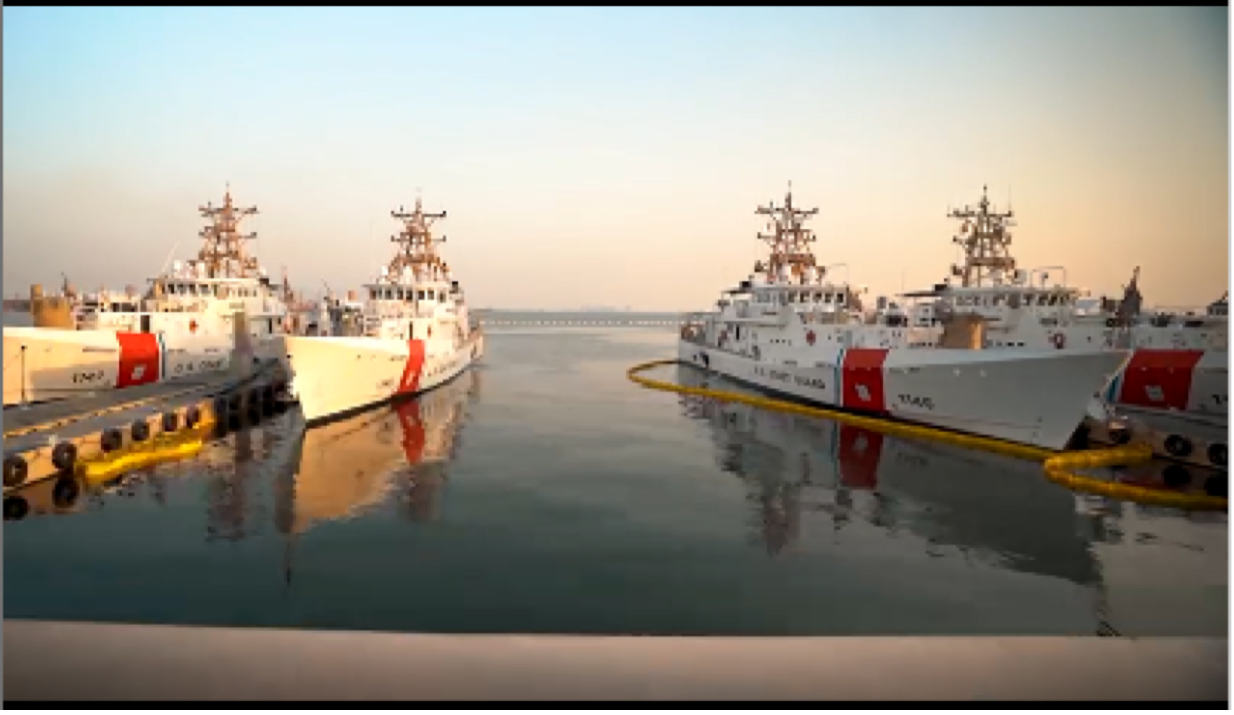
PATFORSWA FRCs in homeport. PATFORSWA photo.
The Coast Guard Patrol Force South West Asia is based in Bahrain. The US naval base there has been hit by Iranian forces. There have been no reports of US casualties.

PATFORSWA FRCs in homeport. PATFORSWA photo.
The Coast Guard Patrol Force South West Asia is based in Bahrain. The US naval base there has been hit by Iranian forces. There have been no reports of US casualties.
Above is a video about the seizure of Motor Tanker Bella 1/aka Marinera on January 7.
We talked about the seizure earlier but this has a lot more detail. I am not familiar with the source so I can’t say how reliable they are but I think you will find it plausible though the telling is a bit too RAH-RAH for my taste. Not all the video is appropriate.
According to the video, the boarding party was exclusively Coast Guard fast roping from an H-65 with Special Ops providing backup in the form of teams on two MH-6 “Little Bird” helicopters that also launched from USCGC Munro. That would be surprising. Would love to get comments from someone who was there.
Thanks to David for bringing this to my attention.
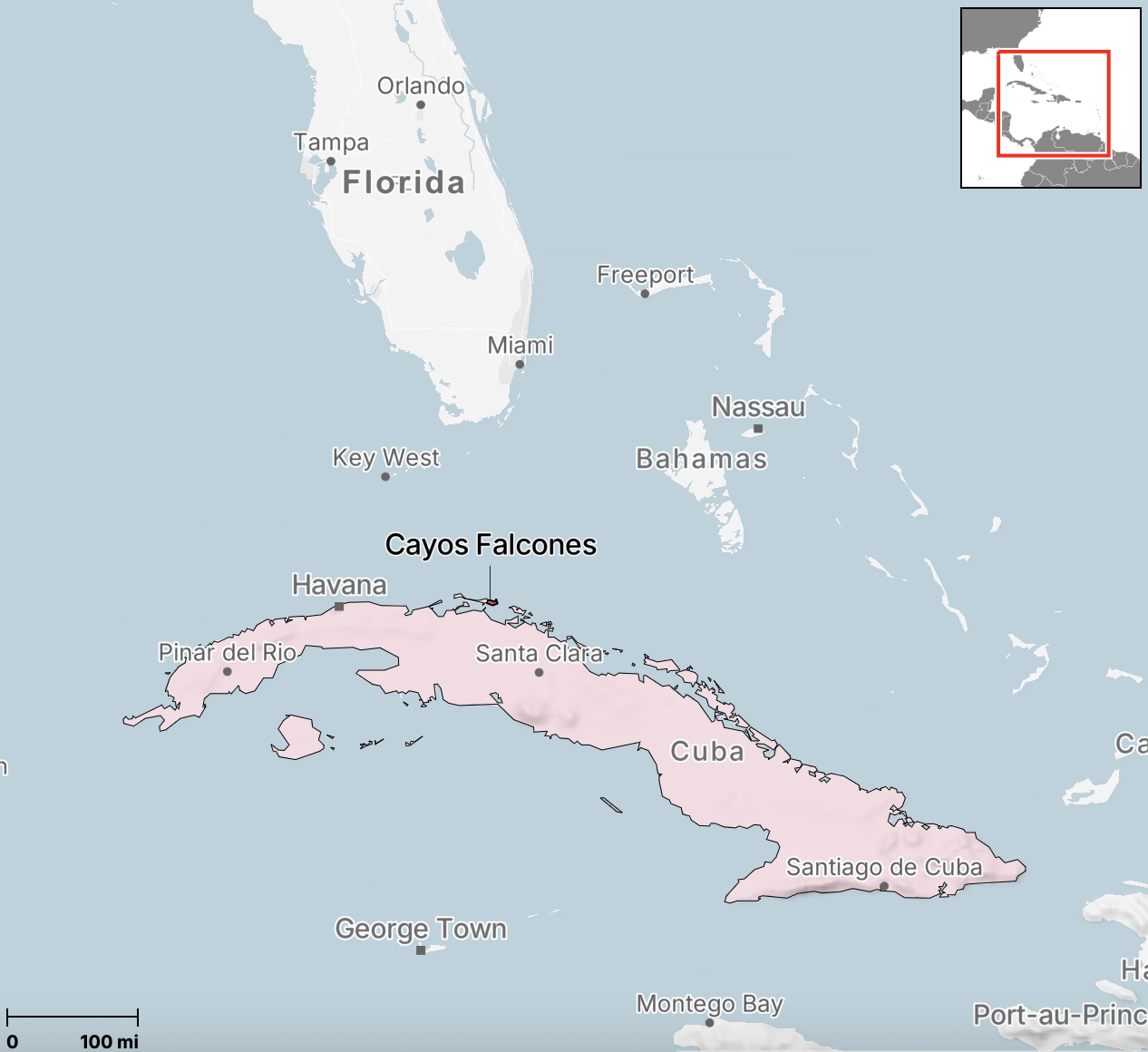
“Four people killed aboard a Florida-registered speed boat following an alleged shootout with the Cuban coast guard were US residents, local officials said.
“The deceased were among a group of ten ‘armed’ individuals who had entered the country’s waters to carry out a terror attack, Cuba‘s government claimed in a statement issued Wednesday night.
“Six others aboard the vessel were left injured after they exchanged gunfire with the coast guard, per the Ministry of the Interior of Cuba. The New York Times reported that all those on board the boat were Cuban citizens living in the US.
We don’t have the other side of the story. If the report from Cuba is correct, we shouldn’t be surprised by the use of force, and while tensions between the US and Cuba are currently high, the incident probably would have gone this way at any time since the Bay of Pigs fiasco.
Tensions may have actually already peaked.
“…it broke on Wednesday that the Trump administration is now allowing American companies to resell Venezuelan oil to private companies in Cuba. The new guidance came from the Treasury Department’s Office of Foreign Assets Control.”
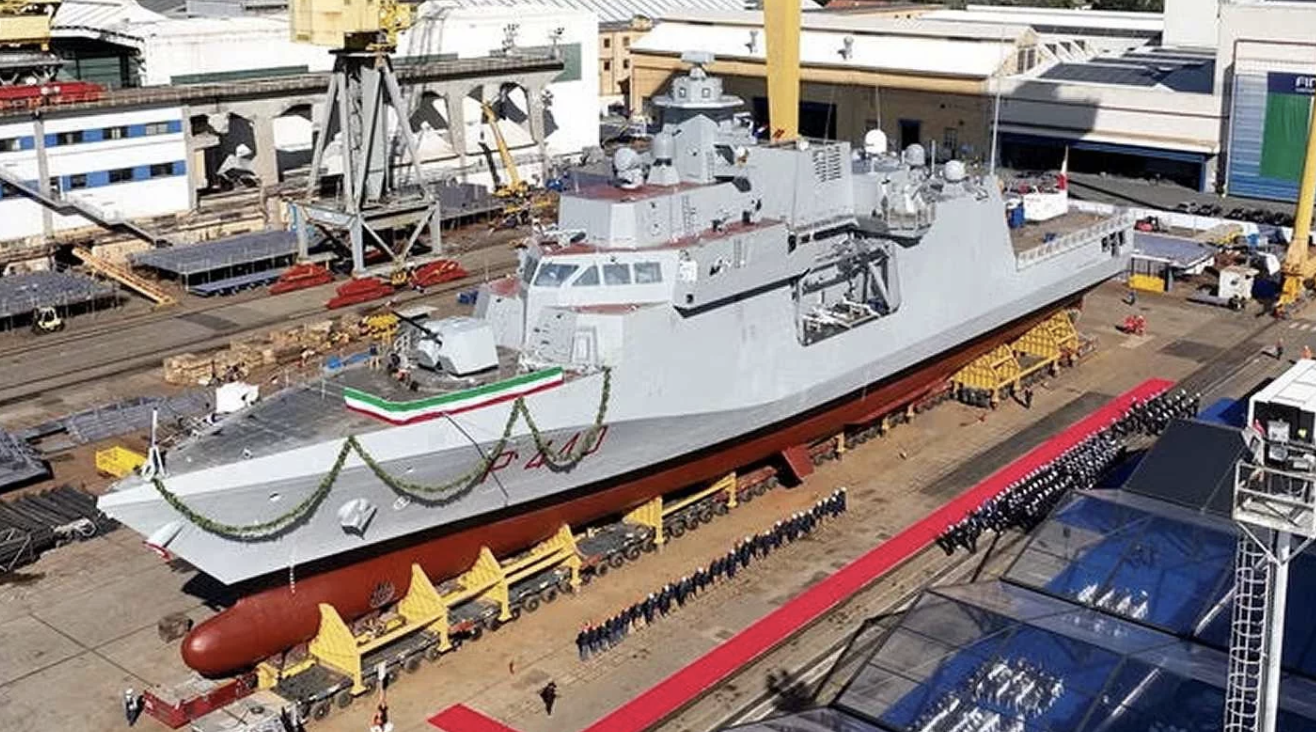
OPV Vivaldi (P 440) is the first PPX vessel for the Italian Navy. Fincantieri picture.
Naval News reports the launching of the first of four PPX project Offshore Patrol Vessels for the Italian Navy. The contract for the first three ships was signed in mid 2023 and the first keel was laid 12 December 2024.
As I noted at the time,
Fincantieri is the parent company of the Marinette based shipyard that has been building Freedom class LCS and will be building the US Navy’s new frigates. That shipyard also built USCGC Mackinaw, the 16 Juniper class WLBs, and the 14 Keeper class WLMs.
We know now that Fincantieri has finished with the Freedom class LCSs and will build only two Constellation class frigates.
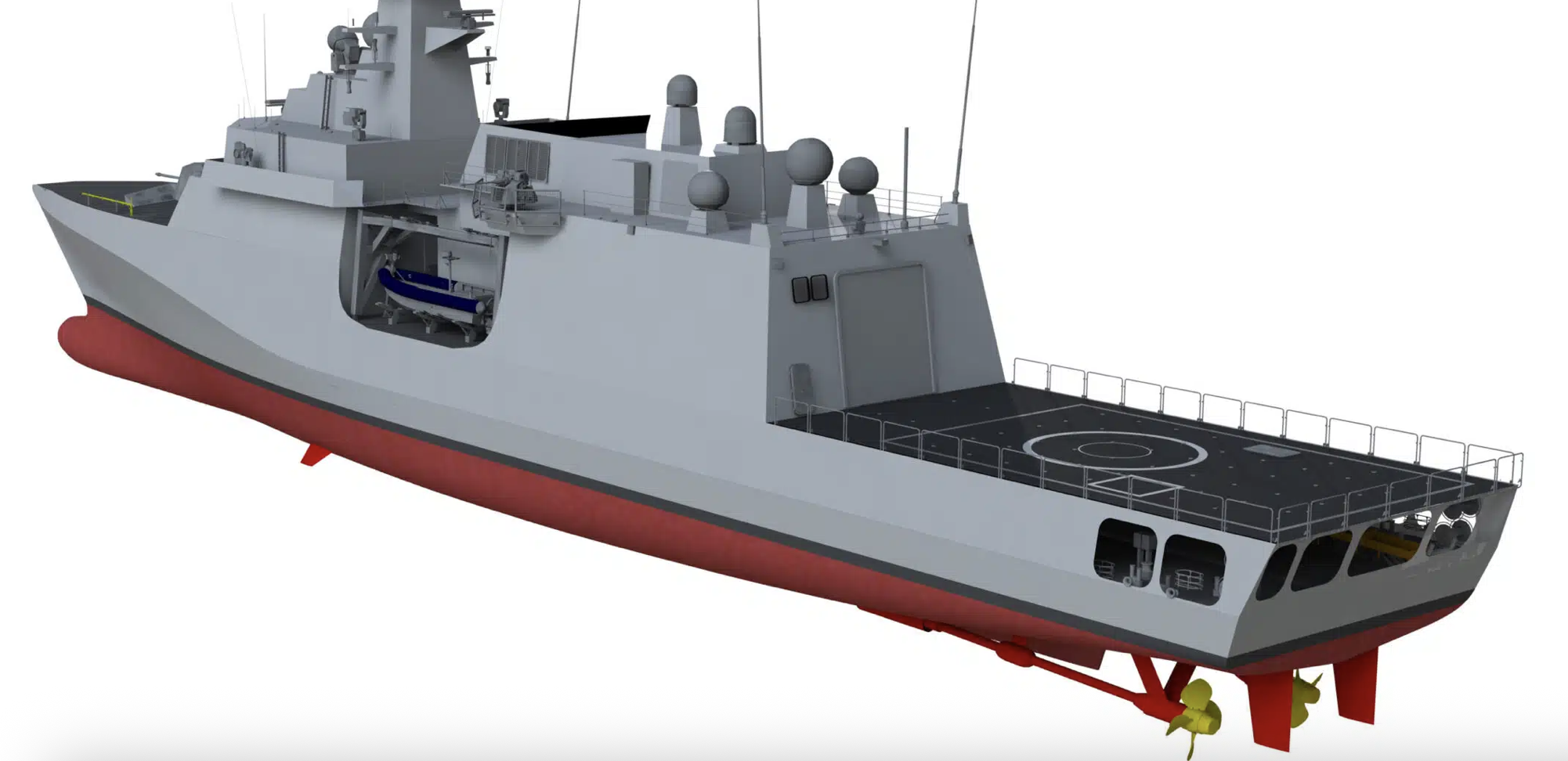
The new generation will be able to operate both rotary-wing manned and unmanned platforms. (Fincantieri)
We need more new ships, and we need them fast. Looks like with few modifications, we could build these as complements to currently contracted OPCs to give us a true WMEC replacement. They are built as combatants to Naval specifications. They can operate H-60 sized helicopters and UAS. They are designed for pollution response. They have the potential for adding a towed array and possibly AAW missiles. Unlike most cutters these ships have redundant propulsion systems in two separate engine rooms. These could serve as corvettes in wartime.
An earlier Naval News report included more technical information,
“With a full load displacement of about 2,400 t, an overall length of about 95 meters (311.6 feet–Chuck), a maximum beam of 14.2 meters, a construction height of 8.4 meters and a maximum draft of only 5.4 meters to operate from a wide range of harbours. The OPV hull design is characterized by bow area featuring a bulb and a completely covered mooring area, alongside active stabilizer fins amidships to ensure operational capability in high sea state conditions and rough weather.
“The CODLAD (COmbined Diesel-eLectric And Diesel) propulsion system is configured on two shaft lines, each including an 8 MW (ISO 3046) MTU 16V8000M91L diesel engine and a 500 kW Marelli reversible electric motor, directly connected to a double input/single output gearbox and controllable pitch propellers, while the rudders are of the conventional type. The diesel engines together with the electric ones must ensure a maximum speed exceeding 24 knots, while the electric motors provide… operating speeds up to 10 knots. Maximum range is 3,500 nm at a speed of 14 knots (more at lower speeds, particularly if the electric propulsion is used–Chuck), with a maximum mission endurance of 20 days.
“The electric power generation and distribution plant is based on four Isotta Fraschini V1708C2ME5 diesel gensets of around 680 kWe each divided in two separate electrical stations. The compartment arrangement for the propulsion and power generating equipment guarantees 50% of the propulsion power with damage to a single compartment and 50% of the electrical power with damage to two contiguous compartments.”
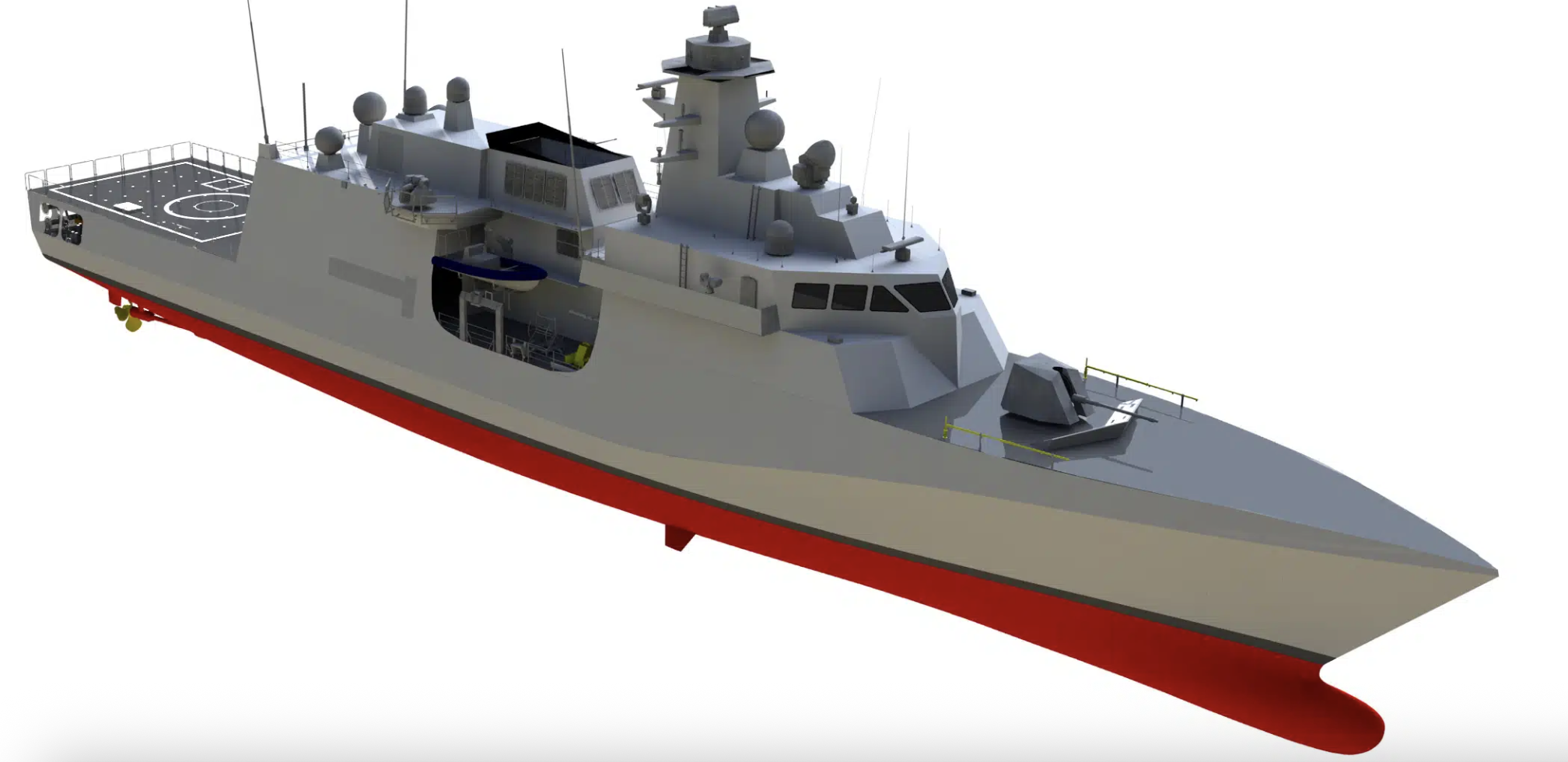
The new OPV will incorporate the new Naval Cockpit derived from the PPA solution and developed by Fincantieri and Leonardo. (Fincantieri)
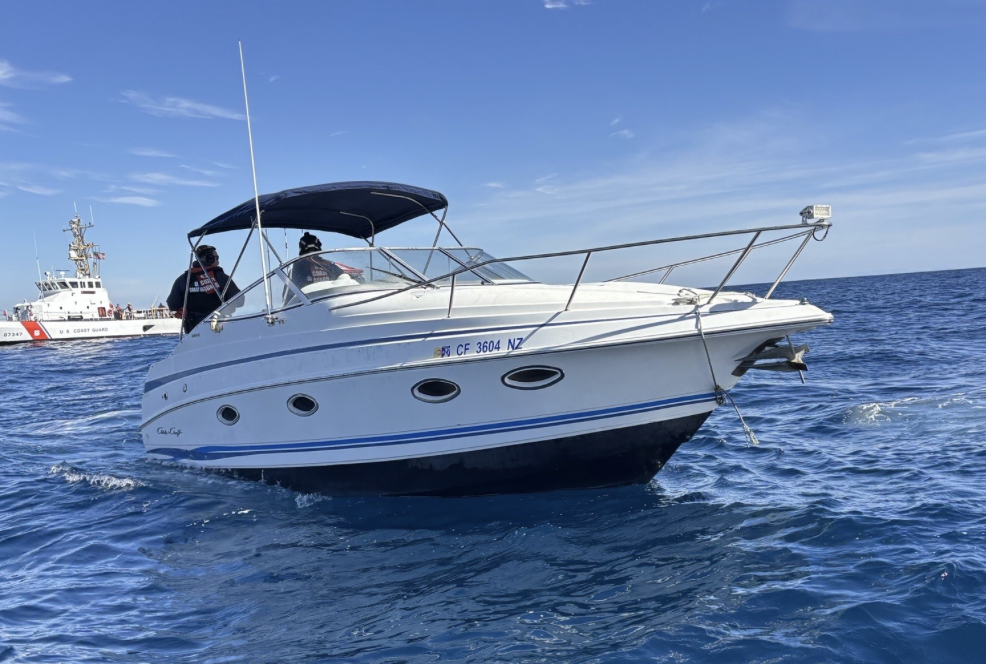
Coast Guard and Department of Homeland Security partner agencies interdict multiple suspected smuggling vessels south of San Clemente Island
The U.S. Coast Guard and Department of Homeland Security partner agencies secure a suspected maritime smuggling vessel during coordinated operations south of San Clemente Island, California, Feb. 21, 2026. In total, crews interdicted five vessels and apprehended 62 aliens in under 90 minutes. (U.S. Coast Guard courtesy photo)
Below are two news releases. Normally I just post reports of West Coast migrant interdictions in the comments section of a post “West Coast Migrant Interdiction” published on Feb. 2, 2025. For continuity I will post these there too, but this was an unusual day.
U.S. Coast Guard Southwest District Phone: (206) 815-6689
SAN DIEGO — The Coast Guard interdicted 20 suspected aliens approximately 8 miles west of Sunset Cliffs, San Diego, Sunday.
At approximately 8:30 p.m., Coast Guard Cutter Forrest Rednour (WPC-1129) crew members observed an 18-foot panga-style vessel transiting into U.S. waters and dispatched a boarding team to intercept.
The Rednour’s boarding team interdicted the vessel and identified 20 suspected aliens aboard; 19 claiming Mexican nationality and one claiming Sudanese nationality.
A Coast Guard Station San Diego boat crew provided assistance by transporting the vessel and all 20 suspected aliens to Department of Homeland Security personnel at Ballast Point.
U.S. Coast Guard Southwest District Public Affairs: 206-815-6689
SAN DIEGO — The U.S. Coast Guard and Department of Homeland Security partner agencies, supported by the U.S. Navy, interdicted five suspected maritime smuggling vessels and apprehended 62 aliens during coordinated operations south of San Clemente Island, Saturday.
At approximately 12:30 p.m., watchstanders at the Sector San Diego Joint Harbor Operations Center received reports from a partner agency aircraft of three vessels suspected of smuggling illegal aliens, transiting northbound from Mexican waters. The vessels were described as 20-to-25-foot cuddy cabin-style boats carrying fishing gear and fuel barrels onboard.
The Coast Guard Cutter Haddock (WPB-87347) already on patrol in the area, launched a small boat crew to investigate the first vessel and conduct a boarding. Located approximately 26 miles south of San Clemente Island, the vessel was observed flying a U.S. flag and was compliant during the boarding. Haddock crews reported 10 aliens aboard the vessel, all claiming Mexican nationality.
A Department of Homeland Security partner agency aircraft located a second vessel of interest and directed a law enforcement crew to the vessel’s location, ultimately leading to a pursuit. Failing to comply with law enforcement commands to stop, warning shots were employed to compel the vessel’s compliance. The vessel complied, and 10 additional aliens were identified onboard, all claiming Mexican nationality. All 10 individuals were subsequently embarked aboard the Haddock.
A Department of Homeland Security partner agency vessel then stopped a third vessel suspected of smuggling illegal aliens. Nine additional aliens, all claiming Mexican nationality, were identified and safely embarked aboard the Haddock.
Additional reports of suspected smuggling vessels in the area prompted further response. A U.S. Navy helicopter and small boat crew from the littoral combat ship USS Augusta (LCS-34) with an embarked Coast Guard Maritime Law Enforcement Team (MLET) assisted in locating and interdicting a fourth cuddy cabin vessel. The Coast Guard MLET identified 16 aliens aboard the vessel, 14 claiming Mexican nationality and two claiming Colombian nationality. All 16 individuals were detained and transferred to the Sentinel-class Forrest Rednour (WPC-1129).
A fifth vessel was later intercepted by a Department of Homeland Security partner agency vessel, which employed warning shots to gain compliance after the vessel failed to obey law enforcement commands to stop. Seventeen aliens were aboard the vessel,16 claiming Mexican nationality and one claiming Guatemalan nationality. All were taken into custody.
In total, crews interdicted five vessels and apprehended 62 aliens in under 90 minutes. The Haddock and Rednour crews transported all aliens to Coast Guard Sector San Diego, where they were transferred to another Department of Homeland Security agency for further processing. One unaccompanied minor was identified among the group.
Department of Homeland Security partner agency personnel seized four of the five vessels. The fifth vessel, which was taking on water and determined to be unseaworthy, was left at sea.
The Coast Guard routinely conducts patrols alongside interagency and Department of War partners to detect suspected maritime smuggling operations and interdict illegal activity, while ensuring the safety of life at sea. This case is an example of the stellar partnerships and complex coordination required amongst all agencies involved.
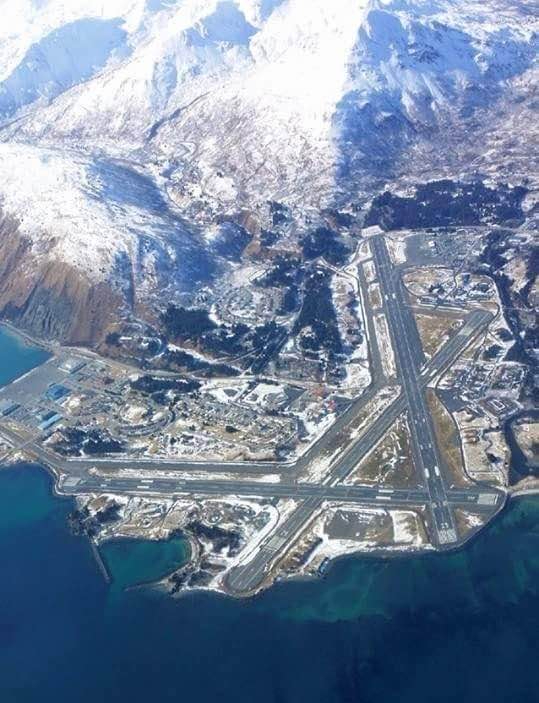
CGAS Kodiak
KMXT radio station Kodiak, Alaska reported on Commissioning of USCGC Frederick Mann (WPC-1160) in Kodiak. I had already passed along the news release about the commissioning as a comment on an earlier post.
One of our readers pointed me to the KMXT post because it includes some interesting comments by the District Commander and Senator Dan Sullivan.
“They’re expecting two additional offshore patrol cutters. They’re going to go from five to nine MH 60s, these are the new helicopters,” he explained. “They’ve had almost $150 million in family housing, $40 million for the Child Development Center. $145 million for a new fuel pier. So that’s just Kodiak.”
The funding breakdown for Kodiak, according to Sen. Sullivan’s office, includes: $202 million for OPC and FRC homeports; $147.2 million for family housing, $40 million Child Development Center, $145 million for a new fuel pier; and $5 million to repurpose an aircraft hangar for MH-60 helicopter operations.
Good news on infrastructure improvements.
We knew about the two OPCs planned for Kodiak, though when they will be there is an open question. Presumably the increased number of H-60s is to replace the H-65s that currently operate from cutters.
There are more comments on smaller units as well and reference to the Commandant’s statement that four of the Arctic Security Cutters might be stationed in Alaska.
Some of the 87 footer movements are to cover for decommissioned island class. Presumably the new Waterways Commerce Cutter will replace USCGC Elderberry (WLI-65401).
The Arctic District needs to update their website since it still shows three Island class cutter while they have all been decommissioned. It would be helpful if the list also included the ships designation and hull number.
Thanks to David S. for bringing this to my attention.
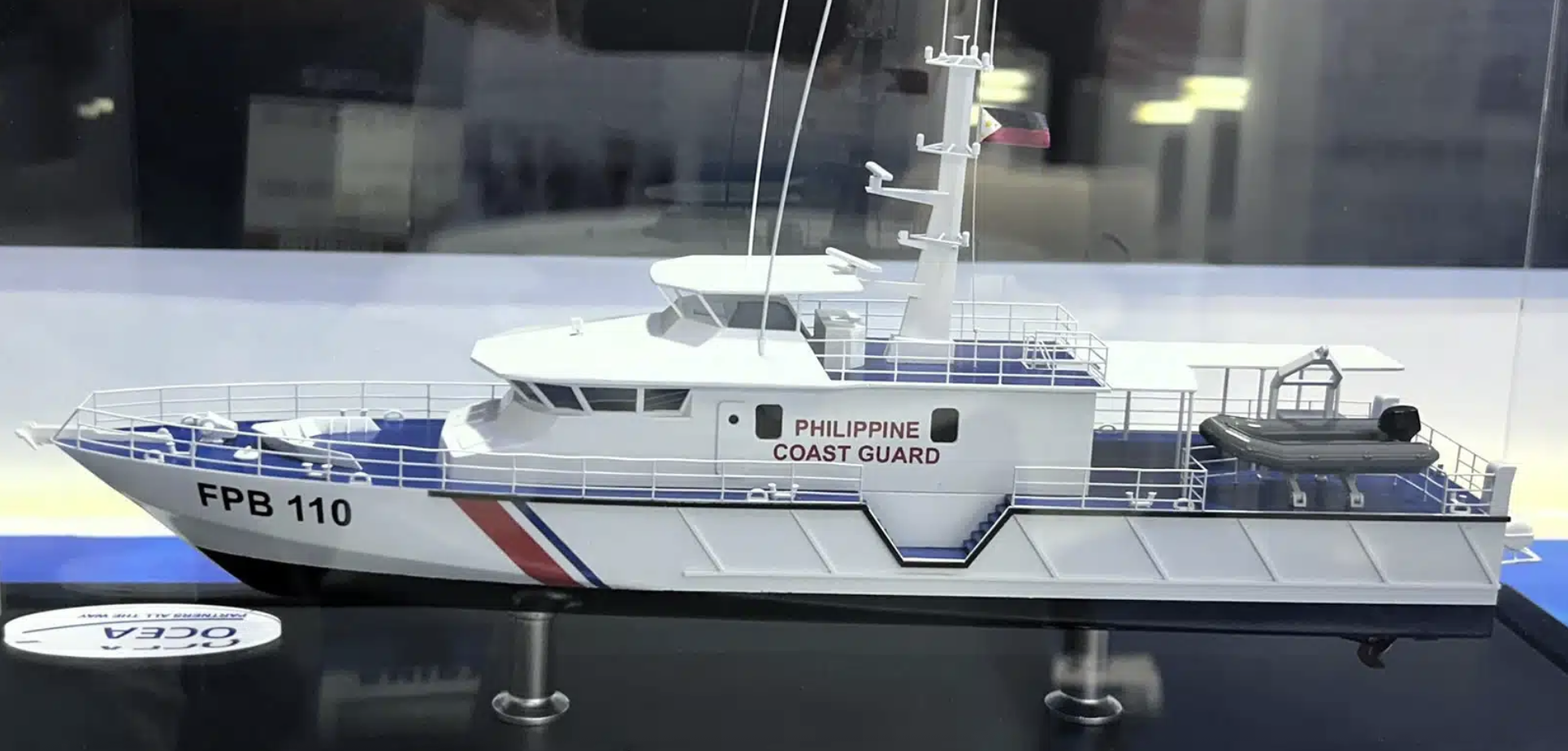
Philippine Coast Guard FPB-110 scale model showcased by OCEA at Philippine Marine 2025. Picture by Aaron Lariosa.
The Philippines’ Department of Transportation and the French company signed a contract in May 2025 for 40 units of 35-meter high-speed multi-role vessels worth $438 million (P25.8 billion) in a bid to enhance the PCG’s maritime presence across the archipelago. Twenty of the boats will be constructed locally, while the rest will be built in France.
They expect to add 50 ships over the next five years.
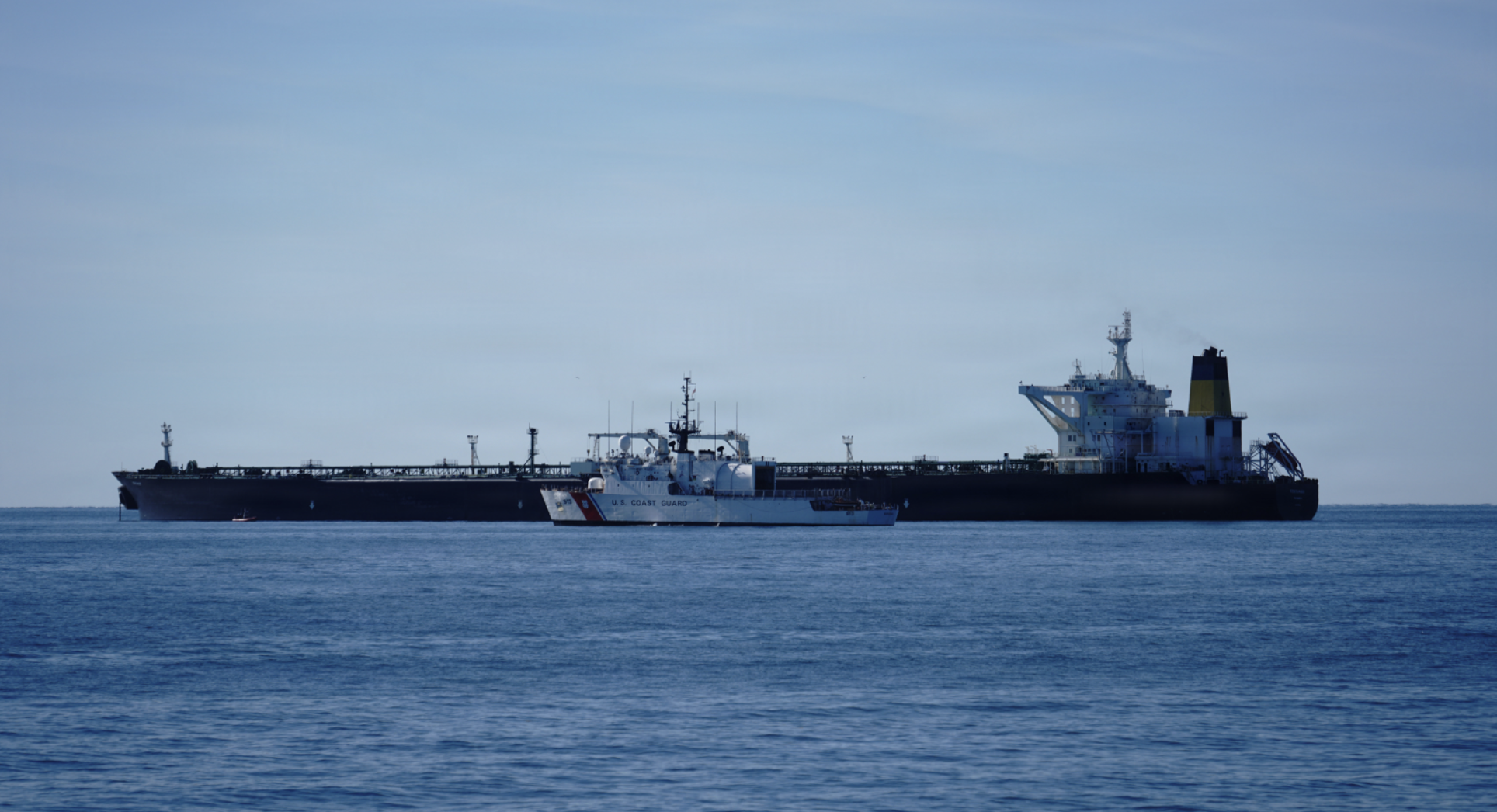
Coast Guard Cutter Mohawk (WMEC 913) escorts the Panamanian-flagged motor tanker Centuries through the Gulf of America, Dec. 31, 2025. Mohawk escorted the vessel after it was intercepted in the Caribbean Sea by a Coast Guard tactical law enforcement team with Department of War support on Dec. 20; the interception was part of Operation Southern Spear, an interagency effort to counter illicit maritime trade and enforce international sanctions. (U.S. Coast Guard photo)
Below is a District SE press release.
KEY WEST, Fla. — The crew of Coast Guard Cutter Mohawk returned to their homeport in Key West, Saturday, after a 60-day patrol in the Caribbean Sea and Gulf of America, where crew members boarded and escorted two sanctioned oil tankers.
Operating in support of Operation Southern Spear, Mohawk’s crew partnered with Department of War and Department of Homeland Security assets as well as additional Coast Guard units to board and escort the two sanctioned vessels, preventing the illicit trade of crude oil in violation of international sanctions.
“Our dedicated crews are the frontline of maritime security,” said Cmdr. Taylor Kellogg, commanding officer of Mohawk. “Their vigilance and expertise were instrumental in the successful interdiction and escort of these tankers, preventing illicit oil from destabilizing the Western Hemisphere. This is a clear demonstration of the Coast Guard’s commitment to enforcing international law and our vital role in the Joint Force. I’m proud of their selfless service and devotion to duty.”
On Dec. 20, a Coast Guard tactical law enforcement team with DoW support intercepted and boarded the Panamanian-flagged motor tanker Centuries. Subsequently, Mohawk escorted Centuries during its transit from the Caribbean Sea to the Gulf of America, where the tanker moored for further disposition in coordination with the Centuries’ flag state.
On Jan. 15, a Coast Guard tactical team with DoW support intercepted and seized the Venezuelan-linked, Aframax motor tanker Veronica, prompting Mohawk’s crew to quickly transit back to the Caribbean Sea and provide escort duties. Following a boarding by a joint warfare team, Mohawk escorted Veronica to a secure anchorage in the Caribbean Sea.
The back-to-back escorts totaled 17 days and covered a combined distance of 2,700 nautical miles.
Unique statutory authorities enable the Coast Guard to enforce international and domestic law in the maritime domain, deploying assets to conduct missions in U.S. waters and on the high seas. The Coast Guard’s involvement in these maritime activities was conducted under Title 14, U.S. Code and in accordance with customary international law. The Coast Guard exercises these authorities to protect maritime safety, security and U.S. interests.
For media inquiries, contact lantpao@uscg.mil.
###
About the U.S. Coast Guard and Operation Southern Spear
The U.S. Coast Guard’s missions are enabled by a unique blend of military, law enforcement and humanitarian capabilities. The Coast Guard is the principal federal agency responsible for maritime safety, security and environmental stewardship in U.S. ports, waterways and on the high seas.
Operation Southern Spear is a multi-agency effort led by the DoW to counter illicit maritime trade and enforce international sanctions. By leveraging joint capabilities, the operation aims to disrupt transnational criminal organizations and maintain stability in the maritime domain.
Mohawk is a 270-foot, Famous-class medium endurance cutter homeported in Key West. An asset of U.S. Coast Guard Atlantic Area, the cutter’s primary missions include counter-narcotics, alien interdiction, homeland security, and search and rescue in support of U.S. interests in the Western Hemisphere.
Based in Portsmouth, Virginia, U.S. Coast Guard Atlantic Area is responsible for all Coast Guard missions east of the Rocky Mountains to the Arabian Gulf, spanning five districts and 40 states. It oversees a wide range of operations, including counter-drug and alien interdiction, enforcement of federal fishery laws, and search and rescue operations in support of Coast Guard missions throughout the Western Hemisphere. In addition to surge operations, Atlantic Area is a force provider of surface and air assets to the Caribbean and Eastern Pacific to combat transnational organized crime and illicit maritime activity.
For more information on how to join the U.S. Coast Guard, visit GoCoastGuard.com to learn about active duty, reserve, officer and enlisted opportunities. Information on how to apply to the U.S. Coast Guard Academy can be found here.
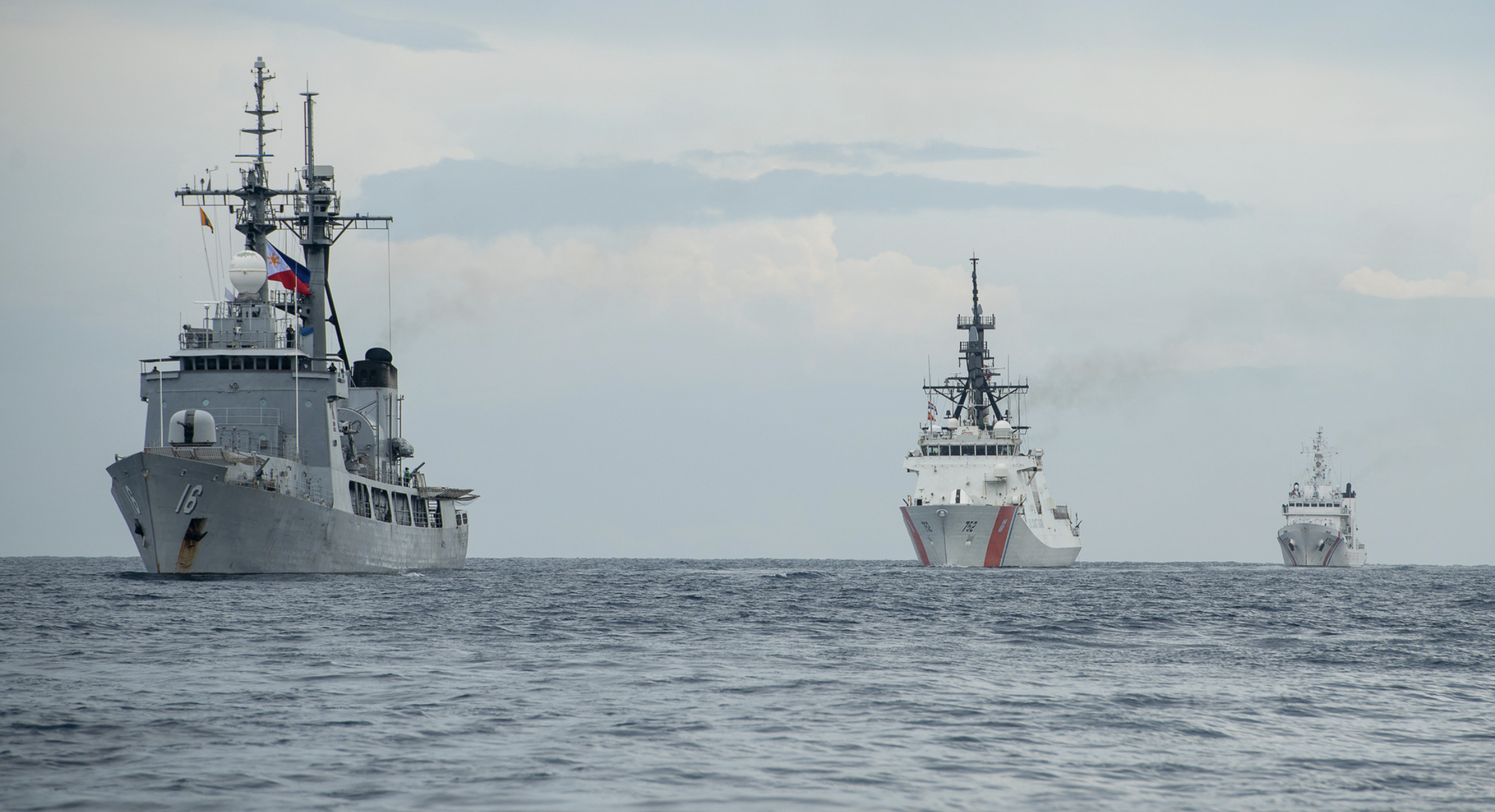
The Legend-class USCGC Stratton (WMSL 752) sails with Philippine Navy’s Gregorio del Pilar-class patrol ship BRP Ramon Alcaraz (PS-16) and Philippine Coast Guard Vessel BRP Melchora Aquino (MRRV-9702) as part of a division tactics exercise in the Sulu Sea, May 20, 2025. (U.S. Coast Guard photo by Petty Officer 3rd class William Kirk)
“The Philippine Coast Guard (PCG) will acquire three Beechcraft King Air aircraft from the United States to enhance its maritime domain awareness and strengthen its search and rescue (SAR) capabilities.”
But what really got my attention was this,
“The PCG… will also become the first foreign coast guard to take part in the US-led Rim of the Pacific exercise in Hawaii later this year.”
The US Coast Guard has of course participated in RIMPAC for as long as I can remember and perhaps from the inception, but this is significant change. In the future we may see the Indian, Japanese, or S. Korean coast guards.
This prompted me to find out when the exercise will be. AI tells me,
“Approximately 29 nations, 40 surface ships, 3 submarines, 14 national land forces, over 150 aircraft and more than 25,000 personnel will participate in the biennial Rim of the Pacific (RIMPAC) exercise scheduled June 26 to Aug. 2, in and around the Hawaiian Islands.”
A highlight of every RIMPAC is one or more SINKEX. This year I would really like to see some live fire counter-UAS exercises by our cutter(s) and other ships that don’t have an AAW missile suite.
Thought my readers might appreciate some photos from previous RIMPACs. If you want to read comments and press releases about previous RIMPACs, here are what I believe are the most important. Significantly Navy H-60s began operating from National Security Cutters in 2016.

The U.S. Coast Guard helicopter tie-down team aboard legend-class cutter USCGC Midgett (WMSL 757) secures a Mexican navy Panther Helicopter ANX 2161 during Exercise Rim of the Pacific (RIMPAC) 2024 off the coast of Hawaii, July 14. (U.S. Coast Guard photo by David Lau)
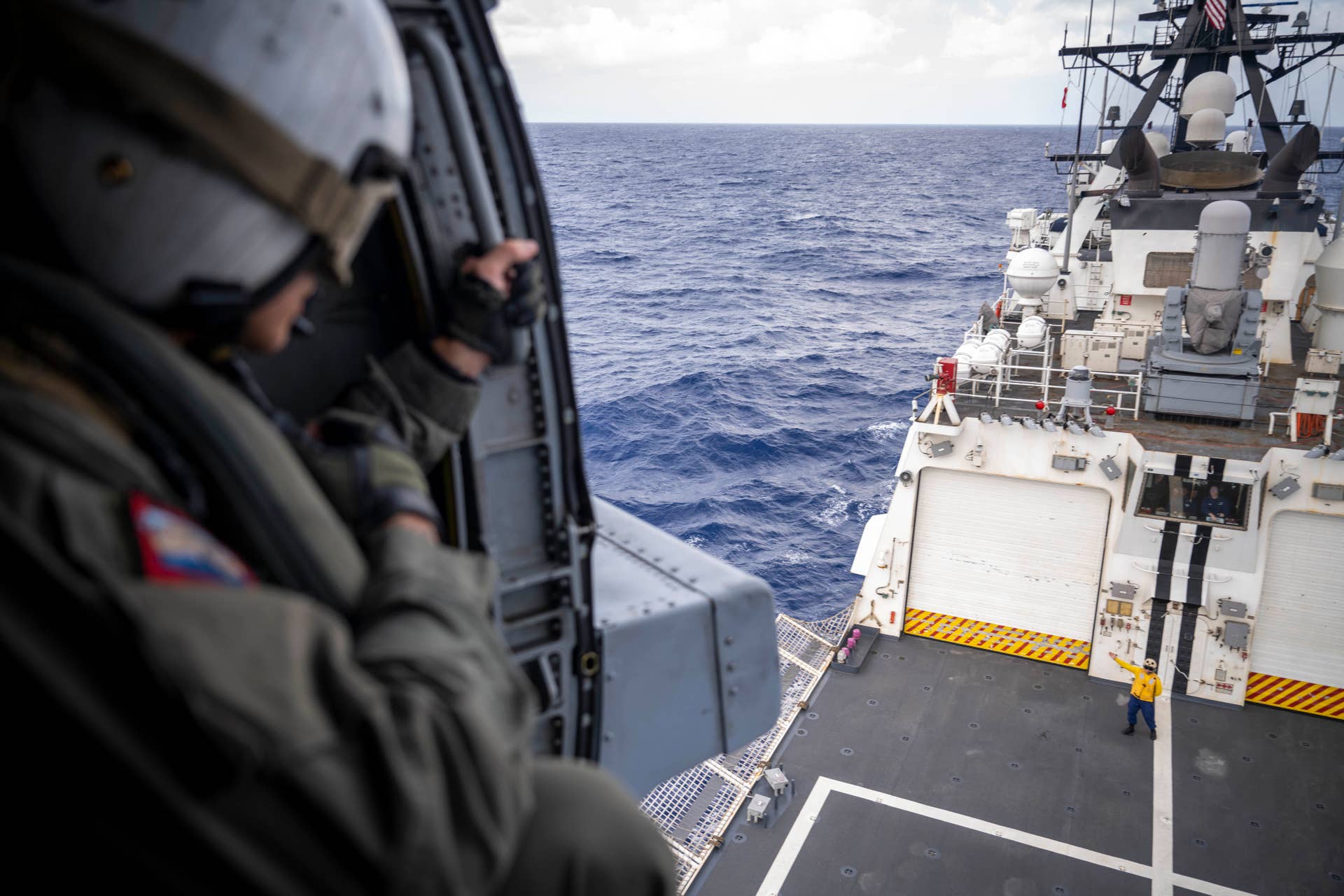
PACIFIC OCEAN (July 30, 2022) U.S. Navy Petty Officer 1st Class Humberto Alba, a naval aircrewman tactical-helicopter, attached to Helicopter Maritime Strike Squadron (HSM) 37, deployed on U.S. Coast Guard Legend-class cutter USCGC Midgett (WMSL 757), looks down at a USCGC crewmember after taking off during flight operations during Rim of the Pacific (RIMPAC) 2022. (U.S. Coast Guard photo by Petty Officer 3rd Class Taylor Bacon)
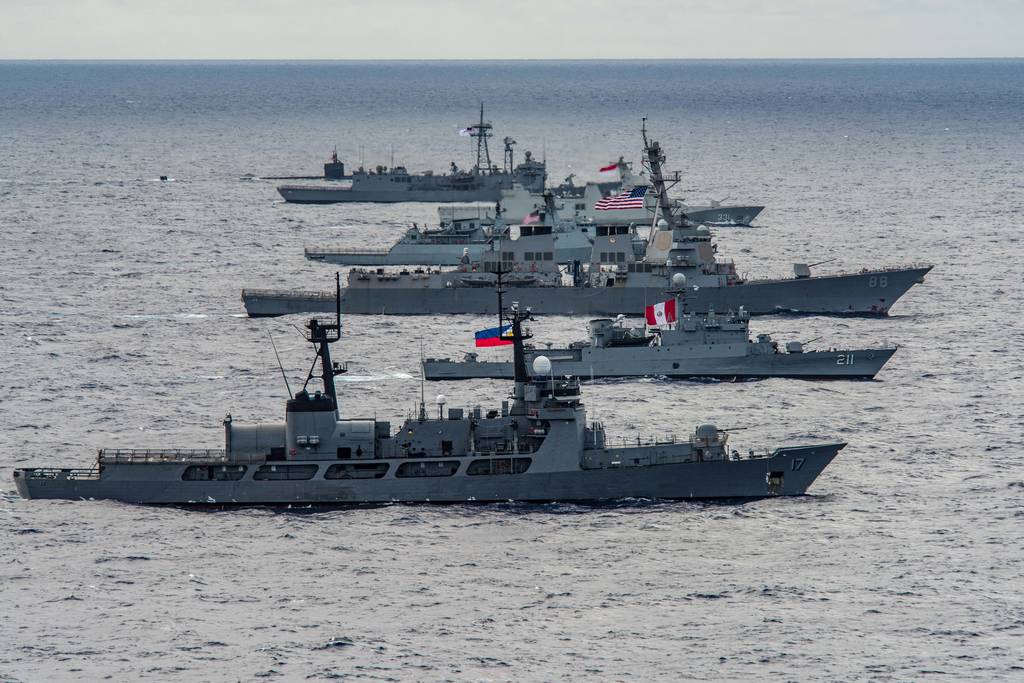
Navy ships assemble to form a multinational fleet for a photo exercise off the coast of Hawaii during the Rim of Pacific (RIMPAC) exercise on July 26, 2018. More than 45 ships and submarines, including this former Coast Guard cutter participated in RIMPAC. (MC3 Dylan Kinee/U.S. Navy)
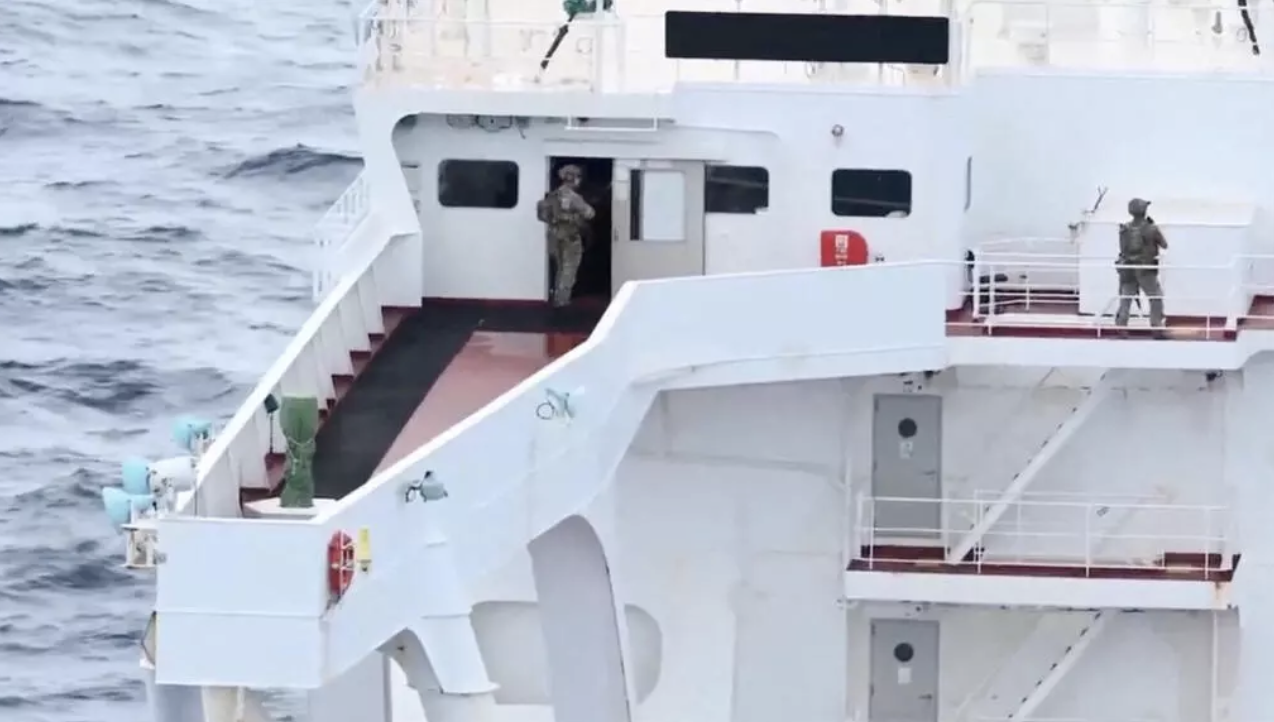
US forces board the vessel Veronica III, in a screengrab obtained from a handout video released on February 15, 2026. © Department of War, via Reuters
The United States intercepted a new oil tanker in the Indian Ocean that had fled the blockade ordered by US President Donald Trump against sanctioned ships leaving or heading to Venezuela, the Pentagon announced on Sunday. (Panamanian-flagged Veronica III, 15 February, 2026–Chuck)
Since this happened in the Indian Ocean, the Coast Guard was probably not involved.
 Chuck Hill's CG Blog