“How Donald Trump Is Reviving the Coast Guard” –The National Interest

Canadian Coast Guard Multi-Purpose Icebreaker (MPI). Source: Seaspan
Note: The MPI image does not show the right propulsors; it will use Steerprop’s contra-rotating propulsors (CRP). Additionally according to Seaspan, the design could easily be upgraded to PC3. Confirmation from Seaspan and Aker Arctic. This is one of two Arctic Security Cutter designs being built for  the USCG.

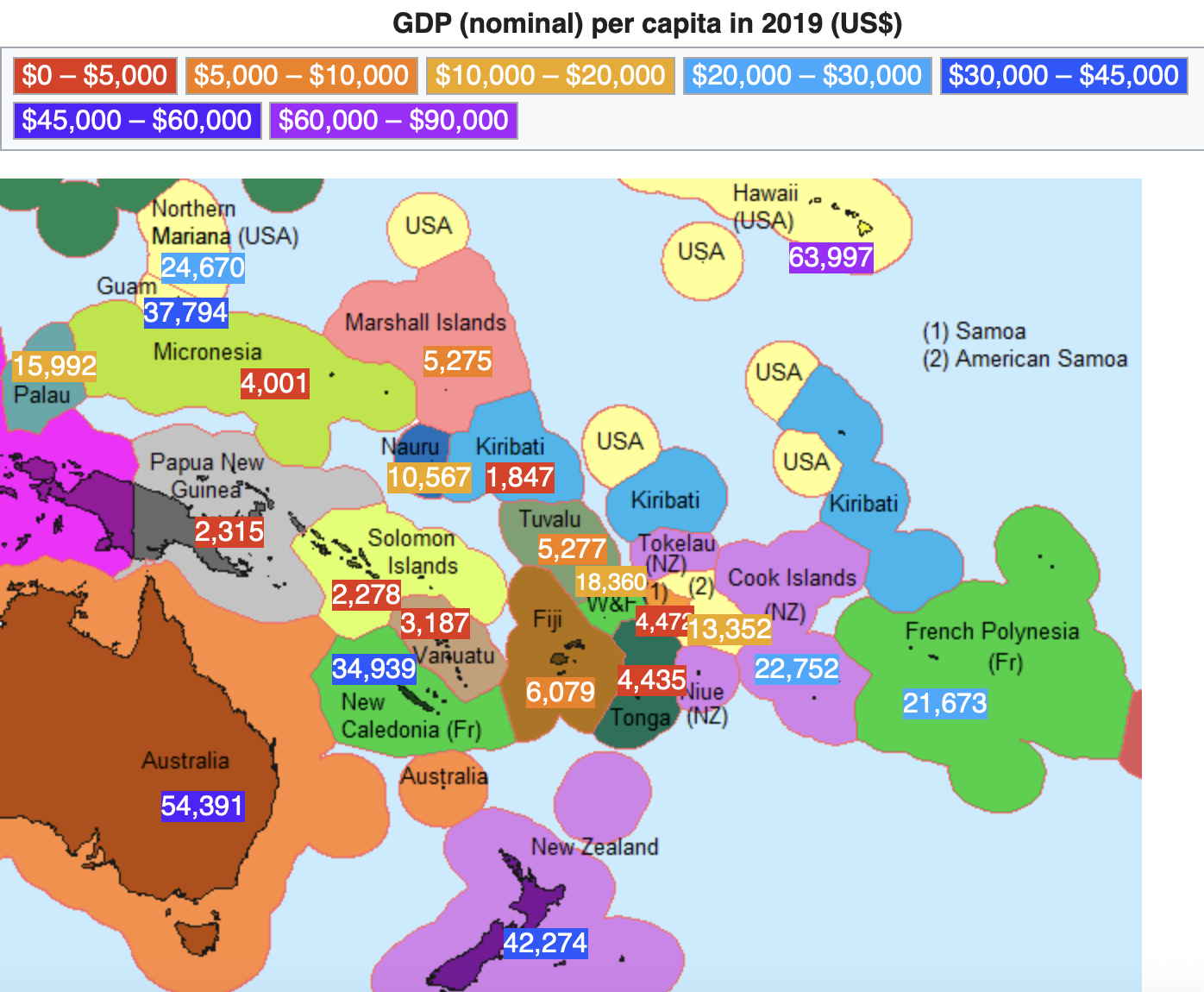
This is mostly about the “Big Beautiful Bill,” which we talked about earlier. but there is some important additional information here. As previously speculated there will apparently be a new Coast Guard base in American Samoa. (See also here.)

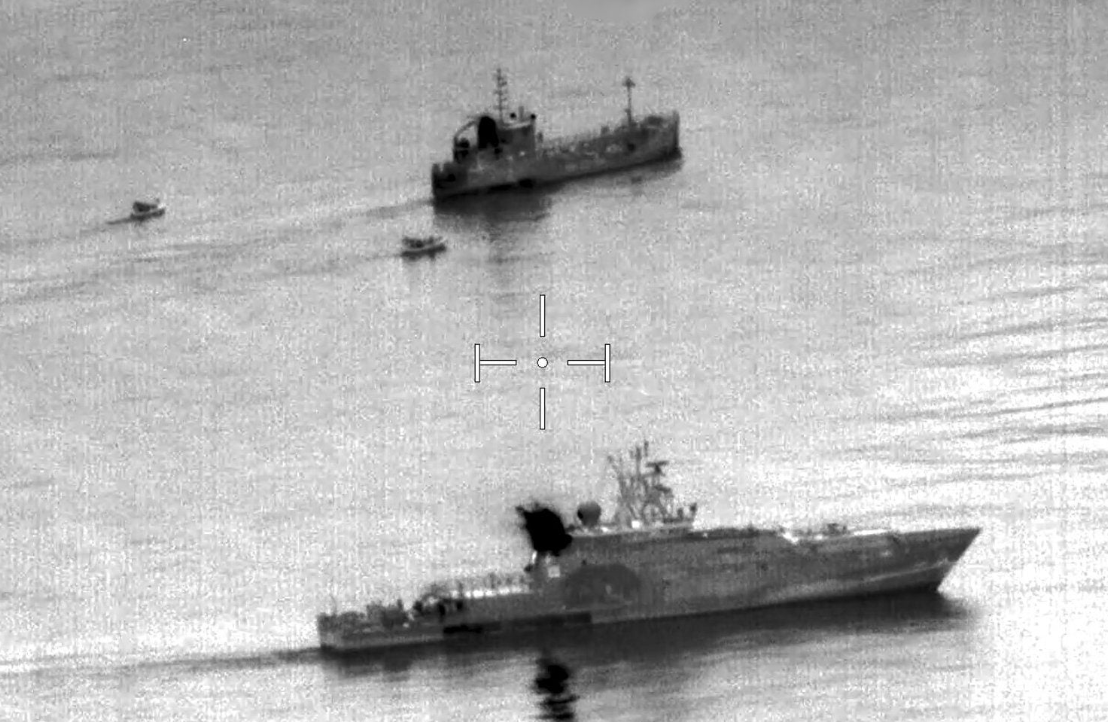
They (Webber class FRCs–Chuck) will be based out of Guam, Hawaii, and the soon-to-be-reopened WWII-era base in American Samoa.

We probably also need to station some FRCs in Manus, Papua New Guinea.

The report may create some unwarranted impressions.

“Among other theaters, the FRCs and OPCs will operate in the Indo-Pacific in packs led by a frigate-sized National Security Cutter.” –The Coast Guard does not normally operate their ships in packs. In the Eastern Pacific Drug transit zone there may be more than one cutter coordinating their operation, but even there they tend to spread out. There is the possibility of coordinating operations with law enforcement agencies of friendly nations in the Western Pacific. 

“In just three short years, the USCG will have seventy-seven FRCs in the fleet.” FRC#61 was delivered recently. The 67th FRC was previously scheduled for delivery in 2028. With the most recent award, the total program has increased to 77 vessels, extending the production line by approximately three years. Sounds like 2031.

“Additionally, Trump signed a deal with our NATO ally Finland to buy 11 Finnish ice-capable cutters for the Arctic and Antarctica right away.” –Only four of these will be built in Finland, the rest will be built in the US. 

“The Coast Guard’s High-and-Dry Cutter” –No Dowd About It

Future USCGC Argus at launch Eastern Shipyard, Oct 27, 2023.

If you are a regular reader, you know the sad story Eastern’s problems producing the Offshore Patrol Cutter. I am not familiar with the source of this story, but it is the first I have seen that suggests there may have been some political push to grant Eastern the contract.

(Swampy sleaziness might have played a role in the decision. In the spring of 2015, POLITICO learned that the company’s owner “hosted a ‘hush-hush’ fundraiser … for Marco Rubio,” then the chairman of the Senate “panel that oversees the Coast Guard.”)

“Coast Guard Grows VIP Fleet Amid Helicopter Procurement Changes” –Aviation Week

Every Coast Guard Aircraft Type Pictured Together In Rare ‘Family Photo’. Pictured: HC-130J, C-27J, HC-144, C-37B, MH-60T, MH-65E.

Aviation Week reports,

“The increased focus on homeland defense has translated to a budget influx for the U.S. Coast Guard, enabling the service to modernize its fleet, as a watchdog outlines a continued drop in readiness.

“The One Big Beautiful Bill Act passed in Congress and signed by President Donald Trump in July allotted the service $24.59 billion to be spent on readiness through 2029. That was in addition to the Coast Guard’s fiscal 2026 request of $14.5 billion.”

This provides a brief look at what we can expect in the future.

The slip in readiness is slight and, “While the Coast Guard fleet flies much more often than Defense Department aircraft, the Coast Guard has about the same readiness rate as the department, the CBO states.”

“America’s Sole Heavy Icebreaker Heads South as Arctic Competition Intensifies” –gCaptain

The rudder of the USCGC Polar Star (WAGB 10) is being removed while in a Vallejo, Calif., dry dock, April 1, 2025. The maintenance work completed over the past five years recapitalized integral systems, including propulsion, communication, and machinery control systems. (U.S. Coast Guard photo by Seaman Nestor Molina)

gCaptain reports,

“The U.S. Coast Guard Cutter Polar Star departed its Seattle homeport Thursday for its 29th annual deployment to Antarctica, beginning a months-long mission that underscores both America’s enduring polar presence and the mounting challenges facing its aging icebreaker fleet.

“The cutter’s deployment follows its return to Seattle in September after 308 days away, which included completing the final phase of its comprehensive five-year Service Life Extension Program at Mare Island Dry Dock in Vallejo, California. The $12.7 million final phase focused on recapitalizing integral systems including propulsion, communication, and machinery control systems.”

“Pre-Award Solicitation Details Classification Description Contact Information Attachments/Links Market Research for Maritime Domain Dominance Technologies/Services for Maritime Applications” –RFI

The Coast Guard has issued a Request for Information,

“The Coast Guard Futures Development and Integration (FD&I) Directorate is the Coast Guard’s central force design and innovation hub guiding budget priorities by clarifying mission needs and capability requirements. Under FD&I, the Coast Guard Research and Development Center serves as the execution agent for research, modeling & simulation, technology forecasting, and field experimentation. The Coast Guard Rapid Response Rapid Prototype (RAPTOR) team is a barrier-breaking enabler that partners with Coast Guard offices to solve the biggest problems in the service by providing cutting edge capabilities and supporting the deployment of rapid solutions. This Request for Information (RFI) is part of an effort by the United States Coast Guard (USCG) to determine the availability and technical readiness of technologies and/or services that support Maritime Domain Dominance (MDD) Operational Concepts. Operational Concepts articulate unsolved challenges and propose solutions for experimentation and leadership validation before committing to force design or to create formal requirements. The Coast Guard desires unified, real-time MDD solutions that establish a “detect-to-act” pipeline connecting every cutter, small boat, aircraft, unmanned system (air and surface), and sensors (space, air, surface, and shore-based) that are networked to our operators and command centers to facilitate the decisions and actions that follow. The desired outcome of a robust MDD capability is faster, more accurate identification and warning of threats along U.S. borders and maritime approaches, enabling the Coast Guard and its partners to control, secure, and defend those areas. The Coast Guard is not looking for a singular solution to provide the MDD capability, but rather a holistic and/or collection of capabilities to achieve this desired outcome.

This is potentially a multi-use system. Tracking traffic will make SAR easier and help identify sources of pollution. Presumably it will monitor boats involved in illegal immigration from Mexico and Canada, but this also has defense implications.

While it is nice to see that the Coast Guard wants to be able to act on information received, I  wonder why this is not a joint Navy/Coast Guard project. Certainly the Navy has an interest. Really the interest should extend to the “Golden Dome.” Navy P-8 Maritime Patrol Aircraft and satellites should be a major source information.

“Navy Cancels Constellation-class Frigate Program, Considering New Small Surface Combatants” –USNI

The US Naval Institute News Service reports,

“The Navy is walking away from the Constellation-class frigate program to focus on new classes of warships the service can build faster, Secretary of the Navy John Phelan announced Tuesday on social media.

“Under the terms negotiated with shipbuilder Fincantieri Marinette Marine, the Wisconsin shipyard will continue to build Constellation (FFG-62) and Congress (FFG-63) but will cancel the next four planned warships.”

This seems an odd way to get more ships faster, but it may be an opportunity to develop a class of ships that can serve in both the Navy and Coast Guard.

I have to believe they have a design in mind to replace the Constellation class.

Marinenette is contracted to build ships for Saudi Arabia based on the Freedom Class LCS called the multi-mission surface combatant. These could be what would be built for the Navy instead of the larger Constellation class.

The only other likely design I am aware of is a Gibbs and Cox design being built in Taiwan.

Drawing of Taiwan’s light frigate project. This image shows the AAW configuration, with VLS. (Official Photo by Simon Liu / Office of the President).

“Hearing to Consider the Nomination of Admiral Kevin E. Lunday, U.S. Coast Guard, 11.19.2025”

The video above is wide ranging. It’s a bit long, but I think it is useful in understanding concerns.

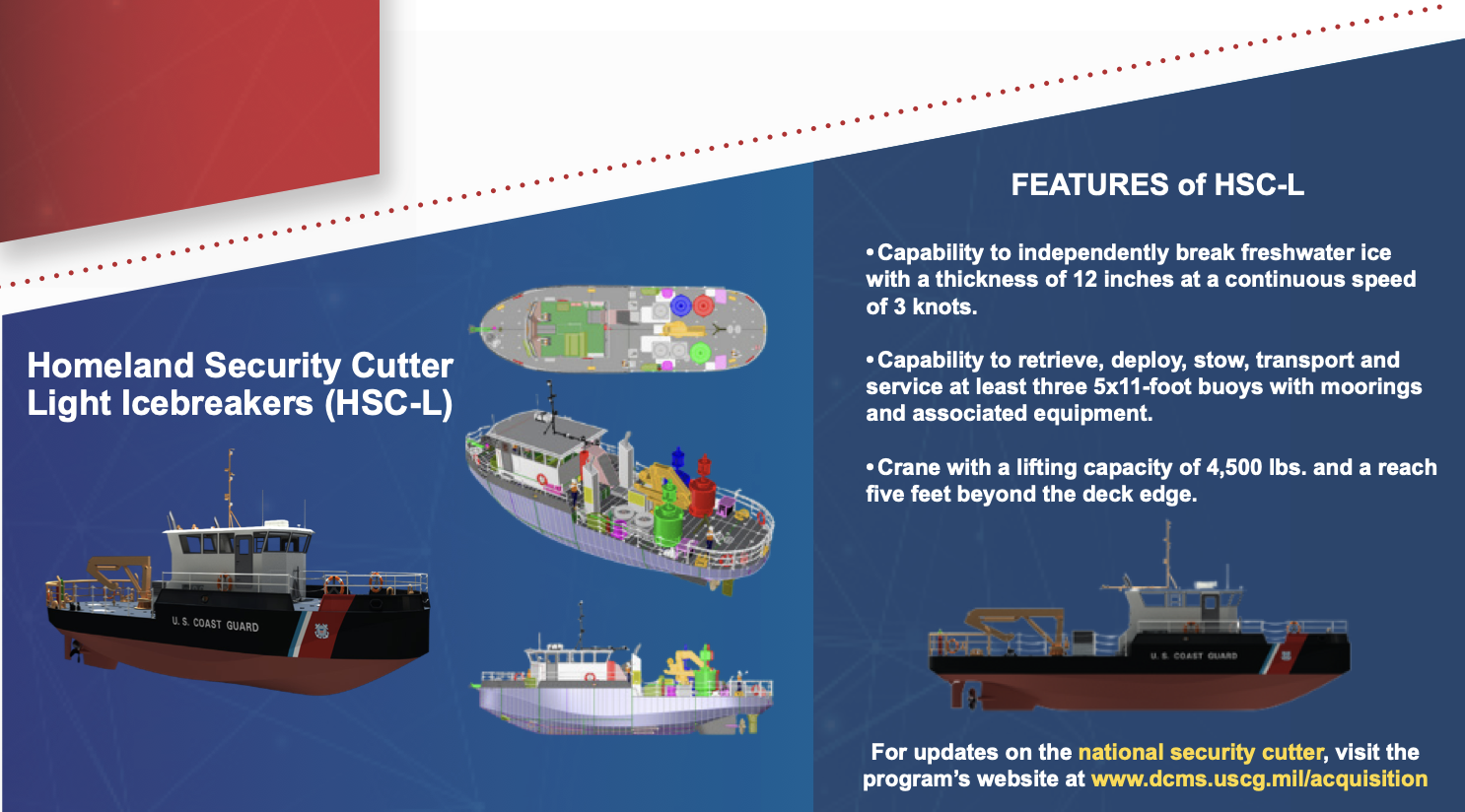
One thing that surprised me was that the Commandant pledged to pursue construction of a second Great Lakes icebreaker. I would have thought since the Arctic Security Cutters will be able to access the Great Lakes that they would provide seasonal icebreaking in the Great Lakes.

It surprises me that we don’t yet seem to know what the additional 15,000 Coast Guard personnel that are expected to be added to the Coast Guard under Force Design 2028 will be doing, so how did we come up with this figure? There is apparently a study underway.

Lost Comments

Recently it seems some comments got accidentally deleted. I approved them but they never showed up on the blog.

If this happened to you, my apologies, please try again. I am very proud that we have an open and active discussion here. If I intentionally delete a comment I will send the author a note and explain why.

Request for Information (RFI) – USCG Acquisition Superhighway

The Coast Guard has issued a Request for Information for systems that can improve its acquisitions process. You can see it here. 

Below is the description provided.


Description

The United States Coast Guard (USCG) is issuing this Request For Information (RFI) to gain a better understanding of the current marketplace and obtain information regarding commercial solutions with integrated Artificial Intelligence (AI) capability that will enhance the efficiency and quality of the USCG procurement and acquisition program management process. This is NOT a solicitation and is intended for information and planning purposes only. The USCG is seeking information on commercially available and emerging technologies that can address specific challenges within our current end-to-end procurement workflow.

A faster, more adaptable, and highly effective Coast Guard is required to successfully deliver the full scope of planned reconciliation services and capabilities.  A critical element of that is implementing an agile and responsive contracting and acquisitions (C&A) solution capable of supporting the rapid delivery of cutting-edge technologies and operational capabilities to the field at the speed of need. We will make significant changes across the C&A organization to implement a solution to provide the capabilities necessary to execute the Coast Guard’s increasingly complex missions. This high velocity solution will eliminate unnecessary and time-intensive requirements wherever possible, strengthen oversight and visibility, and leverage innovative procurement solutions to improve cost and schedule outcomes.

A major initiative required to reach that target objective is the successful adoption and use of advanced technology, human-machine teaming, and data to conduct operational, support, and enterprise functions. We will maximize the use of Commercial off-the-shelf software (COTS) and Artificial Intelligence in accordance with FD28 Executive Plan to obtain and integrate new enterprise capabilities that streamlines, automates and improves overall quality and efficiency of current contracting and acquisition workflows and delivers significant value to the enterprise.

This system should meet the gaps of current enterprise business processes by: (1) Interfacing directly with existing DHS & commercial procurement systems of record; (2) Providing a single point of entry for both procurement and acquisition documentation development and approval workflow; (3) enabling the addition of advanced artificial intelligence and business intelligence to supplement documentation development and decision support capabilities; and (4) Provide a community knowledge management capability.

This enterprise capability is intended to significantly improve data quality issues with current disparate and redundant business process workflows, while automating and standardizing workflows to greatly enhance enterprise efficiency and expand scope of current status tracking visibility and planning capabilities.

Interested parties are requested to submit a response to this RFI using the attached documents. All responses and questions must be submitted electronically via email no later than 03:00 PM Eastern Time (ET) on November 25, 2025 to the Contracting Officer, Ryan Shaughnessy at Ryan.W.Shaughnessy@uscg.mil.