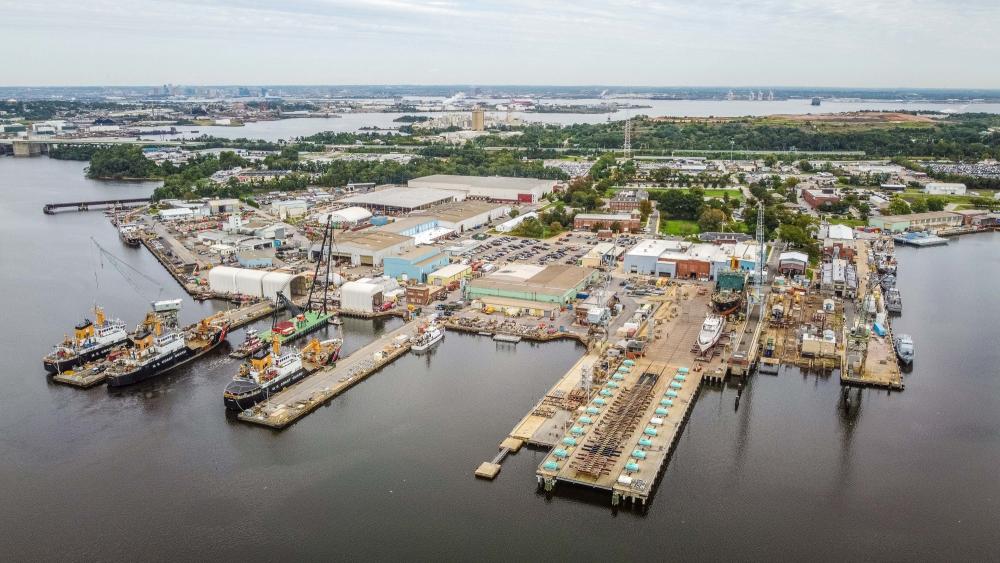
“2 Cutters Stuck in Coast Guard Maintenace Yard After Key Bridge Collapse” –USNI

The Naval Institute News Service reports,

Two Coast Guard cutters are stuck in the service’s Curtis Bay shipyard, with five others unable to get in for scheduled maintenance due to the Key Bridge collapse…there are five Coast Guard ships due for repair work in Curtis Bay between mid-April and mid-May that have been delayed…”

The two ships “stuck” are USCGC Hickory (WLB-212) and USCGC Diligence (WMEC-616). Diligence may be able to use one of the temporary channels.

The ships that have been delayed are USCGC Forward (WMEC-911), USCGC Diamondback (WPB-87370), USCGC Dependable (WMEC-626), USCGC Donald Horsley (WPC-1117), USCGC Confidence (WMEC-619)

Dependable was just decommissioned and Confidence will be soon (technically in commission special, but they are unlikely to return to US Coast Guard service). They were to go into the yard for storage. Diamondback and Donald Horsley should be able to use the temporary channel. Only Forward will have to wait for the reopening of the main channel. I suspect she is going in for “Service Life Extension.”

The bridge collapse has also made it difficult for many of the Yard’s workforce to get to work.

Coast Guard to participate in Sea Air Space 2024

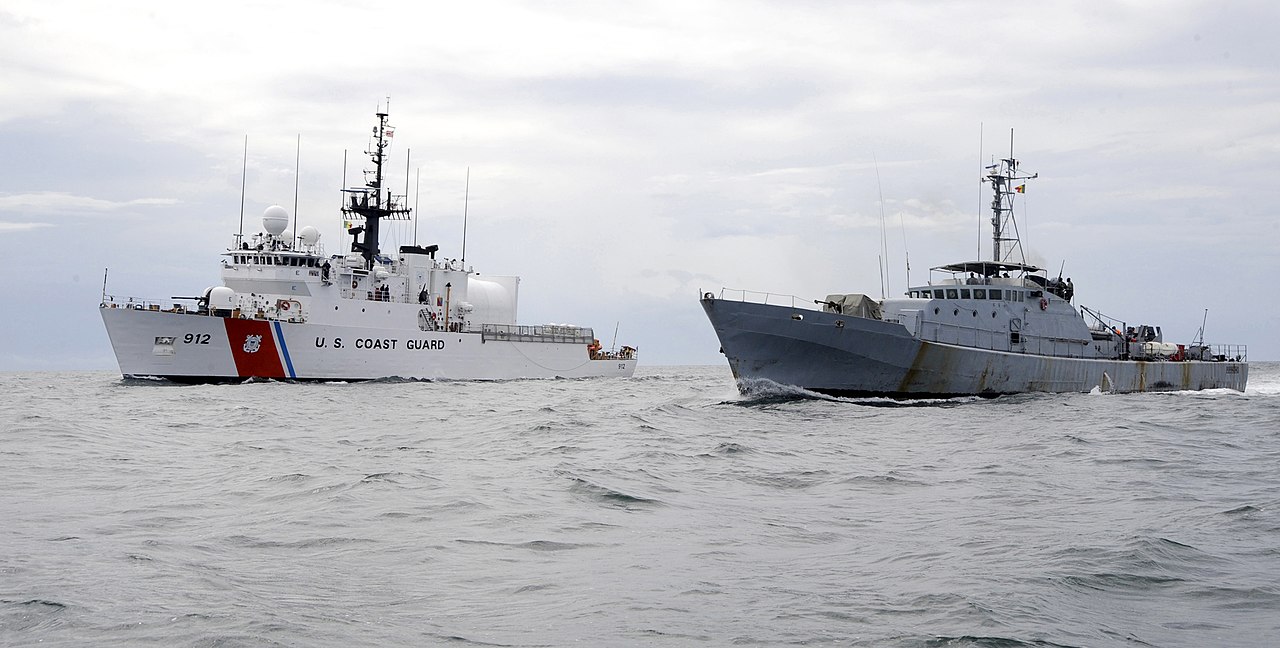
USCGC Legare (WMEC 912), left, patrols along side the Senegalese Navy vessel, Poponquine, during joint operations as part of the Africa Partnership Station. The Legare is deployed off the west and central coast of Africa for the six-day joint U.S/Senegalese operation, during which several Senegalese naval vessel boarding team members embarked aboard the Legare and participated in joint boarding and training exercises. (U.S. Coast Guard photo by Petty Officer 2nd Class Thomas M. Blue/ Released).

The Acquisitions Directorate (CG-9) lists Coast Guard presentations planned for the Navy League’s Sea-Air-Space 2024 Conference and Exposition, April 8-10. 2024. There are additional descriptions of the discussion on the CG-9 link.

Monday, April 8, 2024

10–10:30 a.m.  Interview with the USCG Commander of the Pacific Area, Vice Adm. Andrew J. Tiongson, Commander, Pacific Area and Defense Force West, U.S. Coast Guard

10:30–11 a.m. Modernizing Coast Guard Aviation, Cmdr. Peter Maloney, Deputy Chief, Office of Aviation Forces, U.S. Coast Guard

11–11:30 a.m.  U.S. Coast Guard Command and Control (C2) Modernization, Capt. Christian Hernaez, Chief, Office of C5I Capabilities, U.S. Coast Guard

11:30 a.m.–noon USCG Boats – The Soul of the Service, Capt. Jason C. Aleksak, Chief, Office of Boat Forces, U.S. Coast Guard, Chief, Office of Boat Forces, U.S. Coast Guard

1–1:30 p.m. Interview with the USCG Commander of the Atlantic Area, Vice Adm. Kevin E. Lunday, Commander, Atlantic Area and Defense Force East, U.S. Coast Guard

1:45–2:15 p.m. Overview of the new Polar Coordination Office and Arctic Strategic Outlook Implementation Plan, Mr. David Raboy, Arctic Policy Analyst, Polar Coordination Office, U.S. Coast Guard

2:30–3 p.m.  USCG: Maritime Sensing and Data Sharing Across DHS, Capt. Matt Fine, Chief, Office of Shore Forces, U.S. Coast Guard

Tuesday, April 9, 2024

10–10:30 a.m. IInterview with the USCG Assistant Commandant for Engineering and Logistics, Rear Adm. Amy Grable, Chief Engineer, U.S. Coast Guard

10:30–11 a.m. Interview with the USCG Commander of the Personnel Service Center, Rear Adm. Russell Dash, Commander, Personnel Service Center, U.S. Coast Guard

11–11:30 a.m. USCG: Ready Today, Preparing for Tomorrow, Capt. John J. Driscoll, Chief, Office of Cutter Forces, U.S. Coast Guard

11:30 a.m.–noon Coast Guard Unmanned Systems Experimentation & Lessons Learned, Capt. Thom C. Remmers, Unmanned Systems Cross-Functional Team Lead under the Assistant Commandant for Capabilities, U.S. Coast Guard

1–1:30 p.m. Combating Illegal, Unreported and Unregulated Fishing, Cmdr. Patricia Bennett, Chief, Coast Guard Fisheries Enforcement Policy (CG-MLE-4).

1:45–2:15 p.m. USCG Climate Framework and Implementation, Ms. Candace Nachman, Senior Ocean Policy and Program Adviser, Polar Coordination Office, U.S. Coast Guard

“U.S. and Independent State of Samoa sign addendum to existing maritime law enforcement agreement in the Pacific” –CG News

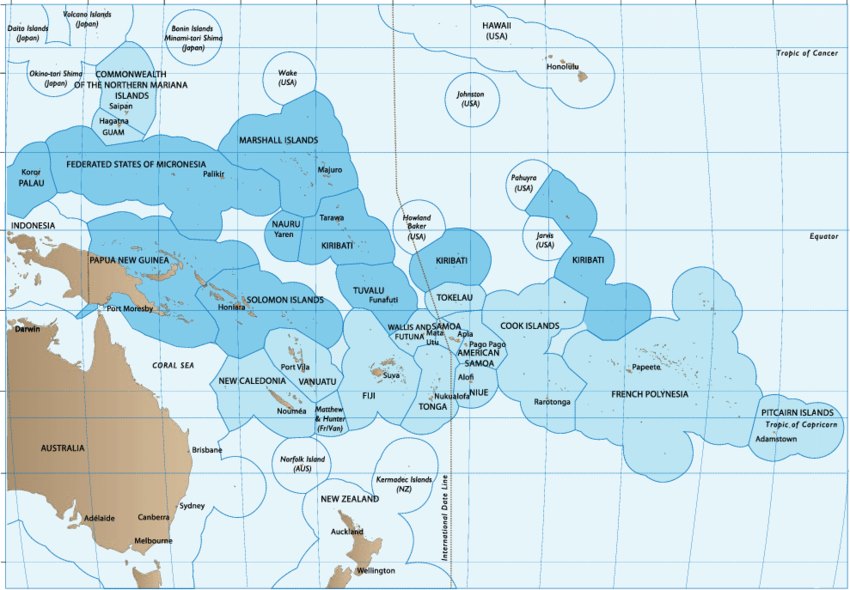
Estimated exclusive economic zones (EEZs) of Pacific Island countries and territories (PICTs). The EEZs of countries that are the Parties to the Nauru Agreement are shown in darker blue. Note that not all EEZs of PICTs have been officially delineated under the United Nations Convention on the Law of the Sea. Source: Patrick Lehodey

Below is a CG news release (includes photos of the signing). The State of Samoa, like Papua New Guinea, is not one of the three nations included in the Compacts of Free Association that include the Federated States of Micronesia and the Republic of Palau that have similar agreements. Of the three Compact of Free Association nations, only the Republic of Marshall Islands does not have the enhanced agreement that permits the US Coast Guard to act in their behalf without a national law enforcement officer on board.

All these island nations have a huge combined EEZ. We are offering help, but our assets in the Western Pacific are thin compared to the assets we have in Atlantic Area policing a much smaller EEZ.

If the illegal fishermen know where the few cutters are, they may just fish illegally in a different area and wait until the cutter leaves. The long-term solution is to help these nations control their own waters and provide enough assets to effectively police the US EEZ in the 14th District. Over and above ships, we need a multinational domain awareness system that can track the illegal fishing and provide intelligence driven enforcement. It looks like we are working on that in the form of the Indo-Pacific Partnership for Domain Awareness (IPDMA) program.


PRESS RELEASE | April 5, 2024

U.S. and Independent State of Samoa sign addendum to existing maritime law enforcement agreement in the Pacific

HONOLULU — The United States and the Independent State of Samoa had the honor to share and sign an addendum to the existing 2012 Bilateral Agreement, at U.S. Embassy Apia in Samoa, to continue and expand operational cooperation to suppress illicit transnational maritime activity, on April 5, 2024.

“In partnership with Samoa, the United States stands committed to safeguarding and ensuring security of Samoa’s economic exclusive zone, by preserving its marine resources, environment, promoting sustainable development for future generations” said U.S. Embassy Apia, Samoa’s Charge d’Affaires, Noriko Horiuchi.

The U.S. Coast Guard and Independent State of Samoa signed the addendum to the existing Bilateral Agreement allowing enhanced maritime law enforcement operations, maritime domain awareness and assists with implementation of integrated operations between the U.S. and Samoa by extending U.S. Coast Guard operability to deter predatory and illegal fishing activities in Samoa’s Exclusive Economic Zone (EEZ).

The enhanced maritime law enforcement agreement represents another tool for Samoa to use to help combat transnational illicit maritime activity and illegal fishing activities within its EEZ. This enhanced agreement enables Samoa to request the U.S. Coast Guard to inspect vessels and enforce their coastal state regulations without a Samoan officer present. This agreement does not replace the joint work conducted with Samoan shipriders; rather, it augments the capability and plays a crucial role in protecting marine ecosystems and the sustainable livelihoods they support.

These enhanced agreements demonstrate the United States’ commitment to a stable, secure and prosperous Pacific region. The strengthened partnerships in the Pacific have been invaluable in increasing the number of boardings within partners’ EEZs, which in turn has led to the deterrence, observation and reporting of vessel crew activities and fishing operations for partner nation’s enforcement agencies.

This advancement follows the similar agreements signed by the Federated States of Micronesia in October 2022, the bilateral defense agreement signed with Papua New Guinea in May 2023, and the enhanced maritime bilateral agreement with the Republic of Palau in August 2023.

“We’re honored to sign this enhanced maritime bilateral agreement with our valued partner, the Independent State of Samoa. This agreement strengthens our collaborative efforts within the region,” said Capt. Tom D’Arcy, chief of response for U.S. Coast Guard District Fourteen in Honolulu. “This agreement serves as a testament to the importance of maritime security in maintaining national sovereignty and regional stability, and we look forward to working even closer with Samoa to effectively address common maritime challenges in the Pacific.”

Through bilateral law enforcement agreements, community engagements and senior leader visits, like the recent U.S. Coast Guard Commandant visit, and subject matter exchanges between maritime agencies, we continue to demonstrate how these partnerships significantly enhance our collective capacity to safeguard shared resources and build a prosperous Oceania that is inclusive and secure for all law-abiding nations.

“Maritime Nation S3 E3: The USCG: At the Intersection of Diplomacy, Law, and Security” –Navy League Video

Above is a great video interview of the Commandant conducted as part of a Navy League Series of video podcasts entitled Maritime Nation. I was frankly surprised by the depth of the interview, and impressed by the Commandant’s willingness to think outside the box.

Thanks to Lee for bringing this to my attention.

“WORLD ICEBREAKERS OVERVIEW” –Aker Arctic

Coast Guard Cutter Healy (WAGB 20) and crew conduct formation steaming exercises with Candian Coast Guard Ship Sir Wilfrid Laurier and crew in the Beaufort Sea, July 28, 2023. The crew conducted a passenger exchange with the Sir Wilfrid Laurier off the coast of Utqiagvik, Alaska. (U.S. Coast Guard photo by Petty Officer 1st Class Michael Underwood)

Below is a publication of Aker Arctic. I assume they will not mind if I pass it along. It is after all something of an advertisement for their expertise. I was surprised to find the US has 16 icebreakers. I don’t know where they got that figure. There are of course Polar Star, Healy, and Mackinaw. They might also count Polar Sea. That leaves 12 or 13. The National Science Foundation has two or three depending on what you count and there is the Aiviq that the Coast Guard is likely to buy. That leaves eight or nine. Maybe they are counting the nine 140 foot Bay class icebreaking tugs. Clearly, they are not including the 16 Juniper class buoy tenders that do have an icebreaking capability, because there are too many of them. This highlights the wide range of capabilities that fall under the icebreaker label and the difficulty of classifying multi-mission ships.

Wikipedia also has a list of icebreakers, including past as well as present icebreakers.


ARTICLE / 13.03.2024

WORLD ICEBREAKERS OVERVIEW

For those who share our passion, we present a snapshot of the world icebreaking fleet as of 1st January 2024.

There is a multitude of ice-strengthened vessels designed for various purposes in the world. Some possess exceptional ice-going capabilities while others are suited only for light ice conditions. Only a select few can truly be classified as icebreakers.

Icebreakers pave the way

An icebreaker is a vessel designed for icebreaking duties. Its core features include a reinforced hull shaped to break the ice, a robust and powerful propulsion system, and appropriate winterization against low ambient temperatures. All characteristics are meticulously selected based on the intended area of operation and planned tasks. These typically include escort or ice management functions.

Major classification societies such as American Bureau of Shipping, Bureau Veritas, Det Norske Veritas, Lloyd’s Register, Russian Maritime Register of Shipping and — most recently — China Classification Society have established rigorous standards and guidelines for icebreakers to ensure safe navigation in ice-covered waters.

Hard to draw the line

The diversity of icebreaking ships makes compiling an exhaustive list of icebreakers challenging. It is difficult to draw a clear line between ships that should be included and ships that should be left out.

In addition to purpose-built icebreakers, many research ships, offshore vessels, and even one luxury cruise ship have been officially classified as icebreakers. However, their ability to operate independently in difficult ice conditions is merely a means to carry out other tasks.

Although smaller ice-strengthened tugboats are often used for icebreaking operations in harbours, they are not considered as icebreakers. Oil tankers, LNG carriers, and other cargo ships are also excluded even if they are fully capable of independent year-round operation in the most challenging Arctic ice conditions.

Market intelligence

At Aker Arctic, we keep a close track on all world icebreakers, including ship type, size, ice class, primary mission, icebreaking capability, and other technical characteristics in addition to expected lifespan.

“This is a cornerstone of our expertise, rooted in our keen interest in monitoring market evolution in our field,” notes Senior Naval Architect Tuomas Romu, who has compiled the overview of the world’s icebreaking fleet presented here.

“However, different countries’ fleet sizes should not be directly compared due to the diversity in the sizes, capabilities and characteristics of individual ships on the list,” Romu adds.

As of 1 January 2024, the complete list of icebreaking ships includes 243 ships: 179 in service worldwide, 29 under construction, and 35 in the shipyards’ orderbooks or included in various procurement programs. While the global fleet is gradually increasing in numbers, many of the new icebreakers are built as replacement to older ships.

World icebreaking fleet 1 January 2024.

Although an icebreaker is a very specific ship type, a review of the global icebreaking fleet must consider not only the diversity of the vessels themselves but also the different ways icebreaking ships are perceived and classified worldwide. For example, United States and Canada each use their own way of classifying icebreakers as “heavy”, “medium” or “light”. On the other hand, Russia’s vast icebreaking fleet can be split into a number of categories based on type, purpose and key technical characteristics.

Examples of two different classification systems: Canada.
Examples of two different classification systems: Russia.

Finland leads the world

Following World War II, Finnish companies made rapid advancements in icebreaking technology, pushing the state of the art in icebreaking design, construction, power supply, and propulsion systems. Today, Finland is a global leader in icebreaker design and construction, with most of the world’s icebreakers originating from Finnish expertise. Naturally, every single icebreaker in service in Finland has been designed and constructed locally.

The strong Finnish maritime cluster is composed of engineering offices, shipyards, equipment manufacturers, universities, model testing facilities, and other related entities. The cluster collectively fosters research, new ideas and innovations, continually inventing ways to improve operations in ice.

The task of how to break ice more efficiently and sustainably has intrigued naval architects and ship engineers for generations, constantly pushing the boundaries of the icebreaker design using new hull forms, alternative fuels, different propulsion systems, and new engine types.


Full-scale references

The Finnish maritime industry also maintains the most extensive full-scale reference database, ensuring that every new vessel meets its performance requirements set before construction.

“Anyone considering acquiring an icebreaker looks to Finland first. With over 80 years of experience, we consistently pioneer new market innovations,” says Romu. “Moreover, our vessels have received global acclaim for their performance and quality.”

Environmental stewardship

The global icebreaker market represents a diverse and dynamic sector, essential for supporting operations in challenging ice conditions worldwide. Finnish leadership in this field, marked by decades of innovation and excellence, sets a high standard for icebreaker design and construction. With increasing demand for efficient icebreaking vessels and sustainable maritime solutions, the Finnish maritime cluster remains at the forefront of technological innovation and environmental stewardship.

We at Aker Arctic are dedicated to monitoring developments, sharing our insights and fostering collaborations to further enhance our own capabilities. We believe this is vital for pushing the state of the art of icebreaking in order to ensure safety and optimal efficiency for maritime operations in icy waters in a constantly evolving world.

Text: Catarina Stewen

Former USCGC Acushnet in Another Life

War is Boring brings us a story about an effort to repurpose the former USCGC Acushnet (WMEC-167),

World War II Navy ship might be used to house homeless veterans in California.”

If you are just reading the title, you might think there was a mistake, but Acushnet was originally USS Shackle (ARS-9), a rescue and salvage ship.

I don’t have a lot of optimism about their long-term success, but wish the new owners luck.

Currently the ship is at the marina at Brown Point in Tacoma, Washington.

I also found it interesting that there are still remnants as the four concrete drydocks in Napa. Every time I see something like this, I think it would be a good idea to have a Coast Guard Yard, West.

Thanks to Paul for bringing this to my attention.

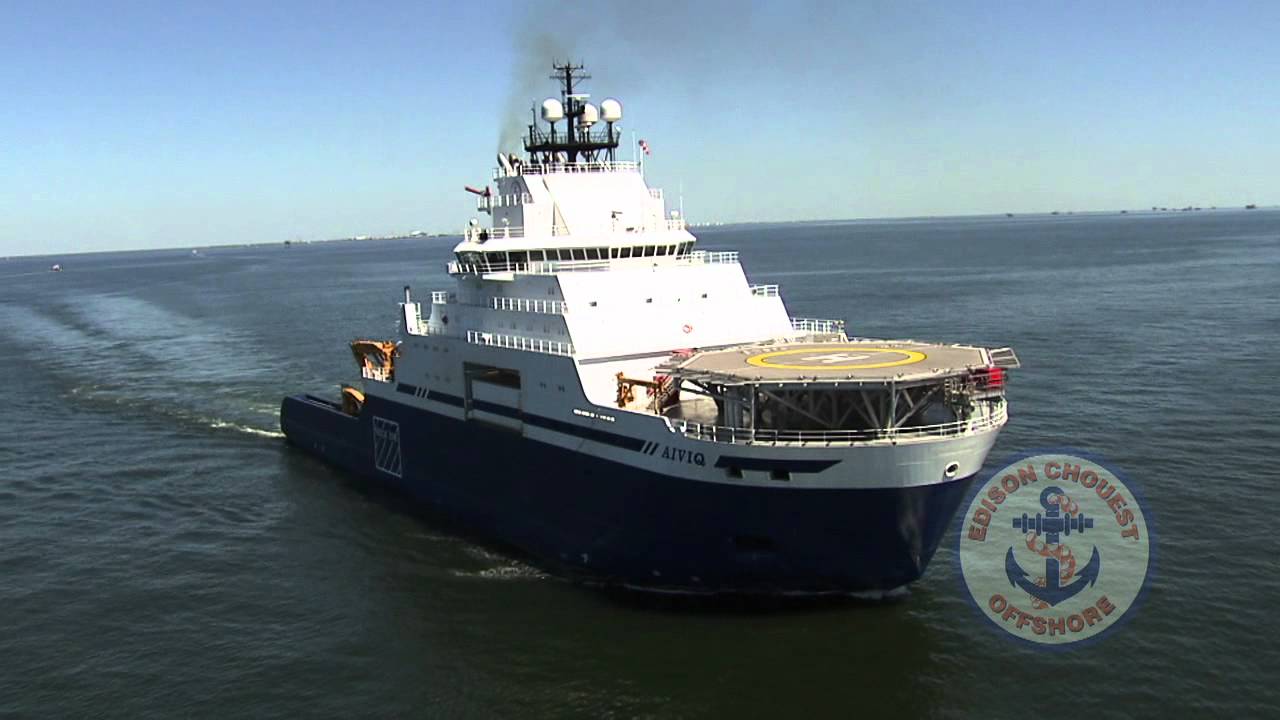
Coast Guard’s Commercial Icebreaker To Be Based In Juneau?

Icebreaking Anchor Handling Vessel Aiviq

There have been several reports like this one, that, if as expected, the Coast Guard buys what is apparently the only US built commercially owned icebreaker, that it will be based in Juneau.

This choice of homeport is something of a surprise. I would have thought Seattle, Kodiak, Anchorage, or even Dutch Harbor before Juneau, but it is the Capital of Alaska. It may have been seen as offering more amenities than Kodiak. It is a cruise destination.

Thanks to David for bringing this to my attention.

“Commandant delivers the 2024 State of the Coast Guard Address”

Above is a video of the Commandant’s 2024 State of the Coast Guard address. Below is the MyCG look at the address.

The video does not actually start until about time 1:40 and we don’t see the Master Chief of the Coast Guard until minute 3:00. He notes that the Coast Guard is making “great progress” on addressing workforce shortages.

As the MyCG story notes, “The State of the Coast Guard Address is mainly intended for Congress and external stakeholders” so a lot of this is introductory, but the address has a lot of meat beginning about time 16:00.

The Commandant reports that the maintenance budget will only address about 50% of planned maintenance–that is pretty serious. I have heard rumblings about deferred maintenance but this is both more definitive and worse than anything I had heard before.

Admiral Fagan has talked more about infrastructure than any previous Commandant I have heard, and she talked here about the need for more infrastructure maintenance.

Admiral Fagan has pushed lowering barriers to service. She also reports the Coast Guard is fielding more recruiters.

She addressed the need to stop harmful behaviors such as sexual harassment and measures being taken.

During the presentation, the Commandant talked about how much more the Coast Guard has been doing in the Pacific but considering that 47% of the entire US EEZ is inside the 14th District, it still looks like the Coast Guard is underrepresented in the Pacific. 


March 21, 2024

Commandant delivers the 2024 State of the Coast Guard Address

By AJ Pulkkinen, MyCG writer

The Commandant, Adm. Linda Fagan, focused on operations, the workforce, and the future as she delivered her 2nd State of the Coast Guard address to Congress last night. You can view it on YouTube or Vimeo.

Operations 

Adm. Fagan highlighted the response to Lahaina wildfires on Maui, narcotics interdictions in the Caribbean and Eastern Pacific, and maritime migrant interdictions in the Pacific, Caribbean, and Straits of Florida. She cited the HARRIET LANE’s homeport shift from Portsmouth, Virginia, to Honolulu, Hawaii, as evidence of the importance of the Indo-Pacific region. She also pointed to the HEALY’s Artic transit as an important step to ensuring our national sovereignty in the northern high latitudes.

“Last year, the United States Coast Guard saved nearly five thousand lives, and ensured the safety of thousands more through our work to prevent maritime accidents before they happen,” said Adm. Fagan.

People 

The Talent Management Transformation Task Force “hit the ground running, challenged long-held assumptions, and are writing new personnel policies that make it easier to join and serve in the United States Coast Guard,” said Adm. Fagan.

Adm. Fagan advocated for our families to have access to affordable housing, childcare, and medical facilities. She pointed to the creation of the Talent Acquisition Specialist rating, the opening of new recruiting offices, and broadening the applicant pool as key steps to closing our current workforce shortage. The Commandant celebrated the tailored approach offered by Agile A-Schools that get trained Petty Officers to the field quicker than before. She celebrated the changes to how the Service manages talent and makes it easier to serve.

“The Coast Guard of the future will increasingly rely on data, analytics, and artificial intelligence to inform our missions,” said Adm. Fagan.

Future 

Adm. Fagan expressed her excitement in launching the ARGUS, the first offshore patrol cutter (OPC). She set her top acquisition priority as starting construction of the Polar Security Cutter – the first new heavy icebreaker built in the United States since the 1970s. She cited the Office of Data Analytics and use of unmanned systems as force multipliers. Finally, Adm. Fagan highlighted efforts to strengthen service culture.

The State of the Coast Guard Address is mainly intended for Congress and external stakeholders. The Commandant will hold a Townhall for all members of the Service on April 3. Stay tuned to find out how you can be a part of the Townhall.

-USCG-

Resources: 

“USCGC Frederick Hatch supports partners in the Federated States of Micronesia and Republic of Palau under Operation Rematau” –U.S. Coast Guard Forces Micronesia/Sector Guam

The crew of the USCGC Frederick Hatch (WPC 1143) stand for a photo with flowers delivered by the people of Ulithi Atoll amid a delivery of 1,500 lbs. of non-perishable food, 1,200 lbs. of water, and essential supplies, including fishing gear and tools, for Ulithi Atoll, FSM, during a state-declared emergency drought on Feb. 21, 2024. The crew completed a significant operational patrol under Operation Rematau from Feb. 15 to March 4, 2024, reinforcing the U.S. Coast Guard’s commitment to maritime safety, security, and environmental stewardship in the Pacific region. (U.S. Coast Guard photo)

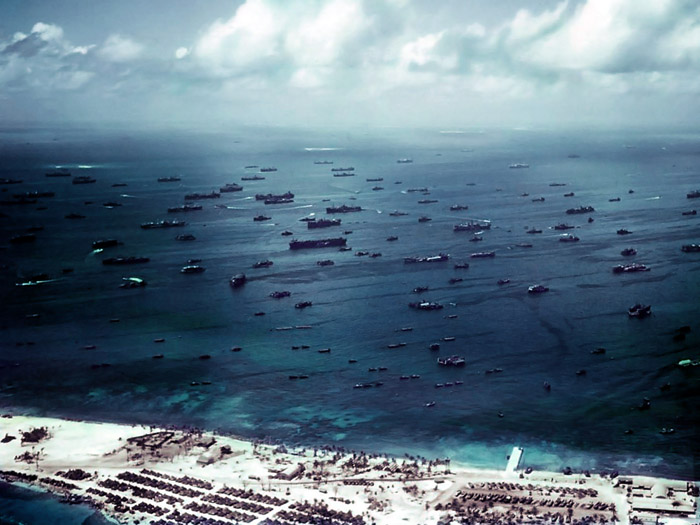
Below is a news release from U.S. Coast Guard Forces Micronesia/Sector Guam. As a reminder of how important these islands can be, I offer the photo below. 

Ulithi Atoll north anchorage and Sorlen Island, late 1944. Naval Base Ulithi was the largest naval base in the world in 1944 and 1945, with over 600 ships at times.


March 14, 2024

USCGC Frederick Hatch supports partners in the Federated States of Micronesia and Republic of Palau under Operation Rematau

SANTA RITA, Guam — The crew of the USCGC Frederick Hatch (WPC 1143) completed a significant operational patrol under Operation Rematau from Feb. 15 to March 4, 2024, reinforcing the U.S. Coast Guard’s commitment to maritime safety, security, and environmental stewardship in the Pacific region.

“Frederick Hatch marked an important milestone in the U.S. Coast Guard’s relationship with our friends in Palau by pioneering the use of the recently signed enhanced bilateral agreement, and we look forward to deepening our ties with Palau’s Marine Law division going forward. The cutter’s first-ever visit to Tinian and participation in Yap Day were both very enjoyable ways to learn about the cultures of our neighboring islands while reflecting our commitment to communities across the Pacific,” said Lt. Patrick Dreiss, commanding officer of USCGC Frederick Hatch.

The Frederick Hatch crew proudly represented the U.S. Coast Guard at the annual Pika Fest Celebration on Tinian, Commonwealth of Northern Mariana Islands, and Yap Day in Colonia, Yap State, the Federated States of Micronesia (FSM).

Supporting local needs, they transported 1,500 lbs. of non-perishable food, 1,200 lbs. of water, and essential supplies, including fishing gear and tools, to Ulithi Atoll, FSM, during a state-declared emergency drought. The crew renewed the meaningful connection with the local community, engaging in direct support and sharing in the generosity and warmth of the island’s residents.

“The opportunity to contribute to the enduring partnership between the Ulithi community and the U.S. Coast Guard, rooted in World War II and grown throughout decades of collaboration, was a special experience for myself and the crew. Thank you to the local non-profit organizations we worked alongside, as the experience of supporting and visiting the people of Ulithi is one of the highlights of my career,” said Dreiss.

Further showcasing the spirit of cooperation and support, the Hatch’s crew organized a donation drive prior to sailing, collecting 40 bags of school supplies and clothing from the U.S. Coast Guard community in Guam and collaborated with the Ayuda Foundation and the Ulithi-based One People One Reef research foundation to facilitate these critical donations to the island.

“Today exemplifies the spirit of teamwork and camaraderie that we hold dear here in Ulithi. It warms our hearts to hear that your short visit to our island was enjoyable, and we’re delighted that you appreciated the coconuts, bananas, and flowers. Knowing that the bananas are adorning your ship’s canopy, and the flowers are being proudly worn by your crew fills us with immense joy,” said Ulithi Mayor John Rulmal.

Yap Day, observed annually on March 1, is a significant cultural and legal holiday in Yap State, one of the four states of the FSM. Established in 1968 and renamed in 1979, it celebrates Yapese culture, highlighting traditional skills and competitions, such as tattooing, fresh produce contests, and traditional games. The U.S. Coast Guard regularly attends, and the 2024 celebration was particularly special as Petty Officer 2nd Class Eugene Halishlius, a native of Yap currently stationed in Guam, returned home aboard Frederick Hatch for the first time in years to participate, further symbolizing the deep connections between the U.S. Coast Guard and the Pacific communities served.

“Returning to Yap, I’m reminded of the values instilled in me: respect, humility, and the identity of being an islander. Coming from a family of navigators, we believe in the power of knowing your waypoints, a principle that guides us to success. Inspired by my brother Ken Raigeluw, who is also serving and driven by our service’s unique opportunities and missions, this journey not only contributes to our collective mission but also my personal growth and family legacy,” said Halishlius.

The Frederick Hatch crew responded to a request from the government of Yap State for a U.S. Coast Guard presence near Ngulu Atoll to deter illegal sea cucumber poaching, demonstrating a commitment to protecting the region’s marine resources and aiding partners. This patrol also marked the first-ever boarding under the Palau enhanced bilateral agreement, signed in August 2023, authorizing U.S. Coast Guard boarding officers to conduct boardings in Palau’s exclusive economic zone (EEZ) on the country’s behalf without a Palauan officer present. While the crew found everything compliant with international and Palauan requirements, the action set a precedent for further regional maritime law enforcement cooperation. It reinforces the trust and confidence of partners in the U.S. Coast Guard’s role to ensure compliance with fishing regulations within partner EEZs.

The patrol also emphasized the need for continued vigilance in the Western Pacific. Not for the first time, the Frederick Hatch crew identified areas of concern for illegal fishing activities and non-compliance with maritime regulations wherein fishing vessels were observed not transmitting on AIS or VMS near the Palau EEZ border with the high seas.

“These efforts not only affirm our dedication to preserving the region’s marine biodiversity but also reinforce the strong and enduring partnerships we have, particularly in support of our Compact of Free Association partners addressing shared security challenges and advancing mutual interests in the Blue Pacific,” said Capt. Nick Simmons, commander of U.S. Coast Guard Forces Micronesia/Sector Guam. “Our partnership with local non-profits and the community in Guam exemplifies a holistic approach to strengthening the fabric of trust and mutual respect we’ve built over decades with Pacific Island communities and beyond as we face future challenges and opportunities together.”

-USCG-

About Operation Rematau
Operation Rematau is how U.S. Coast Guard Forces Micronesia/Sector Guam supports the overarching Coast Guard endeavor Operation Blue Pacific to promote security, safety, sovereignty, and economic prosperity in Oceania. Rematau means people of the deep sea. It reinforces the U.S. commitment to working together to advance Pacific regionalism based on the Blue Pacific narrative. This action supports U.S. national security objectives, bolstering regional maritime good governance and security.

About USCGC Frederick Hatch
The Frederick Hatch is the 43rd 154-foot Sentinel-class fast response cutter named for a surfman and lighthouse keeper who was a two-time Gold Life Saving Medal recipient. Designed for many missions, including search and rescue, national defense, and maritime law enforcement, the Frederick Hatch crew plays a significant role in safeguarding national interests and preserving good maritime governance.