Suggested Reading

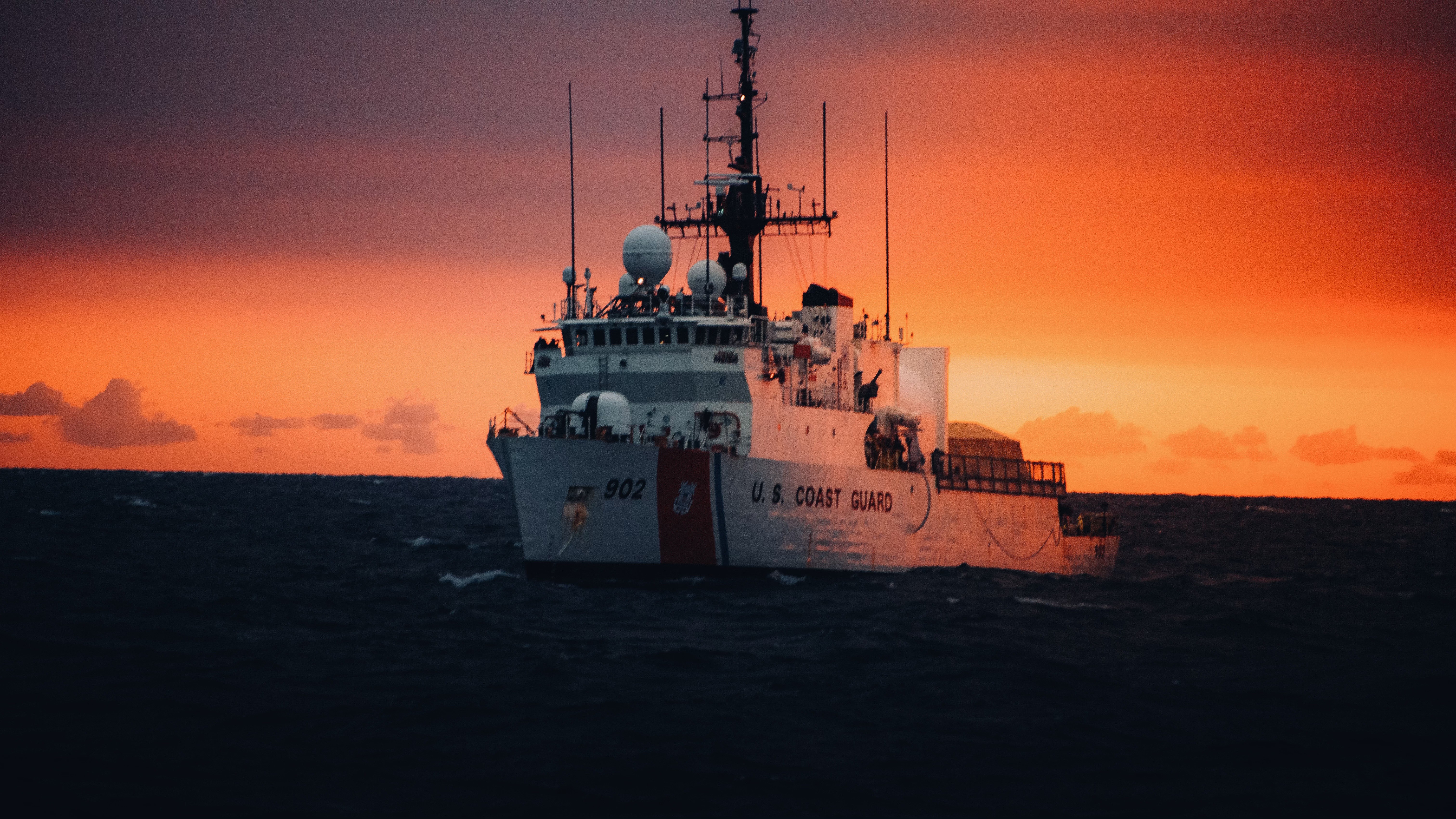
“The U.S. Coast Guard Cutter Tampa (WMEC 902) transits the Florida Straits on Feb. 4, 2024, supporting Operation Vigilant Sentry. Tampa is homeported in Portsmouth, Virginia.” (U.S. Coast Guard photo by Senior Chief Petty Officer Brodie MacDonald)

Below are three articles worth a look. Not ready to comment, but interesting.

Thanks to Paul and David for the recommendations. 

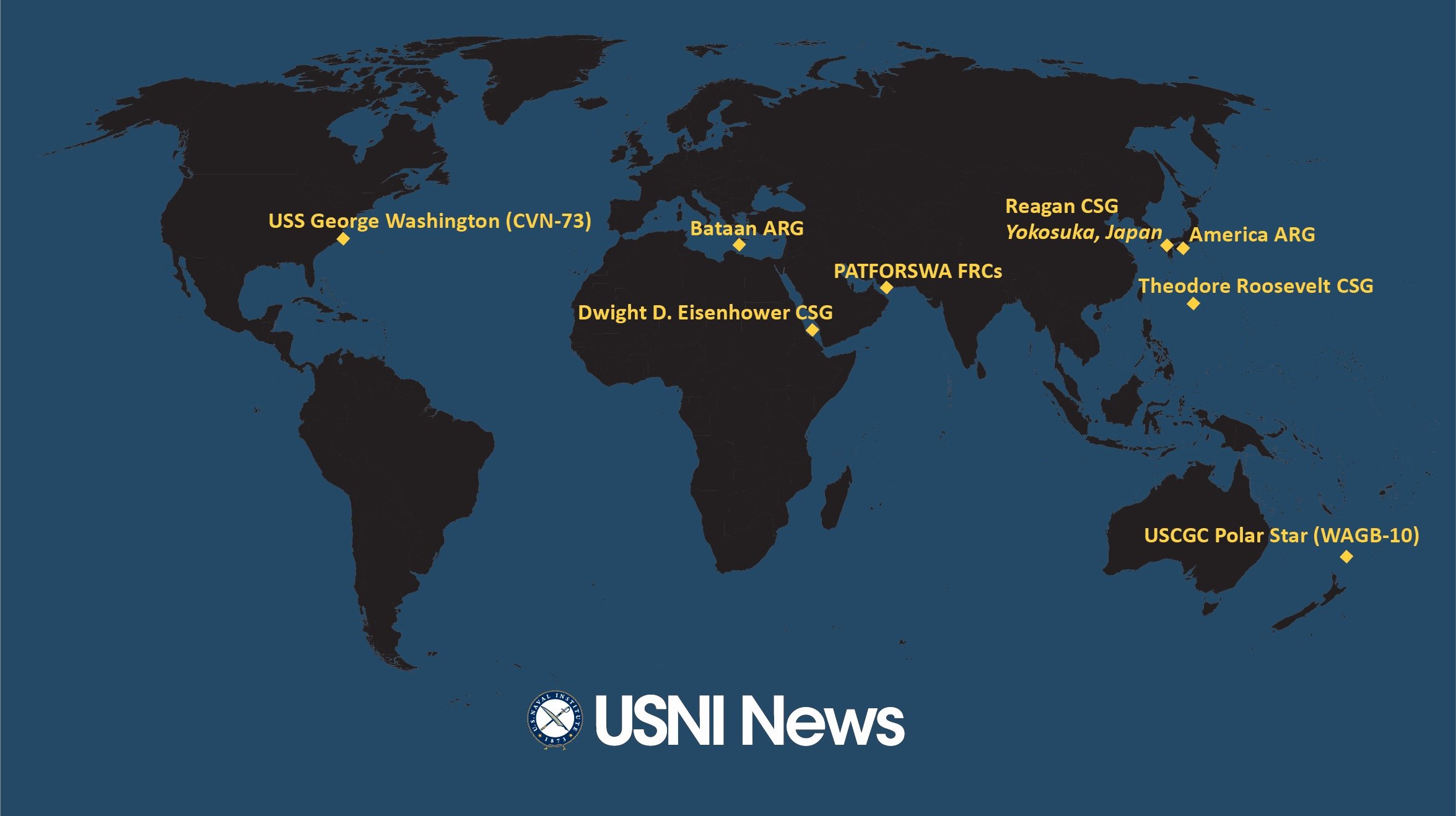
“USNI News Fleet and Marine Tracker: Feb. 26, 2024” –USNI

Looking at this week’s Fleet and Marine Tracker, as always, I am interested in how much of the fleet is deployed and/or underway because I compare these figures with what I know of Coast Guard cutters’ time underway.

  • 33.6% of the Battle Force was deployed.
  • 28.4% of the commissioned Battle Force was deployed.
  • 53.3% of MSC’s USNS Battle Force was deployed.
  • 19.2% of the Battle Force was underway.
  • 57.1% of the ships deployed were underway.
  • 9.3% of those not deployed were underway.

As noted earlier, a count how many ships are deployed in which fleets is no longer included in the tabular section.

There is an interesting note that, “USCGC Polar Star (WAGB-10) is en route Yokosuka, Japan after making a port visit to Auckland, New Zealand Feb. 19 to 25.”

Ukraine to Get Torpedo 47 and Combat Boat 90 from Sweden

ESSANEWS and MSN report,

“The announcement of the SLWT delivery was subtly made within the information that Sweden would support Ukraine with a weapons package worth $680 million. This includes, among other items, swift CB90 (Combat Boat 90) boats and ‘underwater’ weaponry…Ukrainian sources infer that the aforementioned ‘underwater weapon’ refers to the Torpedo 47.”

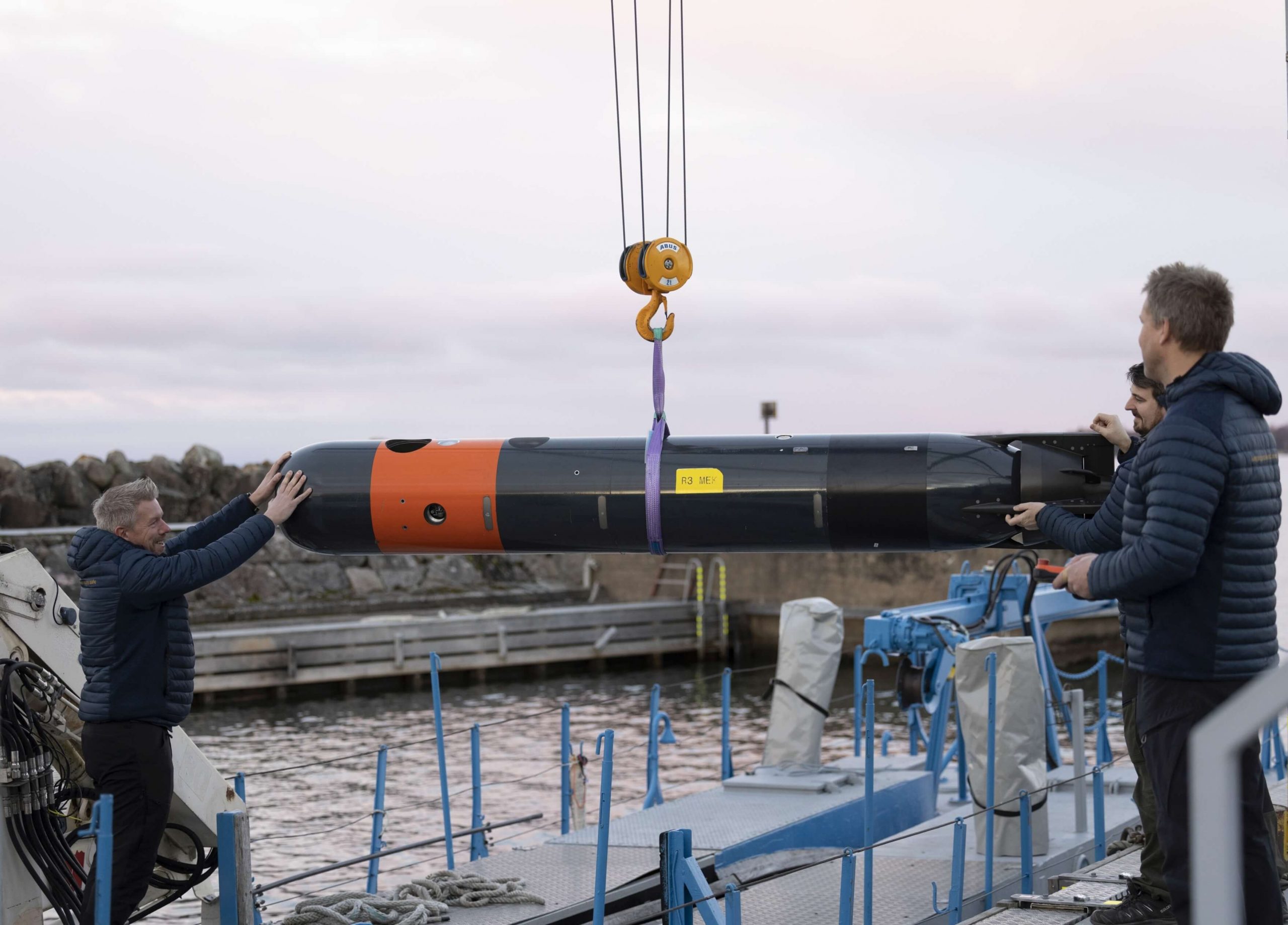
Torpedo 47 (Torped 47):

Torpedo 47 is considerably different from the lightweight torpedoes used by the US Navy. It is:

  • Wire Guided
  • Intended to use against surface vessels as well as submarines
  • Powered by a rechargeable battery
  • Larger and heavier that USN lightweight torpedoes (340 kg 748 lbs, 400mm 15.7″ in diameter, 2.85m 112″ long, with a 50 kg 110 lb warhead)

Torpedo Employment: 

The first thing that comes to mind is how will the torpedoes be employed? Ukraine has no submarines, no large surface combatants, and no helicopters or fixed wing aircraft with anti-submarine sensors.

On the Defense

The MSN article talks primarily about the Torpedo 47 in the context of its use against submarines, and essentially writes off the Russian surface threat. That may be premature.

The Ukrainians are unlikely to be able to find and engage submarines launching long range cruise missiles into Ukraine, but they do want to keep submarines (and surface ships) from attacking merchant ships transiting between the relative safety of Ukrainian ports and Romanian Territorial Waters. The torpedoes may have a role in that.

The package may include some bottom mounted sensors that would allow the Ukrainians to detect submarines approaching their coast and torpedoes could be launched from shore or from small craft directed by controllers ashore.

Torpedoes might be launched from the remaining 110-foot Island class cutters or from the Combat Boat 90s.

On the Offensive

The report suggests the torpedoes might be launched from unmanned surface craft. While this is certainly possible, it would require a new class of larger USVs and controlling a smart torpedo, the torpedo launcher, and the USV gets pretty complicated.

The Russians still have combatants based in Crimea. The Russians are also still apparently attempting to resupply through maritime deliveries to Crimea. Shipping carrying supplies to Crimea may be a target. The warhead is large enough to severely damage or sink the relatively small vessels the Russians seem to be employing for this purpose. There might also be an opportunity to employ the torpedoes in combination with kamikaze Unmanned Surface Vessels. The torpedo would most certainly immobilize or at least slow a target, even if it did not sink it outright. Then additional hit by USVs could insure its sinking.

During WWII the Soviets frequently fired torpedoes into ports to destroy port infrastructure as well as ships in port. These torpedoes might be used against port facilities as well.

Combat Boat 90:

These small ships are well adapted to support special forces. They can each transport half a platoon and can be intentionally run aground to discharge troops. They are likely to be used on Ukraine’s river system as well as offshore.

It might not be too difficult to equip them with these lightweight torpedoes.

Hopefully we will hear more about how the torpedoes and CB90s are used.

Destroyers Named for Coast Guard Captain Charles Satterlee of Cutter Tampa and Other Coast Guard Heroes

The U.S. Navy destroyer USS Satterlee (DD-626) off the Boston Navy Yard, Massachusetts (USA), on 22 September 1943. Official U.S. Navy Bureau of Ships photo 19-N-51146

While working on a post suggesting it might be possible to recover an artifact from USCGC Tampa, sunk with all hands during World War One, I discovered that the U.S. Navy had named two destroyers after USCGC Tampa’s CO, Captain Charles Satterlee, DD-190 and DD-626. Below are excerpts from the Wikipedia entries for the two ships. Unfortunately, DD-190, like USCGC Tampa, was torpedoed and lost with all hands after being transferred to the Royal Navy as part of the 50 Destroyer Deal.

USS Satterlee (DD-626):

In the first week of May 1944, Satterlee underwent training for a special mission assigned to her for the Normandy landings. She was to support a crack unit of 200 Army Rangers in eliminating a German gun battery at Pointe du Hoc which commanded the Omaha landing beaches. After escorting minesweepers to the beach area on the night of 5 and 6 June, she commenced pre-arranged fire on Pointe du Hoc at 05:48, 6 June. As the Rangers landed, she broke up enemy units attempting to oppose them from the top of the cliff.

Although the Rangers found that the battery’s guns had been removed before the landings, German resistance was stiff, and Satterlee provided gunfire support for the rest of the day. Satterlee remained off the Normandy beaches for the next forty days, and then joined the invasion force which arrived off Saint-Tropezsouthern France, on 15 August 1944. Here she helped repel a night attack of five German motor torpedo boats, sinking one from which she rescued 12 survivors.

Satterlee received two battle stars for her World War II service. Henry Fonda also served on the ship, as a Quartermaster 3rd Class

The U.S. Navy destroyer USS Satterlee (DD-190), circa in 1920. US Navy photo.

USS Satterlee (DD-190) was a Clemson-class destroyer in the United States Navy, entering service in 1919. After brief service until 1922, the ship was placed in reserve. The ship was reactivated for World War II before being transferred to the Royal Navy in 1940. Renamed HMS Belmont, the destroyer was used as a convoy escort in the Battle of the Atlantic…On 31 January 1942, she was struck by a single torpedo south of Newfoundland in position 42º02’N, 57º18’W, and sunk with the loss of all 138 hands by the German U-boat U-82 while escorting a convoy (NA.2) of British and Canadian airmen to the United Kingdom.

These two are not the only Navy destroyers named after Coast Guard heroes.

USS Newcomb (DD-586), awarded eight battlestars, was struck by five Kamikazes off Okinawa, but survived.

We knew about USS Newcomb (DD-586) named for the captain of the Revenue Cutter Hudson that towed the torpedo boat Winslow out from under Spanish guns during the Spanish American War.

The U.S. Navy destroyer escort USS Douglas A. Munro (DE-422) approaching the Royal Australian Navy aircraft carrier HMAS Sydney (R17), not visible, in Korean waters, between 31 August 1951 and 22 February 1952.

There was USS Douglas A. Munro (DE-422) named for the Coast Guardsman who lost his life pulling Marines out of an ambush on Guadalcanal.

190606-N-DM308-001 (June 6, 2019) A graphic illustration of the future Arleigh-Burke class guided-missile destroyer USS Quentin Walsh (DDG 132). (U.S. Navy photo illustration by Mass Communication Specialist 1st Class Paul L. Archer/Released)

There may have been others named for Coast Guardsmen, but we know there will be at least one more. “SECNAV Names Future Destroyer in Honor of US Coast Guard, World War II Navy Cross Recipient”

“USS Farragut Returns Home Following a Successful SOUTHCOM Deployment” –4th Fleet

190914-N-KK394-029.MAYPORT, Fla. (Sept. 14, 2019) USS Farragut (DDG 99) (U.S. Navy photo by Mass Communication Specialist 2nd Class Anderson W. Branch/Released)

Below is a news release from USNAVSOUTH/4TH FLEET PUBLIC AFFAIRS.

We have not seen much recently about Navy support of drug interdiction efforts. The US Naval Institute’s Fleet and Marine Tracker no longer includes tabular information about the number of Navy ships deployed to the various fleets, which used to give us some indication. Hopefully we will be seeing more reports like the one below.

Does seem like an LCS would have been a more appropriate choice for the operation, but perhaps there were other considerations. Farragut was deployed for more than three months. Sounds like they spent their time in the Caribbean rather than the Eastern Pacific. Their Deployment began long before the Venezuela/Guyana flap, but I am sure Guyana and the British felt more comfortable, knowing a DDG and other assets were in the neighborhood.


Feb. 3, 2024

MAYPORT, Fla. – The Arleigh Burke-Class Destroyer USS Farragut (DDG 99) returned to U.S. Naval Station Mayport, Fla., Feb. 3, 2024, following the ship’s successful deployment under U.S. 4th Fleet to the U.S. Southern Command area of responsibility.

Farragut, along with the “Valkyries” of Helicopter Maritime Strike Squadron (HSM) 50 Det 2 deployed in September 2023 to support Joint Interagency Task Force (JIATF)-South’s counter-narcotics operations in the Caribbean Sea.

During the deployment, Farragut, with her embarked U.S. Coast Guard Law Enforcement Detachment (LEDET), apprehended or disrupted an estimated 1,770 kilograms of cocaine worth an estimated street value of more than $44 million and the detention of 18 suspected illicit drug runners.

“Every Sailor and Coast Guardsmen had a role in this team effort,” said Farragut Commanding Officer Cmdr. Tom Roberts. “We, alongside allies and partners, seized the opportunity to advance regional and strategic objectives in the area of operations, supporting our nation and our Navy. I could not be more proud of our team and their accomplishments.”

Farragut, the LEDET, and HSM 50 Det 2 conducted operations with the Dominican Navy and British Royal Navy to assist with the apprehension and transfer of personnel and cargo. Farragut also conducted deck landing qualifications with Joint Task Force Bravo (JTF-B) Soldiers, qualifying 18 UH-60A Black Hawk helicopter pilots for maritime operations.

Farragut’s port visits included Willemstad, Curacao, where the ship hosted local students and military personnel to showcase the capabilities of Farragut and discuss the daily lives of Sailors onboard a U.S. naval warship.

“The crew of USS Farragut demonstrated tremendous proficiency and professionalism while executing theater security cooperation events and counter illicit trafficking operations throughout their extended 4-month deployment.” said Capt. Bryan Gallo, Commodore of Task Force FOUR FIVE.

CTF 45 is the U.S. 4th Fleet surface task force charged with executing combined naval operations, building and strengthening regional maritime partnerships, and acting as a DoD-ready service provider to JIATF-South in support of counter-illicit trafficking operations in Central and South American waters.

U.S. Naval Forces Southern Command/U.S. 4th Fleet is the trusted maritime partner for Caribbean, Central and South America maritime forces leading to improved unity, security and stability.

“Data Link Solutions to Provide BAE Systems’ FireNet Tactical Systems for US Navy” –BAE News Release

Below is a BAE press release.

I have long felt Coast Guard ships and aircraft could benefit from use of NATO standard data links. They ease coordination and can become essential in complex military operations, but they also provide secure exchange of text, imagery, and voice communications and can prevent “friendly fire” situations like the attack on USCGC Point Welcome.

Availability of Link 16 at Coast Guard district headquarters (if they do not already have it) would also make coordination with DOD assets easier should the District Commander need to ask for their assistance.

The FireNet systems seems to have made installation easier than ever.


The U.S. Navy has awarded Data Link Solutions, a joint venture between BAE Systems and Rockwell Collins, Inc., a contract to provide small form factor (SFF) Link 16 radios, which will be fulfilled using BAE Systems’ FireNet™ Link 16 tactical systems. FireNet is a scalable, secure, and open system architecture communications solution with a unified tactical network to enable Joint All Domain Command and Control (JADC2) operations.
Warfighters today operate in network-centric, information-intensive environments that demand wide data bandwidth, network diversity, and constant connectivity. Large volumes of accurate, reliable information need to be exchanged in real-time to maintain situational awareness. The FireNet system delivers that edge with additional narrow, wide-band, and tactical data link capabilities.
“We have developed a first-of-its kind small form factor system that enables full Link 16 connectivity. FireNet is scalable and modular to give our service men and women a battlefield advantage in network-centric environments across domains,” said Amber Dolan, director of Adaptive Communications and Sensing at BAE Systems. “Using the government’s program of record waveform, we can reduce lifecycle costs, quickly deliver updated capabilities, and enhance mission survivability across manned and unmanned fleets.”
The FireNet system is Crypto Modernization 1 compliant and offers the highest transmit power available in a SFF radio for current and future fleets. The system addresses size, weight, power, and cost (SWaP-C) demands and its applications can extend across rotary-wing aircraft, unmanned vehicles, maritime vessels, and space platforms. It enables additional line-of-sight voice, data, and network communications from very high frequency to S-Band.
With more than two decades of expertise in the radio market, BAE Systems’ narrowband and broadband communication technologies span airborne, maritime, and ground applications across the radio frequency and visible spectrum. These battle-proven, highly-reliable systems also feature multi-band, secure anti-jam voice, data imagery transmission, and network-capable communications. The company’s family of products merges the latest generation wideband, high speed hardware, and software technologies to provide warfighters with the communication solutions they need in the modern battlefield.
Work on the FireNet system will take place at BAE Systems’ Wayne, New Jersey; Austin, Texas; Fort Wayne, Indiana; and Hudson, New Hampshire sites. Qualification and certification will begin in 2024.

The link below is a pdf data sheet on FireNet options including dimensions and size.

“Coast Guard takes next steps toward all MH-60T helicopter fleet ” –CG-9

Coast Guard to SLEP, Expand MH-60T Helicopter Fleet as Sikorsky Delivers First New Airframe

Below is news from the Acquistions Directorate (CG-9). This is big, but it is going to take a long time. H-65s will be with us until the early 2040s. The Coast Guard intends to increase its H-60 fleet to at least 127, up from 45. Currently the Coast Guard has 98 H-65s or a total 143 rotary wing aircraft. We may be looking at 16 fewer total aircraft, but that is in the distant future and not really a reason for concern. Somehow, I doubt the plan will remain unchanged for 20 years, nor should it


The Coast Guard received approval from the Department of Homeland Security on Oct. 31, 2023, to proceed with acquisition program activities that will continue to extend the service life of the existing MH-60T fleet as well as begin the Coast Guard’s transition to a rotary wing fleet consisting of all MH-60T aircraft. The MH-60T Acquisition/Sustainment Program is authorized to:

  • Move to full rate production of newly manufactured hulls as part of the service life extension program (SLEP) for the existing MH-60T fleet.
  • Conduct Obtain Phase activities and execute low rate initial production of 12 aircraft that will transition three Coast Guard air stations currently operating with the MH-65 to the MH-60T.
  • Begin Obtain Phase activities for aircraft that will transition the remaining Coast Guard air stations to the MH-60T from the MH-65.

Consolidation of the Coast Guard’s rotary wing fleet to a single MH-60T airframe is necessary to mitigate sustainability challenges with the MH-65 short range recovery helicopter and maintain the service’s rotary wing capability until recapitalization in line with the Department of Defense’s Future Vertical Lift program.

The SLEP, now known as Increment 1 of the program, was established in 2017 to extend the service life of the 45 MH-60T aircraft currently in the fleet. These helicopters have been in service since 1990; without the SLEP, 90% of the MH-60T fleet would reach the end of its service life by 2028. To date, two aircraft have already completed SLEP activities.

The SLEP is extending the service life of the existing Jayhawk fleet through replacement of life-limited structural hulls, dynamic components and electrical wiring. All work is being completed by the Coast Guard Aviation Logistics Center (ALC). Because of specialized maintenance completed by ALC approximately every four years, the MH-60Ts that complete the SLEP will have between 12,000 and 20,000 hours of available service life once fielded.

The Coast Guard’s plan to organically grow the MH-60T fleet to at least 127 aircraft, referred to as fleet growth, will occur in two phases, using the same production activities completed in the SLEP. The first fleet growth phase, known as Increment 2 of the program, will organically produce 36 aircraft to convert eight air stations from MH-65 to MH-60T operations. The program has been authorized to produce the first 12 aircraft for this increment and will seek authorization from DHS to produce the remaining aircraft at a later date. Transition of the first air station under Increment 2 is expected to occur in summer 2024.

The air stations not transitioned to MH-60Ts under Increment 2 will be converted as part of Increment 3 of the program. The final air station transition is anticipated to occur in the early 2040s.

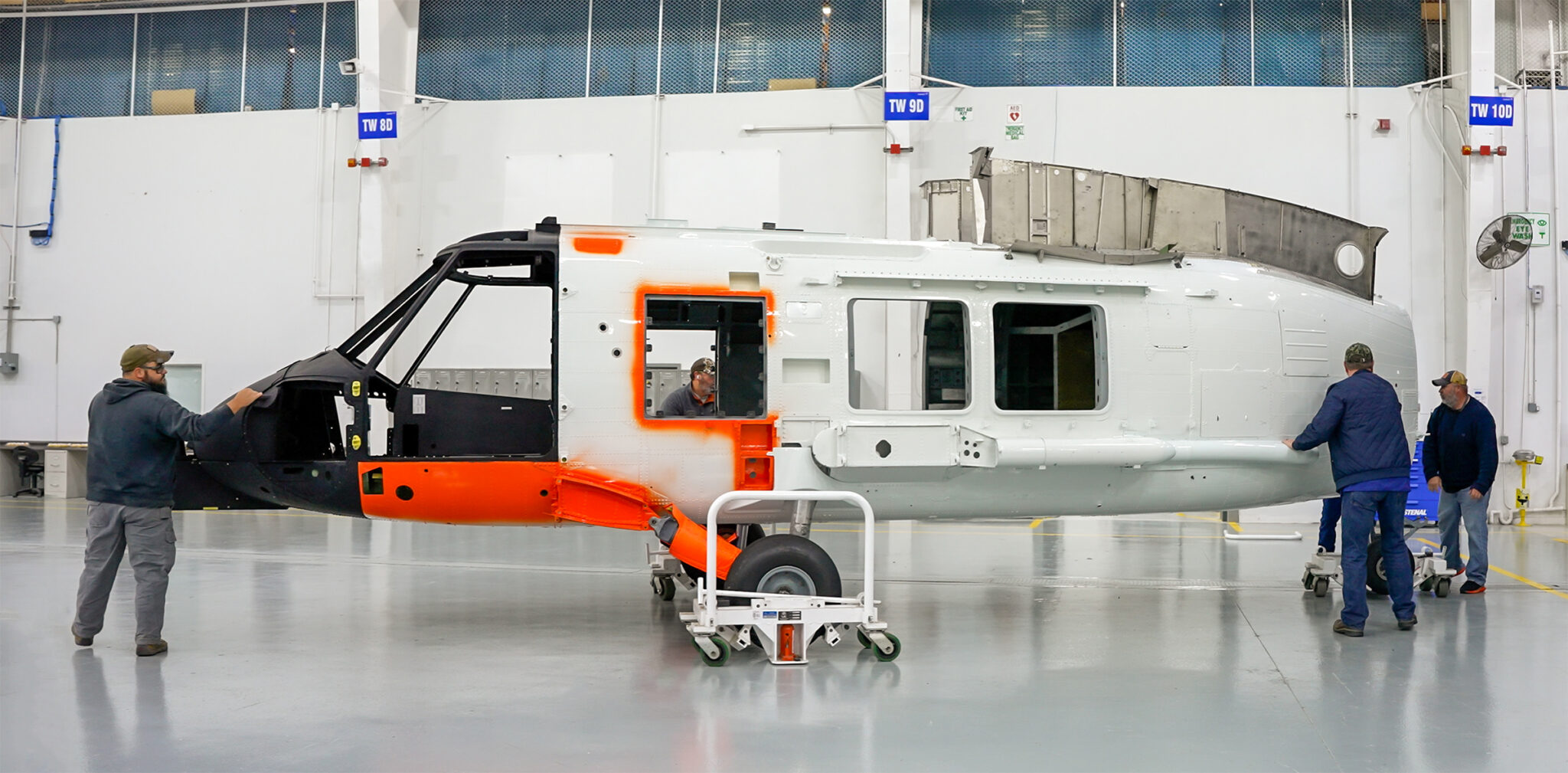
Hulls for the MH-60T Jayhawks for both SLEP and fleet growth will come from two sources, either newly manufactured hulls from the original equipment manufacturer, Sikorsky, or conversion of retired Navy hulls to the MH-60T configuration. On Nov. 30, the first newly manufactured MH-60T hull for the SLEP was accepted by the Coast Guard at the Sikorsky plant in Troy, Alabama. Delivery of hulls 2 and 3 is scheduled for early 2024. During full rate production, which starts with hull 4, deliveries should occur monthly. Forty-five new hulls are currently under contract.

The MH-60T is an all-weather medium range recovery helicopter capable of supporting multiple Coast Guard missions requiring rapid response and an extended on-scene presence. It also supports training and transporting cargo and personnel along with search and rescue, law enforcement, and environmental protection missions. It can reach speeds of around 200 mph and can be outfitted with a 7.62 mm machine gun and .50-caliber rifle designed to disable engines on noncompliant vessels as well as armor to protect crews from small-arms fire.

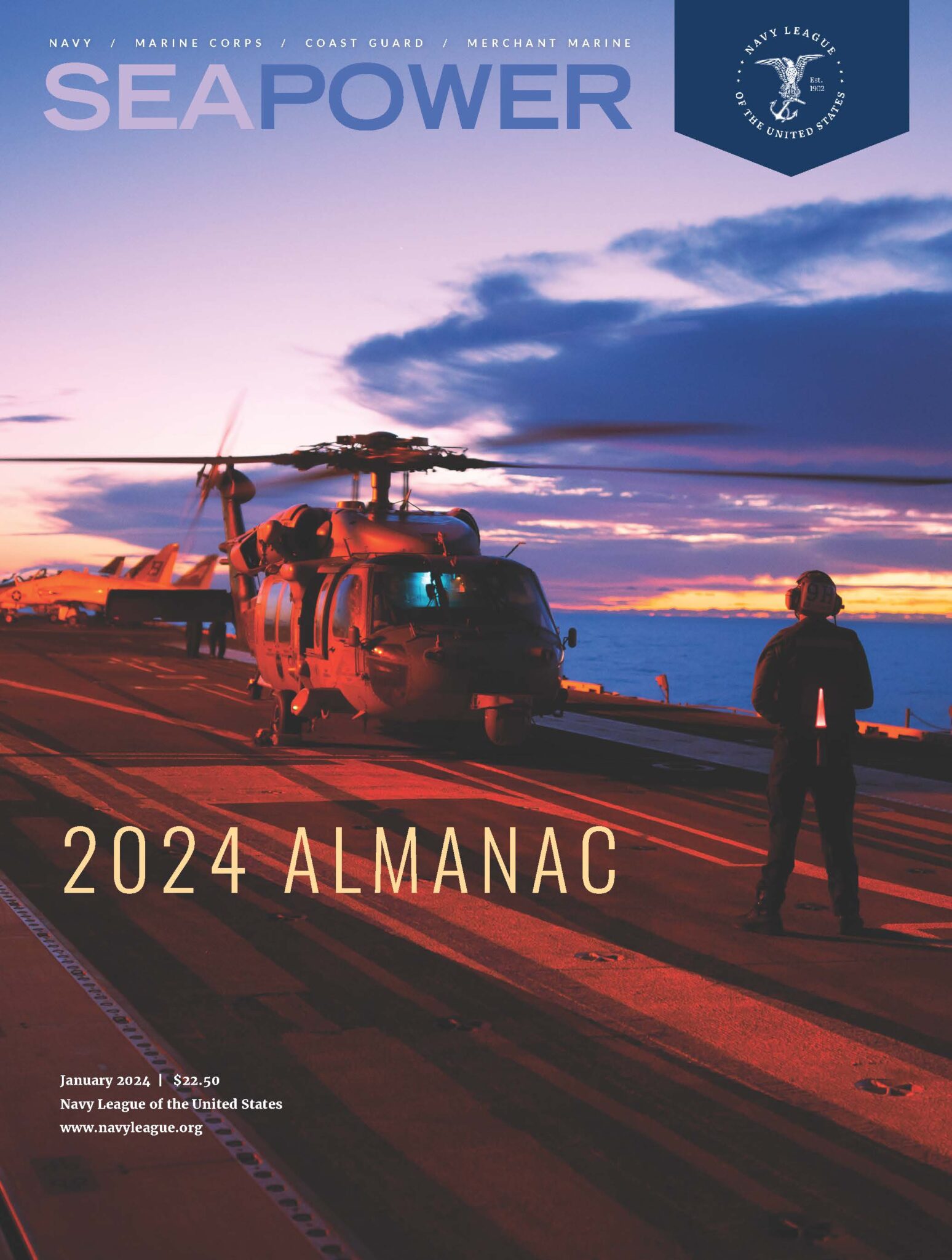
2024 Almanac –SeaPower

Just wanted to put in a good word for the Navy League’s 2024 Almanac. This annual, expanded, special edition of Sea Power alone may be sufficient reason to join the Navy League.

Despite their name, the Navy League is a vital supporter of the Coast Guard and US Merchant Marine and the entire maritime industry.

The almanac includes 189 pages of information about US Navy, Marine Corps, Coast Guard, NOAA, MARAD, and Maritime Sealift Command ships, aircraft, weapons, C4ISR systems, and leadership personnel. It even includes addresses, telephone numbers, and websites.

“Navy SEALs describe how boarding a ship is a team’s ‘sketchiest’ mission” –Task and Purpose

Members of the Coast Guard Cutter Waesche (WMSL-751) law enforcement boarding team inspect a self-propelled semi-submersible (SPSS) in international waters of the Eastern Pacific Ocean, Nov. 20, 2023. The interdiction of the SPSS yielded more than 5,500 pounds of cocaine. In November 2023, Waesche crewmembers seized approximately 18,219 pounds of cocaine, with an estimated street value of over $239 million, during four separate suspected drug smuggling vessel interdictions or events off the coasts of Mexico and Central and South America. (U.S. Coast Guard photo)

Task and Purpose reports,

“Two Navy SEALs went missing during a Visit, Board, Search and Seizure action near Somalia. Former SEALs say those VBSS missions were always among their most dangerous.”

Find it gratifying that Seals recognize the hazards of something the Coast Guard does routinely. Does seem they are more likely to do this in the dark.