K-LOGIR, Korean Low cOst Guided Imaging Rocket and Launcher

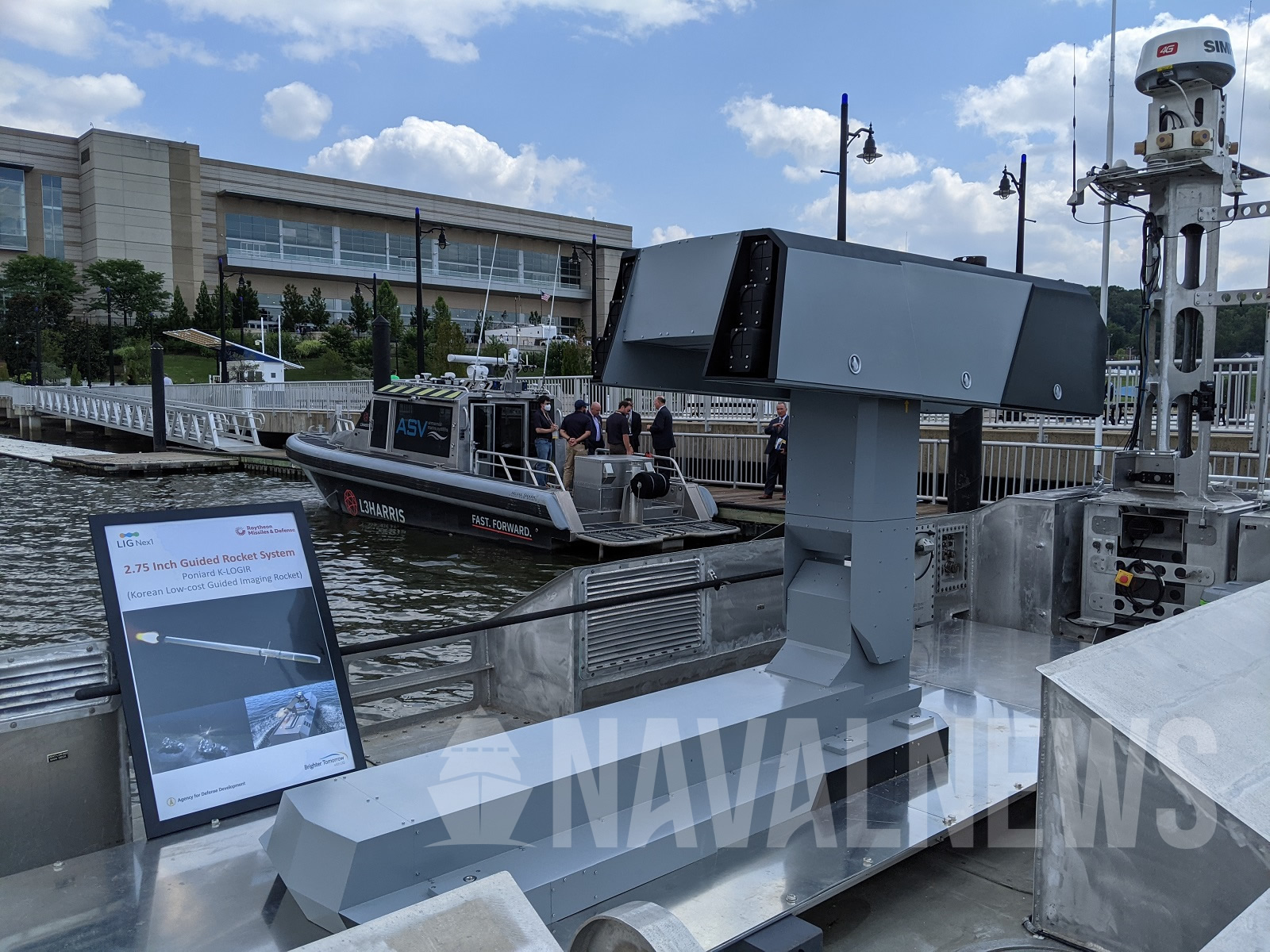
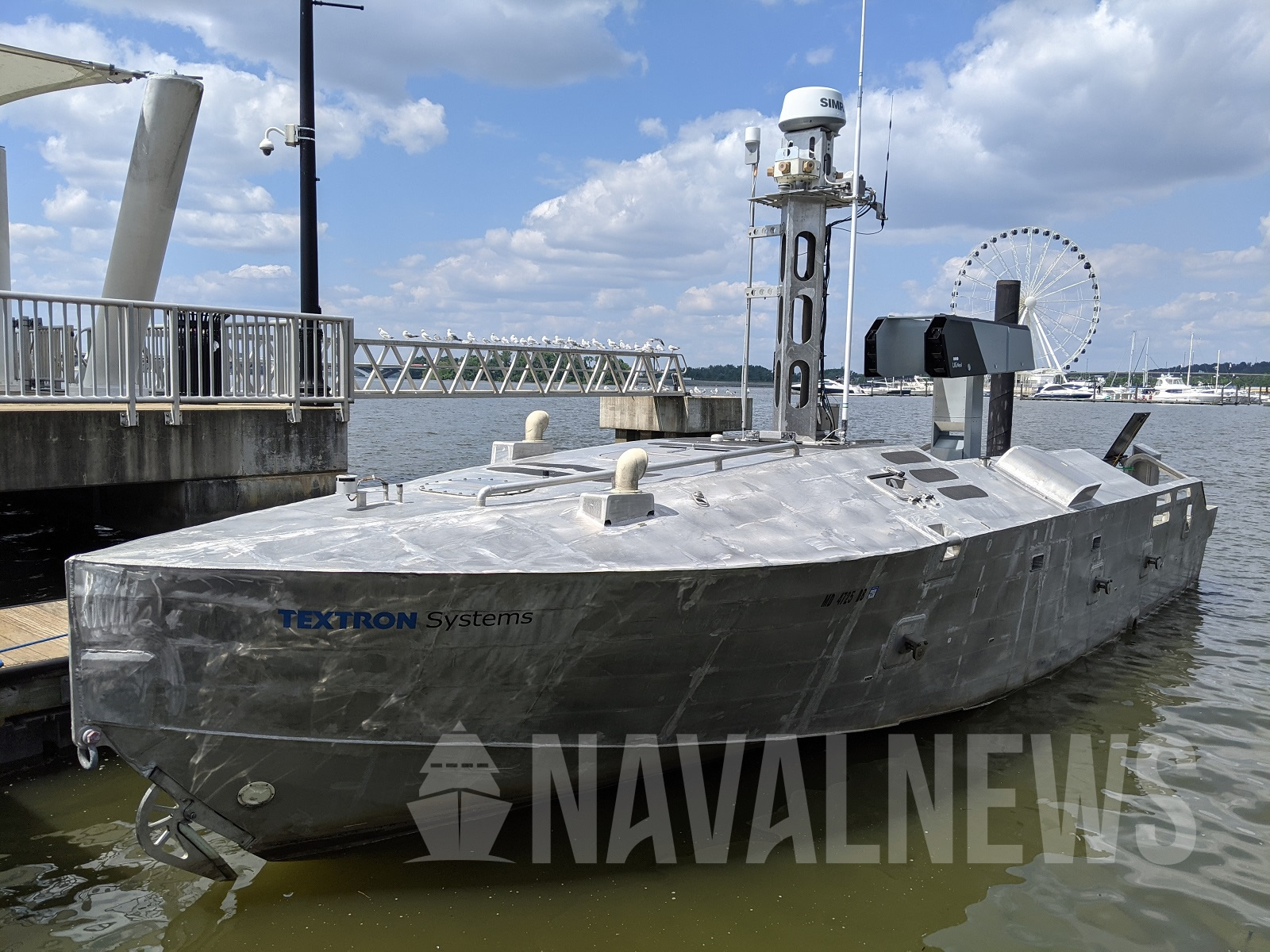
K-LOGIR launcher fitted on a Textron CUSV USV at Sea Air Space 2021. The system was showcased by Raytheon and LIG Nex1.

Naval News recently did a post highlighting a 4th Fleet live fire test combining a Korean developed fire and forget guided rocket system with the Common Uncrewed Surface Vessel (CUSV) cued to a target by a Radiosonde UAS for a fully uncrewed kill chain.

The “Poniard” Korean-Low cOst Guided Imaging Rocket (K-LOGIR) is closely related to the APKWS, both being based on the 70mm Hydra unguided rocket. Unlike the semi-active laser homing APKWS, the K-LOGIR is a fire-and-forget system allowing multiple simultaneous engagements.

Most of the reports I have read on this exercise are unclear if six missiles hit a single target or if six missiles hit six different targets, but this Defense Mirror report, “Textron’s Unmanned Boat Uses South Korean Weapon to Engage Multiple Targets.” makes it clear that multiple targets were engaged in a single salvo.

I don’t fully understand how they designate different targets for the missiles in the salvo, but it may be that they are sending them to different waypoints before they initiate their search.

The ability to engage several targets simultaneously makes this system attractive for countering surface swarm tactics like those that might be encountered by PATFORSWA, but for the Ports, Waterways, and Coastal Security mission, the APKWS’ semi-active laser homing might be a better solution, in that we are unlikely to have to engage numerous targets in a single salvo and we may want to target particular parts of an adversary’s vessel or perhaps engage low-level air targets such as UAS, helicopters, or general aviation aircraft. Presumably, APKS could be fired from the same launcher.

Textron USV fitted with LIG Next1’s Poniard guided rocket. Textron photo.

Take a look at the launcher above and below. Here it is mounted on an unmanned 39-foot boat. In the photo above you can see that it traverses and elevates. It appears to hold up to six rockets. It might be an appropriate way to arm Coast Guard patrol boats and larger cutters with APKWS, but “Vampire” might be even simpler.

K-LOGIR launcher fitted on a Textron CUSV USV at Sea Air Space 2021. The system was showcased by Raytheon and LIG Nex1.

I would really like to see 4th Fleet make more effort to publicize their experimentation efforts. I’m surprised I was not able to find a YouTube video that documented this test and I have seen no mention of it on the 4th Fleet website.

I am also curious to know if the Navy’s 39′ CUSV could be operated from the stern ramp of a National Security Cutter. Interoperability?

“Red Sea Convoy Clash: US Vessels Attacked | Iranian Spy Ship | Will China Shield You?”

This the latest in the series, “What’s Going on With Shipping?” The accompanying description is quoted below.

“In this episode, Sal Mercogliano – maritime historian at Campbell University (@campbelledu) and former merchant mariner – discusses the battle between the Houthi and US and Royal Navy forces of Operation Prosperity Guardian on Jan 9, 2024. A first-hand report of the battle, the role of an Iranian spy ship, and how China is promoting their flag as a defense.”

There is some very interesting discussion here regarding lack of communications between the merchant ships and the navy vessels, US and British.

“First Drug Interdiction of the Year for CMF French-led Combined Task Force 150” — Combined Maritime Forces Public Affairs

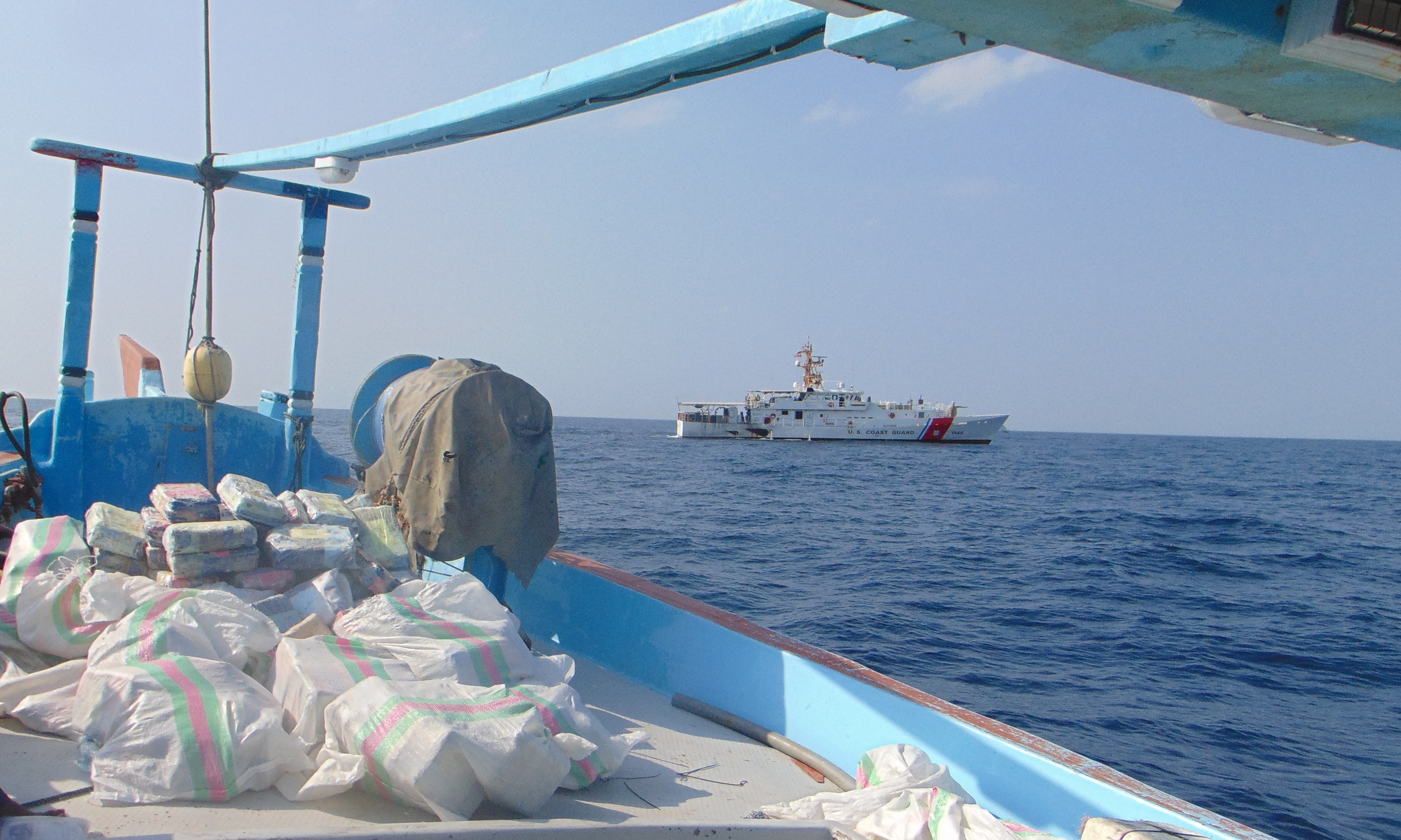
GULF OF OMAN (Jan. 5, 2024) U.S. Coast Guard Sentinel-class fast response cutter USCGC Emlen Tunnell (WPC 1145) seizes bags of illegal narcotics from a vessel in the Gulf of Oman, Jan. 5. Emlen Tunnell was operating under Combined Task Force 150, one of five task forces under Combined Maritime Forces, the largest multinational naval partnership in the world. CTF 150 focuses on maritime security operations outside the Arabian Gulf. (Photo by U.S. Coast Guard courtesy photo)

Below is a news release from Combined Maritime Forces Public Affairs.

MANAMA, Bahrain —January 08, 2024A U.S. Coast Guard cutter operating under the French-led Combined Task Force 150 of the Combined Maritime Forces seized about $11 million worth of illegal drugs from a vessel while operating in the international waters of the Gulf of Oman, Jan. 5.

Coast Guardsmen from the Sentinel-class fast response cutter USCGC Emlen Tunnell (WPC 1145), seized 37 kilograms of heroin, 187 kilograms of methamphetamine and five kilograms of cocaine from the vessel following a search. Following the seizure, the Emlen Tunnell team released the dhow and disposed of the illicit drugs.

Prior to the seizure, while in support to CTF 150, Royal Navy frigate HMS Lancaster gathered intelligence on the dhow, which had been identified as a vessel of interest. Information including imagery and location of the dhow was shared with the Emlen Tunnell and the French maritime patrol aircraft Wallaby, which allowed the Emlen Tunnell to track and execute the interdiction.

This interdiction marked the first seizure of the year for CTF 150 and follows on from a highly successful 2023, with 12 drug busts since the French assumed command in July 2023.

This latest seizure for CTF 150 demonstrated the value of CMF nations working together to share information, leading to another successful narcotics seizure.

CTF 150 is one of five task forces under Combined Maritime Forces, the world’s largest multinational naval partnership, and focuses on maritime security operations in the Gulf of Oman, Arabian Sea and Indian Ocean.

The 39-nation naval partnership is committed to disrupting criminal and terrorist activities by restricting freedom of maneuver across approximately 3.2 million square miles of international waters encompassing some of the world’s most important shipping lanes.

Since 2021, Combined Maritime Forces has seized more than $1 billion in illegal drugs while patrolling waters across the Middle East.

“Government of Canada Orders the MQ-9B SkyGuardian RPAS from GA-ASI” –General Atomic News Release

Below is a General Atomics Aeronautical Systems, Inc. (GA-ASI) news release, in English and French, reporting a contract for eleven MQ-9B UAS and associated support. The SkyGuardian MQ-9B is not quite the same as the SeaGuardian MQ-9B that is being widely used for maritime reconnaissance. SkyGuardian has systems to allow it to sense and avoid air traffic in the national air space. It is not clear at this point if the two payload packages are compatible and that a SeaGuardian with sense and avoid is also possible.

It is also not clear that the FAA is ready to permit operation of this system in US airspace, though acceptance by European and Canadian authorities argues strongly in favor.

Canadian Government announcement here.

SAN DIEGO – 19 December 2023 – The Government of Canada has signed a contract to purchase a fleet of MQ-9B SkyGuardian Remotely Piloted Aircraft Systems (RPAS) from General Atomics Aeronautical Systems, Inc. (GA-ASI). The order includes the associated Certified Ground Control Stations and support equipment from GA-ASI. The first delivery is expected in 2028.

The SkyGuardian RPAS is interoperable with Canada’s domestic missions and its continental defence missions through NORAD, as well as with Canada’s closest allies – including the Five Eyes Alliance (FVEY) and NATO – for seamless integration with current and future Canadian defence, civil air, and ground assets.

“Canada’s vast territory and complex terrains, including in the Arctic, require a cost-effective multi-mission RPAS solution that can endure long periods on station, fly in harsh weather environments, and safely operate in all airspaces,” said Linden Blue, CEO of GA-ASI. “MQ-9B SkyGuardian delivers those critical capabilities. GA-ASI and Team SkyGuardian Canada are honored by this opportunity to become a key partner to Canada for the very long term in delivering these no-fail defence and security outcomes.”

Team SkyGuardian Canada is a coalition of leading Canadian businesses – including CAE, MDA Ltd., and L3Harris Technologies – that are working with GA-ASI on MQ-9B development, delivery, and sustainment. Canada’s investments in the RPAS Project and Team SkyGuardian Canada are a direct reflection of Canada’s vested domestic interest in pursuing leading-edge RPAS technologies.

GA-ASI has had a long, successful, and proud history with Canadian industry that continues to grow. Nearly every system that GA-ASI has delivered throughout its more than 30-year history has contained some level of Canadian content, including sensors, propulsion equipment, and training/simulation systems and services. CAE, MDA Ltd., L3Harris, and GA-ASI are committed to delivering the world’s premier RPAS capability to Canada while creating domestic economic benefits and work opportunities.

MQ-9B is the next generation of RPAS, delivering exceptionally long endurance and range, with auto takeoff and landing under SATCOM-only control, and will be able to operate in unsegregated airspace using the GA-ASI developed Detect and Avoid system. First customer deliveries of MQ-9B began in 2022 to the U.K. Royal Air Force, and contracts have been signed with Belgium and the U.S. Air Force, in support of Special Operations Command. The Japan Coast Guard is currently operating the MQ-9B for maritime operations, which the Japan Maritime Self-Defense Force (JMSDF) also selected for its Medium-Altitude, Long-Endurance (MALE) RPAS Trial Operation Project. MQ-9B has additionally supported various U.S. Navy exercises this year, including Northern EdgeIntegrated Battle Problem, and Group Sail.

“We look forward to working with our Team SkyGuardian Canada partners to deliver our industry leading RPAS for Canada’s dynamic mission requirements. GA-ASI is the world leader in reliable, cost-efficient, and sustainable remotely piloted aircraft systems. These aircraft perform advanced interoperable and systems-of-systems operations for our valued customers around the world – all at a fraction of the carbon footprint impact as traditional manned systems performing similar missions,” added Blue.

About GA-ASI

General Atomics Aeronautical Systems, Inc. (GA-ASI), an affiliate of General Atomics, is a leading designer and manufacturer of proven, reliable RPA systems, radars, and electro-optic and related mission systems, including the Predator® RPA series and the Lynx® Multi-mode Radar. With more than eight million flight hours, GA-ASI provides long-endurance, mission-capable aircraft with integrated sensor and data link systems required to deliver persistent situational awareness. The company also produces a variety of sensor control/image analysis software, offers pilot training and support services, and develops meta-material antennas.

Avenger, Lynx, Predator, and SkyGuardian are registered trademarks of General Atomics Aeronautical Systems, Inc.

Le Gouvernement Du Canada Commande Le SATP GA-ASI SkyGuardian MQ-9B

SAN DIEGO – Le 19 décembre 2023 – Le gouvernement du Canada a signé un contrat pour l’achat d’une flotte de systèmes d’aéronefs télépilotés (SATP) MQ-9B SkyGuardian® auprès de General Atomics Aeronautical Systems, Inc. (GA-ASI). La commande comprend les stations de contrôle au sol certifiées et l’équipement de soutien de GA-ASI. La première livraison est prévue en 2028.

Le SATP SkyGuardian est interopérable pour les missions nationales du Canada et ses missions de défense continentale de NORAD, ainsi qu’avec les alliés les plus proches du Canada, notamment l’Alliance du Groupe des cinq (Five Eyes Alliance, FVEY) et l’OTAN, afin de permettre une intégration sans faille avec les ressources canadiennes actuelles et futures en matière de défense, d’aviation civile et d’opérations terrestres.

« En raison de l’immensité du territoire canadien et de la complexité des terrains, y compris dans l’Arctique, le Canada a besoin d’une solution SATP multimission efficace en termes de couts, capable de rester longtemps en station, de voler dans des conditions météorologiques exigeantes et de fonctionner en toute sécurité dans tous les espaces aériens », a déclaré Linden Blue, président-directeur général de GA-ASI. « Le MQ-9B SkyGuardian possède toutes ces capacités essentielles. GA-ASI et l’équipe SkyGuardian Canada sont honorés de l’occasion qui leur est donnée de devenir un partenaire clé du Canada à très long terme pour atteindre ces résultats sans faille en matière de défense et de sécurité. »

L’équipe SkyGuardian Canada est une coalition d’entreprises canadiennes de premier plan, dont CAE, MDA Ltd. et L3Harris Technologies. Celles-ci collaborent avec GA-ASI au développement, à la livraison et au maintien en service du MQ-9B. Les investissements du Canada dans le projet de SATP et l’équipe SkyGuardian Canada reflètent directement l’intérêt national du Canada à poursuivre les technologies de pointe de SATP.

GA-ASI est fière d’entretenir avec l’industrie canadienne une longue et fructueuse histoire qui ne cesse de s’enrichir. Presque tous les systèmes livrés par GA-ASI au cours de ses plus de 30 ans d’existence ont comporté un certain niveau de contenu canadien, notamment des capteurs, des équipements de propulsion et des systèmes et services de formation et de simulation. CAE, MDA Ltd, L3Harris, et GA-ASI se sont engagés à fournir au Canada la capacité de SATP chef de file au monde, tout en suscitant des retombées économiques et des possibilités d’emploi au pays.

Le MQ-9B est la nouvelle génération de SATP offrant une endurance et un rayon d’action exceptionnellement long, un décollage et un atterrissage automatiques sous contrôle SATCOM uniquement, et il sera capable de fonctionner dans l’espace aérien général à l’aide du système de détection et d’évitement conçu par GA-ASI. Les premières livraisons de MQ-9B ont commencé en 2022 pour la Royal Air Force du Royaume-Uni, et des contrats ont été signés avec la Belgique et l’armée de l’air des États-Unis pour soutenir le commandement des opérations spéciales. La Garde côtière du Japon utilise actuellement le MQ-9B pour ses opérations maritimes. La Force maritime d’autodéfense japonaise (JMSDF) l’a également sélectionné pour son projet d’essai de SATP à moyenne altitude et longue endurance (MALE). Le MQ-9B a également été utilisé cette année dans le cadre de divers exercices de la marine des États-Unis, notamment pour les opérations Northern EdgeIntegrated Battle Problem et Group Sail.

« Nous sommes fébriles de travailler avec nos partenaires de l’équipe SkyGuardian Canada afin de fournir nos SATP de pointe pour répondre aux exigences des missions dynamiques du Canada. GA-ASI est le chef de file mondial des systèmes d’aéronefs télépilotés fiables, rentables et durables. Ces aéronefs assurent des opérations interopérables et des solutions « systèmes de systèmes » avancées pour nos précieux clients dans le monde entier, tout cela avec une fraction de l’empreinte carbone des systèmes classiques pilotés effectuant des missions similaires », a ajouté M. Blue.

À propos de GA-ASI

General Atomics Aeronautical Systems, Inc. (GA-ASI), une filiale de General Atomics, est un concepteur et un fabricant de premier plan de systèmes d’aéronefs télépilotés (ATP), de radars, de systèmes électro-optiques et de systèmes de mission connexes fiables et éprouvés, notamment la série d’ATP Predator® et le radar multimode Lynx®. Avec plus de huit millions d’heures de vol, GA-ASI fournit des aéronefs de longue durée, aptes aux missions, dotés de capteurs intégrés et de systèmes de liaison de données nécessaires pour assurer une connaissance permanente de la situation. L’entreprise produit également divers logiciels de contrôle de capteurs et d’analyse d’images, propose des services de formation et de soutien aux pilotes et développe des antennes en méta-matériaux.

Avenger, Lynx, Predator et SkyGuardian dont des marques déposées de General Atomics Aeronautical Systems, Inc.

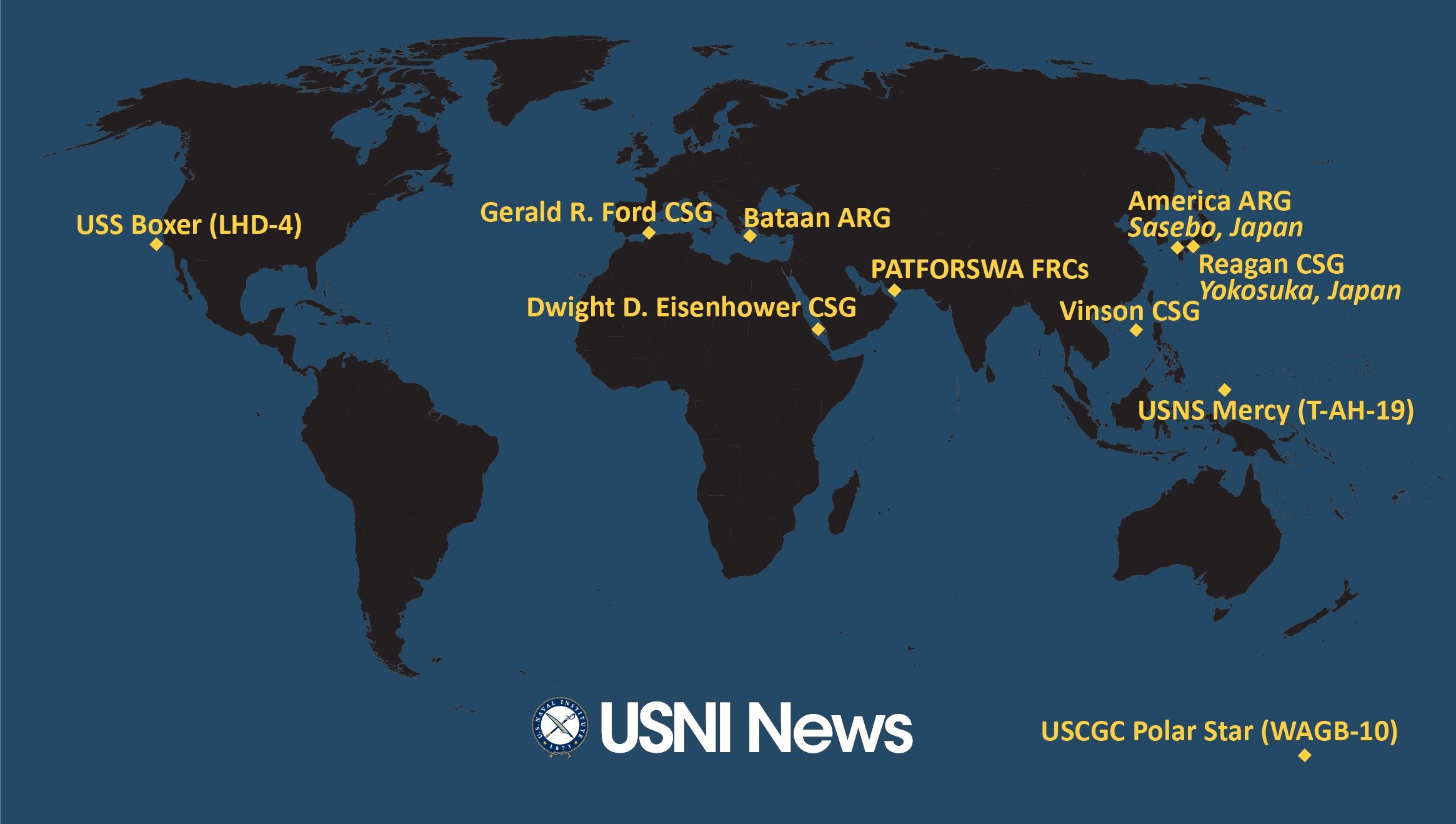
“USNI News Fleet and Marine Tracker: Jan. 4, 2023”

The report shows 31% of the commissioned (USS) ships are deployed. 20.6% of the “Battle Force” ships (USS & USNS) are underway.

The post includes information about PATFORSWA drug seizures, 24, 26, and 28 December and notes that USCGC Polar Star arrived at McMurdo Station in time to celebrate the new year. It also included a video of the ship breaking ice.

Five members of Japan Coast Guard Aircrew Die in Runway Collision

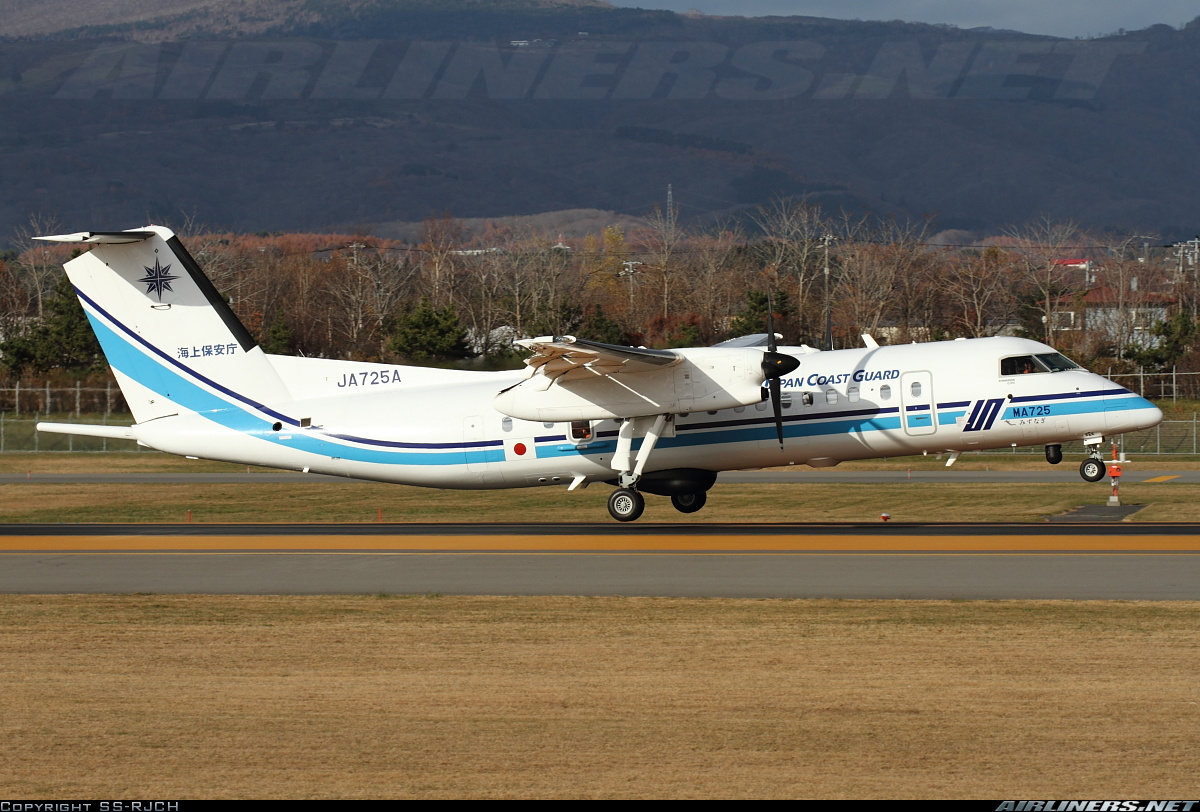
Japan Coast Guard DASH-8-315

A fatal runway collision between a Japan Airlines Airbus A350 and Japan Coast Guard aircraft is being widely reported.

The Japan Coast Guard Bombardier Dash-8 aircraft was heading to western Japan to deliver aid to those caught up in the New Year’s Day earthquake that has killed at least 48 people.

The airliner landed on a runway the JCG aircraft was using as it prepared to take off.

All aboard the JAL aircraft were successfully evacuated. The five of the six crewmembers of the JCG aircraft were killed. One is seriously injured.

“Top Stories 2023: U.S. Coast Guard” –USNI

The US Naval Institute News Service lists their five top Coast Guard stories for 2023.

  • “Doing Less with Less” –closures and decommissionings
  • “Argus Among Us” –christening and launch of the first OPC
  • “Polar Security Cutter Delayed” –now three years behind schedule
  • “The Search for Titan” –search for the civilian deep diving submersible
  • “Operation Fouled Anchor” –handling of report on response to sexual assault allegations at the Coast Guard Academy, 1988 to 2006

“U.S. Coast Guard Cutter Polar Star departs Australia, en route to Antarctica” –CG News

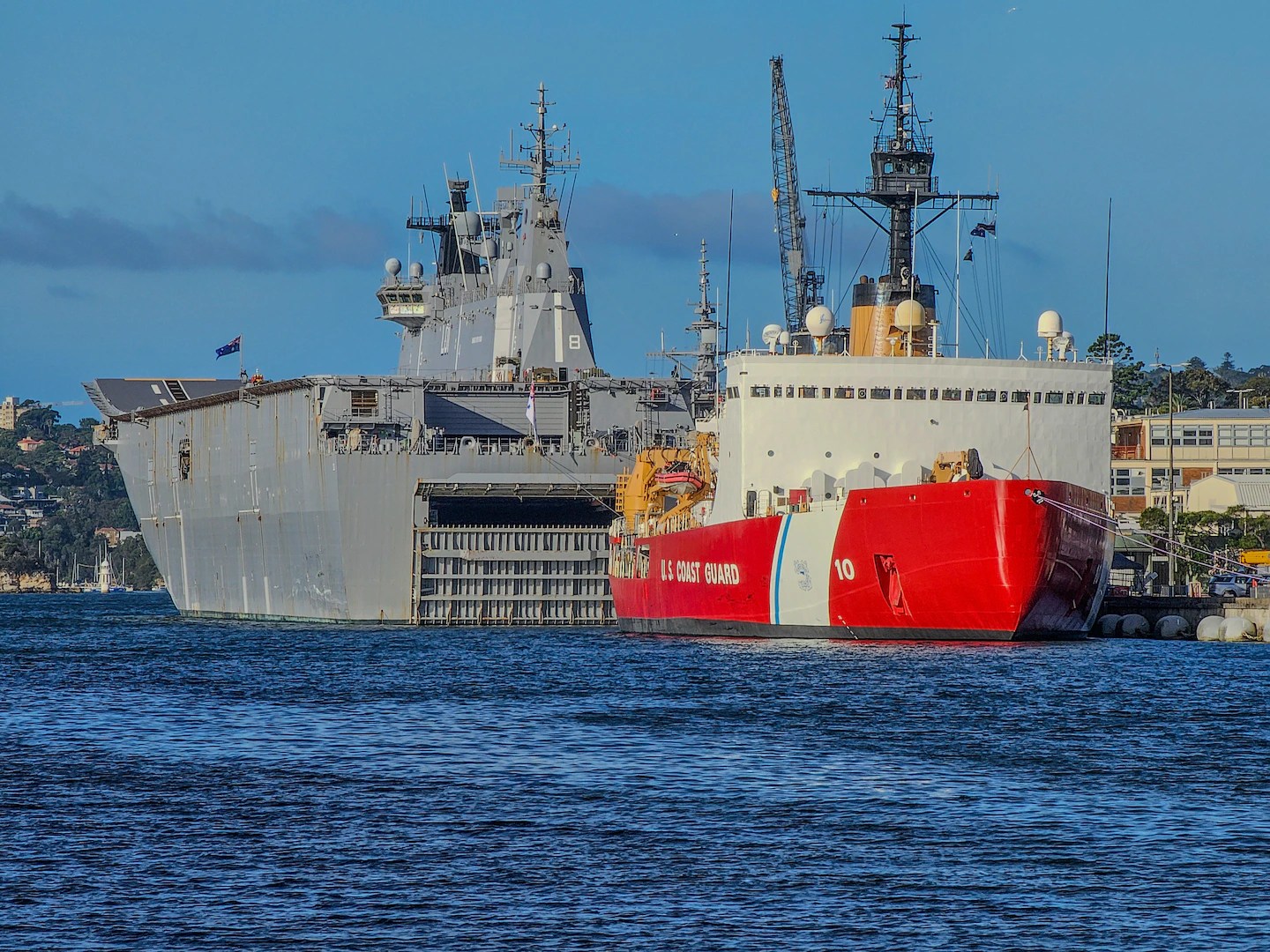
USCGC Polar Star moored in Australia, presumably at HMAS Kuttabul, in Sidney. The large vessel in the background is a Canberra class LHD, HMAS Adelaide (L01) I believe. While, with modifications, this two-ship class probably could operate F-35B VTOL fighters, I have seen no indication that they intend to do so. 

Just passing along this news release from Coast Guard News. More photos there. 


Dec. 21, 2023

U.S. Coast Guard Cutter Polar Star departs Australia, en route to Antarctica

Editor’s Note: To follow the U.S. Coast Guard Cutter Polar Star’s Operation Deep Freeze journey, click here for more imagery.

HOBART, Australia — U.S. Coast Guard Cutter Polar Star (WAGB 10) and crew departed Hobart, Wednesday, after a four-day port call in Hobart and an earlier stop in Sydney, to begin the journey across the Southern Ocean en route to Antarctica in support of Operation Deep Freeze 2024.

While in Hobart and Sydney, the crew hosted tours aboard the Polar Star for guests from the U.S. Embassy including U.S. Ambassador for Australia Caroline Kennedy and members from the Australian government, Royal Australian Navy, Tasmanian government, local industry partners, and local schools and universities.

“A sincere thank you to our Australian hosts and all our international partners whose incredible collaboration has defined the success of Operation Deep Freeze,” said Capt. Keith Ropella, commanding officer of Polar Star. “The cohesion among Antarctic programs reinforces the significance of our joint efforts, fostering a legacy of success for future scientific endeavors in this challenging environment.”

Operation Deep Freeze is a joint military service mission to resupply the United States Antarctic stations of the National Science Foundation, who is the lead agency for the United States Antarctic program (USAP). This year marks Polar Star’s 27th voyage to Antarctica. Every year, a joint and total force team work together to complete a successful Operation Deep Freeze season. Military members from the U.S. Air Force, Army, Coast Guard, and Navy work together through Joint Task Force-Support Forces Antarctica to continue the tradition of providing U.S. military support. Operation Deep Freeze works closely with other Antarctic programs to include those of Australia and New Zealand, as well as those Nations’ respective defense forces.

Leading up to and during the transit, the crew received training and prepared themselves to support this vital mission despite the austere environment. Operation Deep Freeze is one of the more challenging U.S. military peacetime missions due to the harsh environment in which it is conducted. Antarctica is the coldest, windiest, most inhospitable continent on the planet, and each trip requires careful planning and coordination.

“Through rigorous training and specialized preparations, our Coast Guard team stands ready for the challenges of Operation Deep Freeze,” said Lt. Cmdr. Don Rudnickas, operations officer of Polar Star. “The Coast Guard’s unwavering commitment underscores our dedication to the success of U.S. missions in the Polar Regions, ensuring the safety and efficacy of our operations.”

The Polar Star provides heavy icebreaking capabilities to facilitate sealift, seaport access, bulk fuel supply, and port cargo handling for three U.S. research stations in Antarctica with McMurdo Station being the largest. The cutter’s icebreaking capabilities enable the safe delivery of critical supplies to sustain USAP’s year-round operations and support international partnership in the harsh Antarctic environment. It’s vitally important that the U.S. maintains a maritime domain presence in Antarctica to protect uninhibited international access to the region.

When the Polar Star deploys in support of Operation Deep Freeze, they routinely spend the holiday season away from home. During the cutter’s first stop in Honolulu, the crew celebrated Thanksgiving while underway and moored alongside the U.S. Navy fleet at Joint Base Pearl Harbor-Hickam in Honolulu.

During the transit across the Pacific, the crew sailed through the position 0 degrees latitude and 180 degrees longitude, also known as “The X” marking the intersection of the equator and international date line. Crossing this exact position is a unique and rare opportunity among Coast Guard crews.

On December 10, the Polar Star moored at HMAS Kuttabul alongside several Royal Australian Navy ships close to the center of Sydney during a logistics stop for fuel and supplies.

The Polar Star departed its Seattle homeport November 15 and has traveled approximately 7,700 miles with stops in Honolulu, Sydney and Hobart.

The Polar Star is the United States’ only asset capable of providing access to both Polar Regions. It is a 399-foot heavy polar icebreaker commissioned in 1976, weighing 13,500 tons, 84-feet wide, with a 34-foot draft. The six diesel and three gas turbine engines produce up to 75,000 horsepower.

“NATO admiral warns of Chinese, Russian threat in Arctic” –The Watch

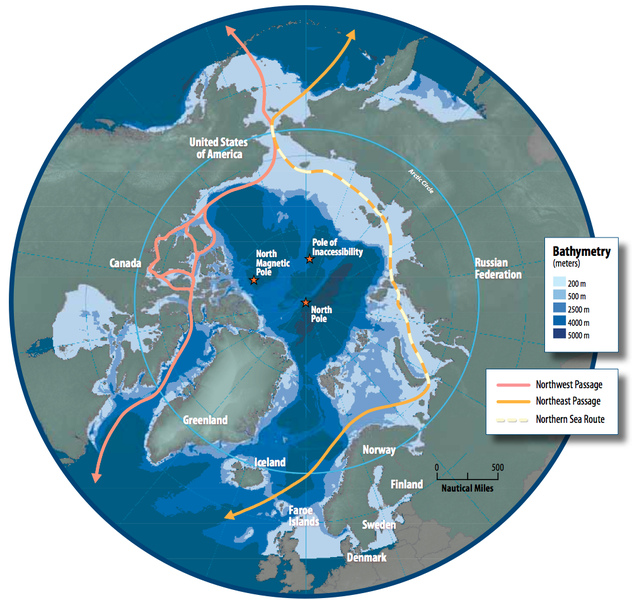
Map of the Arctic region showing shipping routes Northeast Passage, Northern Sea Route, and Northwest Passage, and bathymetry, Arctic Council, by Susie Harder

NORTHCOM’s online magazine, The Watch reports,

Adm. Rob Bauer, chair of NATO’s military committee … is concerned that the People’s Republic of China (PRC) will try to convert its current shipping through Russia’s Northern Sea Route into a military presence in the Arctic.

“We know there are military scientists on board these ships,” Adm. Rob Bauer, who chairs NATO’s military committee, told Bloomberg News on 21 October 2023. “They haven’t said they won’t go there militarily.”

The US does have a strong geographic position, in that it holds one side of the narrow Bering Strait through which any shipping (including submarines) using the direct route between the Pacific and the Arctic must pass.

The question remains, is the US strong enough to hold and exploit its geographic advantage in the event of a major conflict.


“Cutter Healy returns home after circumnavigating the globe” –MyCG

USCGC Healy (WAGB-20) and the Norwegian Coast Guard Vessel Svalbard sail in formation while en route to conduct joint exercises in northern Norway in the Barents Sea. US Coast Guard Photo

Below is a news release from MyCG.

Dec. 20, 2023

Cutter Healy returns home after circumnavigating the globe

By Senior Chief Petty Officer Charly Tautfest, U.S. Coast Guard Pacific Area

U.S. Coast Guard Cutter Healy (WAGB 20) and crew returned to its homeport Dec. 15, 2023, after circumnavigating the globe covering 25,000 miles in 159-days in support of the 2024 Arctic science missions.

The Healy and crew made port call stops in Seward and Kodiak, Alaska; Tromsø, Norway; Copenhagen, Denmark; Reykjavik, Iceland; Charleston, South Carolina; and Ft. Lauderdale, Florida. Additionally, Healy transited the Panama Canal on its return to Seattle.

“I am incredibly proud of the crew’s performance during our 159-day deployment,” said Capt. Michele Schallip, commanding officer of Healy. “The Healy continued demonstrating the nation’s commitment to the global science community as it seeks to improve understanding of the changing Arctic, particularly in ice-covered waters difficult to reach by most research vessels. This deployment also allowed for engagements and joint exercises with Canada, Norway, The Kingdom of Denmark, and Iceland, which promoted interoperability and cooperation in the Arctic region. The crew was able to share similarities and differences with crews of ships conducting similar work to Healy for their respective nations, a special opportunity to build on these long-standing partnerships.”

The cutter’s first mission supported the Office of Naval Research’s Arctic Mobile Observing System, deploying data collection buoys, subsurface gliders, and other sensors in ice-covered waters north of Alaska. The second mission was in collaboration with the National Oceanic and Atmospheric Administration and the National Science Foundation. Healy and scientists recovered and replaced subsurface moorings with oceanographic instruments and sensors as part of the Nansen and Amundsen Basins Observational System in the East Siberian and Laptev Seas. In addition, the cutter hosted a team from the Coast Guard Research and Development Center, who conducted a broad portfolio of research to develop better techniques and technologies for operating in the Arctic environment.

While deployed, Healy conducted crew exchanges with crews from the Canadian Coast Guard Ship Sir Wilfred Laurier and the Icelandic Coast Guard Vessel Thor. The cutter and crew participated in a similar exchange with the Norwegian Coast Guard Vessel Svalbard and crew before joining in a multi-agency search and rescue exercise in Norway. In addition to these valuable engagements with Arctic partners, the cutter visited port cities on the Atlantic coast of the United States, increasing awareness of U.S. Coast Guard missions in the Arctic.

Healy is the Coast Guard’s only icebreaker designed specifically to support research and the nation’s sole surface presence routinely operating in the Arctic Ocean. Commissioned in 1999, the Healy is one of two active polar icebreakers.