“Quentin Walsh — D-Day planner and Cherbourg liberator 80 years ago!” –MyCG

190606-N-DM308-001 A graphic illustration of the future Arleigh-Burke class guided-missile destroyer USS Quentin Walsh (DDG 132). (U.S. Navy photo illustration by Mass Communication Specialist 1st Class Paul L. Archer)

MyCG has a retelling of the life of my favorite Coast Guard Hero, Quentin Walsh. Read the whole thing, but I have quoted below the section on what he and his 53 man  SeaBee unit did in less than three weeks following the Normandy invasion.

German prisoners march out of surrendered Cherbourg under U.S. Army guard. U.S. Navy photo.

By Tuesday, June 27th, Walsh’s men had fought their way through to Cherbourg’s harbor. During this assault, Walsh moved his men quickly to occupy strategic parts of the port and take control the harbor. During the assault, the men in his unit experienced a twenty-five percent casualty rate. By the end of the day, Walsh’s unit had advanced to the city’s old naval arsenal, where he accepted the surrender of 400 German troops.

After capturing Cherbourg’s port facilities, Walsh learned that the Germans held American paratroopers in the city’s old citadel at Fort du Homet. In the highlight of the Cherbourg operation, and likely his career, Walsh and one of his officers put themselves in harm’s way to save the lives of the Americans. The two officers entered the fort under a flag of truce and met with the commanding officer of the German garrison. By greatly exaggerating the numeric strength of his small force of Sea Bees, Walsh convinced the commanding officer to surrender the stronghold. With the surrender of Fort du Homet, Walsh and his men disarmed another 350 German troops and liberated over fifty American prisoners.

I have added this story to my Heritage page. There is an earlier post here reporting that the Secretary of the Navy had announced the decision to name DDG-132 after Walsh while on the deck of USCGC Eagle, in Cherbourg, June 6, 2019.

USS Quentin Walsh (DDG-132), a Flight III Arleigh Burke class destroyer, is to be built by Bath Iron Works.

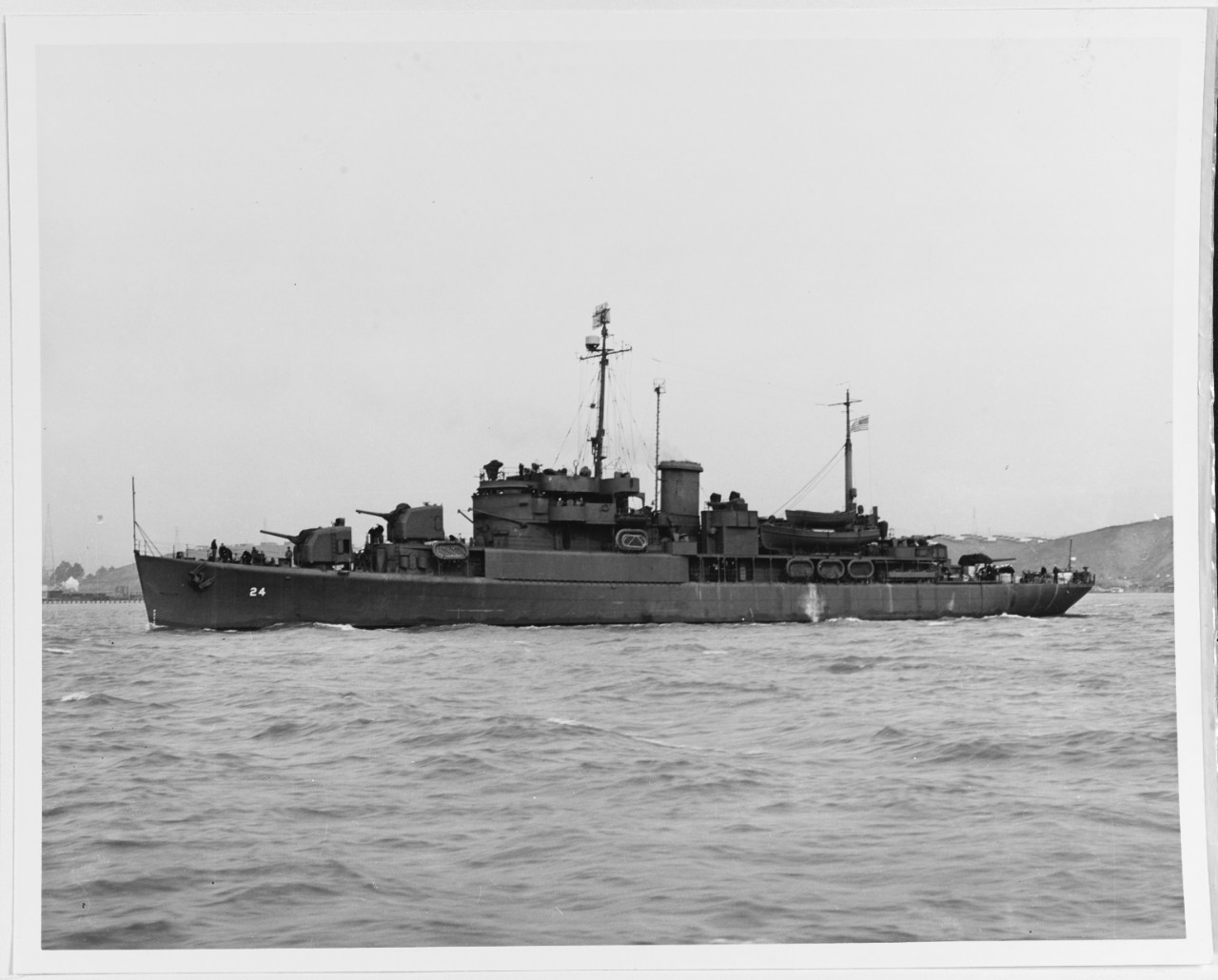
USS/USCGC Chincoteague (AVP-24/WAVP/WHEC-375)/RVNS Lý Thường Kiệt (HQ-16)/RPS Andrés Bonifacio (PF-7)

Title: USS Chincoteague (AVP-24) Photographed on 27 December 1943 off the Mare Island Navy Yard following repairs to severe battle damage incurred in July 1943. One of the four 5/38 guns in her original armament has been replaced by a quadruple 40mm mount. Photograph from the Bureau of Ships Collection  in the U.S. National Archives. Catalog #: 19-N-57482

Recently finished reading “USS Chincoteague the Ship That Wouldn’t Sink” by Frank D. Murphy. It is a small, large print book, the first-person story of a young sailor, then 19, and his first ship, a newly commissioned small seaplane tender, USS Chincoteague, that endured eleven air attacks 16-17 July 1943, only three months after she had been commissioned.

I had a personal interest because my first ship, USCGC McCulloch, the former USS Wachapreague, was also Barnegat class ship.

The attacks on Chincoteague were during a period when the US was moving up the Soloman Island Chain. The Allies had invaded New Georgia, but the fighting was heavy, and the Japanese were making a strong effort to push the allies off the island.

Consolidated PBY-5A Catalina. US Navy photo.

USS Chincoteague was anchored in Sabot Bay, Santa Cruz Islands, Southeast of the Soloman Islands, servicing a squadron PBY patrol planes when the attacks began. When an attack was expected she would get underway to maneuver. Between attacks she would return to service her brood of sea planes.

Attacks on the 16th caused only minor fragment damage. During attacks on the 17th, she received two damaging near misses that caused flooding and fires, then a direct bomb hit that wrecked the after engineroom killing ten crew members, followed by another near miss that dented the hull and knocked the remaining engines offline. Dead in the water, having taken on 663 tons of water, she had a negative GM, and was listing 12 to 18 degrees, it looked as if she would be sunk by the eleventh attack when four Marine Corsairs arrived splashing three of the attackers and driving off the fourth.

After repairs to the forward engineroom, which powered the starboard shaft, the ship got underway at 2350, but at 0245 on the 18th one of the engines was overheating. In an attempt to deal with the overheating, control of the engine was lost, and it ran away in spite of a closed throttle, causing a severe fire that forced the crew to abandon the engineroom.

The ship was taken in tow and, after temporary repairs at Espiritu Santo, was towed by to the West Coast where complete repairs were made including addition of eight 40 mm anti-aircraft guns and additional 20 mm guns. Ultimately, she would earn six battle stars.

You can read the full original damage report here.

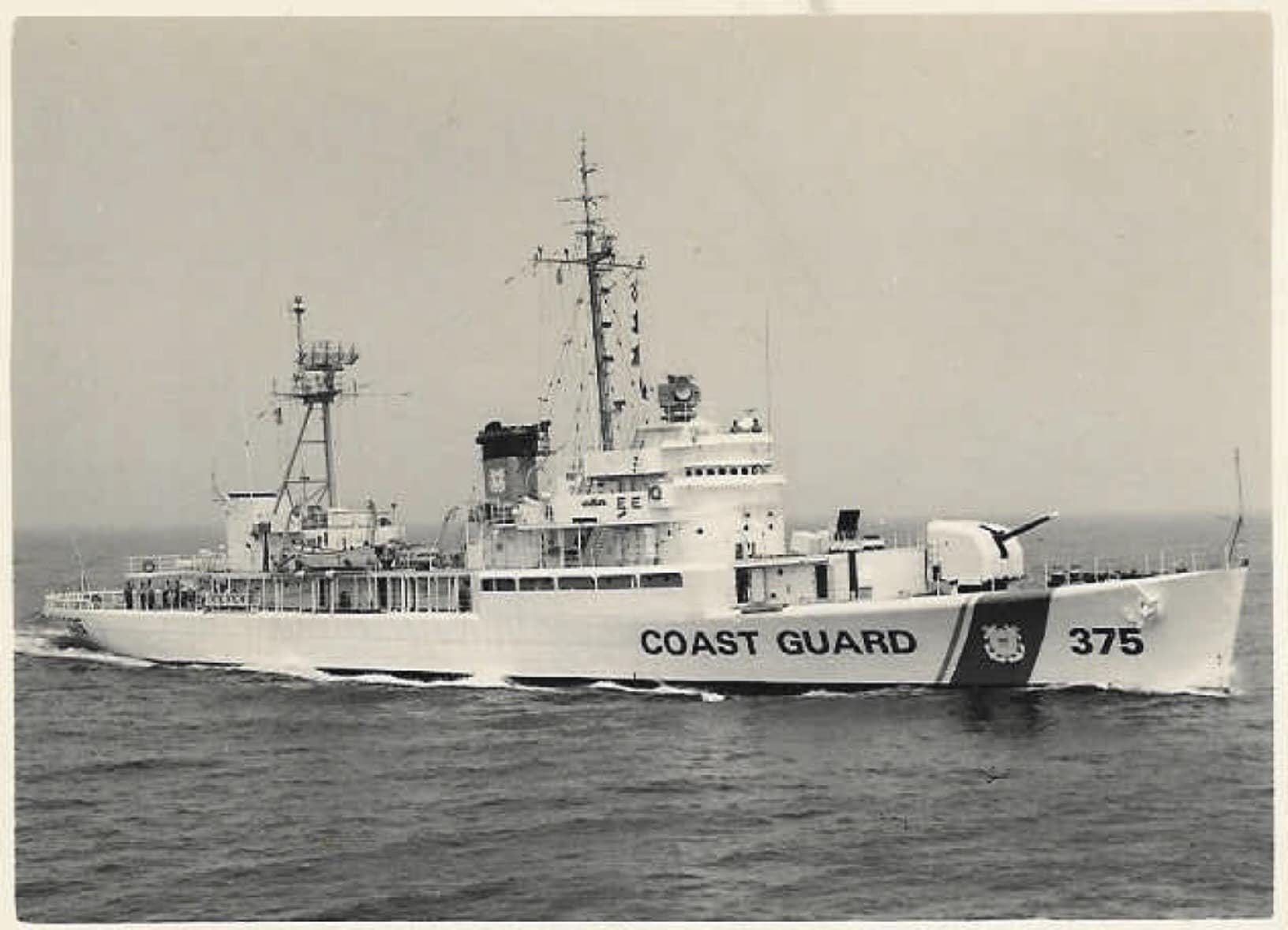
USCGC Chincoteague (WHEC-375) seen here late in her service with the Coast Guard, armed with a single 5″/38, Mk 56 Gun Fire Control System, torpedo tubes for ASW torpedoes, and Hedgehog ASW mortar.

In the 1940s Chincoteague and 17 of here sisters were transferred to the Coast Guard, where they primarily served as weather ships on a number of “Ocean Stations.” In Coast Guard service, these were referred to as the Casco Class.

As part of “Vietnamization” Chincoteague and six of her sister Coast Guard cutters were turned over to the South Vietnamese.

After being turned over to the South Vietnamese, the former Chincoteague, along with another former Coast Guard cutter of her class and two former US Navy ships fought the Chinese Navy in the “Battle of the Paracel Islands,” 16 January 1974.

RVNS Lý Thường Kiệt (HQ-16), the former USCGC Chincoteague

As the South Vietnamese government collapsed, the former Chincoteague along with five other ships of the class (the former Yakutat, Bering Strait, Castle Rock, Cook Inlet, and McCulloch) crowded with hundreds of refugees made their way to the Philippines. In 1976 these ships were turned over to the Philippine Navy as the Andrés Bonifacio class, with four of them commissioned and two (the former Yakutat and Cook Inlet) retained to provide spare parts. They remained in service until at least 1985.

The former USS/USCGC Absecon continued in service with the Vietnamese People’s Navy perhaps as late as 2000 and was probably the only Barnegat class ship ever armed with guided missiles, the SS-N-2 Styx and the SA-N-5 Grail.

“Merchant Mariner Shortage Has Gotten Worse, but a Partial Solution Is Available” –Real Clear Defense

“Convoy WS-12: A Vought SB2U Vindicator scout bomber from USS Ranger (CV-4) flies anti-submarine patrol over the convoy, while it was en route to Cape Town, South Africa, 27 November 1941. The convoy appears to be making a formation turn from column to line abreast. Two-stack transports in the first row are USS West Point (AP-23) — left –; USS Mount Vernon (AP-22) and Coast Guard manned USS Wakefield (AP-21). Heavy cruisers, on the right side of the first row and middle of the second, are USS Vincennes (CA-44) and USS Quincy (CA-39). Single-stack transports in the second row are Coast Guard manned USS Leonard Wood (AP-25, later APA-12) and Coast Guard manned USS Joseph T. Dickman (AP-26 later APA-13).”

Real Clear Defense reports,

A mariner shortfall in 2018 was a grave concern. Today, with an escalating conflict in Europe and an increasingly bellicose China, the lack of seasoned merchant mariners is a clear and present danger to our national security.

Four years ago, the nation was about 1,800 mariners short to sustain sealift in a crisis beyond six months. Today that number is only increasing.

The proposed partial solution is to increae the size of the Merchant Marine Academy classes.

Coast Guard Academy graduates know the Merchant Marine Academy primarily as a football rival, but it is also a source of many Coast Guard Officers.

The central point of the post is that we don’t have enough mariners to support a war. The great distances of the Pacific exacerbate the problem. Logistics, as always, are key.

I would note that the shortages of mariners is not just in the officer ranks, so something more would have to be done.

This have anything to do with the Coast Guard? Well, a few months before the US entry into WWII, there was a test of our maritime logistics capabilities, and it found that the merchant marine crews of Army transport ships were unwilling to operate in the manner the military thought best, including darken ship. What happened? The ships were commissioned and crewed by the Coast Guard.

I am not suggesting that today’s merchant crews are unreliable, but if there are shortages, it is not impossible the nation will again turn to the Coast Guard to supply mariners for high priority logistics ships.

“Coast Guard veteran turns 100, reflects on ‘scary days’ and ‘unbelievable sights’ of D-Day invasion” –D8 Press Release

A great personal story.

Coast Guard Cutter 16, an 83-foot wooden patrol boat assigned to Coast Guard Rescue Flotilla One, sits out of the water in Poole, England, in 1944. On D-Day, the crew of CGC-16 saved the lives of 126 Allied troops, more lives than any other vessel present that day. (U.S. Coast Guard photo)

 Feature Release U.S. Coast Guard 8th District Public Affairs Detachment Texas

Coast Guard veteran turns 100, reflects on ‘scary days’ and ‘unbelievable sights’ of D-Day invasion

Official headshot of Michael J. Swierc, who enlisted in the Coast Guard on Aug. 11, 1942, and trained as a motor machinist’s mate before deploying overseas for the first wave of the D-Day invasion. Swierc, who turned 100 years old on Nov. 6, 2021, received the Bronze Star Medal for helping save 126 Allied troops from drowning in the English Channel on June 6, 1944. (U.S. Coast Guard photo, courtesy Pam Manka)

Story by Petty Officer 1st Class Corinne Zilnicki

Nearly 80 years have passed since Mike Swierc vaulted over the side of a ship hundreds of yards off Utah Beach during the first wave of the D-Day invasion. But for Swierc, a 100-year-old Coast Guard veteran, the memories of those fateful days and nights have not faded from his mind.

“The night of the invasion was unbelievable,” said Swierc. “There was a continuous flash of lightning in the sky and we could hear the bombs. It was nonstop fire.”

Facing off against 28 German heavy artillery batteries and multiple 88 mm machine guns was not exactly what Swierc had expected upon enlisting in the Coast Guard. He and his younger brother had preemptively joined the service in 1942 hoping to protect domestic waterways and scour eastern U.S. coastlines for enemy submarines.

Instead, the farmer’s son found himself weaving through the frigid waters of the English Channel more than 5,000 miles from his hometown of Falls City, Texas.

A natural and seasoned mechanic, Swierc had spent the first 22 months of his Coast Guard service swept up in a whirlwind of basic training and diesel engine schools before deploying overseas for the Normandy invasion.

The 31-day journey from Bayonne, New Jersey, to Ireland was fraught with difficulty. Swierc passed the days aboard his transport ship peeling potatoes, scrubbing dishes and wincing at the sound of the wind lashing against the bulkhead.

“Somehow, I never got seasick,” Swierc marveled. “But we faced the most terrible storm when we crossed the Atlantic.”

The 500 destroyers, escort ships, battleships and aircraft carriers in Swierc’s convoy kept their bows pointed doggedly into the fierce wind and arrived overseas on schedule. Upon reaching Ireland, the Coast Guardsmen joined U.S. Navy sailors in joint training sessions, honing their skills in small-boat handling, ship-to-shore movement, beach landings and general maintenance. As D-Day loomed closer, Coast Guard, Navy, and British Royal Navy personnel prepared their ships for the channel crossing.

Swierc’s cutter, an 83-foot, wooden patrol boat called Coast Guard Cutter 16, was assigned to Rescue Flotilla One, a collection of 60 ships that had been hastily summoned only a few weeks prior. Although the wooden cutters of “the matchbox fleet” were initially designed to hunt submarines, their crews were now charged primarily with rescuing Allied soldiers during the invasion.

“The name of the game was search and rescue,” Swierc said. “I think we did our fair share.”

At around 4 a.m. on June 6, 1944, the Allied assault force departed from the rendezvous point and headed for the coast of France. Heavy seas battered the boats and soaked the men, many of whom were desperately seasick. Bullets and shellfire roared to life overhead and pummeled the water all around the convoy as it approached Utah Beach.

“We didn’t really have time to be scared,” explained Swierc. “We got in there and got after it.”

As soon as CGC-16 arrived off the beachhead, Swierc and his crew dove into action and began plucking survivors from the water around the USS PC-1261, the first ship sunk on D-Day. The submarine chaser had led the first wave of landing craft toward Utah Beach and was obliterated when an artillery shell slammed into its starboard side, instantly killing nearly half the crew.

With shellfire peppering the water around them and the explosions of nearby mines rattling the deck beneath their feet, the Coast Guard crew calmly began extracting shipwreck survivors from the oil-slicked waves.

Upon spotting two injured Allied soldiers in the water, Mike Swierc leaped off the cutter, swam 40 yards through enemy gunfire and fastened a rescue line around the men.

“The one guy said, ‘Don’t worry about me, just get my buddy,’” recalled Swierc. “But I looked at his buddy, and he was bleeding with his head in the water. He had already passed away.”

Unflinchingly, the CGC-16’s head mechanic swam back through the 54-degree water as crew members aboard the cutter reeled in the two soldiers. This was only one of many daring plunges Swierc took into the water that day.

“We were out there swimming our hearts out,” said Swierc. “That water was icy cold but you just didn’t pay attention to it, you just swam.”

With 90 rescued troops safely aboard, the CGC-16 crew sped away from the PC-1261 wreckage site and delivered the survivors to the USS Joseph T. Dickman, a nearby transport ship-turned-hospital platform.

Immediately after handing over the last survivor, the CGC-16’s skipper, Coast Guard Lt. j. g. R. V. McPhail, maneuvered the cutter back into the line of fire to recover more wounded soldiers and sailors from another damaged landing craft. The vessel had struck a mine and was listing on its side, threatening to trap more than 30 stranded crew members underwater. Swierc and his shipmates tossed lines to the men and hoisted them aboard only seconds before the landing craft completely capsized, narrowly avoiding crushing CGC-16 in its rapid descent.

Undeterred, the CGC-16 crew rushed to rescue survivors from a third landing craft decimated by artillery shells less than a mile offshore, nosing past mines and through unceasing shellfire to reach the men.

“The whole deck was completely covered with survivors, most of them traumatically injured,” Swierc said. “It was a sad situation, but we were sent there to do it, and we did it the best we knew how.”

Despite having little formal medical training, Swierc found himself administering first aid to those sprawled across the decks of his ship. Hands that had spent countless hours picking cotton and repairing tractors now steadily injected morphine into the veins of wounded Allied soldiers and marked each man’s forehead with an “X” to record the dosage. After dulling the survivors’ pain, Swierc and his shipmates secured them in baskets and passed them to personnel aboard the Dickman.

All told, the crew of CGC-16 rescued 126 men on June 6, more than any other ship present that day. Along with his shipmates, Swierc earned both the Navy and Marine Corps and Bronze Star Medals for his gallantry and lifesaving actions.

Although his award citation lauds his “cool courage” and “devotion to duty,” Swierc said he was merely doing what he was supposed to do.

The achievements of Swierc and the CGC-16 crew aligned with the overall efforts of Coast Guard Rescue Flotilla One, which saved more than 400 men on D-Day alone and rescued 1,438 Allied troops before the end of June.

Even when the D-Day invasion ended and Allied forces gained a firm foothold in France, Swierc’s commitment and loyalty did not waiver. Along with most of his fellow CGC-16 crewmen, he eagerly volunteered to deploy to the Pacific theatre.

However, the war ended before he got the chance to make the journey.

In September of 1945, the head mechanic of the CGC-16 boarded a transport ship and headed back across the Atlantic with a souvenir tucked in his bag: a set of wrenches from his cutter, which along with 58 other ships of the matchbox fleet had been sunk, burned or cut up for scrap.

Although he was proud to have served his country, Swierc was eager to return to Falls City and reunite with his family. As though flipping back to a page in a familiar book, Swierc resumed helping his father on the farm, picking cotton and shucking corn with the same hands that had pulled wounded, waterlogged soldiers out of the English Channel.

Shortly after returning home from the war, Swierc began working at his brother’s grocery store, where he soon met and inadvertently annoyed his future wife. Despite a rocky start, the two eventually went on their first date at a local cafe, got married in 1948 and had eight children. Swierc, who turned 100 years old on Nov. 6, 2021, and is now surrounded by 44 grandchildren and six great-grandchildren, described his life since D-Day as “rich in love.”

“It’s my family’s love that keeps me going,” he explained with a chuckle and a smile. “This is just the first hundred years of my life. Now I’m going to start on my second hundred.”

Allied troops storm Utah Beach under heavy German artillery and machine gun fire in Normandy, France, June 6, 1944. More than 23,000 men of the U.S. 4th Infantry Division landed on Utah Beach, the westernmost of the assault beaches. (U.S. Coast Guard photo)

Members from Coast Guard Sector/Air Station Corpus Christi attend a birthday celebration for Michael J. Swierc, a Coast Guard veteran who turned 100 years old, Nov. 6, 2021, in Falls City, Texas. Swierc was presented with a hand written letter from the Commandant, as well as a Coast Guard ensign signed by members of Sector/Air Station Corpus Christi and a unit ball cover. (U.S. Coast Guard photo, courtesy Sector/Air Station Corpus Christi)

A socket wrench set originally kept on board Coast Guard Cutter 16, an 83-foot wooden patrol boat whose crew saved the lives of 126 Allied troops on June 6, 1944. Michael J. Swierc, 100-year-old Coast Guard veteran and head mechanic aboard the cutter, kept the set of tools as a souvenir from his service during WWII. (U.S. Coast Guard photo, courtesy Pam Manka)


Coast Guard and CG Manned Vessels Lost in World War II

uss-menges-de-320torpedodamage

Coast Guard manned destroyer escort USS Menges (DE-320) showing the effects of an acoustic homing torpedo hit on the stern.

It is entirely appropriate for Veteran’s Day weekend reading, but this post was prompted by a recent update of the list of “Top Ten Posts.” I found that the 2011 post “What Does It Take to Sink a Ship?” was not only the top post since I started writing, it is also the top post of 2016. That looked at Navy major surface combatant losses in WWII, but I realized I have never surveyed the Coast Guard’s WWII losses.

This began as another shameless attempt to get the Coast Guard to recognize that they need torpedoes to stop medium to large ships, but it grew into a more comprehensive look at CG losses in WII. I did find that six (or seven, Escanaba?) Coast Guard or CG manned vessels were hit by torpedoes and in every case the ship was either sunk (four or five?) or immobilized (two).

I found a couple of good sources. “The Coast Guard at War” is a series of monographs completed shortly after WWII (between 1045 and 1950) and most of the apparently 25 volumes are available in pdf format here, along with a lot of other WWII references. In particular I used The Coast Guard At War: Lost Cutters (Official History Series, Volume VIII, 1947). It lists the loss of 16 Coast Guard vessels and the loss of 12 Coast Guard manned Navy vessels, but two of these (one Navy and one CG) were actually after the war was over. My other source was “U. S. Coast Guard Ship Losses” by Jim Gill, on the US Coast Guard Light Ship Sailors Association International web site. This source identifies 40 losses beginning with the Tahoma in 1914 up to USCGC Mesquite (WLB-305), grounded in 1989. It included three losses not listed in the official history, all by torpedoes:

  • (FS-255), a small Army freighter, 560 tons, torpedoed and sunk by a Japanese submarine while anchored, 11 May 1945, with the loss of four men.
  • USS Menges (DE-320), 1,590 tons, torpedoed while on convoy duty, 4 May, 1944, the ship survived severe damage to her stern, but there were 31 dead.
  • USS Etamin (AK-93), 7,176 tons, which was hit by a hit by an air launched torpedo and damaged badly enough that it was decommissioned and was used subsequently as an unpowered floating warehouse. One dead.

Coast Guard Vessels Lost:

The Coast Guard lost 15 vessels during the course of WWII. Of those, three are believed to be the result of enemy action. Of the remaining 12, eight were a result of adverse weather. 214 Coast Guardsmen were killed in these 15 incidents.

The three ships presumed loss to enemy action included the three largest Coast Guard vessels lost during the war:

CG 85006, 67 tons, was destroyed by an explosion, probably gasoline vapors, 27 Mar.’43, four dead.

CG 58012, 30 tons, was destroyed by fire, 2 May ’43, no fatalities.

CG 83421, 44 tons, was sunk in a collision, 30 June ’43, no fatalities.

USCGC Bodega (WYP-342), 588 tons, went aground attempting to assist another vessel, 20 Dec. ’43, no fatalities.

The eight vessels lost to foul weather were:

ls73

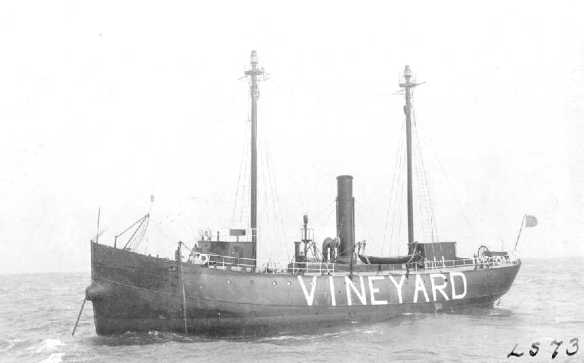
LV 73 on the Vineyard Sound station where she served from 1924 through 1944.  On 14 September 1944 she was carried off station during a hurricane and sank with the loss of all hands.

It might be assumed that the non-combat casualties were not war related, but that might not be the case. The urgency of the missions, the diversion of more capable ships to escort duty, the influx of inexperienced personnel placed in responsible positions, and the use of vessels pressed into service for which they may have been ill-suited, were all a result of the war, and it led to crews being placed in more danger than would have been the case in peacetime.

Coast Guard Manned Navy Vessels Lost:

Of the eleven Coast Guard manned US Navy ships lost during WWII, seven were lost to enemy action, the others were:

  • LST 203, 2,366 tons, was stranded after an intentional beaching, 1 Oct. ’43, no fatalities.
  • LST-69, 2,366 tons, destroyed in the West Loch disaster, 21 May ’44, no fatalities.
  • USS Serpens (AK-97), 14,250 tons, destroyed as a result of an apparent internal explosion of its cargo, 29 Jan. ’45, 196 CG fatalities. (Largest single loss of CG personnel)
  • USS Sheepscot (AOG-24), 2,270 tons, driven ashore by adverse weather, 6 June ’45, no fatalities.

serpens_ak-97

USS Serpens (AK-97)  US Navy photo #NH 89186, from the collections of the US Naval Historical Center, courtesy William H Davis, 1997

sheepscot_aog-24

USS Sheepscot (AOG-24) underway, August 1944, US Navy photo

Those lost to enemy action were:

USCGCMuskeget(WAG-48)

Photo: USCGC Muskeget, seen here before conversion to a weather ship. http://www.navsource.org/archives/09/49/49048.htm

lst69_2

“LST discharges supplies. . .”; no date (November, 1943?); Photo No. 3237; photographer unknown. The Coast Guard-manned LST-69 disembarks equipment during the Tarawa invasion.

Leopold_DE-319

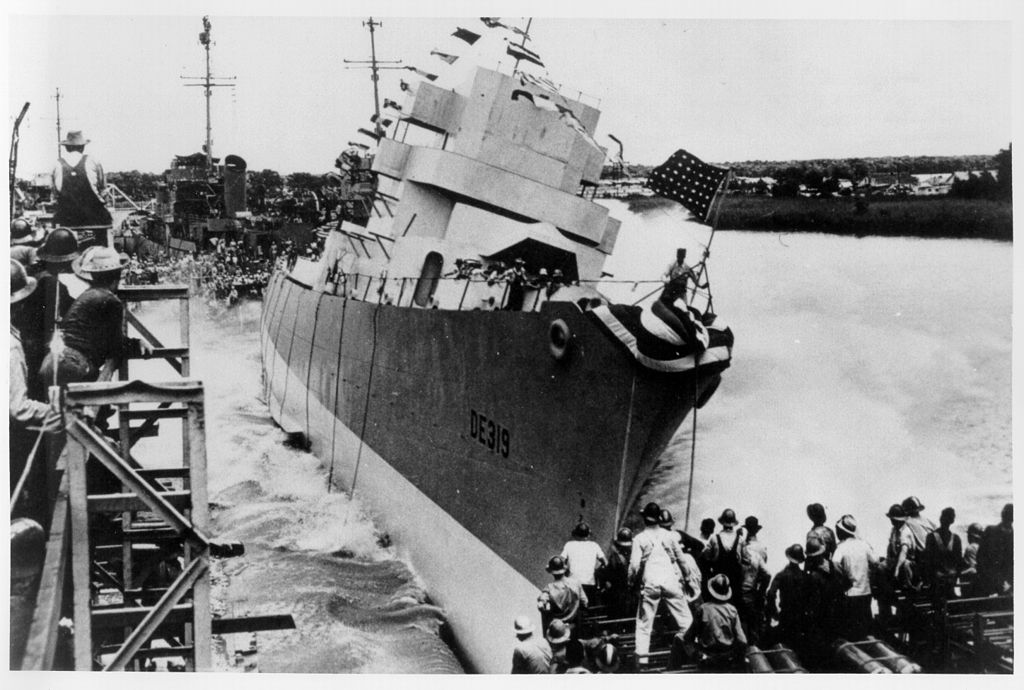
USS Leopold (DE-319) being launched. 

File:Lci-convoy.jpg

Normandy Invasion, June 1944 A convoy of Landing Craft Infantry (Large) sails across the English Channel toward the Normandy Invasion beaches on “D-Day”, 6 June 1944. Each of these landing craft is towing a barrage balloon for protection against low-flying German aircraft. Photograph from the U.S. Coast Guard Collection in the U.S. National Archives. Photo #: 26-G-2333

lci93_omaha_1_300

“SHE FELT THE NAZIS’ WRATH:” A U.S. Coast Guard infantry landing craft still flies its flag, though knocked out of the invasion, ripped and wounded on the beaches of France. Moving in for a landing, the LCI ran afoul of an underwater obstruction, which tore a gaping hole in her bow. Then as its cargo of troops piled ashore, Nazi shells battered her out of further action.”; no date; Photo No. 2395; photographer unknown.

Conclusion:

It may be surprising that it appears the Coast Guard lost two and half to three times as many men in Coast Guard manned Navy vessels, as in Coast Guard vessels.

According to the Coast Guard history web site,

Two hundred and fourteen thousand two hundred and thirty-nine persons served in the Coast Guard during World War II.  That number included 12,846 women.  The Coast Guard lost a total of 1,917 persons during the war with 574 losing their life in action, “died of wounds” received in action, or perishing as a “Prisoner of War.”

These incidents account over 40% of all lives lost and a majority of lives lost as a result of enemy action.