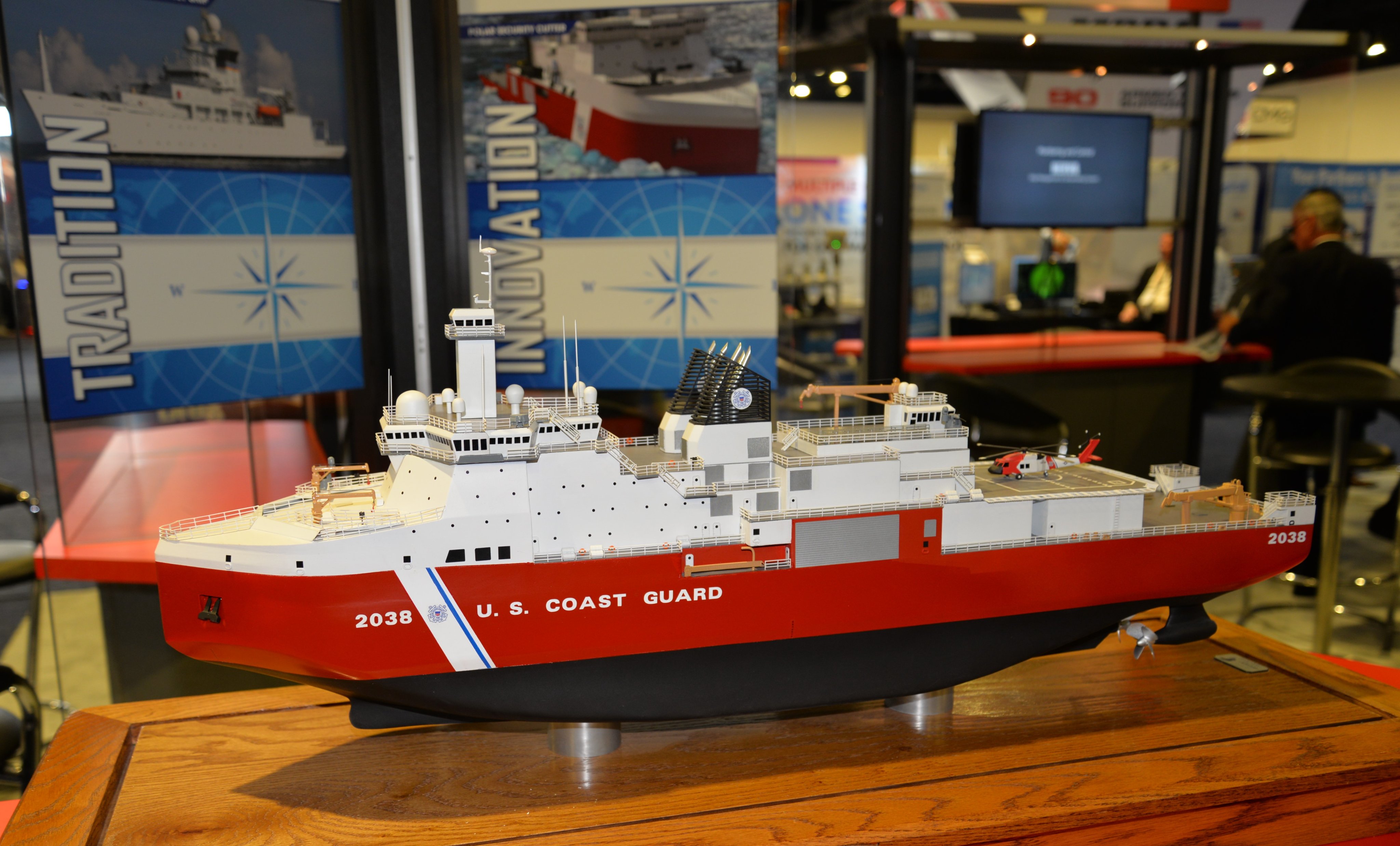
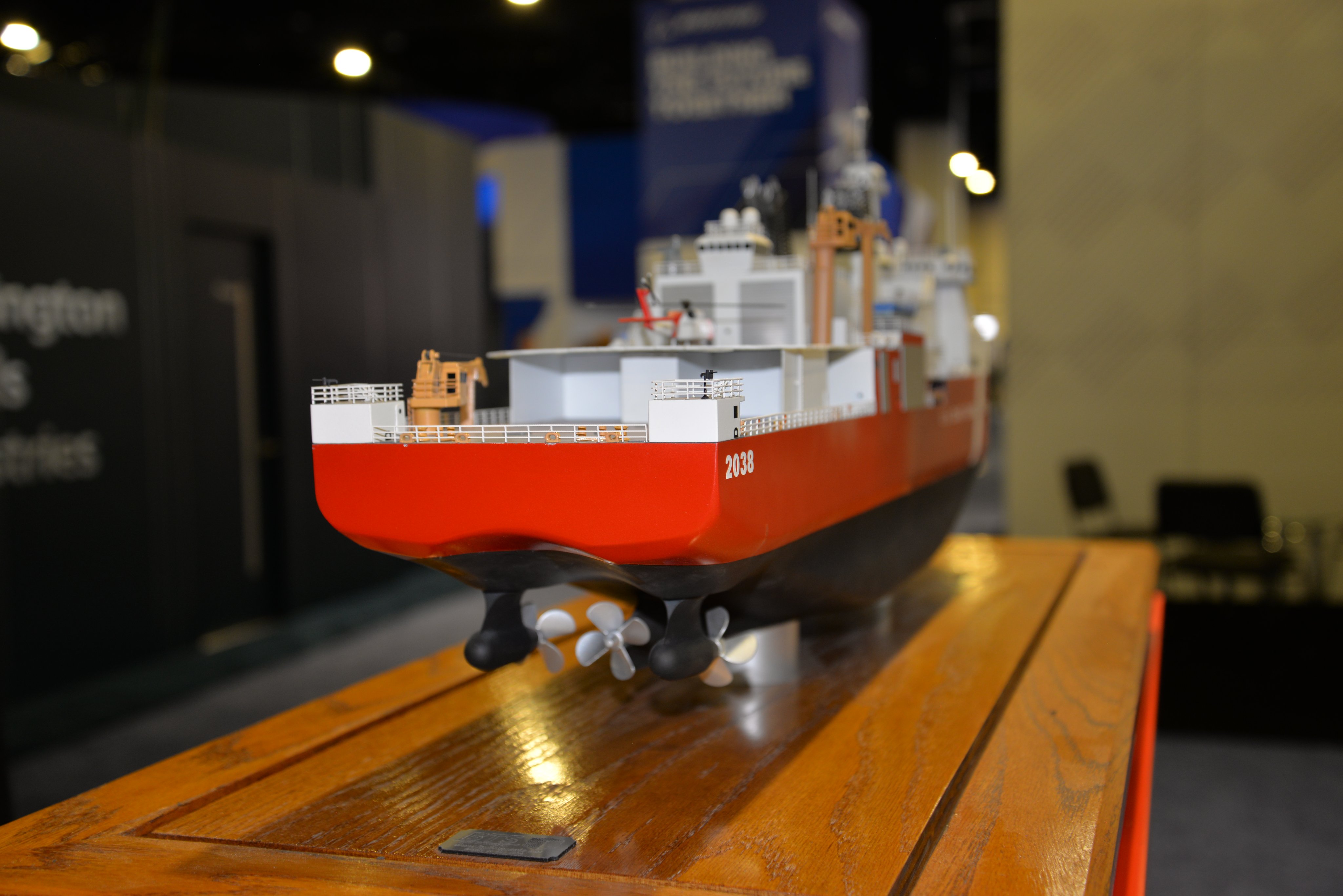
Photos of a model of Halter Marine’s Polar Security Cutter seen at Navy League’s Sea-Air-Space Exhibition have surfaced. Chris Cavas put the photos on Twitter.
Thanks to Walter for bringing this to my attention.


Photos of a model of Halter Marine’s Polar Security Cutter seen at Navy League’s Sea-Air-Space Exhibition have surfaced. Chris Cavas put the photos on Twitter.
Thanks to Walter for bringing this to my attention.
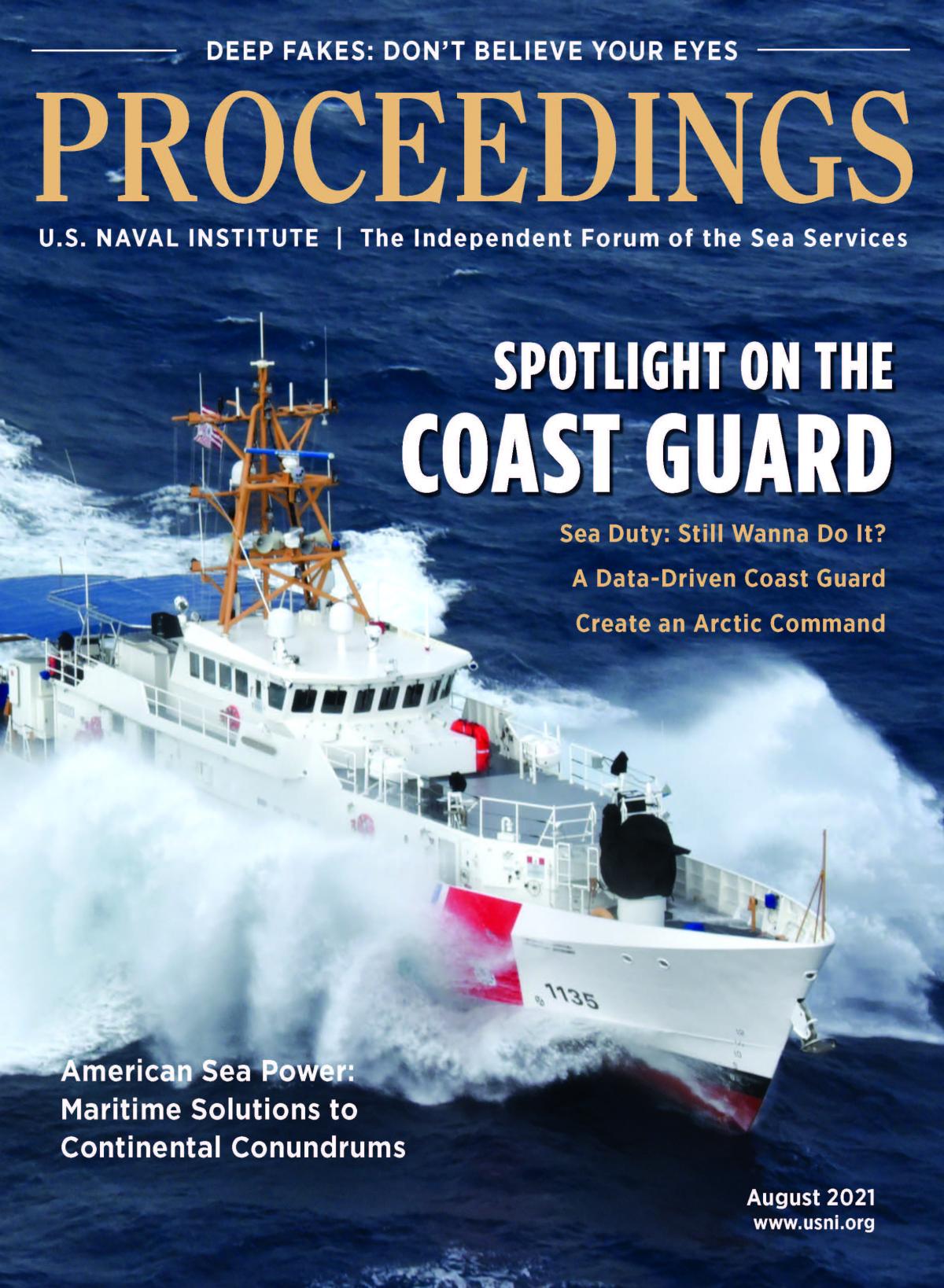
The US Naval Institute annually devotes a good portion of their August issue of Proceedings, to the Coast Guard, including publication of prize winning Essays. We will talk about some of the content later, but you can take a look at the latest issue here.
If you are not a member (shame on you), you will not be able to see all the content but some of it is available to non-members and you will be able to see at least the lead-ins.
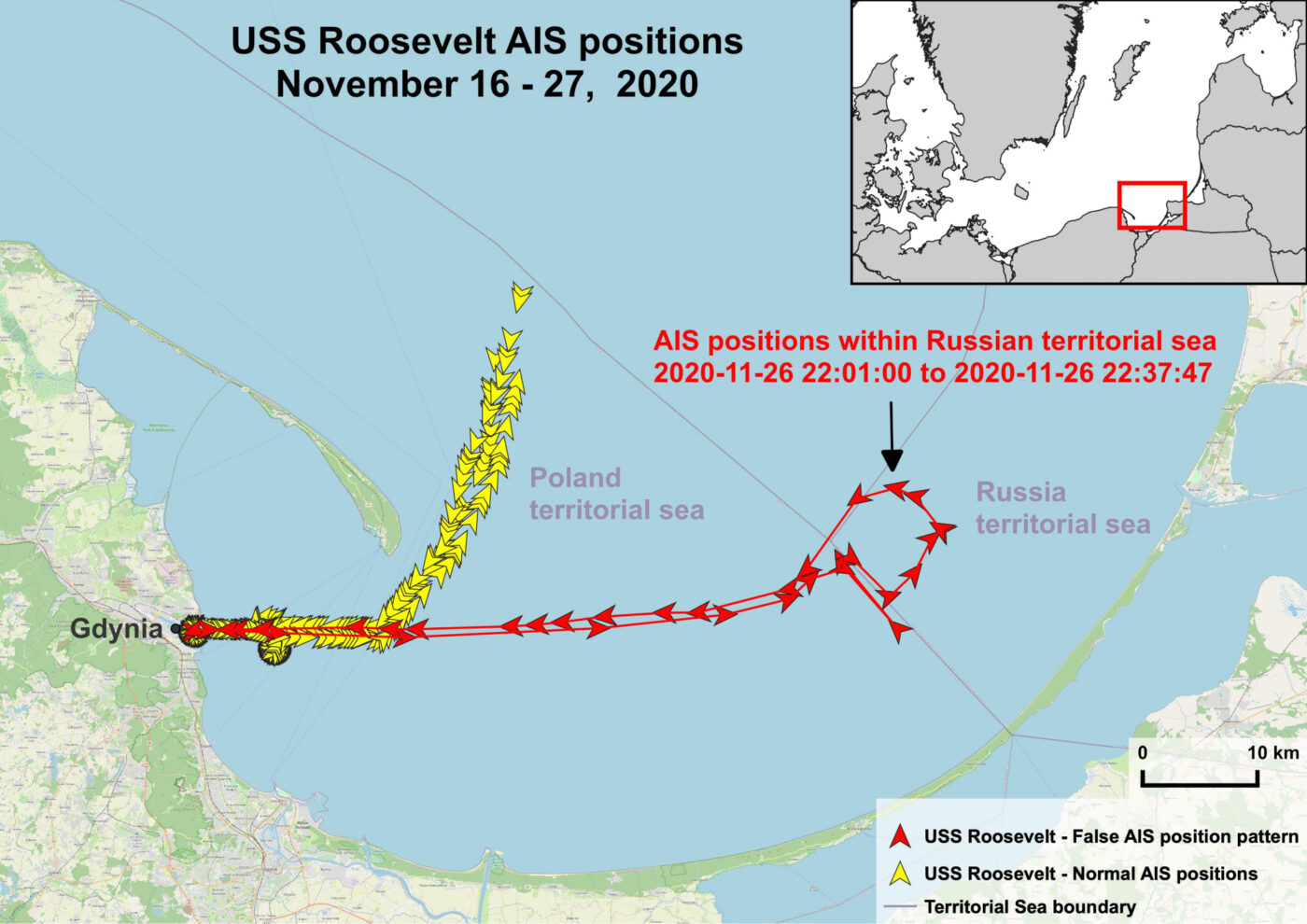
An intriguing story about false Automated Information Systems (AIS) information from Global Fishing Watch.
These systems are important not only for collision avoidance, but also for maritime domain awareness. Who is doing this, how, and for what reason is still a mystery.
Thanks to Sven for bringing this to my attention.
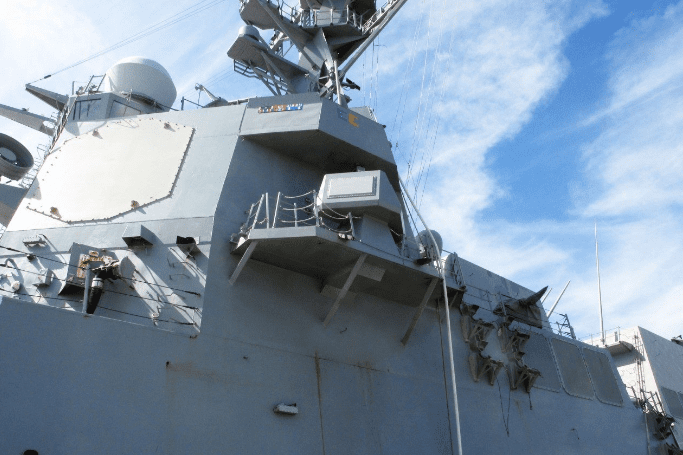
The Navy League on-line magazine “Seapower” has a new post, “Lockheed Martin Delivers 100th SEWIP 2, Starts Deliveries of SEWIP Lite to Navy” which reports Lockheed’s Surface Electronics Warfare Improvement Program (SEWIP) lite will be going on Coast Guard Offshore Patrol Cutters in addition to Navy LCS.
Lockheed has a couple of on-line articles about these systems:
“5 Facts about the Navy’s Surface Electronic Warfare Improvement Program”
and this SEWIP brochure.

CNN reports that two crew members of a Japanese owned Liberian flagged vessel were killed in an attack using a drone. The attack occurred in the Northern Indian Ocean, South of Oman. A BBC report says it occurred near the island of Misarah and that the ship is under US naval escort.
Given the location and the equipment recently seen on the Webber class cutters assigned to PATFORSWA, it is not impossible the escort may be one of the recently arrived cutters.


The Jamestown Foundation reports,
“The Japanese government’s National Institute for Polar Research (NIPR) released four reports so far this month (July 2021) outlining Tokyo’s view that Japan should be among the countries allowed to exploit the oil and natural gas resources lying below the surface in Antarctica and to make territorial claims there once the current treaty regime expires or is modified (Nipr.ac.jp cited by Rambler, July 24). That has sparked outrage in Moscow. Russian commentaries have characterized the NIPR proposals as a threat to Russian rights in the Antarctic; as a challenge to the 1959 international accord that governs the activities of countries there; as a new move on the geopolitical chessboard intended to put pressure on Moscow to sign a peace treaty with Tokyo and return the Kurile Islands; and even as a trial balloon to test out analogous plans the United States may try to employ against Russia in the Arctic in the immediate future (Izvestia, Politros.com, iReactor, Ren.tv, July 24; Expert.ru, July 25).”
The entire article is kind of intriguing in that it discusses how the Russians seem to see the U.S. conspiring against them in the actions of our allies, but for me, this is more evidence that we will see an attempt to open Antarctica to economic exploitation well before the expiration of the current treaty system in 2048.

“The Air Force spends around $6 billion a year on systems and priorities focused on the Arctic, a number that is expected to grow as the region’s importance rises and the Department of the Air Force’s first-ever Arctic Strategy (It is a quick and easy read–Chuck) hits its one-year anniversary.”
It seems likely this will have impact on the Coast Guard in several ways.
“That number will grow as the Air Force does things such as modernizing the North Warning System of radar sites, which has been “put off for too long.”
If they are going to do construction in the Arctic, there is a good possibility they will need icebreaker support to allow access.
“Arctic nations are collectively seeing the importance of the region militarily and working together on ways to increase these indications and warnings. The U.S. and Norway, for example, are collaborating on launching new polar-orbit satellites to improve space surveillance of the region.”
That has the capability of improving our Maritime Domain Awareness for law enforcement, marine environmental protection, and SAR.
Along with increased surveillance, hopefully we will also see improved command, control, and communications facilities and improved infrastructure.
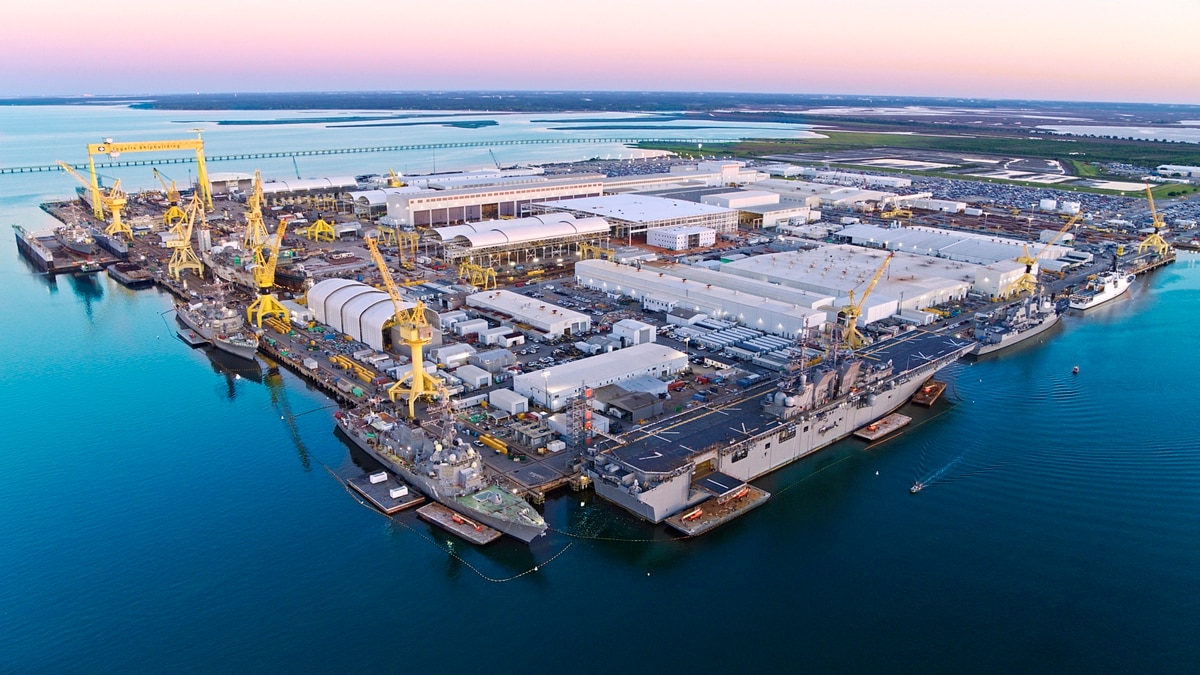
As reported in Marine Link, observer Craig Hooper sees a bust then boom cycle ahead for the shipbuilding industry.
As he frequently does, he has some kind words for the Coast Guard, lauding its success in capacity building with our partner maritime security organizations.
“… the U.S. Coast Guard embraced international collaboration. America’s underfunded and overtaxed maritime law enforcers focused on really working with partners, making significant investments in communications and coordination capabilities. Today, as more and more countries build up their maritime capabilities, those partners are getting to the point where their vessels, if cued to a target by the U.S. Coast Guard, can manage vessel interdictions on their own. The stats are impressive; the Coast Guard Commandant, Admiral Karl Schultz, suggested that, in 2020, 50-60 percent of narcotics interdictions now involve some contribution from partner nations, and that a partner nation handles the interdiction “end game” somewhere between 20-40 percent of the time. The idea, of course, is that as other countries develop their own shipbuilding capabilities, those countries would then assume responsibility for larger portions of the maritime security portfolio, freeing the United States to focus on developing intelligence, surveillance and reconnaissance platforms, coordination-oriented assets and tools for heavy strike.”
There are a couple of paragraphs that the Coast Guard should really take to heart.
“Should China avoid war while continuing to employ their vast national fleet in a controlled but provocative fashion, American shipbuilders can expect rising demand for coastal defense, patrol and other presence-oriented tools necessary for maintaining positive control of America’s vast, 4.3 million square mile Exclusive Economic Zone. The Coast Guard’s 25-ship Heritage class Offshore Patrol Cutter and 64-hull Sentinel class Fast Response Cutter program offer a good start, but more investment will be needed. By and large, new patrol-oriented vessels will primarily engage grey zone intruders via small-boat boarding teams, but they may also require the longer-term flexibility to accept sensors, missiles and other tools necessary to support antisubmarine warfare or other higher-end warfighting requirements (emphasis applied–Chuck).
“As China continues to explore the Arctic, Antarctica and consider other opportunities to either seize unclaimed global real-estate or take lightly-held areas, high latitude operations will continue to grow in importance. Unless America can help like-minded partners muster sufficient numbers of battle-ready polar-ready icebreakers, logistic ships and Coast Guard vessels, the vast Antarctic continent risks becoming China’s next target for territorial expansion.”
The ability to add weapons and sensors is sensible insurance against an uncertain future, and the cautionary note about China’s designs on Antarctica is one I fully endorse.
Covert Shores ((included in my list of recommended blogs) has provided an eleven minute video explaining various types of submarines and providing examples and lists of users. Most of it is pretty basic, but there are some less common types listed. If at all interested, I think you will find it worth your time.
mlive has a nice photo essay of USCGC Alder’s voyage from their homeport, Duluth, to the Coast Guard yard in Baltimore, where the ship will go through a year long major maintenance availability before being reassigned to San Francisco. The crew will return to Duluth and ultimately take over a different WLB.
This is part of an on going “In Service Vessel Sustainment” program that includes a major maintenance availability for all 16 of the Juniper class buoy tenders.
A number of time lapse videos are also linked.
Thanks to Paul for bringing this to my attention.
 Chuck Hill's CG Blog