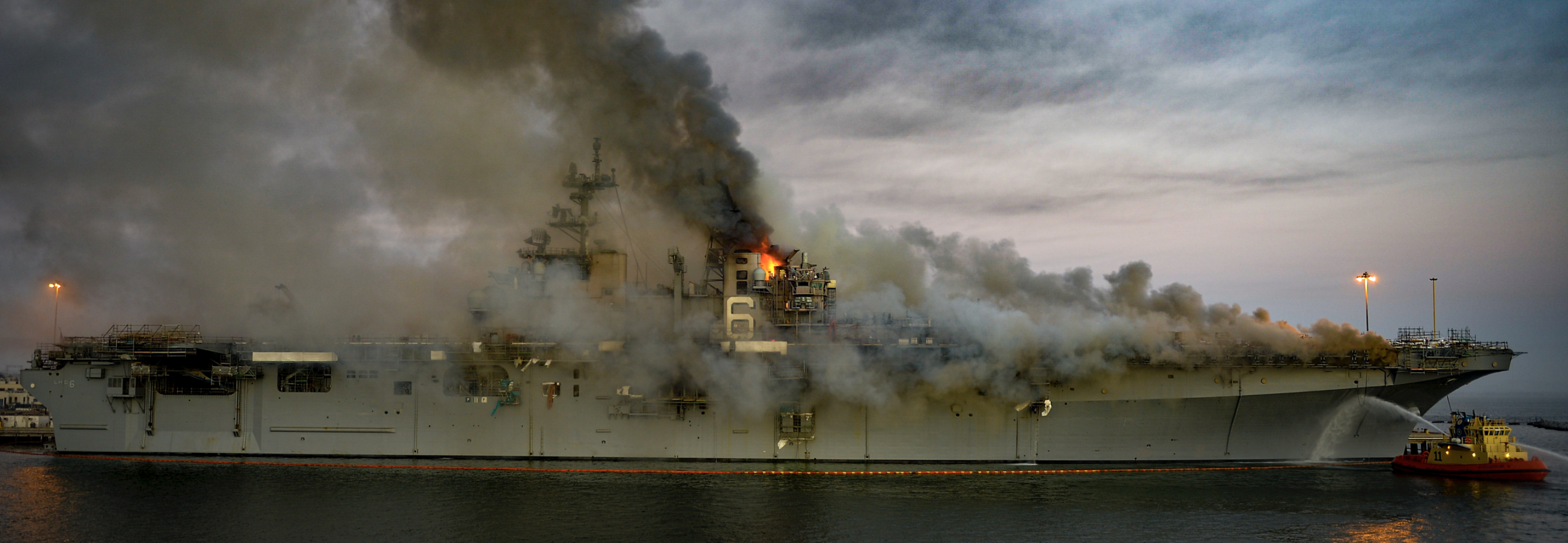
“U.S. Coast Guard Shutters HOMEPORT Platform in Blow to Maritime Industry” –gCaptain

Screen grab from https://www.uscg.mil/Homeport/

gCaptain reports,

The U.S. Coast Guard’s Homeport portal, a critical online platform for maritime operations since 2005, was permanently taken offline on April 12, 2025, leaving the maritime industry scrambling to adapt to alternative credentialing and verification processes.

The shutdown follows a unplanned period of restricted access that began on March 4, 2025, causing significant disruptions across the maritime sector and preventing employers from verifying crew credentials. gCaptain is told the HOMEPORT system’s inaccessibility has already resulted in job losses for mariners who cannot verify their credentials through the previously available online tools.

From the Homeport page,

The Coast Guard Homeport Internet Portal platform will be decommissioned on 12 April 2025. You will need to use alternate approaches for tasks typically performed through the Homeport platform.

We recognize that Homeport has long been a trusted tool for mariners and the broader maritime community. The Coast Guard is establishing temporary workarounds to ensure essential services remain accessible until we can identify the best permanent approach for each function.

The following pages will provide you with guidance on how to conduct activities previously done through Homeport.

The Coast Guard is responsible for maintaining both the physical and cyber security of our country’s maritime commerce system. The Homeport system is facing increasing costs and system obsolescence. As a result, it is no longer a viable tool for managing the many functions required to ensure the smooth and safe flow of vessel traffic.

“U.S. Navy Expands Maritime Border Security Mission with USS Stockdale Deployment” –gCaptain

USS Stockdale (DDG 106). U.S. Navy File Photo

gCaptain reports,

“The US Navy continues to strengthen its southern border security presence with the deployment of USS Stockdale (DDG 106), which departed Naval Base San Diego on April 11, 2025. The Arleigh Burke-class guided-missile destroyer takes over duties from USS Spruance in supporting U.S. Northern Command’s (USNORTHCOM) border security operations.”

There has been a long standing pattern of cruisers and destroyers deploying with and staying close to carriers, but increasingly it seems, the Navy is also using cruisers and destroyers as independent units and not just in support of Coast Guard interdiction efforts.

In addition to USS Spruance (DDG-111) and its replacement, USS Stockdale (DDG-106) on the West Coast and USS Gravely (DDG-107) on the Gulf coast supporting the Coast Guard, on March 15 USS Truxtun (DDG 103) departed Norfolk for independent operations. USS Chosin (CG-65) was in Panama and USS Normandy was off Guyana.

These are large and powerful ships, each with 90 to 122 vertical launch cells, some of which may be loaded with Tomahawk land attack cruise missiles.

Those operating off the US coast also provide a degree of protection US ports do not normally have.

“UNITAS 2025 Mid Planning Conference Concludes” –USNAVSOUTH/4TH FLEET

250407-N-OC941-4089 NAVAL STATION MAYPORT, Florida – (Apr. 7, 2025) – Led by Rear Adm. Carlos Sardiello, Commander U.S. Naval Forces Southern Command/U.S. 4th Fleet, more than 100 Sailors, Marines, and civilians gathered onboard Naval Station Mayport in support of the UNITAS 2025 Mid-Planning Conference. This year’s UNITAS, scheduled for September, is the longest-running, multinational maritime exercise in the world. UNITAS 2025 will combine the efforts of Allies and Partners from across the globe and serve as the warfighting introduction to Navy 250 – the U.S. Navy’s year-long birthday celebration. U.S. Naval Forces Southern Southern Command and the trusted maritime partner for Command/U.S. 4th Fleet is the maritime component of U.S. Caribbean, Central and South America maritime forces leading to improved unity, security, and stability. (U.S. Navy illustration by Chief Mass Communication Specialist John Fischer/Released)

Below is a news release. Hopefully the Coast Guard is planning to participate. I would think an NSC or MEC, FRC, LEDET, and a fixed wing with Minotaur. ECity might even host a foreign aviation unit.

It should be pretty easy, the action will take place off the US East Coast, off Mayport, Camp Lejeune, and Norfolk, Sept. 15 to Oct. 6.

It will include a SINK-EX. The Coast Guard might even get a chance to shoot. (Don’t worry that we might sink the target prematurely.)


April 11, 2025

UNITAS 2025 Mid Planning Conference Concludes

By USNAVSOUTH/4TH FLEET PUBLIC AFFAIRS

JACKSONVILLE, Fla. – U.S. Naval Forces Southern Command/U.S. 4th Fleet completed the UNITAS 2025 mid planning conference on board Naval Station Mayport in Jacksonville, Apr. 7-11. Held virtually and in-person, the conference brought together commands from the U.S. and partner nations to plan for UNITAS 2025, the 66th iteration of the world’s longest-running multinational maritime exercise.

UNITAS 2025 will feature a range of maritime operations, including a live-fire sinking exercise (SINKEX) and amphibious landings. The exercise will take place Sept. 15-Oct. 6 off the East Coast of the United States, with shore-based events at Naval Station Mayport, Marine Corps Base Camp Lejeune, North Carolina, and Naval Station Norfolk, Virginia.

“The level of participation and plans being developed are paramount to a successful exercise and are all oriented to expanding and strengthening our maritime partnerships,” said Rear Adm. Carlos Sardiello, commander of U.S. Naval Forces Southern Command/U.S. 4th Fleet. “Already steeped in a long history of success, UNITAS 2025 will continue to solidify a legacy of maritime partnerships.

More than 250 representatives from 23 countries and all branches of the U.S. military participated in person and virtually, including Argentina, Belize, Brazil, Canada, Chile, Colombia, Dominican Republic, Ecuador, El Salvador, France, Germany, Greece, Guatemala, Honduras, Jamaica, Japan, Mexico, Panama, Paraguay, Peru, Singapore, Spain, and the United States.

Participants refined the exercise scenario and objectives, the list of participating units and personnel, and logistics and communications plans. UNITAS is designed to strengthen relationships and foster interoperability among participating nations.

UNITAS 2025 will showcase maritime technology, including unmanned and hybrid fleet systems, building on last years integration of unmanned undersea vehicles. The exercise will culminate in high-end warfighting events.

“The combined efforts of all planners have shaped UNITAS 2025 to be the largest and most robust iteration of the exercise to date,” said Patrick Cooper, UNITAS 2025 lead planner. “The level of expertise and enthusiasm of every participant at the MPC has been truly astounding.”

UNITAS 2025 will also help set the stage for events celebrating the U.S. Navy’s 250th anniversary, a monumental event. Planning efforts will continue until the Final Planning Conference (FPC) scheduled to be held in June.

U.S. Naval Forces Southern Command/U.S. 4th Fleet is the maritime partner for Caribbean, Central and South American maritime forces, working to improve unity, security and stability.

“Coast Guard Cutter Spencer returns home after Operation Vigilant Sentry patrol, service life extension upgrades” –CG News

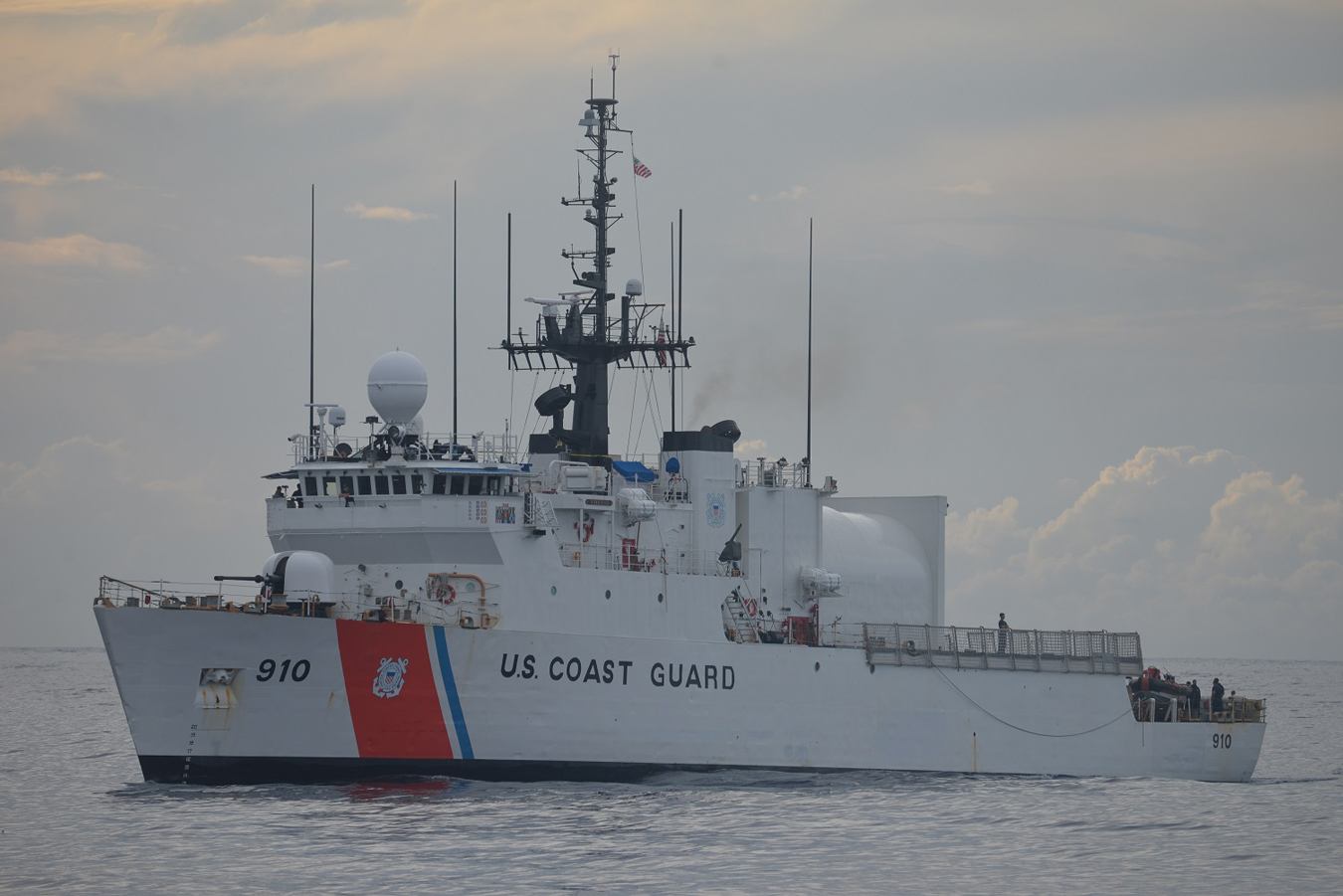
Coast Guard Cutter Spencer (WMEC 905) crew member conduct small boat operations while patrolling the Florida Straits, March 21, 2025. Spencer’s crew conducted a maritime border security patrol after completing nearly two years of service life extension upgrades at the Coast Guard Yard in Baltimore. (U.S. Coast Guard photo by Petty Officer 3rd Class Haylee Casey)

Below is a news release from Coast Guard News. Two things surprised me about the news release.

First, while it talks a lot about migrant interdiction there is no mention of actually interdicting anyone.

Second, I had expected Spencer to be transferred into the Pacific following their SLEP. There have been public statements that the Coast Guard would move another WMEC into the Pacific. After having spent two years in the yard, it would have seemed a good time to change homeport. Because cutters operating in the Western Pacific are far from their homeport and repair facilities, you might think a SLEPed ship, that had had its engines replaced, would be more reliable and therefore better suited for patrols far from home.

Since this is the first complete SLEP, perhaps they felt they needed to get more post–SLEP experience. Meanwhile, despite supposed greater emphasis on the Pacific, PACArea now has only 9 large patrol cutters–6 NSCs and 3 WMECs. When I retired PACArea had 14–10 WHECs and 4 WMECs.


 April 14, 2025

Coast Guard Cutter Spencer returns home after Operation Vigilant Sentry patrol, service life extension upgrades

PORTSMOUTH, Va. — The crew of Coast Guard Cutter Spencer (WMEC 905) returned to their home port in Portsmouth, Friday, following a 92-day deployment in support of alien interdiction operations in the Florida Straits.

Deployed in support of Homeland Security Task Force – Southeast (HSTF-SE) and Operation Vigilant Sentry (OVS) in the Seventh Coast Guard District’s area of responsibility, Spencer’s crew conducted search and rescue, and maritime border security operations to support the ongoing U.S. mission to protect the maritime borders of America.

On April 6, Spencer’s crew rescued a mariner from a capsized vessel approximately 35 miles northeast of Boynton Beach, Florida. Coast Guard Cutter Margaret Norvell’s crew embarked the survivor who was transferred to the Royal Bahamas Defense Force in good condition.

Prior to the patrol, Spencer was part of the service life extension program (SLEP) for two years getting upgrades at the Coast Guard Yard in Baltimore.

“Although our time in Baltimore was challenging, the officers and crew of Spencer were motivated to get the ship ready for operations and embark on our inaugural post-SLEP patrol,” said Cmdr. Justin Strock, commanding officer of Spencer. “In support Homeland Security Task Force – Southeast, we provided a clear visible deterrent to anyone considering illegal entry into the country.”

Established in 2003, HSTF-SE is the DHS-led interagency task force charged with directing operational and tactical planning, command and control, and functions as a standing organization to deter, mitigate and respond to maritime mass migration in the Caribbean Sea and Florida Straits.

OVS is the 2004 DHS plan that provides the structure for deploying joint air and surface assets and personnel to respond to irregular maritime migration in the Caribbean corridor of the United States. Its primary objectives are to prevent the unnecessary loss of life at sea while deterring and dissuading maritime mass migration alongside our federal, state and local partners.

Spencer is a 270-foot, Famous-class medium endurance cutter. The cutter’s primary missions are alien interdiction, counter-drug operations, enforcement of federal fishery laws, and search and rescue in support of U.S. Coast Guard operations throughout the Western Hemisphere.

This Day in Coast Guard History, April 15 / 16

Based on the Coast Guard Historian’s timeline, https://www.history.uscg.mil/research/chronology/
With inspiration from Mike Kelso

April 15

1909  The schooner G.A. Hayden grounded northeast of Station Point Judith. The sea being too rough for surfboat, the life-saving crew took the beach apparatus to the wreck and succeeded in reaching her with the second shot.  The first of her crew was landed in the breeches buoy at 12:10 am.  After 4 trips the last one came ashore at 12:45. The vessel was a total loss.

1986  The Libyan military, on orders from dictator Moammar Gadhafi, fired a missile at Coast Guard LORAN Station Lampedusa off the coast of Italy.  The missile fell harmlessly in the Mediterranean and there were no casualties.

April 16

USRC Louisiana

1820  Landing parties from the cutters Louisiana and Alabama destroyed a pirate base on Breton Island.

1908  Congress authorized the creation of the Office of Captain-Commandant and Engineer in Chief.  Additionally, commanding officers of vessels were authorized to administer oaths of allegiance and other oaths for service requirements in Alaska.

USS Joyce

1944  The Coast Guard-manned destroyer escort USS Joyce, along with her sister warship USS Peterson and a Navy DE sank the German submarine U-550 off New York.  The U-boat first torpedoed what was at the time the largest tanker in the world as the convoy it was joining was forming up outside of New York harbor.  The destroyer escorts then attacked the U-boat, forcing it to the surface, and then sank it in a surface gun-battle.  Joyce rescued the surviving u-boatmen as well as those off the stricken tanker.

Texas City disaster. Parking lot 1/4 of a mile away from the explosion.
Courtesy of Special Collections, University of Houston Libraries. To visit the entire collection at the University of Houston Digital Library please visit: http://digital.lib.uh.edu/cdm4/results.php?CISOOP1=exact&CISOFIELD1=CISOSEARCHALL&CISOROOT=/p15195coll4&CISOBOX1=Texas+City+Disaster&CISOSTART=1,1

1947  The French-owned Liberty ship Grandcamp exploded while loading ammonium nitrate at Texas City, Texas in one of the worst peace-time accidents ever to occur in a U.S. port.  Over 500 died and thousands were injured.

By U.S. Navy – United States Naval Operations Vietnam, Highlights; June 1966 – Map – U.S. MARKET TIME Forces, Public Domain, https://commons.wikimedia.org/w/index.php?curid=34475896

1965  Secretary of the Navy Paul Nitze asked Secretary of the Treasury Henry Fowler for Coast Guard assistance to combat seaborne infiltration from North Vietnam.  This naval operation in Vietnam was named Operation Market Time.

Japanese Navy Building a Cutter X

A concept image of a next-generation offshore patrol vessel (OPV) for the Japan Maritime Self-Defense Force (JMSDF) made by JMU. Image courtesy of Japan’s Acquisition, Technology, and Logistics Agency (ATLA).

Naval News reports,

“The Japanese Ministry of Defense has announced that it has started building a planned fleet of 12 OPV for the Japan Maritime Self-Defense Force (JMSDF). It is the first time ever for the service to introduce any OPV… the first and second vessels are scheduled to be launched in November this year, with the third and fourth vessels being scheduled to be launched in March 2026, according to the magazine. All four vessels will be commissioned in March 2027.”

Notably these are not for the Japan Coast Guard which does have a number of OPVs,

We have discussed these ships before. Earlier posts offer some good discussion in both the post and the comments.

Cost of the first four vessels is reportedly 35.7 billion yen ($250 million). While it is difficult to draw comparisons, that is about what the US Coast Guard would pay for four Webber class FRCs.

These are very true to my original Cutter X concept, e.g. take the crew, equipment, and capabilities of a  Webber class FRC and put them in a more seaworthy hull with greater endurance.

These are not small OPVs:

  • Displacement: 1920 tons, standard, which probably means about 2500 tons full load
  • Length: 95 meters or about 312 feet.
  • Beam: 12 meters, or about 39’4″

They are very similar in statistical description to the WHECs that preceded the Hamilton class, very much the same size as the class we called 311s. They had a range of 20,000 nautical miles at 12 knots.

Their reported speed of 20 knots would suggest they have less horsepower than the Webber class, but the true maximum may be understated. Asian nations frequently understate the capability of their ships. Earlier reports indicated a maximum speed of 25+.

An earlier conceptual drawing showed both a helicopter hangar and stern launch for two RHIBs.

Japan has had great difficulty in manning their ships so they have attempted to trim crew size. The reported crew size is only 30, but they will probably have accommodations for additional mission specific personnel.

Earlier conceptual design, Japanese Navy OPV stern quarter, Note significantly different mast.

From an earlier Naval News post,

“…the aft deck can carry multiple containers, making it useful for a wide range of missions, from transporting supplies in peacetime to providing humanitarian aid in times of disaster. These functions can be used to address Japan’s most pressing issues, such as remote island defense and disaster relief. On the other hand, multi-purpose hangers and modularization of equipment have the advantage of being able to change the ship’s equipment to suit different missions, as well as being able to propose a form that meets the requirements of other countries when exporting to them.”

What will these be used for? I suspect they will provide presence near critical coastal ports and infrastructure to prevent unconventional attacks launched from merchant or fishing vessels from either North Korea or China. The 30mm gun pictured may be adequate only for dealing with fishing vessels. Japan may have supporting forces they can call on.

More discussion of the class and its purpose here.

According to a video release in July 2021 by the MOD’s Acquisition, Technology & Logistics Agency (ATLA), the purpose of this OPV program is to provide enhanced maritime security, particularly around the southwestern Ryukyu Islands, including the disputed Senkaku/Diaoyu Islands in the East China Sea, by boosting JMSDF patrol activities in the region. The OPV will take over the patrol missions of the Abukuma-class destroyer escorts and Hayabusa-class patrol boats currently operated by JMSDF, including monitoring of other countries’ military vessels in the Sea of Japan, East China Sea, and Pacific Ocean. While the OPV’s primary mission is patrol, and its armament is very limited, it will be very well equipped for intelligence, surveillance, and reconnaissance (ISR).

“Canada, Finland tout different paths of ‘icebreaker diplomacy’ with US” –Defense News

Coast Guard Cutter Healy (WAGB 20) and crew conduct formation steaming exercises with Candian Coast Guard Ship Sir Wilfrid Laurier and crew in the Beaufort Sea, July 28, 2023. The crew conducted a passenger exchange with the Sir Wilfrid Laurier off the coast of Utqiagvik, Alaska. (U.S. Coast Guard photo by Petty Officer 1st Class Michael Underwood)

Defense News reports,

Canadian and Finnish shipbuilders have made different offers to the United States for the production of icebreakers, which must weigh what it values more: speed or its sovereign shipyard industry.

It becomes a question of priorities with conflicting aims,

  • Get them fast?
  • Build in US yards to expand US shipbuilding capabilities?
  • Increase the USCG budget to pay for rapid acquisition?

It is unlikely, possibly impossible, the answer to all these questions will be yes.

This Day in Coast Guard History, April 14

Based on the Coast Guard Historian’s timeline, https://www.history.uscg.mil/research/chronology/
With inspiration from Mike Kelso

April 14

1876  An Act of Congress (19 Stat. L., 132, 139) provided that any person “who shall willfully and unlawfully injure any pier, break-water, or other work of the United States for the improvement of rivers or harbors, on navigation in the United States, shall, on conviction thereof, be punished by a fine not exceeding one thousand dollars.”

RMS Titanic departing Southampton on April 10, 1912.

1912  At around 11:40 p.m., RMS Titanic collided with an iceberg off Newfoundland while sailing on her maiden voyage from Southampton to New York.  She sank a little over two hours later.  There were 1,517 lost including 103 women and 53 children out of total passenger and crew of 2,207.  Subsequently, certification and life saving devices were improved and an International Ice Patrol was created to patrol the sea lanes off Newfoundland and Greenland during the winter months.  The Revenue Cutter Service took over the operation of the Patrol the following year.

The USCGC Champlain on the International Ice Patrol, circa mid-1930s. USCG photo.

The Long Blue Line: Lt. j.g. Joseph Jenkins—first African American commissioned officer in the 20th century (photo courtesy of the Jenkins Family)

1943  Joseph C. Jenkins graduated as ensign in the Coast Guard Reserve, becoming the first officially recognized commissioned African-American officer in the Coast Guard.

USCGC Webber (WPC-1101) Fast Response Cutter

2012  The Coast Guard commissioned CGC Bernard C. Webber, the first of the new 154-foot Sentinel-Class cutters.  These cutters were built to replace the 110-foot Island-Class WPBs.  Bernard C. Webber was built by Bollinger Shipyards in Lockport, Louisiana and was assigned the homeport of Miami, Florida.

An official portrait photograph of BM1 Bernie Webber in his dress blues. (U.S. Coast Guard) A painting by Richard Kaiser of CG-36500 in heavy seas nearing the broken stern half of the Pendleton (depicted in the background). (U.S. Coast Guard)

This Day in Coast Guard History, March 13

Based on the Coast Guard Historian’s timeline, https://www.history.uscg.mil/research/chronology/
With inspiration from Mike Kelso

April 13

1909  Cleveland, Ohio, Lake Erie: Two boys were unable to pull against the wind, were in danger of drifting on the breakwater.  Life-saving crew at Cleveland went out, took the two boys in their power lifeboat, and towed their boat to East Ninth Street pier.

USCGC Stratton

2014  CGC Stratton returned to its homeport at Coast Guard Island in Alameda, California, after a 97-day deployment to the Eastern Pacific Ocean.  Since departing January 6, 2014, Stratton completed a 22,000-mile patrol in support of joint counter-drug operations off the coast of California and in the Eastern Pacific Ocean.  During this operational patrol, Stratton’s law enforcement crews seized 500 kilograms and disrupted 1,650 kilograms of cocaine valued in excess of $70 million.  Additionally, Stratton’s crew demonstrated their dedication to marine life when a crew aboard their small boat noticed a sea turtle entangled in fishing line about 500 miles off the coast of Panama March 19, 2014.  After bringing the turtle aboard the small boat, the crewmembers freed it from the line and sent it back to sea.  During a port call in Panama City, Panama, Stratton’s crew participated in a community relations project by painting and restoring a local orphanage.

A Coast Guard Station Boston crew transits between Coast Guard Cutter Escanaba and Coast Guard Cutter Spencer in Boston on Nov. 24, 2014. The Escanaba and Spencer are 270-foot Famous-class medium endurance cutters. U.S. Coast Guard / Petty Officer 3rd Class MyeongHi Clegg

2015  CGC Escanaba returned to its homeport in Boston after a 54-day deployment in the Caribbean.  During the patrol, Escanaba’s mission was to detect and interdict vessels suspected of narcotics trafficking in the waters south of Puerto Rico and the Dominican Republic in support of Operation Unified Resolve.  Escanaba, in conjunction with Coast Guard Cutter Tahoma, a 270-foot cutter home-ported in Kittery, Maine, pursued two go-fast vessels and assisted in two multi-agency interdictions resulting in the detention of eight suspected drug smugglers and 1,300 pounds of cocaine, valued at $16 million.  Prior to the patrol, Escanaba’s crew completed Tailored Ship’s Training Availability at Naval Station Mayport, Florida, which included 134 drills and exercises spanning five warfare areas: command and control, engineering, damage control, seamanship, and weapons.

This Day in Coast Guard History, April 10, 11, 12

Based on the Coast Guard Historian’s timeline, https://www.history.uscg.mil/research/chronology/
With inspiration from Mike Kelso

April 10

1938  The Coast Guard established a “Flood Relief Force” to assist the Red Cross and the victims of flooding of the Alabama and Tombigbee Rivers.  The “Force” consisted of 26 motorboats, one communication truck, two portable radio sets, one Grumman JF-2 amphibian aircraft, and 60 enlisted men, all under the command of LCDR Roy Raney and based at Selma, Alabama.  On April 10 and 11, the Floor Relief Force was “engaged in removing persons from dangerous positions and in transporting Government and Red Cross officials throughout the flood area.”

2014  CGC Seneca returned to its homeport in Boston after completing a 53-day deployment which included two weeks of training at Joint Expeditionary Base Little Creek, Virginia, and five weeks of fisheries patrols off the coasts of New Jersey, Virginia, and North Carolina.  Seneca patrolled the Mid-Atlantic Ocean in support of the Coast Guard Fifth District’s Operation Ocean Hunter.  They boarded 26 fishing vessels from March 2 until April 5.  During the patrol, Seneca ensured the commercial fishing fleet was in compliance with all federal fisheries regulations and issued two fisheries violations.  In addition to law enforcement, Seneca conducted a workup with the Coast Guard Maritime Security Response Team and other deployable specialized forces units.  Using Seneca’s flight deck, MSRT members completed 76 vertical insertions and 44 hoists.  They also completed 210 climbs where they boarded the cutter from a tactical boat via a caving ladder.  Seneca also completed several helicopter in-flight refuels and vertical replenishments with Coast Guard Air Station Elizabeth City, North Carolina.

The Coast Guard Cutter Seneca (WMEC-906) crew underway on the Eastern Pacific Ocean, Sept. 22, 2018. The cutter Seneca is the sixth of thirteen 270′ Famous Class medium endurance cutters in the United States Coast Guard fleet. Home ported in Boston’s historic North End, SENECA moors within a short walk of such landmarks as the Old North Church, Faneuil Hall, USS CONSTITUTION, and TD Garden – Home of the Celtics and Bruins. (Coast Guard Photo)

2015  CGC Seneca returned to its homeport in Boston after a 64-day deployment. The crew of Seneca completed Tailored Ships Training Availability (TSTA), served as a primary Search and Rescue Response asset along the eastern seaboard, and conducted fisheries enforcement boardings from South Carolina to Maine.  During the patrol, the crew responded to the Motor Vessel Grey Shark, approximately 175 nautical miles off the coast of Cape May, New Jersey which was reported adrift and on fire.  Seneca arrived on scene and escorted the vessel until the Eileen Mcallister took the vessel in tow to New York.  The cutter’s crew also participated in an international, multi-agency search and rescue exercise in Rhode Island Sound, conducting more than 45 small boat and helicopter hoist evolutions with partners from five Coast Guard units, the New York Air National Guard, and Canadian Forces.  For the final mission of the patrol, Seneca hosted Maine Marine Patrol officers for a 24-hour fisheries enforcement operation, targeting lobster fishing boats off the coast of Rockland, Maine.

April 11

1917  With the outbreak of World War I President Woodrow Wilson issued an executive order transferring 30 lighthouse tenders to the War Department.  All were subsequently assigned to the Navy Department and 15 lighthouse tenders, four lightships, and 21 light stations also were transferred to the Navy Department.  One more tender was transferred on January 31, 1918 making a total of 50 vessels and 1,132 persons. The War Department used those assigned in laying submarine defense nets during the war and in removing these defenses after the war. Other duties performed by these vessels were placing practice targets, buoys to mark wrecks of torpedoed vessels, and other marks for military purposes, as well as being employed on patrols and special duty assignments.

1938  Coast Guard Patrol Boat CG-240, part of the Coast Guard’s Flood Relief Force established to assist flood victims in Alabama, evacuated 102 persons from the vicinity of Hohn Miller’s Plantation, below Camden, Alabama.

1952  Immediately following the crash of a commercial overseas transport aircraft off the San Juan Harbor, Coast Guard forces coordinated with those of the U.S. Air Force and U.S. Navy to rescue 17 of the 69 persons on board.

An aerial port view of the U.S. Coast Guard high endurance cutter RUSH (WHEC-723) underway during Exercise Brim Frost ’85.

1971  Coast Guard cutters Rush and Morgenthau, assigned to Coast Guard Squadron Three in Vietnam, destroy an enemy trawler.

The Former USCGC Morgenthau, now in Vvietnamese service

USCGC Wrangell WPB-1322 and USS Ronald Reagan CVN-76

2003  CGC Wrangell and the USS Firebolt, with embarked Coast Guard Law Enforcement Detachment 406, escorted the first commercially transported humanitarian aid shipment into the Iraqi port of Umm Qasr.  The Motor Vessel Manar, owned by Manar Marine Services of the United Arab Emirates, delivered almost 700 tons of humanitarian aid including food, water, first aid, and transport vehicles.  This aid shipment was supplied and coordinated by the UAE Red Crescent Society.  This was the fourth aid shipment to arrive in Umm Qasr after the launch of Operation Iraqi Freedom.

April 12

1808  Subsistence for Army officers was fixed at 20 cents per ration and later that year it was applied to all officers of the revenue cutters.

1843  Captain Alexander V. Fraser, Revenue Cutter Service, was appointed Chief of the newly created Revenue Marine Bureau of Treasury.  He therefore became, in effect, the service’s first “Commandant”.

Plans of USRC Harriet Lane.

1861  The cutter Harriet Lane fired the first shot from a naval vessel in the Civil War.  The cutter fired across the bow of the merchant vessel Nashville when the latter attempted to enter Charleston Harbor without displaying the national flag.

1900  An Act of Congress (31 Stat. L., 77, 80) extended the jurisdiction of the Lighthouse Service to the noncontiguous territory of Puerto Rico and adjacent American waters.

1902  Congress authorized the retirement of officers at 3/4 pay for incapacity.  Congress also made all promotions subject to examinations (mental and physical).  Additionally, commissioned officers of the Revenue Cutter Service were granted the same pay and allowances “except forage” as officers of corresponding rank in the Army, including longevity pay.

Lt. (j.g.) Beverly Kelley, first woman to command a U.S. military vessel, on the bridge of the 95-foot cutter Cape Newagen. (U.S. Coast Guard photo)

1979  LTJG Beverly Kelley assumed command of CGC Cape Newagen, thereby becoming the first woman to command a U.S. warship.

Woodcut of Ida Lewis, light-house keeper, Women of the century By Phebe Ann Hanaford 1876

1997  The Coast Guard commissioned CGC Ida Lewis (WLM 551) on this date.  The tender was assigned to Newport, Rhode Island.  Ida Lewis was the lead ship of 14 new 175-foot Keeper Class coastal buoy tenders built by Marinette Marine of Marinette, Wisconsin for the service.  They were the first Coast Guard cutters equipped with Z-Drive propulsion units and were named after famous lighthouse keepers.

USCGC IDA LEWIS

2013  The U.S. Coast Guard and Makah Tribal Council signed a Memorandum of Agreement to reaffirm their integral partnership, cooperation, and coordination in pollution prevention and response.  The focus of the MOA was to enhance consultation, improve the leveraging of resources within respective authorities as applicable, and to improve collective all-hazards prevention and response posture within the maritime environment that comprises the Makah Treaty Area.

The crew of the Coast Guard Cutter Active, a 210-foot Medium Endurance Cutter homeported in Port Angeles, Wash., conducts an at sea refueling of the Coast Guard Cutter Oliver Berry, a fast response cutter homeported in Honolulu, in the Eastern Pacific Ocean, Sept. 17, 2017.
The Active’s crew recently returned home from a 65-day counter narcotics patrol in the Eastern Pacific Ocean where they interdicted more than 1,500 kilograms of cocaine valued at more than $49 million.
U.S. Coast Guard courtesy photo.

2015  CGC Active returned to its home-port of Port Angeles after seizing more than $17 million worth of illegal narcotics during an 88-day deployment.  Active was deployed to the Eastern Pacific Ocean off the coast of Central America in support of Joint Interagency Task Force South.  During the deployment, Active’s crew responded to search and rescue calls, detained a number of suspicious vessels and suspects, and seized over 1,177 pounds of cocaine from suspected smugglers.