“Coast Guard increases operational presence near southwest border between U.S. and Mexico” –D11

Coast Guard Cutter Active and partnership agencies interdict a migrant vessel, approximately 20 miles off the coast of Point Loma (San Diego), California, Jan. 27, 2025. The crew of Active, the Coast Guard Cutter Terrell Horne and U.S. Customs and Border Protection members worked together to interdict this illegal migrant operation, which had 21 individuals aboard. (U.S. Coast Guard courtesy photo)

Below is a District 11 (California) news release.

We have seen a noticeable increase in West Coast migrant interdictions near the Southern border that suggested much increased human trafficking. This is apparently in response to that increase.


March 28, 2025

Coast Guard increases operational presence near southwest border between U.S. and Mexico

ALAMEDA, Calif. – The Coast Guard has increased its operational presence near the southwest border between U.S. and Mexico to enhance border security, immigration enforcement and to protect the territorial integrity of the United States.

Coast Guard District Eleven (D11) has expanded its posture from previous steady state counter-illicit-maritime-activities to gain full operational control of the Southwest Maritime Border.

Since Jan. 21, D11 has tripled its forces operating on the southern border and coordinated Coast Guard surface and air presence with partners to detect, deter, and interdict alien and drug smuggling ventures. D11 diverted aircraft, cutters, small boats and crews under its operational control to the southern border, increasing the illegal alien apprehension rates by 75% with multiple smuggling attempts continuing to occur each night. The Coast Guard remains committed to a persistent operational presence to ensure border security and territorial integrity of the United States.

Irregular maritime migration aboard unseaworthy or overloaded vessels is always dangerous, and often deadly. D11 remains steadfast in its commitment to saving lives and discouraging anyone from taking to the sea in ways that are unsafe and illegal.

D11 has taken immediate actions to increase operational presence and focus to combat illegal fentanyl threatening the United States. In recent years, smuggling ventures across the southern border have been found to include bulk cocaine, methamphetamines, and fentanyl. This trafficking of illegal drugs poses an urgent threat to the American people, and the members of the Coast Guard do everything in their power to interdict drugs before they reach our shores and citizens. Accordingly, the Coast Guard has increased operations to interdict, seize, and disrupt the transshipment of cocaine and other bulk illicit drugs by sea. This includes operations in the Eastern Pacific and the Western Hemisphere Transit Zone, a major highway for illegal smuggling activity. Through sustained counter-narcotics operations, the Coast Guard has imposed billions of dollars of costs on the criminal networks, continuing the fight against corruption and violence fueled by narco-trafficking. Coast Guard law enforcement action and presence is critical to countering the destabilizing impacts of transnational organized crime. Since January 21, the Coast Guard has interdicted more than 68,800 lbs of cocaine and 4,200 lbs of marijuana totaling nearly $785 million in wholesale value.

These trends may change due to an influx of Coast Guard assets coupled with Department of Defense (DoD) resources and U.S. Border Patrol in a coordinated effort to protect our southern borders and maritime approaches. U.S. Northern Command (NORTHCOM) recently deployed two U.S. Navy warships to the southern border to protect the territorial integrity of the United States and support Department of Homeland Security (DHS) and Coast Guard operations.

These U.S. Navy warships will operate in direct support of the Coast Guard and carry Coast Guard law enforcement teams that will enable them to conduct border security operations under Coast Guard authorities. As the Coast Guard hardens and sustains its operational posture, including the arrival of these U.S. Navy warships, it is fully integrated with DHS and DoD through NORTHCOM and U.S. Southern Command.

Additionally, D11 is assisting with the national transport of illegal aliens to designated locations in Texas and California, where DoD then transports the aliens internationally for repatriation. The Coast Guard continues to devote its forces from across the nation to support these flights. These combined surface and air operations demonstrate the Coast Guard’s continued dedication to control, defend, and secure U.S. borders, territorial integrity, and ensure sovereignty.

D11 plays a crucial role in homeland security and economic prosperity by conducting border security and counter-drug operations to safeguard the integrity of the Southwest Border and its maritime approaches, effectively interdicting, seizing and disrupting drug and alien smuggling at sea.

This Day in Coast Guard History, March 29 / 30

Based on the Coast Guard Historian’s timeline, https://www.history.uscg.mil/research/chronology/
With inspiration from Mike Kelso

March 29

1867  The lighthouse at Timbalier Bay was destroyed in a hurricane.  The brick tower “was leveled to the ground and covered with from three to six feet of water.”  The Lighthouse Board commended the keepers, “who faithfully performed their duty, barely escaping with their lives, and living for some days in an iron can buoy . . .”

Members of the Overland Relief Expedition

1898  Lieutenants David Jarvis and Ellsworth P. Bertholf and Surgeon Dr. Samuel J. Call of the Revenue cutter Bear reached Point Barrow, Alaska, after a 2,000 mile “mush” from Nunavik Island that first started on December 17, 1897, driving reindeer as food for 97 starving whalers caught in the Arctic ice.  This Overland Rescue was heralded by the press and at the request of President William McKinley, Congress issued special gold medals in their honor.

1938  By an Executive Order of this date, President Franklin Roosevelt enlarged substantially the number of “personnel in the Lighthouse Service who are subject to the principle of the civil service,” which allowed advancement in the Service based solely on individual merit.

1984  Coast Guard AIRSTA Cape May and Group Cape May responded to severe flooding in southern New Jersey and Delaware after a late winter storm struck the area on March 29, 1984.  Coast Guardsmen evacuated 149 civilians from Cape May and Atlantic City.

1985  The last lightship in service with the Coast Guard, CGC Nantucket I, was decommissioned, thus ending 164 years of continuous lightship service by the U.S. Government.  Nantucket I was the last of the U.S. lightships and the last of the Nantucket Shoals lightships that watched over that specific area since June of 1854.  Launched as WLV-612 in 1950 at Baltimore, the ship also stood watch as the light vessel for San Francisco and Blunts Reef in California, at Portland, Oregon, and finally at Nantucket Shoals.  Nantucket I also spent time in service as a “less-than-speedy” law enforcement vessel off Florida.

Photograph of Ellsworth P. Bertholf, Commandant of the U.S. Revenue Cutter Service from 1911 to 1915 and Commandant of the U.S. Coast Guard from 1915 to 1919. Coast Guard photo.

2005  The keel was laid for the first of the new 418-foot National Security Cutters, CGC Bertholf (WMSL-750), named for Commodore Ellsworth Bertholf, former commandant of the U.S. Coast Guard.  Bertholf was constructed at Northrop Grumman Ship Systems in Pascagoula, Mississippi.  The cutter was christened on November 11, 2006 after being launched on September 29, 2006.  The Coast Guard commissioned Bertholf on August 4, 2008.

March 30

1867  The United States signed the Alaska purchase treaty with Russia.

Admiral Russell R. Waesche, Sr., USCG Commandant 1936 to 1945

1942  By Presidential proclamation, the Coast Guard was designated as a service of the Navy to be administered by the Commandant of Coast Guard under the direction of the Secretary of the Navy, similar to the administration of the Marine Corps.

As Commandant from 1936 through 1945 Waesche insured the successful integration of the U.S. Lighthouse Service, a purely civilian agency, with the Coast Guard in 1939 as ordered by President Franklin Roosevelt. He also presided over the greatest expansion of the USCG in its history and made sure the service maintained its separate identity while it was under the administrative control of the U.S. Navy. Admiral Waesche saw his small peacetime fleet swell with Coast Guardsmen manning more than 750 cutters, 3,500 miscellaneous smaller craft, 290 Navy vessels, and 255 Army vessels. The Coast Guard participated in every major amphibious operation. Furthermore, activities at all Coast Guard air stations were increased as aviators engaged in anti-submarine and convoy escort operations and performed numerous search and rescue missions. In 1943 Waesche also secured Congressional support for the Coast Guard’s return to the control of the Treasury Department as quickly as possible after the end of the Second World War. In doing this, the service avoided the problems that occurred after the end of the First World War when the Navy attempted to maintain its control of the Coast Guard.

Admiral Waesche earned praise from the Secretary of the Navy for his stewardship of the Coast Guard during the Second World War.

After the longest tenure as Commandant, Admiral Waesche retired from the Coast Guard effective 1 January 1946. He died later that year on 17 October 1946 and was buried at Arlington National Cemetery on 21 October. Two weeks after he retired Navy Secretary James Forrestal decorated Admiral Waesche with the Distinguished Service Medal for “exceptionally meritorious service to the government of the United States in a duty of great responsibility as Commandant, United States Coast Guard.”

In March 1946 President Harry S. Truman nominated the ten top U.S. wartime generals and admirals to retain permanently their wartime ranks. At the same time the President announced the formation of an “elder statesmen’s organization” for national defense consisting of those ten officers. Admiral Waesche was one of those officers so-designated.

Though largely responsible for the efficient expansion of the service, Admiral Waesche also improved the traditional functions of the Coast Guard. The activities on the Great Lakes and the inland waterways were extended and intensified. His administration placed increased emphasis on maritime safety, icebreaking, and aids to navigation. As Commandant he also took a keen interest in the work in the field and frequently made personal inspections of district units and activities. In short his tenure as Commandant was one of the most successful in the service’s distinguished history.

Admiral Waesche received an honorary degree as Doctor of Engineering from Purdue University in February, 1944. He was elected President of the Society of American Military Engineers in May, 1944. He was survived by his wife, Agnes R. Cronin, and four sons, three of whom entered military service. His oldest son, Russell Randolph Waesche, Jr., later retired from the Coast Guard as a flag officer.

This Day in Coast Guard History, March 27/28

Based on the Coast Guard Historian’s timeline, https://www.history.uscg.mil/research/chronology/
With inspiration from Mike Kelso

March 27

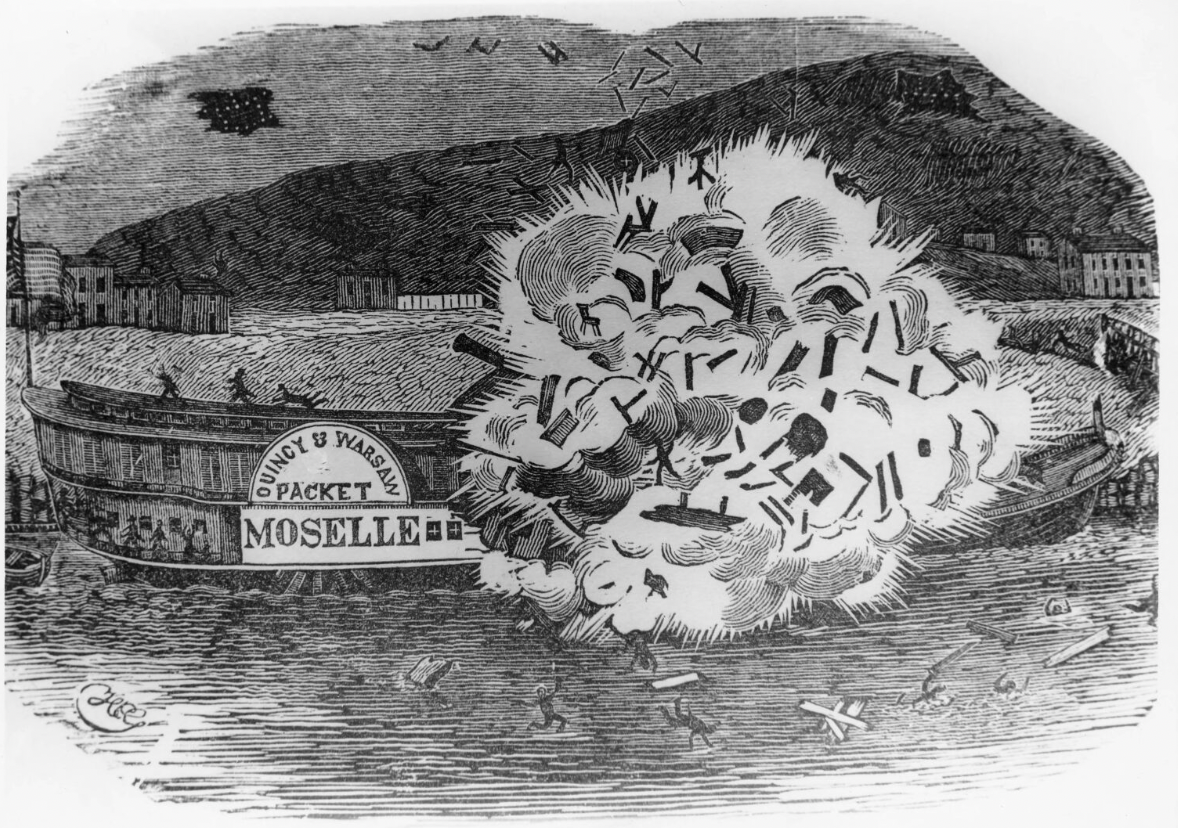
1943  CG-85006 (ex-Catamount) exploded off Ambrose Light while on Coastal Picket patrol duty.  Of a total of ten crew members on board, four drowned while five were reported missing.  Only the commanding officer, CBM Garfield L. Beal, USCG, escaped.  He was picked up six hours later by a passing merchant ship.  The cause of the explosion was never ascertained.

1964  An earthquake which hit 9.2 on the Richter scale and an ensuing tsunami struck Alaska, killing 125 people and causing $311 million in property damage.  Coast Guard units responded in what was called “Operation Helping Hand.”  Within two hours of the earthquake, which began at 1732 local time, CGCs Storis, Minnetonka, and Sorrel were ordered to Prince William Sound; Bittersweet to Seward; and Sedge to Valdez.  “The following morning, three fixed-wing aircraft from Air Detachment Kodiak surveyed the damage while helicopters evacuated those in need.   By March 31, most of the direct assistance had been rendered and the task of repair and clean up began.  Approximately 360 civilians were evacuated from villages and isolated areas in Kodiak Island and Prince William Sound.  Storis was diverted to Cook Inlet for icebreaking duties in the Port of Anchorage until 18 April.” [Kenneth Arbogast, et al, The U.S. Coast Guard in Kodiak, Alaska, p. 15.]  A number of the Coast Guard stations in the area sustained damage, some of it severe.  The only Coast Guard fatality occurred when the tsunami struck the light station at Cape St. Elias and one crewman, EN3 Frank O. Reed, was swept out to sea and perished.

USCGC Wrangell WPB-1322 and USS Ronald Reagan CVN-76

2003  During Operation Iraqi Freedom CGC Wrangell, homeported in Portland, Maine, along with a Coast Guard HH-65 Dolphin helicopter from Air Station Honolulu, escorted the first waterborne humanitarian aid shipment into the port of Umm Qasr without incident, while members of Coast Guard Port Security Unit 311, from San Pedro, California, assisted other coalition forces protecting the harbor.  The shipment, consisting of vital aid donated by numerous countries, was carried aboard the British ship RFA Sir Galahad.

March 28

1963  Three new 44-foot Motor Lifeboats departed the Coast Guard Yard for their designated stations.  Two were assigned to stations in the Third Coast Guard District, Sandy Hook Lifeboat Station and Eatons Neck Lifeboat station, while the third was assigned to Chatham Lifeboat Station in the First Coast Guard District.

1968  The Secretary of Transportation released his Report on Recreational Boat Safety. The report contained a detailed explanation of the proposed legislation and the programs the department intended to undertake.

1993  A Colonial Pipeline Company pipe ruptured, spilling 400,000 gallons of diesel fuel into the Sugarland Run creek in Herndon, Virginia.  The EPA requested the assistance from the National Strike Force.  Other units mobilized for the clean-up operation included a helicopter from AIRSTA Cape May, an air-eye HU-25 from AIRSTA Cape Cod, personnel from MSO Baltimore, CGC Capstan, and reservists from the region.  The strike team used the new DESMI 250 skimmer and pump to control the spill.  Coast Guardsmen assisted with the cleanup and safety operations as well as provided technical assistance.  By April 2, Colonial Pipeline, who claimed responsibility for the spill, had more than 250 contract personnel handling cleanup operations.  The strike teams stayed on site to monitor the cleanup.  The last strike team member left the spill site on April 10.

“South Korea Bolsters Polar Capabilities Moving Ahead With Next-Generation Icebreaker” –gCaptain

South Korea’s research icebreaker Araon, operated by the Korea Polar Research Institute. (Source: Korea Polar Research Institute)

gCaptain reports South Korea is building an icebreaker, “With a displacement of 16,560 tonnes the dual-fuel icebreaker – it can use both low-sulfur diesel and LNG – will be twice as large as the country’s existing icebreaker, Araon.”

But more interesting to me is that South Korea has been instrumental in operationalizing Russia’s Norther Sea Route.

All fifteen Arc7 ice-class LNG carriers for the Yamal LNG project were constructed by DSME (now Hanwha) with additional vessels and vessel elements for Arctic LNG 2 built by both Hanwha and SHI. Ice-capable oil tankers also originate at South Korean shipyards.

The country has also been a key anchor for expanded Arctic shipping with several container ship voyages via Russia’s Northern Sea Route originating or terminating at South Korean hubs, including Busan.

The Northern Sea Route certainly has the potential to facilitate trade between South Korea and Europe. The ships they have been building can traverse the Northern Sea Route without the aid of icebreakers.

“CMF’s Combined Task Force 150 and U.S. Coast Guard Integration Key in Recent Drug Seizure” –NAVCENT

250323-N-NO146-1001 ARABIAN SEA (March 23, 2025) Illegal narcotics seized from a stateless vessel are stacked on the deck of the U.S. Coast Guard Sentinel-class fast response cutter USCGC Emlen Tunnell (WPC 1145) in the Arabian Sea. (Photo by U.S. Coast Guard) Photo is from the O-1 deck, forward of the bridge, looking forward. 

Below is a news release from U.S. Naval Forces Central Command Public Affairs, March 24, 2025

MANAMA, Bahrain —

A U.S. Coast Guard fast-response cutter, working in direct support of New Zealand-led Combined Task Force (CTF) 150 of Combined Maritime Forces (CMF), seized 260 kilograms of illegal narcotics from a vessel in the Arabian Sea, March 19.

The Sentinel-class fast-response cutter USCGC Emlen Tunnell’s (WPC-1145) boarding team discovered and seized 200kg of methamphetamine and 60kg of heroin from the vessel. After weighing and documenting the haul, the crew properly disposed of the narcotics.

Royal New Zealand Navy Capt. Dave Barr, CTF 150 deputy commander, said this drug bust is a testament to the tenacity and expert seamanship of the Coastguardsmen on the Emlen Tunnell operating so far off the coast in challenging waters, and the ability to seamlessly integrate with the multinational CTF 150 staff.

“The waters in this area are full of legitimate fishing and trading vessels so it’s important to get this part right and accurately identify those vessels that are likely to be carrying narcotics,” said Barr. “A big part of our mission is to deter smugglers, so that those legitimate operators can continue to navigate freely to carry out their business.”

This interdiction is part of ongoing efforts to combat illicit drug trafficking in international waters and demonstrates the CMF’s continued commitment to safeguarding maritime security against malign non-state actors.

Emlen Tunnell is forward deployed to Bahrain. The fast response cutter is part of a contingent of U.S. Coast Guard ships operating in the region under Patrol Forces Southwest Asia (PATFORSWA). PATFORSWA deploys Coast Guard personnel and ships alongside U.S. and regional naval forces throughout the Middle East.

CTF 150 is one of five task forces under CMF, the world’s largest international naval partnership. CTF 150’s mission is to deter and disrupt the ability of non-state actors to move weapons, drugs and other illicit substances in the Indian Ocean, the Arabian Sea and the Gulf of Oman.

Combined Maritime Forces is a 46-nation naval partnership upholding the international rules-based order by promoting security and stability across 3.2 million square miles of water encompassing some of the world’s most important shipping lanes.

Storis to Make First Patrol This Summer

gCaptain reports, “Coast Guard Icebreaker ‘Storis’ To Achieve Initial Operating Readiness by August 2025.

“[The vessel] should achieve its initial operating capability operating up in the Arctic August of this year,” Alaska Senator Dan Sullivan stated during a joint session of the state’s legislature.

The ship still will not have been modified to its final form, but it is probably a good idea to get some experience with the ship.

The complete buildout and conversion of the vessel will take an additional year, according to Sullivan. The USCG previously stated that selection of the crew of 60 will begin in Summer 2026. It is unclear how the vessel will be staffed for the 2025 patrol.

“BOLLINGER SHIPYARDS SECURES $951 MILLION U.S. COAST GUARD CONTRACT MODIFICATION FOR POLAR SECURITY CUTTER PROGRAM” –Bollinger News Release

Below is a news release from Bollinger Shipyards.

The expected cost of these ships has gone up considerably, but comparing the current cost of the program, $5.1B for three ships, to the recent Canadian contracts for a similar ship, it seems the initial estimates were never realistic.


Tuesday, March 25, 2025 – Bollinger Shipyards announced today it has received a $951.6 million Fixed-Price-Incentive-Firm Target (FPIF) contract modification from the United States Coast Guard, advancing the Detail Design and Construction phase of the Polar Security Cutter (PSC) Program. This milestone underscores Bollinger’s integral role in strengthening America’s maritime presence and operational capabilities in the Arctic.

“Securing this contract modification has truly been a herculean effort and underscores the incredible trust the U.S. Government has placed in Bollinger to build and deliver the first heavy polar icebreaker in half a century,” said Ben Bordelon, President and CEO of Bollinger Shipyards. “We wouldn’t be in the solid position we’re in today without the leadership and the tireless efforts of the entire team at Bollinger Mississippi Shipbuilding. Their hard work and dedication have successfully put the PSC program on a strong path forward after a rocky start under the previous, foreign-owned builder. We now look forward to receiving the green light to begin full production.”

Bordelon also expressed gratitude for the role of national and state leadership in moving this program forward.

“I am also grateful for the leadership of President Trump and his Administration in recognizing the urgent need for American-made icebreakers. Because of his foresight and commitment to rebuilding America’s shipbuilding capabilities, this historic project is now moving forward.”

Bordelon also acknowledged Mississippi’s leadership for championing the PSC Program and state as a dominant force in shipbuilding.

“I also want to thank Governor Reeves and Mississippi’s Congressional Delegation for their leadership and support, especially as we leverage ongoing state and local investments to ensure Bollinger Mississippi remains the premier example of American shipbuilding.”

“As the Arctic grows as an arena of great power competition, the United States will require far more icebreaking capability from the U.S. Coast Guard to defend our interests in the region. Today’s award is a testament to the good work that Bollinger continues to do on the Polar Security Cutter program and the growing urgency with which their platforms are needed to boost our national defense,” said U.S. Sen. Roger Wicker (R-MS), Chairman of the Senate Armed Services Committee. “The Mississippi Gulf Coast will not only benefit from even more national security-focused quality jobs and economic development, but it will also continue to be a national player and powerhouse in mission-critical innovation and military capability.”

“Mississippi continues to prove its status as the premier destination for American shipbuilding—driving both national defense and commercial maritime strength,” said U.S. Senator Cindy Hyde-Smith (R-MS). “This milestone not only reinforces the Gulf Coast’s strategic importance, but it also reflects the value of returning critical shipbuilding programs to experienced, American-owned hands. Under Bollinger Shipyards’ strong leadership and investment, a once-stalled program will move forward with renewed urgency. I fully support this effort, which brings more high-quality jobs to Mississippi and ensures the Coast Guard is able to meet the growing challenges in the Arctic and beyond.”

Bollinger’s continued investment and growth on the Mississippi Gulf Coast reflect the skills, strength and talent of Mississippi’s workforce,” said Mississippi Governor Tate Reeves. “This announcement reinforces Mississippi’s pivotal role in American shipbuilding and solidifies Mississippi’s reputation as a national leader in maritime innovation and excellence.”

“Bollinger Mississippi Shipyards has a strong track record in American shipbuilding, and their role in the Polar Security Cutter program is another important step. This historic milestone strengthens national security, supports the domestic shipbuilding workforce, and enhances our Arctic presence. Ensuring the U.S. Coast Guard has the tools it needs is critical, and I look forward to seeing this project move forward,” said U.S. Rep. Mike Ezell (R-MS-04).

As Bollinger continues to enhance its operations in Mississippi into world-class shipyards, the company remains committed to making strategic investments to modernize and expand its capabilities. Additionally, the contract modification ensures Bollinger continues to provide its workforce with industry-leading wages throughout the life of the PSC program. Since acquiring foreign-owned VT Halter in November 2022, Bollinger has made a significant economic impact in the state through targeted investments and workforce expansion. To date, Bollinger has invested $76 million across its Mississippi facilities, including Bollinger Mississippi Shipbuilding (BMS), Bollinger Mississippi Repair (BMR), Bollinger Gulfport Shipyard (BGS), and CHAND Gulf Coast.

Since the acquisition in 2022, Bollinger has increased its Mississippi workforce by over 61%, with production roles at BMS alone increasing by more than 178%.  These numbers are expected to rise as the program reaches full production over the coming years. A key driver of this growth has been Bollinger’s innovative Bootcamp workforce development programs, which continue to strengthen the skilled labor pipeline.

“Our investment in developing the next generation of skilled American workers not only strengthens our competitive edge in the shipbuilding industry but also underscores our commitment to fostering economic growth and American innovation,” added Bordelon. “We are committed to providing high-quality careers that positively impact the families and communities we support along Mississippi’s Gulf coast.”

This contract modification primarily supports operations at Bollinger Mississippi Shipbuilding, with additional project contributions from facilities located in Massachusetts, Illinois, Virginia, Georgia, Louisiana, and other regions. Completion of the first Polar Security Cutter is anticipated by May 2030.

The Polar Security Cutter will provide the United States with enhanced operational capability in polar regions, playing a critical role in safeguarding national security, economic stability, and supporting vital maritime and commercial interests.

“Coast Guard Cutter Mohawk returns home after 70-day, counter-drug patrol in the Eastern Pacific Ocean” –New Release

The crew of Coast Guard Cutter Mohawk (WMEC 913) identifies a sailing vessel suspected of illicit activity while underway in the Eastern Pacific Ocean, Feb. 19, 2025. During a law enforcement boarding, the crew discovered approximately 637 pounds of cocaine hidden onboard. (U.S. Coast Guard photo, courtesy Cutter Mohawk)

Below is a news release. The story on this interdiction caught my attention.

Mohawk’s crew jointly interdicted a go-fast style vessel with James’ crew off the coast of Colombia, seizing more than 5,900 pounds of cocaine. Coordinating with a maritime patrol aircraft, Mohawk’s pursuit caused the go-fast vessel to jettison bails of cocaine overboard for later recovery. James’ crew proceeded to stop the go-fast vessel and apprehend three suspected narcotics smugglers for future prosecution.

Why wasn’t Mohawk able to complete the interdiction?

Only thing I could figure was that Mohawk did not have a HITRON helicopter. There is no mention of a HITRON detachment assigned to MOHAWK. There is this statement that suggests MOHAWK had no helicopter.

Furthermore, the Mohawk’s crew participated in training evolutions with James’ embarked Helicopter Interdiction Tactical Squadron aviation detachment and MH-65 Dolphin helicopter.

Mohawk interdicted a sailboat and a fishing vessel, but it looks like the go-fast outran her. Fortunately another cutter with HITRON detachment was there to backstop them. 

Why did we send a 270, equipped with both a flight deck and hangar, from Key West to the Eastern Pacific without an airborne use of force capability? Is there a shortage?


March 24, 2025

Coast Guard Cutter Mohawk returns home after 70-day, counter-drug patrol in the Eastern Pacific Ocean

KEY WEST, Fla. — The crew of Coast Guard Cutter Mohawk (WMEC 913) returned to their home port in Key West, March 16, following a 70-day deployment to the Eastern Pacific Ocean.

Mohawk deployed in support of Joint Interagency Task Force – South (JIATF-S) and Operation Martillo, where crew members conducted counter-drug missions in the Coast Guard Eleventh District’s area of responsibility. While at sea, Mohawk’s crew successfully contributed to protecting their fellow Americans by countering transnational criminal organizations and preventing dangerous and illegal narcotics from reaching the United States. The crew worked side by side with Coast Guard units, embarked law enforcement personnel from the Tactical Law Enforcement Team Pacific (PACTACLET) and the Costa Rican Coast Guard.

Throughout the deployment, crew members interdicted three suspected drug smuggling vessels and apprehended six suspected drug smugglers. Crew members seized nearly 8,200 pounds of cocaine and 330 pounds of marijuana.

While on patrol, Mohawk’s crew interdicted a sailing vessel suspected of illicit activity. Mohawk’s boarding team embarked the vessel and subsequently located contraband, seizing 637 pounds of cocaine and detained the crew.

Additionally, the crew of Mohawk coordinated with Coast Guard Cutter James (WMSL 754) and Coast Guard Cutter Stone (WMSL 758) to deter narcotics trafficking in the region. Notably, Mohawk’s crew jointly interdicted a go-fast style vessel with James’ crew off the coast of Colombia, seizing more than 5,900 pounds of cocaine. Coordinating with a maritime patrol aircraft, Mohawk’s pursuit caused the go-fast vessel to jettison bails of cocaine overboard for later recovery. James’ crew proceeded to stop the go-fast vessel and apprehend three suspected narcotics smugglers for future prosecution.

Mohawk’s crew also had the opportunity to operate with the Costa Rican Coast Guard Grupo de Operaciones Policíale Especiales (GOPES), a Costa Rican special police operations unit. Mohawk identified a fishing vessel suspected of drug smuggling and proceeded to board it. The boarding team discovered 1,600 pounds of cocaine and 330 pounds of marijuana. Following the boarding, the three suspected drug smugglers, fishing vessel and contraband were transferred to GOPES for prosecution in Costa Rica. This joint operation underscores the ongoing U.S. commitment to regional stability and support for partner nation efforts to combat the destabilizing effects caused by transnational criminal organizations.

During a visit in Golfito, Costa Rica, Mohawk’s crew and embarked PACTACLET personnel exchanged best practices with GOPES and shared law enforcement techniques and other tactics for interdicting illicit drug ventures at sea. Mohawk crew members provided a tour of the cutter as well and exchanged coins and patches with their Costa Rican counterparts. In addition, Mohawk crew members volunteered their free time to clean, complete yard work and undertake preservation projects at Hogar de Ancianos de Golfito, a local retirement home.

Furthermore, the Mohawk’s crew participated in training evolutions with James’ embarked Helicopter Interdiction Tactical Squadron aviation detachment and MH-65 Dolphin helicopter. This training served to increase competency for shipboard-helicopter operations and bolstered the tactical relationship between deployed units operating together in the Eastern Pacific.

“I am extremely proud of our accomplishments during this deployment,” said Cmdr. David Ratner, commanding officer of Mohawk. “The Mohawk crew, with the support of embarked law enforcement personnel from the Pacific Tactical Law Enforcement Team, displayed toughness and grit to effectively fight back against destabilizing transnational criminal organizations in the Eastern Pacific and kept nearly 8,200 pounds of cocaine and 330 pounds of marijuana from reaching the United States.”

Based in San Diego, California, PACTACLET personnel provide counter-narcotic law enforcement capabilities and support the interdiction, apprehension and processing of suspected drug smugglers. PACTACLET members are skilled in law enforcement boarding procedures at sea and are critical for mission execution.

Launched Jan. 15, 2012, Operation Martillo, Spanish for “Hammer,” is a counter-narcotic campaign support by U.S. Southern Command and led JIATF-S. By leveraging interoperability between numerous domestic and international partnerships, the task force strives to disrupt and dismantle transnational criminal organizations by fighting crime and defunding their illicit ventures.

Mohawk is a 270-foot, Famous-class medium endurance cutter and was commissioned in 1991. The cutter’s primary missions are counter-drug and migrant interdiction operations, enforcement of federal fishery laws as well as search and rescue in support of Coast Guard operations throughout the Western Hemisphere.

Mohawk falls under the command of U.S. Coast Guard Atlantic Area, which is based in Portsmouth, Virginia. U.S. Coast Guard Atlantic Area oversees all Coast Guard operations east of the Rocky Mountains to the Arabian Gulf. In addition to surge operations, they also allocate ships to deploy to the Caribbean and Eastern Pacific to combat transnational organized crime and illicit maritime activity.

For information on how to join the U.S. Coast Guard, visit GoCoastGuard.com to learn about active duty and reserve, officer and enlisted opportunities. Information on how to apply to the U.S. Coast Guard Academy can be found here.


This Day in Coast Guard History, March 25 / 26

Based on the Coast Guard Historian’s timeline, https://www.history.uscg.mil/research/chronology/
With inspiration from Mike Kelso

March 25

1911  The Treasury Department directed the keepers of life-saving stations to keep a lookout through the beach patrol for stray buoys washed ashore, to secure such buoys when it could be done, and to report their discovery or action to the nearest representative of the Lighthouse Service.

March 26

“Coast Guard Cutter John F. McCormick (WPC 1121) crew transits through the San Francisco Bay, Saturday, March 4, 2017, during their voyage to homeport in Ketchikan, Alaska. The cutter was named after McCormick who received the Gold Lifesaving Medal in 1938 for his exceptional skill in maintaining control of the 52-foot motor lifeboat Triumph while responding to a vessel in need near the Columbia River Bar under treacherous conditions, allowing the crew to recover a crewmember that had been washed overseas. Coast Guard photo by Petty Officer 2nd Class Loumania Stewart”

1938  The US Coast Guard motor lifeboat Triumph departed from the Point Adams Station, located near Hammond, Oregon at the mouth of the Columbia River.  It proceeded out to the bar and stood by while several crab boats crossed in.  The tug Tyee with a barge load of logs in tow was attempting to cross out.  Tyee passed too close to the life buoy and the barge drifted into the outer break on Clatsop Spit.  Triumph, while attempting to assist Tyee, lost Surfman Richard O. Bracken overboard in the breakers of Clatsop Spit.  Bracken would have been drowned had it not been for the skill of BN (L) John F. McCormick, Officer-in-Charge of Triumph, and the cooperation of the crew, namely CMOMM (L) Albert L. Olsen and Surfman Harold W. Lawrence.  In making the rescue, Triumph was carried broadside on the face of a wave a distance of approximately 50 yards.  The masts had been completely submerged, then the boat righted itself.  Bracken had been washed overboard by the force of the sea.  McCormick, acting with exceptional skill, maneuvered Triumph against the strong current, into the breakers and picked up the drowning man.  Olsen remained in the engine room during all these maneuvers, stayed at the controls under perilous conditions, and rendered commendable service.  McCormick was awarded a Gold Life-Saving Medal for this rescue while Olsen and Lawrence were awarded Silver Lifesaving Medals.

Within three days, the 77th Division had secured the major islands of Kerama Retto.

1945  Coast Guardsmen participated in the landings at Geruma Shima, Hokaji Shima, and Takashiki in the Ryukyu Islands.

The Kerama Retto island group lies 15 miles west of Okinawa.

Douglas R5D-3; “OFF TO HEAT AN ICEBERG: A 1,000-pound thermite bomb enclosing a cluster of small bomblets, each capable of burning at a temperature of 4,300 degrees Fahrenheit, rides under the wing of a Coast Guard UF-2G amphibian plane toward an iceberg target in the foggy Grand Banks region of Newfoundland. The temperature of one bomblet equals half the sun’s surface temperature. This bomb was one of twenty cluster bomb of thermite and petroleum types air-dropped on selected icebergs during heat destruction tests made by the International Ice Patrol force in June, at the height of the 1959 heavy ice season. Above the bomb carrier is a large passenger type Coast Guard R5D plane, one of three used on regular ice observation flights out of Argentia, Nfld. The more modern R5Ds this year replaced old World War II B-17 bomber type plane with plexiglass noses where ice observation instruments and carries a crew of about seven. Ice is observed from many windows. Averaging 6 to 8 hour ice observation flights, the R5D patrols an area of about 14,000 square miles in the Grand Banks region. The R5D plane here wears one of the new paint schemes currently being tested for easy air visibility by the U.S. Coast Guard on its various planes. In place of the dull silver gray and orange trim formerly used, the new dress is made of glowing fluorescent colors–orange nose, wing tips, tail and body strip with black edgings, and main body in brilliant white.”; Photo No. 5854; 17 July 1959; photographer unknown.

1946  The International Ice Patrol resumed after being suspended during World War II.

A U.S. Coast Guard Sikorsky HH-52A Seaguard helicopter (s/n 58-1357) demonstrates its ability to land on water on Lake Pontchartrain, Louisiana (USA), 23 September 1964.

1963  A Coast Guard HH-52 based from Air Station Salem, Massachusetts, landed in the water off Fort Weatherall, Newport, Rhode Island to rescue a man overboard from the radar picket ship USS Protector.  “Using the new platform, the crew of the HH-52A retrieved the man, helpless and incoherent, from 39-[degree] F waters. He was flown to the Naval Hospital, Quonset Point without incident.  This is the first rescue fully exploiting the unique capabilities of the new HH-52A helicopter.”

This Day in Coast Guard History, March 24

Based on the Coast Guard Historian’s timeline, https://www.history.uscg.mil/research/chronology/
With inspiration from Mike Kelso

March 24

1909  Muskeget, Massachusetts: the schooner Vigilant parted moorings and stranded one mile south of the station.  The owner applied to the keeper at 10:30 p.m. for assistance.  Surfmen proceeded to the scene, carried out an anchor and line, and hove the schooner into deep water.  During the storm the owner was sheltered and supplied with meals at the station for two days.  But for the security afforded by an additional anchor and cable loaned by the crew, Vigilant would have stranded a second time.

1920  The Coast Guard established its first air station on this date at Morehead City, North Carolina.  The station was closed on July 1, 1921 due to a lack of funding.

1989  The tanker Exxon Valdez grounded on a reef in Prince William Sound, Alaska, spilling 10.1 million gallons of crude oil.  This was the worst oil spill in U.S. history to date.  Coast Guard units responded and prevented the entire cargo from spilling, cleaned up the oil which did spill, and conducted an investigation into the causes of the accident.  The spill provided the impetus for the passage of the Oil Pollution Act of 1990, which greatly increased the Coast Guard’s role in protecting the nation against spills.