No News from Eastern:
I was hoping for some news about Eastern’s progress on the Offshore Patrol Cutter (OPC) program, but I could not find any. Eastern has contracts to build four ships,
- Argus (915) and Chase (916) to go to San Pedro, CA
- Ingham (917) and Rush (918) to go to Kodiak, AK
Reported milestones for the four ships are as follows:
- Argus: Steel cut Jan. 7, 2019; Keel laid April 28, 2020; launched Oct. 27, 2023
- Chase: Steel cut April 27, 2020; Keel laid May 27, 2021
- Ingham: Steel cut Sep. 27, 2021; Keel laid July 15, 2022
- Rush: Steel cut Oct. 18, 2022
Nothing since October 2023, not even a report of keel laying for Rush, which should have happened in 2023. Was Rush’s keel laid? Are sea trials being conducted on Argus? WTFO!
The Planned Timeline:
The Congressional Research Service report, “Coast Guard Cutter Procurement: Background and Issues for Congress” noted.
“The posting for the RFP for the Stage 2 industry studies (October 11, 2019–Chuck) included an attached notional timeline for building the 25 OPCs. Under the timeline, OPCs 1 through 7 (i.e., OPCs 1-4, to be built by ESG, plus OPCs 5-7, which are the first three OPCs to be built by the winner of the Stage 2 competition) are to be built at a rate of one per year, with OPC-1 completing construction in FY2022 and OPC-7 completing construction in FY2028. The remaining 18 OPCs (i.e., OPCs 8 through 25) are to be built at a rate of two per year, with OPC-8 completing construction in FY2029 and OPC-25 completing construction in FY2038.
Using these dates—which are generally 10 months to about two years later than they would have been under the Coast Guard’s previous (i.e., pre-October 11, 2019) timeline for the OPC.
The Current Optimistic Timeline:
We are in the middle of FY2025 and still waiting for OPC#1, so we are at least an additional three years late on delivery of USCGC Argus and we are almost certainly an additional two years late getting the first ship from Austal (though I am hoping for a pleasant surprise).
Eastern was expected to deliver one ship every year. I would have expected construction to speed up with experience, but the intervals between steel successive steel cuttings and between successive keel layings never got down to 12 months. But let us presume that Argus OPC #1 will be delivered in 2025 and Eastern will deliver #2- 4 at 12 month intervals.
Austal started cutting steel for OPC #5, Pickering (WMSM-919), on August 29, 2024. I assume they will deliver four years after starting steel cutting and annually thereafter with two per year delivered after #7. It should look like this.
- 2025 #1
- 2026 #2
- 2027 #3
- 2028 #4 & #5
- 2029 #6
- 2030 #7
- 2031 #8 & #9
- 2032 #10 & #11 These will replace the last of WMEC210s
- 2033 #12 & #13. These will begin replacement of Alex Healy and the 13 WMEC270s
- 2034 #14 & #15 These are the last that will be built under existing contracts
- 2035 #16 & #17
- 2036 #18 & #19
- 2037 #20 & #21 These will begin replacement of the six SLEP WMEC270s
- 2038 #22 & #23
- 2039 #24 & #25 These will replace the last of the WMEC 270s
This does assume a smooth continuation of the program, delivering two ships a year without interruption even after exercising all options and completion of existing contracts.
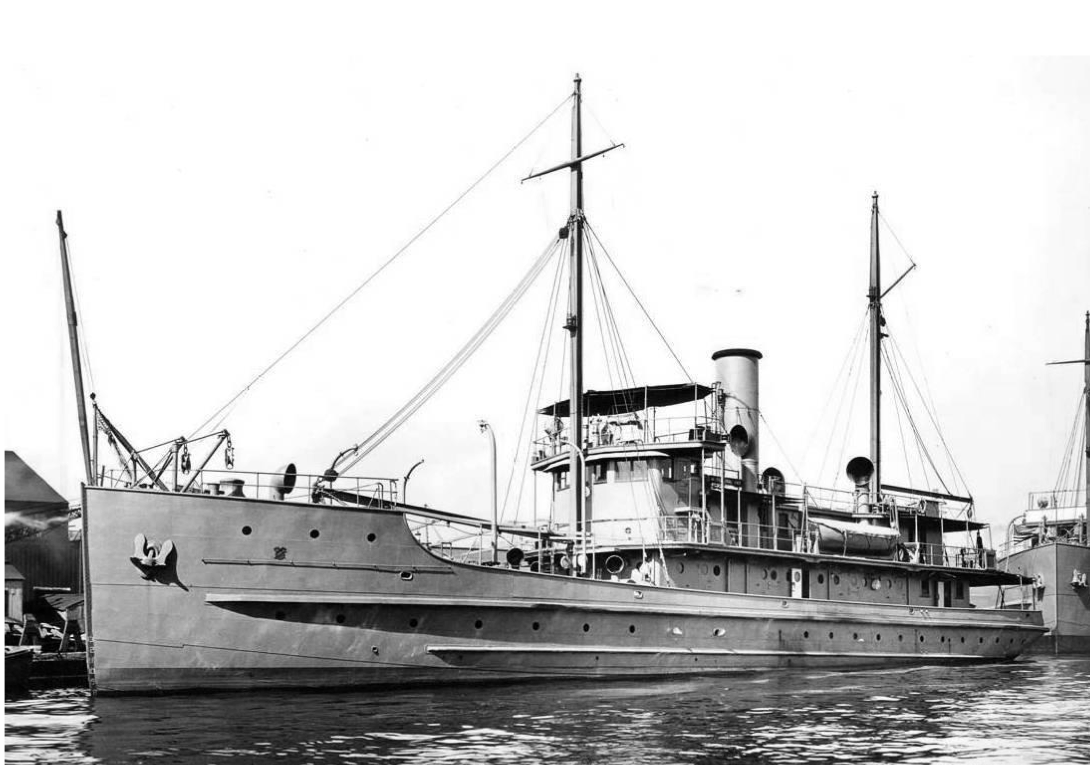
All the WMEC210s will not be replaced until 2032. At that point even the youngest of the 210s would be 63 years old. It is by no means certain any will last that long, but Reliance is already 61 years old.
All WMECs would be replaced by the end of 2039 by which time the youngest WMEC270 will be 48 years old.
Will the program continue uninterrupted after the completion of the currently optioned 15 OPCs? This would be easy only if Austal wins the contract for a Phase 3. Is that a forgone conclusion?
If some other company wins the Phase 3 contract, will they also initially deliver the first three ships at the rate of one ship per year as was done with the first two contracts?
Alternatives:
It can take up to ten years from the beginning of planning to delivery of the first ship. In reality it has taken considerably longer for the first OPC to get this far and we still no finished product. Even if all options are exercised, the last currently contracted OPC will be funded in FY2030 or 2031.
Do we still want to be building a design in 2030 that is 15 years old? Does the Coast Guard now own the design that could be handed over to another contractor to build the last ten ships or would a third yard have to provide a third detailed design, creating a “C” class of OPC?
Now is the appropriate time to consider alternatives.
Assuming we want to continue with the same design, Phase Three might be started with the idea of awarding a contract in FY2027 and delivering one additional OPC each year 2032, 2033, and 2034 by either Austal or a competing shipyard, with the winner producing two per year thereafter, until all 25 are completed. It would allow completion of all 25 a year and a half earlier.
If we want to look at an alternative that could replace the last ten currently planned OPCs and start delivering ships by 2035, we should issue an RFP in 2026.
There are two directions this new design could go.
- A cheaper design that can be made in larger numbers. A primary goal would be a smaller crew as a way to reduce operating costs. It might be smaller and cheaper (we already have contracted for more than enough ships to do Alaska patrols), but should be able to support alternative mission modules and unmanned systems.
- Ships that can be more readily upgraded for a wartime role. We might accelerate the design process by looking at the European Patrol Corvette, Australia’s Tier 2 combatant under the AUKUS umbrella, or if the country needs an ice capable combatant look at Finland’s Pohjanmaa-class corvette.