This Day in Coast Guard History, February 6

Based on the Coast Guard Historian’s timeline, https://www.history.uscg.mil/research/chronology/
With inspiration from Mike Kelso
February 6
1893 Secretary of Treasury was authorized to define and establish anchorage grounds for vessels in harbor of Chicago and adjacent waters of Lake Michigan.
1942 CGC Nike rescued 38 persons from SS China Arrow which had been torpedoed off Ocean City, Maryland.

This photograph is looking easterly at the grounded tanker Global Hope near Salem Harbor. Coney Island is to the east of the entrance to the harbor. Marblehead lies to the south. There is an oil slick near the stern of the vessel. Historical Photographs
1978 Coast Guard units from the First and Third Districts responded to a severe winter storm in New England, including stations providing shelter to displaced families and Coast Guard four-wheel drive vehicles serving as ambulances while an amphibious vehicle was the only means of transportation from the mainland from Sandy Hook, New Jersey, transporting nine people to safety from flooded areas. A 682-foot tanker Global Hope went aground in Salem Sound, Massachusetts, and an HH-3F from Air Station Cape Cod arrived on scene followed by CGC Decisive which removed 28 of the 32 persons on board, with four left aboard to assist in salvage and pollution control.
1990 Two Coast Guard Air Station Houston crews were the first to receive the Igor I. Sikorsky Award for Humanitarian Service. The award was presented by the Helicopter Association International at their Dallas convention. The crews were honored for their rescue of seven fishermen during Hurricane Chantal last year. They flew through driving rain, winds in excess of 65 miles per hour, thunderstorms, and squalls to rescue the men from their capsized boat.

This is the ill-fated Boeing 757 that crashed after take off from Puerto Plata, Dominican Republic, on February 6, 1996… The Boeing 757 took its first flight on February 3, 1984… 26/02/1985 Eastern Airlines N516EA 20/05/1992 Nationair C-FNXN 01/05/1993 Aeronautics Leasing N7079S 14/07/1993 Birgenair TC-GEN 19/12/1994 International Caribbean Airways 8P-GUL 31/03/1995 Birgenair TC-GEN
1996 Alas Nacionales Airlines Flight 301 crashed off the Dominican Republic and Coast Guard units conducted search and rescue operations.

The Pacific Northwest was hit by an historic flood in February 1996. Corps dams were put to the test and held back as much of the flood waters as possible, but too much rain fell in the valley below the dam. As a result, many communities in western Oregon felt the impacts of the flood waters.
1996 Coast Guard units responded to calls of assistance due to severe flooding throughout the Pacific Northwest.
No Helicopters on Cutters in Alaska / More Helicopters Will Operate from Forward Bases

An MH-65 Dolphin helicopter crew based out of Air Station Kodiak and
deployed aboard Cutter Alex Haley, prepares for a helicopter in-flight refueling at sea evolution with the cutter crew during a search and rescue case near Dutch Harbor, Alaska, Wednesday, Dec. 30, 2020. The crew hoisted an injured fisherman from the vessel Magnus Martens and placed him in the care of awaiting Guardian Flight Alaska personnel for further transport to Anchorage. (U.S. Coast Guard photo by Lt. Benjamin DeGroot)
“With an aging aircraft fleet under scrutiny and the phase-out of an older airframe, the Coast Guard has stopped sending its cutters to sea in the Arctic with helicopters onboard.”
We are not just talking about icebreakers. When a US government entity says the “Arctic” they include the Aleutians and Bering Sea, even though they are below the Arctic Circle so this really means no helicopters on any Coast Guard vessels in District 17 (Alaska).

http://www.state.gov/e/oes/ocns/opa/arc/uschair/258202.htm . This map of the Arctic was created by State Department geographers as part of the U.S. Chairmanship of the Arctic Council.
Cutters carried helicopters for two reasons, for reconnaissance and as a mobile SAR air station. All the National Security Cutters (NSC) now have unmanned air systems (drones) that are more effective search aircraft than helicopters. Hopefully USCGC Alex Haley (WMEC-39) (really a high endurance cutter) which is home-ported in Kodiak will also be so equipped if it is not already.
Rather than having helicopters on ships which are increasingly going North of the Bering Strait, far from most fishing vessels, the helicopters will be forward deployed.
“Coast Guard District 17 and Air Station Kodiak maximized aviation forward operating sites staffed by shipboard landing capable MH-60T crews in Kotzebue, Cold Bay and Prince William Sound, a model that streamlines search-and-rescue response and enables flexible movement of the helicopter crews in support of deployed Coast Guard cutters and seasonal mission demands,” officials said in a statement provided to National Defense.
This will keep the helicopters nearer the concentrations of population and fishing vessels. Because they are shipboard capable MH-60Ts, they will have longer range than the H-65s that had been deployed on ships, and will still be able to use cutters to extend their range by HIFR (Helicopter In Flight Refueling) or by transit on a cutter’s flight deck to get within range.
The announcement makes it sound like the Coast Guard will be less capable of responding than they were before, but really this seems to be a net improvement based on the incorporation of more capable assets–Unmanned Air Systems and more numerous longer ranged helicopters.
Officials with Coast Guard headquarters said the change was made in summer 2024 as Air Station Kodiak phased out four retiring MH-65 Dolphin helicopters and transitioned to the newer MH-60T Jayhawk. The base now operates six Jayhawks and will eventually have nine, officials said. (emphasis applied–Chuck)
The trade-off is that cutters will not have helicopters immediately available on board, but having a cutter with helicopter in the right place at the right time was always a matter of luck.
(I have to wonder why this information was not included in a Coast Guard news release. I looked for it as a CG news release and found nothing.)
Thanks to Peter for bringing this to my attention.
This Day in Coast Guard History, February 5

Based on the Coast Guard Historian’s timeline, https://www.history.uscg.mil/research/chronology/
With inspiration from Mike Kelso
February 5
1882 The schooner Mary L. Vankirk, bound for Philadelphian from South Creek, Pamlico Sound, North Carolina, carrying a crew of five men, encountered heavy weather. She lost sails and sprung a leak and before long she became water-logged and almost unmanageable. In this condition, it was determined to run to leeward and seek refuge in Hatteras Inlet. Matters, however, became worse and it was decided to beach the vessel. She was discovered heading for the land by the crew of Station No. 18, Sixth District (Chicamicomico, North Carolina). The surfboat was run out, but the life-saving crew returned to the station for the breeches-buoy apparatus. The latter arrived abreast of the schooner at 8:15, fifteen minutes after she struck the bar about half a mile north of the station. The schooner was so close that the keeper was able to wade out into the water and cast a heaving-line to those huddled in the rigging. As quickly as possible, the men in the rigging hauled off the whip-line. The breeches-buoy was soon rigged and went spinning out to the vessel. All five men were safely landed.

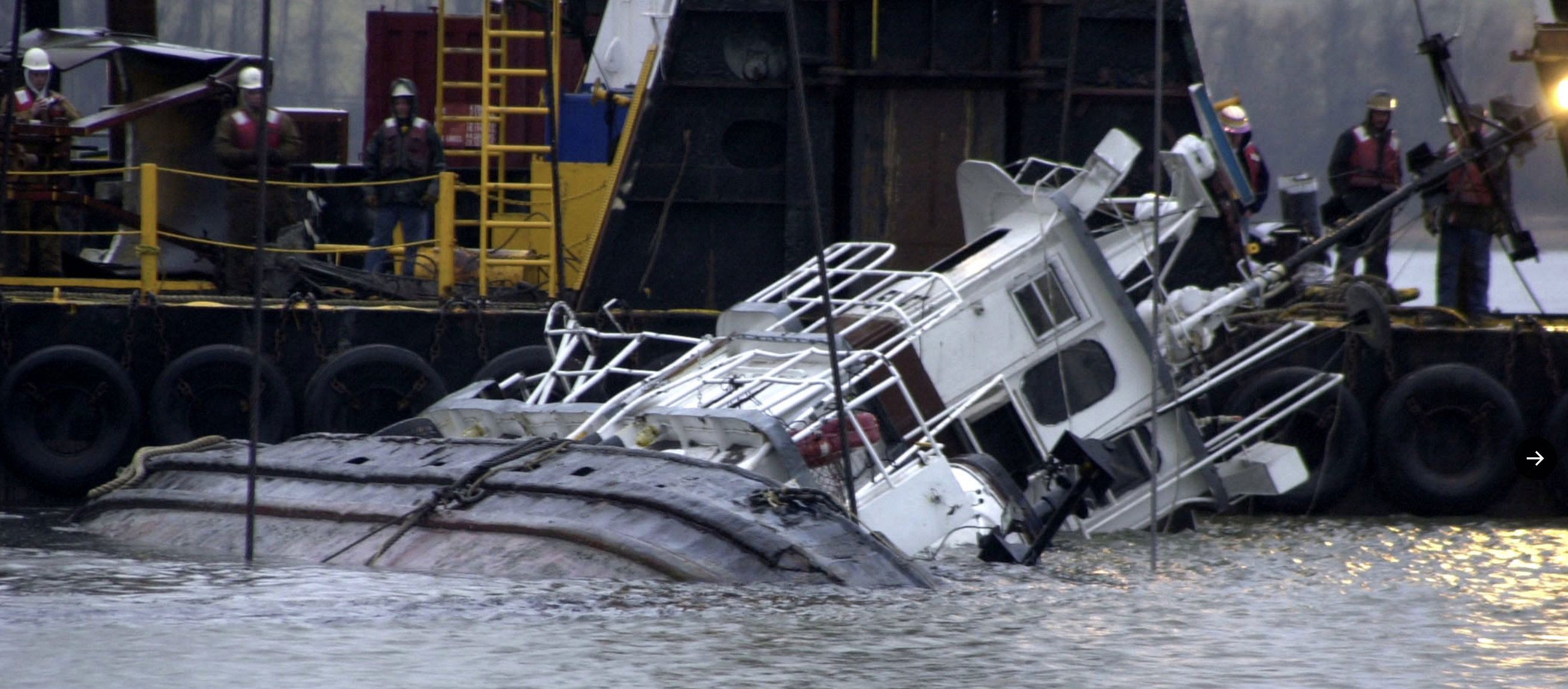
The 36 foot Coast Guard lifeboat serves as a memorial to the men who died on it in a rescue mission. The four Coast Guardsmen honored gave their lives while following in the brave traditions of the United States Coast Guard’s search and rescue mission. (photo courtesy of westportwa.com)
1946 Four Coast Guardsmen from Willapa Harbor Lifeboat Station perished in the line of duty while searching for two crab fishermen feared lost in Williapa Bay. The men were: BMC Joseph W. Miller, USCG; MM 1/c Geloyd J. Simmons, USCG; Coxswain James R. Graves, USCG; S 1/c Howard W. Hampton, USCG.
“The 36 foot Motor Lifeboat from the Station Willapa Bay washed ashore near Ocean City with no one on board. The boat and its four man crew had joined the Westport station’s 52 foot Invincible in a search for two Westport crab boats believed lost in a storm the previous day. The 36 footer was last seen by the Invincible’s crew at approximately 1 a.m. on the 5th during a brief rendezvous somewhere south of Grayland.“Bodies of three of the four Coast Guardsmen were later recovered along the beach north of Grays Harbor, but exactly what happened aboard the boat or to the fourth crewman remains a mystery. Ironically, the fishermen identified as the subjects of this search and feared lost at sea were found safe in Willapa Harbor, where they had remained throughout the storm.
1973 The position of Senior Coast Guard Officer-Vietnam (SCGOV) was disestablished.
1975 The Coast Guard commissioned the Houston-Galveston Vessel Traffic System, the third VTS to be “implemented by the Coast Guard on a major waterway of the U.S.”
Precision Guided 70mm Rockets–APKWS and LOGIR, Poniard Low-Cost Guided Imaging Rocket

Couach 2200FPB Fast Patrol Boat. 12 being built for Royal Saudi Navy, armed with multiple rocket launchers by LIG Nex1 fitted at the stern.
Lately I have been seeing a lot of news about various developments related to guided 70mm (2.75 inch) rockets, particularly since an APKWS took down a cruise missile less than two weeks ago.
I probably don’t need to say this again, but I think these are extremely appropriate weapons for the Coast Guard because of their light weight, minimum training and maintenance requirements, low cost, and their range, accuracy, and effectiveness against the range of threats the Coast Guard is most likely to encounter from small drones to merchant ships.
The CUSV seen in the video and below is only 12 meters, 39′ in length.
South Korean Guided Rocket Test-Fired from USV at RIMPAC 2024
LIG Nex1’s K-LOGIR / Poniard guided rocket successfully finished a Foreign Comparative Testing (FCT) during RIMPAC 2024.
“A launch system for the 2.75-inch guided rocket was developed to be mounted on ships. Currently, it is installed on the Royal Saudi Navy’s 2200 Fast Patrol Boat (FPB) and HSI-32 interceptors, The UAE Navy new Gowind corvettes and is planned to be installed on the UAE Navy’s Falaj 3-class OPV.

Installing LIG Nex1’s Poniard launcher on Textron’s CUSV for the live fire test during RIMPAC. (ROK Navy Photo)
Infrared Seeker For APKWS Guided Rockets Is In The Works
“Advanced Precision Kill Weapon System II, better known simply as APKWS, is slated to be demonstrated with a passive infrared seeker. The news came in the 2025 Marine Aviation Plan, which states that “Additional demonstrations are also in [the] work[s] with the Army and Air Force to determine [the] feasibility of adding additional guidance methods to the APKWS family, including passive infrared seekers.”
“While little is known about this initiative, such a capability could potentially offer a far cheaper solution with independent targeting capabilities compared to existing missiles, while also increasing magazine depth on certain platforms dramatically.”
OKSI Awarded USSOCOM and AFRL Contracts for Precision Guidance Seeker for Munitions
“July 23, 2024 /PRNewswire/ — OKSI has been awarded multiple contracts totaling nearly $6 million from USSOCOM and the Air Force Research Laboratory (AFRL) for their ARMGDN seeker. ARMGDN is a capability enhancement to BAE Systems’ APKWS® laser-guidance kit, providing passive target acquisition and tracking for precision engagements. APKWS is a guidance kit for the 2.75 inch Hydra-70 rocket. Together, the APKWS with OKSI’s ARMDGN seeker will facilitate rapid engagements of multiple air or ground targets via ripple fire of multiple precision- guided rockets in rapid succession.”
U.S. F-16 Fighters Shot Down Drones with Laser-Guided Rockets in Combat
“The U.S. Navy also announced in late 2023 that it was about to deliver a new proximity-fused warhead for APKWS II rockets, optimized for use against drones, albeit developed ostensibly for the surface-to-air role. However, further developing an air-to-air capability out of these older rockets is another impressive feat for the U.S. Air Force, that has now the possibility to engage targets at a very small fraction of the cost of other existing missiles.”
Marines to give air-to-ground missile new counter-drone capabilities
“APKWS II continues to provide a reliable, high-capacity precision guided munition for both the rotary wing and fixed wing communities. The program has now completely transitioned to the Single Variant Block Upgrade (SVBU) that will enable the same guidance unit to be used for any platform, as well as increasing the overall employment envelope. To improve performance against UAS, certification of a suitable proximity fuse is in work for fielding to the fleet with current guidance and warhead combinations. Additional demonstrations are also in work with the Army and Air Force to determine feasibility of adding additional guidance methods to the APKWS family, including passive infrared seekers,” officials wrote.
This Day in Coast Guard History, February 4

Based on the Coast Guard Historian’s timeline, https://www.history.uscg.mil/research/chronology/
With inspiration from Mike Kelso
February 4
1859 The United States signed the “Treaty of Friendship, Commerce and Navigation” with Paraguay at Asuncion after the revenue cutter Harriet Lane, as part of a U.S. Navy expedition, forced the opening of the Paraguay and Parana Rivers.
1863 Commissioned officers of the Revenue Cutter Service were to be appointed by the President by and with advice and consent of the Senate. This act contained the first statutory use of term “Revenue Cutter Service.” Previous laws referred only to “revenue cutters”.
1881 Keeper Ida Lewis, the head keeper of the Lime Rock Lighthouse, rescued two soldiers from Fort Adams who had fallen through the ice “at the imminent risk of Mrs. Lewis-Wilson’s life.” For her heroic actions she was awarded a Gold Lifesaving Medal. She was officially credited with saving 13 persons during her distinguished career with the U.S. Lighthouse Service “and it is understood that the number was probably much greater.”
1982 Attorney General William Smith declared at a press conference that Operation Tiburon was “the most successful international marijuana interdiction effort to date.” The operation began in November 1980, and accounted for the seizure of 95 vessels. It was a combined operation that included elements of the Coast Guard, the Drug Enforcement Administration, the Customs Service, and various state and local law enforcement agencies.

M/V New Carissa On February 4, 1999, the M/V New Carissa, a 639-foot bulk freight ship of Panamanian registry, went hard aground in heavy seas about 150 yards off a stretch of remote, undeveloped sandy beach three miles north of Coos Bay, Ore. The ship was intentionally ignited to burn the fuel oil and later broke in two. NOAA photo.
1999 The 639-foot freighter New Carissa ran aground north of Coos Bay, Oregon. Coast Guard helicopter crews rescued 23 crewmembers, but the vessel remained firmly aground and attempts to refloat her failed. A unified command made up of Coast Guard and Navy personnel, as well as marine salvors, attempted to prevent a catastrophic oil spill as the ship began breaking apart. The team decided to set the oil on board the New Carissa on fire so it would burn away before being spilled and fouling the shore. It was the largest “in situ” burn ever tried in U.S. waters and it consumed a significant amount of the oil aboard the New Carissa. The Coast Guard’s annual report for that year noted: “While some oil did spill out of the vessel, the unified command’s efforts greatly reduced the potential environmental damage to the Oregon coast.” The ship eventually broke in two and her bow section was towed to sea and sunk by the Navy.
2014 CGC Diligence returned to its homeport of Wilmington, North Carolina, after completing a 49-day patrol in the North Atlantic Ocean in support of Operation Atlantic Venture. The combined efforts of Diligence and the other Coast Guard assets involved in the operation resulted in nearly 75 vessel inspections that identified numerous violations of federal safety and fisheries regulations.
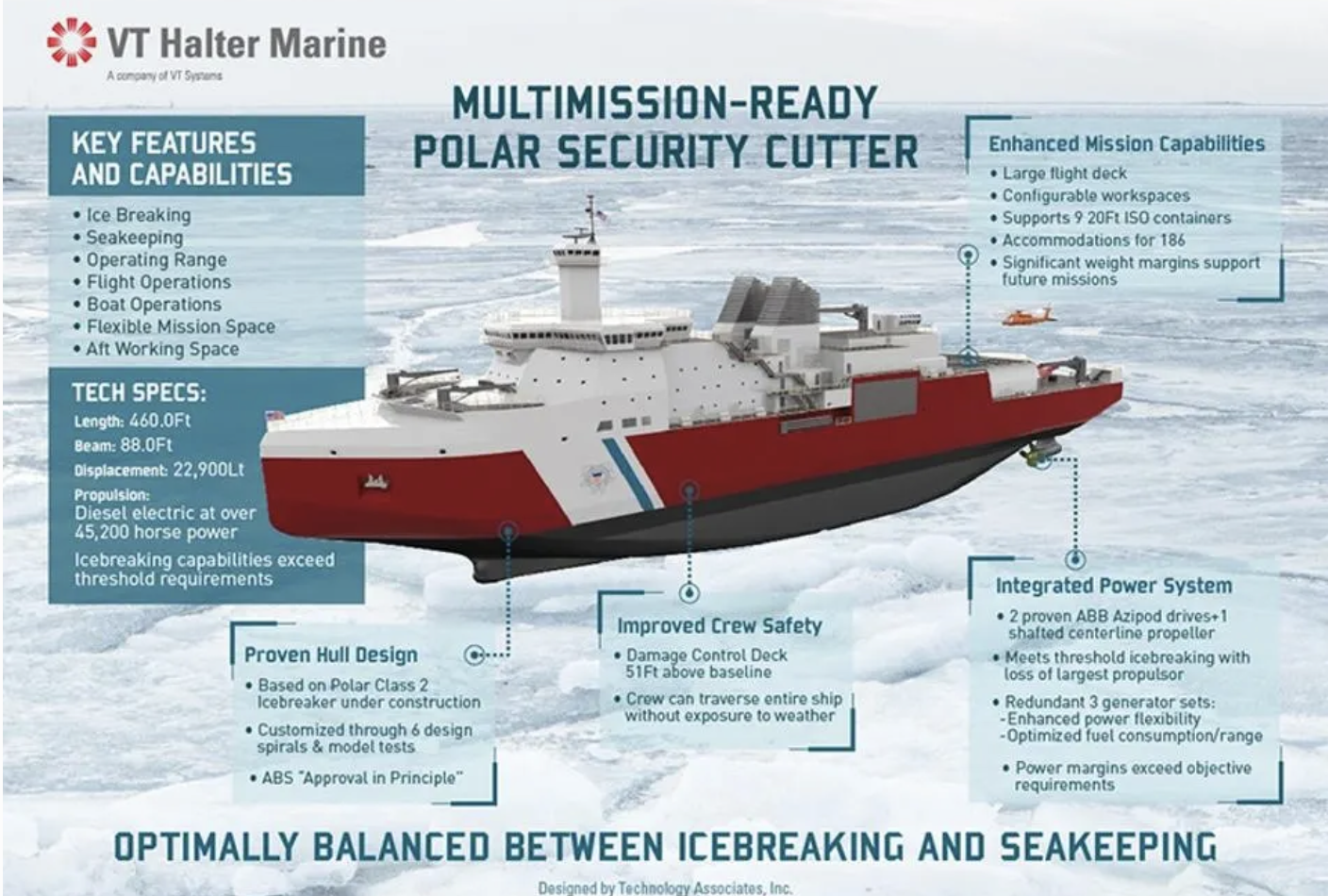
Sea-Air-Space 2025
This Day in Coast Guard History, February 3

Based on the Coast Guard Historian’s timeline, https://www.history.uscg.mil/research/chronology/
With inspiration from Mike Kelso
February 3
1801 Treaty of peace with France was ratified on this date, thereby ending the “Quasi-War,” in which cutters of the Revenue Marine had rendered valiant service.
1880 Date of a terrific gale on the New Jersey coast. Six vessels came ashore with 47 persons on board; all but two survived. Nineteen Life-Saving Service crewmen were awarded Gold Life-Saving Medals during the rescue of the persons aboard the wrecked George Taulane.
1943 A U-boat torpedoed the transport USS Dorchester off the coast of Greenland. Two of her escorts, CGCs Comanche and Escanaba, responded. The crew of Escanaba used a new rescue technique when pulling survivors from the water. This “retriever” technique used swimmers clad in wet suits to swim to victims in the water and secure a line to them so they could then be hauled onto the ship. Although Escanaba saved 133 men (one later died) and Comanche saved 97, over 600 men were lost, including the famous “Four Chaplains” who gave up their lifejackets to those that did not have one and all four went down with the ship.

Cadet Mary Jane East in dress uniform during rifle inspection on the Academy parade grounds. (U.S. Coast Guard Photo) 11/24/2020
1976 The Coast Guard Academy first announced the appointments of 50 cadets to enter with the Class of 1980, including three women: Cathryn Lis of Bristol, Connecticut; Susan Kollmeyer of Groton, Connecticut; & Cynthia Snead of Melbourne, Florida. The Coast Guard News Release published on February 4, 1976 regarding their announcement noted that: “Of the four largest federal service academies (Army, Navy, Air Force, Coast Guard) the Coast Guard Academy is the first to offer an appointment to a woman.” (USCG News Release No. 7-76; 4 February 1976).
1997 The 660-foot freighter Contship Houston ran aground on a coral reef 12 miles southeast of Key West in the Florida Keys National Marine Sanctuary. The vessel, under Coast Guard supervision, was safely floated off the reef some 144 hours later.
“Maritime Coastal Border Security and the Role of USCG R&D” –Marine Link

Map shows the locations of 37 Coast Guard Sectors. Source: https://homeport.uscg.mil/Pages/Sector-Map.aspx
Marine Link provides a post by Bert Macesker, Executive Director, USCG Research and Development Center and Dr. Joe DiRenzo, the Center’s Partnership Director, that discusses what the Coast Guard R&D Center is doing to enhance maritime border security in all its forms.
The National Naval Strategy
I will, for the moment step outside my accustomed role as a retired Coast Guard curmudgeon, and comment on the National Naval Strategy. Please forgive me, but this is the most “bully pulpit” I have. I got to thinking about this when the discussion of the Panama Canal noted that USN carriers cannot use the Canal and would take a very long time to join any naval conflict with China.
There is no longer any tactical or strategic reason that deployment of the US Fleet should be split 50/50 between the Atlantic and Pacific.
Russia is a fading shadow of the former Soviet Union with a smaller GDP than Canada. Our Atlantic Sea lines of communication are essentially secure. Russia is by no means ready to take on all of NATO, They can barely handle Ukraine.
China on the other hand is increasingly aggressive. Their rapidly growing fleet enjoys a home field advantage in the Western Pacific, particularly while half our fleet is based in the Atlantic.
Most of our ships and all of our aircraft carriers should be based in the Pacific.
In Europe, we have plenty of land bases we can operate aircraft from. Nevertheless, Britain, France, and Italy should be encouraged to coordinate their carrier deployments so that one of them is always immediately available
Big deck amphibious ships like LHAs operating F-35Bs and MH-60R ASW helicopters can fill in for what little carrier aviation we need in the Atlantic and Mediterranean.
In the Pacific we have few permanent air bases close to where conflict is likely. Carrier based aircraft can be the difference between victory and disaster.
The situation is starting to look much like World War II, when virtually all US fast carriers were assigned to the Pacific Fleet
Right now we operate aircraft carriers singly, even in the Western Pacific. Singly an aircraft carrier can barely defend itself against Chinese anti-access systems, much less go on the offensive.
Operating aircraft carriers in pairs with augmented escorts gives them a much better chance of both surviving and going on the offensive. One can play defense while the other prepares a massive strike.
Ten carriers in the Pacific would mean we could have a ready pair in the Western Pacific at all times. They and their larger destroyer squadron could even work up together before deployment.
The current distribution of shipyards capable of doing maintenance on aircraft carriers may suggest basing all US aircraft carriers in the Pacific may be impossible. It might be necessary to open a new shipyard. Vallejo might be an option. A fourth USN Pacific operating base on US soil could be advantageous. If a new shipyard is developed in the Pacific, if it were government owned and operated it could speed emergency repairs, avoiding the delays of contract negotiations.