A Common Operating Picture?

Navy photo, experimental ship Stilleto

This sounds like it might be something the Coast Guard might be interested in.

PSS CDS receives critical data from multiple sensors and offers two-way sharing of information and commands across both classified and unclassified domains. Intersect™ Sentry is an automation and analysis tool that creates alerts from a variety of intelligence, sensor and reconnaissance data streams according to parameters defined by the user. Both systems have been successfully demonstrated in support of joint and coalition maritime operations.

Whatever that actually means, it sounds good, and it fits on something WPB sized.

New Info on China’s Navy and coast guards–ONI

File:Logo of the China Coast Guard.png

China Coast Guard Crest

The Office of Naval Intelligence (ONI) has issued incredibly detailed information on China’s Navy and para-military naval organizations in an unclassified form.

Perhaps most impressive is the PLA Navy Identification Guide which includes their coast guards. The sheer number of vessels in their coast guard type organizations is staggering.

The Diplomat offers their take on these new intelligence products. The author, “Andrew S. Erickson is an Associate Professor in the Strategic Research Department at the U.S. Naval War College and a core founding member of the department’s China Maritime Studies Institute (CMSI). He serves on the Naval War College Review’s Editorial Board.”

You can access all of these products here.


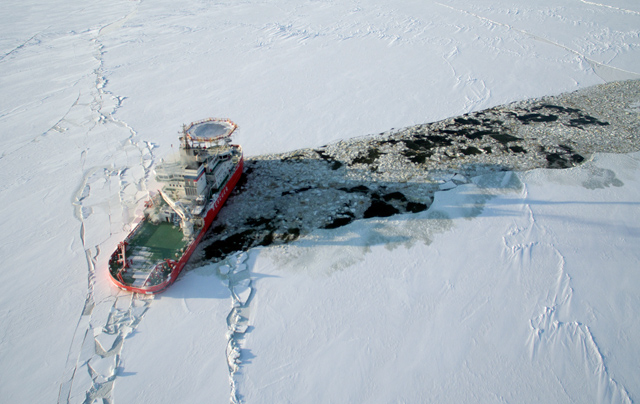
New Icebreaker–For the Great Lakes?

Launch of USCGC Mackinaw (WLBB-30) on April 2, 2005. Photo by Peter J. Markham.

Launch of USCGC Mackinaw (WLBB-30) on April 2, 2005. Photo by Peter J. Markham.

gCaptain is reporting that the severe conditions in the Great Lakes over the last two winters and the resulting loss of iron production, have prompted support for another Great Lakes icebreaker at least as large as Mackinaw.

“This is the second year in a row a brutal winter has slowed early season shipments of iron ore and other cargos on the Lakes. In April 2014, shipments of iron ore totaled just 2.7 million tons, a staggering 53.3 percent below the month’s long-term average.

“As a result, Rep. Candice Miller (R-MI) included a provision in the Coast Guard Authorization Act of 2015 (H.R. 1987) approved by the House Transportation and Infrastructure Committee that directs the U.S. Coast Guard to design and build a new, multi-mission icebreaker to enhance its capabilities on the Great Lakes.”

This could be an opportunity not only to build another icebreaker for the Great Lakes but also to design the three Medium Icebreakers the High Latitude Study has shown the Coast Guard needs.

A ship along the lines of Russia’s new oblique icebreaker would be particularly useful in the Great Lakes in that it would open a channel wider than the beam of the icebreaker itself.

baltica_icebreaking


“The Pentagon is buying the wrong ship, and it’s costing taxpayers billions”–David Axe

cyclone-crafts-1

Cyclone-class boats before the modernization program in formation. Courtesy of U.S. NAVY

Influential defense columnist David Axe has written a piece picked up by Reuters that advocates that the Navy buy Webber class PCs instead of Littoral Combat Ships as replacements for the Cyclone class patrol craft currently homeported in Bahrain.

“It just so happens that Bollinger Shipyards, the same Louisiana shipyard that built the Cyclones, is building Sentinel-class boats for the Coast Guard that are roughly the same size as the Navy vessels, far more modern and reasonably priced at just $70 million a boat.

“If the Navy bought 10 fewer Littoral ships and acquired 10 new patrol boats for $70 million apiece instead, it would represent a net savings of more than $3 billion in ship construction costs while also boosting national security.

While I can’t totally agree with Mr. Axe, making the Webber class dual service would almost certainly provide some benefit to the Coast Guard in terms of training, future modernization, and long term sustainability.

RAF Retiring C-130Js, Perhaps an Opportunity

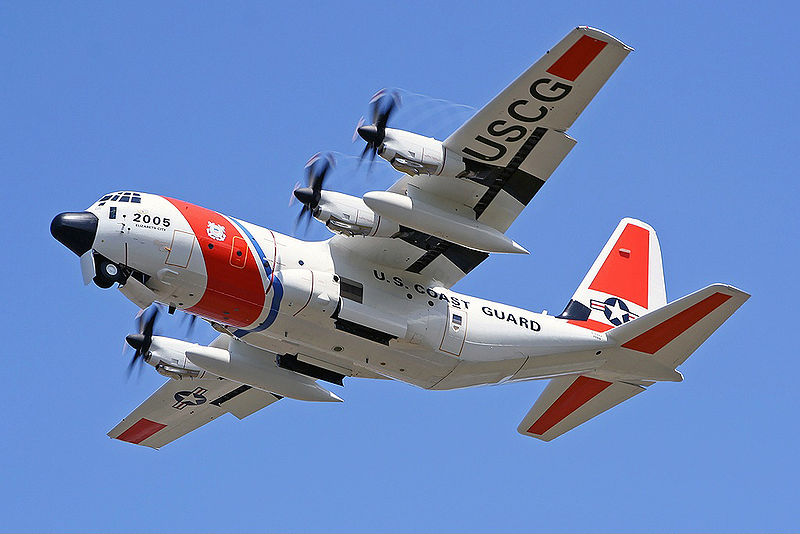
800px-USCG_C130_Hercules

The RAF is reportedly planning on premature retirement of its fleet of 24 C-130J transport aircraft, so that they will have a homogenous fleet of Airbus A400M transports.

The plan is the C-130J will be gradually withdrawn starting next year as the RAF ramps up operations of the first of 22 Airbus A400M airlifters, due to complete delivery by the end of 2018.

This might be an opportunity for the Coast Guard to replace the remaining H models that make up the majority of its C-130 fleet with the more capable J models, at much less than the cost of new aircraft.