This Day in Coast Guard History, December 15/16

Based on the Coast Guard Historian’s timeline, https://www.history.uscg.mil/research/chronology/
With inspiration from Mike Kelso

December 15

The Mobile Point Lighthouses prior to the American Civil War. They were destroyed during the Battle of Mobile Bay.

1835  The superintendent of the lighthouse system wrote to Winslow Lewis, “I perceive by a Mobile paper which I received this morning that the Mobile Point light has been fitted by you as a revolving light” similar to the nearby Pensacola lighthouse.  “I am very sorry that you have done so.” Lewis was a contractor who – almost by himself a virtually controlled the administration of the lighthouse system.  The incident helped cause a Congressional investigation that ultimately created a modern lighthouse system in this country.

1839  Near Gloucester, Massachusetts, a storm from the southeast caught and dragged ashore or drove to sea over fifty vessels.  An eyewitness wrote: “From one of the beach to the other, nothing could be seen but pieces of broken wrecks; planks and spars…ropes and sails…flour, fish, lumber…soaked and broken…”  The local fishermen manned two boats, the Custom House boat and the newly launched Revenue Cutter Van Buren (commissioned December 2, 1839) and “fearlessly risked their lives for the safety of their fellow creatures” and brought many safely to shore.

15 December 1943, New Britain. Landing craft approach the inhospitable shores near Arawe, where American troops forced a landing at dawn in one of the most daring amphibious assaults yet undertaken in this area. Completely overwhelming the Japanese defenders they seized the entire Arawe Peninsula within three hours. Note the number identifying the landing craft had been whited out by the censor. Photo credit: Harold George Dick

1943  Coast Guardsmen participated in the landings made on Arawe Peninsula, New Britain.

1944  Coast Guardsmen participated in the landings made on Mindoro, Philippine Islands.

Argo Merchant sinking

1976  The Liberian-flagged 644-foot tanker Argo Merchant, with 7.5 million gallons of oil on board, grounded on a shoal 28 miles southeast of Nantucket.  Coast Guard helicopters from AIRSTA Cape Cod rescued her 38-man crew.  CGCs Sherman and Vigilant responded, along with other vessels, but heavy weather prevented the containment of the spill.  The tanker broke in two on December 21.

December 16

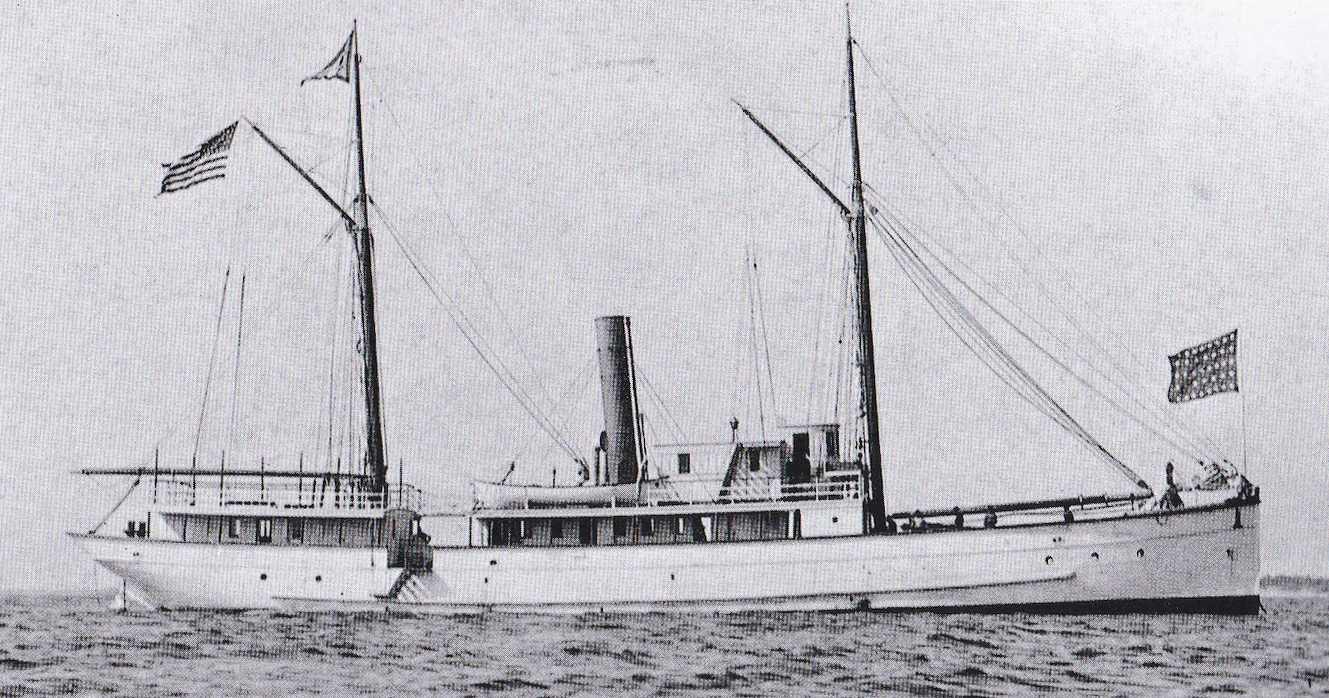
USRC Gallatin; “U.S. Coast Guard survey schooner GALLATIN photographed in 1855
Gallatin was a 73-foot topsail schooner that displaced 112 tons. She was built by the New York Navy Yard and entered Revenue service in 1830. She was ordered to Charleston, SC, on 16 November 1832 to enforce federal tariff law and suppress the “nullification proceedings” adopted by the State of South Carolina. She was transferred to the Coast Survey in 1840 and returned to Revenue service between 1848 to 1849 and then returned to the Coast Survey. She was captured by Confederate forces early in the Civil War and served the South as a privateer. This is the earliest known photo of a Revenue cutter although by the time this photo was taken she had already transferred permanently to the Coast Survey.

1831  Secretary of the Treasury John McLane ordered Revenue cutters to conduct “winter cruises.”  The USRC Gallatin became the first cutter “directly authorized by the government to assist mariners in distress.”

The crash site of the United Airlines DC-8, United 826, in Park Slope, Brooklyn

1960  A United Airlines DC-8 with 84 passengers on board collided with a TWA Super Constellation carrying 44 in mid-air over the New York City area. There were 134 fatalities including all aboard the two aircraft and six on the ground. Coast Guard helicopters, working with the aircraft of the Army, Navy and New York Police Department, transported the injured to a nearby hospital.  Coast Guard vessels also searched the New York harbor area.  The debris they picked up was used by the Civil Aeronautics Board in its determination of the cause of the mishap.

The crash site of the TWA Super Constellation, TWA 266, in Miller Field, Staten Island.
What About Drones?

You may have heard about an incident where a 47 foot MLB was tracked by 12 to 30 objects that were thought to be Unmanned Air Systems.

The War Zone has a post that talks about this and other recent incidents, reports, and conspiracy theories that involve drone, “Coast Guard Ship Stalked by Unidentified Aircraft, Iran Drone Mothership Claim Shot Down by DoD.” More here and here.

Drones are hot sellers. There are a lot of them, and there will be many more after Christmas. With the reports of use of drones in the war between Ukraine and Russia, activities involving drones are starting to receive a lot of public attention, and it is not surprising that many see them as potentially dangerous or at least a threat to privacy. Drones flown at night have probably also resulted in a number of UFO sighting reports. Plus, a lot of drone operators are not aware or ignore FAA regulations that apply to them.

Opinions about the size and speed of drones seen at night are extremely unreliable, but there are ways to identify drones that are operating legally. I will try to provide some basic information and point toward the current regulations.

Why are they hard to track? Large drones are not hard to track if they are operated at altitude. On the other hand, small drones operated at low altitudes are very hard to pick up on radar. They are down in the clutter. Virtually all of these sightings are probably small drones of less than 55 pounds, the vast majority less than five pounds.

Air search radars frequently exploit doppler effect to pick moving targets out of the clutter, but most drones are slower than the speeds necessary to trigger a detection by doppler–they are close to the ground and move at speeds similar to that of millions of cars.

In addition to being small, most drones are made of non-radar reflective materials like foam and plastic. There is very little that would return a radar signal other than the motors and wires.

Why don’t the operators show up electronically? Most radios used to control drones now are frequency agile and relatively short range so they may be difficult to recognize. They have to be frequency agile because they use the same radio frequencies common in household electronics, so short bursts on a 2.4 GHZ frequency are indistinguishable from thousands of others. Also, drones may fly a preprogrammed route with no additional radio frequency required. Drones can also be programmed to follow a person or presumably any moving object.

Are they doing anything illegal? FAA Regulations Part 107 applies to both recreational and commercial use of small, civil, unmanned aircraft systems–small meaning 55 pounds (25 kg) or less. As the operator of remote-control model airplanes that are, like multi-rotors, considered drones, I am somewhat familiar with the issues.

Some things are specifically illegal without a specific waiver or exemption. Waivers may be relatively easy to obtain. I regularly get one where I fly.

  • Flying a UAS beyond the line of sight of the person or team controlling the drone
  • Flying more than 400 feet above ground level.
  • A single pilot operating more than one aircraft simultaneously
  • Flying at night or during twilight without required lighting.
  • Operating in restricted air space. (Restricted areas may be temporary like over sporting events or effectively permanent like around airports and over Washington DC.)

Flying or hovering over your house at less than 400 feet is probably not illegal, but flying over people exposed on the ground may be. Harrasing people on the ground with a drone is definitely illegal.

How can they be detected and identified? Perhaps most relevant is the requirement to have a remote ID module if flown outside of a “Federally Recognized Identification Area (FRIA)” (typically a defined area around a remote-controlled model airfield registered and approved by the FAA).

So that solves the problem, right? No! The ID modules are short range, I have heard 2 miles or less. Operated low or where terrain blocks the signal, it is going to be less, so to even detect the signal you have to be relatively close. There are applications for smart phones that allow anyone to access the ID module signal, but generally law enforcement has received no training and in fact has no knowledge that these are available.

So, what should we do? We are in a transition period. Going from a time when drone sightings were rare, to a time when they will be routine. Amazon is planning on using drones to drop packages. Drones are useful. They are not going away. Seeing lights in the night sky that move irregularly and that you cannot identify is probably not a reason for concern. We really don’t want people shooting at lights in the sky.

Irresponsible drone operation may require enforcement. FAA’s stated enforcement strategy is first to try to educate before moving on to fines. There no specific acts identified as felonies under part 107 but negligent operation causing significant damage or violation of restricted airspace would certainly be covered by other laws including laws applied to operation of larger aircraft.

Perhaps Coast Guard units need to be trained in the use of drone ID applications.

Use of Force: As we know, drones can be used as weapons and as they become more common place, there is more likelihood the Coast Guard will need to take them down for force protection, defense readiness, and Ports, Waterways, and Coastal Security. The cutters of Patrol Forces Southwest Asia (PATFORSWA) have been fitted with short range, high resolution, drone detection radars and what appear to be electronic countermeasures, so are getting some experience with drone detection, passive countermeasures, and possibly hard kill countermeasures as well.

The Coast Guard’s missions may require use of force. In some cases, electronic warfare may be sufficient. Directed energy weapons seem to hold promise, but 30mm guns with air burst ammunition and APKWS 70mm guided rockets have proven capability and provide additional capability against other threats.

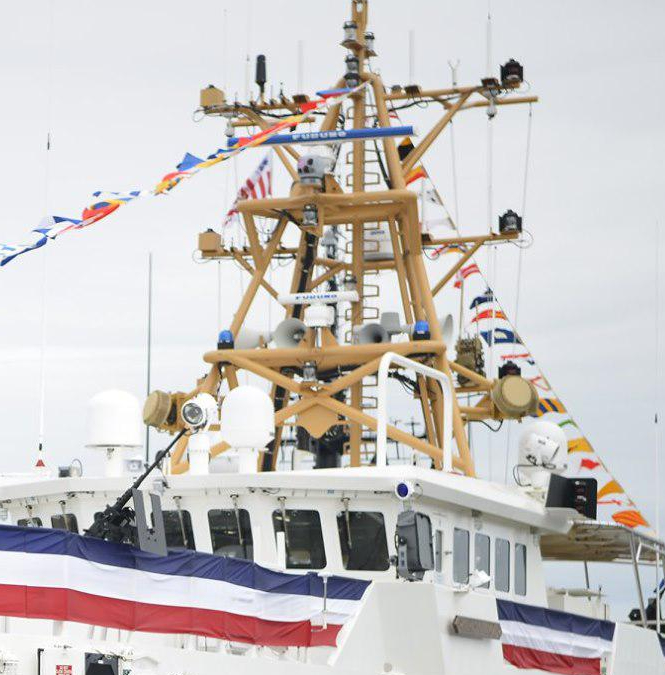
  • USCGC Charles Moulthrope (WPC-1141) prior to departure for PATFORSWA. Small drone detection radars are visible low on the mast. 

This Day in Coast Guard History, December 13/14

Based on the Coast Guard Historian’s timeline, https://www.history.uscg.mil/research/chronology/
With inspiration from Mike Kelso

December 13

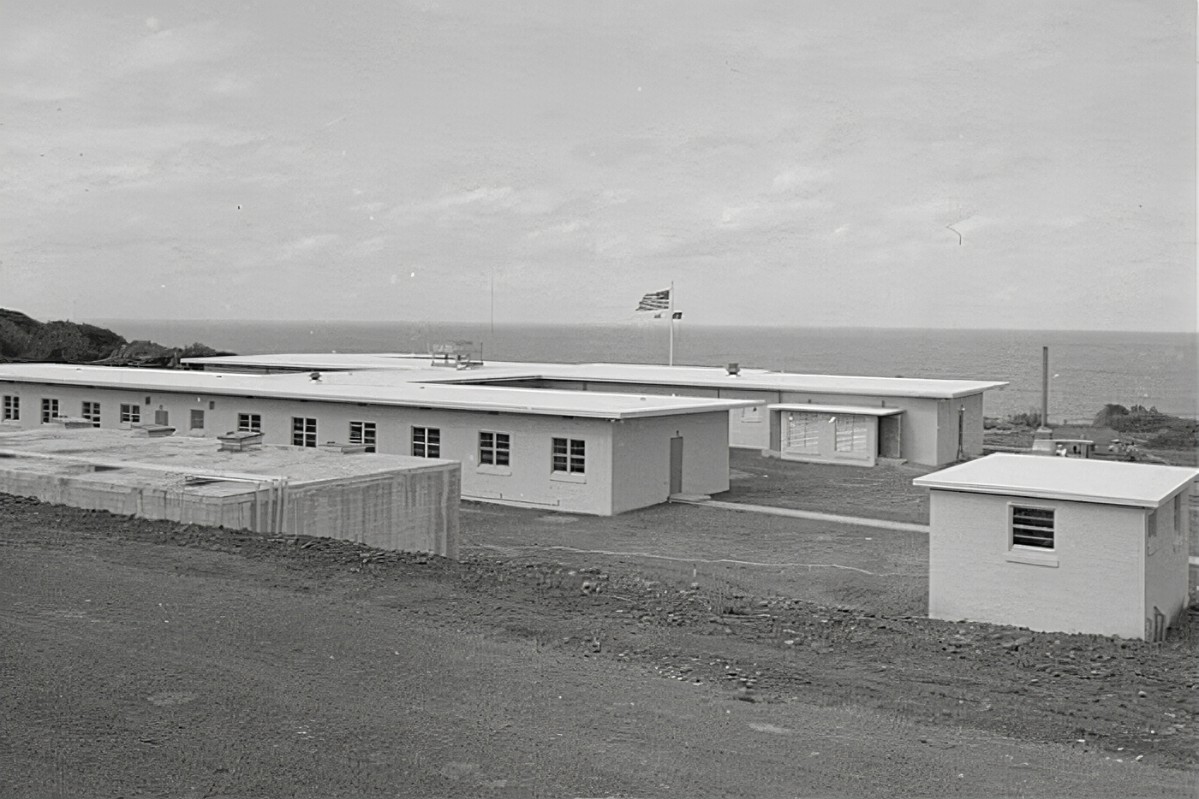
LORAN STATION IWO JIMA

1965  The Treasury Department received “official word” to commence a project to build a number of LORAN stations throughout Southeast Asia in support of the escalating U.S. efforts in the Vietnam War.  The LORAN project was code-named “Tight Reign.”

South Korean Navy P-3CK

2014  Coast Guard search and rescue crews were relieved by Republic of Korea assets in their search for 26 crewmembers from the fishing vessel 501 Oryong that capsized November 30, 2014, near Chukotka, Russia, in the Bering Sea. The Coast Guard completed more than 24 searches covering more than 4,576 square miles utilizing two cutters, two helicopters, and multiple airplanes.  Coast Guard crews will continue to partner with the Republic of Korea to provide search and rescue planning support.  Two Republic of Korea Navy P-3 Orion aircraft joined the search for survivors on December 6, 2014. The Republic of Korea vessel Sam-Bong arrived at the 501 Oryong’s last known position and began their investigation.  The Coast Guard offered to assist the Kamchatka Border Guard Directorate and the Republic of Korea with their search for survivors and deployed the following assets: CGCs MunroAlex Haley, HC-130s from Air Station Kodiak, and two SAR planners from Juneau deployed to Anchorage to work with South Korean Navy P-3 aircrews.  The Republic of Korea reported the 501 Oryong, with 60 crewmembers, was hauling in its catch when a wave hit and flooded the vessel’s storage chambers with seawater.  Good Samaritans rescued eight crewmembers, but one died of complications, 26 bodies were recovered, and 26 crewmembers were reported missing.

December 14

1846  Revenue Captain Alexander Fraser protested in a report to Congress against “unjust imputations” made against the Service for its involvement in the failure of the first steam cutters.  He also requested the authority to employ medical aid on cutters and to provide pensions for personnel disabled in service.

1854  Congress authorized the appointment of the first lifeboat station keepers at $200 per year each and superintendents for Long Island and New Jersey serving under Secretary of Treasury who “may also establish such stations at such lighthouses, as, in his judgment, he shall deem best.”

Sea otters. Photo taken under U.S. FWS permit #MA-043219. (Ryan Wolt)

1911  President William Howard Taft proclaimed the Convention entered into between the United States, Great Britain, Japan, and Russia for the preservation of the fur seal and the sea otter.  As this treaty prohibited entirely the killing of seals, and sea otters, on the part of the four nations concerned, in the North Pacific Ocean and Bering Sea, it was necessary that the movements of the Revenue Cutter fleet that enforced the agreement “correspond generally” to the progress of the seal herd in its annual northern migration.  During the 1912 season the following cutters were assigned: Rush, Manning, McCulloch and Tahoma.  This was the first regular patrol in enforcement of the regulations issued pursuant to the International Convention proclaimed on December 14, 1911.  Prior to that date Revenue Cutter vessels enforced the regulations of the Paris Tribunal of arbitration decreed August 15, 1893 for the preservation of the fur seal.  The patrol of the North Pacific Ocean and Bering Sea was first inaugurated in 1895 for the enforcement of the provisions of the Act of Congress approved April 6, 1894.  The cutters Rush, Bear, Corwin, Grant, and Perry were the first cutters assigned to carry out this patrol which commenced in 1895.

1996  The 735-foot M/V Bright Field collided with the New Orleans Riverwalk, causing substantial damage and injuring over 100 people.  Coast Guard forces responded.

Special Purpose Craft – Heavy Weather 2nd Generation (SPC-HWX II)

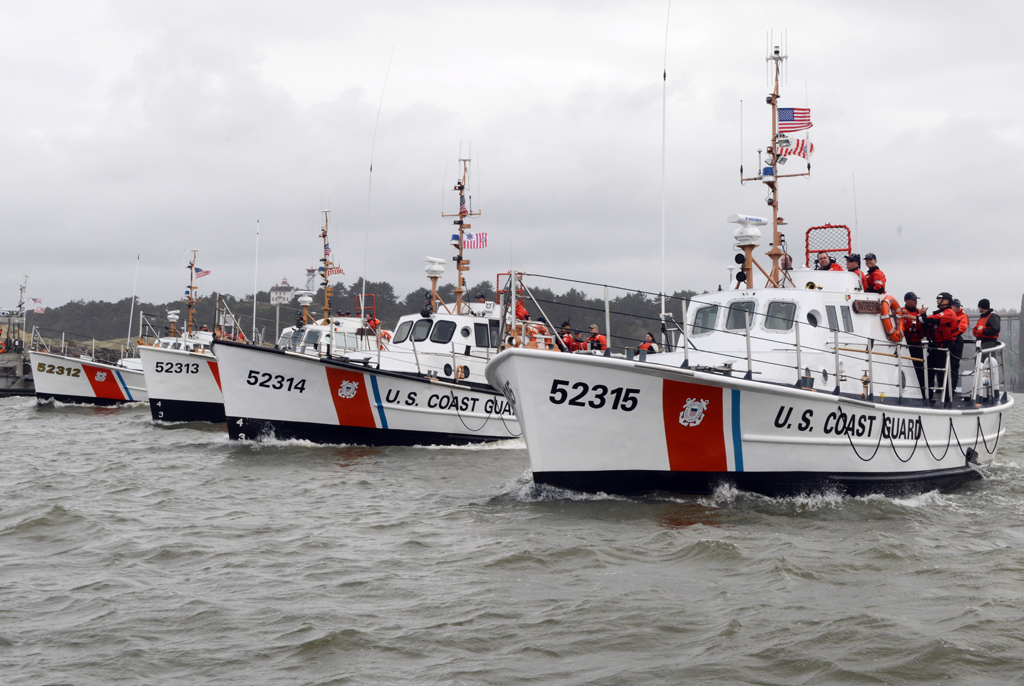
Being Replaced: Coast Guard crew members aboard four 52-foot Motor Life Boats and one 47-foot Motor Life Boat transit in formation outbound of Yaquina Bay, Ore., April 9, 2019. The four 52-foot MLBs are the only active vessels of their kind and the crews are assigned to different units across the Pacific Northwest, which is why having all four together for the roundup was a rare occurrence. (U.S. Coast Guard photo by Petty Officer 3rd Class Trevor Lilburn)

The Acquisitions Directorate has announced the release of a request for proposal for six boats to replace the 52 foot MLBs which were taken out of service more than three years ago. You can find the RFP here.

The proposal should give the Coast Guard some very capable craft. I did not read the entire 196 pages front to back, but I did manage to find out some of the capabilities included in the specifications.

First some limits:

  • Length 64 feet or less
  • Beam 22 feet or less
  • Draft 7 feet or less

Other characteristics:

  • Speed: at least 20 knots
  • Cruise Speed: 16 knots
  • Minimum Speed: 5 knots or less
  • Range: 500 nautical miles
  • Crew: Minimum 4

Missions:

  • SAR is number one, but also
  • Marine Safety
  • Law Enforcement
  • Ports Waterways and Coastal Security
  • Marine Environmental Protection
  • plus, anything else they might use it for.

Capabilities:

They are expected to operate in 35′ seas, 60 knot winds, and 25′ surf.

The boats will support a relief crew of four for missions that last more than 10 hours in calm waters or more than six hours in more demanding conditions. There is also seating for five survivors for a total of 13 seats. Berthing is limited to four.

The boats will have both open and enclosed bridges. It will be equipped with a bow thruster, recovery wells on either side and a powered towline reel.

Communications include satellite phone, and if I understand correctly, encrypted voice and data.

In addition to radar, sensors will include Electro Optics and Infra-Red (EO/IR).

Maybe We Need More than Six:

As I have noted before, such vessels could replace 87 foot WPBs that are approaching the end useful life in at least some ports and do it with a smaller crew and probably better seakeeping. They might not encounter 25 foot surf as frequently as the those in the Pacific Northwest, but the capability to deal with heavy weather will be there when needed. They don’t have the endurance of WPBs but when cases extend beyond their endurance, FRCs should take over. I do hope they are a bit faster than 20 knots, after all the 47 footers can do 25 knots.


FY2025 RDT&E Project Portfolio

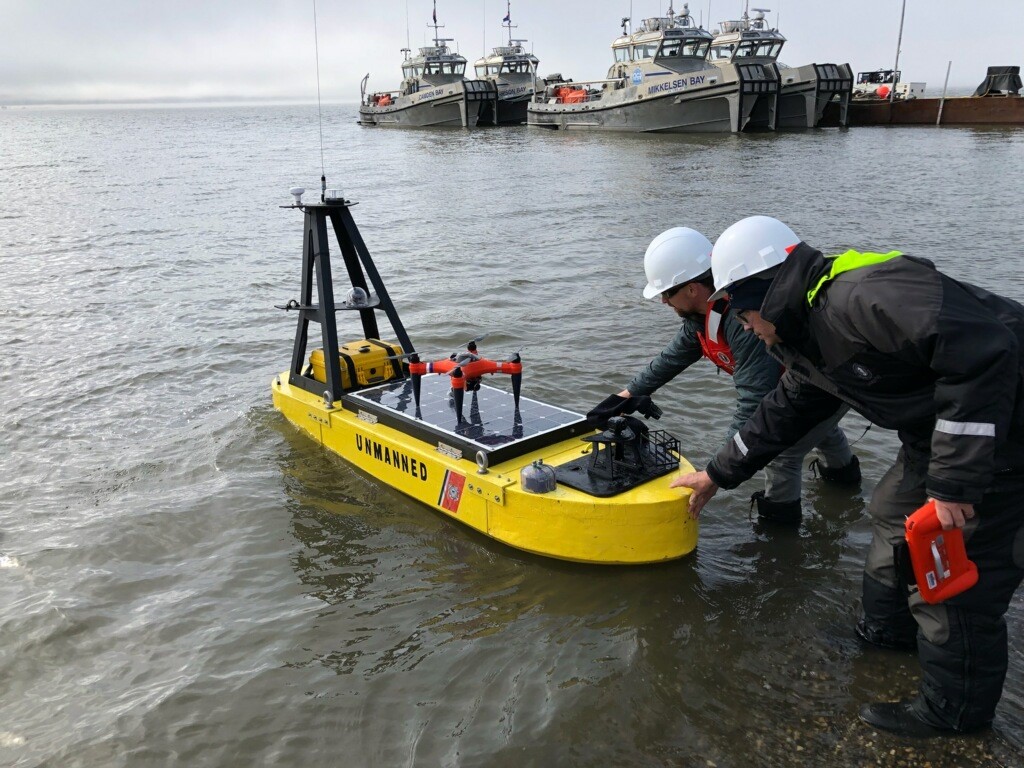
RDC researchers test the effectiveness of pairing the USV and the Splash Drone on a mission. U.S. Coast Guard photo by Alexandra Swan.

The Acquisitions Directorate has a short post about the Research and Development Center, “Research and Development Center projects focus on enhancing Coast Guard mission success,” but for the real meat you have to follow the link to the 50 page “U. S. Coast Guard RDT&E Project Portfolio.” This document provides a brief overview of 46 different projects, many of which involve either using or countering unmanned systems.

These provide a window into how the future Coast Guard might look and are perhaps the only real way the Coast Guard will actually be able to continue to do more with less.

“‘Eroding readiness’: US Coast Guard Commandant warns of looming crisis” –Breaking Defense

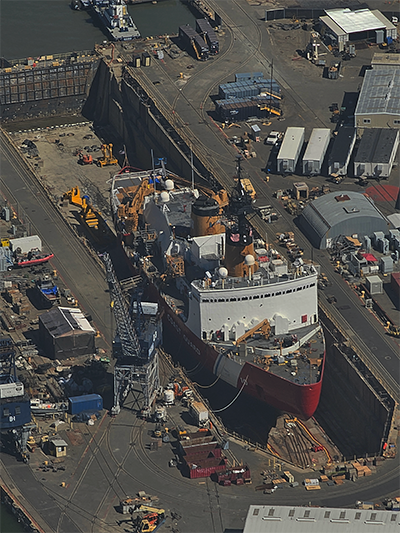
Polar Star at Mare Island Dry Dock LLC undergoing the fourth phase of its five-year Service Life Extension Project. U.S. Coast Guard photo by Cmdr. Jeremy Courtade.

Breaking Defense reports,

 “A multi-billion shortfall in operation and maintenance coffers is hampering US Coast Guard operations with a steep cliff looming on the horizon, according to Commandant Adm. Linda Fagan…The four-star admiral estimated that her service funding really needs to grow from $13 billion up towards the $20 billion range, and that right now it could “ingest” $3 billion for operation and maintenance accounts to keep helicopters in the air and vessels mission ready. That additional $3 billion, Fagan added, could be used to shore up infrastructure, buy additional parts, maintenance, and for command, control, communication, computer, cyber and intelligence (C5I) initiatives.”

The Commandant says dry dockings are being deferred and parts and equipment has to be passed from cutter to cutter to allow them to deploy with full capability.

Swapping equipment puts an additional load on the crews. Being Semper Paratus cost money.

Good to see the Commandant being forthright about the problems, rather than trying to pretend the Coast Guard does not need additional funding to meet the ever-increasing demands.

Being a credible, essential part of the defense establishment by having clearly defined roles in a potential future conflict with China and/or Russia would help to justify additional cost and heightened readiness.

Thanks to Lee for bringing this to my attention.

This Day in Coast Guard History, December 11/12

Based on the Coast Guard Historian’s timeline, https://www.history.uscg.mil/research/chronology/
With inspiration from Mike Kelso

December 11

1881  Six men landed from a boat on Race Point, Cape Cod, and were soon after found, wet, chilled, and much exhausted, by the patrolman from Station No. 6, Second District.  He learned that they were the captain and crew of the Canadian schooner J .A. Hatfield that had been sunk in a collision with an unknown bark the previous night.  The patrolman conducted them to the light keeper’s dwelling nearby.

United States Coast Guard Cutter Mellon (WHEC-717) makes way through the Bering Sea while acting as search and rescue standby cutter for the Bering Sea Opilio Crab fishery. U.S. Coast Guard photograph 010209-C-6130A-500, PA1 Keith Alholm

2014  CGC Mellon returned to Seattle following a seven-week deployment in the Eastern Pacific Ocean after interdicting nearly 700 pounds of cocaine seized from seagoing drug smugglers.  The drugs, recovered during a single bust off the coast of Central America, were worth an estimated street value of $18.6 million.  Three suspects were detained during the operation. The more than 150-person crew of Mellon left Seattle on October 25 to conduct anti-narcotics and search and rescue missions along the coast of Mexico and Central America.  Their efforts resulted in six law enforcement boardings and the disruption of an additional 1,900 pounds of cocaine shipments headed for the U.S.  Just as Mellon began its journey homeward on November 24, 2014, the cutter was diverted to lead search and rescue operations in the case of a missing U.S. sailor.  The sailing vessel Seven Sisters was found capsized off the coast of Mexico with no crew present after the vessel was reported as overdue to the port of Acapulco.  Over the course of nearly a week, Mellon launched its attached MH-65 Dolphin helicopter and crew up to four times a day and covered more than 26,000 square miles of ocean while searching for the lost sailor.  Extra lookout watches were set aboard the cutter in hopes of finding him, but the case was suspended after the search efforts proved unsuccessful.  Another search and rescue operation involved a few unlikely survivors.  About 300 miles off the coast of Guatemala, Mellon’s crew spotted four sea turtles and a dolphin entangled in more than 100 feet of abandoned fishing line.  A small crew launched one of the small boats to rescue the animals and remove the debris from the water.  After nearly an hour of cutting the animals free, they were released and appeared to be uninjured.

December 12

1876  The first ever examination for Revenue Cutter cadets was held in Washington, D.C.

The 82-foot patrol boats of Squadron One (RONONE) deploying from Subic Bay in the Philippines to the theater of operations in Vietnam. (U.S. Coast Guard)

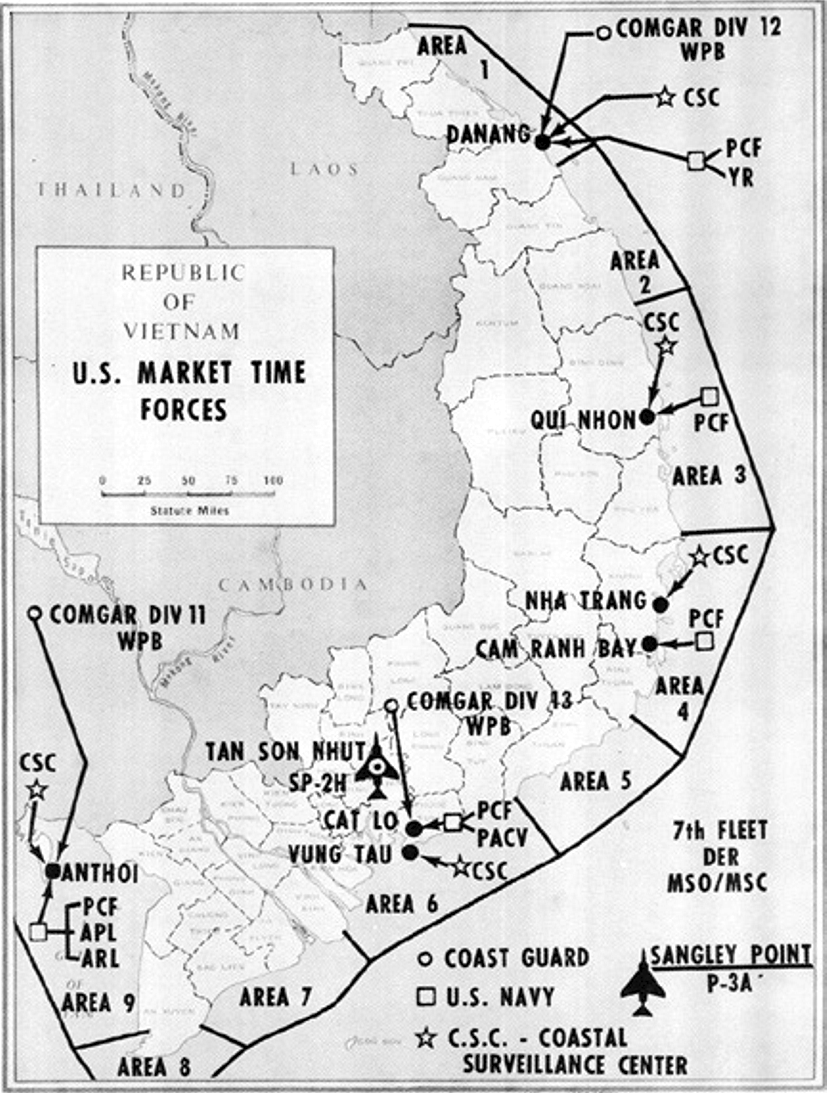
1965  Division 13, Coast Guard Squadron One (RONONE) was established for service in Vietnam. This third division of 9 WPBs, which would be based at Cat Lo, brought the squadron up to 26 WPBs with Division 11, 9 WPBs based at An Thoi Naval Base, Phu Quoc Island, and Division 12 based at Da Nang.

By U.S. Navy – United States Naval Operations Vietnam, Highlights; June 1966 – Map – U.S. MARKET TIME Forces, Public Domain, https://commons.wikimedia.org/w/index.php?curid=34475896

1994  CGC Munro responded to a mayday from the Greek-registered 798-foot container ship Hyundai Seattle approximately 550 nautical miles south of Adak, Alaska.  The freighter reported an engine room fire that left the ship dead in the water.  An HH-65 attached to the cutter hoisted 27 crewmen to safety.  The freighter was later towed safely into Seattle.

This Day in Coast Guard History, December 10

Based on the Coast Guard Historian’s timeline, https://www.history.uscg.mil/research/chronology/
With inspiration from Mike Kelso

USLHT Azalea, 31 December 1891, United States Lighthouse Service Tenders; National Archives photo

1905  “To evaluate its use in lighthouse work, radio equipment was installed experimentally on Nantucket Lightship in August of 1901.  On December 10, 1905, while riding out a severe gale, Lightship No. 58 on the Nantucket Shoals Station sprang a serious leak.  There being no recognized radio distress signal at that time, the operator could only repeatedly spell out the word “help”.  Although no reply was received Newport Navy station (radio) intercepted the call and passed it on to the proper authorities.  The lightship tender Azalea was dispatched to the assistance of Lightship No. 58, and upon arrival at the scene passed a towline.  The long tow to a safe harbor began, but after a few hours it was quite evident that Lightship No. 58 was sinking.  Azalea took off her crew of thirteen men only minutes before she sank.  This pioneer use of radio had indeed proved Its worth in rescue operations.”

1941  Germany and Italy declared war on the United States.

The Coast Guard Cutter Dependable sits moored to the pier during a Heritage Recognition Ceremony in Virginia Beach, Virginia, April 9, 2024. The Heritage Recognition Ceremony celebrated the Dependable, its current and past crew members, and its accomplishments, before it was placed in commission, special status. (U.S. Coast Guard photo by Senior Chief Petty Officer Nick Ameen)

1981  A Coast Guard HH-52A landed on CGC Dependable’s flight deck, marking the 5,000th helicopter landing on board the cutter.  According to Coast Guard aviation records, this was the most helicopter landings ever recorded on board a cutter.  The landing occurred off Dauphin Island in the Gulf of Mexico.

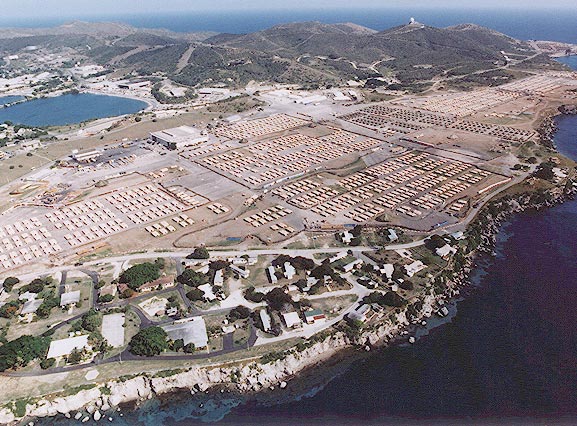
Original caption: “Gitmo airfield converted for 10,000 migrants”

1993  Secretary of Transportation Andrew H. Card, Jr., awarded the military members of the Coast Guard the Humanitarian Service Medal and the civilian employees the Coast Guard Public Service Commendation for their services during the Haitian migrant crisis from October 1991 through November 1992.  During that period, a flotilla of over 27 Coast Guard cutters rescued 35,000 Haitian migrants from hundreds of overcrowded and unseaworthy vessels.

This Day in Coast Guard History, December 9

Based on the Coast Guard Historian’s timeline, https://www.history.uscg.mil/research/chronology/
With inspiration from Mike Kelso

1899  A Treasury Order entrusted the Bureau of Navigation “with the duty of examining and disposing of petitions for the remission of fines, penalties, and forfeitures under the laws relating to navigation, vessels, steamboat-inspection, and passengers.”

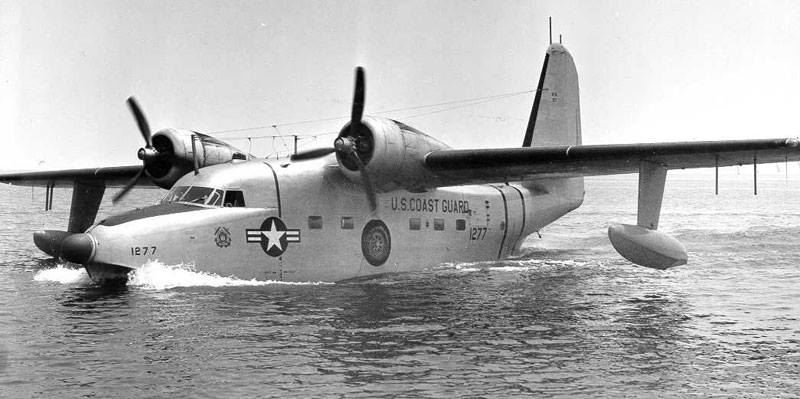
UF-1 Albatros

1959  At the request of the Russian Embassy, the crew of a US Coast Guard UF-1 amphibious aircraft removed an ill Russian seaman from the merchant ship Jana in the Bering Sea.  The plane, with an interpreter and a doctor aboard, landed in a blinding snow storm at Dutch Harbor, where the patient was transferred to a hospital.

USCGC Westwind

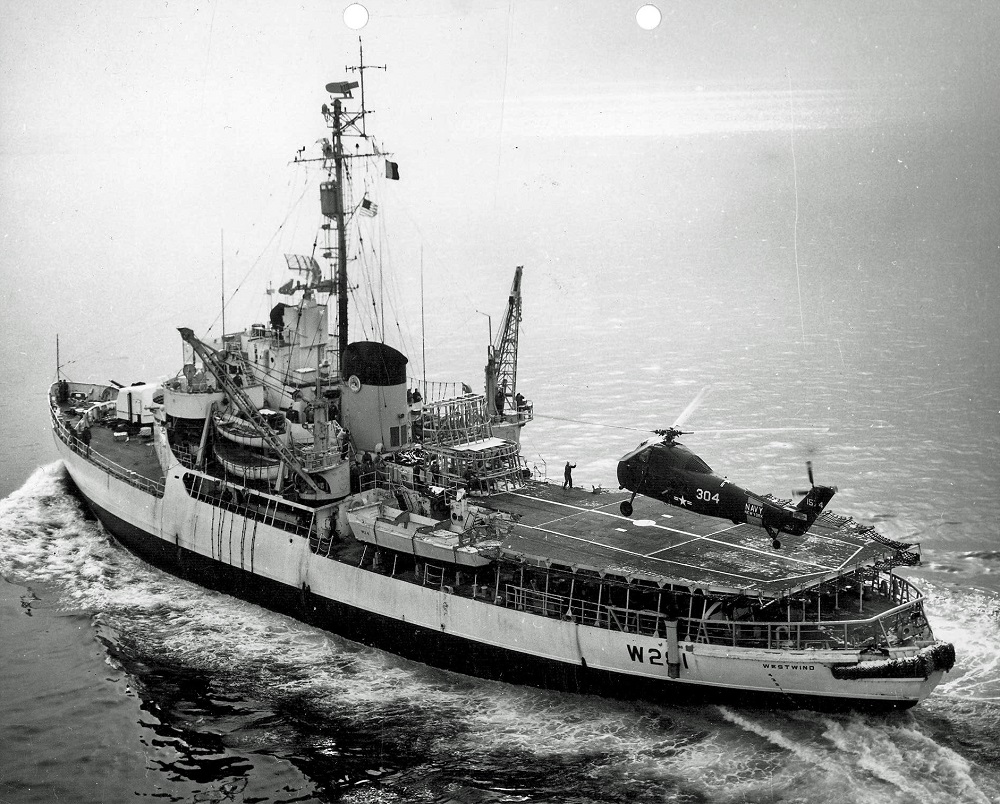
1981  The icebreaker CGC Westwind departed her homeport of Milwaukee for the Caribbean.  She was assigned to relieve a high-endurance cutter on a counter-drug patrol.

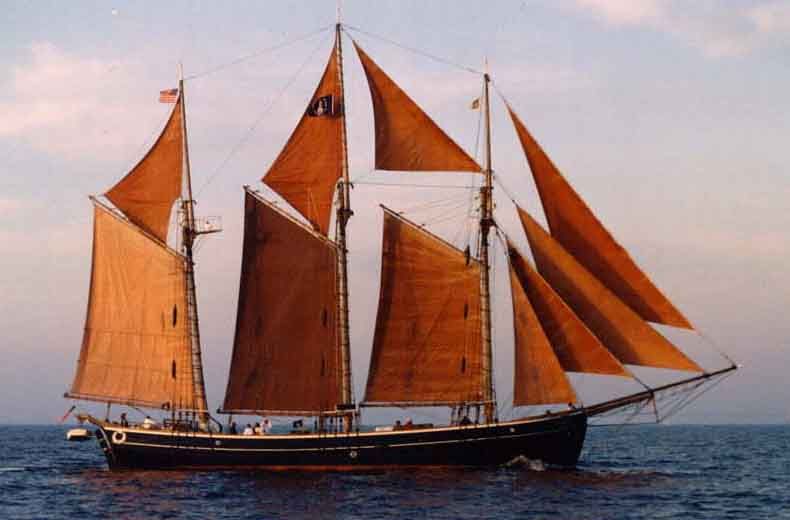
1996  Two Coast Guard HH-60 helicopters with support from an HC-130, all from AIRSTA Elizabeth City, rescued the seven crewmembers of the 67-year old schooner Alexandria when she went down in a fierce storm 50 miles southwest of Cape Hatteras.

This Day in Coast Guard History December 8

Based on the Coast Guard Historian’s timeline, https://www.history.uscg.mil/research/chronology/
With inspiration from Mike Kelso

December 8

1904 An Executive Order extended the jurisdiction of the Lighthouse Service to the noncontiguous territory of the Midway Islands.

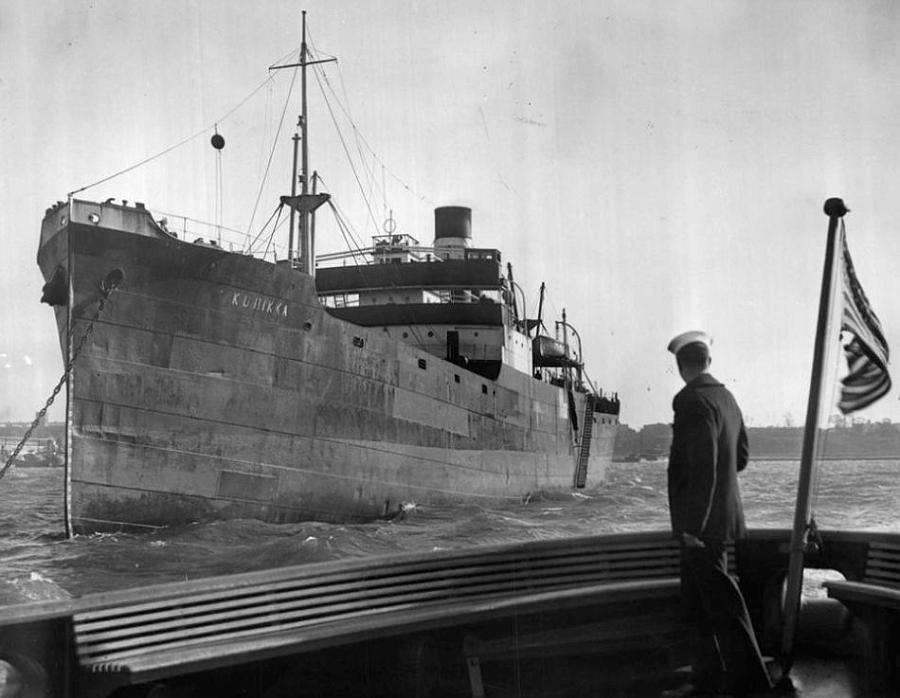
Finnish vessel SS Kurikka at anchor (CG photo)

1941 Coast Guardsmen seized all nine Finnish vessels that were in U.S. ports and placed them in “protective custody” to “prevent the commission of any acts of sabotage” on orders from the Navy Department.  Twenty-four hours later the Coast Guard removed the crews from each of the vessels. (The Finns were allied with Germany against the Soviets.) This action was ordered soon after the break in diplomatic relations between Great Britain and Finland.  The following Finish vessels were seized: SS Olivia, at Boston, Massachusetts; SS Kurikka, SS Jourtanes, and SS Saimaa at New York, New York; SS Advance, at Philadelphia, Pennsylvania; SS Aagot and SS Marisa Thorden at Baltimore; SS Aurora, at Newport News, Virginia; and SS Delaware, at Galveston, Texas.

1983 Four cutters arrived off of the island of Grenada to replace U.S. Navy surface forces conducting surveillance operations after the U.S. invaded the island earlier that year.  The cutters involved were Cape GullCape FoxCape Shoalwater, and the Sagebrush. (A USNI story about the mission here.)

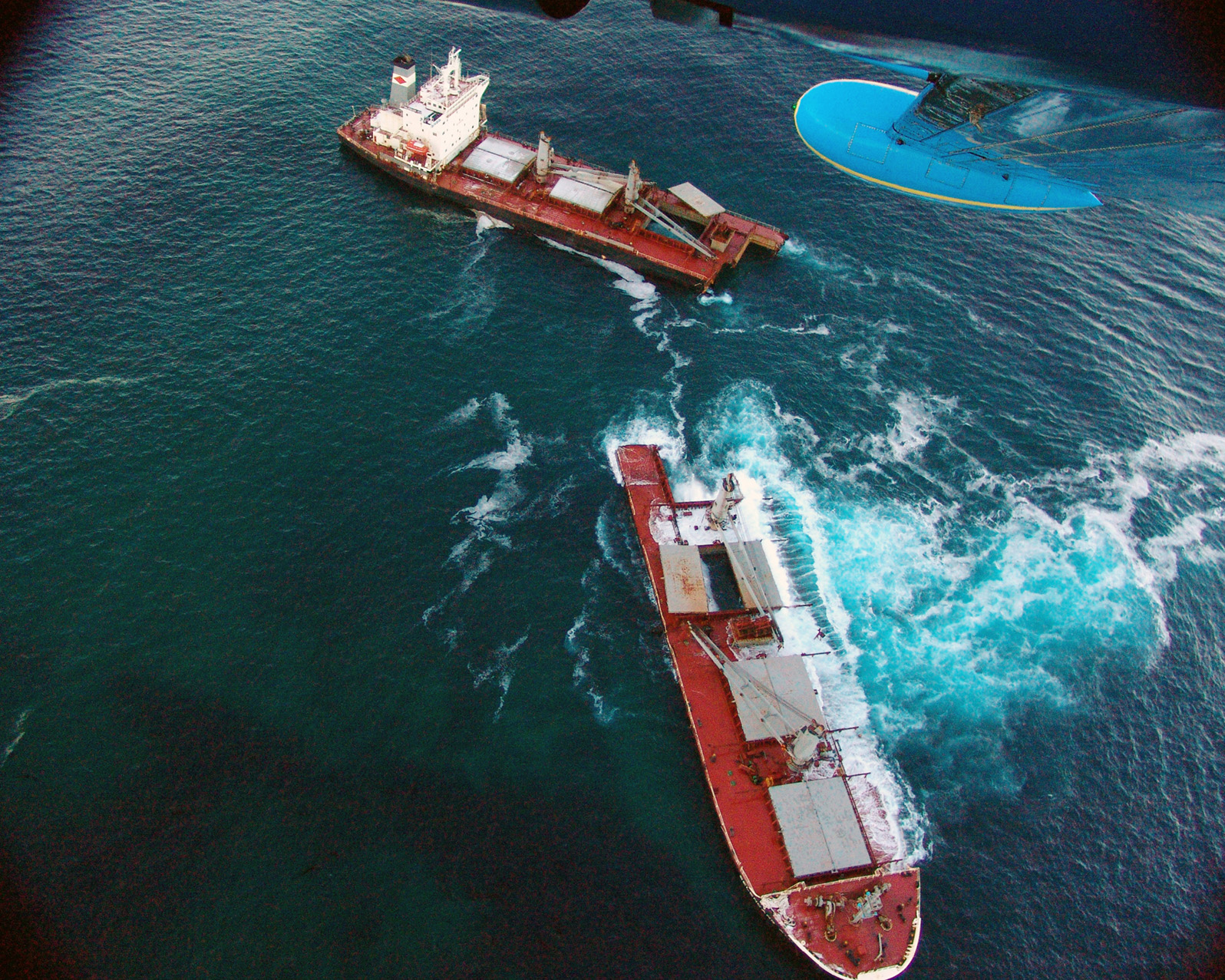
JUNEAU, Alaska (Dec. 19, 2004)–An over-flight photo taken Dec. 19 show the bow and stern sections of the 378-foot freighter Selendang Ayu near Skan Bay. Unified Command photo

2004 The 738-foot freighter Selendang Ayu grounded and broke in two December 8, 2004, offshore of Spray Cape, Unalaska.  Fighting extremely adverse conditions, helicopter crews from Kodiak and the CGC Alex Haley, working with the crew of Haley, rescued all but six of the sailors.  AST3 Aaron Bean earned the Meritorious Service Medal and AMT3 Gregory Gibbons the Distinguished Flying Cross.  During the rescue high waves caused the crash of a Coast Guard HH-60J. Six of MV Selendang Ayu’s crew died in the crash.