Grab the popcorn. An entertaining historical post from Defense Media Network.
Author Archives: Chuck Hill
“Coast Guard first ever Data Strategy guides the way forward for data readiness and well-informed decision making” –MyCG

A family of Link-16 Terminals for Air, Ground, and Sea Platforms. MIDS Family. LVT 1:Provides Link-16, TACAN and Voice for Tactical Air and Surface Vessels. LVT 2: Provides Link-16 for US Army Air Defense Units. LVT 3 – Fighter Data Link: Provides Link-16 with reduced output power for the USAF F-15 fleet. MIDS LVT-1. MIDS LVT-3.
Looks like this might be important. Certainly the goals are laudable. MyCG reports on the Coast Guard’s “Data Strategy.” (I have provided the text below.) The objective that stood out for me was improved cutter connectivity. This inevitably means different things to different people. Are we talking wider availability of tactical data links or more opportunities for second guessing the captain of the cutter? There is limited access to the strategy, so I was not able to look at the original document.
There is a tendency to always want more data and to create a new system and a new reporting requirement. Hopefully this approach will minimize that tendency. The report suggests that is the intention. Let’s hope so.
Hopefully it will also help in making the case for the Coast Guard within the Department, the Administration, and the Congress.
Coast Guard first ever Data Strategy guides the way forward for data readiness and well-informed decision making
By Shana Brouder, MyCG Writer
March 2, 2021 —
The first in our service history, the Coast Guard Data Strategy is a critical step for improving data quality and decision making in the Coast Guard for years to come.
“In an era where data generates more revenue than oil, it is crucial that the Coast Guard modernizes its data management to help build and sustain its future force,” said Commandant Adm. Karl Schultz in the Data Strategy.
The strategy’s guiding principles emphasize a user-centric approach, highlighting people as our most important asset and reinforcing the need to more fully support them through the data and technologies they require. With our workforce in mind, the strategy focuses on reducing the burden of manual data collection by crews during daily operations. The strategy also lays out a future that simplifies access to data, enables data analytics across systems and improves security to protect the information collected.
“Almost everyone in the Coast Guard handles data in some sort of way,” said Mark Bortle, acting chief data officer for the Coast Guard. “Ultimately, we want to free up people’s time by automating certain tasks that allow them to do more mission-oriented tasks rather than administrative-oriented tasks.”
Program leaders throughout the fleet provided perspective to the Data Readiness Task Force (DRTF), charged with establishing the processes and governance to improve the scope of what information is collected, and how it should be used.
Reducing Data Redundancies
Capabilities implemented by the DRTF will tie together data from multiple systems. This means accessing data and associated analytics will be simplified and streamlined—making data-driven decisions in real time a reality.
The DRTF will also help identify authoritative data sources, which will help limit redundant data entry and reduce risk of error. Instead of several platforms or sources tracking weigh-in information for members, the structure and processes established by the DRTF will ensure that only one system tracks the data, and remains current.
Improving Data Security
Streamlining access to data using identity management configuration will ensure only those who should have access to data are the ones who can access it. This will also make accessing data faster and easier.
The effort ties together both the Tech Revolution and the Coast Guard Strategic Plan—moving both closer to reality. Focusing on data readiness and fostering automation to share data rapidly and accurately will promote a culture in the Coast Guard that embraces evidence-based decision making as part of day-to-day operations.
“The DRTF is implementing five core programs to realize higher data readiness and informed decision making,” said Bortle. “These core programs are Data Governance and Management, Workforce Development, Data Fidelity, Technology Way Forward, and Pilot and Real-time Learning. Our goal is to create a structure within the Coast Guard to make the right information accessible to the right people at the right time from anywhere on any authorized device.”
Additional Resources:
“Coast Guard Cutter Kimball conducts patrol to increase maritime presence and support in Pacific” –D14
Below is a press release from District 14. This is a demonstration of the Coast Guard’s growing commitment to countering Illegal, Unregulated, and Unreported (IUU) fishing in the Western Pacific
U.S. Coast Guard sent this bulletin at 02/24/2021 11:46 PM EST
| News Release |
U.S. Coast Guard 14th District Hawaii and the Pacific |
Coast Guard Cutter Kimball conducts patrol to increase maritime presence and support in Pacific
Editors’ Note: Click on images to download a high-resolution version.
HONOLULU — The Coast Guard Cutter Kimball (WMSL-756) concluded a successful two week expeditionary patrol in support of counter-illegal, unreported and unregulated fisheries enforcement, furthering the United States’ commitment to regional security and partnerships.
As part of Operation Blue Pacific, the crew of the Kimball deployed in support of national security goals of stability and security throughout the Indo-Pacific; the crew of the Kimball remains prepared to utilize training in targeted and intelligence-driven enforcement actions as well as counter predatory irresponsible maritime behavior.
While patrolling approximately 3,600 miles in the Philippine Sea, the Kimball’s law enforcement team conducted its first ever at-sea boarding and expanded on the multilateral fisheries enforcement cooperations such as the Western and Central Pacific Fisheries Commission.
The WCPFC is an international body made up of 43 nations and international organizations. Members agree to allow the 13 countries in the pact to board and record any potential violations on their nationally flagged vessels. The findings go to the WCPFC, who notifies the vessel’s flag state of the suspected infraction for further investigation.
“Our presence in the area shows our partners the Coast Guard’s enduring efforts to provide search and rescue response and oversight of important economic resources,” said Lt. Cmdr. Drew Cavanagh, operations officer for the Kimball. “The ongoing presence of a Coast Guard cutter in this part of the Pacific to assist in determining compliance with conservation management measures established by the WCPFC demonstrates the U.S. commitment to the region and our partners.”
The Coast Guard combats illegal fishing and other maritime threats across the Pacific to protect the United States and Pacific Island Countries resource security and sovereignty. Combating illegal fishing is part of promoting maritime governance and a rules-based international order that is essential to a free and open Oceania.
While on patrol, the Kimball was briefly diverted to assist in a search and rescue case in the Federated States of Micronesia where they utilized a small unmanned aircraft system, or sUAS. Use of sUAS expands maritime domain awareness and provides persistent airborne surveillance on maritime hazards, threats, and rescue operations.
“Training is also an important component of underway time and affects our readiness,” Lt. j. G. Joseph Fox, assistant combat systems officer for the Kimball. “The team conducted law enforcement training as well as disabled vessel towing training for our newest crewmembers.”
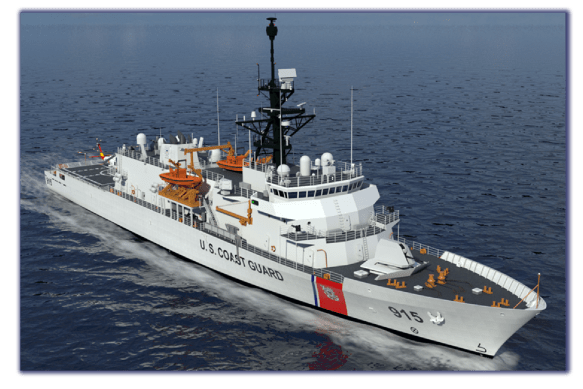
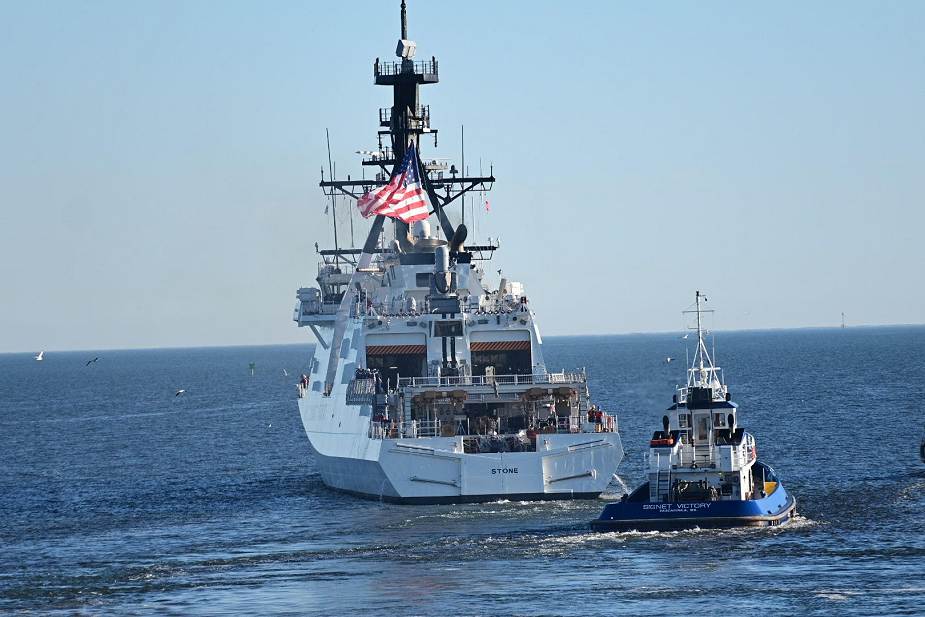
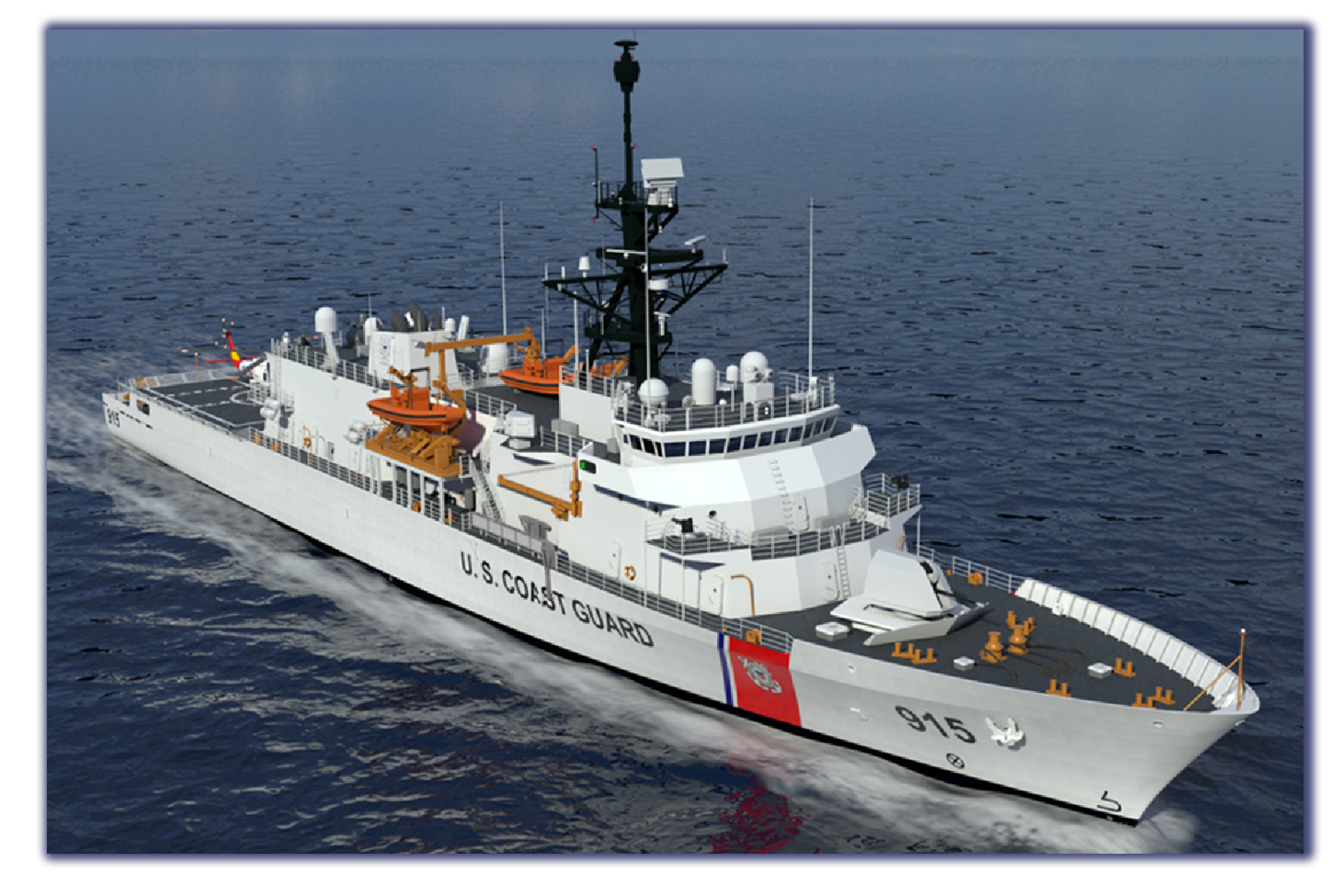
The Kimball is one of the newest national security cutters to be homeported in Honolulu. These technologically-advanced ships are 418 feet long, 54 feet wide and have a 4,600 long-ton displacement. They have a top speed in excess of 28 knots, a range of 12,000 nautical miles, endurance of up to 90 days and can accommodate a crew of up to 150.
Advanced command-and-control capabilities and an unmatched combination of range, speed and ability to operate in extreme weather enable these ships to confront national security threats, strengthen maritime governance, support economic prosperity, and promote individual sovereignty.
Canada’s HMCS Harry DeWolf Class AOPS
The Harry DeWolf class is an almost unique type of ship. Canada is building eight, six for their Navy and two for their Coast Guard. It is derived from the similar and perhaps slightly more capable Norwegian Coast Guard vessel Svalbard, which has made it to the North Pole and recently undertook a mission the Healy was unable to complete due to a machinery casualty.
They are classified as “Artic and Offshore Patrol Ships” or AOPS, rather than icebreakers, but they are clearly designed to operate in ice and are rated Polar Class 5 (Year-round operation in medium first-year ice, which may include old ice inclusions). In many ways they approximate the similarly sized and powered old Wind Class icebreakers. (2012 post on the class with updates in the comments here.)
Below are another photo and a couple of videos, but first the specs.
- Displacement: 6,615 t (6,511 long tons)
- Length: 103.6 m (339 ft 11 in)
- Beam: 19 m (62 ft 4 in)
- Draft: 6.5 m (21 ft 4 in) (estimate based on that of Svalbard)
- Propulsion Generators: Four 3.6 MW (4,800 hp)
- Propulsion Motors: 2 × 4.5 MW (6,000 hp)
- Speed: 17 knots
- Endurance: 6,800 nautical miles
- Crew: 65 (accomodations for 85)
- Armament: one 25mm Mk38 remote weapon system modified for Arctic Conditions and two .50 cal. machine guns (I do feel this is inadequate.)
Navy buying boats for the Coast Guard

33-foot special purpose craft-law enforcement (SPC-LE) small boat crew from Coast Guard Station Key West, Fla., pulls alongside CGC Eagle in Atlantic April 13,2012.Several types of SPCs.SPC-LE ideal platform to interdict drug smugglers’ go-fast boats can plane in under 3seconds top speed 60mph+.Enclosed heated air-conditioned cabin has shock mitigating seats, reducing fatigue, capable of operating more than 30 miles from shore. U.S. Coast Guard Petty Officer 1st Class Brandyn Hill
Defence Blog reports that the Navy will be buying some boats for the Coast Guard, as well as boats for Naval Special Warfare Command. The boats for the Coast Guard are of a type already in the Coast Guard inventory. They are typed, “Coast Guard (USCG) Special Purpose Craft – Law Enforcement II (SPC-LE II).”
I presume that since the Navy is paying for these, they will be used by the two Maritime Force Protection Units that escort Ballistic Missile submarines (SSBNs) during surface transit to and from bases in Kings Bay and Bangor.
The boats are described by the Acquisitions Directorate (CG-9) as follows:
A new, high-speed boat to interdict smugglers’ “go-fast” craft, the SPCLE is derived from the proven U.S. Department of Homeland Security 33-foot Defender-class boats. The SPCLE features three Mercury Verado 275hp outboard motors, a zero to plane time under three seconds, and a top speed of more than 60 miles per hour. The fully enclosed heated and air conditioned cabin, with as many as six shock mitigating seats, reduces crew fatigue and allows operations in heavier seas. With a forward gunner’s station and increased operational range, the 33-foot SPCLE is an ideal law enforcement platform.
Characteristics
Length: 35.4 feet
Beam: 10 feet
Draft: 30 inches
Displacement: 11,960 pounds
Maximum Speed: 60+ knots
Range: 250 nautical miles
Crew: six
The report talks about 110 boats total but does not provide a breakdown to indicate how many will be going to the Coast Guard. It is possible this will be a replacement for the boats described above, similar but perhaps not identical. The will be powered by three outboards. There is a listing here that provides information on how they will be outfitted.
“Coast Guard awards task order for Polar Star service life extension contract” –CG-9

USCGC Polar Star in dry dock, Mare Island Dry Dock LLC, Vallejo, CA. Photo: Official USCG Polar Star Facebook
Below is information from the Acquisitions Directorate (CG-9) about the coming Service Life Extension planned for USCGC Polar Star. The SLEP is to be extended over five years and will be conducted during annual availabilities at a Shipyard in Vallejo, California.
I really would have thought the Coast Guard would have recognized the stress these long periods away from homeport are having on the crew and changed the ship’s homeport to the San Francisco Bay area. Its not too late.
Feb. 23, 2021 —
The Coast Guard awarded a task order with a total value of $11.1 million Feb. 19 to execute Coast Guard Cutter Polar Star service life extension project (SLEP) activities under an indefinite delivery, indefinite quantity contract with Mare Island Dry Dock LLC of Vallejo, California. The task order will cover annual maintenance of the cutter and support systems as well as SLEP work items including propulsion hub removal and reinstallations for all three propulsion shafts, boiler biennial maintenance and recapitalization of the starboard disconnect coupling on the main reduction gear. The Polar Star SLEP is part of the Coast Guard’s In-Service Vessel Sustainment program.
The Polar Star SLEP will recapitalize targeted systems such as the propulsion, communication and machinery control systems and conduct major maintenance to extend the cutter’s service life by four years. By replacing obsolete, unsupportable or maintenance-intensive equipment, the Coast Guard will mitigate the risk of lost operational days due to unplanned maintenance or system failures. The SLEP work items and recurring maintenance will take place within a five-year, annually phased production schedule running from 2021 through 2025. Each phase will be coordinated so that operational commitments such as Operation Deep Freeze missions in Antarctica will still be met.
Work under this task order will begin later this year. The Polar Star is completing a historic mission this winter to support national security objectives in the Arctic. The 399-foot cutter, commissioned in 1976 and the nation’s only active heavy icebreaker, supports nine of the 11 Coast Guard statutory missions.
The Coast Guard is also investing in a new fleet of polar security cutters (PSCs) that will sustain the service’s capabilities to meet mission needs in the Arctic and the Antarctic. The first PSC, currently under design, is on contract for delivery in 2024.
For more information: In-Service Vessel Sustainment program page and Polar Security Cutter program page
“U.S., Japan Coast Guard strengthen capabilities through joint exercise” –D14

Ships from the U.S. Coast Guard and Japan Coast Guard conducted exercises near the Ogasawara Islands of Japan, Feb. 21, 2021. The U.S. Coast Guard Cutter Kimball and Japan Coast Guard Ship Akitsushima, two of the respective services’ newest and most capable vessels, operated alongside helicopters and unmanned aerial vehicles to practice interdicting foreign vessels operating illegally inside Japanese waters. (U.S. Coast Guard photo courtesy of the Coast Guard Cutter Kimball/Released)
Below is a D14 news release. The Japanese Cutter referred to, AKITSUSHIM (PLH-32), is one of the largest cutters in the world. It may not look like it in the photo, but it is twice as large as the KIMBALL. Only the Chinese have cutters that are larger.
This is more evidence of the Coast Guard’s continued interest in aiding our Western Pacific allies.
U.S., Japan Coast Guard strengthen capabilities through joint exerciseEditors’ Note: Click on images to download a high-resolution version. JAPAN — The U.S. Coast Guard concluded a joint law-enforcement exercise Sunday with the Japan Coast Guard in the Philippine Sea, furthering interoperability in performing law-enforcement missions. This weekend, ships from the U.S. Coast Guard and Japan Coast Guard conducted exercises near the Ogasawara Islands of Japan. The U.S. Coast Guard Cutter Kimball and Japan Coast Guard Ship Akitsushima, two of the respective services’ newest and most capable vessels, operated alongside helicopters and unmanned aerial vehicles to practice interdicting foreign vessels operating illegally inside Japanese waters. “These illegal activities, such as illegal, unregulated, and unreported fishing, can have a major impact on the fragile marine ecosystems in the Indo-Pacific region,” said Capt. Holly Harrison, commanding officer of the Coast Guard Cutter Kimball. “We always benefit from and enjoy working with our Japanese Coast Guard partners as it enhances our collective ability to respond to any number of maritime threats and challenges.” The U.S. Coast Guard and Japan Coast Guard have been bolstering each other’s capabilities and effectiveness since the founding of the Japan Coast Guard in 1948. The agencies work together to counter illegal maritime activity and assist foreign maritime agencies in the Indo-Pacific region in improving their own capabilities necessary for maritime law enforcement. “This exercise reaffirms our long-standing alliance and assures our two coast guards operate seamlessly together,” said Vice Adm. Linda Fagan, commander, Coast Guard Pacific Area. “Together we are committed to safeguarding mariners at sea, preventing destructive illegal fishing and smuggling, and promoting a free and open Indo-Pacific.” |
Looking at Replacing the 52 Foot MLBs

Coast Guard crew members aboard four 52-foot Motor Life Boats and one 47-foot Motor Life Boat transit in formation outbound of Yaquina Bay, Ore., April 9, 2019. The four 52-foot MLBs are the only active vessels of their kind and the crews are assigned to different units across the Pacific Northwest, which is why having all four together for the roundup was a rare occurrence.
(U.S. Coast Guard photo by Petty Officer 3rd Class Trevor Lilburn)
It looks like the Coast Guard may be finally looking at replacing the 52 foot Motor lifeboats.
“The U. S. Coast Guard (USCG) is conducting market research in preparation for the replacement of four Special Purpose Craft – Heavy Weather (SPC-HWX). The primary purpose of the SPC-HWX is to conduct Search and Rescue (SAR) missions in extreme weather conditions to include surf and extreme seas and be able to tow larger fishing vessels. Other missions will include Ports, Waterways, and Coastal Security (PWCS) and law enforcement. These boats will replace 52-foot SPC-HWX boats that were built in the 1950s and are increasingly difficult to maintain. The SPC-HWX boats will be deployed to four USCG stations in the Pacific Northwest. A preliminary table of requirements that outlines the features desired in a new SPC-HWX is attached…”
We could see this coming. One has already been taken out of service. They are approaching 60 years old, and, while they have warranted affection from those that have served on them, we can certainly do better. We have been discussing possible replacements for over seven years, here, here, here, here, and here
There are two specifications that I saw as unnecessarily limiting, first the dimensions, length, 64′, beam, 22′ max with fendering, draft 7′, and secondly the maximum speed, 25 knots. Are the maximum dimensions based on infrastructure limits, or are we unnecessarily limiting our choices? Limits on length in particular might preclude use of innovations like the Axe Bow. We really should not have to specify a maximum length, unless there are limits on supporting facilities. Competition will inevitably favor smaller craft as long as they can meet the other specifications. Higher speed is desirable and attainable, so why not add 30 knots as an objective speed and provide an incentive in the contract for reaching speeds over 25 knots. On the other hand the RFI include nothing about noise of G-force limits.
This RFI only refers to replacing the four 52 footers, but in many places, a larger, relatively fast motor lifeboat could be a suitable replacement for the 87 foot WPBs, after all you can expect heavy weather from time to time, anywhere the Coast Guard operates. If the Coast Guard does see the advantage of replacing WPBs with these larger MLBs, it is also possible to make this type of vessel ice-capable for operation in Alaska and and other Northern ports.
There should be no problem finding a builder with the appropriate experience. I expect Vigor now owner of the former Kvichak Marine Industries, Seattle, WA will be a bidder.
I do hope someone will look at the RAFNAR hull form.
Thanks to Lee for bringing this to my attention.
“U.S. Navy Reports On Arctic And North Atlantic” –Naval News
Naval News reports on a Webinar conducted by Admiral Robert Burke who is Commander of U.S. Naval Forces Europe, Commander of U.S. Naval Forces Africa, and Commander of Allied Joint Forces Command in Naples. Previously he served as Vice Chief of Naval Operations. He is a submariner. Sounds like he spent some time under the ice.
There is a lot here about the Arctic. Keep in mind he is talking primarily about the Atlantic side rather than the waters around Alaska. This is primarily about the Russian threat, but there are concerns about China as well.
“Chinese Assessment of New U.S. Naval Strategy” –USNI
The US Naval Institute news service provides a translation of a Chinese review of the Tri-Service Naval Strategy, “Advantage at Sea.”
It is, in my view, a surprisingly even handed evaluation. Not that it does not reflect the Chinese position, but it is at least fairly accurate.
One particular paragraph references the US Coast Guard.
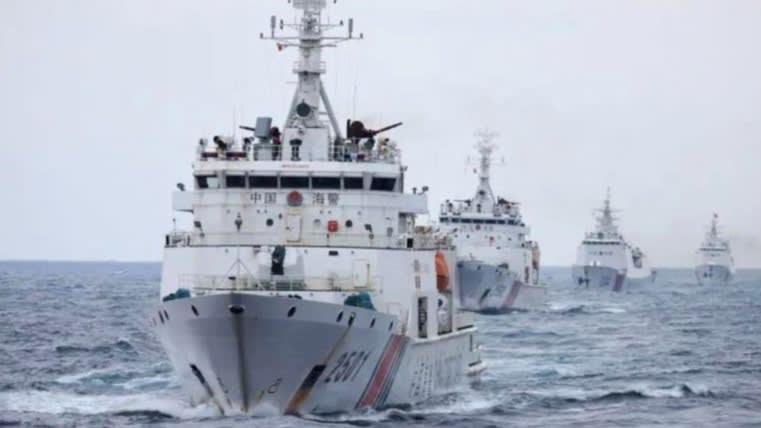
Third, the U.S. will also introduce a new style of struggle, namely, it will bolster competition in the “gray zone.” That is, the U.S. will take greater action in the domains of social media; supply chains, especially defense industry chains; and space and cyber. A fairly obvious early indicator of this was that the USCG—which traditionally operates in the vicinity of the U.S. coast to defend the security of U.S. territory—has recently moved forward into the South China Sea region. It is preparing to conduct military operations in the South China Sea, with the aim of striking China’s maritime forces as well as bolstering joint law enforcement with regional states in the South China Sea, in order to respond to China’s South China Sea rights protection operations.
The idea of the USCG moving into the South China Sea “with the aim of striking China’s maritime forces” is a bit far fetched, but the rest is reasonably accurate and reflects the Strategy’s recognition of the Coast Guard as uniquely qualified to counter aggression in the “Gray Zone.”