This Day in Coast Guard History, March 10

Based on the Coast Guard Historian’s timeline, https://www.history.uscg.mil/research/chronology/
With inspiration from Mike Kelso

March 10

1909  The British barkentine Ladysmith, during a thick fog, stranded three miles WSW of the Fisher’s Island Life-Saving Station.  The keeper was notified by telephone and the life-savers, in surfboat, proceeded to the scene.  They safely rescued the Ladysmith’s master, his wife, and 9 seamen.

A U.S. Coast Guard Grumman HU-16E Albatross (serial 7250, ex USAF 51-7250) from USCG Air Station Cape Cod, Massachusetts (USA) in flight. Coast Guard photo.

1983  The Coast Guard retired the last operational HU-16E Albatross, ending the “era of seaplanes” for the service.

The Coast Guard Cutter Polar Star cuts through Antarctic ice in the Ross Sea near a large group of seals as the ship’s crew creates a navigation channel for supply ships, January 16, 2017. The resupply channel is an essential part of the yearly delivery of essential supplies to the National Science Foundation’s McMurdo Station.US Coast Guard photo by Chief Petty Officer David Mosley

2015  CGC Polar Star returned to Seattle after a 101-day Antarctic deployment.  Polar Star departed Seattle for Operation Deep Freeze 2015, the military resupply and logistical support mission for the U.S. Antarctic Program’s McMurdo Station. Polar Star escorted the cargo vessel Ocean Giant and fuel tanker Maersk Peary to McMurdo Station through ice ranging in thickness from 5 to 10 feet. Upon completion of Deep Freeze, Polar Star’s crew rescued 26 fishermen aboard the 207-foot F/V Antarctic Chieftain.  The mariners were trapped in a heavy pack ice near Cape Burks, Antarctica, for almost two weeks.  The crew diverted to provide assistance to the fishermen.  After navigating across 753 miles with 89 miles of treacherous ice conditions, Polar Star’s crew located the Antarctic Chieftain and towed the fishing vessel through 49 miles of pack ice before transferring the Antarctic Chieftain to the New Zealand fishing vessel Janas.

DAKAR, Senegal – U.S. Coast Guard Lt. Cmdr. Nicholas Forni, executive officer aboard USCGC Spencer (WMEC 905) and Lt. Jacob Balchikonis, operations officer aboard Spencer, meet with Lt. Col. Sam Kunst, U.S. Marine Corps Attaché to Dakar, Senegal, Jan. 17, 2023. Spencer is on a scheduled deployment in the U.S. Naval Forces Africa area of responsibility, employed by the U.S. Sixth Fleet, to carry out joint training, exercises, and maritime security operations alongside AFRICOM partners in support of U.S. interests abroad, regional partnerships, and to strengthen international maritime governance. (U.S. Coast Guard photo)

2023  CGC Spencer returned to their home port in Portsmouth on 10 March 2023 following an 88-day deployment to Africa. During the patrol, Spencer’s crew worked to combat illicit transnational activities, including illegal, unregulated and unreported fishing, by conducting multinational law enforcement operations in the Atlantic Ocean, the US Coast Guard (USCG) said. Spencer’s crew also participated in the Obangame Express 2023 maritime exercise with participants from the US Navy, US Coast Guard and 17 West African partners. Conducted by US Naval Forces Africa, Obangame Express focusses on countering illegal, unreported, and unregulated fishing and other sea-based illicit activity. Spencer’s crew hosted multiple African country representatives, held diplomatic engagements and participated in community relations events during port visits in Cabo Verde, The Gambia, Senegal, Sierra Leone, Togo, Nigeria and Côte D’Ivoire. Spencer’s port visit to Lomé, Togo marked the first US ship visit to Togo since 2012. While at sea, Spencer also interdicted a Brazilian sailing vessel carrying 3,040 kilograms of suspected cocaine worth over $109 million. Spencer’s crew was augmented with several temporarily assigned members, including Tactical Law Enforcement and Maritime Safety and Security Team personnel, medical officers from the US Public Health Service and Coast Guard, US Coast Guard Auxiliary Chinese language translators, electronics technicians and a yeoman.

2023 CGC Kimball (WMSL 756) and crew returned to their Honolulu homeport, Friday, following a 42-day, 10,000 nautical mile Western Pacific patrol. Kimball was the first U.S. military ship in recent history to visit the port city of Kagoshima, Japan, where the crew partnered with service members from Japan Coast Guard’s 10th District to plan and conduct combined operations and search-and-rescue exercises. Kimball’s crew met with Japan Coast Guard senior leadership and hosted Japan Coast Guard servicemembers, U.S. Consulate Fukuoka staff, community leaders and local media aboard the cutter during the port visit in support of Operation SAPPHIRE. Operation SAPPHIRE is a joint agreement between the U.S. and Japan Coast Guards signed in 2022 for enhancing cooperation between the two sea services. SAPPHIRE is an acronym for the ‘Solid Alliance for Peace and Prosperity with Humanity and Integrity on the Rule of law-based Engagement.’ “By collaborating with Japan Coast Guard members and conducting evolutions that enhanced communication and inter-operability during the patrol, the crew continued to strengthen a solid foundation for the positive and productive relationship with the maritime service of a like-minded nation,” said CAPT Tom D’Arcy, Kimball’s commanding officer. Kimball’s crew demonstrated proficiency in the ship’s aviation program by working with an air operations inspection team to conduct a biennial Shipboard-Aviation Standardization Inspection (AVSTAN). By achieving their AVSTAN certification, Kimball can continue deploying with aviation detachments during future patrols. Kimball also supported U.S. Coast Guard efforts to increase its presence in the Indo-Pacific. Kimball’s crew delivered a MH-65 Dolphin helicopter from Air Station Barber’s Point to Santa Rita, Guam, to enable forward operations that extend the service’s air coverage in the region. During the patrol, the cutter’s engineering department was presented with the RADM R. S. Lucas Plaque Award for their outstanding contributions to the Coast Guard’s naval engineering program. Members from Kimball’s engineering department were cited for excellence and ingenuity during recent patrols and for completing three extensive industrial periods encompassing significant maintenance, contractual repair projects, and casualty repairs valued at over $4.4 million. “I am extremely proud of our crew’s accomplishments,” said D’Arcy. “Kimball continues to remain on the front lines of the Coast Guard’s strategic plan. Our engagements in Japan strengthened our existing relationships with international partners who uphold good maritime governance. Kimball’s patrol re-affirmed the U.S. Coast Guard’s commitment to facilitating a free and open Indo-Pacific.”

This Day in Coast Guard History, March 8/9

Based on the Coast Guard Historian’s timeline, https://www.history.uscg.mil/research/chronology/
With inspiration from Mike Kelso

Sorry I am late getting these published

March 8

USCGC Argo, same class as USCGC Calypso as equipped in WWII.

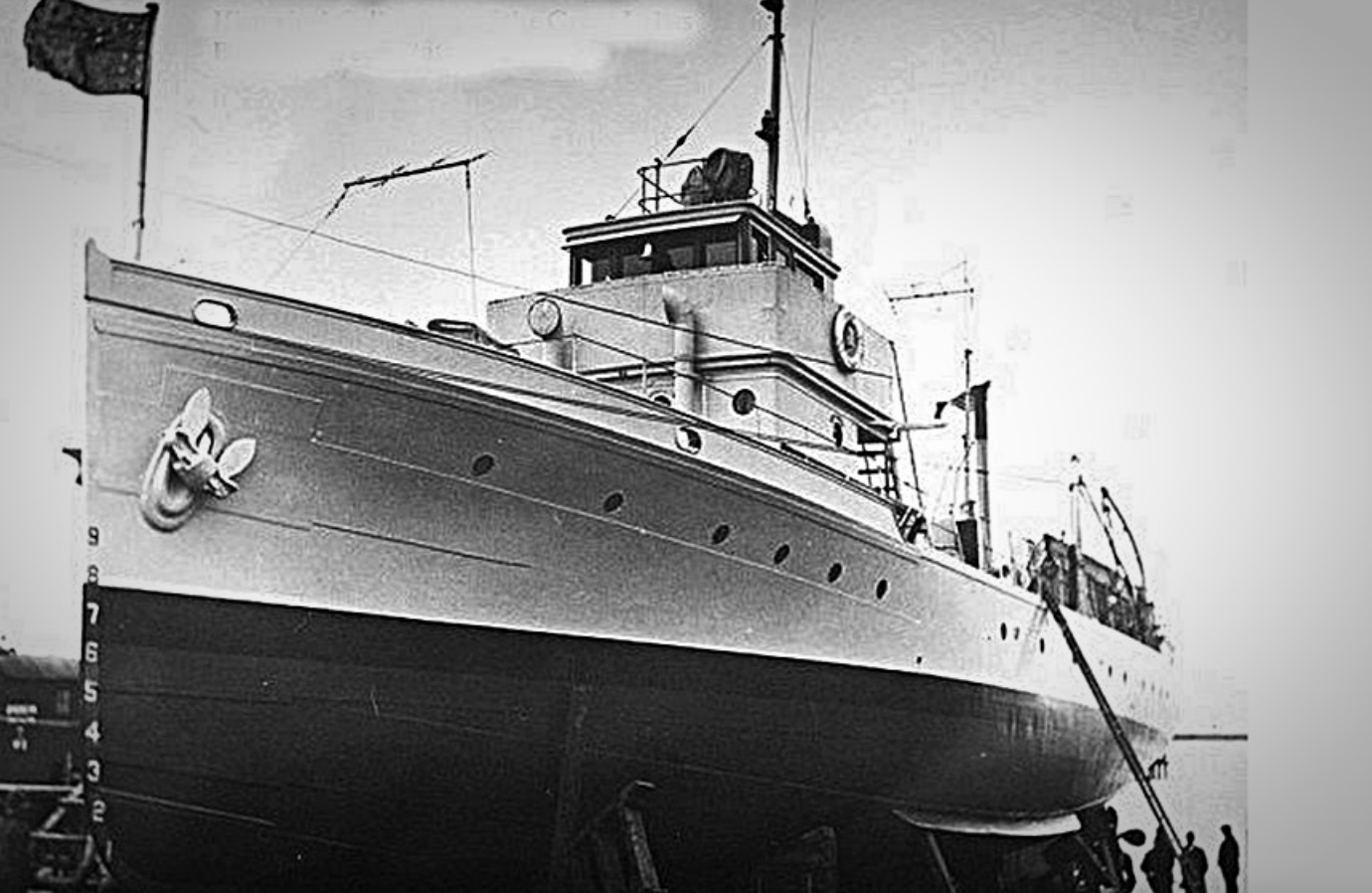
1942  A Coast Guard aircraft located the lifeboats of SS Arubutan, which had been sunk by a German U-boat off the North Carolina coast, and directed CGC Calypso to them.

The U.S. Coast Guard icebreaker USCGC Eastwind (WAGB-279) was one of three icebreakers used by Operation Deep Freeze in the Ross Sea area, December 1955. US Navy photo.

1963  CGC Eastwind crossed sixty degrees south latitude north-bound after 126 days in the Antarctic Region as a part of Operation Deepfreeze 63, setting a new record for a single cruise in that area.

1973  The first “Coast Guard-controlled drug seizure” took place when the cutter Dauntless seized the sport fishing vessel Big L which was smuggling an “illicit cargo” of one ton of marijuana.

USCGC ALERT departing Astoria

2015  CGC Alert returned to its homeport of Astoria, Oregon, following a 61-day counter narcotics patrol off the coast of Central and South America.  The crew of the 46-year old ship interdicted two suspected smuggling vessels stopping an estimated 2,300 pounds of cocaine worth approximately $28 million.  On two separate occasions, the crew found sea turtles entangled in abandoned fishing gear.  The crew’s efforts saved three turtles, allowing them to swim away unharmed.  Coast Guardsmen aboard also improved their proficiency by conducting 94 safety and mission specific drills.  These exercises included shipboard emergency response, navigation proficiency, and live-fire gunnery exercises.

March 9

The grounded SS Robert E. Lee seen in background and Coast Guardsmen row out in surfboat on rescue mission. Photo by Boston Herald-Traveler Photographer Leslie Jones. Full photo set viewable here.

1928  A pulling surfboat with nine men aboard, under the command of Boatswain’s Mate First Class William Cashman, got underway from the Manomet Life-Saving to go to the rescue of the steamer Robert E. Lee.  The Lee had grounded on Mary Ann Rocks in a heavy gale.  While returning to the station the surfboat capsized due to extremely heavy seas, spilling all nine men into the water.  Six were rescued but “Captain” Cashman, Surfman Frank W. Griswold, and Surfman Edward R. Stark perished in the line of duty in the freezing water.  During the on-going search and rescue operations all 236 passengers and crew from the Robert E. Lee were saved.

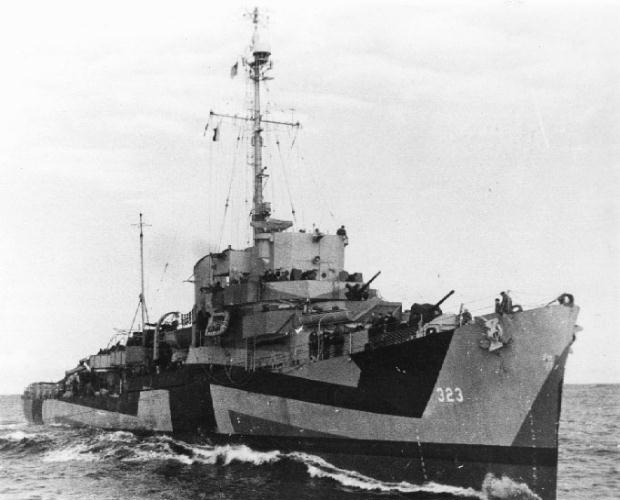
Leopold CO, LCDR Kenneth Coy Phillips

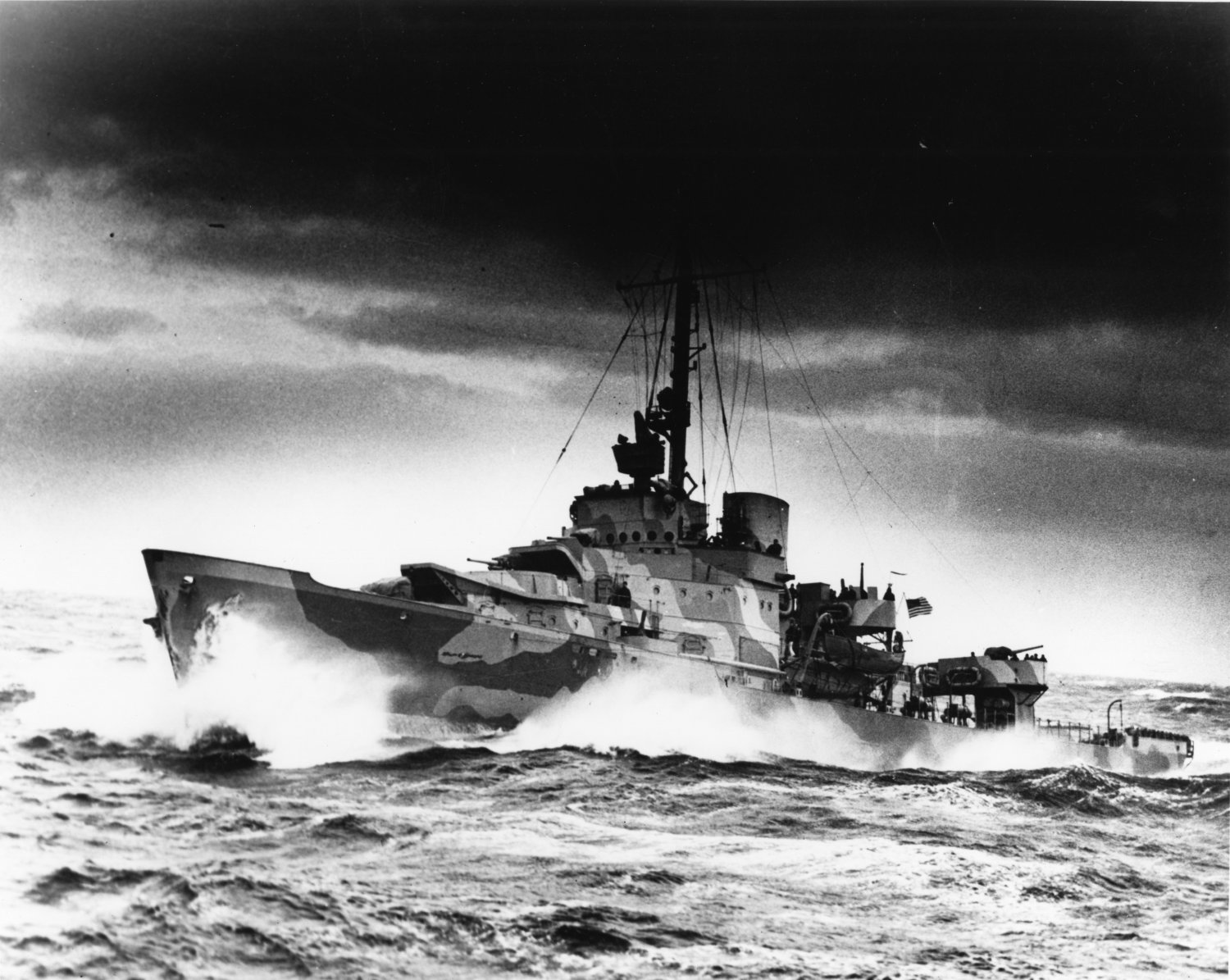
1944  The U-225 torpedoed and sank the Coast Guard-manned destroyer escort USS Leopold (DE-319) off Iceland.  The attack marked the introduction of a newly developed acoustic torpedo.  All 13 officers and 148 (out of 186) enlisted men on board were killed.  The 28 survivors were rescued by USS Joyce (DE-317), another Coast Guard-manned destroyer escort.

A Coast Guard manned LST

1946  The Coast Guard-manned LST-767 was damaged in a hurricane near Okinawa.  She was later declared a total loss and was decommissioned.

A Point White sister-ship also assigned to Operation Market Time during the Vietnam War

1966  CGC Point White, on duty with Coast Guard Squadron One, Division 13, in Vietnam, captured a Vietcong junk after a running firefight.  Point White was in Vietnam only a month when she started conducting patrols on a Viet-Cong-controlled area of the Soi Rap River.  Point White used a plan of steaming out of the patrol area and covertly returning.  On March 9th, she spotted a junk crossing the river and attempted to stop it.  The junk opened fire with small arms, including automatic weapons.  Point White returned the fire and rammed the junk, throwing the occupants into the water.  The cutter’s commanding officer, LTJG  Eugene J. Hickey, rescued a survivor who turned out to be a key VC leader of the Rung Sat Secret Zone.  During March, three WPBs of Division 13 killed twenty-seven VC in action, captured seven more, and confiscated considerable contraband.

By U.S. Navy – United States Naval Operations Vietnam, Highlights; June 1966 – Map – U.S. MARKET TIME Forces, Public Domain, https://commons.wikimedia.org/w/index.php?curid=34475896

1996  The first “all-Coast Guard” Ceremonial Honor Guard carried out a wreath laying at the Tomb of the Unknown Soldier in Arlington National Cemetery.

“Davie Awarded Major Contract by Canada to Build Polar Icebreaker” –Davie News Release

Yesterday we learned that Canada had awarded a contract to Seaspan to build a 26,000 ton Polar Icebreaker. Today we learn that Canada awarded a second contract to a different shipyard, to build an additional 22,800 ton, 138.5 meter, polar icebreaker to a different design.

Below are news releases from Davie and Helsinki Shipyard.

It is almost impossible to accurately compare shipbuilding costs internationally, but the cost of this Canadian contract, $3.25B Canadian ($2.26B US), seems to suggest current estimates for the Polar Security Cutter are at least in the ballpark, and not outrageously high, rather that the initial contract was significantly underbid.


Davie Awarded Major Contract by Canada to Build Polar Icebreaker

March 8, 2025

Lévis — Davie, the Québec-based international shipbuilder, today announced it has been awarded a contract by the Government of Canada for the construction of a needed polar icebreaker. This initiative will leverage Davie’s international presence, with work beginning in 2025, under a robust contract framework that will enable Davie and Canada to set new standards of efficiency and productivity in vessel procurement.

Through this agreement, valued at $3.25 billion, Davie will deliver its production-ready heavy icebreaker design called the Polar Max to Canada by 2030. To support the rapid delivery of the ship, Davie will capitalize on the expertise of Helsinki Shipyard, which was acquired by Davie in 2023 with the support of the Québec government. Helsinki Shipyard has built over 50% of all the world’s icebreakers.

“Today marks a significant milestone in our commitment to enhancing our nation’s maritime capabilities” said The Honourable Jean-Yves Duclos, Minister of Public Services and Procurement and Quebec Lieutenant. “The contract awarded to Chantier Davie Canada Inc. for the build of a new polar icebreaker underscores our dedication to ensuring safe and efficient navigation in Arctic regions. This state-of-the-art vessel will not only strengthen our icebreaking fleet, but will also support critical scientific research and environmental protection efforts, and ensure national security in the Arctic. We are proud to take this step forward in strengthening our maritime infrastructure for safeguarding Canada’s sovereignty in the Arctic.”

While the early phase of the polar icebreaker construction is underway, the modernization of Davie’s Lévis Shipyard will continue, giving Davie time to accelerate the hiring of skilled workers across all trades. This will enable Davie to leverage its Canadian supply chain sooner than anticipated, while ensuring the completed polar icebreaker is delivered from Lévis. Davie plans to implement a workforce exchange, enabling Québec employees to learn world-class icebreaker construction expertise first-hand from their Finnish colleagues.

Davie President & CEO, James Davies, said: “Today’s announcement is truly transformative. Canada deserves immense credit for partnering with Davie on this groundbreaking procurement. Delivering such a special ship in a timely manner is in the best interests of all Canadians. It will accelerate economic benefits for Quebecers and strengthen the skills of our talented Lévis’ shipbuilders. In a volatile world, we can and must forge shipbuilding collaborations with trusted allies like Finland to secure shared interests. If not now, then when?”

“It is fitting that this announcement comes as Davie celebrates its 200th anniversary. The construction of the polar icebreaker will create opportunities for our employees and will place us firmly on track to create thousands of jobs far more quickly. Our Québec suppliers will be rapidly activated to help us deliver this needed ship in record time. There is a geopolitical imperative to act to protect our interests and we thank the Government of Canada and the Government of Québec for their vision and recognizing the time is now,” commented Alex Vicefield, Chairman and CEO of Inocea, the parent company of Davie Shipbuilding.

This contract is huge win for the ICE Pact. The Polar Max will be the first flagship project of the trilateral partnership. It will be proof that transatlantic collaboration is possible with the Polar Max delivered by Canadian shipbuilders supported by their Finnish colleagues.

A Win for Québec and for Canada

This announcement will bring immense benefits to Québec and the rest of Canada. Davie is committed to building a strong network of shipbuilding suppliers and plans to invest more than $200 million in local small- and medium-sized businesses to help them scale and reap the opportunities of shipbuilding contracts over the coming years and further Québec’s position as a naval construction hub.

Building on the success of our delivery of the NSC Asterix in 2018, Davie is once again committed to delivering on time and on budget.

As the global leader in Arctic shipbuilding, Davie stands out for its innovative approach and commitment to doing things differently. By working closely with Canada, Davie designed the strategy to expedite production and improve efficiency. This program will showcase Davie’s shipbuilding excellence, strengthen the local shipbuilding value chain, and create future major export opportunities for everyone involved.

About Davie

Based in Québec, Canada since 1825, Davie is a world-class designer and builder of specialist, mission-critical ships such as icebreakers, ferries and warships for government and commercial customers. Davie became a partner in the Government of Canada’s National Shipbuilding Strategy on April 4, 2023. This historic agreement is for the design and construction of the largest and most technologically advanced ice-going ships ever constructed in and for Canada. The initial $8.5 billion package of work includes seven heavy icebreakers and two large hybrid-powered ferries. In November 2023, Davie acquired Finland’s Helsinki Shipyard, the world leader in icebreaker design and construction. Find out more at davie.ca and helsinkishipyard.fi.


DAVIE AND CANADIAN GOVERNMENT AGREE ON HEAVY ICEBREAKER CONSTRUCTION – WORK TO BEGIN AT HELSINKI SHIPYARD

8.3.2025

Canadian-owned Davie, which owns the Helsinki Shipyard, signed an agreement with the Canadian government to construct a heavy icebreaker. The new vessel will be based on Davie’s advanced Polar Max icebreaker, created by the Helsinki Shipyard basing on Aker Arctic’s original Aker ARC 148 hull form.

Polar Max is the first newbuild project at the Helsinki Shipyard under Davie’s ownership, and it will be carried out in collaboration between Finnish and Canadian maritime industry experts. The work will begin in Helsinki and be completed at Davie’s shipyard in Canada. The finished vessel is scheduled to be delivered to the Canadian government by 2030. The unique expertise of the Helsinki Shipyard will play a significant role in delivering the vessel on such a fast schedule.

The construction of the icebreaker is expected to increase the direct workforce at the Helsinki Shipyard by around 500 employees, with many hundreds more employed throughout the Finnish maritime industry cluster.

The icebreaker order is part of Canada’s national shipbuilding program. This new order is the second heavy icebreaker project in this program. The project is also aligned with the principles of the Icebreaker Collaboration Effort (“ICE Pact”) between Finland, the United States and Canada, which originated from President Trump’s 2020 discussions with the Finland government. The ICE Pact supports the West’s urgent need to build advanced icebreaker fleets to counter the expansion of adversaries in the polar regions.

“When we acquired Helsinki Shipyard, we pledged to rebuild this historic business. The Polar Max project is evidence that we are delivering on our promise. We can’t wait to begin this new chapter in Helsinki Shipyard’s story. The Canadian government deserves immense credit for partnering with Davie on this groundbreaking procurement. In such a volatile world, we can and must forge shipbuilding collaborations with trusted allies like Finland to defend our shared interests. If not now, then when?” said James Davies, President & CEO, Davie Shipbuilding.

“The Polar Max project is an important milestone in expanding production and design in Helsinki. The project is an excellent example of Finland’s leading Arctic shipbuilding expertise, which is in significant demand internationally,” said Kim Salmi, CEO of Helsinki Shipyard.

Polar Max will be 22,800 tonnes vessel with a length of 138,5 meters. Additionally, it functions as a research vessel, capable of performing oil spill response operations and emergency towing year-round. Davie continues to promote similar projects internationally and aims to accelerate the development of Finland’s maritime industry ecosystem and the creation of Finnish maritime innovations.

Canada’s Contribution to Drug Interdiction Effort

A recent Marine Link post regarding a joint Canadian, Colombian, US drug interdiction, “Canadian, U.S. Coast Guards Team on Caribbean Sea Drug Bust”,

On March 1, 2025, His Majesty’s Canadian Ship (HMCS) Harry DeWolf successfully assisted a United States Coast Guard (USCG) Law Enforcement Detachment (LEDET) in conducting a seizure of 750 kilograms of cocaine in the Caribbean Sea. This seizure, supported by Colombian air and maritime assets, has an estimated street value $18.8 million.

HMCS Margaret Brooke and HMCS Harry DeWolf 

also included the graphic at the head of the post.

Notably the Canadian vessels involved are Canadian Navy rather than Canadian Coast Guard. All actual law enforcement actions were taken by embarked USCG teams acting under USCG authority. HMCS Summerside, Edmonton, and Yellowknife are smaller than WMEC210s, at 55.3 m (181 ft 5 in) in length. Canadian interdictions were done in the Eastern Pacific as well as in the Caribbean/Atlantic.

190729-N-AD499-1166 SEATTLE (July 29, 2019) The Royal Canadian Navy Kingston-class coastal defence vessel HMCS Edmonton (MM 703) participates in a parade of ships in Elliott Bay during the 70th annual Seattle Fleet Week. Seattle Fleet Week 2019 is a time-honored celebration of the sea services and provides an opportunity for the citizens of Washington to meet Sailors and Coast Guardsmen, as well as witness firsthand the latest capabilities of today’s maritime services. (U.S. Navy photo by Mass Communication Specialist 3rd Class Victoria Foley/Released)

Her Majesty’s Canadian Ship Yellowknife (HMCS-706) pulls into the Port of San Diego to offload $44.2 million worth of cocaine, Sept. 12, 2024. The Yellowknife’s crew interdicted a panga-style boat 430 miles southwest of Acapulco, Mexico, September 5 during a Eastern Pacific counter-narcotics patrol under the direction of U.S. Coast Guard District 11 and Joint Inter-Agency Task Force South. (U.S. Coast Guard photo by Chief Petty Officer Levi Read/Released)

SOUTHCOM PR Much Improved

Partial Image of SOUTHCOM web site.

Last month I took several commands’ public relations organizations to task for poor performance, “Selling Seapower/Failing PR.”

This is what I said about SOUTHCOM, “I would have thought, would have a lot of Coast Guard related content. Their web site has had four posts about the set up of the retention center at Gitmo 4 to 6 February, but before that they were a lot more quiet. Two posts in January; two posts in December; four in November; two in October; eight in September which included UNITAS, but there was never even a wrap-up at the conclusion of UNITAS. I had to go back to June 6,2024 to find a Coast Guard related story, and there were very few Navy related stories.”

They seem to be doing much better now. There were 15 stories in February and already three stories, including one including the Coast Guard very prominently, in March. The Coast Guard related story was lifted whole cloth from a 7th District news release, but I have no problem with that. There it will be seen by a different readership.

“Seaspan to Build Made-In-Canada Heavy Polar Icebreaker” –Seaspan News Release

Canadian Polar Icebreaker to be built by Seaspan

Below is a news release from Canadian shipbuilder, Seaspan.


March 7, 2025 – North Vancouver, BC – Today, Seaspan Shipyards (Seaspan) has been awarded the construction contract to build one of the Canadian Coast Guard’s (CCG) new heavy polar icebreakers.

The polar icebreaker will be built entirely in Canada at Seaspan’s Vancouver Shipyards, located in North Vancouver, British Columbia. With the contract now in place, Seaspan is ready to cut steel on this ship and begin full-rate construction on Canada’s newest vessel under the National Shipbuilding Strategy (NSS). Construction of this ship will support the work of a team of more than 1,000 local shipbuilders and a broad Canadian supply chain of over 800 Canadian companies contributing massive strategic value, innovation and economic benefits to Canada.

Building this complex and densely-outfitted multi-mission ship will mark the first time a polar icebreaker has been built in Canada in more than 60 years and will have more advanced capabilities than the CCG’s current heavy icebreakers. Once delivered, this made-in-Canada heavy polar icebreaker will be one of the most advanced and capable icebreakers in the entire world. It will be one of only a handful of Polar Class 2 ships in operation and will allow for the CCG to operate self-sufficiently year-round in the high-Arctic, down to temperatures at -50°C.

The new polar icebreaker will be the seventh vessel designed and built by Seaspan under the NSS. It will also be the fifth Polar Class vessel to be built for the CCG, and one of up to 21 icebreaking vessels overall that Seaspan is constructing.

Functional design of the polar icebreaker was completed in 2024 by Seaspan, prior to the start of construction. For this ship, Seaspan worked extensively to build out the largest marine design and engineering team in Canada, which includes Seaspan employees and Canadian partners, while simultaneously working alongside established Finnish companies who have extensive experience in designing Arctic-going vessels.

Seaspan is the only Canadian shipyard with the expertise, facilities, and domestic supply-chain to build polar icebreakers in Canada. Official start of construction for this new heavy polar icebreaker is scheduled for April 2025.

QUOTES

“Today’s contract signing is the next step in our journey of fulfilling the vision of the National Shipbuilding Strategy, which is to build ships for Canada, in Canada, by Canadians. The NSS is demonstrating that a made-in-Canada approach is not only possible, but also imperative to our security and sovereignty. We look forward to starting construction on this ship next month, and to building more Polar Class vessels for Canada and our Ice Pact partners.”

  • John McCarthy, CEO, Seaspan Shipyards

“The contract awarded to Seaspan’s Vancouver Shipyards for the build of a new polar icebreaker is a significant step forward for Canada’s economic and natural resource sectors. This advanced vessel will not only ensure safe and efficient navigation in our polar regions but also support the sustainable development of our natural resources. By enhancing our icebreaking capabilities, we are opening new opportunities for economic growth, scientific research and environmental stewardship. This project exemplifies our commitment to leveraging cutting-edge technology to benefit our economy and protect our unique polar environments for future generations.”

  • The Hon. Jonathan Wilkinson, Minister of Energy and Natural Resources and MP for North Vancouver

“Today marks a significant milestone in our commitment to enhancing our nation’s maritime capabilities. The contract awarded to Seaspan’s Vancouver Shipyards for the build of a new polar icebreaker underscores our dedication to ensuring safe and efficient navigation in Arctic regions. This state-of-the-art vessel will not only strengthen our icebreaking fleet, but will also support critical scientific research and environmental protection efforts, and ensure national security in the Arctic. We are proud to take this step forward in strengthening our maritime infrastructure for safeguarding Canada’s sovereignty in the Arctic.”

  • The Hon. Jean-Yves Duclos, Minister of Public Services and Procurement and Quebec Lieutenant

“The National Shipbuilding Strategy is providing the Canadian Coast Guard with its fleet of the future. The polar icebreaker to be built by Vancouver Shipyards will be able to operate in the Arctic year-round, further bolstering our ability to deliver crucial services to Northern communities and support Canadian sovereignty in the Arctic.”

  • The Honourable Diane Lebouthillier, Minister of Fisheries, Oceans and the Canadian Coast Guard

“Our partnership with Seaspan to construct a polar icebreaker underscores our government’s steadfast commitment to ensuring the Canadian Coast Guard can continue to protect Canada’s sovereignty and interests, while also revitalizing Canada’s shipbuilding industry, creating high-paying jobs and maximizing economic benefits across the country.”

  • The Honourable François-Philippe Champagne, Minister of Innovation, Science and Industry

QUICK FACTS

  • The polar icebreaker will be 158 metres long and 28 metres wide, with a design displacement of 26,036t.
  • Highlights of key design features, include:
    • IACS Polar Class 2 (PC2) Heavy Icebreaker
    • More than 40MW of installed power
    • Ice-classed azimuthing propulsion system
    • Complex, multi-role mission capability
    • Scientific Laboratories
    • Moon Pool (to allow for safe deployment of equipment from within the ship)
    • Helicopter flight deck and Hangar
    • Vehicle Garage and future Remotely Piloted Aircraft System (RPAS) capability
  • Seaspan has already gained significant experience designing and building Polar Class vessels including three offshore fisheries science vessels which are now in service with the CCG; an offshore oceanographic science vessel that will be delivered to the CCG in the coming months; and a class of up sixteen multi-purpose icebreaking vessels (also Polar Class) that is currently in Construction Engineering.
  • Seaspan is one of the most modern shipyards in North America, following its privately funded $200M+ shipyard modernization, development of a skilled workforce and state-of-the-art, purpose-built infrastructure to deliver large, complex vessels.
  • Under the NSS, Seaspan has become a major economic and job creation engine. According to an economic analysis conducted by Deloitte, Seaspan has contributed $5.7 billion to Canada’s GDP between 2012-2023, while also creating or sustaining more than 7,000 jobs annually.
  • Seaspan’s NSS supply-chain has now grown to ~800 Canadian companies from coast-to-coast, with more than half being SMEs.

Coast Guard Cutter Procurement: Background and Issues for Congress, Updated March 5, 2025 –Congressional Research Service

US Capital West Side, by Martin Falbisoner

The Congressional Research Service (CRS) has again updated their “Report to Congress on Coast Guard Cutter Procurement”. (This link will always take you to the most recent edition of the report.) My last post on this evolving document was in reference to the March 25, 2024 update. The report includes a nice one page summary if you are new to our current shipbuilding activities but the news is on pages 27 and 28, the last two pages of the report excluding the Appendixes, which I have reproduced below,

The Administration asked for two FRCs and the House Appropriations Committee has recommended four. This, in addition to the 67 currently funded, would bring the total number of FRC funded to 71 which is the requirement in the current program of record, 58 for domestic use, one lost to a fire in dry dock, six for PATFORSWA, and six for the Indo-Pacific.

It’s not clear to me if the six for the Indo-Pacific is just the six currently planned for Guam or does this refer to six in addition to the three originally planned for Guam that replaced two WPB110s? It has appeared the Coast Guard might also base FRCs in American Samoa. Looking at the numbers that appears to be the case.

It also appears another WMEC 270 that has gone through Service Life Extension Program (SLEP) will be headed for the Pacific.


FY2025 DHS Appropriations Act (H.R. 8752)

House

The House Appropriations Committee, in its report (H.Rept. 118-553 of June 14, 2024 on H.R. 8752, recommended the funding levels shown in the HAC column of Table 1. H.Rept. 118-553 states.

Fast Response Cutter (FRC).—The recommendation provides $335,000,000 to purchase four additional FRCs, economic price adjustments related to the rise in material and labor costs, and post-delivery missionization costs.

Offshore Patrol Cutter.—The recommendation provides the requested $530,000,000 to continue the program of record for these critical assets. The Committee directs the Coast Guard to continue to provide additional program and schedule details, as described in the explanatory statement accompanying Public Law 117–103, as part of the required quarterly major acquisition briefings. (Pages 53-54)

H.Rept. 118-553 also states

Engagement in the Indo-Pacific.—The Committee supports the Coast Guard’s efforts to help develop the maritime capabilities of partners and allies in Southeast Asia. To better assess these efforts, the Committee directs the Coast Guard to provide a briefing within 180 days of the date of enactment of this Act on its work in the Indo-Pacific, including current efforts, opportunities for expansion, and options for improving coordination with and leveraging capabilities with the DOD, especially U.S. Indo-Pacific Command (USINDOPACOM)….

Oceania Operations.—The Committee recognizes the importance of the Coast Guard in maintaining the U.S.’s posture in the Indo-Pacific. The Committee supports the Coast Guard’s efforts to expand its presence in the Indo-Pacific, especially through the ship rider program, and encourages the Coast Guard to continue its coordination with USINDOPACOM and partner and allied nations. To better evaluate these efforts, the Committee directs the Coast Guard to report to the Committee not later than 180 days after the date of enactment of this Act assessing the Coast Guard’s capabilities and operations in the Indo-Pacific. This report should include a list of current assets in the region, any assets and capabilities needed to address unfulfilled requirements, any areas where logistical support is needed, and any changes that must be taken to effectively implement the U.S. Indo-Pacific Strategy. To support the Coast Guard’s Indo-Pacific operations, the recommendation provides $3,000,000 for increased presence of regional Coast Guard Maritime Advisors, Liaison Officers, Attaches, and other foreign engagement positions throughout the Indo-Pacific, and $1,200,000 for Indo-Pacific workforce support including for housing, medical, and childcare access for Coast Guard personnel.

270′ WMEC Service Life Extension Program.—The Committee supports the Coast Guard’s efforts to counter aggression by the PRC in the Indo-Pacific. The recommendation includes $60,000,000 for a service life extension program for one Medium Endurance Cutter, enabling the Coast Guard to deploy an additional support cutter to the Indo-Pacific. The Coast Guard plays a vital role in the Indo-Pacific, but the vast distances in the region and limited resources hamper the Coast Guard’s ability to expand its presence. This Indo-Pacific support cutter will help the Coast Guard increase its activities and better support the U.S. mission in the Indo-Pacific. (Pages 50, 51, and 53)

“Pitch for ‘Arctic Security Cutter’ Part of FY 2025 Budget Negotiations”–USNI

The Coast Guard Cutter Healy (WAGB 20), the Coast Guard’s only “medium icebreaker,” returns to Seattle following a two-month Arctic patrol, Aug. 16, 2024. The Healy is the United States’ largest Polar icebreaker and was commissioned in 2000. (U.S. Coast Guard photo by Petty Officer 2nd Class Taylor Tracy)

The US Naval Institute reports,

The final Fiscal Year 2025 spending bill could include a provision for a new Arctic Security Cutter that would operate in parallel with the ongoing Polar Security Cutter icebreaker program, according to two sources familiar with a draft version of the proposal.
The draft for the FY 2025 spending bill calls for up to three hulls in the reconciliation proposal that House and Senate Republicans are negotiating, the sources told USNI News.

At last it appears the procurement process for the class of medium icebreakers we know we need has begun.

Why “up to three” when we know we need at least four? Presumably any icebreakers in out  years would be options, unless they are considering a block buy, which is unlikely for a new class that may be as difficult as this one.

This Day in Coast Guard History, March 6

Based on the Coast Guard Historian’s timeline, https://www.history.uscg.mil/research/chronology/
With inspiration from Mike Kelso

March 6

1896  Secretary of the Treasury was authorized to detail cutters to enforce anchorage regulations on the St. Mary’s River.

1932  Five members of Station Atlantic City were lost in the line of duty when station personnel responded to the gas screw vessel Anna and a motor boat in distress off Atlantic City.  Two of the station’s boats were lost in the heavy seas: Picket Boat No. 2301 capsized outside the bar while responding to the original distress situation and then surfboat No. 2301 disappeared while proceeding to the assistance of the picket boat crew.  Lost were: Surfman David A. Barnett, Surfman William R. Garton, MoMM2c (L) William Graham, Surfman Harold Livingston, and BM2c (L) Marvin E. Rhoades.

11/30/1999 AT SEA–The Coast Guard Cutter Barracuda (WPB 87301) is the Coast Guard’s newly designed coastal patrol boat has several enhancements over the aging 82s, including improved mission sea keeping abilities (up to sea state 5), significantly upgraded habitability (allowing any gender mix for its 10 person crew, 11 berths max), 25 kt max speed, and compliance with all current and projected environmental protection laws. The CPB also employs an innovative stern launch and recovery system using an Aluminum hulled inboard diesel powered waterjet small boat. USCG photo by Cliff Fenton

1998  The Coast Guard commissioned CGC Barracuda (WPB 87301) on this date.  The new patrol boat was assigned to Eureka, California.  Barracuda was the first vessel of the new 87-foot Marine Predator class patrol boats built by Bollinger Shipyards for the Coast Guard to replace the venerable 82-foot Point Class patrol boats.