“USCG Report: Small Cutters Prove They Can Patrol a Big Ocean” –Marine Link

Cutters Joseph Gerczak and Juniper refuel in Papeete, Tahiti, while underway during Operation Aiga, February 6, 2022. The two cutters were in the region combating illegal, unreported, and unregulated fishing and other maritime threats on the high seas throughout the Pacific. (U.S. Coast Guard photo courtesy of the USCGC Juniper)(cropped)

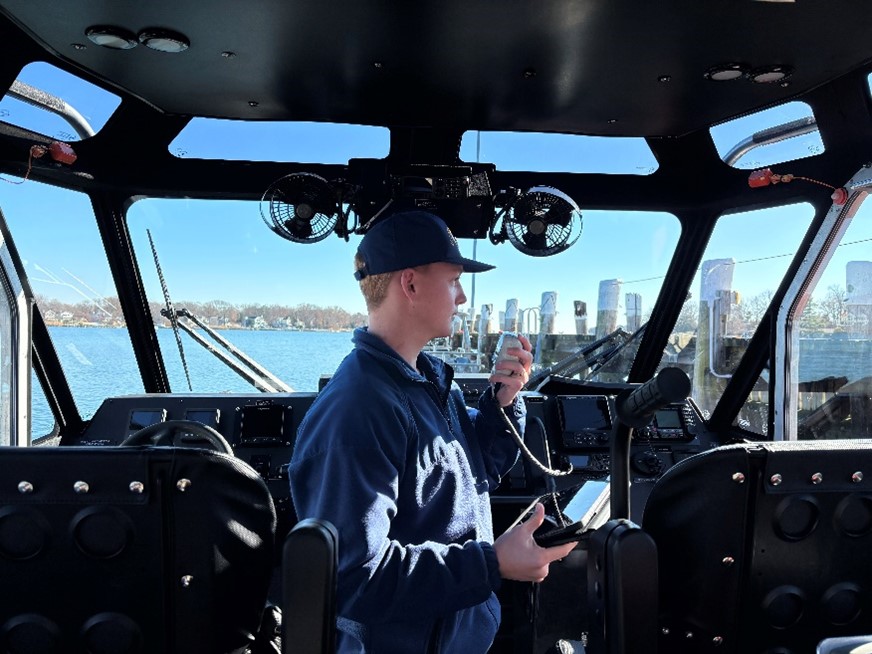
Marine Link has an interesting article that recounts the methods that allow the 154 foot Webber “Sentinel” class WPCs “Fast Response Cutters, FRCs”with a nominal endurance of only five days and a range of 2500 nautical miles at 14 knots to deploy well beyond that distance.

Issues that must be dealt with other than limited storage and fuel include lack of an independent duty corpsman and carbon build-up in the engines due to operating at lower than design RPM.

When we go to Tahiti or American Samoa, there’s nothing in between. We’ll usually travel with a ‘black hull’ buoy tender in case we need to take on fuel at sea. But we have to be very careful with our fuel, and how we run our engines, and balance the need to have enough provisions for the trip and arrive safety with at least 20 percent fuel on board with the need to get down there so we can get to work.”

Sea State can also make it difficult to do a Replenishment at Sea (RAS).

The article does not reflect the current number of FRCs planned–77 rather than the 64 indicated in the article. It appears likely that the number of FRCs in Guam will increase from three to six and that additional FRCs (probably three) will be based in American Samoa.)

The article talks about future OPCs allowing National Security Cutters to spend more time in the Western Pacific but makes no mention of USCGC Harriet Lane, currently based in Oahu, or other WMECs that might be based in the Pacific in the Future.

“…in the absence of the perfect asset, the FRCs are the right asset for the job right now. “We’re making it work.”

USV attacks on Shadow Tanker Fleet

As you have probably heard, Ukraine has used unmanned surface vessels to attack three tankers of the Russian shadow fleet in the Black Sea.

Just wanted to point out where they targeted the vessels, specifically they used multiple unmanned systems and attacked the stern near the engine room, propeller, and rudder.

Tankers. particularly those with empty tanks are very hard targets to sink, with lots of sealed tanks providing reserve buoyancy. During the “Tanker War” in the 1980s tankers proved extremely resilient.

Attacking the propulsion and steering will probably keeps them out of service longer than damage in any other part of the ship.

Should the Coast Guard be faced with an attack on a US port using a medium or larger ship, it might be impossible for local Coast Guard forces to sink the attacking vessel. In that case, it might be best to follow the Ukrainian example and attack the propulsion and/or steering to keep the attacker from reaching its objective and provide time for reinforcements to arrive.


Over-the-Horizon (OTH-IV) and Long-Range Interceptor (LRI-II)

Over-the-Horizon (OTH-IV) and Long-Range Interceptor (LRI-II) rigid-hull inflatables on stern of USCGC Stone

Above is a screen grab that I thought might be interesting, in that it provides a comparison of the two boats carried by National Security Cutters, the eight meter OTH-IV to the right and the eleven meter LRI-II to the left on the launch ramp.

The LRI-II is only carried on the Bertholf class National Security Cutters. The OTH is carried by various classes of cutters including the 154 foot Webber class (Fast Response Cutters).

“Noem says Coast Guard-led tanker seizure near Venezuela was ordered by Trump to combat drug trafficking” –NBC News

NBC News reports,

“Homeland Security Secretary Kristi Noem on Thursday addressed the U.S. seizure of an oil tanker near Venezuela, saying the Coast Guard–led operation was carried out in coordination with the Departments of Defense and Justice, as well as the FBI.”

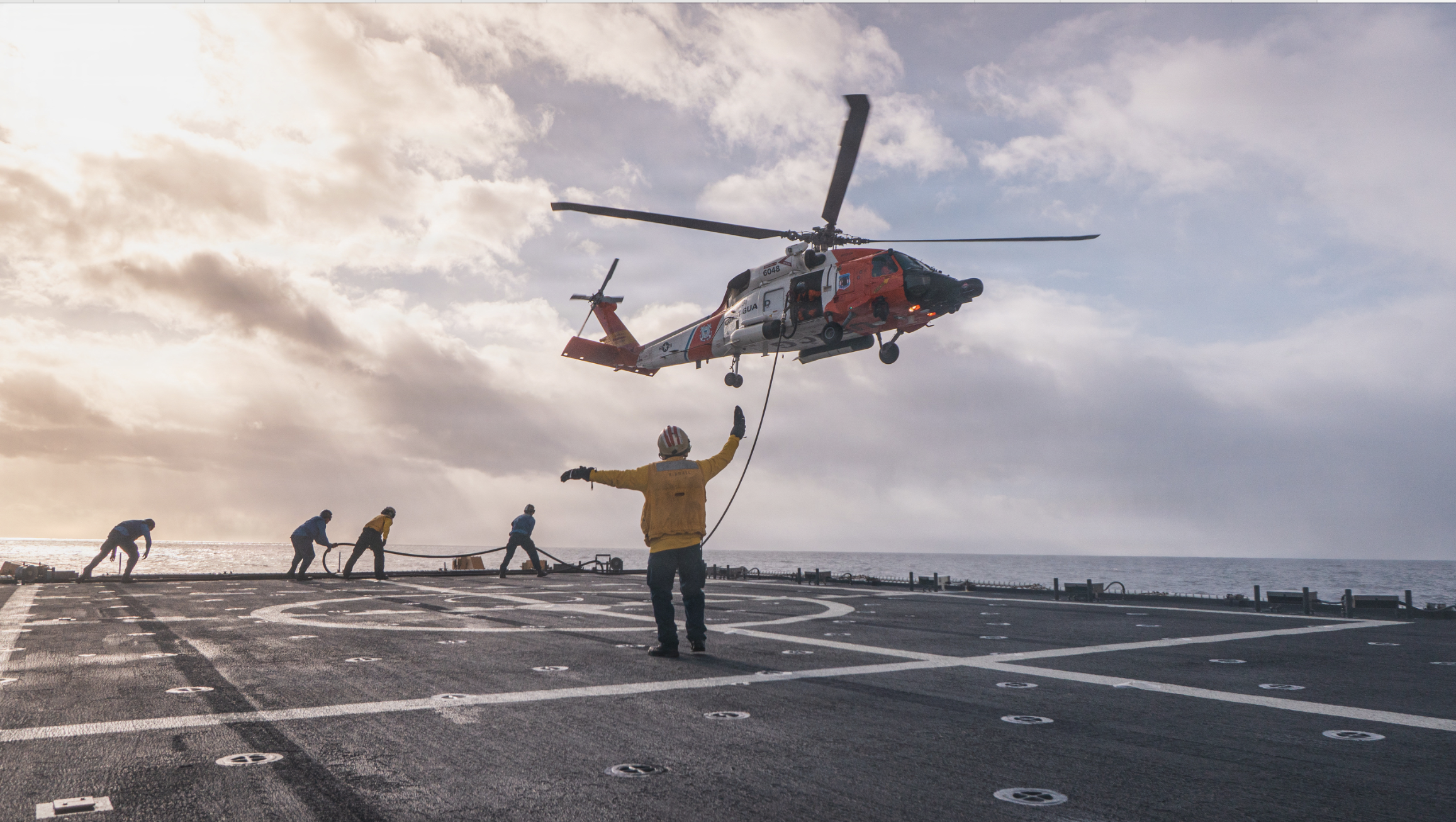
You have probably heard about the seizure of this tanker off the coast of Venezuela, but you may not have heard that the team that fast roped down on the tanker was Coast Guard.

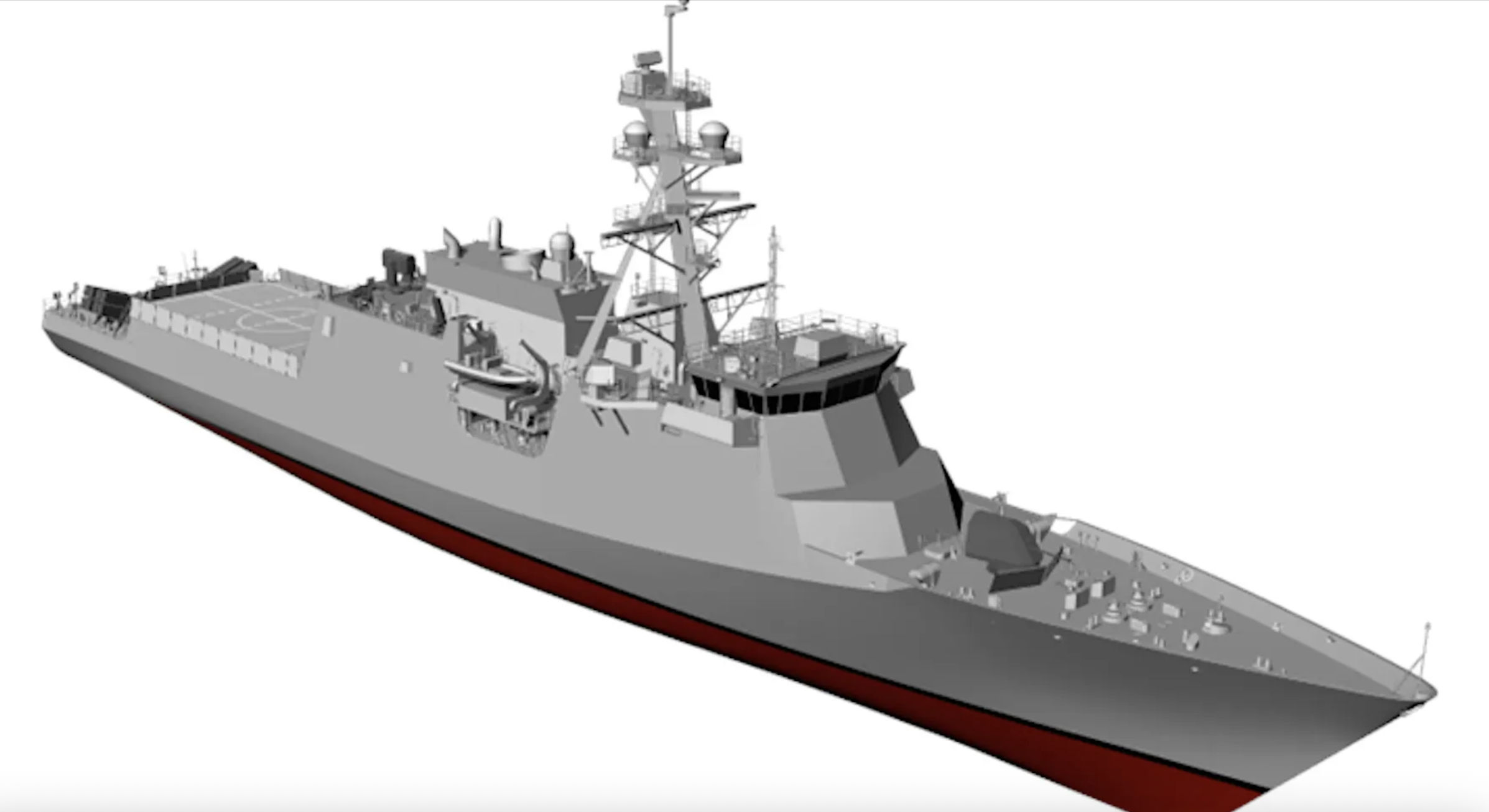
“Navy wants new frigate in 2028, says service’s acquisition head” –Breaking Defense / a National Security Cutter Patrol Frigate

Above is a Huntington Ingalls video about Frigate variations of the National Security Cutter. The video is now eleven years old. 

Breaking Defense reports,

“Navy Secretary John Phelan recently told attendees at a private dinner that the new frigate would be a modified National Security Cutter, sources told Breaking Defense.”

Apparently this may not be a done deal yet, but sounds likely. Huntington Ingalls may even be able to use parts of cancelled NSC#11 to speed the process.


“U.S. Coast Guard authenticates keel for offshore patrol cutter Pickering” –News Release

USCGC Pickering Artist rendering starboard quarter. Credit: Austal

Below is a Coast Guard news release. Good to see progress on the Austal portion of the OPC program.


Dec. 9, 2025

U.S. Coast Guard authenticates keel for offshore patrol cutter Pickering

WASHINGTON — The Coast Guard authenticated the keel for the future Coast Guard Cutter Pickering during a ceremony Monday in Mobile, Alabama.

Keel authentication is a time-honored shipbuilding tradition marking the formal start of a vessel’s construction. During the ceremony, the sponsor’s initials are applied to a ceremonial keel plate that will be installed on the cutter, symbolically indicating the keel is “truly and fairly laid.”

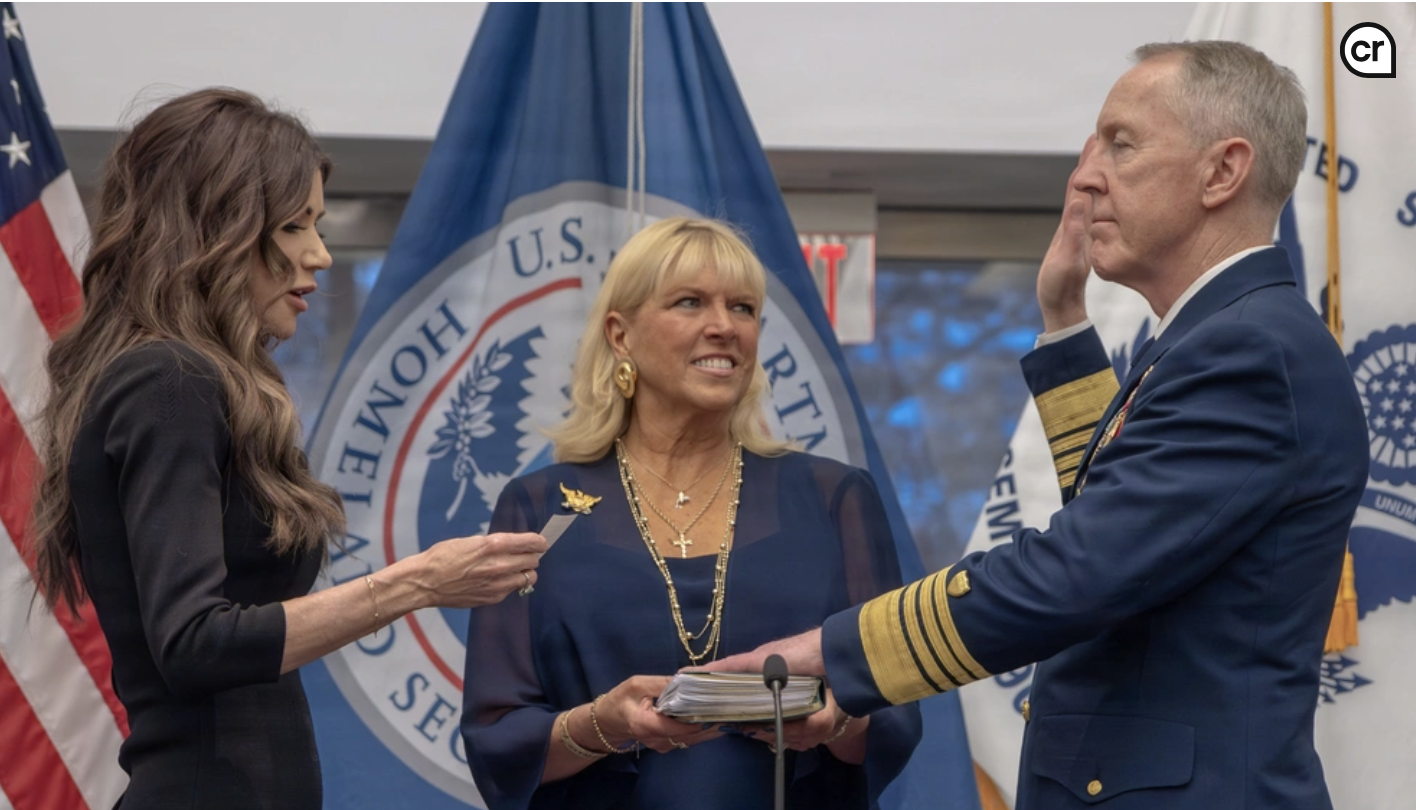
Adm. Kevin Lunday, acting commandant of the Coast Guard, attended the event along with Rep. Mike Ezell of Mississippi, chairman of the House Transportation and Infrastructure Subcommittee on Coast Guard and Maritime Transportation; Michelle Kruger, president of Austal USA; and more than 100 guests.

“This event highlights the progress made towards delivering this much-needed asset to the nation,” said Rear Adm. Chad Jacoby, deputy commandant for systems and chief acquisition executive. “With OPC design and modeling activities fully complete and production underway, we are gaining speed towards recapitalization of our medium endurance fleet.”

Ravi Khamsourin, an advanced welder with Austal USA, placed the initials of the sponsor, Dr. Meghan Pickering Seymour, on the ceremonial keel plate. Pickering Seymour is Pickering’s great-great-great-great-great-granddaughter.

Pickering is named after a revenue cutter built in 1798 that bore the same name. The vessel was named in honor of Timothy Pickering, the second secretary of war. Pickering fought in the American Revolution as a colonel and served as adjutant general of Gen. George Washington’s army in 1777. He later served as secretary of state, a U.S. senator and a member of the House of Representatives from Massachusetts. He advocated for construction of the first frigates built to enforce tariff and trade laws and prevent smuggling.

Pickering will be the third Coast Guard vessel to carry the name. In addition to the original revenue cutter Pickering, the Coast Guard operated a concrete-hull floating base bearing the name Pickering during the 1920s.

The OPC acquisition program addresses the Coast Guard’s long-term need for cutters capable of deploying independently or as part of task groups. The cutters provide essential capability for the Coast Guard to control, secure and defend U.S. borders and maritime approaches, facilitate maritime commerce vital to economic security and strategic mobility, and respond to contingencies. Acquisition of 25 OPCs will complement the service’s national security cutters, fast response cutters and polar security cutters as part of the Department of Homeland Security’s layered security strategy.

Delivery of Pickering is scheduled for 2027.

“Sri Lanka Navy takes delivery of former United States Coast Guard Cutter” –Naval News

Ex-USCGC DECISIVE (Credit: Sri Lanka Navy)

Naval News reports,

The Sri Lanka Navy (SLN) formally took delivery of the former United States Coast Guard Cutter, USCGC DECISIVE, provided by the United States to SLN, in a ceremony held at the United States Coast Guard Yard in Baltimore on 02 Dec 25.

The former USCGC Decisive is now 57 years old. This is the fourth former US Coast Guard cutter to join the Sri Lankan Navy. Decisive’s sister ship, USCGC Courageous (SLNS Samudura) was transferred in 2004.

SLNS-Samudura. You can see that Sri Lanka upgraded the armament. 

Sri Lanka also has two much larger 378 foot long Hamilton Class cutters, the former USCGC Sherman transferred in 2018, and the former USCGC Munro, transferred in 2021.

Sri Lanka SLNS Vijayabahu (former USCGC Sherman)

Sri Lanka Navy ship P627 (ex-USCGC Douglas Munro). Source: Jordanroderick via Wikipedia. The CIWS, ESM, and air search radar were removed before transfer. 

Why Pac Area is Under Resourced

Map of Compact of Free Association nations: Palau, the Federated States of Micronesia, and the Republic of the Marshall Islands are in red; the United States is in blue. Prepared by Fephisto via Wikipedia. 

Ran across this chart and thought it might be useful to pass it along. 85% of the US EEZ currently is in areas under the USCG Pacific Area Commander, but, in addition, the US has obligations to help the Compact of Free Association States that also fall under the authority of the Pacific Area, specifically District Oceania (formerly D14).

“USCG, CBP, HSI seize vessel with $28M in illicit narcotics off Miami Beach” –District SE

USCG, CBP, HSI seize vessel with $28M in illicit narcotics off Miami Beach

Below is a news release from District SouthEast (formerly D7).

Law enforcement crews from U.S. Coast Guard Station Miami Beach and CBP Air and Marine Operations seized approximately 3,715 pounds of cocaine, worth an estimated $28 million, from a suspected drug smuggling vessel 2 miles east of government cut, Nov. 2, 2025. CBP AMO law enforcement boat crews provided assistance with multiple marine units and specialized search tools upon initial interdiction by a Coast Guard Station Miami Beach crew. (U.S. Coast Guard photo by Coast Guard Station Miami Beach)

“This was the largest USCG Small boat station cocaine seizure since 1995”

Just wanted to point out this boat does not look like the ones found transporting drugs in the Caribbean or in the Eastern Pacific Drug transit zones. This boat looks like a typical American recreational fishing boat. It easily blends in with the local traffic. The boats intercepted in the Caribbean and Eastern Pacific do not bring drugs directly into the US. Generally they offload their cargoes for transshipment.


Dec. 5, 2025

USCG, CBP, HSI seize vessel with $28M in illicit narcotics off Miami Beach

MIAMI – A U.S. Coast Guard Station Miami Beach law enforcement boat crew along with CBP Air and Marine Operations (AMO) and HSI seized approximately 3,715 pounds of cocaine, worth an estimated $28 million, from a suspected drug smuggling vessel 2 miles east of government cut, Tuesday.

CBP AMO law enforcement boat crews provided assistance with multiple marine units and specialized search tools upon initial interdiction by Coast Guard Station Miami Beach crew.

“This was the largest USCG Small boat station cocaine seizure since 1995,” said Lt. Matthew Ross, Coast Guard Station Miami Beach commanding officer. “Protecting our maritime borders from illicit drug trafficking and transnational criminal organizations remains one of our highest priorities. The Coast Guard and our federal, state and local law enforcement partners remain vigilant in our shared efforts to keep our maritime borders safe by preventing illicit narcotics from reaching our communities.”

CBP’s Office of Field Operations (OFO) Miami Seaport also responded with a K9 team once the vessel was brought pierside. The OFO K9 alerted to multiple locations within the vessel. A physical search by AMO agents uncovered more than 1,000 concealed packages of cocaine, weighing over 3,700 lbs. Federal agents took custody of three subjects and transported them.

“Disrupting maritime narcotics smuggling like this demonstrates the power of teamwork in safeguarding our nation and holding criminals accountable,” said Executive Director Andy Blanco, CBP Air and Marine Operations Southeast Region. “Smugglers should be warned that our whole-of-government team is watching, and they will be caught.”

We are part of a whole-of-government approach to secure our borders by dismantling Foreign Terrorist Organizations (FTO) and Transnational Criminal Organizations (TCO), including narco-trafficking and human smuggling operations.

-USCG-

“20,000-pound cocaine seizure by Coast Guard breaks 18-year-old record” –CBS

CBS reports,

“A U.S. Coast Guard ship seized more than 20,000 pounds of cocaine from a single ship this week, making the largest at-sea interdiction in nearly 20 years, officials said.

“The Coast Guard said the crew of the Munro, a cutter that patrols the Pacific and is based in Alameda, California, made the seizure during “counter-narcotics operations” in the Eastern Pacific.”

I would have liked to quote the Coast Guard news release in full, but I could not find it.