“Availability and Use of Aircraft in the Coast Guard” –Congressional Budget Office

The Congressional Budget Office (CBO) prepared a report “at the request of the Chairman and Ranking Member of the Coast Guard and Maritime Transportation Subcommittee of the House Committee on Transportation and Infrastructure” on the use and availability of Coast Guard aircraft. Below the break is CBO’s “At a Glance” summary. I added some additional detail and observations below.

“CBO found that Coast Guard helicopters tend to have availability rates that are lower than the rates for Army helicopters, higher than the rates for Department of the Navy (DoN) helicopters, and similar to those of Air Force helicopters.

“On average, Coast Guard helicopters flew significantly more hours than DoD’s helicopters. (About twice as much–Chuck) (CBO also compared Coast Guard H-60s with DoD’s H-60s and found a similar result.)”

There is also a Graphic showing the total flight hours during 2024 for each air station that I included above.


At a Glance

In this report, the Congressional Budget Office analyzes patterns in the availability and use of aircraft by the U.S. Coast Guard, the agency responsible for protecting the nation’s waterways, from 2006 to 2024. CBO looks at availability—a measure of the percentage of time aircraft can be flown for training or missions—and flying hours, both in total and per aircraft.

Here are CBO’s findings about the fleet’s size, availability, and use:

  • Size. As of 2024, the Coast Guard had about 200 manned aircraft. About three-fourths of those are rotary-wing aircraft (H-65 and H-60 helicopters), and the rest are fixed-wing aircraft. Since the early 2010s, the number of Coast Guard aircraft has declined.
  • Availability. From 2006 to 2024, the availability of Coast Guard aircraft decreased slightly. Availability of fixed-wing aircraft has been generally lower than that of helicopters, although their respective availability rates have converged in recent years. In 2024, the Coast Guard’s average availability rate for its aircraft was 49 percent.
  • Use. Total flying hours for Coast Guard aircraft have decreased since 2006. Use of the H-65 fleet has declined the most, especially since 2019. The fixed-wing C-144 fleet has logged the most flying hours per aircraft.
  • Comparison With Availability and Use of Other Aircraft. In general, Coast Guard aircraft fly much more than similar Department of Defense (DoD) aircraft, but their availability rates are about the same as those of DoD’s aircraft.
  • Comparison With Availability and Use When Operated by the Navy. CBO analyzed 10 Coast Guard H-60s that were formerly operated by the Department of the Navy. During service in the Navy, those H-60s flew fewer hours, on average, than other H-60s operated by the Navy. After those H-60s were refurbished in a depot to perform different missions, the Coast Guard began to operate them. Availability rates and flying hours per year for those helicopters were markedly greater than when they were operated by the Navy.
  • Availability and Use During the Pandemic. Even though the availability rate of Coast Guard aircraft did not change markedly during the coronavirus pandemic, their flying hours dropped in March 2020 and reached their lowest point in April 2020.

This Day in Coast Guard History, April 2

Based on the Coast Guard Historian’s timeline, https://www.history.uscg.mil/research/chronology/
With inspiration from Mike Kelso

April 2

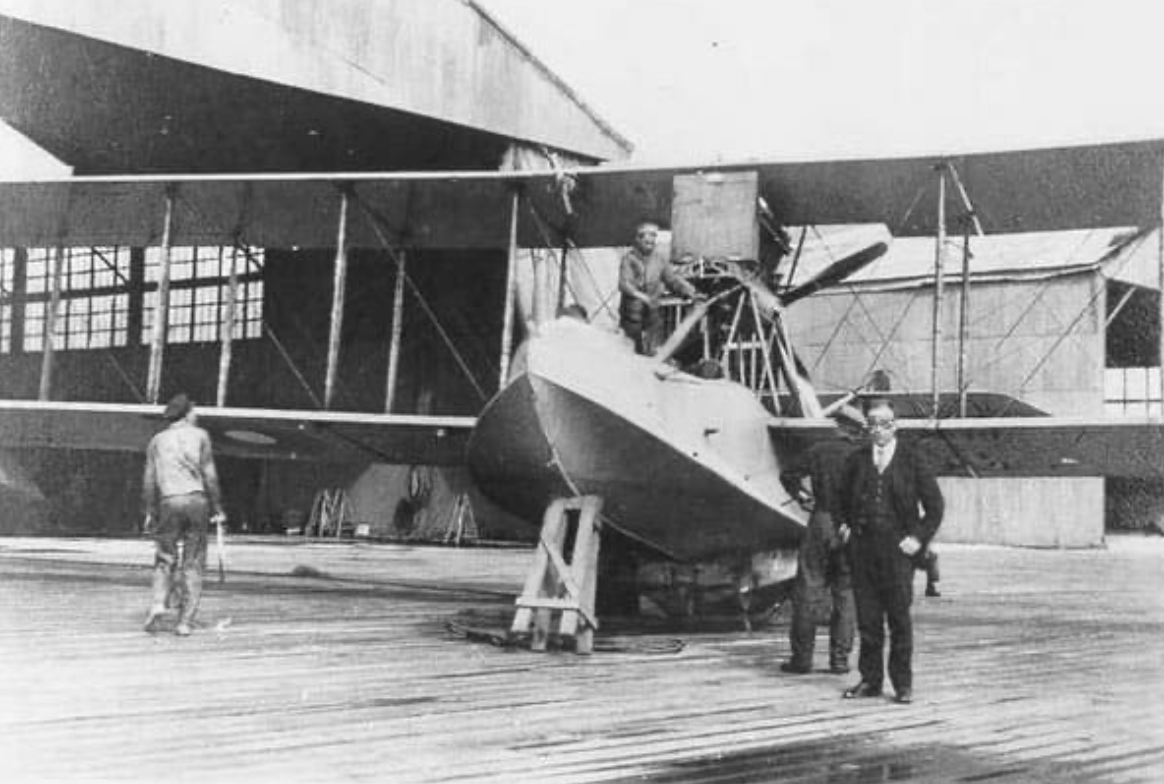
Aircraft maintenance on the ramp at the Morehead City air station. Aircraft was a Curtis HS-2L

1924  Congress appropriated $13,000,000 for ten air stations and equipment.  Congress first authorized the stations on August 29, 1916, but did not provide for sufficient funding until this date. The first Coast Guard Air Station had been established in 1920 in Morehead City, NC.

The Morehead City air station remained in commission until July, 1922 at which time personnel were transferred to other assignments and the aircraft were returned to the Navy. There would be no more Coast Guard aviation activity until the advent of the Coast Guard Air Station at Gloucester Massachusetts in 1926. Only five out eleven of the initial cadre returned to flight status.

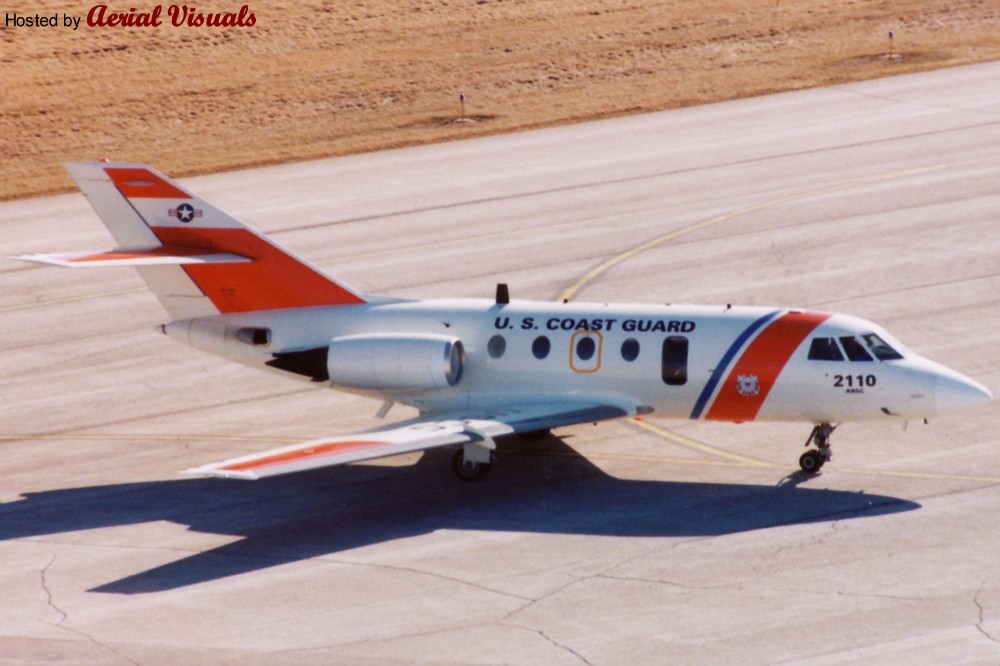
HU-25 CGNR 2110 Photographer: Glenn Chatfield
Notes: At Cedar Rapids, IA

1982  The first of a new type of aircraft was added to the Coast Guard’s air fleet, a HU-25A Guardian, was dedicated and christened at Aviation Training Center Mobile.

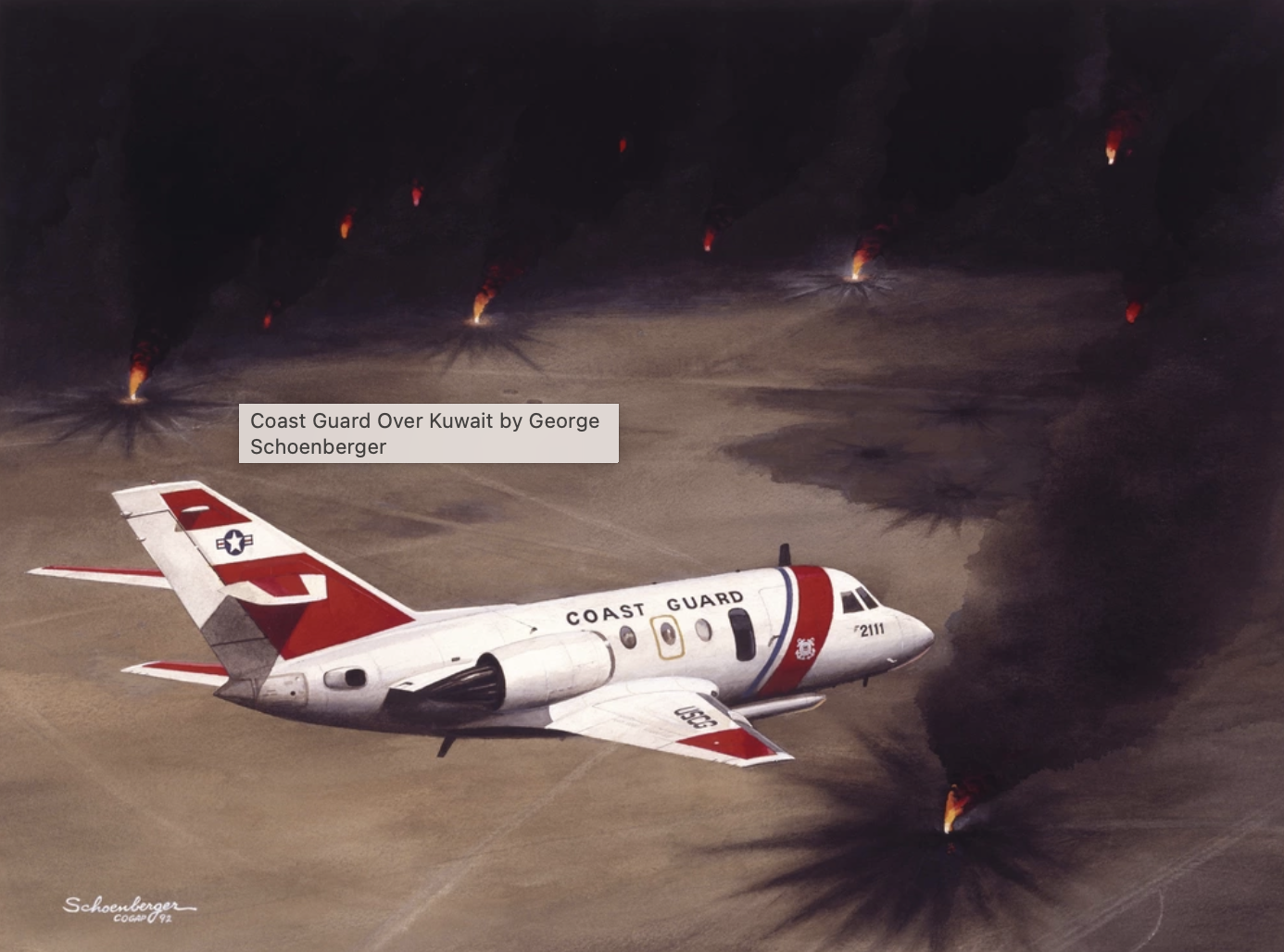
In response to the Iraqi action of firing oil wells and pumping stations in Kuwait, two HU-25A Falcon jets from Air Station Cape Cod, equipped with Aireye technology, which precisely locates and records oil as it floats on water], departed for Saudi Arabia. The Falcons mapped over 40,000 square miles in theatre and located every drop of oil on the water. This was used to produce a daily updated surface analysis of the location, condition and drift projections of the oil. The Aviation Detachment was deployed for 84 days, flew 427 flight hours and maintained an aircraft readiness rate of over 96 percent.

1983  The State Department forwarded a request for assistance from the United Arab Emirates to help prepare for an oil spill cleanup in the Persian Gulf.  The spill occurred after combat operations during the Iran-Iraq war had left many oil wells burning and leaking oil.  Four Coast Guard pollution experts responded to the request.

“Coast Guard celebrates 40 years of service with H-65 helicopter” –CG-9

Great article about the history of the H-65 in Coast Guard service by the Acquisitions Directorate, CG-9 reproduced below.

Don’t get the impression that the H-65 is going away anytime soon. Expect at least another decade of service. The last of the parent design AS365 Dauphin was manufactured in 2021. The closely related Eurocopter AS565 Panther is still being manufactured and has seen service in eleven countries.


Coast Guard celebrates 40 years of service with H-65 helicopter

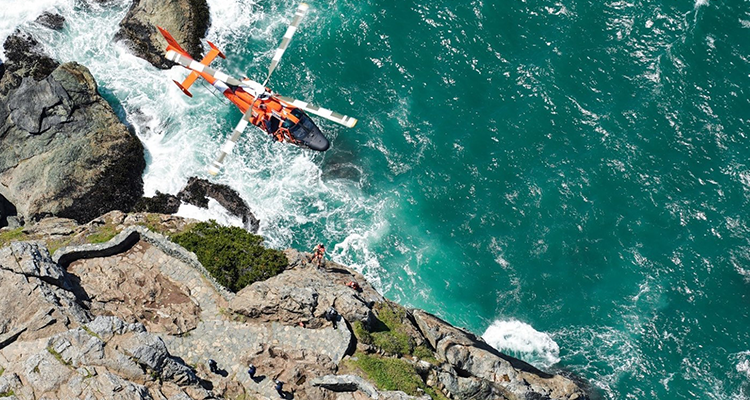
Upgrades throughout the 40-year history of the H-65 were strategically completed to allow for expanding missions and operations in the most challenging maritime conditions, such as cliff rescues. Here an MH-65 crew conducts vertical surface training off the coast of Humboldt Bay, California, to hone critical skills to ensure precise and efficient hoisting techniques in this rugged, coastal environment. U.S. Coast Guard photo.


It’s 2007. Coast Guard Air Station Port Angeles, Washington, receives a call about an injured mountain climber at the summit of The Brothers, a pair of prominent mountain peaks in Olympic National Park near Seattle. The elevation: 6,866 feet. And it’s snowing.

A search and rescue mission was deployed using the HH-65C short range recovery helicopter. “We were right up against that line where it was clear. If we had gone much further toward the peak, we would have been in blizzard conditions. We had to dump fuel at altitude to get light enough,” recalled Cmdr. Christian Polyak, co-pilot on the rescue mission and now commanding officer of Coast Guard Air Station Detroit. “We were able to reach the summit, pluck the injured mountain climber off the peak and get back to the airport in about 15 minutes.”

Unknown to the mountain climber, the Coast Guard H-65 Conversion/Sustainment Program had been working for years – and would continue working in subsequent years – to update the H-65 fleet and support missions like the one that brought the mountain climber to safety. “The rescue couldn’t have been done without the HH-65 and the engine upgrade from Bravo to Charlie,” Polyak explained.

In November 2024, the Coast Guard marked the 40th anniversary of the initial H-65 operation, but the tenure of this critical asset in supporting Coast Guard missions is slowly coming to an end. The service has completed the transition from the MH-65D to the MH-65E, the final upgrade of this airframe. Obsolescence challenges with the MH-65 will lead to the sundowning of aircraft as they reach the end of their service lives.
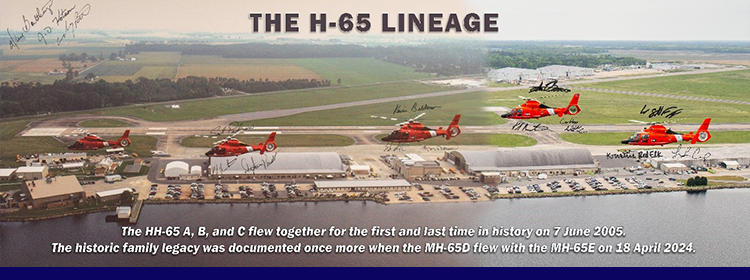
HH-65A HH-65B HH-65C/MH-65C  MH-65D MH-65E
Began operations: 1984 Began operations: 2001 Began operations: 2004 Began operations: 2009 Began operations: 2015
Original Coast Guard version. Avionics upgrade undertaken on a portion of the fleet, including a night vision goggle compatible integrated flight management avionics suite. Engines replaced with Turbomeca Arriel 2C2-CG engines, adding 40% more power. Airborne use of force capability added, including 7.62 mm general-purpose machine gun and a .50-caliber precision rifle. Obsolete subsystems replaced, such as replacing navigation systems and gyros with digital GPS and inertial navigation systems. Remaining obsolete subsystems modernized, including replacing analog automatic flight control with digital systems, installing digital weather radar systems and installing digital glass cockpit instruments.
Other program milestones included purchase of seven new MH-65 aircraft to identify and intercept non-compliant light aircraft operating within the Washington, D.C., Air Defense Identification Zone and execution of a service life extension program to extend the service life of the helicopters by an additional 10,000 flight hours.

Since their introduction more than 40 years ago, Coast Guard H-65s have been credited with rescuing approximately 26,000 people. For nearly two decades, the Coast Guard has planned and executed targeted improvements to enhance reliability and performance of the operational fleet. Across each iteration, starting with the initial designation of the HH-65A (Alpha) to the current MH-65E (Echo), every upgrade enhanced the airframe’s capabilities, enabling crews to complete lifesaving, law enforcement and national security missions more efficiently and effectively.

Retired Capt. Keith Overstreet has flown every model of the H-65, starting with the Alpha in 1995 at Air Station Savannah, Georgia. “I started flying the 65 when it was relatively new … when we purchased the H-65 it was really an advanced aircraft with advanced avionics. It allowed us to fly coupled approaches down to the water with a fairly precise position. It could control not only the lateral, the guiding left to right, but vertically down to the water as well.”

As modern as it was for its time, regular upgrades kept it relevant.

“The Alpha had a small navigation screen where you could create a flight plan. It had a forward-looking radar that would map out vessels and terrain,” said retired Cmdr. Kevin Barres, who flew 65s throughout his entire 25 years in the Coast Guard. “Then Bravo came up and you had a color display that differentiated some terrain,” which helped in developing flight plans.

“Charlie meant changes to the engine, and the engine control. It went from mechanical control using air and linkages to digital control. Echo replaced analog avionics components with a digital cockpit that has significant commonality with the H-60 fleet. There were enhancements to the automatic flight control system and there was a complete rewire of the aircraft. Its modern glass cockpit is standard across the board,” Overstreet said.
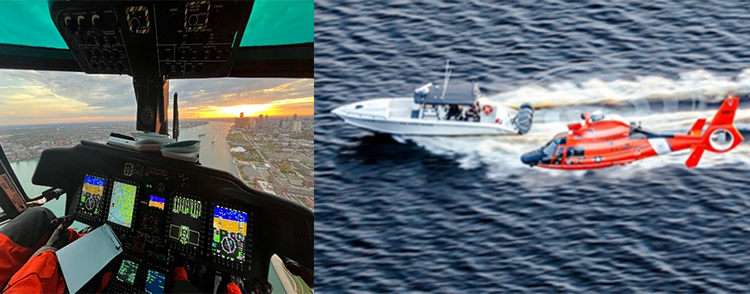
LEFT: A glass or digital cockpit replaced analog instruments in the MH-65E. RIGHT: The updates for missions requiring airborne use of force capability got underway in August 2006. The Helicopter Interdiction Tactical Squadron specializes in those missions, often used for drug-interdiction, and moved to the MH-65 from the Agusta MH-68A Stingray in 2008. U.S. Coast Guard photos.


“Every upgrade was significant and addressed a specific problem or modernization to accommodate how the mission, aviation and airspace were changing,” Barres said.

Cumulatively, these three pilots have flown nearly 16,000 hours in the H-65 and remember missions completed with fondness and pride.

Barres remembers when a bear-watching float plane split in half in the water, stranding six tourists, the bear guide and the pilot in Haro Bay, Alaska. It was 2006, and he was on his first deployment in Kodiak.

“It was a very windy day. The seas in the bay had built a little bit. When the aircraft tried to take off, the tube that goes across the front that connects the two floats failed and split. The aircraft did a nosedive into the wave and was swamped. They were all able to get out and were standing on the wing while it floated for a little while.”

The Coast Guard responded with an HC-130, an MH-60 and an MH-65. Barres was in the office and volunteered to pilot the MH-65.

“The C-130 got on scene and dropped two survival rafts to them. The bear guide was able to climb up on the capsized life raft and hang on. All the other people were hanging on to the float plane. The plane sunk, and they all ended up in the water for about 10 to 20 minutes.”

They were able to float due to their safety devices, but they all were hypothermic. The two helicopters were able to retrieve everyone, and all survived.

Another “miraculous” search and rescue mission Barres recalls was when he was stationed in Barbers Point, Hawaii. He was involved in rescuing a family that was stranded on a very small skiff in ocean waters for just short of two weeks, surviving on sea water and flying fish, after their small outboard motor malfunctioned. When the family was taken back to their home in Kiribati aboard an H-65, they were met with ecstatic school children and an elected official showered them with gifts of bananas and coconuts.

H-65 does more than search and rescue

“The H-65 has been heavily relied upon for all our aviation special missions,” said Polyak, who currently ranks as the most senior active-duty H-65 aviator.

During a deployment to Japan from Kodiak on a mission to enforce an international fisheries treaty, Polyak was grateful for the enhancements of the satellite communications on the MH-65C.

“Without that upgrade, we wouldn’t have been able to maintain radio communications with the cutter at the distances we were operating the helicopter,” he said. “As a pilot I always want to be able to talk to the ship if I’m 100 miles away from it. When you’re thousands of miles away from land and there’s nowhere else to go, you need to be able to talk to the ship so you can find out where they are and get back to them.”

The stories of the missions are endless. But without the behind-the-scenes mechanics that keep the aircraft operational, none of this would be possible.

“It takes 21 maintenance labor hours for every flight hour,” said Polyak, who served as the branch chief for the H-65 Echo conversion at the Aviation Logistics Center (ALC) in Elizabeth City, North Carolina, leading a team of 36 to deliver MH-65 Echoes to the fleet from 2017 to 2020. “There’s a lot of work happening on the hangar deck. Our enlisted mechanics work very hard to allow this aircraft to continue to operate and do lifesaving missions. There’s an equally important component at the ALC where the overhaul for the aircraft occurs. And there are hundreds of active-duty members, civilians and contractors that only support the H-65 fleet. These quiet professionals are supporting frontline operations. Along that same vein, the Aviation Training Center in Mobile, Alabama, has continued to provide excellent standardization and training support so that pilots and air crews can work together and execute these challenging missions.”

Looking forward, pilots are grateful they had the opportunity to fly the H-65s.

“It’s amazing the way we in the Coast Guard were able to bring it online,” Barres said. “Basically, going from 1960s helicopters to the most modern helicopters in the world at that time and then over 40 years keeping the aircraft upgraded and relevant.”

“At one point we had nearly 100 airframes in the fleet,” he continued. “The 65 never let me down on a mission or my crew or the folks that we were out there trying to help, whether it was law enforcement, or a fisheries patrol or a search and rescue case.”

All three pilots find immense career fulfillment in completing search and rescue missions made possible by the capabilities of the H-65.

“That day when you look somebody in the eye,” Overstreet said. “And you know, and they know that they would not be on this earth alive if you hadn’t been there. That makes it easy to put your all into your work every day.”
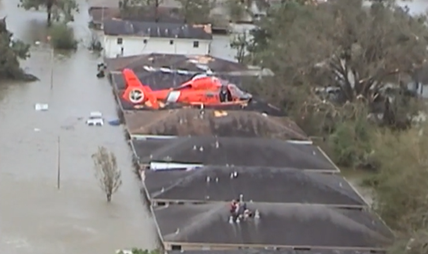
An airman from Air Station New Orleans, who was on the first helicopter that returned following the Hurricane Katrina, recounted, “The second that everyone heard us on Channel 16, Channel 16 just blew up with mayday calls.” Flying on waivers, he did rescues for five days and nights straight. At the time, this was considered the biggest search and rescue event in U.S. history. U.S. Coast Guard photo.


Related:

40 years in service!

Genesis of the Coast Guard HH-65 Helicopter

For more information: MH-65 Short Range Recovery Helicopter Program page


“Coast Guard to hold rescheduled commissioning and ribbon-cutting ceremony for newest air station in more than 25 years” –D11

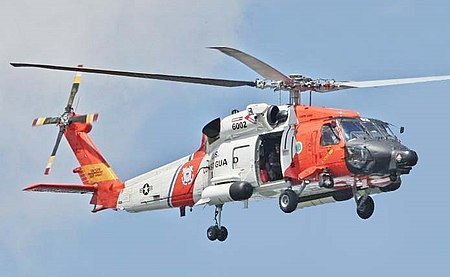
The first MH-60T medium range recovery helicopter to operate out of new Air Station Ventura lands on the station’s ramp on June 8, 2024. U.S. Coast Guard photo.

Below is a District eleven (California) media advisory. More information about the air station and the MH-60T program in this earlier post. The ribbon cutting was originally to have been done June 18. I’ve seen no explanation for the delay. There has been an aviation detachment in the LA/Long Beach area for some time. With the addition of Ventura, there will be five CG air stations in District Eleven, San Diego (MH-60T), Ventura (MH-60T), San Francisco (MH-65), Sacramento (C-27J), and Humbolt Bay (MH-65).

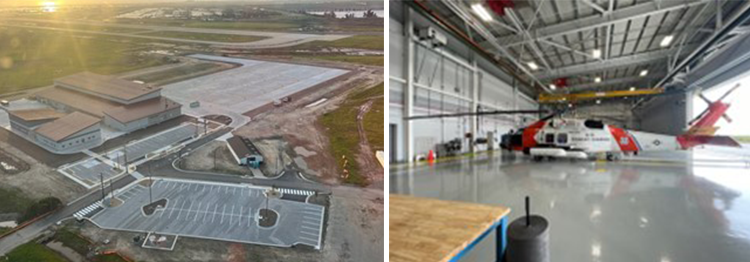
The new Coast Guard Air Station Ventura and its MH-60T hangar is located at Naval Base Ventura County in Point Mugu, California. U.S. Coast Guard photos.

Nov. 12, 2024

Editor’s Note: Media are asked to RSVP by 5 p.m., Tuesday, Nov. 12 by contacting District 11 public affairs at 206-815-6689 or PADETLA@USCG.MIL.

WHAT: Commissiong and ribbon-cutting ceremony for Coast Guard Air Station Ventura

WHO:

  • Vice Adm. Andrew J. Tiongson, commander, Coast Guard Pacific Area
  • Rear Admiral Joseph R. Buzzella, commander, Coast Guard District 11
  • Rear Adm. Mike E. Campbell, director, Coast Guard Acquisition Programs and Program Executive Officer
  • Cmdr. Amanda Sardone, commanding officer, Coast Guard Air Station Ventura

WHEN: Nov. 13, 2024 at 10 a.m. to 11 a.m.

WHERE: Naval Base Ventura County Point Mugu: 190 Third St., Point Mugu, CA 93042.

SAN PEDRO, Calif. — The Coast Guard is scheduled to hold a commissioning and ribbon-cutting ceremony for Coast Guard Air Station Ventura at Naval Base Ventura County in Point Mugu, Wednesday. The ceremony will mark the official establishment of the newest Coast Guard air station in more than 25 years.

Recently, the aircrew of Air Station Ventura conducted three rescues:

  • Oct. 13, 2024: Air Station Ventura medevac a 63-year-old woman suffering from abdominal pain from the Cruise Ship Grand Princess
  • Oct. 17, 2024: Air Station Ventura conducted hoist from vessel in 10-foot seas for a diver suffering decompression sickness near Anacapa Islands in Channel Islands.
  • Oct. 31, 2024: Air Station Ventura medevac a man suffering from seizures from Cruise Ship Celebrity Radiance 90-miles from Air Station Venture.

The air station serves a crucial role in protecting the maritime region from Orange County to San Luis Obispo County including the vital ports of Los Angeles and Long Beach. Its missions will include 24/7 emergency response; search and rescue; drug and migrant interdiction; law enforcement; and marine safety and environmental protection. The permanent presence of the Coast Guard in Ventura County provides enhanced security and quicker response times to emergencies, benefiting both the local community and maritime industries.

Air Station Ventura features:

  •  $70 million state-of-the-art, 43,000 square-foot hangar facility
  • 12,000 square-foot administration facility and berthing facility
  • One MH60-T Jayhawk helicopter and expected to receive two more
  •  Approximately 100 Coast Guard personnel

District 11 now consists of four active air stations ranging from Humboldt Bay down to San Diego.

“MEDIA ADVISORY: Coast Guard to hold ribbon-cutting/ commissioning ceremony for new Air Station Ventura” –First New Air Station in More Than 25 Years

Below is a District 11 press release. This is also an upgrade from H-65s to H-60s. Quoting a 2021 news release

“Previously, the Coast Guard operated Air Station Los Angeles out of the Los Angeles International Airport for more than five decades until it lost its lease in May 2016. The Coast Guard officially closed the air station and shifted aviation operations to a Forward Operating Base (FOB) located at Naval Base Ventura County supported by Coast Guard Air Station San Francisco. The Point Mugu FOB operates out of a leased hangar facility and leased berthing space from the Navy. Currently, 13 permanent service members and approximately 11 rotating crewmembers from San Francisco fly two MH-65 Dolphin helicopters out of Point Mugu.”

The new airstation will be a tenant command of Naval Base Ventura County.


June 17, 2024

MEDIA ADVISORY: Coast Guard to hold ribbon-cutting/commissioning ceremony for new Air Station Ventura

POC: Petty Officer 3rd Class Richard Uranga 310-781-0619

WHO: Congressman Salud Carbajal, Representative of California’s 24th District, Congresswoman Julia Brownley, Representative of California’s 26th District, Rear Admiral Andrew Sugimoto, commander, U.S. Coast Guard District Eleven, Capt. Neal Armstrong, commander U.S. Coast Guard Facilities Design and Construction Center and Cmdr. Amanda Sardone, commander, U.S. Coast Guard Air Station Ventura.

WHAT: Ribbon-cutting/Commissioning ceremony for the new U.S. Coast Guard Air Station Ventura.

WHEN: June 18, 2024 at 1000.

WHERE: Naval Base Ventura County: 190 3rd St, Point Mugu, CA 93042.

SAN PEDRO, Calif. — The U.S. Coast Guard is scheduled to hold a ribbon cutting and commissioning ceremony for its newest air station at Naval Base Ventura County, Point Mugu. The ceremony will take place on Tuesday, marking the establishment of the newest Coast Guard air station in more than 25 years.

Air Station Ventura features a $70 million state-of-the-art, 43,000 square foot hangar and a 12,000 square foot administration facility, ensuring that Coast Guard personnel have the resources needed to carry out their vital missions. This new facility will house three MH-60 Jayhawk helicopters and approximately 100 personnel, significantly enhancing the Coast Guard’s capabilities in the region.

The air station will serve a crucial role in protecting the busy maritime region from Orange County to San Luis Obispo County including the vital ports of Los Angeles and Long Beach. The permanent presence of the Coast Guard in Ventura County will provide enhanced security and quicker response times to emergencies, benefiting both the local community and maritime industries.

For more information or to RSVP to the event, please contact Public Affairs Detachment Los Angeles/Long Beach at padetla@uscg.mil.

EDITOR’S NOTE: Media are asked to RSVP by June 17 by emailing Coast Guard Public Affairs Detachment Los Angeles/Long Beach at PADETLA@USCG.MIL.


“Coast Guard MH-65 Dolphin helicopters retired after 36 years of service in Alaska” –News Release


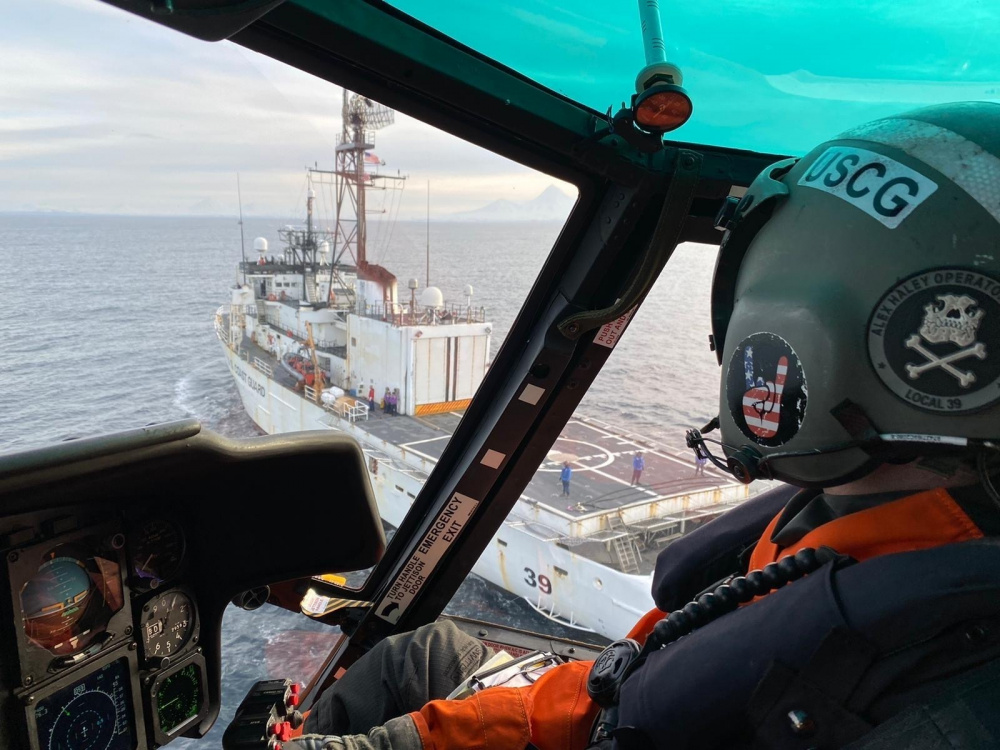
An MH-65 Dolphin helicopter crew based out of Air Station Kodiak and
deployed aboard Cutter Alex Haley, prepares for a helicopter in-flight refueling at sea evolution with the cutter crew during a search and rescue case near Dutch Harbor, Alaska, Wednesday, Dec. 30, 2020. The crew hoisted an injured fisherman from the vessel Magnus Martens and placed him in the care of awaiting Guardian Flight Alaska personnel for further transport to Anchorage. (U.S. Coast Guard photo by Lt. Benjamin DeGroot)

Below is a District 17 news release. This marks an important step in the move to an all H-60 rotary wing fleet and it also means that ships on ALPAT will be moving to operating MH-60s rather than H-65s.

I have to wonder, since recently upgraded MH-65Es will be with us for a very long time, if perhaps we might be able to open a new Coast Guard air station in Guam or the Northern Marianas (probably Tinian where the USAF is refurbishing an air base) and perhaps in American Samoa using H-65s. (I notice, when USCGC Harriet Lane recently deployed to the Western Pacific, she apparently did so without a helicopter, which would have made the ship more effective.) Certainly, the people of these American territories would welcome the additional SAR resources. That additional Western Pacific air stations might also, at least temporarily, operate Coast Guard fixed wing aircraft would also help to counter Illegal, Unreported, Unregulated (IUU) fishing.


 April 24, 2024

KODIAK, Alaska – The Coast Guard retired the Air Station Kodiak MH-65 Dolphin helicopter fleet during a ceremony, Tuesday.

Capt. Timothy Williams, commanding officer of Air Station Kodiak, presided over the ceremony honoring the 36 years of service the MH-65 Dolphin airframe and its crews provided to the Arctic region.

Air Station Kodiak currently has a rotary-wing fleet of six MH-60 Jayhawk helicopters. The unit will shift to a rotary-wing ship-and-shore based fleet of nine MH-60 Jayhawks in 2025.

Air Station Kodiak will be the fourth Coast Guard Air Station to transition to a single rotary wing fleet of MH-60 Jayhawk helicopters. Air Stations Borinquen, Traverse City, and New Orleans all recently completed similar transitions.

“For decades, the cutter and helicopter team were the core of the ALPAT mission,” said Cmdr. James Kenshalo, MH-65 Dolphin pilot. “Together they projected force and protection to the most extreme remote regions of our nation’s territories, operating beyond where help could reach. Countless lives have been saved because of these dedicated crews.”

Commissioned in January of 1988, the Alaksa Patrol (ALPAT) mission executed solely by MH-65 Dolphin aircrews provided Coast Guard Cutters with a reliable airborne asset during Alaska Patrols.

To read more about the Coast Guard MH-65 Dolphin and MH-60 Jayhawk helicopters click the following links:

SRR – MH-65 (uscg.mil)

MH-60T Service Life Extension Program (uscg.mil)

“Coast Guard delivers 14th Minotaur-missionized HC-144 to fleet” –CG-9

New Minotaur operator workstations are being installed on all HC-144Bs. Minotaur provides dramatically improved data fusion and integrates installed sensors and radar. U.S. Coast Guard photo by Aviation Engineering Warrant Officer 3 Randy Jopp.

Below is a story from the Acquisitions Directorate (CG-9). 14 of 18 HC-144s have been missionized with Minotaur. The statement, “The aircraft will be based at Air Station Cape Cod, Massachusetts, the first of three to be stationed there” refers only to the “B” model with Minotaur. Three HC-144As were already there and are being replaced by the upgraded aircraft.


The Coast Guard completed work on its 14th HC-144B Ocean Sentry medium range surveillance aircraft outfitted with both the Ocean Sentry Refresh (OSR) modifications and the Minotaur mission system Jan. 17. Modifications to CGNR 2318 were completed at the Aviation Logistics Center in Elizabeth City, North Carolina. The aircraft will be based at Air Station Cape Cod, Massachusetts, the first of three to be stationed there.

The OSR project upgrades the aircraft with a new flight management system, which manages communication control, navigation and equipment monitoring. After the OSR upgrade is completed, each aircraft is redesignated as an HC-144B.

Minotaur integrates installed sensors and radar and provides dramatically improved data fusion as well as information processing and sharing capabilities.

Completion of missionization and upgrade of a 15th HC-144 is scheduled for later this year. Air Station Miami completed transition to the upgraded aircraft in 2022 and Air Station Corpus Christi, Texas, transitioned in 2019. The service plans to upgrade each of the service’s 18 HC-144s by the end of 2024, with transition of Air Station Cape Cod and Aviation Training Center Mobile, Alabama.

For more information: Medium Range Surveillance Program page and Minotaur Program page

“MH-65 upgrades were invaluable to mission success in the aftermath of Hurricane Ian” –CG-9

The report below is from the CG-9 website

MH-65 upgrades were invaluable to mission success in the aftermath of Hurricane Ian

Air Station Miami crew during Hurricane Ian

The Air Station Miami crew evacuates a person in the aftermath of Hurricane Ian. In addition to Air Station Miami’s MH-65Es and HC-144Bs, the coordinated rescue included one MH-65E from Air Station Houston and two MH-65Ds from Air Station Savannah. Total statistics for the coordinated rescue: 46 lives saved, 36 lives assisted and 19 pets saved. U.S. Coast Guard photo by Air Station Miami.


Hurricane Ian caused nearly 150 fatalities when it swept through Florida in late September 2022 and has been cited as the deadliest hurricane to hit Florida since 1935. In the search and rescue efforts that followed, Air Station Miami crewmembers played a pivotal role in rescuing both human and animal survivors. According to the pilots, upgrades on the Coast Guard’s MH-65E proved vital during multiple rescue missions. In the days following the storm they were faced with harried conditions when fuel stops were limited, communications were intermittent and lives depended on the speed and awareness of the crew.

The upgraded MH-65E, or Echo, sports an all-glass cockpit and Common Avionics Architecture System (CAAS) that replaced legacy analog components. The new system aligns with Federal Aviation Administration next-generation requirements that call for performance and space-based navigation and surveillance, allowing for more three-dimensional approaches and flight patterns as well as higher visibility of the helicopter by other on-scene aircraft.

Integral to the CAAS is the automatic dependent surveillance-broadcast, or ADS-B, which allowed command aircraft (both Coast Guard HC-144 and Navy P-3) to track the MH-65E even when it was no longer visible to the crews. The moving map on the pilot screens can be overlayed with the traffic collision avoidance system (TCAS), which helps deconflict airspace with multiple aircraft maneuvering in tight quarters. The display can be placed across four multi-function display (MFD) screens and is accessible to both pilots.

“The TCAS was immensely helpful, especially being able to use the moving map overlay,” said Lt. Audra Forteza. “There were so many aircraft in the area, both military and civilian, and not everyone was making traffic calls as they should be – the TCAS allowed us to quickly and efficiently find the most imminent threat and maneuver to maintain separation. Knowing where exactly to look for a target made identification much faster and allowed us to focus on the mission at hand vice continually searching for other aircraft.”

The crewmembers were equally impressed by the bingo fuel alerts, an aviator term used to describe the minimum fuel an aircraft requires to land safely at its designated landing site. Fuel stops were severely limited because of widespread power outages on the ground. This meant that finding an airport with a generator strong enough to facilitate refueling was largely based on recommendations from other parties in communication with the aircrews. “Word of mouth was key to success for aircrews operating the area to determine which airports had fuel,” Forteza said. “And the people at the airfields were extremely accommodating in getting crews food, fuel, water and bathrooms.”

The MFD screens were also very useful when it came to hoisting survivors out of difficult situations while maintaining situational awareness and control of the aircraft. Forteza was able to monitor her co-pilot safely and effectively while they operated the hoist in a series of challenging urban environment rescues over the course of several days.

Additionally, utilizing the upgraded radar weather mode allowed for safe navigation between hurricane bands as the crews searched for survivors by painting a clearer, more accurate picture of the evolving weather situation even when their in-flight tablets did not have reception. In response to Hurricane Ian, Air Station Miami pilots flew a total of 46 hours over several days. Forteza and Lt. Danielle Benedetto personally contributed to saving the lives of 16 people, as well as five cats and three dogs. The air station fully transitioned to the MH-65E in July 2021.

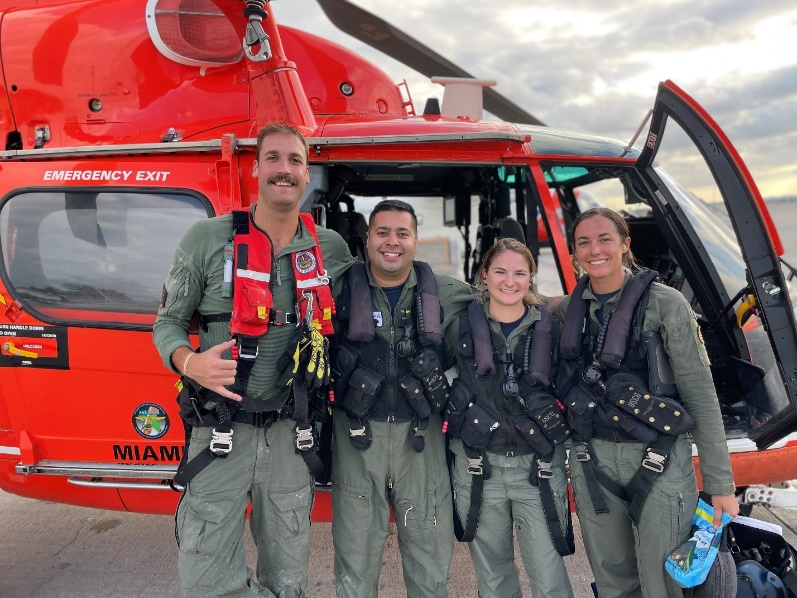
Air Station Miami crew

Air Station Miami crew, from left: Petty Officer 2nd Class Tyler Kilbane, Petty Officer 2nd Class Nick Rodriguez, Lt. Audra Forteza and Lt. Danielle Benedetto. U.S. Coast Guard photo.

Live shots taken by Minotaur-equipped HC-144

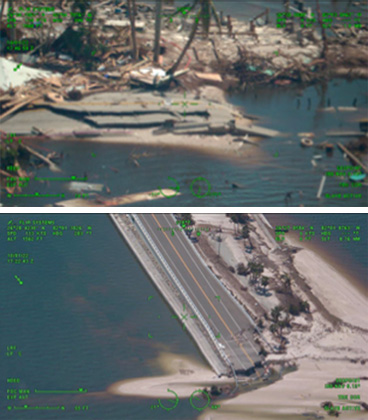
Live shots of Hurricane Ian damage taken by Minotaur-equipped HC-144 aircraft were used to support the Incident Management Team. U.S. Coast Guard photos.

MH-65E transition
The Coast Guard has completed 52 out of 98 total conversions including avionics upgrades to the Echo configuration and Service Life Extension work. Air stations that have completed the transition and number of aircraft:

Houston 3
Miami 5
Port Angeles, WA 3
Barbers Point, HI 4
North Bend, OR 5
Helicopter Interdiction Tactical Squadron 12
Humboldt Bay, CA 3
San Francisco 7

Next up for conversion are Atlantic City, N.J., and Savannah, GA

For more information: MH-65 Short Range Recovery Helicopter Program page and Minotaur Mission System Program page

“Coast Guard delivers ninth Minotaur-missionized HC-144 to fleet” –CG-9

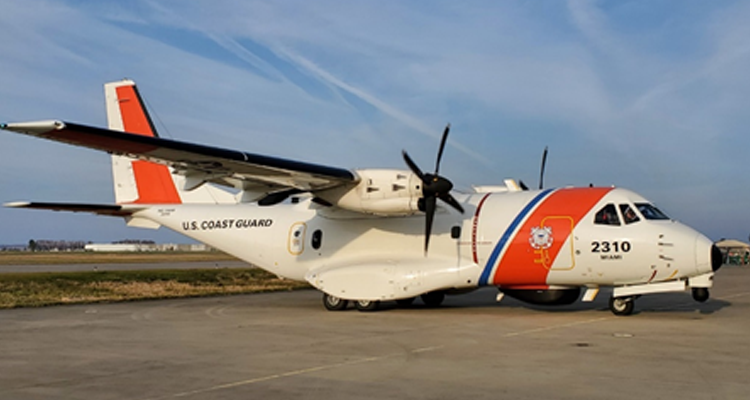
CGNR 2310 departs for its second test flight after completing Minotaur missionization. It is the Coast Guard’s ninth HC-144B Ocean Sentry outfitted with both Ocean Sentry Refresh modifications and the Minotaur mission system. U.S. Coast Guard photo by Aviation Engineering Warrant Officer 3 Randy Jopp.

The Acquisitions Directorate, CG-9 reports,


The Coast Guard accepted delivery of its ninth HC-144B Ocean Sentry medium range surveillance aircraft outfitted with both the Ocean Sentry Refresh (OSR) modifications and the Minotaur mission system Dec. 16, 2020. Modifications to CGNR 2310 were completed at the Aviation Logistics Center in Elizabeth City, North Carolina. The aircraft will be based at Coast Guard Air Station Miami.

The OSR project upgrades the aircraft with a new flight management system, which manages communication control, navigation and equipment monitoring. After the OSR upgrade is completed, each aircraft is redesignated as an HC-144B.

Minotaur integrates installed sensors and radar and provides dramatically improved data fusion as well as information processing and sharing capabilities.

Completion of missionization and upgrade of a 10th HC-144 is scheduled for June 2021. The service plans to upgrade each of the service’s 18 HC-144s by 2024.

For more information: HC-144 program page and Minotaur program page

New Minotaur operator workstations are being installed on all HC-144Bs. Minotaur provides dramatically improved data fusion and integrates installed sensors and radar. U.S. Coast Guard photo by Aviation Engineering Warrant Officer 3 Randy Jopp.

“COAST GUARD  Actions Needed to  Close Stations  Identified as  Overlapping and  Unnecessarily  Duplicative” –GAO

U.S. Coast Guard Station Shark River 28SEP14

The Federal Register /Vol. 85, No. 31/Friday, February 14, 2020/Notices reports that the Coast Guard is considering closing five stations and has asked for public comment. This is in response to GAO report 18-9, Oct. 2017,”COAST GUARD  Actions Needed to  Close Stations  Identified as  Overlapping and  Unnecessarily  Duplicative.”

Stations Oxford, MD; Fishers Island, NY; Shark River, NJ; Roosevelt Inlet, DE; and Salem, NJ have been identified for consolidation with neighboring stations.

“In October of 2017, the Government Accountability Office issued report GAO–18–9, titled ‘‘Actions Needed to Close Stations Identified as Overlapping and Unnecessarily Duplicative.’’ This GAO report recommended the consolidation of eighteen boat stations. Due to environmental and operational factors, the Coast Guard is not considering all eighteen boat stations identified in the GAO report for consolidation. Instead, we anticipate consolidating five stations, with implementation notionally scheduled for fiscal year 2021. These stations have been identified because there are other units nearby capable of responding to cases in these areas, and because these five stations respond to a low number of cases. We do not anticipate any adverse effect on Coast Guard response capability. We expect an improvement to the proficiency of boat operators as well as a less complicated response system. “

It is by no means certain that these five stations will be closed. The GAO report notes that the Coast Guard has a long history of failed attempts to close stations that appeared redundant.

The GAO noted that the Coast Guard has good criteria for determining which SAR boat stations should be closed, but that while it has some data based criteria for Air Stations it was not as rigorous as that for the small boat stations.

Actually looking at Figure 6: “Map of Coast Guard Helicopter Coverage as of August 2017” on page 24 of the GAO report, while there are areas of overlap off Washington State, Florida, Georgia, South Carolina, and Delaware and over Lake Michigan, there are also apparent gaps between LA and San Franciso, at the Florida panhandle, and over Lake Superior.

When the Coast Guard gets its next generation aircraft, including, hopefully, products of the Future Vertical Lift program that is expected to double the range and speed of vertical takeoff aircraft, we are going to need to take a fresh look at the number and  location of Coast Guard Air Stations.

Credit BryMarConsulting for bringing this to my attention.