“Sea Machines and USCG partner on computer vision domain awareness” –Marine Link

Photo from Sea Machines website, https://sea-machines.com/ai-ris/

Marine Link reports that a 270 foot WMEC has been fitted with an artificial intelligence recognition and identification system (AI-ris) computer vision product by Sea Machines.

AI-ris uses artificial intelligence to identify and track visual targets of interest. Installation on the cutter was made possible under an ongoing Cooperative Research and Development Agreement (CRADA) between Sea Machines Robotics and the USCG Research and Development Center in an effort to evaluate how computer vision systems can be utilized for autonomous navigation, collision avoidance, and target detection. The deployment of AI-ris provides the USCG a new tool for maritime domain awareness and allows Sea Machines to refine its computer vision technology with feedback from the USCG across a range of environmental conditions and operational scenarios.”

No idea why the report did not name the cutter that got the system. Even the photo that accompanied the report has no hull number.

Sea Machines and the Coast Guard Research and Development Center (RDC) do have some history, having used their SM300 Autonomous Command & Control system.

Norweigen Frigate Collides with Tanker, Runs Aground to Avoid Sinking in Deeper Water, Again No AIS

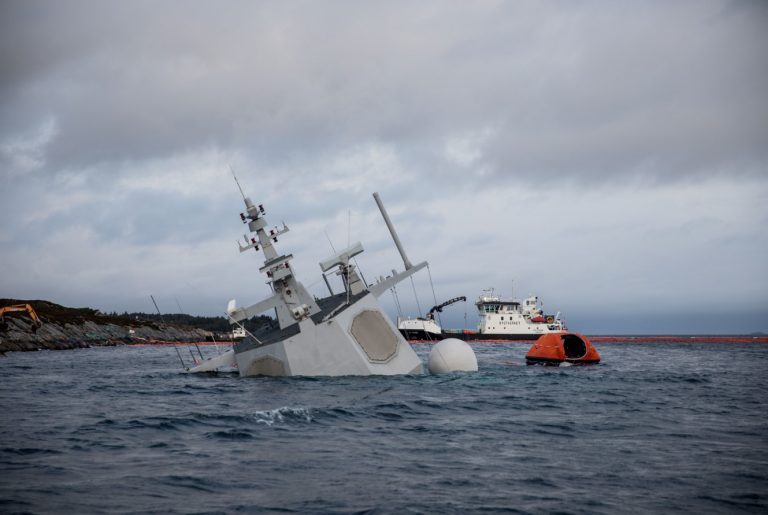
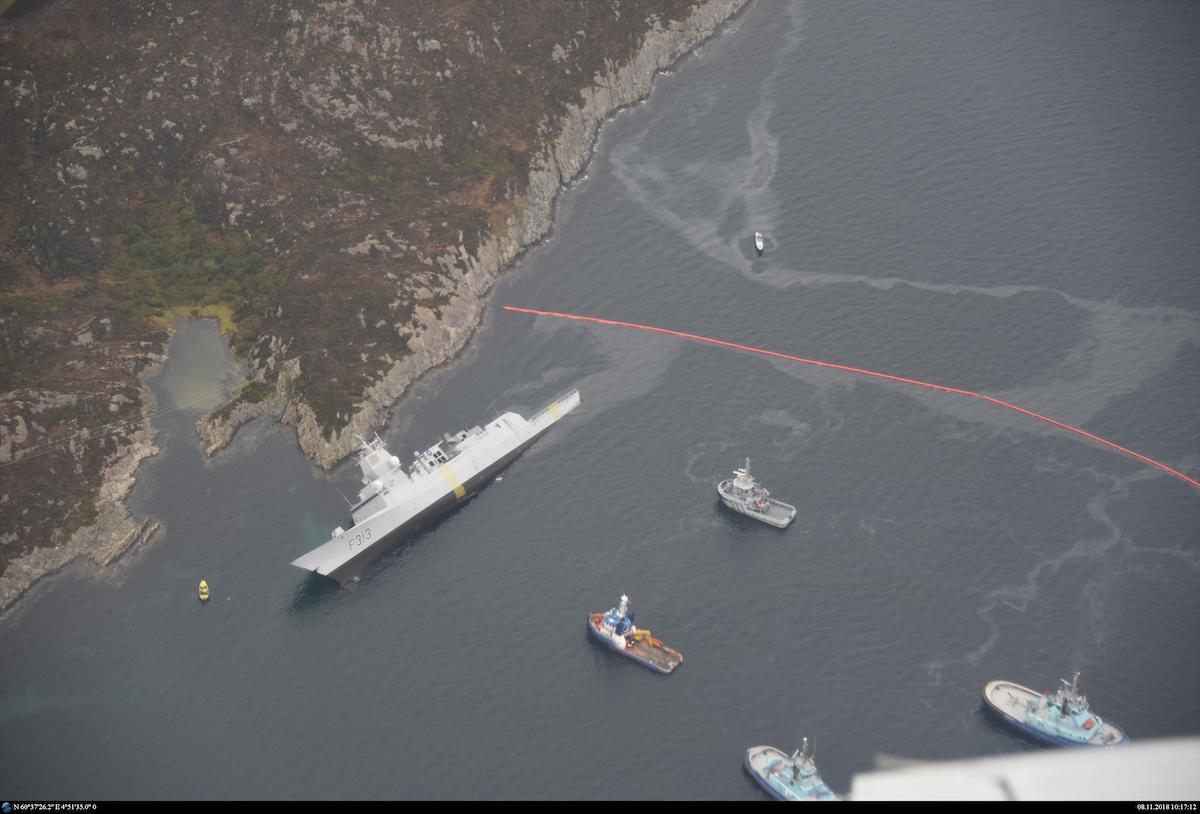
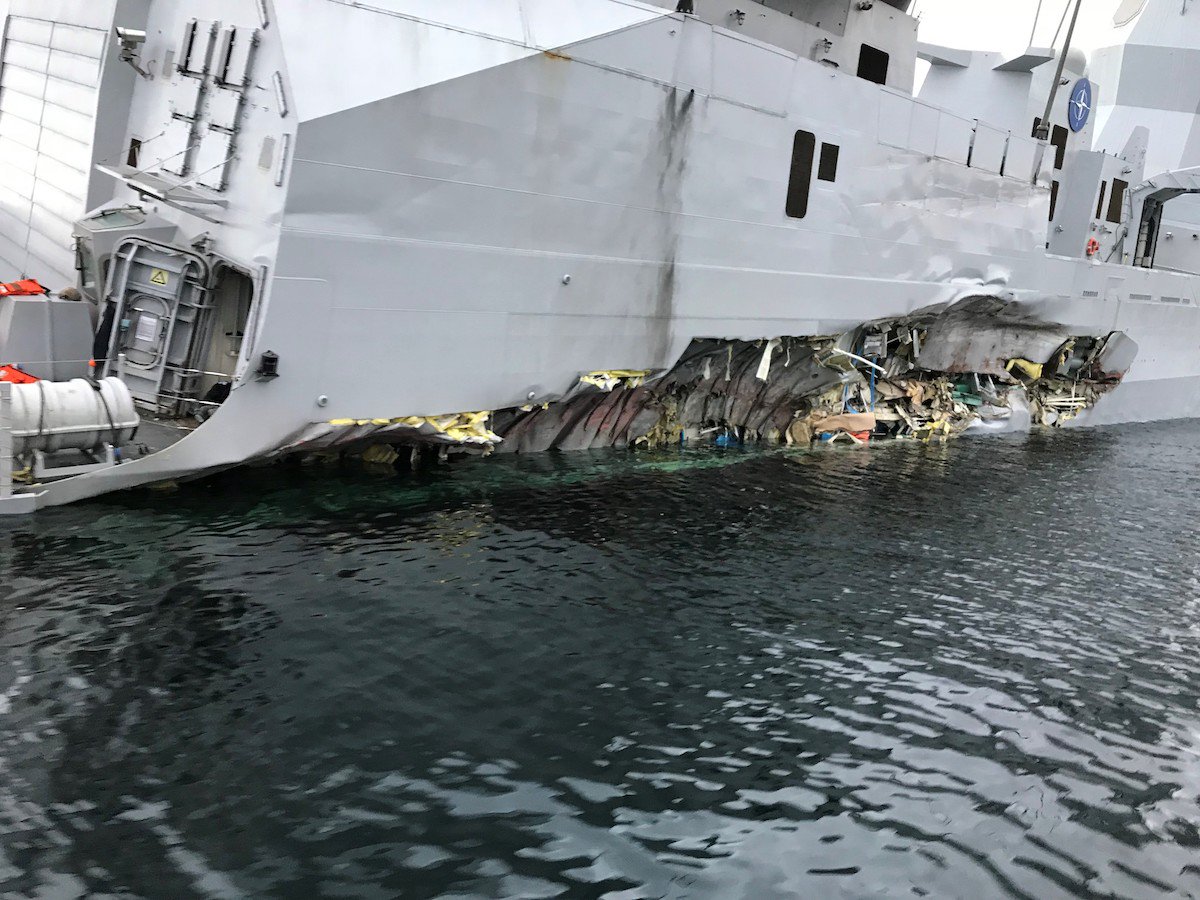
Wrecked Norwegian navy frigate “KNM Helge Ingstad” is seen in this Norwegian Coastal Administration handout picture in Oygarden, Norway, November 13, 2018. Jakob Ostheim/Norwegian Coastal Administration/Handout vis REUTERS

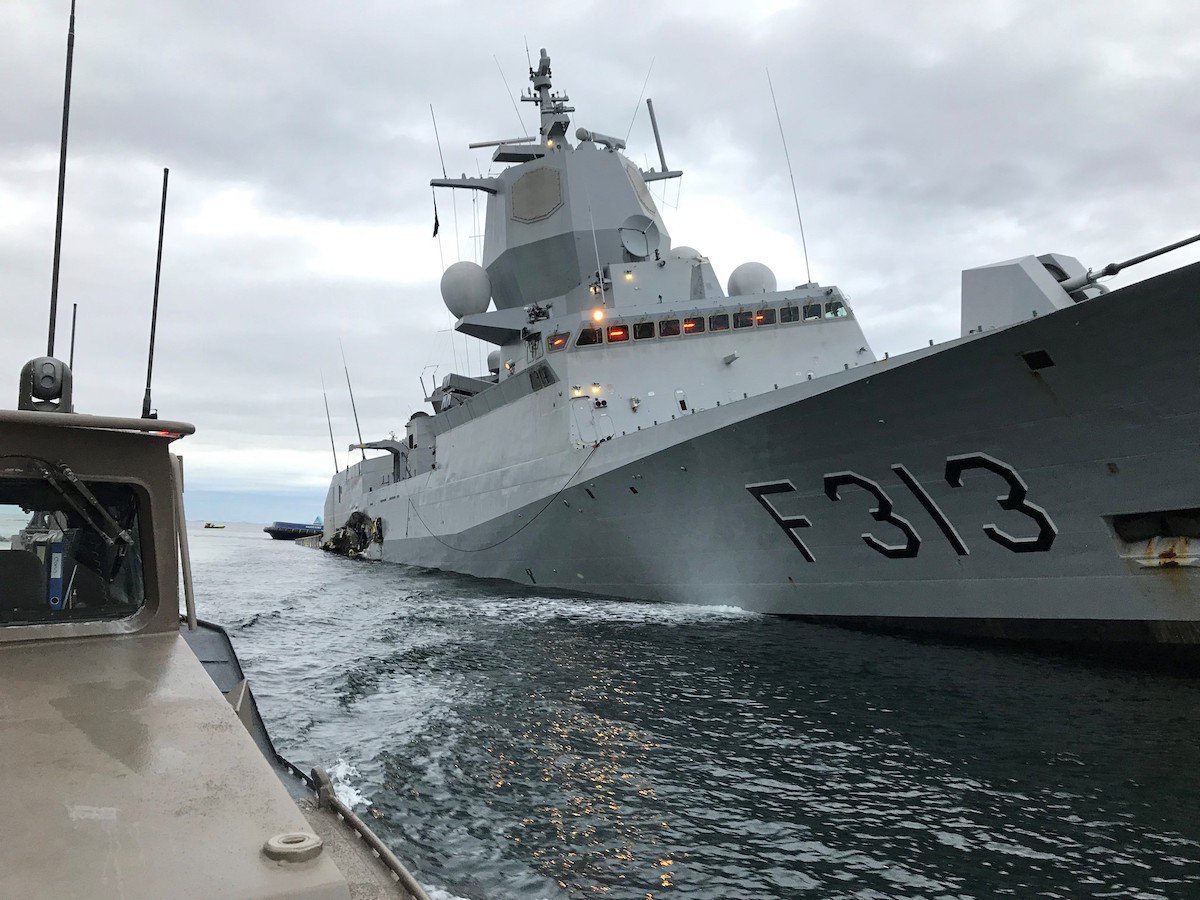
As you probably know by now, a Norwegian frigate was involved in a collision with a much bigger tanker. The Captain chose to run the frigate aground in hopes of preventing it from sinking. Fortunately only eight people were injured and remarkably there were not deaths.
The frigate Helge Ingstad was inbound at 17 knots and  the tanker Solas had gotten underway shortly before and was outbound at 7 knots.
The frigate is a bit smaller than the US Navy destroyers Fitzgerald and John S. McCain, damaged in collisions in 2017, but there was a similarity to these earlier collisions. None of the three ships had its Automatic Identification System (AIS) activated.
As reported by Defense News, in this case, failure to energize the AIS “…seems to have delayed recognition by central control (Vessel Traffic System–Chuck) and the other ships in the area that Ingstad was inbound and heading into danger…”
OK, I can understand turning off your AIS when in open sea, in an attempt to provide a degree of operational security, but if you are in congested waters there is no point. In fact you could use a bogus AIS or some kind of generic AIS, but if you are going to moor within hours in a city or if you have just gotten underway, it buys you nothing.
Turning on the AIS ought to be on every Special Sea Detail checklist. 
Photo: Royal Norwegian Navy

More here, here, here. and here.

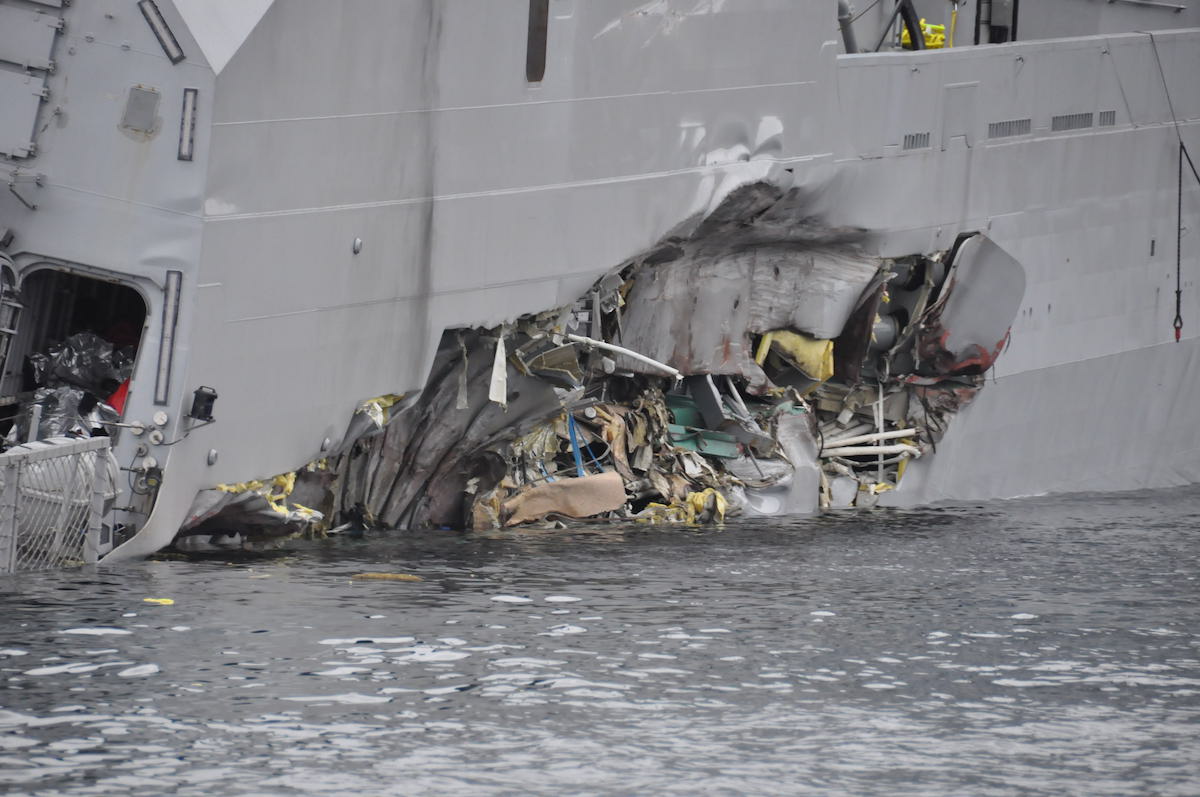
Below: Photos of the damage to the KNM Helge Ingstad after its collision with a tanker in a Norwegian fjord. Credit: @Forsvaret_no


Video–Collision of US Guided Missile Destroyer JOHN MCCAIN and Tanker ALNIC MC in Singapore Waters–gCaptain

gCaptain has provided a video screen grab showing AIS (Automatic Identification System) tracks in the Singapore Strait including that of the oil tanker Alnic MC for the time of Monday’s collision with the U.S. guided-missile destroyer USS John S. McCain which apparently occurs about 50 seconds in, you may want to go to full screen.

Note there was no AIS track for the McCain, just as there was no AIS track for USS Fitzgerald at the time of her collision two months earlier.

I appreciate the need for security, but perhaps in highly congested areas in peacetime, it would  be advisable to turn on AIS.