Offshore and Aviation Fleet Mix Study Published

The Coast Guard has made public the Executive Summary of its Offshore and Aviation Fleet Mix Study. “FierceHomelandSecurity” has published a short summary of the content.

They also provided a direct link to the “Executive Summary” (a 24 page pdf). It is heavy with acronyms, and there is no list of acronyms attached to the Executive Summary, although there is probably one in the full study. I’ve attached a list of those I found, at the end of the post for those who might want a little help going through the summary.

“This initial phase of the FMA (Fleet Mix Analysis-ed.) is intended to address offshore surface and aviation capabilities. Follow-on FMA phases will assess capabilities needed for coastal and inland missions as well as emerging missions, such as Arctic operations and those of the Deployable Operations Group (DOG).

“ES.5.1  SCOPE:

“The FMA explored the projected Fleet mix requirements to meet the CG’s 11 statutory missions in FY2025. Mission requirements were based on nine Mission Performance Plans (MPPs) and an assessment of critical activities, such as training and support, which consume asset mission availability.

“The FMA included all CG aviation (fixed- and rotary-wing), all white-hull cutters (FRC up to NSC), and all applicable C4ISR systems.

“The FMA focused on activities in the offshore and aviation operating environment. Offshore and aviation are defined in the FMA as being generally 50+ nautical miles offshore and/or requiring extended presence. The FMA also considered missions within 50 nautical miles that consume air asset availability.

“The FMA used the 2007 CG Fleet, as defined in the 2007 Modeled CONOPS (Concept of Operations-ed.) and the “Deepwater” POR (Program of Record-ed.) as Baselines for comparative performance and cost analysis.

“ES.5.2  ASSUMPTIONS

“Preliminary Operational Requirements Document (P-ORD) thresholds were used for the OPC (Offshore Patrol Cutter-Chuck).

“The OPC and NSC will operate 230 days away from homeport (DAFHP). No specific crewing method is assumed (i.e., crew rotation concept [CRC]).

“The HC-144A will operate at 800 programmed flight hours (PFH) per year. (This is a reduction from previous assumption–Chuck)

“U.S. Navy out-of-hemisphere (OOH) (2.0 OPC/NSC) and Joint Interagency Task Force South (JIATF-S) (7.0 OPC/NSC) support was consistent with the FY2010 demand.

“Additional acquisition/next generation platforms have the same capabilities and cost as the FMA Baseline Fleet mix cutters and aircraft (e.g., the next-generation short range recovery (SRR) helicopter is an MH-65C).

“ES.5.3  CONSTRAINTS:

“The High Latitude regions of the ice shelf and Deployable Operations Group (DOG) mission requirements were not considered.

“No specific MDA performance measures have been established to model.

“87-ft coastal patrol boat (CPB), 225-ft seagoing buoy tender (WLB), Department of Defense (DoD)/Department of Homeland Security (DHS), and foreign asset contributions were considered, but force level requirements for 87-ft CPB, 225-ft WLB, DoD/DHS and foreign assets were not assessed.

“Additional shore facilities (e.g., schools, berthing, simulators/training aids, etc.) beyond those directly associated with platforms (e.g., piers, hangars, etc.) are not included in costs.

“”The need for non-operational/shore billet increases commensurate with the projected increases in operational manning was not assessed and is not included in costs.

“All cost estimates are rough order of magnitude (ROM) and are not budget quality.

“Additional specific assumptions utilized for modeling, simulation, and costing are included in their respective chapters of the final report.

“ES.3  Methodology:

“The Fleet Capacity Analysis (FCA) combined information developed in the mission validation phase, the capability definition phase, and a Warfare Analysis Laboratory Exercise (WALEX) to produce an objective Fleet mix and incremental Fleet mix alternatives. To develop the objective Fleet mix, the FMA used three independent teams with unique force projection tools or methodologies – the Database Enhanced Center for Naval Analysis (CNA) IDS Asset Assessment Tool (CIAAT) Model (DECMv2), the Mission Effectiveness Asset Needs Model (MEAN), and a qualitative analysis by a panel of CG SMEs – to develop a force structure that was aligned with MPP capability and capacity targets. Each team applied their methodology using a common set of asset characteristics and mission demands to develop a zero-based force mix (capable of meeting all mission requirements) projection. The results from these independent projections were considered as three “lines of position” (LOPs) and were consolidated to form a conceptual “fix.””

Seven Alternative Fleets:

The Study looks at seven levels of effort: Continue reading
Maritime Domain Awareness, for Us and for Them, by Google

The US Naval Institute and AFSEA have been sponsoring a “Joint Warfighting Conference.” Many of the presentations are available on line and the quality has been excellent. One of the most intriguing presentations was made by Michael Jones, Chief Technology Advocate at Google Ventures.

Using only two people and $3M, Google has begun tracking almost all the vessel traffic on the world’s oceans and they expect to start making this information available to the public. They exploit the the Marine Automatic Identification System (AIS).

There is discussion about this particular presentation here (the video is also linked there) including some discussion of the limits on the technology. If you don’t want to watch the whole presentation, the portion I refer to is from minute 23:30 to minute 31:00. AOL Defense also has a “CliffsNotes” version of the presentation here. Jones claims to have tracked military vessels (along with all other users of AIS) better than some of their commanders can, including track history, course, and speed.

It will probably take a while to sort out all the implications of this technology. It could certainly be useful for SAR, MEP, and fisheries protection. But it also means that the bad guys will have this information as well. Pirates will have better information for selecting and intercepting their targets. Unless Google deletes the information, or cutters turn off AIS, Coast Guard vessel movements will be visible to anyone with the desire to track them. Drug smugglers will know when interdiction vessels are in the area and how many there are. Vessels fishing illegally will have an easier time evading enforcement.

The Navy’s New Patrol Boat

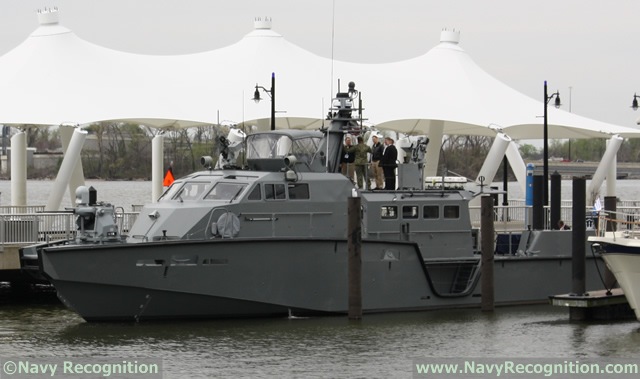
US_Navy_MK_VI_Patrol_Boat_Sea_Air_Space_2015_1

The Navy has placed orders for five Patrol Boats of a new type, with up to 48 planned. Announcements here and here. At 85 ft long, it is a size the Coast Guard is familiar with, and it is made by Safe Boats International LLC, a company the Coast Guard contracted to build its own Response Boat-Small, Special Purpose Craft-Law Enforcement (SPC-LE), and Special Purpose Craft-Near Shore Life Boat (SPC-NLB). In fact the new patrol boat is a development of the same family as the Special Purpose Craft-Near Shore Life Boat (SPC-NLB) which suggest it may even be self-righting.

Step-down cut-outs on the hull, similar to those on 47 foot motor lifeboats, are visible in the illustration, making it easier to board smaller vessels or pull people from the water. Sprint speed is up to 41 knots with 35 sustained. Accommodations appear crowded and relatively austere compared to Coast Guard patrol boats.

Interestingly the boats are being bought through GSA. At approximately $6M the price is not bad.

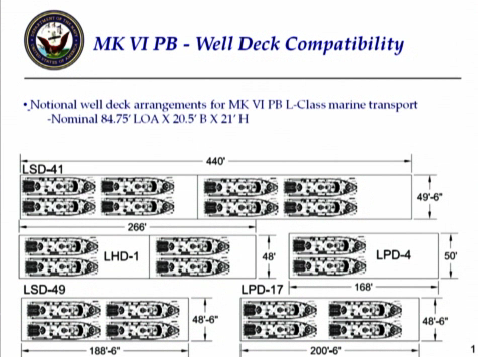
The Center for International Maritime Security has some interesting discussion about how they might be used. Below is an illustration from that post, originally provided by Navy Undersecretary Bob Work at a CATO Institute event,  showing how the boats might be transported in the well decks of various classes of amphibious warfare ships.

By Kurt Albaugh | Published May 22, 2012

Mk VI Well Deck

Lee Wahler, who writes for www.warboats.org and is a frequent contributor here, believes the boat grew out of this Request For Information, from 12 Nov 09. (Thanks Lee) This may provide some additional insight into the rationale behind the design:

Description

This synopsis is issued in anticipation of a potential future procurement program. The Naval Sea Systems Command is conducting market research to determine the existence of a Force Protection – Coastal Craft type boat possessing the characteristics below. GENERAL MISSION: The Force Protection – Coastal (FP-C) Craft requires a tactically sized, highly reliable, combatant craft capable of operating from land or maritime platforms. The mission of FP-C will be to provide a capability to persistently patrol shallow littoral areas beyond sheltered harbors and bays, and into less sheltered open water out to the Departure Sea Area (DSA) for the purpose of force protection of friendly and coalition forces and critical infrastructure. Mission profiles include patrol of Maritime Pre-Positioning Forces (MPF) and Joint Logistics Over The Shore (JLOTS) anchorage and marshaling areas, High-Value Asset (HVA) shipping escort, and tactical surface mobility for Visit, Board, Search, and Seizure (VBSS) operations, Critical Infrastructure Protection (CIP), Maritime Interdiction Operations (MIO) overwatch, Theater Security Cooperation (TSC), and Security Force Assistance (SFA). CRAFT REQUIREMENTS: General Note: All requirements (unless designated “desired”) are the minimum acceptable operational value. Desired requirements are capabilities that would optimize craft performance and are beyond which any gain in utility does not warrant additional expenditure. Craft employment will be Day / Night, in all weather with a minimum of 24 hour endurance with a given notional mission profile. Craft will conduct sustained continuous operations in 10 feet (Very Shallow Water (VSW) curve) depths and greater at all craft speeds. Craft to be fully capable conducting mission in NATO Sea State 3. Craft will operate versus a level II threat, including: small tactical, waterborne units, and unconventional warfare units armed with small arms, rocket propelled grenades, and machineguns, improvised explosive devices and mines. Craft will operate from a sea or expeditionary shore base, or dock ship. Mission Capabilities: Vessel Operations: with self-fendering the craft is to be capable of conducting boarding operations on vessels up to 50 tons and shoulder 25 ton vessels without incurring significant damage to the fender or the craft. Consideration should be given to boarding craft of various freeboard heights. Crew and Compliment: Two crews (on watch and off watch) of 4-5 each plus one (1) eight (8) person VBSS boarding Team – total of 16-18 people. Crews consists of: 1 Patrol Leader, 2 Coxswains, 2 Engineers, 2 weapon console operators, and 2 gunners. Weight allowances are 285 lbs/person plus 650 lbs total for additional allowance/cargo items. Messing: storage and weight allocation appropriate for two meals ready to eat (MREs) per person. Craft equipped with marine sanitation capability and potable drinking water appropriate for 24 hour mission profile. Human Factors Embark/Disembark: Embarking and disembarking of the boarding team to vessels of interest; protection of boarding team with secure seating at cruising speeds. Human Factors Habitability: Enclosed cabin with seating for 12-13 persons; Environmentally controlled (HVAC) cabin and accommodation space; Crew rest accommodations (safe for cruising speeds) for the off watch crew (4-5 persons); Sanitary head facilities with privacy; shock mitigating seating for 2 crews; Desired shock mitigating seating for VBSS Team. Secondary Capabilities: Unmanned Vehicle Interoperability: Desired – craft shall provide the capability to launch, recover, maintain, and operate various small un-manned vehicles including air, surface, and undersea. Person in the Water Recovery (PIW): Features allow the crew to retrieve a person or object with no more than two crewmembers required for the retrieval operation. One crewmember should be able to safely secure the PIW alongside the boat. The vessel shall provide for unassisted self-recovery of able-bodied crewmembers from the water. Jason’s Cradle type arrangements are to be considered. Helicopter Medical Response: Fully capable of conducting hoisting and personnel transfer operations by basket or Stokes Litter from an open space that has few obstructions and is clear of masts and antenna. Antenna used to communicate with the helicopter must not be impacted. Multi-Mission Reconfigurable Areas: Payload Space: Accommodation and/or cabin area provided for the transport of passengers, MEDVAC, unmanned vehicle command and control, detainees and berthing. Payload area provided for re-supply and logistics missions. Payload Weight: Desired payload weight capability (inclusive of the embarked VBSS team) of 7,000 lbs. (See weight definitions in the technical matrix attached) Operating Environment: Operational Water Depth: Sustained continuous operations in 10 feet (VSW curve) and greater water depths at all craft and engine speeds. Navigable Draft: 6 foot draft at full load; desired 4 foot draft at full load. Sea State Operating Environment: Fully capable of transiting and conducting mission operations in seas up to 8 feet (significant wave height 1/3) combined with 20 knot winds, ), Desire to Survive in 12 foot seas (limited to best course and speed). Operate NATO Sea State 2/Survive NATO Sea State 3, Desire to Operate NATO Sea State 3/Survive NATO Sea State 4. Water Temperatures: Desired full operations of craft and equipment in water temperatures of 28 to 95 deg. F. Air Temperatures: Desired full operations of craft and equipment in air temperatures of -20 to 125 deg. F (lower temps. for storage). Performance: Speed: Have a 25 knots cruise and top speed of 35 knots at full load (see definition in the technical matrix attached) in significant wave heights of 3 feet; Desired 40 knot top speed in the same conditions. Towing: Effectively tow another similar sized craft and be able to be towed, in the operational conditions described above. (Line tow from stern is the only acceptable tow method in a seaway, vice a calm water slow speed side tow). Turning: At cruise speed craft must be able to turn 180 Deg. Craft must be stable in high speed turns, as well as other maneuvers including all stops; Desired to turn 180 Deg. in less than 6 boat lengths at the cruise speed. Range: 24 hour, un-refueled operating endurance, a minimum range of 510 nautical miles (NM) at a profile of 35% max fuel efficiency hull speed, 50% patrol/cruise speeds (25 kts) and 15% Maximum speed (35+ kts.) in 3 ft significant wave height. Range to be calculated starting mission at full load with 10% reserve; Desired range of 600 NM. A transit fuel tank may be used to achieve the objective 600+ NM objective range at the same operational profile. Operational Usage: Desired operational objective of 2000 hours without any critical failures. Transportability: Maritime: Capable of being transported and logistical launch and recovery via a well deck, crane or deck cargo transport aboard USN and/or MSC/common US/coalition commercial ships. (Consideration of tie downs and amphibious operations kick stand). Hoisting: Lifting eyes for single point lift to allow launch/recovery or loading/unloading with at sea and/or shore side cranes as required in transport above. (Individual leg soft slings, and man portable hardware is preferred). Terrestrial: Desired improved road / highway transport objective for Medium Tactical Vehicle Replacement (MTVR) tractor variant prime mover with an organic trailer with special permit and wide load transport restrictions. Not to be considered a constraining requirement. Air: Desired internal air in C-17 and/or C-5 transport on a trailer. The prime mover does not need to travel in the same aircraft. Not to be considered a constraining requirement. Survivability: Stability: Basic USN small craft stability criteria and single compartment damage stability. Ballistic Protection: Personnel protection is to be provided against NIJ level III type threats (Full 360 degree, modular protection for interior manned stations (i.e. the main cabin) secondarily berthing sleep areas and then passenger payload areas if separate). Desire for additional modular, up armor packages/kits coverage to protect the exterior gunners up to their midriff when standing at their weapons. These may be separate “tub” or combined protective systems. Desired mobility protection (propulsion system, propulsion support systems and control components). Desired passive RPG/IED threat protection or active protection. Weapons: Crew Served: 360 degrees of coverage with two or more Heavy Machine Gun capable foundations, to mount MK 16 Mod 8 or Mod 9 weapons stands. Remote Stabilized: Craft must accommodate a stabilized weapon forward and/or aft. Weapon System Power: Craft must provide power provisions for GAU-17 weapon at each manned and un-manned location, and power for the remote weapon system for each un-manned location. Non-Lethal: Power and foundation for Long Range Acoustic Hailing Device. Precision Engagement: Desired capability of integrating future small missile systems. Features of Construction: Boarding/disembarking persons and cargo: Provide feature(s) for pier/ platform/ seabase boarding/disembarking of persons or cargo. Feature(s) to be deployed/stowed manually by one (1) (preferably) to two (2) sailors. Feature may be easily removable or hard mounted. Arch/Mast/Cabin-Top: Craft and appendages sized for proper placement of all required components (i.e. radar, antennas, sensors, optics). If any appendage is to be stowed for normal transport or underway low obstruction avoidance, amphibious docking, it must be safely handled and easy to raise and secure and lower and secure by 1-2 men in the specified operational environment. Propulsion: Propulsion Plant : Multiple inboard diesel engines. Full instrumentation package (analog style gauges) run from engines or engine computer controller. Fuel: Desired capability of using JP-5 and JP-8 fuels (JP fuels in this case require ignition protected components throughout machinery space.) Maintenance: Desired that mechanical layout must maximize maintenance access while keeping with placement for survivability. Operation: Machinery and equipment must operate, and manned spaces comfort level maintained at all speeds and all engine RPMs at the craft’s minimum operable draft at minimum and maximum water and air temperature ranges defined herein. Electrical: System: 24V ungrounded & 12V system via a converter; dual battery bank maintenance free; battery switch(s); circuit panel breaker style, double pole protection for each circuit; reserve battery capacity for extended loiter operations. Shore and Auxiliary Power: Equipped with standard commercial shore power connection(s). If required by projected load, 220v AC 3 phase / 110v AC single phase electrical generation capability appropriate to electronics and combat systems suite. Lighting: All mission essential light sources (interior and exterior), including lighted controls and displays to be Night Vision Imaging System (NVIS) compatible. Non-mission essential light sources to be securable at one place. Also Interior/exterior Deck lighting for nighttime illumination; Desired NVIS compatible deck lighting. Communications: Hardware: In general to include antennas, mounts, speakers and handsets; a VHF Marine Band radio; Loud Hailer; Tactical VHF; Tactical HF; Tactical UHF; Tactical SATCOM; Blue Force Tracker and/or Automated Identification System (AIS); Intercom (6 stations min); File transfer over tactical radios. Desired Boat to Boat Line-of-Sight (LOS) and Boat to Tactical Operations Center (TOC) Secure Data Link; Desired Unmanned Vehicle Command and Control. Navigation: Nav. Hardware: Integrated marine radar; depth sounder; electronic chart plotter; and back-up position data provided by a commercial GPS receiver. Magnetic compass; military GPS; adjustable IR strobe/follow me light. Nav. Software; Desired open architecture, nonproprietary software, classified chart capable with engine and critical systems alarms and monitoring, radio/comm’s control. (May include other aux systems control and monitoring i.e. power systems, batteries, HVAC, lighting.) Nav. Lights: Standard COLREGS Nav. lights and dual station Remote control spotlight for nighttime illumination; Desired IR Spot Light fixture or lens. Surveillance: Sensors: Desired EO/IR Device. It is anticipated that one boat will be procured in fiscal year 2010. Additional boats may be procured based on availability of funding. The quantity of boats is subject to change. Prospective firms are encouraged to submit a capability summary that does not exceed fifty (50) pages in length describing their boat and firm’s recent relevant business experience and their approach in meeting the requirements stated above. Responses should include: (a) The name and address of the contractor and where such boats would be built; (b) Point of contact including name, title, phone, and email addresses. (c) A description of proposed craft and information on how the craft meets the specified capabilities. Describe craft currently offered by the Contractor that meet, or with minor modifications might meet, the above listed requirements. All offered craft characteristics should be identified for chart comparison to the requirements listed above. If above requirements cannot be met, identify what is achievable with minor modifications; when addressing the ability to meet specific craft performance requirements please substantiate claims with data or demonstrated satisfactory performance of equivalent craft. Include available concept or detailed level profile and/or arrangement drawings. (d) To better assess and compare the offered craft data, please fill out the attached FP-C RFI Response Matrix in Microsoft Excel. (e) Identify similar craft on GSA Schedule and/or plan and schedule to get qualifying craft on GSA Schedule. (f) If any specific requirements indicate a degree of risk, please address the constraints and what mitigating design/engineering action would be pursued. (g) Estimated unit price. (h) A notional schedule for construction. (i) Whether the business is currently classified as a Large, Small, Small Disadvantaged, 8(a) and/or Woman Owned company, Hub Zone small business, Veteran Owned Small Business, or Service Disabled Veteran Owned Small Business. Offerors can offer optional craft demonstrations to demonstrate craft performance. If responders desire to provide a craft demonstration, so indicate in the RFI response including name, phone, and email address of your coordinating/scheduling point of contact. Demonstrations would last no more than one day and would be conducted at no cost to the Government. RESPONSES: Responses shall include a completed Requirements Matrix, in Microsoft Excel format, along with a separate document addressing the information requested outside of the Requirements Matrix. Email responses or inquiries should be sent to Ms. Christina Trasferini at Christina.trasferini@navy.mil and LT Scott Duncan wallace.duncan@navy.mil. To help ensure proper receipt, name the email “Force Protection – Coastal Boat Response” in the subject field. Information may also be sent hard copy with a CD attachment of the Requirements Matrix in Microsoft Excel format to the following address: Commander, Naval Sea Systems Command, Attention: Christina Trasferini, SEA 02222, 1333 Isaac Hull Avenue SE Stop 2020, Washington Navy Yard, DC 20376. No telephone inquiries will be accepted and requests for solicitation packages will not be honored, as a solicitation has not been prepared at this time. WHEN TO SUBMIT: All responses are requested by 12 November 2009. NOTICES REGARDING SOLICITATION: Please note that this synopsis is for information purposes and to identify potential sources. This notice does not constitute a Request for Proposal and is not to be construed as a commitment by the Government. NOTICE REGARDING PROPRIETARY INFORMATION: All submitted materials will be designated for Government Use Only. No reimbursement will be made for any costs associated with providing information in response to this announcement and any follow up information requests. Future information, if any, will be posted at the websites for FBO and NECO, the same sites where this announcement has been posted.

Yemen CG, Advisers Ambushed

An interesting article here, about problems facing the Yemen Coast Guard. It also talks about an ambush of four US advisers to the Yemen Coast Guard that left three wounded, one seriously. The advisers, and the agency they are employed by, are not identified.

The US Coast Guard has sold at least two 87 patrol boats to Yemen. This area is going to be a long term problem, and if the Coast Guard is not already helping, we can expect they will in the future. There is a Marine view of the situation in Yemen here.

Who is the New Namesake for the former USCGC Dallas

On May 22, the former USCGC Dallas was handed over to the Armed Forces of the Philippines. Rear Admiral John Korn, Assistant Commandant for Acquisitions, passed the long glass to Philippine Navy Captain Ernesto Baldovino. The ship entered Philippine service and was given a new name, BRP Ramon Alcaraz (PF-16). (Video here)

It is a proud name. Information about Ramon Alcaraz, from the Philippine Department of National Defense below:

Philippine Defense Newsletter: Who is Commodore Ramon Alcaraz?

by Department of National Defense – Philippines on Wednesday, May 23, 2012 at 8:49pm.

DND-OPA | Camp Gen. Emilio Aguinaldo | 22 May 2012 – On May 6, 2012, H.E. Benigno S. Aquino, III announced during the commemorative ceremonies of the surrender of Corregidor during World War II that the second Weather High Endurance Cutter (WHEC) to join the Philippine Fleet will be named after Navy hero, the late Commodore Ramon A. Alcaraz.

Noon of May 22, during the 114th anniversary of the Philippine Navy Fleet, Philippine Ambassador to the United States, Hon. Jose L. Cuisia with AFP Chief of Staff General Jesse D. Dellosa and PN Fleet Commander Rear Admiral Jose Luis Alano was at the Charleston yard of the United States Coast Guard to formally receive the retired USCG Dallas….

(This part of the article appears on the May 2012 issue of the Philippine Defense Newsletter)

Ramon A. Alacaraz or “Monching”  to friends was born on August 31, 1915 in Plaridel, Bulacan, He entered the cadetship at the Philippine Military Academy on June 15, 1936 and received his commission as a 3rd Lieutenant on March 15, 1940. Ka Monching was one of the 79 new officers from the PMA. A year and half after the PMA, he would be integrated into the US Army Forces Far East (USAFFE) and assigned to the newly created Off Shore Patrol (OSP) of the Philippine Army.

Then Commonwealth President Manuel L. Quezon contracted the acquisition 36 units of fast motor torpedo boats of British design as part of the off shore defense of the Philippines amidst the growing fears over an expansionist imperial Japan. The OSP was formally organized on February 9, 1939 with headquarters at the Muelle del Codo at the Port Area in Manila under the command of 1st Lieutenant Jose V. Andrada.

The OSP, the forerunner of the Philippine Navy was assigned with three units of US Navy motor torpedo boats or Q-Boats (Quezon-boats); Q-111 “Luzon,” Q-113 “Agusan” and Q-112 “Abra” which was captained by Alcaraz.

Upon the outbreak of the war, as commander of the Q-112 Abra, then boat Captain Alcaraz shot down three Japanese dive bombers zigzagging at the straight between Bataan and Corregidor island. Alcaraz and the Abra crew’s initiative stopped the Japanese from completing their objectives. Gen. Douglas McArthur promoted on the spot Alcaraz on January 1942 at Corregidor for heroism and gallantry in action.

Alcaraz would later get captured by the Japanese and imprisoned at the Malolos, Bulacan Prisoner of War camp. Ka Monching was released by the Japanese on August 10, 1942 after undergoing months of intensive “rejuvenation program.” He was paroled and instructed to be re-trained at the Torres High School in Gagalangin, Tondo to join the Bureau of Constabulary.

Graduating in September 1942 as a commissioned police officer, Alcaraz was told that his first assignment was Lanao del Norte. He faked a malaria illness resulting to his confinement at San Lazaro. Ka Monching missed the boat to Mindanao and was later re-assigned to Bayombong, Nueva Vizcaya.

In the mountains of the Sierra Madre, he would clandestinely meet with guerrilla leaders under the command of Lt. Col. Manuel Enriquez. Though a middle ranking officer of the police reporting directly to high ranking officials of the Japanese kempetai, Alcaraz was clandestinely forming his network of informants against the occupying forces.

All throughout the occupation period, Ka Monching gave the Japanese forces a false sense of security, gathering information and informing USAFFE Headquarters in exile up to the right time to fight came to light in the liberation of the Philippines in 1944.

Alcaraz would continue to serve the defense establishment even after the war and upon instructions of then Defense Secretary Ramon F. Magsaysay, Commodore Alcaraz was instructed to study the organization of the United States Marine Corps.

He would later use this learning experience to designate Philippine Navy personnel to form the First Marine Company under the command of his Q-Boat Executive Officer, Lt. Cdr. Manuel Gomez. The company would be based at the Marine Station at Port Area, Manila and eventually grow, becoming the present day Philippine Marine Corps.

The Commodore last served as head of the Naval Operating Forces until his retirement on January 22, 1966. Alcaraz received multiple decorations in the course of his service in the Armed Forces. Among the awards and decorations include a Gold Cross, the U.S. Silver Star, Philippine and American Defense Medals, World War II Victory medal, Philippine Independence medal and others.

He left for the U.S. when Martial Law was declared to continue with the fight for the rights and benefits of Filipino veteran soldiers who fought alongside U.S. forces in World War II.

Ka Monching’s last battle was the passage of the Filipino Veterans Equity Bill, which finally became law as the American Recovery and Reinvestment Act of 2009 on February 17, 2009. The act appropriated a total of US$198 million authorizing the U.S. Department of Veterans Affairs to release a one-time, lump-sum payment to eligible World War II (WWII) Philippine veterans

On June 25, 2009, Ka Monching peacefully passed away at the age of 94 at his home in Orange County in California. ***

Cutter Class Names and Descriptors

On an earlier post, a conversation developed over how we refer to the various Coast Guard vessel classes. I had called the 154 foot WPC, Fast Response Cutters (FRC), of the Sentinel Class, the Webber Class. It went like this:

—————————————————————————————————————————

Jimmy, “If you’re shooting for an A+ in accuracy, it’s the Sentinel class, not the Webber class.”

Chuck Hill, “Let’s just say I like Webber better, and it fits the international norms of usage.”

EBurley, “That being said, the Coast Guard has, at least, a decent tradition of naming cutter classes after something over than the first ship in the class – the WEBBER is just the most recent example:
418′ WMSL: Legend class (lead ship: USCGC BERTHOLF)
378′ WHEC: Secretary/Hero class (lead ship: USCGC HAMILTON)
270′ WMEC: Famous (cutter–ed.) class (lead ship: USCGC BEAR)
110′ WPB: Island class (lead ship: USCGC FARALLON)
87′ WPB: Marine Protector class (lead ship: USCGC BARRACUDA)
“Other examples include the Cape and Point classes of patrol boats, the Bay class ice breaking tugs, the Polar class icebreakers, Keeper class coastal buoy tenders, and the Treasury/Secretary class cutters (327′).
Desk riding cutterman, “I’ve heard the WHEC’s called the HAMILTON class a few times, the 210′s called the RELIANCE class, and the Navy kept trying to call the WMSL’s the BERTHOLF class when they were ramping up for the WAESCHE testing. It was really funny to watch the crew of WAESCHE get frustrated.
“I’m fine if we want to continue down that road but for the love of God, please start naming the first of class with the understanding that people will call it the”____” class. The BEAR class, the BARRACUDA class, and the BERTHOLF class don’t really roll of the tongue like the PERRY, TICON, or BURKE classes. It’s like naming a child, don’t give them a name that will be easy to pick on in school.
“So the story I heard with the 378′s was that we shifted the names mid stream because we changed departments and no longer wanted to name cutters as treasury secretaries.
—————————————————————————————————————————
If we look at just one class, we see they can be referred to as 378s, Hamilton Class, Secretary Class/Hero Class, WHEC 715 class, and because they are the only units in that category WHECs or simply HECs. Depending on the context there might be some confusion between this “Secretary” Class and the previous “Secretary” Class (327s).
When the Coast Guard wants to build a new class of ships, they have to call it something, so we got names like National Security Cutter and Fast Response Cutter. In the previous generation it was “High Endurance Cutters,” “Medium Endurance Cutters,” and Patrol Boats (No one wanted to advocate for “Low Endurance Cutters.”) These are programs that describe needs. When we get a little further along, there is a proposed design to meet the needs, we have to call it something, so we get names like “Sentinel” Class cutters, before the first of class is ever named and before the design is finalized. To my mind, these names are only placeholders until the design is finalized (giving us the final length) and first of class is named giving us the actual name of the class.
The Navy usually handles this need for a place holder name by using a hull number, e.g. DD-963, FFG-7. The Coast Guard could have done this if they had called the Bertholf’s the WHEC-750 class, but instead they chose to invent a new ship type to describe the class, WMSL.
Calling the class National Security Cutters offered a poor description of the ship, because that is not what these vessels do most of the time, and further–if these are National Security Cutters, then it implies that other cutters don’t do National Security.
I’m not sure of the intent in calling the Webber class, Fast Response Cutters. Are they intended to respond quickly, or are they fast cutters that sit around waiting to respond. In either case it implies passivity and something of an emergency response role, when I suspect these vessels will actually spend a lot of time on patrol.
Offshore Patrol Cutter at least seems to be reasonably accurate as a descriptor, but why didn’t we simply call it the MEC replacement cutter. It is pretty obvious they need replacement. It is obvious to anyone who has spent at least ten minutes reading about the program any where but here, that, that is their purpose (for some reason the Acquisitions Directorate OPC web page fails to mention this fact).
Historically I believe the Coast Guard only went to type designations proceeded by “W” in preparation for operations with the Navy prior to WWII. Bill Wells tells me as late as 1938 references were to cruising cutters, patrol cutters, and patrol boats.  The type designations they used, WPG, WPC, WSC, were standard Navy type designations with the addition of the Coast Guard designator (CG–Patrol Gunboat, Patrol Craft, Sub Chaser). This helped the Navy make proper use of Coast Guard vessels. The system persisted until the mid 60s when vessels were re-designated WHEC and WMEC.  The 125, 165 and new 210 foot WPCs were redesignated WMECs, and existing 327 and 255 foot WPGs and 311 ft WAVPs, as well as the 378 foot WPGs, then building, were redesignated WHECs.
If our object were to help others understand what these ships do, we might consider using designators that are more easily recognized by the rest of the world, as we have done with the Webber class WPCs. The Bertholfs might be WFF (CG frigate) or perhaps a more descriptive WPF (CG patrol frigate. This goes back to the CG manned patrol frigates (PF) of WWII). The  Offshore Patrol Cutter might also be designated WPF. If we wanted to differentiate them, we could use an optional suffix WPF(L) and WPF (S) (large and small).
Convincing others that the Coast Guard needs ships begins with an understanding of what the ships will be used for. If we create a new type designation for each class, it becomes redundant in the Coast Guard and incomprehensible to the rest of the world.