“Rebrand the Coast Guard Districts” –USNI / This was too good an idea not to bring up again

The post below the line was published in February 2024. It was generally well received but nothing happened.

We have a new administration that is talking about reorganization, so maybe it is a good time to bring it up again.

The only reservations seemed to be about using the word “Forces” instead of “District.” My final comment on the post was, we could also continue to call them districts but give them geographic names, e.g. Coast Guard District New England or Coast Guard District Alaska and Arctic.

I found that the author,

CDR Cole currently serves as the United States Coast Guard’s National Security Fellow at Harvard University where she examines defense, emerging technologies, and strategy at the Belfer Center of Science and International Affairs and advancing public policy for national security at the Harvard Kennedy School of Government.
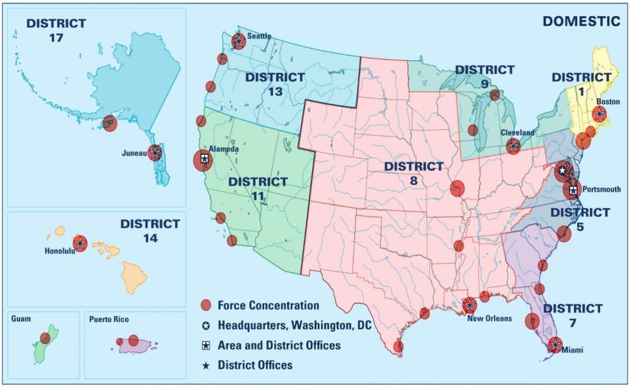

The February edition of US Naval Institute Proceedings has a one page, “No Body Asked Me, But,” article on page 18, by Cdr. Leah Cole, USCG, suggesting that the Coast Guard Districts be given geographic names rather than numbers.

I’ll just list the proposed names without linking them to the existing numbers because, you will find them obvious and intuitive.

  • Forces New England
  • Forces Mid-Atlantic
  • Forces South and Caribbean
  • Forces Heartland and Gulf Coast 
  • Forces California and Southwest Border
  • Forces Pacific Northwest
  • Forces Pacific Islands
  • Forces Alaska and Arctic

I think she pretty much nailed it, though I think Forces Southeast and Caribbean might be more descriptive for D7, and for D11, Forces Pacific Southwest.

Along with these, she would rebrand the Areas Forces Atlantic and Forces Indo-Pacific.  There is a potential glitch here, in that PATFORSWA, which frequently operates in the Indian Ocean, is currently under Atlantic Area. (Both the Combatant Commanders and the Navy’s Fleet structure have the Indian Ocean split up three ways.) Just Forces Pacific should suffice.

She goes on to suggest,

“As an additional step, the Coast Guard could time the renaming to align with a new recruiting initiative for both the active-duty and reserve force that offers candidates the opportunity to serve in their home regions or a region in which they would like to live and serve long-term. This could create a sense of purpose, build belonging, and also reduce barriers to accessions.”

She also suggests how district Reserve programs could be tuned for predicable surge operations–it’s a short read.

As I am sometimes told, this makes too much sense to actually happen, but it is definitely worthy of serious consideration.

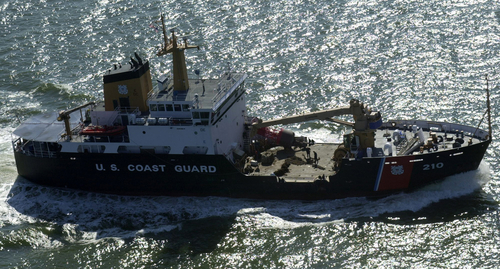
“Commander Cole, a permanent cutterman, is executive officer of the USCGC Bertholf (WMSL-750). She is the 2023 recipient of the John G. Witherspoon Award for inspirational leadership.”

“Coast Guard Force Design 2028” –News Release

The U.S. Coast Guard’s headquarters campus in Washington, D.C.

Below is a Coast Guard News Release.

It is too early to say where these changes will take the Coast Guard, but both the acting Commandant and the Senior Advisor to the Secretary for the Coast Guard (SASCG) Mr. Sean Plankey, are Coast Guard Academy graduates (class of 1987 and 2003). Both seem to be firmly grounded in the military nature of the Coast Guard. Both have spent a lot of time in close contact with DOD.

“Force Design 2028 is the way we will become a more agile, capable, and responsive fighting force (emphasis applied–Chuck) to best serve the American people,” ADM Lunday said.

Some of the steps outlined in Force Design 2028 appear specifically intended to move the Coast Guard closer to DOD.

–Align with the DoD’s “Rapid Force-Wide Review of Military Standards” for physical fitness, body composition, and grooming standards. We’ll follow DoD standards to the maximum extent possible and build processes that are necessary to ensure total force readiness.

–Increase Coast Guard engagement with the Defense Innovation Unit (DIU) to accelerate technology and capability acquisition and adoption by leveraging leading edge disruptive technology development in the private sector. This includes increasing our footprint at DIU and maximizing the number of training allowance billets available at the DIU Immersive Commercial Acquisition Program.

I certainly see a need for more attention to the Coast Guard’s Defense Readiness Mission and to Ports, Waterways, and Coastal Security.

My impression is that the Coast Guard will be increasingly focused on protecting the Maritime Transportation System, particularly in cyberspace.


April 3, 2025

Coast Guard Force Design 2028

By MyCG Staff

Acting Commandant Kevin E. Lunday recently announced Force Design 2028 (FD 2028). Directed by Department of Homeland Security Secretary Kristi Noem and led by the Senior Advisor to the Secretary for the Coast Guard (SASCG) Mr. Sean Plankey, FD 2028 is creating a blueprint to ensure the Service is ready for the future and the Nation’s demands.

“Force Design 2028 is the way we will become a more agile, capable, and responsive fighting force to best serve the American people,” ADM Lunday said.

FD 2028 is focused on four campaigns:

  • People
  • Organization
  • Acquisition and Contracting
  • Technology

Here are some details about each campaign, including some of the first steps already underway. Additional details can be found in ALCOAST 155/25.

People
We are building the Coast Guard’s future force, starting today. Increased national demand for our Coast Guard requires a larger, more capable military workforce. This campaign will improve training systems, boost access to medical care, and modernize both the Coast Guard Reserve and the civilian management system.

Early actions:

  • Align with the DoD’s “Rapid Force-Wide Review of Military Standards” for physical fitness, body composition, and grooming standards. We’ll follow DoD standards to the maximum extent possible and build processes that are necessary to ensure total force readiness.
  • Starting in Promotion Year 2026, best qualified selection boards will be required to employ in-zone reordering to the maximum authorized by law to reorder those officers of particular merit for promotion.
  • Remove administrative burdens on our members by reducing reporting and other requirements that are redundant and of little value. (See ALCOAST 145/25 for details.)
  • Restore maximum Commander and Officer-in-Charge discretion and flexibility in their use of non-judicial punishment (NJP) under Article 15 of the Uniform Code of Military Justice (UCMJ).  This change is consistent with the ultimate responsibility entrusted to commanders to maintain good order and discipline at their units.

Organization
As global security threats, technological advancements, and operational demands continue to evolve, the Coast Guard must adapt its organizational construct and internal decision making and governance processes to remain relevant, effective, and responsive.

Early actions:

  • Delegate operational authorities to the appropriate level of command to increase mission effectiveness and reduce risk to Coast Guard personnel. The recent delegation of non-compliant vessel use of force authorities to pursuit coxswains and cutter commanding officers is one example that empowers those at the tactical edge with the authorities, capabilities, and effective command and control needed to deliver operational results.
  • Establish a USCG HQ Director of Staff, reporting to the Vice Commandant, who is responsible for streamlining executive decision-making, enhancing agility and integration, aligning strategic messaging, and optimizing HQ processes.
  • Restructure the Deputy for Personnel Readiness (DPR) enterprise to optimize support for our most valuable resource-our people. This transformation establishes a comprehensive, people-centric approach across four business lines: accessions and training, total workforce management, workforce and family services, and healthcare delivery. We will separate policy/program management from service delivery to best meet the needs of our people.
  • Restructure the Deputy for Materiel Readiness (DMR) enterprise to focus on a systems approach to assets, ensuring the Coast Guard has the right capabilities, in the right place, at the right time. This transformation includes creating new business lines to oversee the total lifecycle management of our surface, air, C5I, and shore infrastructure, and integrating acquisition and sustainment functions for greater efficiency and effectiveness.
  • Establish the Assistant Commandant for Operational Integration and Response Policy (CG-3/5R) to align operational integration and planning at the Service level to increase decision-making speed and resource allocation to our operational commanders and advance national level planning and preparedness while increasing situational awareness for the Secretary, Department, Joint Staff, and Interagency partners.

Acquisitions and Contracting
Develop a high velocity acquisition and contracting system to rapidly deliver the assets the Service needs to fulfill its commitment to the American people.

Early actions:

  • Eliminate or minimize bureaucratic delays to delivering the assets the Service needs. An example is the recent elevation the Simplified Acquisition Procedures and micro- purchase limits to the maximum extent allowed by law and regulation, ensuring rapid distribution of goods and services to the field units charged with carrying out our front-line missions.
  • Increase Coast Guard engagement with the Defense Innovation Unit (DIU) to accelerate technology and capability acquisition and adoption by leveraging leading edge disruptive technology development in the private sector. This includes increasing our footprint at DIU and maximizing the number of training allowance billets available at the DIU Immersive Commercial Acquisition Program.
  • Improve the speed of contracting and procurement by empowering our contracting professionals in the field, reducing redundant and sequential approval and review process that add unwarranted mission risk.
  • Provide improved transparency and accountability in the contracting process through development of a quick-to-field contract tracking system and establish clear metrics and targets that consider mission impact.

Technology
The Coast Guard will accelerate the adoption of secure, state-of-the-market technologies to enhance data sharing, situational awareness, and operational effectiveness.

Early actions:

  • Leverage efficient industry solutions to dramatically accelerate the Authority To Operate (ATO) process for Information Technology systems and achieve the goal of ATOs in 30 days. This will begin with the Software Factory and minimize bureaucratic delays to deliver essential capabilities required for Coast Guard mission success.
  • Establish data teams in each mission domain to make sure we’re fully leveraging data to improve operations.
  • Establish a Rapid Response Rapid Prototype Team to transform how we deliver mission-critical technology solutions. This effort will span operations, engineering, acquisitions, finance, information technology, logistics, data science, and change management/integration – delivering proven innovation where it matters most.

How we will stay on course

An FD 2028 implementation team comprised of permanently assigned military and civilian personnel is being established and will report to the new Director of Staff.  The team will coordinate a Coast Guard wide effort to implement the Secretary’s intent on FD28 as well as continue the actions already started.

“We are executing transformational change to renew the Coast Guard,” said ADM Lunday.  “Force Design 2028 will ensure the Coast Guard remains Semper Paratus, Always Ready, to serve the American people.”

“Sen. Rick Scott Announces Bill to Establish a Secretary for the U.S. Coast Guard”

The U.S. Coast Guard’s headquarters campus in Washington, D.C.

Senator Rick Scott (R-FL) has announced introduction of a bill to establish a Secretary of the Coast Guard, who would in turn report to the Secretary of Homeland Security. This would parallel the Secretary of the Navy’s relationship with the Secretary of Defense, but then the DOD budget is five times that of DHS, and, in fact, the Navy Department budget is 50% larger than the entire DHS  budget.

The Maritime-Executive has a report on this, written by K. Denise Rucker Krepp that attributes this move to the Fouled Anchor controversy which investigated alledged coverup of mishandling of allegations of racism, hazing, discrimination, sexual harassment, sexual assault, and rape.

My own feeling has always been that when within a local jurisdictions, violations of local laws, particularly sexual assault and rape, should be handled by local law enforcement.

The caption on the photo above, as it appears in the Maritime-Executive report states, “Unlike the other armed forces, the service has no civilian leader.” This is not really true. The Coast Guard is under the Secretary of Homeland Security. Similarly there is no “Secretary of the Marine Corps,” a much larger military service than the Coast Guard, with a budget almost four times as large, but they do fall under the Secretary of the Navy and do in fact have civilian leadership.

Creating a Secretary of the Coast Guard would not just add one civilian political appointee, he would need a civilian staff. This would be a whole new level of bureaucracy between DHS and the Coast Guard, and we know how well “Gossip Games” go. Meanwhile there is nothing that stops the Secretary DHS from having part of his staff specialize in oversight of the Coast Guard. 

I will take this opportunity to state, I think the Coast Guard should be an independent agency, like NASA or the EPA. The Federal Government has lots of them. The Coast Guard has no shortage of oversight from Congress and the Coast Guard’s eleven missions don’t really fit neatly in any existing department. It would cut out an entire level of bureaucracy.

It might be assumed that a Secretary of the Coast Guard would support the service, but could they really do a better job of representing the service or perhaps they would have a different agenda. This might even lead to civilianizing or politicizing the service.

“Rebrand the Coast Guard Districts” –USNI

The February edition of US Naval Institute Proceedings has a one page, “No Body Asked Me, But,” article on page 18, by Cdr. Leah Cole, USCG, suggesting that the Coast Guard Districts be given geographic names rather than numbers.

I’ll just list the proposed names without linking them to the existing numbers because, you will find them obvious and intuitive.

  • Forces New England
  • Forces Mid-Atlantic
  • Forces South and Caribbean
  • Forces Heartland and Gulf Coast 
  • Forces California and Southwest Border
  • Forces Pacific Northwest
  • Forces Pacific Islands
  • Forces Alaska and Arctic

I think she pretty much nailed it, though I think Forces Southeast and Caribbean might be more descriptive for D7, and for D11, Forces Pacific Southwest.

Along with these, she would rebrand the Areas Forces Atlantic and Forces Indo-Pacific.  There is a potential glitch here, in that PATFORSWA, which frequently operates in the Indian Ocean, is currently under Atlantic Area. (Both the Combatant Commanders and the Navy’s Fleet structure have the Indian Ocean split up three ways.) Just Forces Pacific should suffice.

She goes on to suggest,

“As an additional step, the Coast Guard could time the renaming to align with a new recruiting initiative for both the active-duty and reserve force that offers candidates the opportunity to serve in their home regions or a region in which they would like to live and serve long-term. This could create a sense of purpose, build belonging, and also reduce barriers to accessions.”

She also suggests how district Reserve programs could be tuned for predicable surge operations–it’s a short read.

As I am sometimes told, this makes too much sense to actually happen, but it is definitely worthy of serious consideration.
“Commander Cole, a permanent cutterman, is executive officer of the USCGC Bertholf (WMSL-750). She is the 2023 recipient of the John G. Witherspoon Award for inspirational leadership.”

“Singapore’s Police Coast Guard deploys multilayered tactics to defend coastline” –Indo-Pacific Defense Forum

Indo-Pacific Defense Forum takes a look at Singapore’s Police Coast Guard, apparently prompted by a July 2022 report commissioned by the Korea Institute for Maritime Strategy and titled “Second Amongst Equals? The Police Coast Guard within Singapore’s Maritime Security Architecture.” Wikipedia has a more detail.

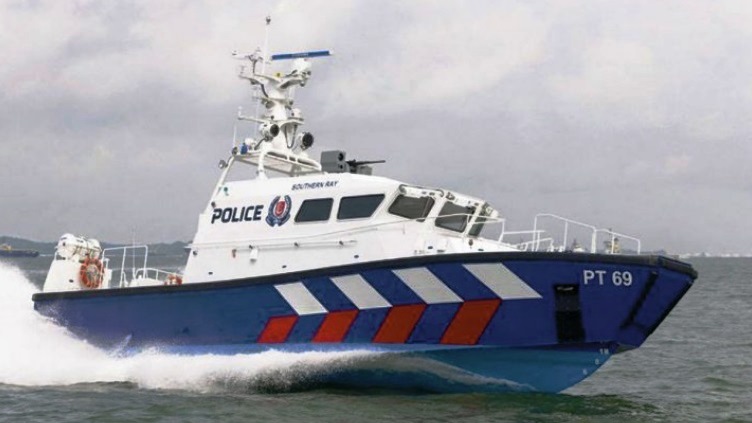
(They have a very different sort of “racing stripe” to identify their vessels, apparently replacing a more conventional white/red/white stripe on blue hull about a decade ago.)

Singapore has a very small EEZ, 1,067 sq.km. That of the US is 10,638 times larger, but those waters are extremely important, highly congested, and have had a long history of piracy. IUU, terrorism, and particularly illegal imigration are continuing concerns.

The largest Singapore Police Coast Guard vessels are similar in size to the 110 foot WPBs. Most of their vessels are relatively fast (35 to 55 knots) and for a “police” organization, well armed. The Singapore Navy handles some missions that we would consider Coast Guard missions, including operation of Offshore Patrol Vessels.

“Let the Coast Guard Helm Alaskan Command’s Maritime Component” –USNI

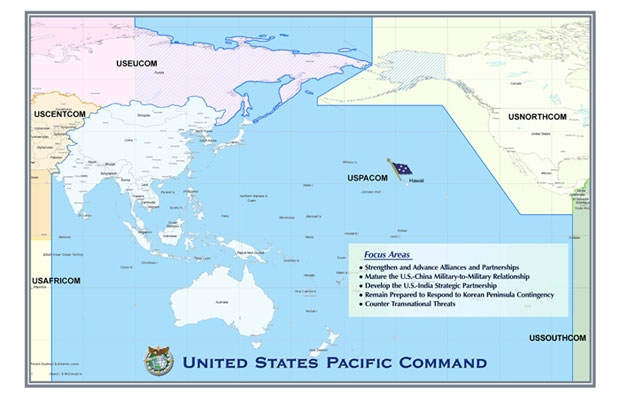
PACOM Area of Responsibilty

Two officers, one Army and one Air Force, both with experience in Alaska Command, find that the organization of naval support for the Command is problematic and suggest that making CCGD17 the Naval Component Commander is the solution.

In 2014, the subunified Alaskan Command was reassigned from Pacific Command to NorthCom. Alaskan Command owns the joint force activities in the land and air domains over Alaska and the Arctic and coordinates with Naval Forces Northern Command (NavNorth)—based some 4,500 miles from Alaska—for maritime joint operations. The Alaskan Command commander also is responsible to North American Aerospace Defense Command (NORAD) for the Alaskan region’s air defense and identification zone (ADIZ), which extends to the North Pole and along the eastern border of Russia. Currently, the maritime warning responsibilities in the Arctic are held at NORAD headquarters in Colorado, and maritime domain awareness responsibilities are retained with the NavNorth Commander in Norfolk, Virginia.

With three different chains of command, none of which own surface vessels around the waters of Alaska, Alaskan Command’s ability to conduct homeland defense is at risk because of a cumbersome command-and-control structure beset with the challenges of distance and limited expertise in operating in the Arctic. There is a more effective command-and-control structure to protect the homeland in the Arctic: establishing the U.S. Coast Guard as the Joint Force Maritime Component Commander of Alaskan Command.

This is recognition of a problem we looked at before, and my conclusion was that Alaska should be reassigned to PACOM. Short of that there is another alternative I will get to below, and they do seem to have a good workable proposal for a Joint Inter-Agency Task Force (North)

There has been almost no cooperation between the Navy and Alaska Command. That may be starting to change. In May the Navy conducted Exercise Northern Edge 2019. The Navy talked about this a relearning how to operate in the Arctic, but as far as I can tell, they never got into the Arctic. Apparently the Carrier Strike Group stayed in the Gulf of Alaska, but at least they did work with the Air Force in Alaska.

Admittedly the US Navy has limited capability in the Arctic.

“…the Navy’s minimal involvement in the region is for good reason: the Navy has limited Arctic capability, apart from submarines and patrol aircraft. Essentially, there are no current requirements levied on the U.S. Navy necessitating an Arctic presence.”

That also might be changing. It is not unlikely that the Navy will return in at least some fashion to Adak as it has in Iceland..

“Last year, the Navy indicated it would like to begin flying submarine-hunting P-8 Poseidon aircraft from Adak Island hundreds of miles off the Alaskan coast in the Aleutian island chain, which would put US aircraft at the westernmost airfield that can handle passenger aircraft in the United States.”

Joint Force Maritime Component Commander

To be the Naval Component Commander you have to be ready for high end conflicts as well as the more routine requirements. Submarines and Maritime Patrol Aircraft are critical assets for success in any major conflict in the Arctic. They are also forces the Coast Guard is not ready to command.

US Navy Fleet Organization

Surely that Maritime Component Commander should be Third Fleet. Additionally, as I noted earlier, It makes no sense to divide the Bering Sea and the Chukchi Sea between 3rd Fleet and 7th Fleet. Third Fleet should assume responsibility for all of PACOM’s Arctic waters including the entire Bering Sea and the Aleutians. (7th Fleet already has more than enough to do in the Western Pacific and Indian Ocean.)

Joint Inter-Agency Task Force (North):

Meanwhile it would make sense for the Coast Guard to participate in formation of a Joint Inter-Agency Task Force (North) for the purpose of Disaster Relief/Humanitarian Assistance, response to major SAR cases, and dealing with possible Russian, or even Chinese, Gray Zone operations in the Arctic.

“Nobody Asked Me, But . . . Rename the Coast Guard Districts”–USNI

The US Naval Institute has a short article by Cdr. Jim Hotchkiss (USCG Reserve). Unfortunately it is behind the paywall for those of you who are not members, but in short he points out that the current district number designations can be traced back to WWII and a desire to correspond to Naval District designations. Now that that is no longer a consideration, why not use more descriptive geographic designations?

His proposal is captured in the diagram above.

Certainly Cdr. Hotchkiss has a point. I only have a couple of comments. It would ease the transition if we continue to use the term “District” rather than the less specific term, “Command,” which he uses above, e.g., “Coast Guard District Northeast” rather than “Coast Guard Northeast Command.”

The actually choice of names would justify some additional thought, but I will suggest alternatives for three of the Districts.

  • For the current 7th District–CG District Southeast
  • For the current 8th District–CG District Gulf and Inland
  • For the current 11th District–CG District Southwest

China Coast Guard Changes Departments

Photo from http://defence-blog.com/news/photos-charge-of-the-10000-ton-china-coast-guard-cutter.html
As predicted earlier, the China Coast Guard has been moved into their equivalent of DOD.
DefenseWorld reports that,
“The China Coast Guard will be absorbed into the country’s Central Military Commission (CMC), effective July 1, after the transfer of command from the State Oceanic Administration, local media reports.”
“The coast guard will reportedly be integrated into the PLA Navy as an auxiliary branch.”
“People’s Daily revealed that the Coast guard ships would be armed with more powerful small diameter cannons instead of water cannon. Under the leadership of the CMC, ship crews could also be authorized to carry fire arms.”
An earlier Bloomberg report stated
“The latest change makes the fleet part of the People’s Armed Police, or PAP, a domestic paramilitary force also directly under Xi’s command in December.”
It was only a little over five years ago that the China Coast Guard was formed from four independent agents. We have already seen it becoming better armed. They are operating former Chinese frigates. They are building much bigger cutters, and cutters based on Chinese Navy frigates and corvettes.
The China Coast Guard has proven its value, and it looks like President Xi has recognized its potential and wants to take more direct control.


Government Reorganization–Effects on Coast Guard

PENSACOLA BEACH, Fla. (Sept. 20, 2004)–Coast Guard cutter CYPRESS, a 225-foot buoy tender homeported in Mobile, Ala., underway near Pensacola Beach. CYPRESS was deployed in part of the Coast Guards efforts to repair aids to navigation damaged or dragged off station by Hurricane Ivan. USCG photo by PA3 John Edwards

“We trained hard, but it seemed that every time we were beginning
to form up into teams, we would be reorganized. I was to learn later
in life that we tend to meet any new situation by reorganizing;
and a wonderful method it can be for creating the illusion of progress
while producing confusion, inefficiency, and demoralization.” attributed, probably erroneously to Gaius Petronius Arbiter, Roman Satirist (c.27-66 AD)

BryMar-Consulting has provided a link to the administration’s proposal for reorganizing the government. The Coast Guard is mentioned twice, once in regard to transferring Aids to Navigation responsibility to DOT and once with regard to duplication between the Coast Guard and CBP’s marine unit.

“In addition, transferring current U.S. Coast Guard responsibilities for permitting alterations to bridges and aids to coastal navigation to DOT would better align those functions with similar functions already carried out by DOT’s.” (p.73)

(Once again the multi-mission nature of CG AtoN assets is not recognized.)

“DHS Air & Maritime Programs

“This proposal would identify efficiencies and budgetary savings to be achieved by eliminating unnecessary duplication between U.S. Customs and Border Protection and U.S. Coast Guard air and maritime programs. This could include facility consolidation, standardized data, enhanced domain awareness and coordination, and common future capability requirements. “(p. 123)

GAO seems to like CBP. We may be in for a fight on this.

There is a good possibility this proposal will go nowhere. It will require Congressional action. Still we need to stay heads up.