“Coast Guard announces agreement to construct new polar security cutter shipyard facilities” –CG-9

I am trying to catch up on things, but while this is an August 4 release from the Acquisitions Directorate, I think it is an important step in integrating the PSC’s machinery and providing training.


Coast Guard announces agreement to construct new polar security cutter shipyard facilities

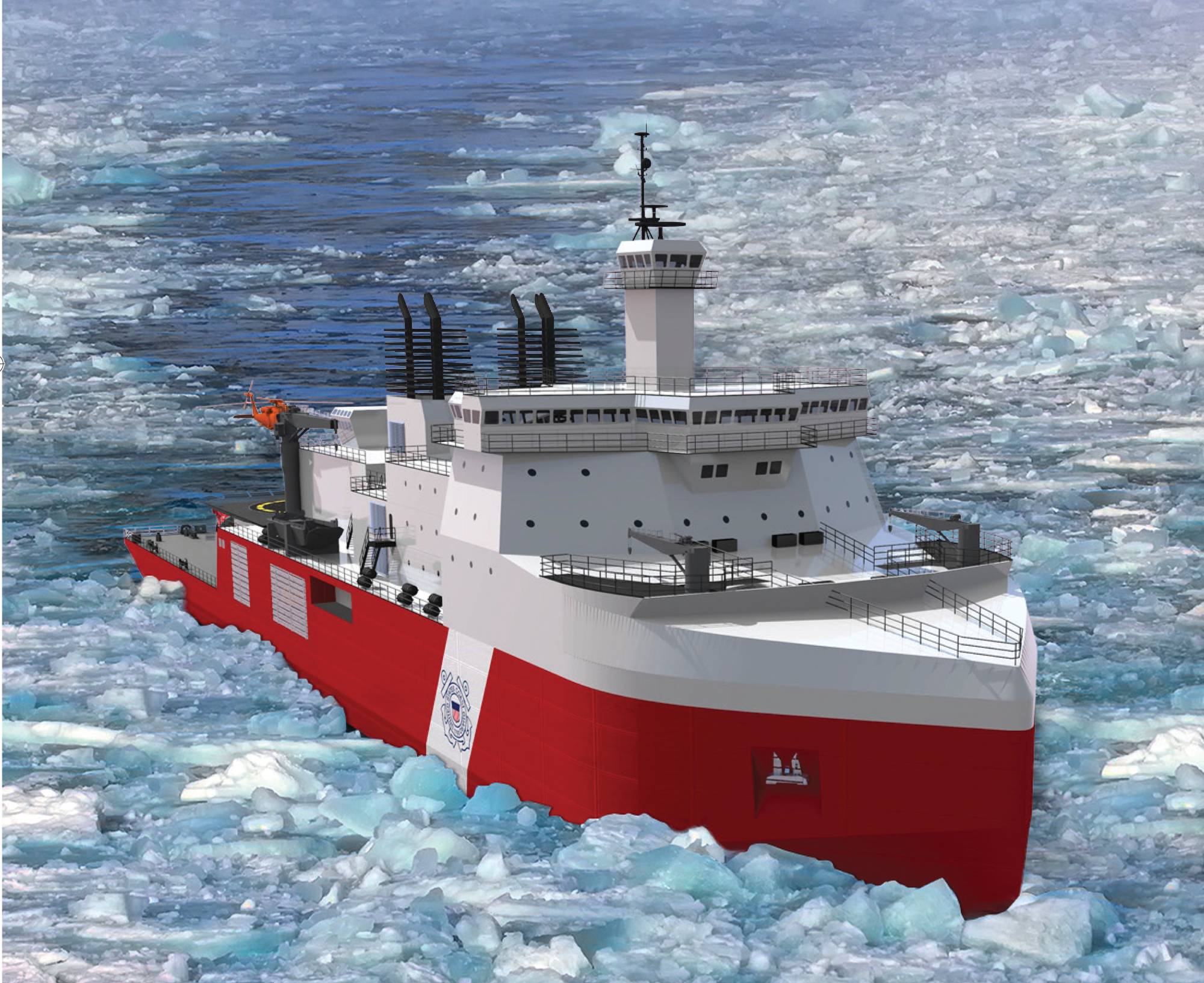
As part of continuing efforts to foster growth within the domestic shipbuilding industry and maintain momentum for acquisition priorities, the Coast Guard on July 23 formalized an agreement with Bollinger Mississippi Shipbuilding (BMS) to construct a production integration facility and land-based test facility at the shipyard in Pascagoula, Mississippi, in support of the Polar Security Cutter (PSC) Program.

This action represents a significant step in the Coast Guard’s continuing investment in the domestic shipbuilding sector and collaboration with industry partners to deliver critical assets to the nation. The construction of both facilities represents a significant capital investment partnership between the Coast Guard and BMS that will support streamlined production and integration of PSC mechanical and communication systems for a simplified installation process.

The Coast Guard modified the construction contract for the first PSC, originally awarded on March 25, 2025, to provide funding for the integration and test facilities via capital expenditure incentives. These incentives benefit the shipyard by providing access to funding for facility upgrades, workforce training and wage increases.

For more information: Polar Security Cutter Program page

“Trump Bill Secures $9 Billion for U.S. Arctic Surge, Six New Icebreakers to Counter Russian and Chinese Dominance” –gCaptain

gCaptain reports,

“President Trump’s vast tax and spending bill has secured funds the U.S. Coast Guard has been searching for since the early 2010s. The “One Big Beautiful Bill Act” appropriates close to $9 billion for the expansion of the Coast Guard’s Arctic icebreaker fleet.”

The report provides a breakdown of the appropriations that includes money for Polar Security Cutters, Arctic Security Cutters, and infrastructure in Juneau to support USCGC Storis,

Interestingly it also states,

“Rounding out the Arctic package, the U.S. Navy will also receive $115 million for the exploration and development of existing Polar infrastructure.”

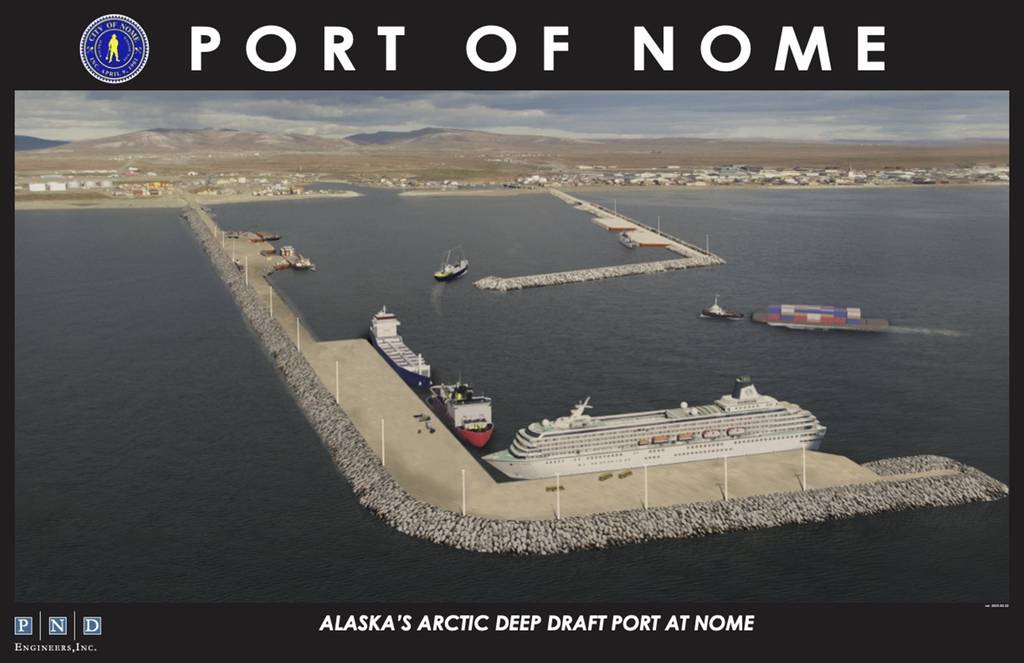
That sounds like improvements in Adak that the Coast Guard might also exploit. It might also refer to development of facilities at Nome but it is not nearly enough to fund plans for a deepwater port that had been shelved by the previous administration.

This rendering provided by the City of Nome shows how the Port of Nome, Alaska, will appear following an expansion project that will cost more than $600 million. Shipping lanes that were once clogged with ice for much of the year along Alaska’s western and northern coasts have relented thanks to global warming, and the nation’s first deep water Arctic port should be operational in Nome by the end of the decade. (PND Engineers Inc./City of Nome via AP)

“BOLLINGER SHIPYARDS SECURES $951 MILLION U.S. COAST GUARD CONTRACT MODIFICATION FOR POLAR SECURITY CUTTER PROGRAM” –Bollinger News Release

Below is a news release from Bollinger Shipyards.

The expected cost of these ships has gone up considerably, but comparing the current cost of the program, $5.1B for three ships, to the recent Canadian contracts for a similar ship, it seems the initial estimates were never realistic.


Tuesday, March 25, 2025 – Bollinger Shipyards announced today it has received a $951.6 million Fixed-Price-Incentive-Firm Target (FPIF) contract modification from the United States Coast Guard, advancing the Detail Design and Construction phase of the Polar Security Cutter (PSC) Program. This milestone underscores Bollinger’s integral role in strengthening America’s maritime presence and operational capabilities in the Arctic.

“Securing this contract modification has truly been a herculean effort and underscores the incredible trust the U.S. Government has placed in Bollinger to build and deliver the first heavy polar icebreaker in half a century,” said Ben Bordelon, President and CEO of Bollinger Shipyards. “We wouldn’t be in the solid position we’re in today without the leadership and the tireless efforts of the entire team at Bollinger Mississippi Shipbuilding. Their hard work and dedication have successfully put the PSC program on a strong path forward after a rocky start under the previous, foreign-owned builder. We now look forward to receiving the green light to begin full production.”

Bordelon also expressed gratitude for the role of national and state leadership in moving this program forward.

“I am also grateful for the leadership of President Trump and his Administration in recognizing the urgent need for American-made icebreakers. Because of his foresight and commitment to rebuilding America’s shipbuilding capabilities, this historic project is now moving forward.”

Bordelon also acknowledged Mississippi’s leadership for championing the PSC Program and state as a dominant force in shipbuilding.

“I also want to thank Governor Reeves and Mississippi’s Congressional Delegation for their leadership and support, especially as we leverage ongoing state and local investments to ensure Bollinger Mississippi remains the premier example of American shipbuilding.”

“As the Arctic grows as an arena of great power competition, the United States will require far more icebreaking capability from the U.S. Coast Guard to defend our interests in the region. Today’s award is a testament to the good work that Bollinger continues to do on the Polar Security Cutter program and the growing urgency with which their platforms are needed to boost our national defense,” said U.S. Sen. Roger Wicker (R-MS), Chairman of the Senate Armed Services Committee. “The Mississippi Gulf Coast will not only benefit from even more national security-focused quality jobs and economic development, but it will also continue to be a national player and powerhouse in mission-critical innovation and military capability.”

“Mississippi continues to prove its status as the premier destination for American shipbuilding—driving both national defense and commercial maritime strength,” said U.S. Senator Cindy Hyde-Smith (R-MS). “This milestone not only reinforces the Gulf Coast’s strategic importance, but it also reflects the value of returning critical shipbuilding programs to experienced, American-owned hands. Under Bollinger Shipyards’ strong leadership and investment, a once-stalled program will move forward with renewed urgency. I fully support this effort, which brings more high-quality jobs to Mississippi and ensures the Coast Guard is able to meet the growing challenges in the Arctic and beyond.”

Bollinger’s continued investment and growth on the Mississippi Gulf Coast reflect the skills, strength and talent of Mississippi’s workforce,” said Mississippi Governor Tate Reeves. “This announcement reinforces Mississippi’s pivotal role in American shipbuilding and solidifies Mississippi’s reputation as a national leader in maritime innovation and excellence.”

“Bollinger Mississippi Shipyards has a strong track record in American shipbuilding, and their role in the Polar Security Cutter program is another important step. This historic milestone strengthens national security, supports the domestic shipbuilding workforce, and enhances our Arctic presence. Ensuring the U.S. Coast Guard has the tools it needs is critical, and I look forward to seeing this project move forward,” said U.S. Rep. Mike Ezell (R-MS-04).

As Bollinger continues to enhance its operations in Mississippi into world-class shipyards, the company remains committed to making strategic investments to modernize and expand its capabilities. Additionally, the contract modification ensures Bollinger continues to provide its workforce with industry-leading wages throughout the life of the PSC program. Since acquiring foreign-owned VT Halter in November 2022, Bollinger has made a significant economic impact in the state through targeted investments and workforce expansion. To date, Bollinger has invested $76 million across its Mississippi facilities, including Bollinger Mississippi Shipbuilding (BMS), Bollinger Mississippi Repair (BMR), Bollinger Gulfport Shipyard (BGS), and CHAND Gulf Coast.

Since the acquisition in 2022, Bollinger has increased its Mississippi workforce by over 61%, with production roles at BMS alone increasing by more than 178%.  These numbers are expected to rise as the program reaches full production over the coming years. A key driver of this growth has been Bollinger’s innovative Bootcamp workforce development programs, which continue to strengthen the skilled labor pipeline.

“Our investment in developing the next generation of skilled American workers not only strengthens our competitive edge in the shipbuilding industry but also underscores our commitment to fostering economic growth and American innovation,” added Bordelon. “We are committed to providing high-quality careers that positively impact the families and communities we support along Mississippi’s Gulf coast.”

This contract modification primarily supports operations at Bollinger Mississippi Shipbuilding, with additional project contributions from facilities located in Massachusetts, Illinois, Virginia, Georgia, Louisiana, and other regions. Completion of the first Polar Security Cutter is anticipated by May 2030.

The Polar Security Cutter will provide the United States with enhanced operational capability in polar regions, playing a critical role in safeguarding national security, economic stability, and supporting vital maritime and commercial interests.

“USCG Polar Security Cutter Program Offers DOGE An Easy ‘Win’”–Forbes

Forbes’ always perceptive Craig Hooper takes a look at the Polar Security Cutter program and finds it ripe for cancellation, “years late, wildly over-budget, and both the budget and the schedule are at risk of slipping even further into the red…”

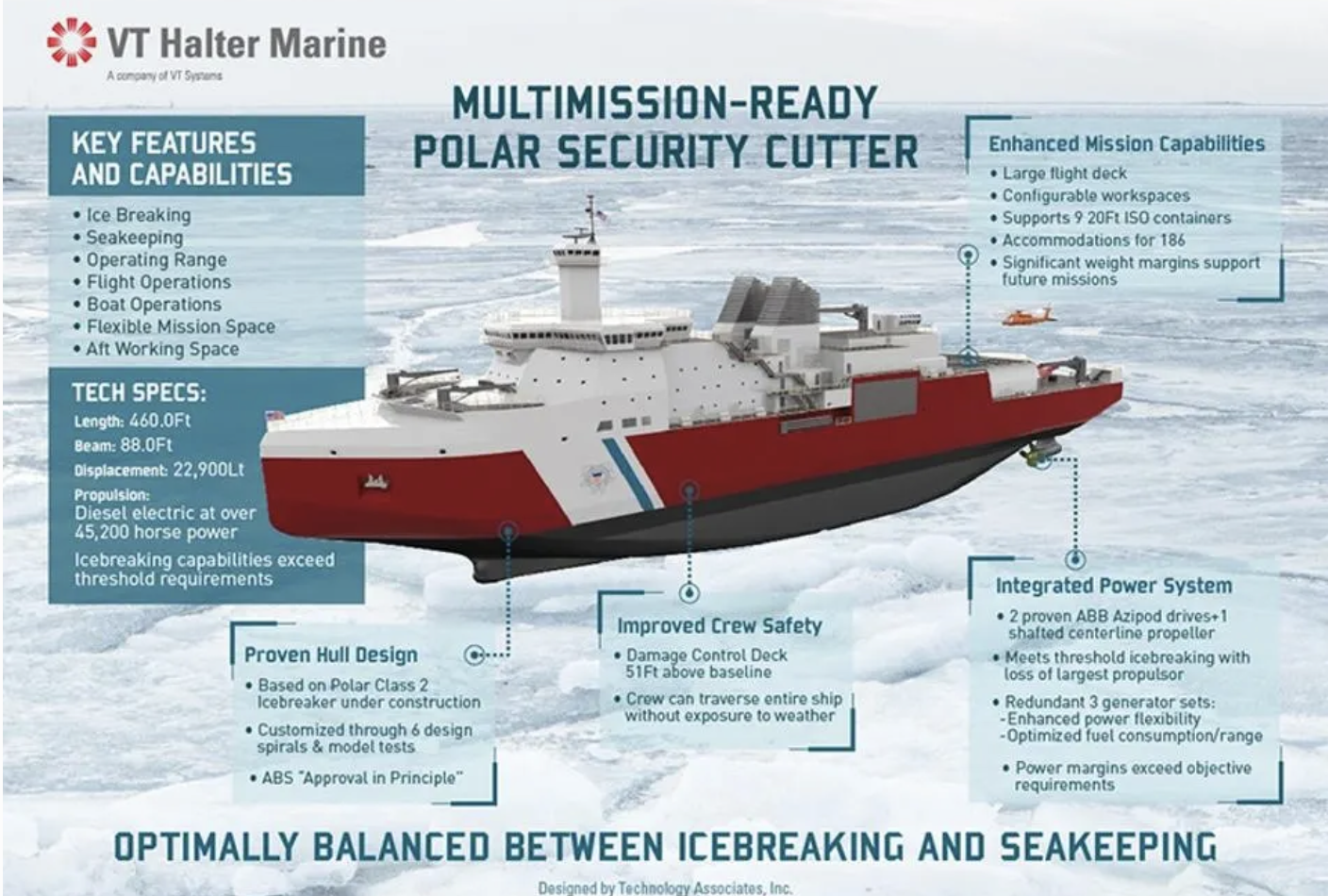
I still want to know who decided that the Coast Guard should award this critically important contract to a relatively inexperienced and less than fully successful shipyard even though they had failed to offer a proven design as had been required by the original solicitation and apparently repeatedly lied that the design was building (See the graphic from VT Halter above, “Proven Hull Design”).

I don’t know enough to agree that the Polar Security Cutter contract should be cancelled, but I do think Hooper would agree that it is time to start procurement of the Medium Icebreakers we know we need, even if the first is to be built in a foreign yard.

Given his comments on the Offshore Patrol Cutter (OPC) program in the same article, I think he might also agree that the Coast Guard should be looking at an alternate design for a medium endurance cutter replacement to be built in lieu of at least some of the planned OPCs.

The first OPC has yet to be delivered, and the costs are likely to increase. If the PSC aligns with the OPC’s ugly performance trends, starting PSC construction with this amount of design uncertainty puts the Coast Guard at real risk of an even bigger fiasco…Sadly, these Coast Guard tastemakers don’t reflect that the building rate–as it is now–appears unable to meet the positively glacial building pace set by years-late and massively over-budget Offshore Patrol Cutter.

Thanks to Paul for bringing this to my attention. 

“Elomatic awarded Polarstern 2 icebreaker design contract” –Marine Log / A Little Late for the Polar Security Cutter

Polarstern 2 rendering: Ocean Architects and Elomatic. This does not look much like the Polar Security Cutter.

As you may recall ,the Polar Security Cutter was supposed to have been based on a proven design. VT Halter Marine Inc. won the contract based on the design of the Polarstern 2, but really Polarstern 2 was, at that point, vaporware rather than a proven design. Its design contract has just been signed almost six years after the award of the contract for the Polar Security Cutter, April 23, 2019.

Marine Log reports,

“Thyssenkrupp Marine Systems (TKMS) has awarded Elomatic Maritime Technologies GmbH a design and engineering contract to support the construction of Germany’s new Polarstern 2 icebreaker.

How did this happen?

Polar Star is Home–Finally

Polar Star at Mare Island Dry Dock LLC undergoing the fourth phase of its five-year Service Life Extension Project. U.S. Coast Guard photo by Cmdr. Jeremy Courtade.

Below are two news releases, first one from Coast Guard News, the second from the Acquisitions Directorate (CG-9).

The Coast Guard has been working very hard to make sure that Polar Star can meet her annual commitment to open a path for resupply of the Antarctic Base at McMurdo, but it has to have been hard on the crew. They just completed the fourth phase of a five-part Service Life Extension Program (SLEP), but unlike the single phase SLEPs and MMAs we are seeing with the buoy tenders and medium endurance cutters at the Coast Guard Yard, here the crew stays aboard. After 138 days on the resupply mission, instead of returning to Seattle, their homeport, they went to Vallejo, California, where they spent about 140 days. Altogether, 285 days away from homeport, and over a one-year period, more days in Vallejo than in homeport.

Polar Star has only one more of these to go, but it looks like the Crew of USCGC Healy is going to go through the same 5-year SLEP cycle, where they will spend more time in Vallejo than in their homeport. This is just wrong. There are only two yards on the West Coast that can accommodate ships of this size. The Navy, with its huge presence, is a strong competitor for the use of the one in Seattle. By contrast the Bay Area has virtually no Navy presence. It is likely the Icebreakers will have to use the yard in Vallejo for almost all their drydocking. Maybe it is time to change their homeport to somewhere in the San Francisco Bay Area, maybe even Vallejo.

Improvements are planned for Base Seattle, largely on the assumption that the Polar Security Cutters (PSC) will be based there, but they can expect to run into the same problem. Given the greater size of the PSCs and the long-term probability the Navy presence in Seattle will remain large and may well increase, the problem is not going away. The dry dock in Vallejo was built to accommodate battleships. It is big enough.


U.S. Coast Guard Cutter Polar Star (WAGB 10) (left) sits moored next to U.S. Coast Guard Cutter Healy (WAGB 20) at Coast Guard Base Seattle, Aug. 25, 2024. The Polar Star and Healy are routinely deployed to Arctic and Antarctic locations to support science research or help resupply remote stations. (U.S. Coast Guard photo by Lt. Chris Butters)

Aug. 28, 2024

Coast Guard heavy icebreaker returns to Seattle following Antarctic deployment, months-long Service Life Extension Project in California

SEATTLE — The U.S. Coast Guard Cutter Polar Star (WAGB 10) and crew returned to Seattle, Sunday, after 285 days away from the cutter’s home port.

Following a 138-day deployment to Antarctica supporting Operation Deep Freeze 2024, the Polar Star reported directly to Mare Island Dry Dock (MIDD) LLC. in Vallejo, California, to commence the fourth phase of a five-year Service Life Extension Project (SLEP).

The work completed at MIDD is part of the in-service vessel sustainment program with the goal of recapitalizing targeted systems, including propulsion, communication, and machinery control systems, as well as effecting significant maintenance to extend the cutter’s service life.

Polar Star’s SLEP work is completed in phases to coordinate operational commitments such as the cutter’s annual Antarctic deployment. Phase four began on April 1, 2024, targeting three systems:

  • Boiler support systems were recapitalized, including the electrical control station that operates them.
  • The heating, ventilation and air conditioning (HVAC) system was refurbished through the overhaul of ventilation trunks, fans and heaters that supply the cutter’s berthing areas.
  • The flooding alarm system was redesigned, providing the ability to monitor machinery spaces for flooding from bow to stern.

Additional work not typically completed every dry dock included removing and installing the starboard propulsion shaft, servicing and inspecting both anchor windlasses, inspecting and repairing anchor chains and ground tackle, cleaning and inspecting all main propulsion motors and generators, installation of an isolation valve to prevent seawater intrusion into the sanitary system, and overhauling the fuel oil purifier.

Phase four of Polar Star’s SLEP took place over approximately 140 days and represented a total investment of $16.8 million. By replacing outdated and maintenance-intensive equipment, the Coast Guard will mitigate lost mission days caused by system failures and unplanned repairs. The contracted SLEP work items and recurring maintenance is taking place within a five-year, annually phased production schedule running from 2021 through 2025.

The Coast Guard is investing in a new fleet of polar security cutters (PSC) that will sustain the service’s capabilities to meet mission needs in both the Arctic and Antarctic regions. The SLEP allows Polar Star to continue providing access to the Polar regions until the PSCs are operational and assume the high latitude missions. Polar security cutters will enable the U.S. to maintain defense readiness in the Polar regions; enforce treaties and other laws needed to safeguard both industry and the environment; provide ports, waterways and coastal security; and provide logistical support – including vessel escort – to facilitate the movement of goods and personnel necessary to support scientific research, commerce, national security activities and maritime safety.

“Completing a dry dock availability is a positive milestone, and despite challenges due to being away from home port, our crew’s energy and resilience inspires me every day,” said Capt. Jeff Rasnake, Polar Star’s commanding officer. “The amount of time and effort put into Polar Star and its mission is truly remarkable. The dedication and teamwork displayed across all stakeholders exemplifies the Coast Guard’s flexibility and commitment to ensuring the continued success of Operation Deep Freeze as well as strengthened partnerships among nations invested in the Antarctic latitudes. I look forward to observing how this crew will continue to grow as a team and to discovering what we can accomplish together.”

Along with the rigorous maintenance schedule, Polar Star held a change of command ceremony on July 8, 2024, in Vallejo, where Rasnake relieved Capt. Keith Ropella as the cutter’s commanding officer. Rasnake served as the deputy director for financial management procurement services modernization and previously served as Polar Star’s executive officer. Ropella transferred to the office of cutter forces where he will oversee the management of the operational requirements for the cutter fleet and develop solutions for emerging challenges facing the afloat community.

Polar Star is the Coast Guard’s only active heavy polar icebreaker and is the United States’ only asset capable of providing year-round access to both polar regions.

Commissioned in 1976, the cutter is 399 feet, weighing 13,500 tons with a 34-foot draft. Despite reaching nearly 50 years of age, Polar Star remains the world’s most powerful non-nuclear icebreaker with the ability to produce up to 75,000 horsepower. Polar Star’s SLEP is important to the survival of the Antarctic mission and crucial to the well-being and success of Polar Star and crew during these long missions.


Coast Guard completes fourth phase of service life extension work on Polar Star

Coast Guard Cutter Polar Star completed the fourth phase of its five-year Service Life Extension Project (SLEP) at the Mare Island Dry Dock LLC in Vallejo, California. The cutter departed the San Francisco Bay Area on August 22, for its homeport in Seattle.

The SLEP, a key initiative within the Coast Guard’s In-Service Vessel Sustainment (ISVS) Program, aims to extend the service life of the Polar Star by modernizing targeted systems, including propulsion, communication, and machinery control systems. Concurrent with the SLEP work, crews conducted significant maintenance efforts to ensure the cutter remains capable of operating within some of the most extreme environmental conditions on earth.

SLEP work on the Polar Star is conducted in phases to align with the cutter’s operational commitments, such as the cutter’s annual Antarctic deployment. Phase four began on April 1, 2024, focusing on the following systems:

  • Heating, ventilation and air conditioning systems were refurbished with ventilation trunks, fans and heaters to improve air circulation and maintain comfortable living environment for the ship’s crew during extended deployments.
  • Boiler support systems were recapitalized, including the electrical control station that operates them to generate reliable heating and steam supply to the water maker.
  • The flooding alarm system was redesigned to enable the crew’s ability to monitor the ship’s machinery spaces for flooding from bow to stern.

Additional work completed during this phase, beyond routine dry dock maintenance, was critical to ensuring the Polar Star’s operational readiness. This included significant overhauls and inspections of key propulsion and anchoring systems that are essential for the cutter’s operational performance.

Kenneth King, Program Manager for the ISVS Program, commented on the milestone, saying, “I am tremendously proud of the joint In-Service Vessel Sustainment Program, the Long Range Enforcer Product Line team and their significant efforts in completing Phase 4. Our dedicated professionals continue to exemplify our service’s core values to ensure Polar Star meets its multifaced missions in the polar regions until the arrival of the Polar Security Cutter Fleet.”

For more information:In-Service Vessel Sustainment Program page and Polar Security Cutter Program page.

Maybe One Small Step Closer to a Polar Security Cutter

Photo of a model of Halter Marine’s Polar Security Cutter seen at Navy League’s Sea-Air-Space Exhibition have surfaced. Photo credit Chris Cavas.

Saw this new Navy contract on a list of DOD Contracts for Aug. 12, 2024.

Bollinger Mississippi Shipbuilding, Pascagoula, Mississippi, is awarded a $37,990,331 firm-fixed-price modification to previously awarded contract (N00024-19-C-2210) to exercise an option for provisioned item orders to procure a diesel generator. Work will be performed in Rostock, Germany (90%); Mankato, Minnesota (5%); and Lafayette, Indiana (5%), and is expected to be completed by December 2025. Fiscal 2021 procurement, construction, and improvement (Coast Guard) funds in the amount of $37,990,331 will be obligated at time of award and will not expire at the end of the current fiscal year. Naval Sea Systems Command, Washington, D.C., is the contracting activity.

That is a mighty expensive emergency generator. It was not clear where this generator was going. Googling the contract number, I found this reference to the contract, connecting it to the Polar Security Cutter.

Contracts For April 23, 2019

NAVY

VT Halter Marine Inc., Pascagoula, Mississippi, is awarded a $745,940,860 fixed-price incentive-firm contract for the detail design and construction of the U.S. Coast Guard (USCG) Polar Security Cutter (PSC) (formerly the Heavy Polar Ice Breaker). The PSC program is a multiple year Department of Homeland Security Level 1 investment and a USCG major system acquisition to acquire up to three multi-mission PSCs to recapitalize the USCG fleet of heavy icebreakers which have exhausted their design service life. The PSC’s mission will be to ensure continued access to both polar regions and support the country’s economic, commercial, maritime, and national security needs. This contract includes options which, if exercised, would bring the cumulative value of this contract to $1,942,812,266. Work will be performed in Pascagoula, Mississippi (61 percent); Metairie, Louisiana (12 percent); New Orleans, Louisiana (12 percent); San Diego, California (4 percent); Mossville, Illinois (4 percent); Mobile, Alabama (2 percent); Boca Raton, Florida (2 percent); and various other locations (3 percent), and is expected to be completed by June 2024. If all options are exercised, work will continue through November 2027. Fiscal 2019 procurement, construction, and improvement (Coast Guard); and fiscal 2018 and 2017 shipbuilding and conversion (Navy) in the amount of $839,224,287 will be obligated at time of award and will not expire at the end of the current fiscal year. This contract was competitively procured via the Federal Business Opportunities website, with three offers received. The Naval Sea Systems Command, Washington, District of Columbia, is the contracting activity (N00024-19-C-2210).

I presume this is for the first of class since construction has not yet begun, but there was also this,

Contracts For Dec. 29, 2021

NAVY

VT Halter Marine Inc., Pascagoula, Mississippi, is awarded a $552,654,757 fixed-price incentive modification to previously awarded contract N00024-16-C-2210 to exercise an option for the detail design and construction of the second Coast Guard Polar Security Cutter. Work will be performed in Pascagoula, Mississippi (61%); Metairie, Louisiana (12%); New Orleans, Louisiana (12%); San Diego, California (4%); Mossville, Illinois (4%); Mobile, Alabama (2%); Boca Raton, Florida (2%); and other locations (3%), and is expected to be completed by September 2026. Fiscal 2021 procurement, construction, and improvement (Coast Guard) funds in the amount of 485,129,919 (80%); fiscal 2020 procurement, construction, and improvement (Coast Guard) funds in the amount of $100,000,000 (17%); and fiscal 2019 procurement, construction, and improvement (Coast Guard) funds in the amount of $20,000,000 (3%) will be obligated at time of award and will not expire at the end of the current fiscal year. The Naval Sea Systems Command, Washington, D.C., is the contracting activity.

“Coast Guard Polar Security Cutter (Polar Icebreaker) Program: Background and Issues for Congress” Updated March 25, 2024 –CRS

Polar Security Cutter. Image credit VT Halter Marine.

The Congressional Research Service has once again updated their look at the Polar Security Cutter (heavy icebreaker) program. (See the latest version here.)

I have reproduced the one page summary below.

As expected, the FY2024 budget includes $125M to purchase a US built commercially available icebreaker, presumably the Aiviq since it is the only one that meets the criteria.

The budget as enacted includes $20M for procurement of a Great Lakes Icebreaker (GLIB). The request for this item was $55M.

There was nothing in the enacted budget for the Polar Security Cutter program because the first two ship have already been funded but construction has yet to begin on the first ship, so there is no need to fund the third in FY2024.

There is a requirement to report on the possibility of reviving the Polar Sea,

In addition, within 120 days of the date of enactment of this Act, the Coast Guard is directed to provide a report that assesses the viability of reactivating Coast Guard Cutter Polar Sea. The report shall include an analysis of the material condition of the hull and cost and timeline estimates for a full overhaul of the vessel, including the renewal of the cutter’s propulsion, mechanical, electrical, communication, and support systems.


Summary

Required number of polar icebreakers. A 2023 Coast Guard fleet mix analysis concluded that the service will require a total of eight to nine polar icebreakers, including four to five heavy polar icebreakers and four to five medium polar icebreakers, to perform its polar (i.e., Arctic and Antarctic) missions in coming years.

Current operational polar icebreaker fleet. The operational U.S. polar icebreaking fleet currently consists of one heavy polar icebreaker, Polar Star, and one medium polar icebreaker, Healy. A second Coast Guard heavy polar icebreaker, Polar Sea. Polar Sea, suffered an engine casualty in June 2010 and has been nonoperational since then. Polar Star and Polar Sea entered service in 1976 and 1978, respectively, and are now well beyond their originally intended 30-year service lives. The Coast Guard plans to extend Polar Star’s service life until the delivery of at least the second Polar Security Cutter (PSC; see next paragraph).

Polar Security Cutter (PSC). The Coast Guard PSC program aims to acquire four or five new PSCs (i.e., heavy polar icebreakers), to be followed at some later point by the acquisition of new Arctic Security Cutters (ASCs) (i.e., medium polar icebreakers). The Navy and Coast Guard in 2020 estimated the combined total procurement cost of the first three PSCs in then-year dollars as $2,673 million (i.e., about $2.7 billion). The procurement of the first two PSCs is fully funded. The Coast Guard’s proposed FY2024 budget requested $170.0 million in continued procurement funding for the PSC program. The Coast Guard’s proposed FY2025 budget requests no procurement funding for the PSC program. The Coast Guard originally aimed to have the first PSC delivered in 2024, but the ship’s estimated delivery date has been delayed repeatedly and may now occur no earlier than 2028. Another potential issue concerns the accuracy of the PSC’s estimated procurement cost, given the PSC’s size and internal complexity as well as cost growth in other Navy and Coast Guard shipbuilding programs. The PSC’s estimated procurement cost per weight is roughly half that of the Navy’s LPD-17 Flight II and LHA amphibious ships. These amphibious ships are equipped with expensive combat system equipment that is not included in the PSC design, but whether this would account for all of the difference in cost per weight between the PSC design and the two amphibious ship designs is not clear. If substantial cost growth occurs in the PSC program, it could raise a question regarding whether to grant some form of contract relief to the PSC shipbuilder.

Commercially available polar icebreaker (CAPI). The Coast Guard’s proposed FY2024 budget requested $125.0 million in procurement funding for the purchase of an existing commercially available polar icebreaker (CAPI) that would be modified to become a Coast Guard polar icebreaker. The Coast Guard’s proposed FY2025 budget requests no procurement funding for CAPI, but the Coast Guard’s FY2025 Unfunded Priorities List (UPL) includes an item for $25.0 million in procurement funding for the ship.

Great Lakes icebreaker (GLIB). The Coast Guard’s proposed FY2024 budget proposed to initiate a new procurement program for procuring a new Great Lakes icebreaker (GLIB) that would have capabilities similar to those of Mackinaw, the Coast Guard’s existing heavy Great Lakes icebreaker. The Coast Guard’s proposed FY2024 budget requested $55.0 million in initial procurement funding for the ship, and the Coast Guard’s FY2024 UPL included an item for an additional $20.0 million in procurement funding for the ship. The Coast Guard’s proposed FY2025 budget requests no procurement funding for GLIB, but the Coast Guard’s FY2025 UPL includes an item for $25.0 million in procurement funding for the ship.

“USCG Leans In Towards First Polar Security Cutter” –Naval News

Photo of a model of Halter Marine’s Polar Security Cutter seen at Navy League’s Sea-Air-Space Exhibition have surfaced. Photo credit Chris Cavas.

Naval News reports on Coast Guard remarks about the Polar Security Cutter program at the Surface Navy Association annual symposium.

There is some good news. The Commandant says she is, “100% confident in the design…” The keel has not been laid, but “Welding work is commencing on three build units purchased for the first ship.” (That phraseology does sound a little strange to me.)

She goes on to say,

“I’m focused on fielding the Polar Security Cutters …. [and] getting that first one well into construction, with some predictability around when that ship will come to full operating capacity. We’re working hard with the yard, with the navy, and with the program office to bring some better certainty and clarity around that,” said Adm Fagan.

Which clearly means we do not yet have the predictability, certainty, and clarity the Commandant wants.

Explaining why this is not just an Icebreaker, Rear Admiral Chad Jacoby – USCG Assistant Commandant for Acquisition/Chief Acquisition Officer – told the symposium,

“The distinction there is the Polar Security Cutter is going to do way more than break ice. It will have National Security Cutter-level capabilities, sensors, and equipment on a hull that can go anywhere in the world in any season,” Rear Adm Jacoby continued. “So, we’re not just breaking ice, we’re not just having presence: we’re going to be able to execute almost all USCG missions up in the Arctic, down in the Antarctic, anywhere in the world.”

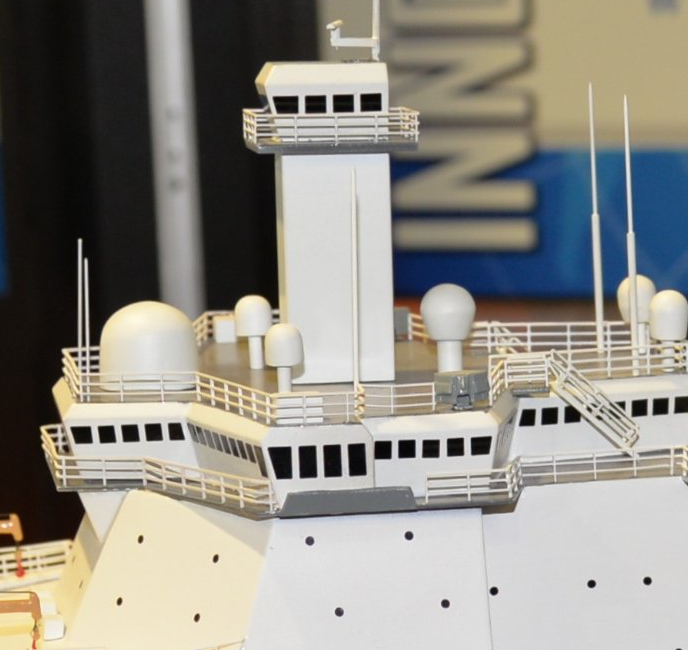
I look forward to learning what that actually means. It certainly isn’t in terms of installed armament. I don’t see an air-search radar on either the model presented (pictured above) or the illustrations I have seen.

Photo of a model of Halter Marine’s Polar Security Cutter seen at Navy League’s Sea-Air-Space Exhibition have surfaced. Photo credit Chris Cavas.

There do appear to be AN/SLQ-32 antennas on top of the bridge on the model (in gray). Could there also be a SCIF (Sensitive Compartmented Intelligence Facility) like there is on the National Security Cutter? There are also areas where containerized systems could be installed.

To me the most encouraging thing that has happened with regard to this class is that Bollinger took over the project when they purchased the shipyard that is building them. I wish them every success.

“Coast Guard Polar Security Cutter (Polar Icebreaker) Program: Background and Issues for Congress” –CRS, Updated Dec. 12, 2023

Photo of a model of Halter Marine’s Polar Security Cutter seen at Navy League’s Sea-Air-Space Exhibition have surfaced. Photo credit Chris Cavas.

The Congressional Research Service has once again updated their look at the Polar Security Cutter (heavy icebreaker) program. (See the latest version here.)

I have reproduced the one page summary below.

For me the most important new information is that somewhere there is a new Coast Guard Fleet Mix Study. It has not been made public, but I would sure like to see the results. The last one goes back to 2009. Ever since it was published. it has been an important part of every Congressional Research Service report on the cutter procurement plan and apparently, it has been expanded to include Icebreakers as well as patrol cutters and aircraft. It is an important planning tool. Let’s hope they don’t take three years to make it public like they did the last time.


Summary

Required number of polar icebreakers. The Coast Guard testified in April, June, and November 2023 that a new Coast Guard fleet mix analysis concluded that the service will require a total of eight to nine polar icebreakers, including four to five heavy polar icebreakers and four to five medium polar icebreakers, to perform its polar (i.e., Arctic and Antarctic) missions in coming years. Prior to this new fleet mix analysis, the Coast Guard had stated that it would need at least six polar icebreakers, including three heavy polar icebreakers.

Current operational polar icebreaker fleet. The operational U.S. polar icebreaking fleet currently consists of one heavy polar icebreaker, Polar Star, and one medium polar icebreaker, Healy. In addition to Polar Star, the Coast Guard has a second heavy polar icebreaker, Polar Sea. Polar Sea, however, suffered an engine casualty in June 2010 and has been nonoperational since then. Polar Star and Polar Sea entered service in 1976 and 1978, respectively, and are now well beyond their originally intended 30-year service lives. The Coast Guard plans to extend the service life of Polar Star until the delivery of at least the second Polar Security Cutter (PSC).

Polar Security Cutter (PSC). The Coast Guard Polar Security Cutter (PSC) program is a program to acquire at least three new PSCs (i.e., heavy polar icebreakers), to be followed at some later point by the acquisition of additional new Arctic Security Cutters (ASCs) (i.e., medium polar icebreakers). The Navy and Coast Guard in 2020 estimated the combined total procurement cost of the first three PSCs in then-year dollars as $2,673 million (i.e., about $2.7 billion). The procurement of the first two PSCs is fully funded. The Coast Guard’s proposed FY2024 budget requests $170.0 million in continued procurement funding for the PSC program, which would be used for procurement of long leadtime materials (LLTM) and government-furnished equipment
(GFE) for the PSCs, and for other program expenses. (GFE is equipment that the government purchases and then provides to the shipbuilder for incorporation into the ships.)

On April 23, 2019, the Coast Guard-Navy Integrated Program Office for the PSC program awarded a fixed-price, incentive-firm contract for the detail design and construction (DD&C) of the first PSC to Halter Marine Inc. of Pascagoula, MS, a shipyard that was owned by Singapore Technologies (ST) Engineering. On December 29, 2021, the Coast Guard exercised a fixed price incentive option to its contract with Halter Marine for the second PSC. In November 2022, ST Engineering sold Halter Marine to Louisiana-based Bollinger Shipyards. The former Halter Marine is now called Bollinger Mississippi Shipbuilding.

Commercially available polar icebreaker (CAPI). The Coast Guard’s proposed FY2024 budget also requests $125.0 million in procurement funding for the purchase of an existing commercially available polar icebreaker (CAPI) that would (be) modified to become a Coast Guard polar icebreaker, so as to help augment the Coast Guard’s current polar icebreaking capacity until the new PSCs enter service, and to continue augmenting the Coast Guard’s polar icebreaking capacity after the PSCs enter service.

Great Lakes icebreaker (GLIB). The Coast Guard’s proposed FY2024 budget also proposes to initiate a new procurement program for procuring a new Great Lakes icebreaker (GLIB) that would have capabilities similar to those of Mackinaw, the Coast Guard’s existing heavy Great Lakes icebreaker. The Coast Guard’s proposed FY2024 budget requests $55.0 million in initial procurement funding for the ship, whose total acquisition cost, the Coast Guard estimates, might be roughly $350 million, depending in part on the exact design that is developed for the ship. The Coast Guard’s FY2024 Unfunded Priorities List (UPL) includes an unfunded priority for an additional $20.0 million for the ship that would be used for accelerating initial procurement of LLTM for the ship.