“Analyzing the Arctic Security Cutter Request for Information” –Sixty Degrees North

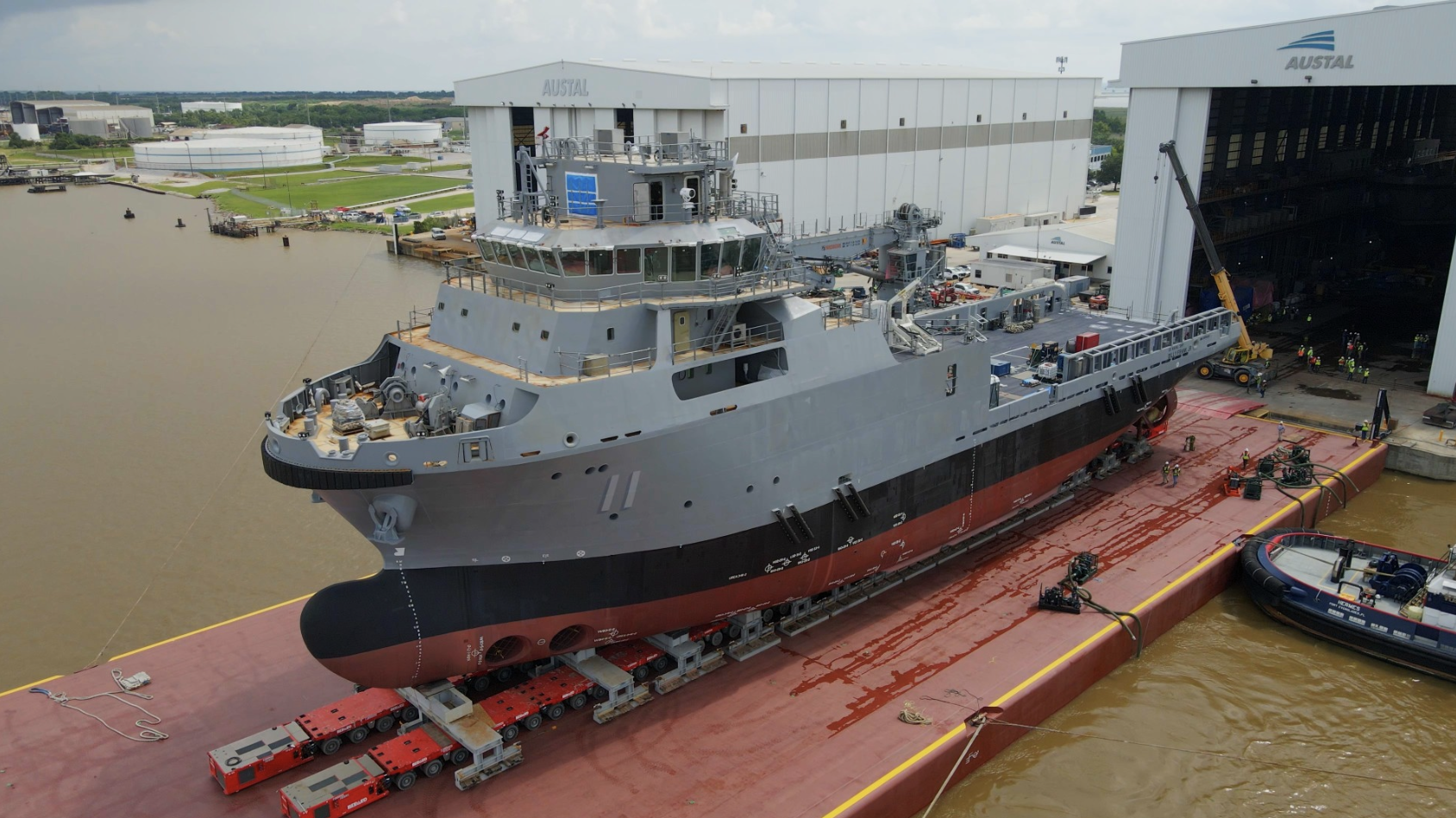
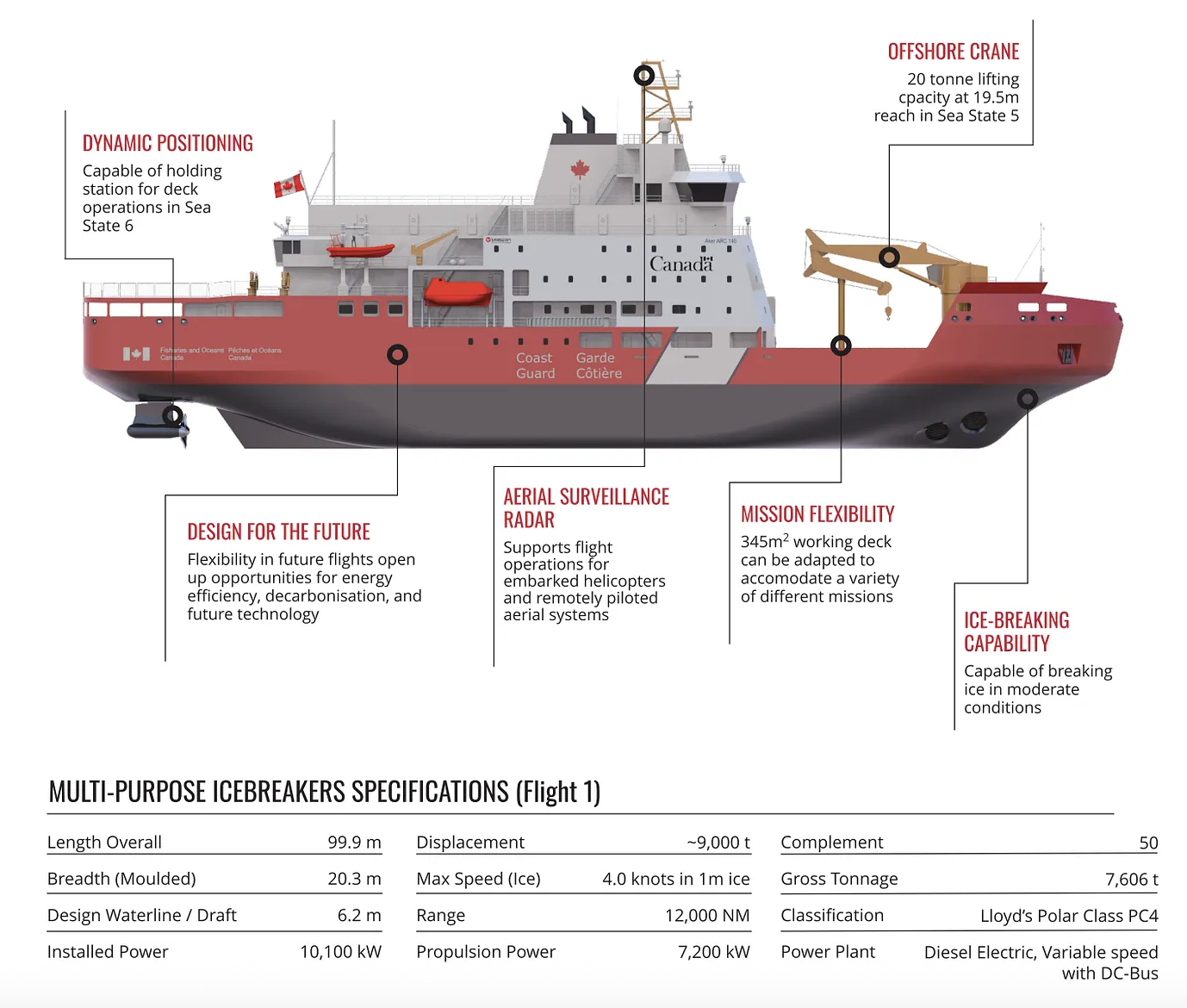
Canadian CG MPV. Credit Aker Arctic.

An excellent article here from Sixty Degrees North.

Minor difference with the analysis above, authors states,

“Note that it is about 3,000 nautical miles from Seattle to northern Alaska, so the 6,000 nm range in the RFI is likely insufficient for meaningful operations in the Arctic.”

The 6500 nautical mile range listed in the RFI is probably adequate given the possibility of refueling in Alaska, although longer range is always a desirable attribute.

Note there has been considerable news lately that Canadian Shipbuilder Davie has announced an intention to acquire Gulf Copper & Manufacturing Corporation with facilities in Port Arthur and Galveston. It is always going to be difficult to sell the idea that US military vessels should be built outside the US.

“Request for Information – Arctic Security Cutter (ASC): Icebreaking Capable Vessels or Vessel Designs that are Ready for Construction / This Could be the Great Lakes Icebreaker Too

Canadian CG MPV. Credit Aker Arctic.

The Coast Guard issued a Request for Information Apr 11, 2025 01:14 pm EDT with a response date of Apr 25, 2025 05:00 pm EDT.

Description

The United States Coast Guard (USCG) is conducting market research to assess the current capabilities of the U.S. and international maritime industrial base to support Arctic Security Cutter (ASC) acquisition efforts. Specifically, the USCG is seeking to increase their understanding of existing icebreaking capable vessels or vessel designs that are ready for construction or already in production.

The USCG is also interested in proven execution and build strategies and the ability of global shipyards to support the construction and subsequent launch of an icebreaking-capable vessel within 36-months of a contract award.

Responses are due no later than 5:00 PM ET on April 25, 2025.

Interested parties shall refer to the attached RFI package for complete submission requirements, technical expectations, and response format guidance. All responses shall be submitted electronically per the instructions provided.

This RFI does not constitute a Request for Proposal (RFP), nor does it guarantee future contract award. Responses will be used solely for market research and planning purposes.

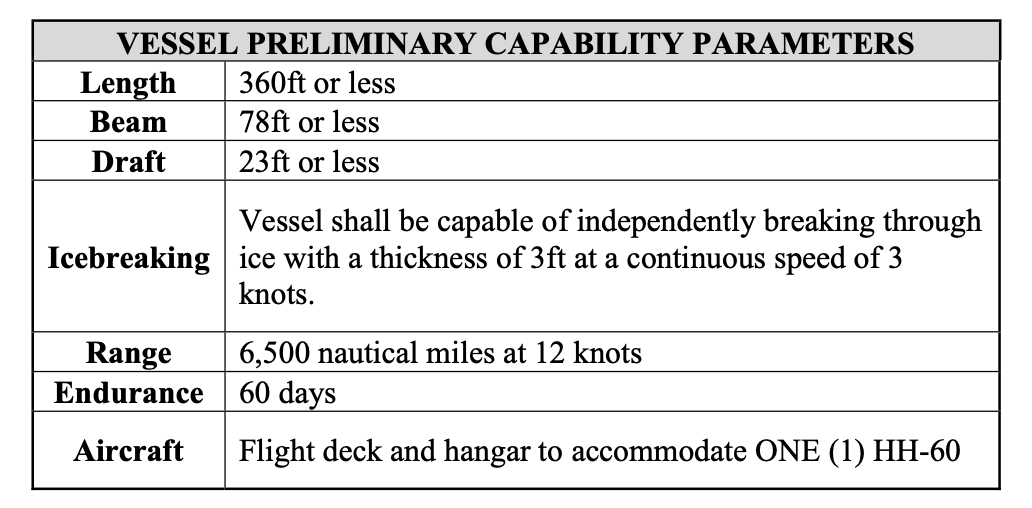
The RFI includes the following preliminary specifications:

What we see here is not particularly demanding. Healy is rated for breaking 4.5 ft at 3 knots. Reportedly Mackinaw can continuously proceed through fresh water ice up to 32 inches (81 cm) thick at 3 knots or 14 inches (36 cm) at 10 knots. It seems likely the ship may not need the 20,000 HP that has defined the lower limit for what the Coast Guard calls a Medium Icebreaker. The similar sized approximately 8,500 ton USCGC Glacier was capable of continuously breaking 4 ft of ice at 3 knots with 21,000 HP.

It appears that the Norwegian Svalbard and the Canadian Harry DeWolf (ice class 5) and Multi-Purpose Vessels (ice class 4) could qualify.

The maximum dimensions proposed would allow the icebreaker to transit the Saint Lawrence Seaway, meaning these could also serve as Great Lakes Icebreakers.

When the original USCGC Mackinaw was build, the Wind class icebreaker design was altered, making the ship broader with a shallower draft, only 19.5 feet vs 25’9″ for the Wind class. The maximum draft to pass the Saint Lawrence Seaway is 26.5 feet (8.08 meters). Since the draft specified for the Arctic Security Cutter is only 23 feet, I presume there is at least one port they plan to use where that is a controlling depth.

“Canada, Finland tout different paths of ‘icebreaker diplomacy’ with US” –Defense News

Coast Guard Cutter Healy (WAGB 20) and crew conduct formation steaming exercises with Candian Coast Guard Ship Sir Wilfrid Laurier and crew in the Beaufort Sea, July 28, 2023. The crew conducted a passenger exchange with the Sir Wilfrid Laurier off the coast of Utqiagvik, Alaska. (U.S. Coast Guard photo by Petty Officer 1st Class Michael Underwood)

Defense News reports,

Canadian and Finnish shipbuilders have made different offers to the United States for the production of icebreakers, which must weigh what it values more: speed or its sovereign shipyard industry.

It becomes a question of priorities with conflicting aims,

  • Get them fast?
  • Build in US yards to expand US shipbuilding capabilities?
  • Increase the USCG budget to pay for rapid acquisition?

It is unlikely, possibly impossible, the answer to all these questions will be yes.

“BOLLINGER SHIPYARDS SECURES $951 MILLION U.S. COAST GUARD CONTRACT MODIFICATION FOR POLAR SECURITY CUTTER PROGRAM” –Bollinger News Release

Below is a news release from Bollinger Shipyards.

The expected cost of these ships has gone up considerably, but comparing the current cost of the program, $5.1B for three ships, to the recent Canadian contracts for a similar ship, it seems the initial estimates were never realistic.


Tuesday, March 25, 2025 – Bollinger Shipyards announced today it has received a $951.6 million Fixed-Price-Incentive-Firm Target (FPIF) contract modification from the United States Coast Guard, advancing the Detail Design and Construction phase of the Polar Security Cutter (PSC) Program. This milestone underscores Bollinger’s integral role in strengthening America’s maritime presence and operational capabilities in the Arctic.

“Securing this contract modification has truly been a herculean effort and underscores the incredible trust the U.S. Government has placed in Bollinger to build and deliver the first heavy polar icebreaker in half a century,” said Ben Bordelon, President and CEO of Bollinger Shipyards. “We wouldn’t be in the solid position we’re in today without the leadership and the tireless efforts of the entire team at Bollinger Mississippi Shipbuilding. Their hard work and dedication have successfully put the PSC program on a strong path forward after a rocky start under the previous, foreign-owned builder. We now look forward to receiving the green light to begin full production.”

Bordelon also expressed gratitude for the role of national and state leadership in moving this program forward.

“I am also grateful for the leadership of President Trump and his Administration in recognizing the urgent need for American-made icebreakers. Because of his foresight and commitment to rebuilding America’s shipbuilding capabilities, this historic project is now moving forward.”

Bordelon also acknowledged Mississippi’s leadership for championing the PSC Program and state as a dominant force in shipbuilding.

“I also want to thank Governor Reeves and Mississippi’s Congressional Delegation for their leadership and support, especially as we leverage ongoing state and local investments to ensure Bollinger Mississippi remains the premier example of American shipbuilding.”

“As the Arctic grows as an arena of great power competition, the United States will require far more icebreaking capability from the U.S. Coast Guard to defend our interests in the region. Today’s award is a testament to the good work that Bollinger continues to do on the Polar Security Cutter program and the growing urgency with which their platforms are needed to boost our national defense,” said U.S. Sen. Roger Wicker (R-MS), Chairman of the Senate Armed Services Committee. “The Mississippi Gulf Coast will not only benefit from even more national security-focused quality jobs and economic development, but it will also continue to be a national player and powerhouse in mission-critical innovation and military capability.”

“Mississippi continues to prove its status as the premier destination for American shipbuilding—driving both national defense and commercial maritime strength,” said U.S. Senator Cindy Hyde-Smith (R-MS). “This milestone not only reinforces the Gulf Coast’s strategic importance, but it also reflects the value of returning critical shipbuilding programs to experienced, American-owned hands. Under Bollinger Shipyards’ strong leadership and investment, a once-stalled program will move forward with renewed urgency. I fully support this effort, which brings more high-quality jobs to Mississippi and ensures the Coast Guard is able to meet the growing challenges in the Arctic and beyond.”

Bollinger’s continued investment and growth on the Mississippi Gulf Coast reflect the skills, strength and talent of Mississippi’s workforce,” said Mississippi Governor Tate Reeves. “This announcement reinforces Mississippi’s pivotal role in American shipbuilding and solidifies Mississippi’s reputation as a national leader in maritime innovation and excellence.”

“Bollinger Mississippi Shipyards has a strong track record in American shipbuilding, and their role in the Polar Security Cutter program is another important step. This historic milestone strengthens national security, supports the domestic shipbuilding workforce, and enhances our Arctic presence. Ensuring the U.S. Coast Guard has the tools it needs is critical, and I look forward to seeing this project move forward,” said U.S. Rep. Mike Ezell (R-MS-04).

As Bollinger continues to enhance its operations in Mississippi into world-class shipyards, the company remains committed to making strategic investments to modernize and expand its capabilities. Additionally, the contract modification ensures Bollinger continues to provide its workforce with industry-leading wages throughout the life of the PSC program. Since acquiring foreign-owned VT Halter in November 2022, Bollinger has made a significant economic impact in the state through targeted investments and workforce expansion. To date, Bollinger has invested $76 million across its Mississippi facilities, including Bollinger Mississippi Shipbuilding (BMS), Bollinger Mississippi Repair (BMR), Bollinger Gulfport Shipyard (BGS), and CHAND Gulf Coast.

Since the acquisition in 2022, Bollinger has increased its Mississippi workforce by over 61%, with production roles at BMS alone increasing by more than 178%.  These numbers are expected to rise as the program reaches full production over the coming years. A key driver of this growth has been Bollinger’s innovative Bootcamp workforce development programs, which continue to strengthen the skilled labor pipeline.

“Our investment in developing the next generation of skilled American workers not only strengthens our competitive edge in the shipbuilding industry but also underscores our commitment to fostering economic growth and American innovation,” added Bordelon. “We are committed to providing high-quality careers that positively impact the families and communities we support along Mississippi’s Gulf coast.”

This contract modification primarily supports operations at Bollinger Mississippi Shipbuilding, with additional project contributions from facilities located in Massachusetts, Illinois, Virginia, Georgia, Louisiana, and other regions. Completion of the first Polar Security Cutter is anticipated by May 2030.

The Polar Security Cutter will provide the United States with enhanced operational capability in polar regions, playing a critical role in safeguarding national security, economic stability, and supporting vital maritime and commercial interests.

“Brazil to start the construction of 11 new NPa500MB offshore patrol vessels” –Navy News

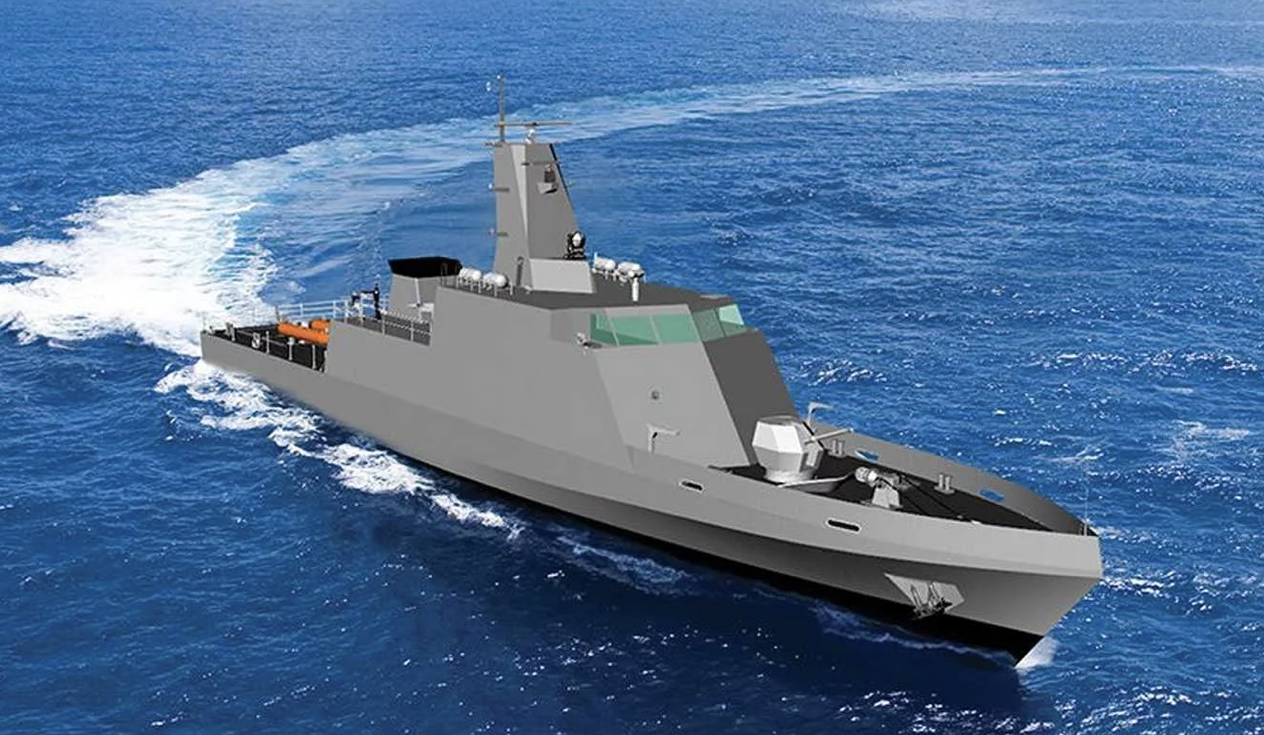
The planned total cost for the eight NPa500MB OPVs is estimated at 2.8 billion reais (~476 million USD), while three other vessels will be specifically configured for mine countermeasures operations. (Picture source: Emgepron)

Army Recognition’s Navy News reports,

“…February 24, 2025, the Brazilian Navy’s Naval Systems Design Center (CPSN) delivered the basic engineering plan for the 500-ton offshore patrol vessel (NPa500MB) to Emgepron, a state-owned company responsible for naval projects, in late January. This step is part of the Patrol Vessel Acquisition Program (PRONAPA), which involves the domestic construction of 11 offshore patrol vessels (OPVs) with a high percentage of locally sourced components. These vessels are designed for the surveillance and protection of the Exclusive Economic Zone (EEZ), search and rescue operations, and combating illegal activities such as illegal fishing.

Brazil has the tenth largest EEZ in the world at 3,830,955 km sq., about one third that of the US, less than Canada, Japan, or New Zealand, but more than Chile, Kiribati, or Mexico.

Brazil has no Coast Guard. The Brazilian Navy operates 22 vessels they refer to as offshore patrol vessels. Only three are what the USCG would call medium endurance cutters. Four are near 40 year old former Royal Navy 890 ton 14 knot steel hulled minesweepers. 12 are 217 tons full load, 152’7″ (46.5 m), 26.5 knot patrol craft commissioned 1993 to 2009.

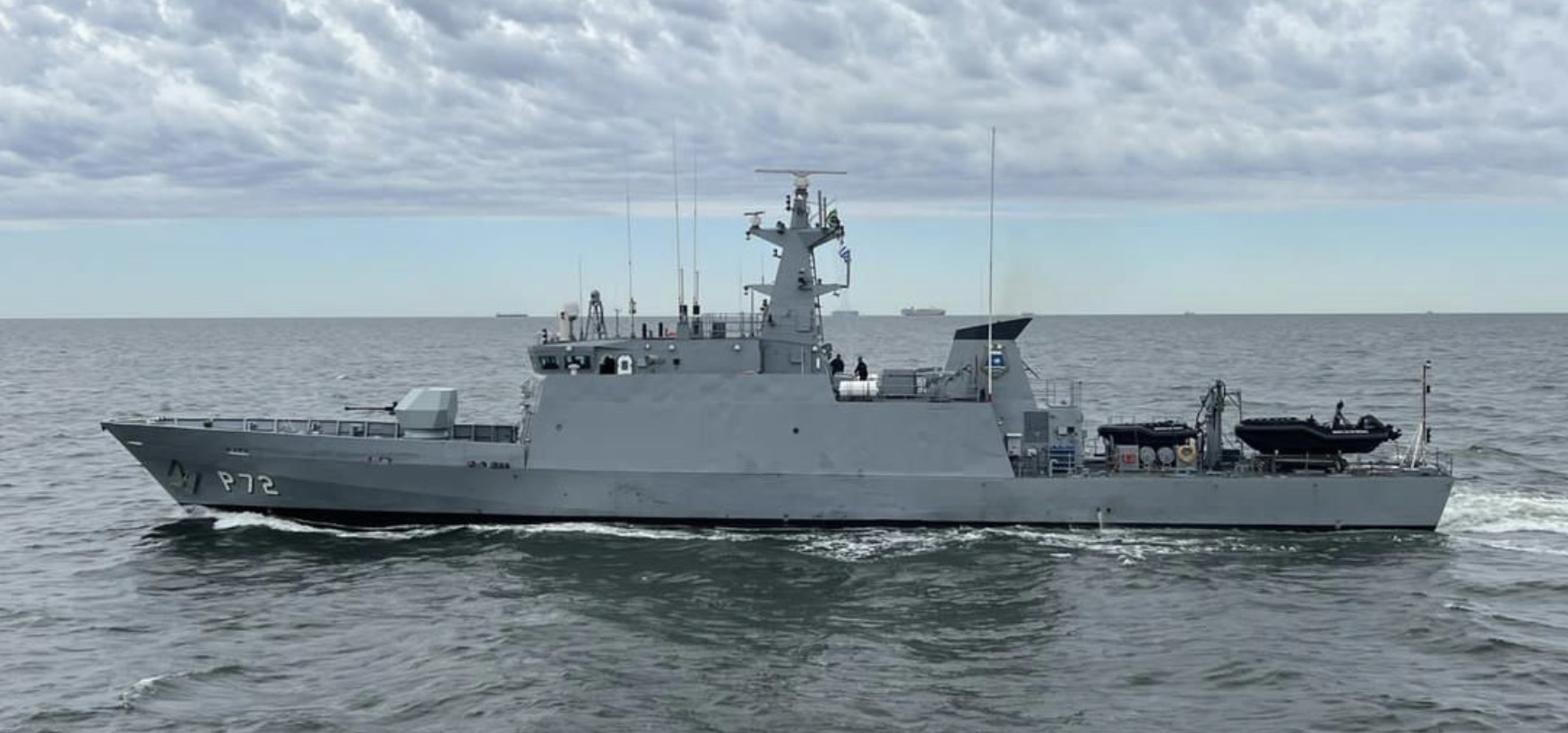
The remaining three are 500 ton, 182’5″, 21 knot Macaé class. Two vessels of this class are still building.

Macaé class patrol craft Navio-Patrulha Maracanã (P72) – 2023

If the Brazilian patrol vessel fleet were to provide the same coverage as the US Coast Guard in proportion to the size of their EEZ, they would need 12 large patrol ships (over 1000 tons) and about 20 smaller patrol craft. (They may be supplementing their patrol force with other classes of vessels.)

The new design appears to be an evolutionary outgrowth of the Macaé class since it is only slightly larger and has similar layout and performance: overall length of 58.9 meters (193’3″), a beam of 9.0 meters (29’6″), a maximum draft of 2.5 meters (8’2″), and a displacement of 564 tons

Presumably the Brazilian Navy sees the Macaé class as successful, but the new ships do not appear to be a significant improvement over the Macaé class. As I noted earlier (How Long Should an OPV be? Is There a Minimum?) I believe a length of at least 80 meters is the minimum for a truly fully capable OPV. In addition to better range, endurance, and seakeeping, the additional length allows incorporation of features that appear to be becoming standard on OPVs, including multiple, more capable, 8 to 11 meter RHIBs (perhaps a stern ramp), space for containerized mission modules and unmanned systems, and a flight deck and hangar for at least UASs.

The Macaé class was based on the 400 ton, 55 meter French P400 class patrol vessel. The French came to believe they needed a larger vessel and have begun replacing their P400 class with vessels with the 80 meter POM. Perhaps Brazil should again look to France and base their next OPV on the more capable POM.

“Davie Awarded Major Contract by Canada to Build Polar Icebreaker” –Davie News Release

Yesterday we learned that Canada had awarded a contract to Seaspan to build a 26,000 ton Polar Icebreaker. Today we learn that Canada awarded a second contract to a different shipyard, to build an additional 22,800 ton, 138.5 meter, polar icebreaker to a different design.

Below are news releases from Davie and Helsinki Shipyard.

It is almost impossible to accurately compare shipbuilding costs internationally, but the cost of this Canadian contract, $3.25B Canadian ($2.26B US), seems to suggest current estimates for the Polar Security Cutter are at least in the ballpark, and not outrageously high, rather that the initial contract was significantly underbid.


Davie Awarded Major Contract by Canada to Build Polar Icebreaker

March 8, 2025

Lévis — Davie, the Québec-based international shipbuilder, today announced it has been awarded a contract by the Government of Canada for the construction of a needed polar icebreaker. This initiative will leverage Davie’s international presence, with work beginning in 2025, under a robust contract framework that will enable Davie and Canada to set new standards of efficiency and productivity in vessel procurement.

Through this agreement, valued at $3.25 billion, Davie will deliver its production-ready heavy icebreaker design called the Polar Max to Canada by 2030. To support the rapid delivery of the ship, Davie will capitalize on the expertise of Helsinki Shipyard, which was acquired by Davie in 2023 with the support of the Québec government. Helsinki Shipyard has built over 50% of all the world’s icebreakers.

“Today marks a significant milestone in our commitment to enhancing our nation’s maritime capabilities” said The Honourable Jean-Yves Duclos, Minister of Public Services and Procurement and Quebec Lieutenant. “The contract awarded to Chantier Davie Canada Inc. for the build of a new polar icebreaker underscores our dedication to ensuring safe and efficient navigation in Arctic regions. This state-of-the-art vessel will not only strengthen our icebreaking fleet, but will also support critical scientific research and environmental protection efforts, and ensure national security in the Arctic. We are proud to take this step forward in strengthening our maritime infrastructure for safeguarding Canada’s sovereignty in the Arctic.”

While the early phase of the polar icebreaker construction is underway, the modernization of Davie’s Lévis Shipyard will continue, giving Davie time to accelerate the hiring of skilled workers across all trades. This will enable Davie to leverage its Canadian supply chain sooner than anticipated, while ensuring the completed polar icebreaker is delivered from Lévis. Davie plans to implement a workforce exchange, enabling Québec employees to learn world-class icebreaker construction expertise first-hand from their Finnish colleagues.

Davie President & CEO, James Davies, said: “Today’s announcement is truly transformative. Canada deserves immense credit for partnering with Davie on this groundbreaking procurement. Delivering such a special ship in a timely manner is in the best interests of all Canadians. It will accelerate economic benefits for Quebecers and strengthen the skills of our talented Lévis’ shipbuilders. In a volatile world, we can and must forge shipbuilding collaborations with trusted allies like Finland to secure shared interests. If not now, then when?”

“It is fitting that this announcement comes as Davie celebrates its 200th anniversary. The construction of the polar icebreaker will create opportunities for our employees and will place us firmly on track to create thousands of jobs far more quickly. Our Québec suppliers will be rapidly activated to help us deliver this needed ship in record time. There is a geopolitical imperative to act to protect our interests and we thank the Government of Canada and the Government of Québec for their vision and recognizing the time is now,” commented Alex Vicefield, Chairman and CEO of Inocea, the parent company of Davie Shipbuilding.

This contract is huge win for the ICE Pact. The Polar Max will be the first flagship project of the trilateral partnership. It will be proof that transatlantic collaboration is possible with the Polar Max delivered by Canadian shipbuilders supported by their Finnish colleagues.

A Win for Québec and for Canada

This announcement will bring immense benefits to Québec and the rest of Canada. Davie is committed to building a strong network of shipbuilding suppliers and plans to invest more than $200 million in local small- and medium-sized businesses to help them scale and reap the opportunities of shipbuilding contracts over the coming years and further Québec’s position as a naval construction hub.

Building on the success of our delivery of the NSC Asterix in 2018, Davie is once again committed to delivering on time and on budget.

As the global leader in Arctic shipbuilding, Davie stands out for its innovative approach and commitment to doing things differently. By working closely with Canada, Davie designed the strategy to expedite production and improve efficiency. This program will showcase Davie’s shipbuilding excellence, strengthen the local shipbuilding value chain, and create future major export opportunities for everyone involved.

About Davie

Based in Québec, Canada since 1825, Davie is a world-class designer and builder of specialist, mission-critical ships such as icebreakers, ferries and warships for government and commercial customers. Davie became a partner in the Government of Canada’s National Shipbuilding Strategy on April 4, 2023. This historic agreement is for the design and construction of the largest and most technologically advanced ice-going ships ever constructed in and for Canada. The initial $8.5 billion package of work includes seven heavy icebreakers and two large hybrid-powered ferries. In November 2023, Davie acquired Finland’s Helsinki Shipyard, the world leader in icebreaker design and construction. Find out more at davie.ca and helsinkishipyard.fi.


DAVIE AND CANADIAN GOVERNMENT AGREE ON HEAVY ICEBREAKER CONSTRUCTION – WORK TO BEGIN AT HELSINKI SHIPYARD

8.3.2025

Canadian-owned Davie, which owns the Helsinki Shipyard, signed an agreement with the Canadian government to construct a heavy icebreaker. The new vessel will be based on Davie’s advanced Polar Max icebreaker, created by the Helsinki Shipyard basing on Aker Arctic’s original Aker ARC 148 hull form.

Polar Max is the first newbuild project at the Helsinki Shipyard under Davie’s ownership, and it will be carried out in collaboration between Finnish and Canadian maritime industry experts. The work will begin in Helsinki and be completed at Davie’s shipyard in Canada. The finished vessel is scheduled to be delivered to the Canadian government by 2030. The unique expertise of the Helsinki Shipyard will play a significant role in delivering the vessel on such a fast schedule.

The construction of the icebreaker is expected to increase the direct workforce at the Helsinki Shipyard by around 500 employees, with many hundreds more employed throughout the Finnish maritime industry cluster.

The icebreaker order is part of Canada’s national shipbuilding program. This new order is the second heavy icebreaker project in this program. The project is also aligned with the principles of the Icebreaker Collaboration Effort (“ICE Pact”) between Finland, the United States and Canada, which originated from President Trump’s 2020 discussions with the Finland government. The ICE Pact supports the West’s urgent need to build advanced icebreaker fleets to counter the expansion of adversaries in the polar regions.

“When we acquired Helsinki Shipyard, we pledged to rebuild this historic business. The Polar Max project is evidence that we are delivering on our promise. We can’t wait to begin this new chapter in Helsinki Shipyard’s story. The Canadian government deserves immense credit for partnering with Davie on this groundbreaking procurement. In such a volatile world, we can and must forge shipbuilding collaborations with trusted allies like Finland to defend our shared interests. If not now, then when?” said James Davies, President & CEO, Davie Shipbuilding.

“The Polar Max project is an important milestone in expanding production and design in Helsinki. The project is an excellent example of Finland’s leading Arctic shipbuilding expertise, which is in significant demand internationally,” said Kim Salmi, CEO of Helsinki Shipyard.

Polar Max will be 22,800 tonnes vessel with a length of 138,5 meters. Additionally, it functions as a research vessel, capable of performing oil spill response operations and emergency towing year-round. Davie continues to promote similar projects internationally and aims to accelerate the development of Finland’s maritime industry ecosystem and the creation of Finnish maritime innovations.

“Seaspan to Build Made-In-Canada Heavy Polar Icebreaker” –Seaspan News Release

Canadian Polar Icebreaker to be built by Seaspan

Below is a news release from Canadian shipbuilder, Seaspan.


March 7, 2025 – North Vancouver, BC – Today, Seaspan Shipyards (Seaspan) has been awarded the construction contract to build one of the Canadian Coast Guard’s (CCG) new heavy polar icebreakers.

The polar icebreaker will be built entirely in Canada at Seaspan’s Vancouver Shipyards, located in North Vancouver, British Columbia. With the contract now in place, Seaspan is ready to cut steel on this ship and begin full-rate construction on Canada’s newest vessel under the National Shipbuilding Strategy (NSS). Construction of this ship will support the work of a team of more than 1,000 local shipbuilders and a broad Canadian supply chain of over 800 Canadian companies contributing massive strategic value, innovation and economic benefits to Canada.

Building this complex and densely-outfitted multi-mission ship will mark the first time a polar icebreaker has been built in Canada in more than 60 years and will have more advanced capabilities than the CCG’s current heavy icebreakers. Once delivered, this made-in-Canada heavy polar icebreaker will be one of the most advanced and capable icebreakers in the entire world. It will be one of only a handful of Polar Class 2 ships in operation and will allow for the CCG to operate self-sufficiently year-round in the high-Arctic, down to temperatures at -50°C.

The new polar icebreaker will be the seventh vessel designed and built by Seaspan under the NSS. It will also be the fifth Polar Class vessel to be built for the CCG, and one of up to 21 icebreaking vessels overall that Seaspan is constructing.

Functional design of the polar icebreaker was completed in 2024 by Seaspan, prior to the start of construction. For this ship, Seaspan worked extensively to build out the largest marine design and engineering team in Canada, which includes Seaspan employees and Canadian partners, while simultaneously working alongside established Finnish companies who have extensive experience in designing Arctic-going vessels.

Seaspan is the only Canadian shipyard with the expertise, facilities, and domestic supply-chain to build polar icebreakers in Canada. Official start of construction for this new heavy polar icebreaker is scheduled for April 2025.

QUOTES

“Today’s contract signing is the next step in our journey of fulfilling the vision of the National Shipbuilding Strategy, which is to build ships for Canada, in Canada, by Canadians. The NSS is demonstrating that a made-in-Canada approach is not only possible, but also imperative to our security and sovereignty. We look forward to starting construction on this ship next month, and to building more Polar Class vessels for Canada and our Ice Pact partners.”

  • John McCarthy, CEO, Seaspan Shipyards

“The contract awarded to Seaspan’s Vancouver Shipyards for the build of a new polar icebreaker is a significant step forward for Canada’s economic and natural resource sectors. This advanced vessel will not only ensure safe and efficient navigation in our polar regions but also support the sustainable development of our natural resources. By enhancing our icebreaking capabilities, we are opening new opportunities for economic growth, scientific research and environmental stewardship. This project exemplifies our commitment to leveraging cutting-edge technology to benefit our economy and protect our unique polar environments for future generations.”

  • The Hon. Jonathan Wilkinson, Minister of Energy and Natural Resources and MP for North Vancouver

“Today marks a significant milestone in our commitment to enhancing our nation’s maritime capabilities. The contract awarded to Seaspan’s Vancouver Shipyards for the build of a new polar icebreaker underscores our dedication to ensuring safe and efficient navigation in Arctic regions. This state-of-the-art vessel will not only strengthen our icebreaking fleet, but will also support critical scientific research and environmental protection efforts, and ensure national security in the Arctic. We are proud to take this step forward in strengthening our maritime infrastructure for safeguarding Canada’s sovereignty in the Arctic.”

  • The Hon. Jean-Yves Duclos, Minister of Public Services and Procurement and Quebec Lieutenant

“The National Shipbuilding Strategy is providing the Canadian Coast Guard with its fleet of the future. The polar icebreaker to be built by Vancouver Shipyards will be able to operate in the Arctic year-round, further bolstering our ability to deliver crucial services to Northern communities and support Canadian sovereignty in the Arctic.”

  • The Honourable Diane Lebouthillier, Minister of Fisheries, Oceans and the Canadian Coast Guard

“Our partnership with Seaspan to construct a polar icebreaker underscores our government’s steadfast commitment to ensuring the Canadian Coast Guard can continue to protect Canada’s sovereignty and interests, while also revitalizing Canada’s shipbuilding industry, creating high-paying jobs and maximizing economic benefits across the country.”

  • The Honourable François-Philippe Champagne, Minister of Innovation, Science and Industry

QUICK FACTS

  • The polar icebreaker will be 158 metres long and 28 metres wide, with a design displacement of 26,036t.
  • Highlights of key design features, include:
    • IACS Polar Class 2 (PC2) Heavy Icebreaker
    • More than 40MW of installed power
    • Ice-classed azimuthing propulsion system
    • Complex, multi-role mission capability
    • Scientific Laboratories
    • Moon Pool (to allow for safe deployment of equipment from within the ship)
    • Helicopter flight deck and Hangar
    • Vehicle Garage and future Remotely Piloted Aircraft System (RPAS) capability
  • Seaspan has already gained significant experience designing and building Polar Class vessels including three offshore fisheries science vessels which are now in service with the CCG; an offshore oceanographic science vessel that will be delivered to the CCG in the coming months; and a class of up sixteen multi-purpose icebreaking vessels (also Polar Class) that is currently in Construction Engineering.
  • Seaspan is one of the most modern shipyards in North America, following its privately funded $200M+ shipyard modernization, development of a skilled workforce and state-of-the-art, purpose-built infrastructure to deliver large, complex vessels.
  • Under the NSS, Seaspan has become a major economic and job creation engine. According to an economic analysis conducted by Deloitte, Seaspan has contributed $5.7 billion to Canada’s GDP between 2012-2023, while also creating or sustaining more than 7,000 jobs annually.
  • Seaspan’s NSS supply-chain has now grown to ~800 Canadian companies from coast-to-coast, with more than half being SMEs.

Coast Guard Cutter Procurement: Background and Issues for Congress, Updated March 5, 2025 –Congressional Research Service

US Capital West Side, by Martin Falbisoner

The Congressional Research Service (CRS) has again updated their “Report to Congress on Coast Guard Cutter Procurement”. (This link will always take you to the most recent edition of the report.) My last post on this evolving document was in reference to the March 25, 2024 update. The report includes a nice one page summary if you are new to our current shipbuilding activities but the news is on pages 27 and 28, the last two pages of the report excluding the Appendixes, which I have reproduced below,

The Administration asked for two FRCs and the House Appropriations Committee has recommended four. This, in addition to the 67 currently funded, would bring the total number of FRC funded to 71 which is the requirement in the current program of record, 58 for domestic use, one lost to a fire in dry dock, six for PATFORSWA, and six for the Indo-Pacific.

It’s not clear to me if the six for the Indo-Pacific is just the six currently planned for Guam or does this refer to six in addition to the three originally planned for Guam that replaced two WPB110s? It has appeared the Coast Guard might also base FRCs in American Samoa. Looking at the numbers that appears to be the case.

It also appears another WMEC 270 that has gone through Service Life Extension Program (SLEP) will be headed for the Pacific.


FY2025 DHS Appropriations Act (H.R. 8752)

House

The House Appropriations Committee, in its report (H.Rept. 118-553 of June 14, 2024 on H.R. 8752, recommended the funding levels shown in the HAC column of Table 1. H.Rept. 118-553 states.

Fast Response Cutter (FRC).—The recommendation provides $335,000,000 to purchase four additional FRCs, economic price adjustments related to the rise in material and labor costs, and post-delivery missionization costs.

Offshore Patrol Cutter.—The recommendation provides the requested $530,000,000 to continue the program of record for these critical assets. The Committee directs the Coast Guard to continue to provide additional program and schedule details, as described in the explanatory statement accompanying Public Law 117–103, as part of the required quarterly major acquisition briefings. (Pages 53-54)

H.Rept. 118-553 also states

Engagement in the Indo-Pacific.—The Committee supports the Coast Guard’s efforts to help develop the maritime capabilities of partners and allies in Southeast Asia. To better assess these efforts, the Committee directs the Coast Guard to provide a briefing within 180 days of the date of enactment of this Act on its work in the Indo-Pacific, including current efforts, opportunities for expansion, and options for improving coordination with and leveraging capabilities with the DOD, especially U.S. Indo-Pacific Command (USINDOPACOM)….

Oceania Operations.—The Committee recognizes the importance of the Coast Guard in maintaining the U.S.’s posture in the Indo-Pacific. The Committee supports the Coast Guard’s efforts to expand its presence in the Indo-Pacific, especially through the ship rider program, and encourages the Coast Guard to continue its coordination with USINDOPACOM and partner and allied nations. To better evaluate these efforts, the Committee directs the Coast Guard to report to the Committee not later than 180 days after the date of enactment of this Act assessing the Coast Guard’s capabilities and operations in the Indo-Pacific. This report should include a list of current assets in the region, any assets and capabilities needed to address unfulfilled requirements, any areas where logistical support is needed, and any changes that must be taken to effectively implement the U.S. Indo-Pacific Strategy. To support the Coast Guard’s Indo-Pacific operations, the recommendation provides $3,000,000 for increased presence of regional Coast Guard Maritime Advisors, Liaison Officers, Attaches, and other foreign engagement positions throughout the Indo-Pacific, and $1,200,000 for Indo-Pacific workforce support including for housing, medical, and childcare access for Coast Guard personnel.

270′ WMEC Service Life Extension Program.—The Committee supports the Coast Guard’s efforts to counter aggression by the PRC in the Indo-Pacific. The recommendation includes $60,000,000 for a service life extension program for one Medium Endurance Cutter, enabling the Coast Guard to deploy an additional support cutter to the Indo-Pacific. The Coast Guard plays a vital role in the Indo-Pacific, but the vast distances in the region and limited resources hamper the Coast Guard’s ability to expand its presence. This Indo-Pacific support cutter will help the Coast Guard increase its activities and better support the U.S. mission in the Indo-Pacific. (Pages 50, 51, and 53)

“USCG Polar Security Cutter Program Offers DOGE An Easy ‘Win’”–Forbes

Forbes’ always perceptive Craig Hooper takes a look at the Polar Security Cutter program and finds it ripe for cancellation, “years late, wildly over-budget, and both the budget and the schedule are at risk of slipping even further into the red…”

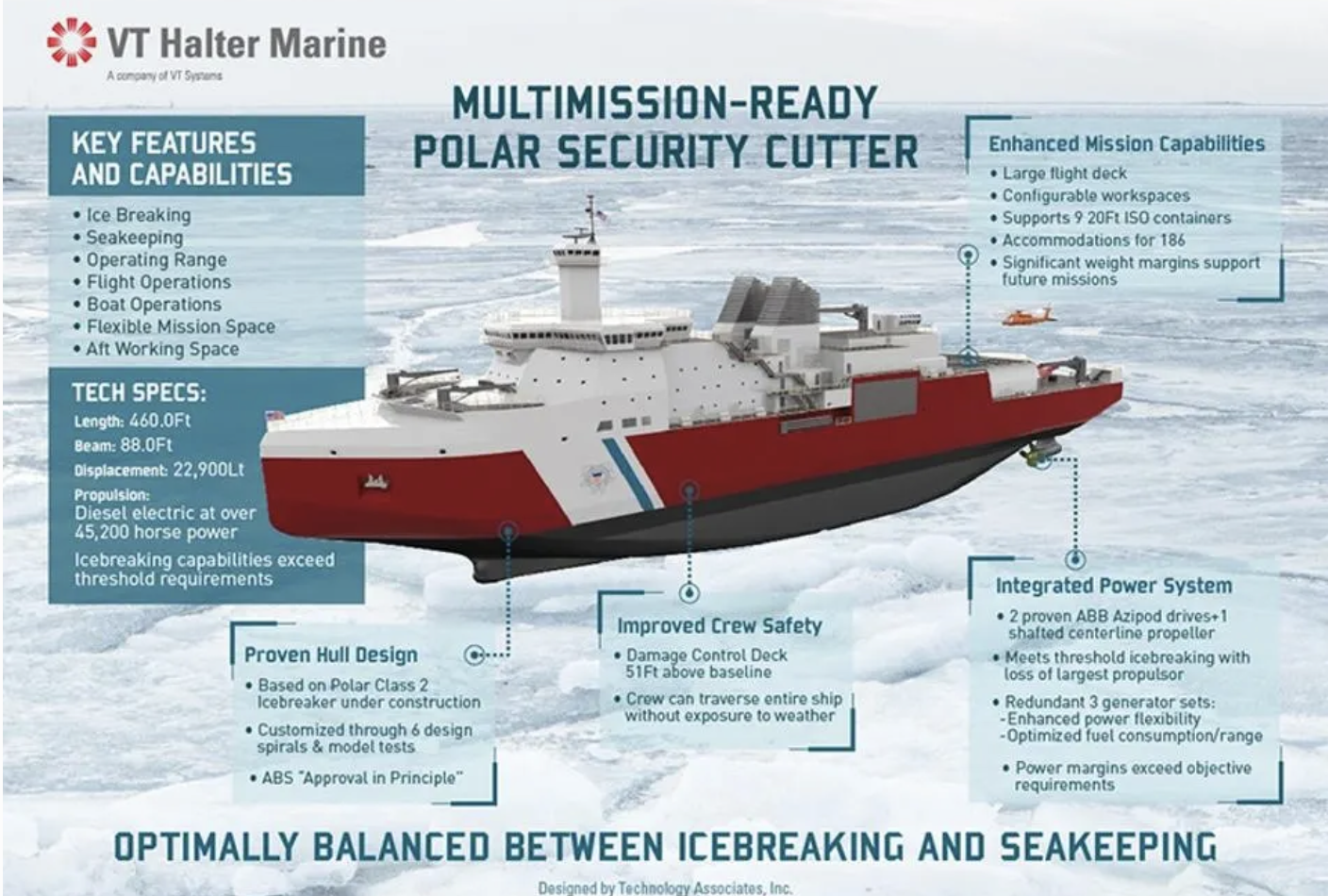
I still want to know who decided that the Coast Guard should award this critically important contract to a relatively inexperienced and less than fully successful shipyard even though they had failed to offer a proven design as had been required by the original solicitation and apparently repeatedly lied that the design was building (See the graphic from VT Halter above, “Proven Hull Design”).

I don’t know enough to agree that the Polar Security Cutter contract should be cancelled, but I do think Hooper would agree that it is time to start procurement of the Medium Icebreakers we know we need, even if the first is to be built in a foreign yard.

Given his comments on the Offshore Patrol Cutter (OPC) program in the same article, I think he might also agree that the Coast Guard should be looking at an alternate design for a medium endurance cutter replacement to be built in lieu of at least some of the planned OPCs.

The first OPC has yet to be delivered, and the costs are likely to increase. If the PSC aligns with the OPC’s ugly performance trends, starting PSC construction with this amount of design uncertainty puts the Coast Guard at real risk of an even bigger fiasco…Sadly, these Coast Guard tastemakers don’t reflect that the building rate–as it is now–appears unable to meet the positively glacial building pace set by years-late and massively over-budget Offshore Patrol Cutter.

Thanks to Paul for bringing this to my attention. 

“AKER ARCTIC SELECTED TO PROVIDE ADVANCED ICE LOAD MONITORING SYSTEM FOR FINNISH NAVY MULTI-ROLE CORVETTES” –Aker Arctic

Below is an Aker Arctic news release. Frankly I didn’t know there was such a thing as an ice load monitoring system, but it sounds like something we would want on ships going into the Arctic or Antarctic. I presume it is monitoring the role rate (Tups do you have more info?)

Specs for the class have been updated since the graphic above:

  • Displacement: 4300 tons
  • Length: 117 m (384′)
  • Width: 16 m (52.5′)
  • Draught: 5 m (16.4′)
  • Speed: 26 knots (48 km/h)
  • Crew: 73

More on this new class of warships here and here.


Aker Arctic has been chosen to supply its state-of-the-art ice load monitoring system to the Finnish Defence Forces Logistics Command. The contract includes the delivery of Aker Arctic’s ARC ILMS ice load monitoring, measurement and analysis system for the series of four Pohjanmaa-class multi-role corvettes currently under construction at Rauma Marine Constructions for the Finnish Navy.

The ARC ILMS is Aker Arctic’s platform for measuring loads that the ship’s structure experiences when operating in ice-cover waters, providing feedback to the operator on the safety level of the ship in ice.

“Following our recent successes being chosen to supply the ARC ILMS for the Canadian Coast Guard’s Multi-Purpose Vessels (MPV) (here–Chuck) and our collaboration with French cruise company Ponant measuring ice loads on the Le Commandant Charcot as she made her historic trans-Arctic voyage last summer, we are excited with the vote of confidence the Finnish Navy has put in us to supply our ARC ILMS to their important program” said Kari Laukia, Head of Equipment Business and Special Projects at Aker Arctic.

The contract builds on Aker Arctic’s long-term involvement with the Pohjanmaa-class. In addition to the ARC ILMS, Aker Arctic is supplying the ice-strengthened controllable pitch propellers and their pitch control mechanisms, propeller shafts, bearings and shaft seals. In addition to complete design, calculations and material supplies, Aker Arctic is also responsible for installation supervision and commissioning of the propulsion lines.