“Coast Guard Cutter Spencer completes service life extension program” –CG-9

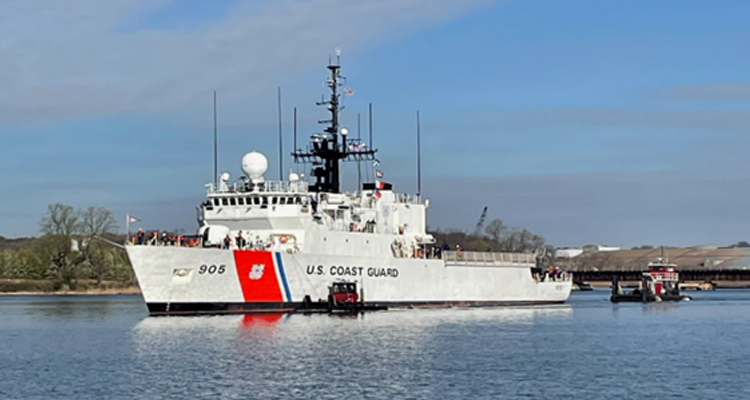
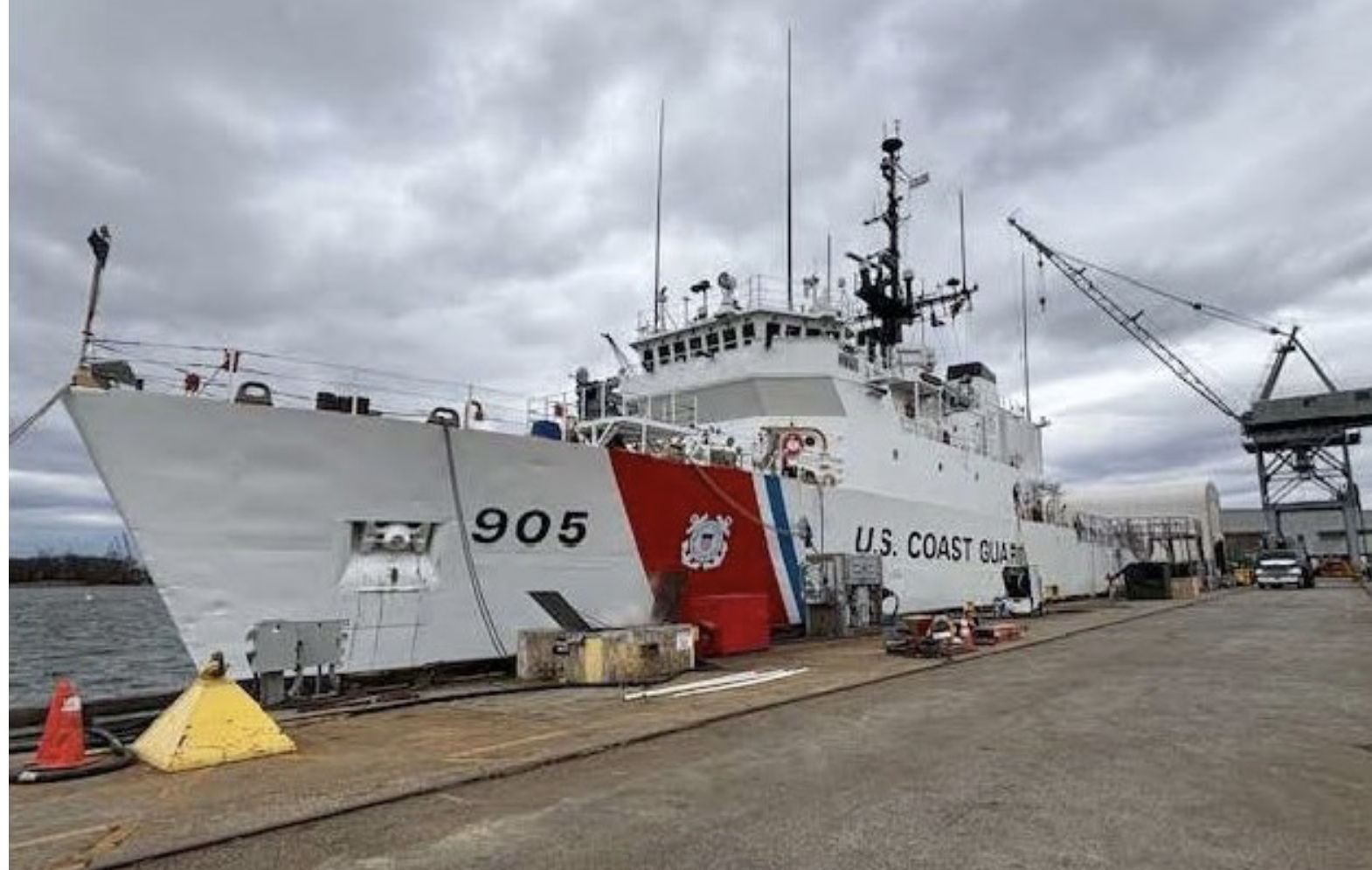
Coast Guard Cutter Spencer, at Coast Guard Yard in Baltimore, prepares for sea trials at the conclusion of its service life extension work. U.S. Coast Guard photo.

Below is a news release from the Acquisition Directorate (CG-9).

As can be seen in the accompanying photo, the 76mm Mk75 gun and Mk92 fire control systems have been removed, replaced by a 25mm Mk38, presumably a Mod3. The AN/SLQ-32 antennas remain. There is now, apparently, no multi-function/air search radar capability.

All six ships chosen for SLEP were “B Class” 270s built by Robert Derecktor Shipyard. Unlike the four “A Class” ships they are able to operate MH-60 helicopters.

USCGC Spencer had been home-ported in Portsmouth VA, but I suspect she like USCGC Harriett Lane will be transferred to the Pacific Area.


Coast Guard Cutter Spencer completes service life extension program

Coast Guard Cutter Spencer, a 270-foot Famous-class medium endurance cutter, departed Coast Guard Yard in Baltimore on March 8, 2025, having successfully completed its 20-month service life extension program (SLEP).

Managed by the Coast Guard’s In-Service Vessel Sustainment (ISVS) Program, the SLEP ensures mission readiness, improves reliability and reduces maintenance costs of the Coast Guard’s operational fleet. The program extends the service life of legacy cutters by replacing obsolete, unsupportable or maintenance-intensive systems, enabling the cutter to continue meeting mission demands in the most cost-effective manner.

The SLEP for the medium endurance cutters includes updates and replacements of electrical power generation and distribution systems, main diesel propulsion engines, and gun weapon systems. Spencer is the first of six medium endurance cutters scheduled to receive all major system overhauls including new main propulsion engines. This intensive work, which began in July 2023, will allow the cutter to operate for an additional decade, sustaining operational capability as the Coast Guard transitions to the offshore patrol cutter (OPC) fleet.

“These cutters have been essential for Coast Guard operations for over four decades, conducting missions from drug interdiction and fisheries enforcement to search and rescue,” said Kenneth King, ISVS program manager. “Investing in their sustainment is critical to ensuring these cutters remain operationally relevant and capable of executing the service’s most demanding missions until the next generation – the OPCs – are fully deployed.”

Five additional medium endurance cutters – Legare, Campbell, Forward, Escanaba and Tahoma – will complete SLEPs by 2030. Seneca and Harriet Lane previously served as prototypes for the electrical and structural work but did not receive new engines. Harriet Lane also served as the prototype for the MK38 gun weapon system.

For more information: In-Service Vessel Sustainment Program page and Offshore Patrol Cutter Program page

Are We Going to do the Same Thing to the Crew of Healy that was done to the Crew of Polar Star?

The spouse of a Coast Guard Cutter Healy (WAGB 20) crewmember waves goodbye as the cutter departs Base Seattle for a multi-month deployment to the Arctic, June 12, 2024. (U.S. Coast Guard photo by Petty Officer 3rd Class Annika Hirschler)

Having recently reread the Acquisition Directorate’s In-Service Vessel Sustainment web page, I found this.

Service life extension program for Coast Guard Cutter Healy will occur in a five-year phased production between 2026 and 2030. Healy is a 420-foot cutter, the service’s only active medium polar icebreaker, which was commissioned in 1999. When completed, the SLEP effort will recapitalize a number of major systems and extend the service life of the cutter until the polar security cutters are operational.

This sounds an awful lot like what was done to Polar Star over a five year period. Healy, like Polar Star, is based in Seattle, but Polar Star’s five year rolling Service Life Extension Program was not done in Seattle, it was done in Vallejo, CA. Vallejo is 776 miles from Seattle. These five phased Yard periods were extremely long, so the ship spent about half its down time far from home. I know they tried to mitigate the effect on the crew, but it had to be bad for crewmembers whose families were in Seattle.

I can’t help but think it would have been a good idea to change Polar Star’s homeport to Vallejo or Alameda (water depth at the Support Center permitting). Vallejo is a lower priced area than Seattle and there is property there from the old Navy shipyard that the city is still trying to develop. Pretty sure the city would be happy to have Healy homeported there.

If Vallejo was not possible, it is 31 miles from Vallejo to Alameda. That is not a particularly long commute in the Bay area, for the relatively short time the ship would be in Alameda, and there are relatively affordable places to live in between.

Is it going to be different for Healy?

I also notice this, that the SLEP is intended to “extend the service life of the cutter until the polar security cutters are operational.” Since Healy is nominally a medium icebreaker, I would have thought the Coast Guard would keep her in service until replaced by an Artic Security Cutter (medium icebreaker). Healy was commissioned in 1999, so I would have thought she would remain in service 40 years, until 2039. A SLEP ending in 2030/31 also suggests another ten years of life. Are we going to have to wait until 2039 for the Polar Security Cutters to be completed?

WMEC 270 SLEP / USCGC Legare Begins Service Life Extension Program at Coast Guard Yard

The Coast Guard Cutter Legare (WMEC 912) weighs anchor near the Statue of Liberty in New York City, New York, March 17, 2024. (U.S. Coast Guard photo courtesy of Legare)

The Acquisitions Directorate (CG-9) website includes a photo of USCGC Legare (WMEC-912) and the caption “270- foot medium endurance cutter Legare begins service life extension program at Coast Guard Yard.” Normally clicking on the caption would lead to a post expanding on the title, but in this case, it takes you to the In-Service Vessel Sustainment Program page. That page gives us this information about the 270 SLEP.

“Service life extension program for the 270-foot medium endurance cutters involves targeted system replacement to address system reliability, supportability, obsolescence and in­teroperability. This work will include upgrades or replacements to the electrical power generation and distribution system as well as the main propulsion engines. The mission is to facilitate continued operations during transition to the offshore patrol cutter by extending the service life of 270-foot cutters for up to 10 years. Work began on one prototype vessel at the Coast Guard Yard in July 2021 and on the second cutter in April 2022. Full production is scheduled to begin in 2023.”

The intention is not to SELP all 13 WMEC270s, rather they did two limited prototype SLEPS (Seneca, WMEC-906, and Harriet Lane, WMEC-903), and plan to do six full production SLEPs. These 270s should be the last WMECs in commission as they are replaced by Argus class Offshore Patrol Cutters. Harriet Lane’s most visible change was removal of her 76mm Mk75 gun and Mk92 fire control system. A 25mm Mk38 remote weapon station was mounted on the bow on an elevated position. This change is to be applied to all subsequent 270 SLEPs.

Spencer, (WMEC-905) was the first full production 270 SLEP. Spencer was the first 270 to receive new engines. Spencer’s old engines were to be remanufactured and reinstalled on a subsequent WMEC270 SLEP, presumably the newly arrived Legare.

This is a long process. Work on Harriet Lane lasted 15 months, so I expect we will have at least one 270 in the Yard being SLEPed for the next five years.

U.S. Coast Guard Heavy Icebreaker Returns to the U.S. (but Not to Homeport) Following Completion of Antarctic Mission

The U.S. Coast Guard Cutter Polar Star (WAGB 10) sails under San Francisco’s Golden Gate Bridge after its 138-day deployment to Antarctica for Operation Deep Freeze 2024, March 31, 2024. The cutter will soon enter a Northern California drydock for phase four of its five-year service life extension program to prepare the cutter for the following year’s Operation Deep Freeze, which is the annual logistical support mission provided by the Department of Defense to the National Science Foundation, managed by the U.S. Antarctic Program. (U.S. Coast Guard photo by Seaman Autumn Riewestahl)

Below is a Coast Guard News release. Note that while Polar Star has returned to the US, she did not return to Seattle, her homeport. Once again Polar Star will spend much of her inport time, probably the majority, away from homeport. Last year, in 2023, it was 19 weeks. The year before that, 2022, it was at least 146 days. I couldn’t find the figure for 2021, but I am sure it was similar. The decision not to change the ship’s homeport to the Bay Area, when they knew how much time the ship would spend away from homeport seems to me, cruel and unusual. I hope we never do this again.


April 4, 2024

U.S. Coast Guard heavy icebreaker returns to the U.S. following completion of Antarctic mission

SAN FRANCISCO – The Coast Guard Cutter Polar Star (WAGB 10) and crew returned to the United States Sunday, following a 138-day deployment to Antarctica to support Operation Deep Freeze 2024.

This deployment marks the Polar Star’s 27th journey to Antarctica in support of Operation Deep Freeze, an annual joint military service mission to resupply the United States Antarctic stations, in support of the National Science Foundation (NSF) – the lead agency for the United States Antarctic Program (USAP). This year also marks the 64th iteration of the annual operation.

The Polar Star crew departed Seattle bound for Antarctica on Nov. 15, 2023, traveling more than 27,500 miles through the North Pacific, South Pacific, Indian, and Southern Oceans, as well as the Bering Sea and Gulf of Alaska, which included stops on four continents.

While en route to Antarctica, the Polar Star made three logistical stops in Pearl Harbor, Hawaii, Sydney, and Hobart, Australia. In Hobart, the cutter and crew hosted the U.S. Ambassador for Australia, Caroline Kennedy, Australian members of parliament, Australian and Tasmanian government representatives, and local industry partners.

After arriving in Antarctica, the cutter broke a 38-mile channel through fast ice up to 12 feet thick, creating a navigable route for cargo vessels to reach McMurdo Station. The Polar Star and crew executed three close-quarters ice escorts for cargo vessels through difficult ice conditions to guarantee the delivery of nine million gallons of fuel and 80 million pounds of cargo to advance scientific endeavors in the most remote region of the world. The cutter departed the Antarctic region on Feb. 14 after 51 days of operations in support of Operation Deep Freeze 2024.

On the return journey, the Polar Star evaded a severe bomb cyclone in the Southern Ocean and had stops in Auckland, New Zealand, Yokosuka, Japan, and Dutch Harbor, Alaska. The Polar Star’s stop in Yokosuka consisted of a media visit and formal reception hosted aboard the cutter, where the crew conducted professional exchanges with senior maritime representatives from the United States, Japan, Australia, and New Zealand, underscoring the importance of collaboration within the Indo-Pacific to promote security and stability across the region.

“The successful completion of this mission stands as a testament to the relentless commitment and selflessness exhibited by our crew,” said Capt. Keith Ropella, Polar Star’s commanding officer. “Despite adverse weather, difficult ice, and formidable mechanical challenges, the crew of Polar Star not only achieved their mission but did so with remarkable expertise and teamwork, proof of their devotion to duty and dedication to their shipmates.”

Operation Deep Freeze is the annual logistical support mission the Department of Defense provides to the NSF, which the USAP manages. This includes strategic and tactical inter-theater airlift and airdrop coordination, aeromedical evacuation support, search and rescue response, sealift, seaport access, bulk fuel supply, port cargo handling, and transportation requirements supporting the NSF. This unique mission demonstrates U.S. commitment to the Antarctic Treaty and scientific research programs. The Polar Star and crew contribute to this yearly effort by breaking the solid ice channel to clear the way for supply vessels.

The Polar Star is now in Vallejo, California, for phase four of its five-year Service Life Extension Project (SLEP). SLEP was awarded to Mare Island Dry Dock, LLC to recapitalize targeted systems, including the propulsion, communication, and machinery control systems, and conduct significant maintenance to extend the cutter’s service life. The Coast Guard will mitigate the risk of lost operational days due to unplanned maintenance or system failures by replacing obsolete, unsupportable, or maintenance-intensive equipment. Each phase is coordinated so that operational commitments, like Operation Deep Freeze missions in Antarctica, will still be met.

The Seattle-based Polar Star is the United States’ only asset capable of providing access to both Polar Regions. The cutter is a 399-foot heavy polar icebreaker commissioned in 1976. It weighs 13,500 tons, is 84 feet wide, and has a 34-foot draft. The six diesel and three gas turbine engines produce up to 75,000 horsepower.

“Coast Guard to SLEP, Expand MH-60T Helicopter Fleet as Sikorsky Delivers First New Airframe” –Seapower / Implications for Cutters

Coast Guard to SLEP, Expand MH-60T Helicopter Fleet as Sikorsky Delivers First New Airframe

The Navy Leagues on line magazine, Seapower, reports,

“The U.S. Coast Guard has confirmed plans to expand is MH-60T Jayhawk helicopter fleet and make it the standard service-wide helicopter. The service life-extension of the current MH-60T fleet is being highlighted as Sikorsky, a Lockheed Martin company, delivers the first of 45 replacement MH-60T airframes to the Coast Guard.”

There is a lot of information here.

  • The Coast Guard currently has 48 MH-60T.
  • Generally, six are being overhauled.
  • 45 of these will receive new hulls.
  • 12 new hulls will be delivered annually.
  • Electric tail folding will be added to MH-60s beginning in 2024.

That suggests the SLEP program for the existing Fleet will go through FY 2027, but there is also an intent to replace all H-65s with H-60s. Ultimately the Service expects to have 127 H-60s. That is 79 additional H-60s. Growth will involve both new construction and additional Navy conversions. Sounds like we may still be as much as 13 years from full conversion to a full H-60 fleet, about 2036, but perhaps earlier.

H-65s will continue to operate from cutters for some time.

So, what about the H-65s and the smaller cutters that may not be able to operate the H-60? The nine “B class” 270s should be able to operate H-60s, but the 210s and four “A Class” 270s cannot. The last of those will probably be decommissioned about 2032, certainly no later than 2035.

Aviation Logistics Center (ALC), CGAS Elizabeth City should be wrapping up the MH-65E SLEP program about now, having begun full rate production in November 2019 at a rate of 22 aircraft a year. The SLEP reportedly added 10,000 hours to the life of each aircraft, so the H-65s will probably outlast the cutters that can only operate the smaller helicopter.

“Coast Guard Yard removes two 27-ton engines as part of medium endurance cutter service life extension program” –CG-9

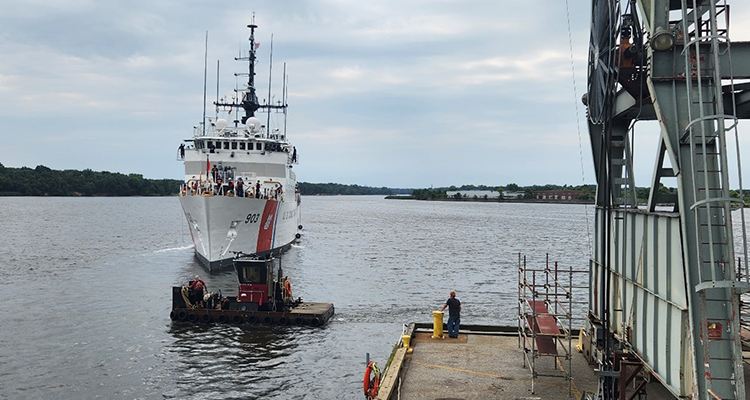
Coast Guard Cutter Spencer approaches the pier at Coast Guard Yard in Baltimore. Service life extension program work on the medium endurance cutter will last 15 months. U.S. Coast Guard photo.

Below is a news release from the Acquisitions Directorate (CG-9). Included is a statement that USCGC Campbell will be the next WMEC to undergo SLEP. Check out the video linked below.


Workers at Coast Guard Yard in Baltimore remove a 27-ton main diesel engine from Coast Guard Cutter Spencer. U.S. Coast Guard photo by Lt. Charles Lortz, In-Service Vessel Sustainment Project Residence Office Baltimore.

On Nov. 8, personnel at Coast Guard Yard in Baltimore achieved a milestone in the 270-foot medium endurance cutter service life extension program (SLEP) by safely removing the two main diesel engines from Coast Guard Cutter Spencer. The engines each weigh 54,000 pounds – or 27 tons – and this is the first lift of this weight that has been conducted at Coast Guard Yard in more than a decade. This also is the first time Yard personnel have removed an engine from a 270-foot medium endurance cutter.

To gain the necessary access, workers removed the extendable aircraft hangar and cut through two decks. View a time-lapse video of the process here.

While Coast Guard Cutters Seneca and Harriet Lane served as prototypes for the electrical and structural work and installation of a new gun weapons system, Spencer is the first Coast Guard Famous-class medium endurance cutter to receive all major SLEP work items, including replacement of the main diesel engines. The SLEP work will sustain the cutters’ capabilities, enabling them to meet mission needs until they are replaced by offshore patrol cutters. This program is part of the In-Service Vessel Sustainment (ISVS) Program, the Coast Guard’s strategic class-by-class evaluation of its vessels to determine what major maintenance and upgrades are necessary for each class of cutters to reach or extend their service lives.

Spencer has been in service since June 1986, and the original engines provided nearly 90,000 hours of operational service prior to their removal.

As the next phase in the SLEP, two new ALCO 251 engines will be installed. The engines removed from the Spencer will be remanufactured by Fairbanks Morse Defense and installed on the next medium endurance cutter to go through the SLEP, Coast Guard Cutter Campbell.

Coast Guard Yard is the service’s sole shipbuilding and major repair facility and part of the Coast Guard’s core industrial base and fleet support operations.

For more information:In-Service Vessel Sustainment Program page

“Coast Guard completes third phase of Polar Star service life extension program” –CG-9

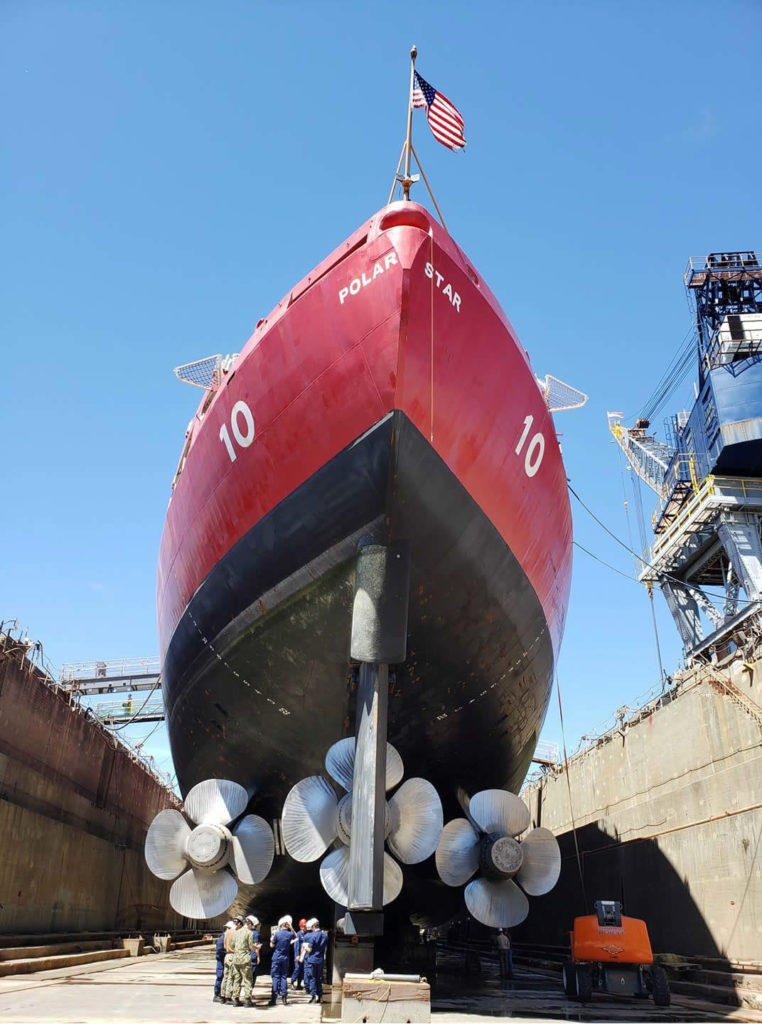
2020, As with previous Dry Docks, the three pitch propellers were removed, overhauled, and reinstalled. Photo: Official USCG Polar Star Facebook

Below is a news release from the Acquisitions Directorate (CG-9). Polar Star spent 19 weeks, almost four and a half months away from homeport in the shipyard. They did pretty much the same thing for the past two years and the plan is to continue to do it for two more years. The Service Life Extension Program (SLEP) is necessary because the Icebreaker (Polar Security Cutter) program has been so long delayed in both initiation and execution.

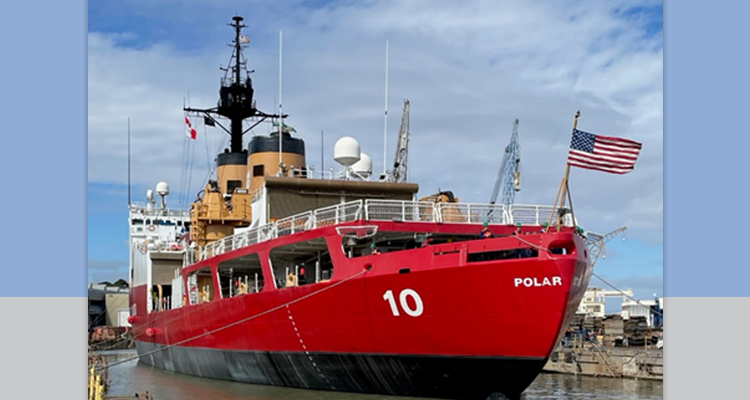
Coast Guard Cutter Polar Star undocking in Vallejo, California, after successfully completing phase three of its service life extension program. U.S. Coast Guard photo by LT Louis Simione.


The Coast Guard has completed the third of five planned phases of Coast Guard Cutter Polar Star’s service life extension program (SLEP) as part of the In-Service Vessel Sustainment Program.

Accomplished in Vallejo, California by Mare Island Dry Dock, the work encompassed a 132-day, $15.6M dry-docking evaluation along with service life extension machinery efforts. Annual maintenance accompanied SLEP funded improvements to shipboard equipment and numerous vital system upgrades for fire detection, communications and monitoring water quality.

Polar Star will return to Seattle to commence preparations for the 2024 Operation Deep Freeze deployment. The next SLEP phase is scheduled to begin in April 2024.

The Polar Star SLEP addressed targeted systems such as propulsion, communication and machinery control systems for recapitalization. Major maintenance extends the service life of Polar Star beyond that of its original design. By replacing obsolete, unsupportable or maintenance-intensive equipment, the Coast Guard is mitigating the risk of lost operational days due to unplanned maintenance or system failures. The contracted SLEP work items and recurring maintenance are taking place within a five-year, annually phased production schedule running from 2021 through 2025. Each phase is coordinated so that operational commitments will still be met.

Polar Star is the Coast Guard’s only active heavy polar icebreaker. The Coast Guard is investing in a new fleet of polar security cutters that will sustain the service’s capabilities to meet mission needs in both the Arctic and Antarctic regions.

For more information: In-Service Vessel Sustainment Program page and Polar Security Cutter Program page.

“Coast Guard completes work on service life extension program prototype” –CG-9

Coast Guard Cutter Harriet Lane departs Coast Guard Yard in Baltimore Aug. 3, 2023, after undergoing 15 months of In-Service Vessel Sustainment Program production work. The service life extension program for this cutter entailed 113 work items, worth $21 million, which included a new electrical system and an MK38 Mod 3 gun weapon system, a first for the medium endurance cutter class. Both Coast Guard Cutters Seneca and Harriet Lane served as medium endurance cutter prototypes for new electrical and structural work and Harriet Lane served as the gun weapons systems prototype.

For more information: In-Service Vessel Sustainment Program page


Above is an announcement by the Acquisitions Directorate (CG-9). As I noted in a July post about the WMEC270 Service Life Extension program, there are still some unknowns regarding the program. The photo above may answer some of those questions.

As expected, a Mk38 gun mount has replaced the 76mm Mk75. The CG-9 post indicates the installed mount is the 25mm Mk38 Mod3, and that there is one and only one mount. The Mk92 fire control system has apparently been removed and I see no apparent new radar that would replace its air search and approach control capability. It also appears the SLQ-32 has been removed.

It appears the Mk38 Mod3 is mounted on an elevated platform about four feet above the foc’sle deck. This should provide both a better field of fire and a degree of protection from green water coming over the bow, though I felt it should have been raised a full deck.

Harriet Lane was a prototype, but it wasn’t one of the six to get the complete SLEP. They are to be Spencer, Legare, Campbell, Forward, Escanaba and Tahoma.

Harriet Lane is expected to change homeports to the Pacific and be dedicated to operations in the Western Pacific.

I think it perhaps unfortunate, that the ship that may be placed in a position where it will need to face down China Coast Guard cutters armed with 76mm guns has lost hers. Perhaps it should not matter, but it may be more difficult to act boldly when your adversary can hurt you badly, from a distance, with impunity.

“Coast Guard begins production phase of medium endurance cutter service life extension program” –CG-9

Coast Guard Cutter Spencer approaches the pier at Coast Guard Yard in Baltimore. Service life extension program work on the medium endurance cutter will last 15 months. U.S. Coast Guard photo.

Below is a release from the Acquisitions Directorate, CG-9.

I would note that all six ships getting this service life extension are “B class” 270s, built by Robert Derecktor Shipyard, Middletown, RI, numbers 905, 907, 908, 909, 911, and 912. Unlike the first four “A class,” these have a stronger flight deck, capable of supporting H-60s.

This release clarifies a lot about the SLEP program, but there are still some unknowns.

Reportedly the 76mm Mk75 gun and presumably the associated Mk92 firecontrol system will be removed. A Mk38 gun mount would presumably replace the 76mm, but it is not clear if any additional radar would be added to replace the air search and approach control functions that were provided by the Mk92. “Harriet Lane served as the gun weapons system prototype,” but I have not seen any post conversion photos of Harriet Lane that might show us the new sensor/weapon combination. Harriet Lane is expected to change homeports from Norfolk to Honolulu early in FY2024. Harriet Lane is an “A class” 270.

I also wonder if the SLQ-32 electronic warfare systems will be retained? Will the gun be the same 25 mm we have on the Webber class, or will at least some get the 30mm Mk38 mod4?


Coast Guard begins production phase of medium endurance cutter service life extension program

July 14, 2023

The service life extension program (SLEP) for the 270-foot Famous-class medium endurance cutters (MECs) moved to the production phase July 1 with the start of industrial work on Coast Guard Cutter Spencer.

Four main areas are being addressed during this SLEP, encompassing electrical, weapons system, engine and structural areas. Coast Guard Cutters Seneca and Harriet Lane served as prototypes for the electrical and structural work; Harriet Lane served as the gun weapons system prototype. Work on Seneca ran from July 2021 to March 2022; Harriet Lane work began March 2022 and is scheduled to be completed in August 2023.

Spencer will be the first hull to receive all major work items, including new main diesel engines. The work is scheduled to last 15 months.

SLEP work on the 270-foot MECs is planned through spring 2028 on five additional hulls: Legare, Campbell, Forward, Escanaba and Tahoma. The work involves targeted system replacement to address system reliability, supportability and obsolescence. SLEP work is completed at Coast Guard Yard concurrently with regular maintenance activities to achieve overall schedule and cost savings. The work will facilitate continued MEC operations during the service’s transition to the future offshore patrol cutter class.

In-Service Vessel Sustainment is the Coast Guard’s strategic class-by-class evaluation of its vessels to determine what major maintenance and upgrades are necessary for them to reach or extend their service lives.

For more information: In-Service Vessel Sustainment Program page

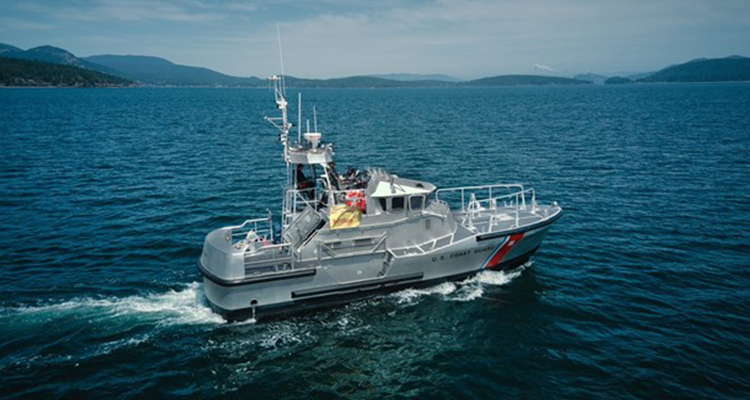
“First 47-foot motor lifeboats delivered following design modification to service life extension program” –CG-9

U.S. Coast Guard photo.

Below the line is the latest Acquisitions Directorate report on the 47 foot MLB life extension program. Previous reports containing additional information are:


First 47-foot motor lifeboats delivered following design modification to service life extension program

The Coast Guard’s In-Service Vessel Sustainment (ISVS) Program in partnership with the Boat Acquisition Program completed service life extension program (SLEP) work on a ninth and 10th 47-foot motor lifeboat (MLB) in June.

The SLEP work package for these two MLBs incorporated design modifications to address operational test and evaluation (OT&E) findings. The extra time and resource investment to develop and refine solutions from the OT&E findings for these two boats should reduce future MLB SLEP durations.

Based on the OT&E findings, the additional work completed on these MLBs encompassed a reconfiguration of the open and enclosed bridge areas, revised console configuration on the open bridge and revised exterior lighting. Further repairs under the SLEP included engine control system modifications to improve speed and responsiveness in hazardous surf conditions as well as extensive hull plating replacement.

For efficiency, the SLEP work is being conducted in two locations, one on each coast, and each facility worked on one of the MLBs incorporating the OT&E production modifications.

On the West Coast, the work was completed in Bellingham, Washington, on June 14, 2023. This MLB was the first post-SLEP boat delivered to Station Umpqua River along the Central Oregon coast.

On the East Coast, the work was completed in the newly opened facility in Portland, Connecticut, on June 9, 2023. This boat is the second post-SLEP MLB delivered to Station Barnegat Light, New Jersey.

SLEP work extends an asset’s service life by replacing obsolete, unsupportable or maintenance-intensive equipment with standardized configuration. The 47-foot MLB SLEP was initiated to extend the useful life of the MLB fleet by 20 years through 2047. The SLEP timeline remains on schedule to place up to 107 MLBs back to full operational capability prior to 2030.

For more information: In-Service Vessel Sustainment Program and Boat Acquisition Program pages