Is the Coast Guard Going to Bring a Knife to a Gun Fight? A Gun to a Missile Fight?

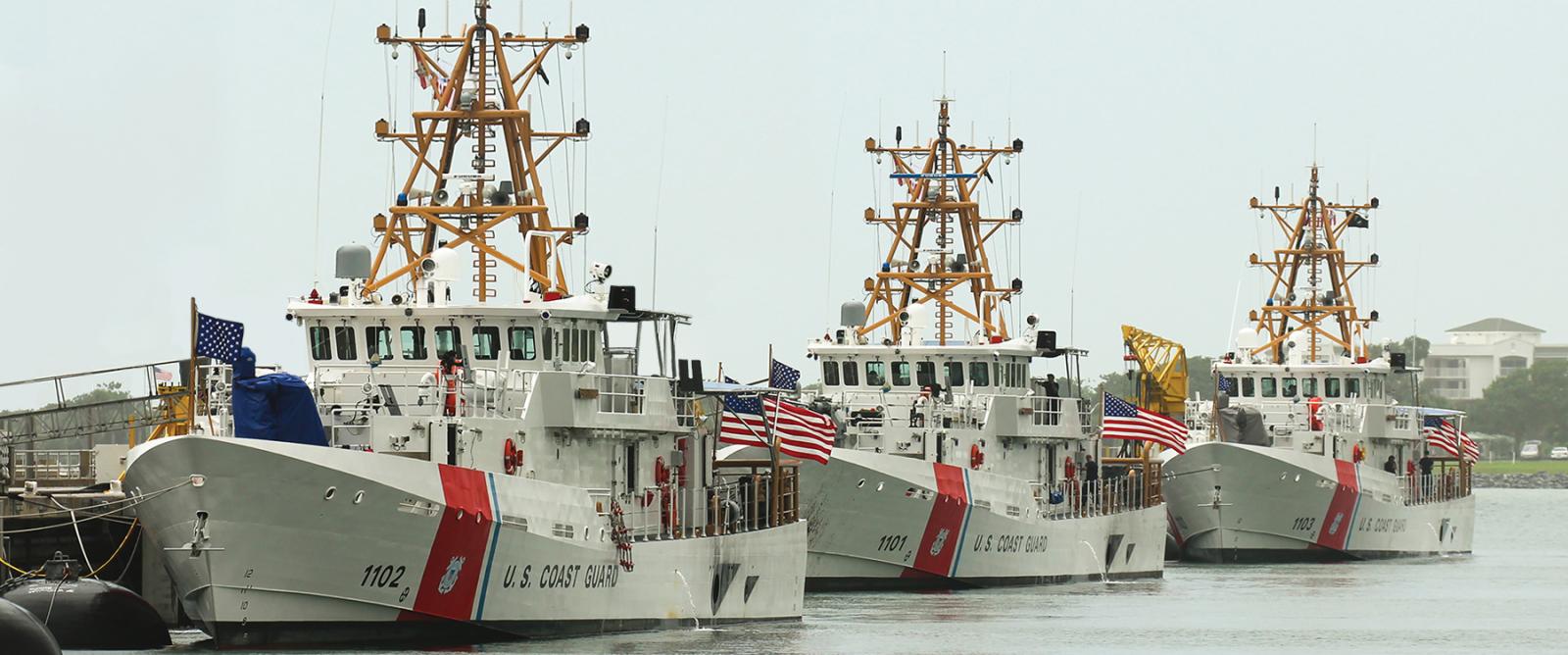
The first three fast response cutters—the USCGC Richard Etheridge (WPC-1102), Bernard C. Webber (WPC-1101), and William Flores (WPC-1103). Credit U.S. COAST GUARD. In case of a maritime terrorist attack, Webber class Fast Response Cutters are likely to be the most potent response the Coast Guard would be able field. 

Why is it that the Coast Guard has not mounted missiles or torpedoes on their ships since about 1991?

Currently the US Coast Guard’s most powerful weapons are the 57mm Mk110 and the 76mm Mk75. Do they assure that the Coast Guard will be able to take actions inherent in Coast Guard missions, including the ability to forcibly stop any vessel–any vessel— regardless of size? Will the larger cutters mounting these weapons even be in the vicinity when needed? When called upon, will the units on scene have any effective weapons?

I don’t think so.  In fact, we are less capable of doing so than we were in the 1930s.

When asked about this in 2020, then Commandant, Admiral Fagan, is reported to have said essentially, “For the present time, the U.S. Coast Guard is satisfied with keeping the current ‘gun and no missiles’ weapons fit the same and exercising the White-Hull Humanitarian symbol of Search and Rescue and Maritime Law Enforcement wherever and whenever the large Coast Guard Cutters sail into far off seas.”

My response at the time was here. I recognize some advantage in being seen as non-threatening, but few people would mistake even a missile armed Cutter for an invading force, and torpedoes are useless against targets on land. Coast Guard cutters overseas missions are primarily law enforcement. In the future, cutters may be in gray zone conflicts with the aggressive China Coast Guard–the largest coast guard fleet in the world, which usually operates cutters in groups. We don’t want USCG cutters to look like they can be pushed around.

Looking helpless may not inspire confidence in our allies.
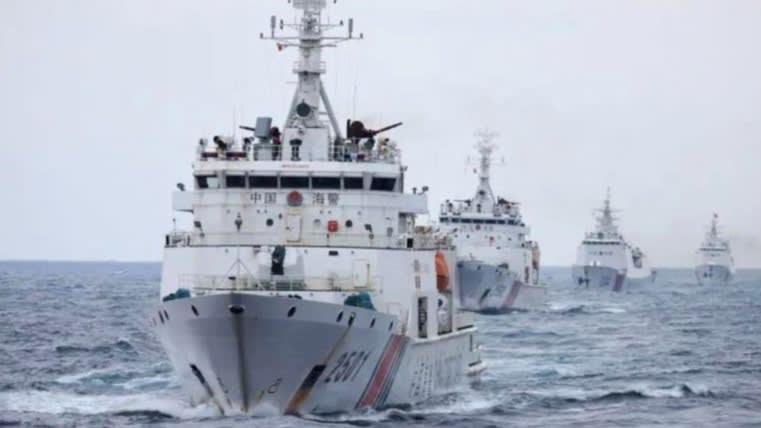
This Chinese coast guard ships armed with 76mm and 30mm guns© Kyodo

Wartime:

It seems likely that, if the US has a conflict with China, one of the first things the Coast Guard will have to do is seize all Chinese owned/flagged/manned vessels in US waters. Naturally some will resist. The Coast Guard will need to be able to overcome any resistance without asking for help from other armed services because they will be busy elsewhere.

As the conflict develops, it it likely the Coast Guard will be involved in blockade operations and otherwise tasked with hunting down Chinese controlled shipping that might be carrying agents, special forces, mines, or even containerized missile launchers.

We are not just talking about small vessels here. Some are over a thousand feet long and there are hundreds of them.

Law Enforcement/Counter-Terrorism:

Coast Guard vessels patrol boat size and larger are not just SAR assets. They are law enforcement units and in wartime combatants. Included in their peacetime law enforcement role is counter terrorism.

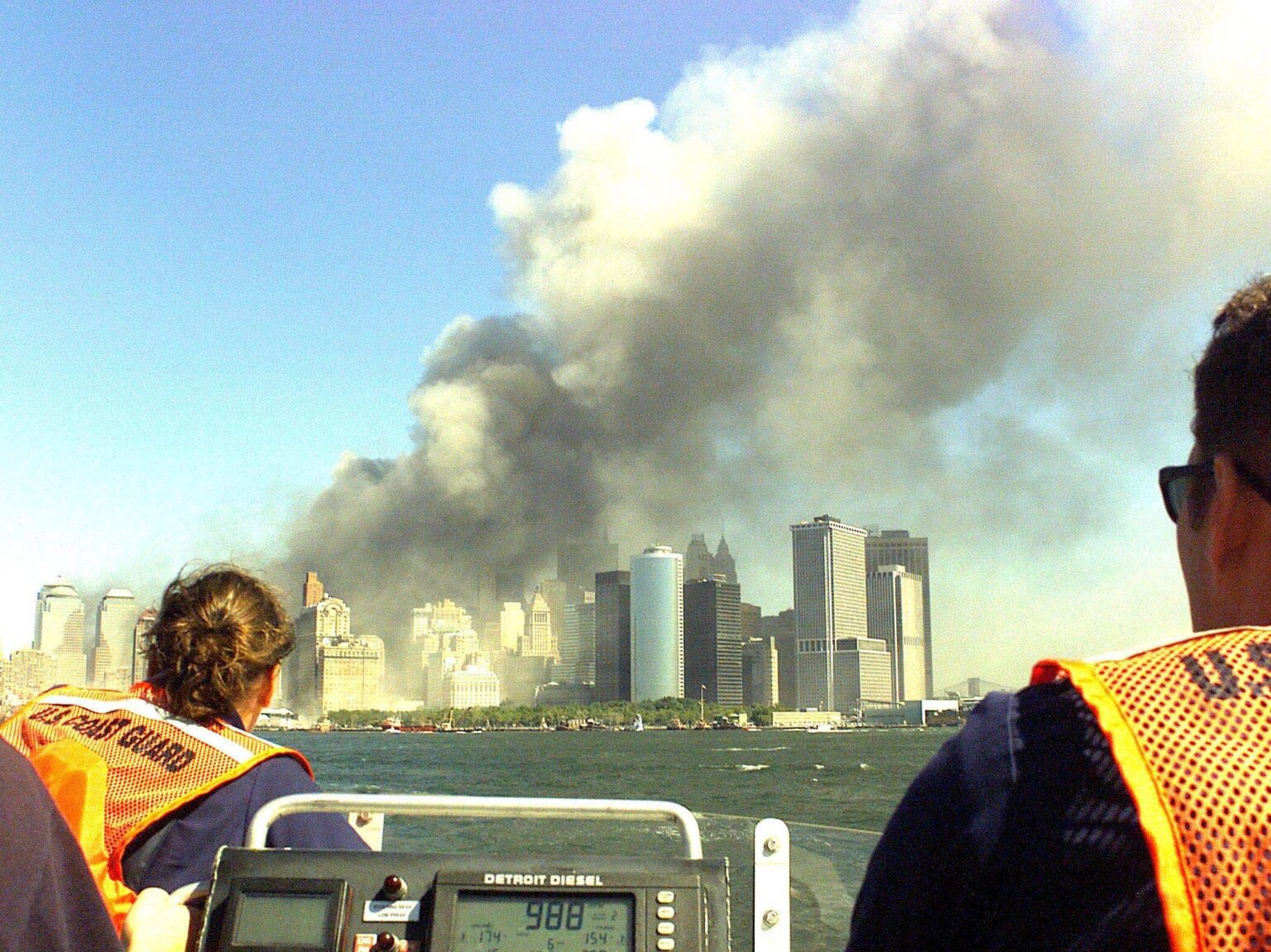
Wise men learn from the mistakes of others. Consider the lessons to be learned from the response to attacks on 9/11 and the North Hollywood shootout.

9/11: We knew about kamikazes. We knew airplanes loaded with fuel could be used as weapons. We knew that big planes were more destructive than small ones.

Domain awareness failed when the aircraft turned off or changed their transponder codes. Communications between FAA and NORAD were poor. Interceptors were too few and too far between. Interceptors once launched were sent in the wrong directions. Managers focused on the first attack, which was then already over, refused to receive a report of the second attack in progress.

Too many layers of decision making between detection and action. For timely action, best if the unit that detects an attack can respond immediately, and Coast Guard units are likely to be the first to recognize a maritime terrorist attack.
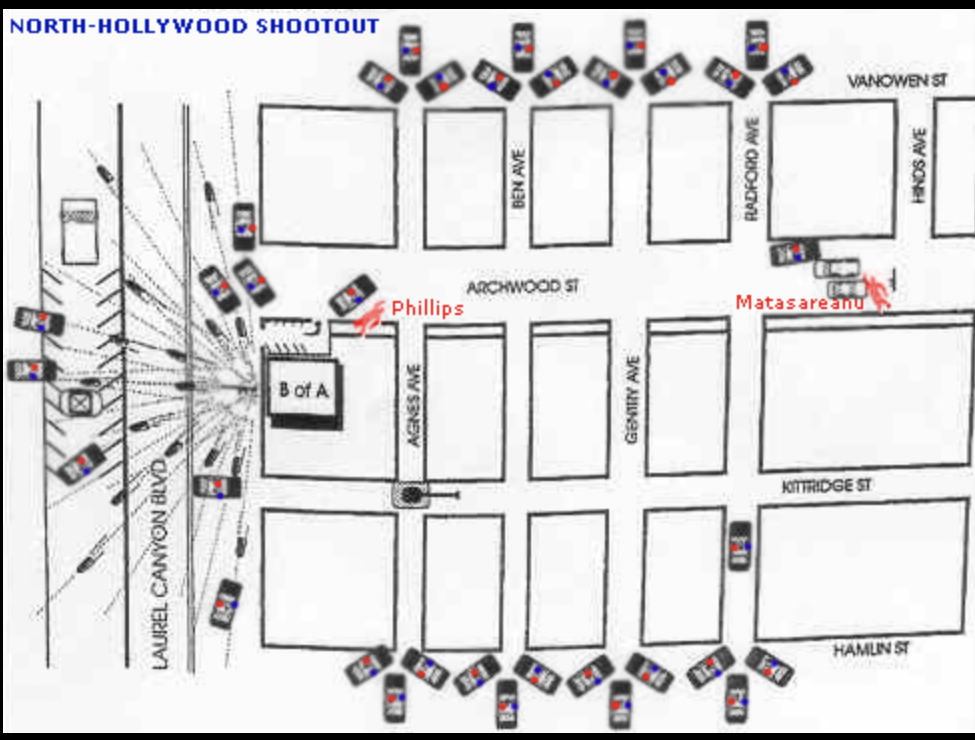
North Hollywood Shootout:

“The North Hollywood shootout, also known as the Battle of North Hollywood, was a confrontation between two heavily armed and armored bank robbers, Larry Phillips Jr. and Emil Mătăsăreanu, and police officers in the North Hollywood neighborhood of Los Angeles on February 28, 1997.

In this case the response to the crime was prompt but inadequate. At the time, the police on patrol were generally armed with only the classic 38 Special revolver, 9mm handguns, and a few shotguns. The bank robbers armor was impervious to these weapons. The robbers carried automatic rifles with high capacity magazines with up to 100 rounds. The two robbers fired approximately 1100 rounds. Some police officers even reequipped themselves with weapons from a local firearms dealer.

An inventory of the weapons used by the two bank robbers:

  • A Bushmaster XM-15 converted illegally to fire full auto with two 100-round Beta Magazines and fitted with a M16A1-style handguard
  • A Heckler & Koch HK-91 semi automatic rifle with several 30-round magazines
  • A Beretta 92FS with several magazines
  • Three different civilian-model Norinco Kalashnikov-style rifles converted illegally to fire full auto with several 75- to 100-round drum magazines and 30-round box magazines

The police were ultimately successful because of the overwhelming response. Over 300 law enforcement officers from various forces had responded to the citywide tactical alert, but they were really not prepared to confront just two men who were armed or protected in ways they did not expect. The perpetrators, Phillips was shot 11 times, including his self-inflicted gunshot wound to the chin, while Mătăsăreanu was shot 29 times. Twelve police officers and eight civilians were injured.

If terrorist sage a maritime attack, it is unlikely to be what the Coast Guard has trained for. Coast Guard capabilities are public knowledge. Ballistic protection to protect terrorist operators or shooters against common Coast Guard weapons is relatively easy.

Terrorist can easily put protected firing positions and strong points on a ship, even if the Coast Guard has not done it.

Tests have shown that 25mm Mk38 rounds may not even penetrate a quarter inch of aluminum.

Even relatively small terrorist controlled vessels could be armed with a variety of weapons more destructive than the .50 caliber machine gun or the 25mm gun. RPGs (rocket propelled grenades) are common, but there are recoilless rifles, heavy machine guns, anti-tank and anti-aircraft guns up to 152mm, and anti-tank guided missiles that would also work well against a cutter, that are widely distributed.

Here are two examples. Both are widely available, compact, and hard hitting. The options are almost endless.
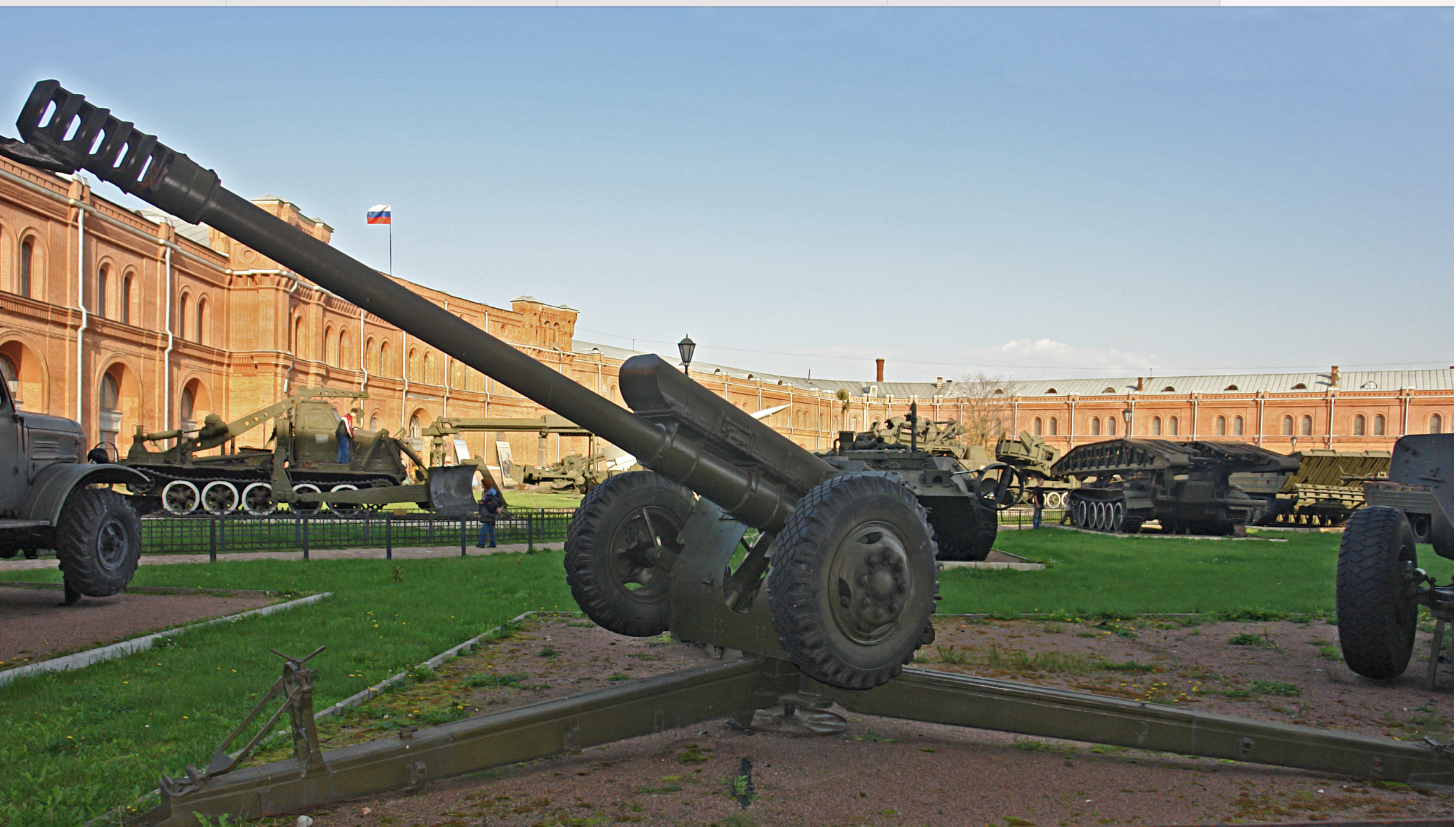
122mm howitzer D-30 (2A-18) Chief Designer F. F. Petrov (1960) Maximum range: 15300 meters Rate of fire: 6 – 8 rounds per minute Mass: 3200 kg Shell mass: 22 kg. Photo credit George Shuklin

The 122-mm howitzer D-30

 … is a Soviet howitzer that first entered service in 1960. It is a robust piece that focuses on the essential features of a towed field gun suitable for all conditions. The D-30 has a maximum range of 15.4 km (9.6 mi) or 21.9 km (13.6 mi) using rocket-assisted projectile ammunition.

With its three-leg mounting, the D-30 can be rapidly traversed through 360 degrees. Although no longer manufactured in the countries of the former Soviet Union, the D-30 is still manufactured internationally and is in service in more than 60 countries’ armed forces.
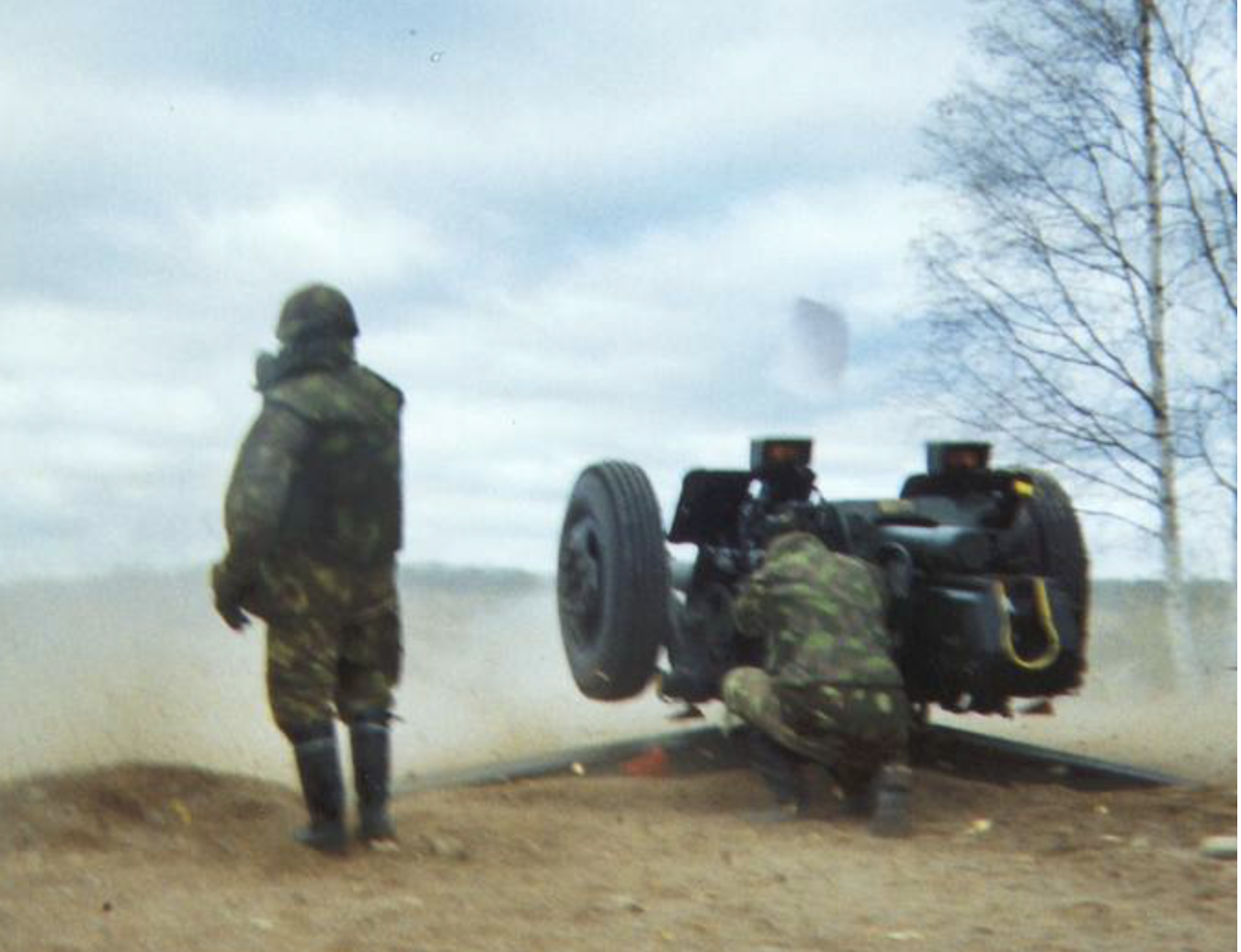
Finnish D-30 in direct fire during a training exercise. Photo credit: Jaakko Pulkkinen
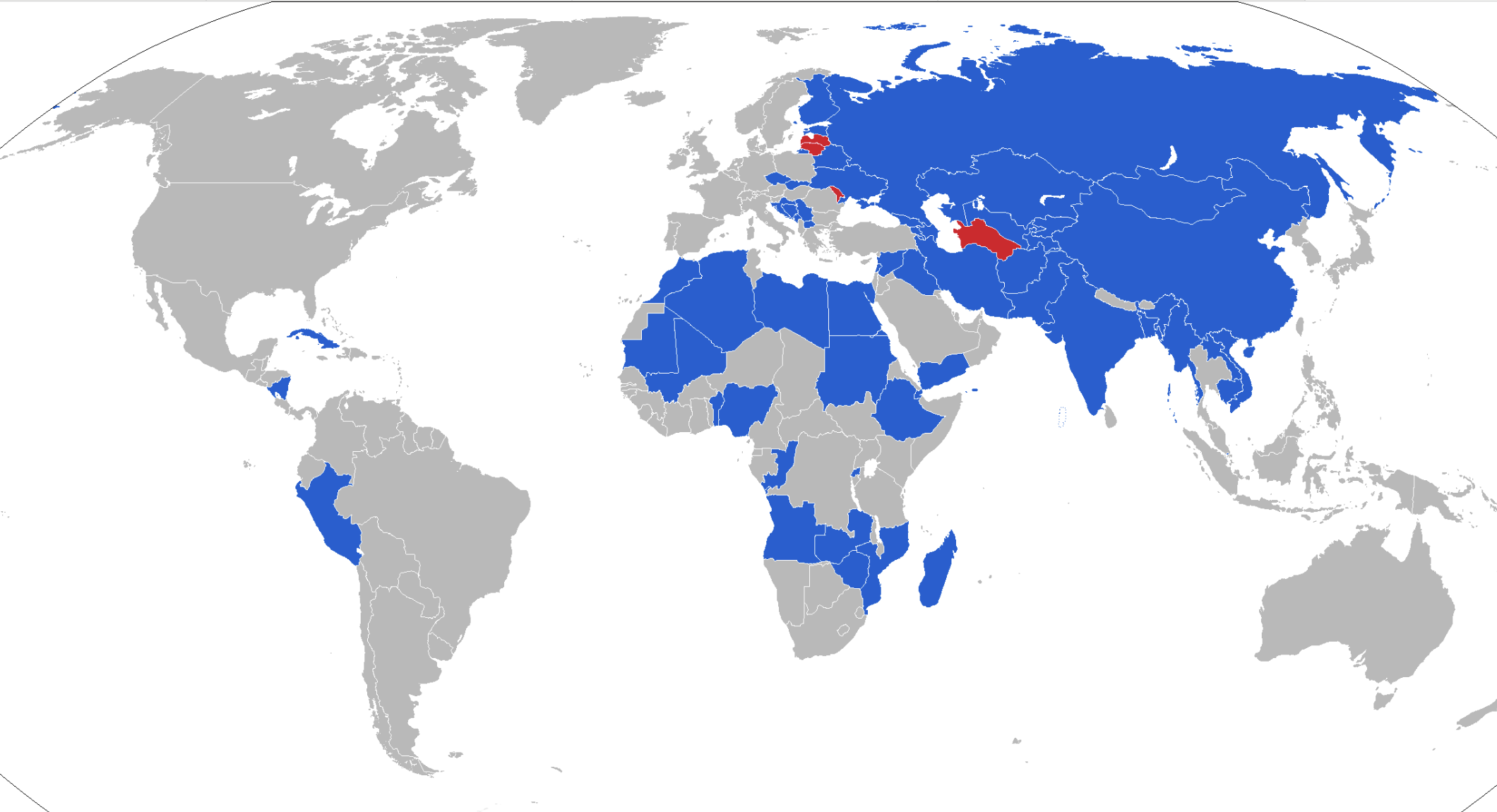
Map of D-30 operators in blue with former operators in red. From Wikipedia. Credit: Jurying
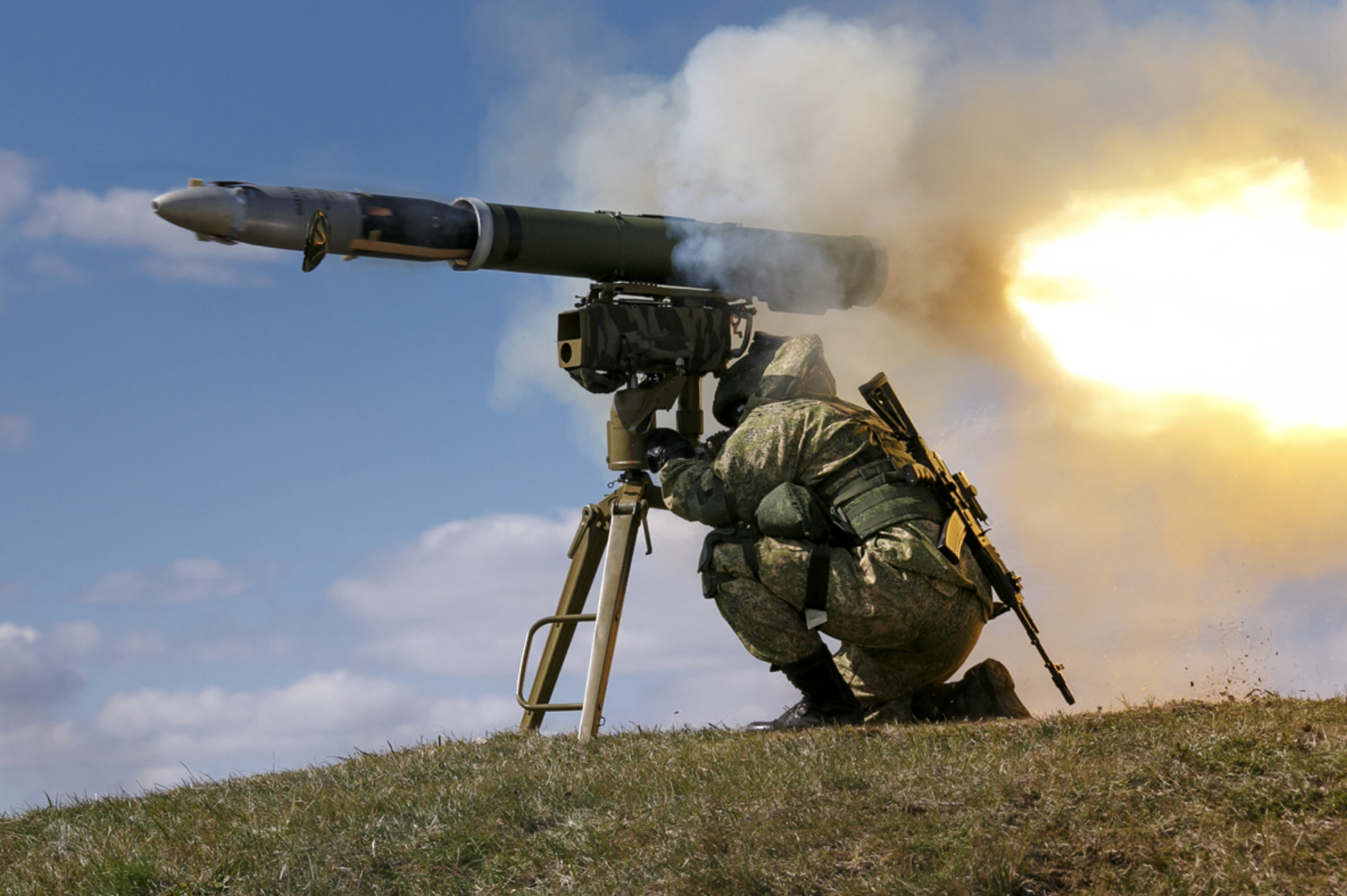
9M133 Kornet:

9M133 Kornet. Control check of cadets of the Training Center for Combat Use of Missile Troops and Artillery of the Ground Forces of the Western Military District (Moscow Region).

The 9M133 Kornet (Russian: Корнет; “Cornet”, NATO reporting name AT-14 Spriggan, export designation Kornet-E) is a Russian man-portable anti-tank guided missile (ATGM) intended for use against main battle tanks. It was first introduced into service with the Russian army in 1998.

The Kornet is among the most capable Russian ATGMs. It was further developed into the 9M133 Kornet-EM, which has increased range, an improved warhead, and equipped with an automatic target tracker (fire-and-forget capability).

The Kornet has been widely exported and is produced under license in several countries. It was first used in combat in 2003 and has since been used in many conflicts.
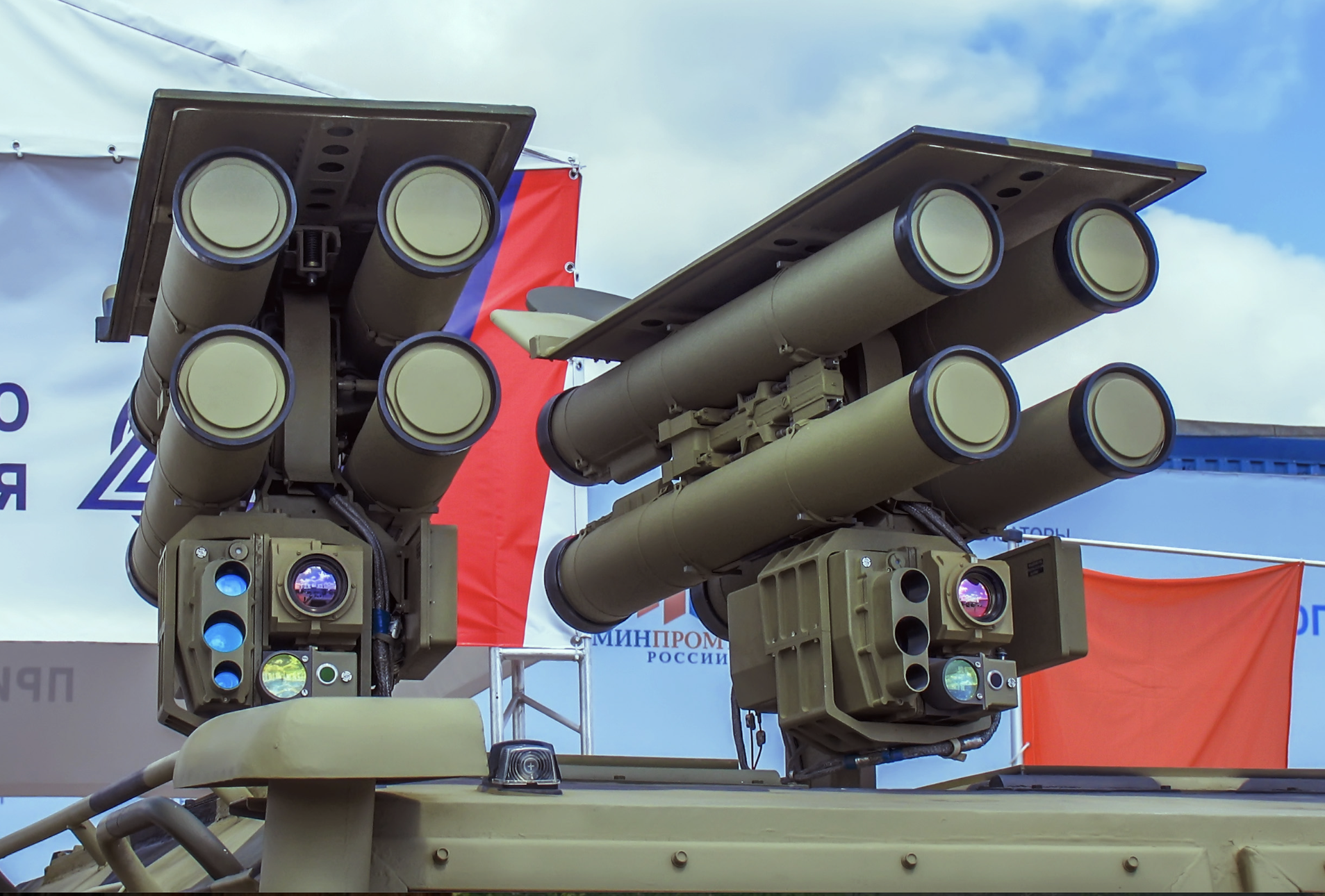
Kornet-EM missiles truck mounted Kornet-D launcher. Credit: Mike1979 Russia. Looks like this could be easily mounted in a container.
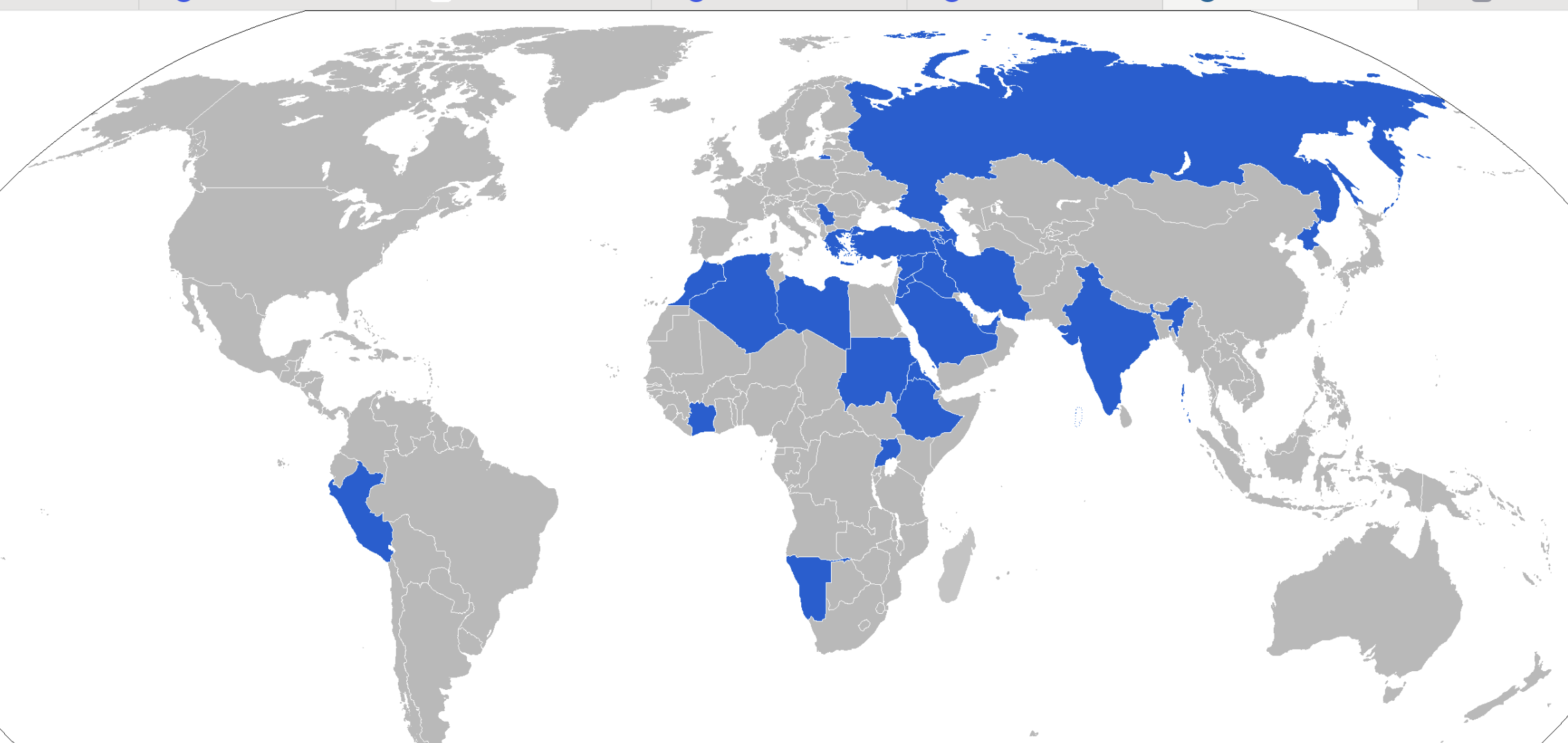
Map with 9M133 operators in blue. Author: Jurryaany

NON-STATE USERS:

“Ukraine’s New Maritime Drone Is A Jet Ski” –Covert Shores

Click to enlarge. Photo credit: hisutton.com

Covert Shores reports,

Both Ukraine and Russia have developed ‘maritime drones’ (USVs – uncrewed surface vessels) with explosive charges. These one-way attack USVs, aka ‘kamikaze’ drones, have been used to attack ships and bridges. The initial design, first seen in September 2022, already employed jet ski parts. However the hull was bespoke. This latest USV is a minimally modified commercial jet ski.

Based on the blurred imagery, the jet ski used appears to be a Kawasaki STX type. The seats, handlebars and some unnecessary casings have been stripped off. Then some communication and control devices have been added.

This seems to show how easy it would be for terrorists to field an offensive unmanned surface kamikaze drone.

“Italian commandos storm Turkish ship to foil migrant hijackers” –The Telegraph

The heavily armed commandos dropped onto the ship from helicopters. ©IMPA

The Telegraph reports,

“Italian special forces stormed a cargo ship after 15 “illegal migrants” armed with knives attempted to hijack a ship and take its crew hostage.”

The Brits had a similar incident in 2018, involving four migrants, also without firearms. “Special forces retake cargo ship after stowaways threatened staff” –The Telegraph (UK)

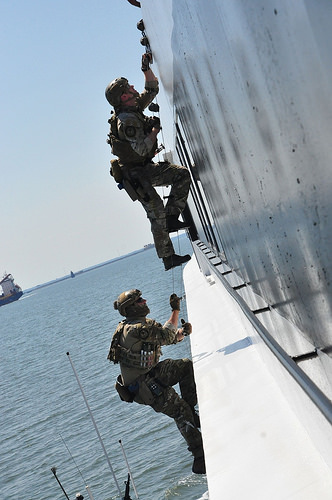
The Coast Guard does train for this sort of thing. “CBS Reports on MSRT Exercise

Even in a benign environment, fast roping can be dangerous. “Two FBI Agents Die in Maritime FAST Roping from Helicopter Training Exercise

Not to take anything away from the professionalism of the Italian commandoes, but if you are going to do something like this, you hope the opposition will be something like the Italians faced, desperate untrained people without a plan or organization, without firearms. One man with an RPG or a .50 caliber could ruin your entire day. Even when confronted by “peaceful protesters,” things can go terribly wrong. “Israeli Navy intercept of Gaza aid convoy turns deadly

There are sometimes alternatives, “Israeli Blockade–Lessons Applied

If you consider worst case, this is what we might be facing. “Potential Terrorist Threat Weapons

“Confronting All Ten Modalities of Maritime Terrorism” –Real Clear Defense

Taj Mahal Palace hotel, Mumbai Terrorist Attack,

Real Clear Defense has a post explaining ten modalities of maritime terrorism including some examples you may not be aware of. They are:

  1. An Attack on the Water from the Water
  2. An Attack on the Water from the Land
  3. An Attack on the Land from the Water
  4. A Precursor Attack in the Maritime Domain
  5. A Maritime Activity Related to Terrorist Financing
  6. Money Laundering of Terrorist Funds Through Maritime Activity
  7. Maritime Activity Related to Terrorist Logistics, Intelligence and Sustainment
  8. Cyberattacks by Terrorists Targeted at Maritime Activity
  9. Indirect Attacks on the Maritime Domain
  10. Hybrid Aggression

You may find the explanations interesting. The author summarizes,

“These ten modalities of maritime terrorism are not necessarily exhaustive, but they do provide a somewhat parsimonious taxonomy to assist security professionals in identifying and countering terrorist activity in the maritime domain. As a practical reality, most states have limited maritime law enforcement capacity, and the same agency is often tasked with countering everything from fishing without a license to oil spills to drug trafficking to piracy. Understanding how terrorists may be engaging in the maritime space can help sensitize analysts and operators to terrorist activity that may otherwise be obscured. At the same time, that understanding can help inform policy makers how to create a national-level approach that limits opportunities for terrorists to engage in any of the ten modalities. A state’s national security may be significantly impaired by any one of these terrorist activities, so every state should proactively strive to make itself as inhospitable as possible to all ten modalities of maritime terrorism.”

“Coast Guard Struggling with Southern California ‘Coastal Awareness Gap’ as Maritime Smuggling Rises” –USNI

Aerial view of the Port of San Diego with two aircraft carriers moored at North Island and three cruise ships in Port, from Oct. 4, 2012. Port of San Diego photo

US Naval Institute reports the Coast Guard is looking for ways to deal with a problem unique to Sector San Diego, a combination of proximity of Mexico and heavy offshore traffic.

“We’ve faced a major increase in smuggling,” Capt. Tim Barelli, commander of Sector San Diego, told an audience on the first day of WEST, a three-day defense industry conference hosted by USNI and Armed Forces Communications and Electronics Association. Incidents of smuggling have doubled, year over year, in the past three years, “and I’m doing that with the same amount of people, same amount of helicopters and same amount of small boats. So that is my biggest challenge.”

They are hoping technology can help.

I would point, out this is not just a drug or human trafficking problem. Terrorists could use the same confusing conditions to cover a maritime attack on this major US port city and naval base.

26/11

Taj Mahal Palace hotel, Mumbai Terrorist Attack,

In the US the date 9/11 has special meaning, but in India it is November 26, which they refer to as 26/11.

The 2008 Mumbai attacks (also referred to as 26/11) were a series of terrorist attacks that took place in November 2008, when 10 members of Lashkar-e-Taiba, an Islamist terrorist organisation from Pakistan, carried out 12 coordinated shooting and bombing attacks lasting four days across Mumbai. The attacks, which drew widespread global condemnation, began on Wednesday 26 November and lasted until Saturday 29 November 2008. A total of 175 people died, including nine attackers, and more than 300 were wounded.

Nearly all the killing and all the television coverage was on land, but it should not be forgotten, the terror came by boat.

“Ohio River Bomb Spree Shows Need For New Coast Guard Waterways Commerce Cutters” –Forbes

USCGC Smilax (WLIC-315)

Craig Hooper has another pro-Coast Guard post in Forbes.

It talks about a domestic terrorism incident as a justification for the Waterways Commerce Cutter program.

The program already seems to be progressing well with essentially no opposition.

The article goes a bit beyond advocating for the program as it exists now.

“—the emerging threat of domestic terrorism suggests that these vessels may need to enhance their disaster response capabilities faster than the Coast Guard expects. Better communications, better situational awareness resources and better resources to keep crew safe may be quite useful over the three or four decades. Fittings for chemical sensors, extra protective gear storage, unmanned platform capabilities, and better decontamination resources all ensure these Cutters will be viable over the long-term.”

Take a look. I am not enthusiastic about Hooper’s suggested upgrades, but I have a lot of respect for his opinion, so would not dismiss them out of hand.

9/11 Twenty Years Ago

Below is the Commandant’s message marking the 20th Anniversary of this attack, that so changed the Nation and the Coast Guard.

Frankly, I do not see that the Coast Guard is really prepared to counter a well planned terrorist attack conducted from the sea. A tiny fraction of the money spent in Afghanistan and Iraq could close this gap. We need to be better armed and more capable of stopping an attack, regardless of the size of the attacking vessel, using forces regularly assigned in each port.

Let the Coast Guard response be, “Never again, Not on our watch.”

united states coast guard

R 101030Z SEP 21
FM COMDT COGARD WASHINGTON DC
TO ALCOAST
BT
UNCLAS
ALCOAST 324/21
SSIC 5700
SUBJ: 20TH ANNIVERSARY OF 9/11
1. On the morning of 11 September 2001, nineteen terrorists took
control of four cross-country commercial aircraft, weaponizing the
planes and steering them into the World Trade Center Twin Towers
in New York and the Pentagon in Washington, D.C. On the fourth
plane, believed to be headed toward the U.S. Capitol or the White
House, a brave band of passengers and crew attempted to regain
control and downed the plane near Shanksville, Pennsylvania in the
struggle.
2. Living up to our motto of Semper Paratus, Coast Guard personnel
sprang into action to save lives and provided security for that
day’s survivors.
3. Almost immediately following the attacks, all bridges and
tunnels in Manhattan were closed leaving hundreds of thousands of
people stranded, with no way to return safely home. Coast Guard
personnel directed the safe evacuation of more than 500,000 people
from the island with the assistance of hundreds of local ferries,
as well as commercial and private craft. This, the largest maritime
evacuation in recorded history, was conducted in less than 8 hours.
4. In and around Ground Zero, after the collapse of the World Trade
Center Towers, the Coast Guard’s Atlantic Strike Team worked in
close cooperation with the Environmental Protection Agency to
monitor air quality for first responders in the rescue and recovery
operation.
5. At the Pentagon, the Navy Command Center sustained a direct hit
from the crash of Flight #77, resulting in the loss of 42
personnel. From a secondary office at Coast Guard Headquarters,
Coast Guard RADM Jeffrey Hathaway, the Director of the Navy Command
Center, fortuitously away from the Pentagon that morning,
established personal security detachments to protect Senior Navy
Leadership in the aftermath of the attack, and supported the
planning and policies of the coming war on terrorism.
6. By October 2001, U.S. Military forces had deployed to
Afghanistan to execute Operation Enduring Freedom (OEF). Coast
Guard personnel served in support of OEF through units such as the
Redeployment Assistance and Inspection Detachment (RAID Team),
inspecting shipments of hazardous materials and facilitating
container movements in support of the Global War on Terror.
7. In support of Operation Noble Eagle, thousands of Coast Guard
Active Duty, Reservists, and Auxiliarists mobilized to assist the
direct defense of the continental U.S., protecting military outload
operations, ensuring the safety of maritime commerce and port
facility operations, search and rescue, and other vital operations.
8. The attacks of September 11th made it clear that our national
security starts well beyond our borders. In response, President
George W. Bush signed the Maritime Transportation Security Act
(MTSA) of 2002 to protect the Nation’s ports and waterways from
terrorist attacks. The U.S. Coast Guard proceeded on the greatest
organizational transformation since World War II and expanded our
capabilities and mission sets. This included the establishment of
Maritime Security Response Teams (MSRT) and Maritime Safety and
Security Teams (MSST). By March 1, 2003, the Department of Homeland
Security was established with the U.S. Coast Guard serving as the
lead federal agency for maritime homeland security. Our efforts
throughout the U.S. Marine Transportation System (MTS) and across
the globe continue to actively counter and deter terrorism threats
in the maritime domain.
9. As an organization, we have made tectonic changes these past
twenty years and continually strive to refine and improve our
operations and mission support delivery, but we must never become
complacent. As technology rapidly advances and threatscapes become
increasingly complex, we too must advance and adapt. We, the U.S.
Coast Guard, are the eyes and ears for safety, security, and
environmental stewardship on our federal waters, and purveyors of
our national maritime interests across the globe. Keep your eyes
and ears wide open; prepare and adapt always; be ready and never
forget the lessons we learned on September 11th.
10. Thank you for your service, and Semper Paratus!
11. ADM K. L. Schultz, Commandant (CCG), sends.
12. Internet release is authorized.

“The Coast Guard and American Maritime: A Vital Post-9/11 Partnership” –Seapower

NEW YORK, New York (Sept. 11)–A Coast Guard rescue team from Sandy Hook, NJ, races to the scene of the World Trade Center terrorist attack. USCG photo by PA2 Tom Sperduto

Seapower brings us a short post from Former Commandant James Loy and president and CEO of The American Waterways Operators, Jennifer Carpenter.

It is a reminder of the response to 9/11, a different justification for the Jones Act, and a warning about the potential of cyber attack.

“The Pentagon isn’t the only one with special operators. Here are the 5 most elite forces outside the Defense Department” –Business Insider

Business Insider brings us a look at five “Special Operations” forces employed by non-DOD organizations.

  • FBI’s Hostage Rescue Team
  • Coast Guard’s Maritime Security Response Teams
  • DEA’s Special Response Teams
  • Dept. of Energy’s Special Response Teams
  • CIA’s Special Operations Group

What I noticed in the descriptions of these groups, is that the Coast Guard’s qualification process is the longest, “almost 18 months,” while the other four groups seem to rely heavily on recruiting former military special operations force members. DEA’s course is only two weeks in addition to prior training.