“Khulna Shipyard lays keel for five more Padma-class patrol vessels for Bangladeshi Navy” –Navy Recognition

NavyRecognition reports.

“Bangladesh’s Khulna Shipyard Ltd has begun construction of the second batch of five Padma-class patrol vessels on order for the Bangladeshi Navy (BN).

“… first batch was built in Bangladesh by BN-owned Khulna Shipyard in collaboration with mainland China’s Hudong-Zhonghua Shipbuilding through the China Shipbuilding & Offshore International Corporation (CSOC).”

The Padma class is used by both the Bangladesh Navy and Coast Guard. According to Wikipedia, eight have been completed, five for the Navy and three for their Coast Guard, with a total of 23 planned. It is similar in size to the Webber class. They are a bit slower at 23 knots but have a considerably larger crew, 45.

The Bangladesh Navy and Coast Guard have vessels from a number of sources including the US, UK, Italy and South Korea, including two former USCG 378s, but most of their vessel of late seem to be coming from China or like these are Chinese designs built in Bangladesh.


“Griffin Missile Exercise” –Demitry Shulgin

ARABIAN GULF (Sept. 16, 2018) A MK-60 Griffin surface-to-surface missile is launched from coastal patrol ship USS Thunderbolt (PC 12). Ships attached to U.S. 5th Fleet’s Task Force 55 are conducting missile and naval gun exercises against high speed maneuvering targets to advance their ability to defend minesweepers and other coastal patrol ships. U.S. 5th Fleet and coalition assets are participating in numerous exercises as part of the greater Theater Counter Mine and Maritime Security Exercise to ensure maritime stability and security in the U.S. Central Command area of responsibility, connecting the Mediterranean and the Pacific through the western Indian Ocean and three strategic choke points. (Photo by MC2 Kevin Steinberg)

Dmitry Shulgin reports on a live fire exercise involving half the Cyclone class PCs and half the PATFORSWA 110 foot Island class cutters operating out of Bahrain.

“Exercise participates included Forward Deployed Naval Forces (FDNF) patrol coastal ships USS Sirocco (PC-6), USS Tempest (PC-2), USS Squall (PC-7), USS Hurricane (PC-3), USS Whirlwind (PC-11) and island class patrol boats USCGC Adak (WPB-1333), USCGC Aquidneck (WPB-1309), and USCGC Baranof (WPB-1318).

“The ships also conducted live fire exercises with their Mark-38 25-mm machine guns and other crew served weapons to maintain operator proficiency and test new equipment upgrades for future missions.”

There is one bit of information here I had not seen before, an effective range for the Griffin small, short range surface to surface missile, given as 3 nautical miles, 6000 yards or 5.56 km. Since these missiles have found no other user after the installation on the ten Cyclone class homeported in SW Asia, I think the program was probably a dead end. It is bracketed by two very successful system being produced in huge numbers,  the smaller Advance Precision Kill Weapon System (APKWS) and the larger Longbow Hellfire.

I am hoping, when the Webber class cutters replace the Island class in Bahrain, that the Coast Guard and Navy will have taken some steps to better equip them for this potentially hostile area, including possibly Hellfire and/or APKWS..

Crewmembers aboard the U.S. Coast Guard cutter USCGC Adak (WPB-1333) raise the American flag. Adak is assigned to CTF 55, supporting maritime security operations and theater security cooperation in the U.S. 5th Fleet area of responsibility. U.S. Coast Guard photo by Seaman Frank Iannazzo-Simmons

“Coast Guard releases draft request for proposal for industry studies, announces Offshore Patrol Cutter Industry Day” –CG-9

I am passing this along, but have to say that, since this came out Dec. 20, 2019, it seems a bit confusing. The significant news is that the Request for Proposal is expected to be issued by the end of the year.

D

The Coast Guard released a draft request for proposal (RFP) for industry studies Dec. 4 to support offshore patrol cutter (OPC) follow-on production. Responses to the draft industry studies RFP will be used to inform development of a final RFP, which is scheduled for release before the end of calendar year 2019.

Today’s action complements the release of the Coast Guard’s draft statement of work (SOW) for OPC industry studies. The draft RFP and SOW are available at the following here.

The Coast Guard also announced that the service will host an OPC Industry Day on Dec. 11, 2019, at 9:00 a.m. EST at the Coast Guard Yard in Baltimore, Maryland.

The industry day announcement can be found at the following here.

An RSVP is required to attend. Attendees must RSVP no later than 12:00 p.m. Monday, Dec. 9, 2019. Please see the industry day announcement for detailed RSVP instructions and location information.

The Coast Guard’s overall goal for the OPC Industry Day is to refresh awareness and understanding of industry capabilities and provide an opportunity for potential offerors to gain insight into OPC industry studies and other follow-on acquisition activities. The industry studies draft RFP will be a focal point of the industry day event; attendees are strongly encouraged to review the contents of the draft RFP and come prepared to discuss it with Coast Guard officials.

Addendum: The Coast Guard updated the Industry Day announcement Dec. 13, 2019, based on discussions with interested vendors.

Addendum: The Coast Guard released a revised draft RFP Dec. 20, 2019, in support of the OPC follow-on production, based on discussions with interested vendors.

For more information: Offshore Patrol Cutter program page

“Set ThreatCon Delta. Active Shooter Reported in Building 12!” –USNI

A petty officer pulls another to safety during a 2015 active shooter exercise at the Coast Guard Training Center in Cape May, N.J. Photo: U.S. Coast Guard (Lauren Simmons)

The Dec. 2019 edition of the US Naval Institute Proceedings has an article expressing concern about the Coast Guard’s readiness to deal with active-shooter/hostile-event response (ASHER)? The article is available on line and is written by Commander Thomas J. Hughes, U.S. Coast Guard (Retired), currently head of the Exercise Support Division of Coast Guard Force Readiness Command as a career Federal employee.

It is thought provoking. How much time, money, training, and priority is appropriate in the face of competing demands?

“House Passes FY 2020 Coast Guard Funding Bill Backs Icebreaker, Limits OPC Program” –USNI

The US Naval Institute news service reports the House has passed the Department of Homeland Security budget including,

“The FY 2020 total is $49.8 million less than what the service received a year ago but is $846.7 million more than what was initially proposed in President Donald Trump’s FY 2020 budget request, according to a statement from the House Appropriations Committee.”

The 2020 budget request was discussed here. The FY2019 budget as enacted is discussed here.

It is worth noting that this bill has already been coordinated with the Senate, so it should advance without significant changes.

“The funding was part of a $1.4 trillion spending bill Senate and House negotiators created that avoids a possible federal government shutdown at the end of this week. The spending bill still needs Senate approval and Trump’s signature before becoming law.”

The Good News:

As expected the Congress bumped up the purchase of Webber class patrol craft from two units to four. ($140M requested, $260M in the bill, the FY 2019 budget provided six units for $360M). Congress has been pretty consistent in increasing the number purchased annually. This will fund FRCs #57-60. That leaves only four more units to complete the expected 64 total units anticipated for the class (58 in the program of record and six for PATFORSWA).

An additional $100M for long lead time items for the second Polar Security Cutter was added.

Congress also added another $105M for the HC-130J program. Congress also has a history of doing this as well. A similar amount was in the FY2019 budget.

The Bad News: 

The total amount in the budget is less than FY2019, and that was less than FY2018. That trend is not good.

Since the requested amount for Procurement, Construction, and Improvements (PC&I) was $1.2B, it seems likely that even with these additions, the total Budget may be well under both the $2M the Coast Guard has been saying they need annually and last year’s $2,248.26M total, but we will not know for sure until we get more detail.

There is no provision for a much talked about National Security Cutter #12, even though money was included in the FY2019 budget for long lead time items for #12.

The Not Unexpected: 

The requested amount for the Offshore Patrol Cutter (OPC) program, $457 million for the construction of OPC #3 as well as long lead time materials for OPCs #4 and #5, was cut by $14M. That may represent nothing more than deletion of long lead time materials for OPC #5. Construction of #5 is now in the distant future, since the decision to grant Eastern Contract Relief and re-compete the contract for OPCs #5-15. This does seem to indicate Congress will allow DHS and the Coast Guard to continue with contract relief and that Eastern will construct the first four OPCs as previously announced.

110 foot WPBs as Missile Boats –for Ukraine

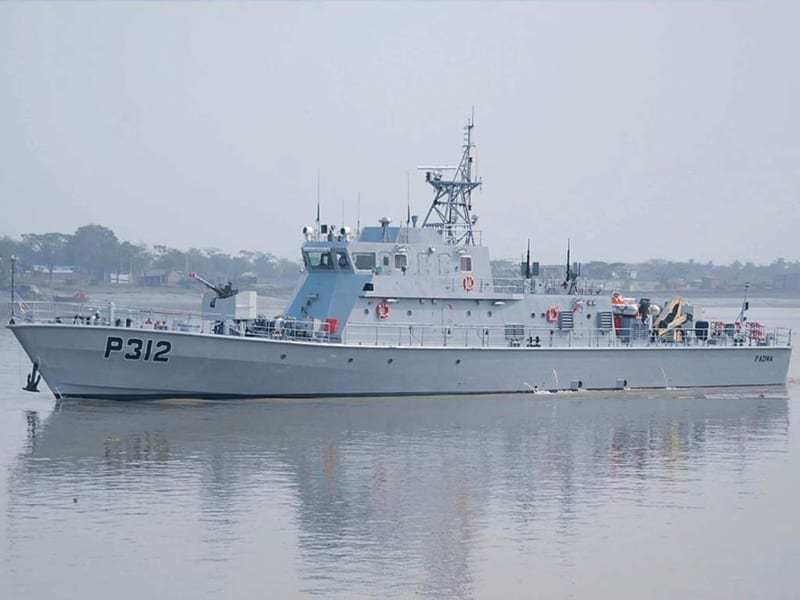
USCGC_Maui_(WPB-1304)

Defense News has a story about the Congress authorizing sale of Coast Defense and Anti-Ship missiles to the Ukraine.

A surprising comment was that these might be fitted on the 110 foot WPBs that have been transferred to Ukraine

Speaking at the German Marshall Fund on Friday, Dmytro Kuleba, Ukraine’s Deputy Prime Minister on European and Euro-Atlantic Integration, indicated that the weapons would be ideal fits for a pair of Island-class patrol boats Ukraine has received from Washington.

Those boats were “supplied without anything on them,” said Kuleba, the first member of the current Ukrainian government to visit Washington. “So we will continue working on obtaining more boats of that class, and hopefully with some of the equipment you mentioned.”

This might refer to Harpoon, but I think it is more likely that this is in reference to the Naval Strike Missile which has already been used in land based coast defense batteries.

Frankly, I think Ukraine would be better off truck mounting the missiles, in that they would be harder to target, but since many nations will be receiving retired Island class WPBs, a standard conversion might be desired by a number of nations.


“Coast Guard releases request for information for Polar Star service life extension project” –CG9

The Coast Guard Cutter Polar Star cuts through Antarctic ice in the Ross Sea near a large group of seals as the ship’s crew creates a navigation channel for supply ships, January 16, 2017. The resupply channel is an essential part of the yearly delivery of essential supplies to the National Science Foundation’s McMurdo Station.US Coast Guard photo by Chief Petty Officer David Mosley

A news release. Dec. 20 is a very short deadline.

The Coast Guard released a request for information (RFI) Nov. 27 seeking industry input and feedback on the draft solicitation for the Coast Guard Cutter Polar Star service life extension project (SLEP) as part of the In-Service Vessel Sustainment program (ISVS). The SLEP effort will recapitalize a number of major systems and extend the service life of the cutter by approximately four years. This future contract will include SLEP work items and recurring maintenance in a five-year phased production schedule between 2021 and 2025.

The RFI is available here. The deadline to submit responses is Dec. 20 at 4 p.m. EST.

Polar Star, the Coast Guard’s only active heavy icebreaker, is scheduled to conduct ice breaking operations to create an ice channel for which cargo vessels will be escorted to resupply the National Science Foundation’s McMurdo Station in Antarctica. This marks the seventh time the cutter has been at the center of Operation Deep Freeze since the cutter was reactivated in 2013.

The 399-foot cutter – commissioned in 1976 – supports nine of the 11 Coast Guard statutory missions.

For more information: In-Service Vessel Sustainment program page

“RIGHTING THE SHIP, The Coast Guard Must Improve its Process for Addressing Bullying, Harrassment, and Retaliation” –House Committee Majority Report

I am just passing this along. I confess I have not read beyond the executive summary and I will not be commenting on it. Comments are still welcome, but I have been too long out of the service to comment meaningfully.

Thanks to Brymar Consulting for bringing this to my attention.