The Congressional Research Service (CRS) has again updated their report on Cutter Procurement. You can see it here. Actually it was updated twice in rapid succession, on 25 Nov. to reflect the Coast Guard’s action, and on 27 Nov. to reflect the action of the House Transportation and Infrastructure Committee and the Chair and Ranking Member of that committee’s Coast Guard and Maritime Transportation subcommittee in the form of what could only be described as a scathing letter to the Acting Secretary, Department of Homeland Security.
First, I will address the changes included in the 25 Nov. update. (Page numbers are where these changes appear in the 27 Nov. update, linked above.)
Second, I will discuss the 27 Nov. update including verbatim the quoted portions of the letter that were included in the CRS report.
There are a number of alternatives to the current plan to continue construction of the first four ships at Eastern and recompete the contract for ships of essentially the same design, but that is a subject for a separate post.
—–
The 25 Nov. Update.
The Coast Guard’s November 22 update and the draft Statement of Work, which we discussed earlier, are covered on pages 14-16.
Growth in the OPC’s estimated displacement, which was also revealed in the Statement of Work, is noted at the bottom of page 4, continuing to page 5, as part of the OPC Program Overview.
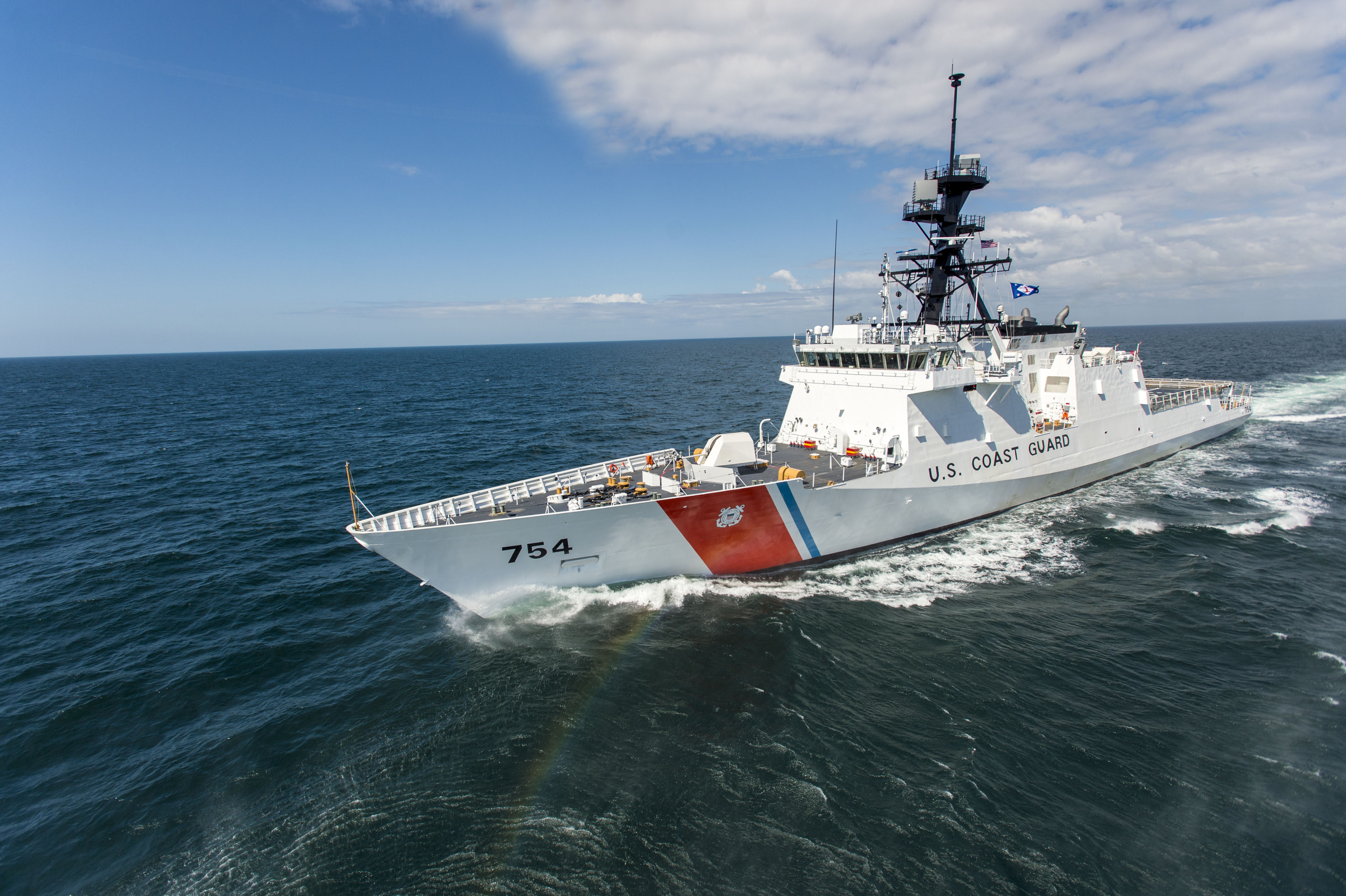
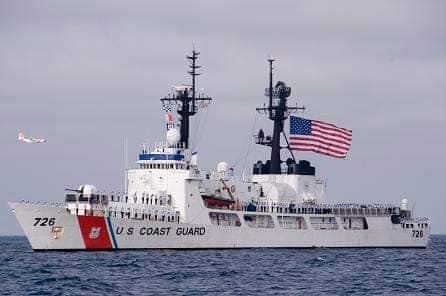
OPCs … are to be less expensive and in some respects less capable than NSCs. OPCs are to have a length of 360 feet, which will make them about 86% as long as NSCs, which have a length of 418 feet. OPCs were earlier estimated to have a full load displacement of 3,500 tons to 3,730 tons, which would have made them about 80% as large in terms of full load displacement as NSCs, which have a full load displacement of about 4,500 tons. As the OPC design has matured, however, its estimated displacement has grown to about 4,500 tons, making it essentially as large as the NSC in terms of full load displacement
The decision to recompete has raised a number of “Issues For Congress” beginning on page 19 and continuing through page 23, including consideration of a 12th National Security Cutter in view of the delays in the delivery of Offshore Patrol Cutters.
—–
The 27 Nov. Update
This update reflected the HTIC’s November 25 letter to DHS regarding the program. The November 25 letter is covered on pages 16 (as part of the background information), page 23 (as part of the issues for Congress), and 27-29 (as part of the legislative activity).
November 25, 2019, Letter from House Transportation and Infrastructure Committee to DHS Regarding OPC Program
A November 25, 2019, letter to the Acting Secretary of DHS from the Chair and Ranking Member of the House Transportation and Infrastructure Committee and the Chair and Ranking Member of that committee’s Coast Guard and Maritime Transportation subcommittee regarding the OPC program states in part:
The Committee on Transportation and Infrastructure has reviewed your proposal to provide extraordinary relief under Public Law 85-804 as requested by Eastern Shipbuilding Group (ESG) for the construction of the Offshore Patrol Cutter (OPC). We are skeptical that such truly extraordinary relief is justified given that this “crisis” was foreseeable and mostly avoidable. Further, we are concerned that this relief sets a damaging precedent that any current or future contract with the United States Coast Guard (Coast Guard or Service) could be renegotiated outside the Federal Acquisition Regulations.
As you know, the Coast Guard is in the middle of a rnulti-decade, multi-billion-dollar recapitalization of its cutter fleets. Last fall, the Service entered into a fixed price contract with ESG for the largest single acquisition in its history for the OPC. Shortly after entering into that contract, on October 10, 2018, Hurricane Michael hit the ESG shipyard and devastated the surrounding Panama City, Florida area where much of the shipyard workforce lived. The shipyard claims the impacts of the disaster rendered its facilities and workforce incapable of meeting the terms of the contract. The Department of Homeland Security (DHS) and the Service now propose to expand the timeframes for the delivery of each of the first four OPCs, spend up to an additional $659 million to complete those cutters, and then re-compete the contract earlier than previously planned. The decision to proceed with the current contractor raises a number of concerns for the Committee. Foremost among those concerns being the delay in delivering the cutters as well as the use of the Public Law No. 85-804 authority, which ultimately eliminates the Coast Guard’s claim of getting the best value through a firm, fixed-price contract. If that were a priority for the Service, it would make more sense to pivot to a contractor who had competed for the original contract and is positioned to execute on it rather than create continued uncertainty around the OPC.
For more than a decade, the Committee has tracked the widening capability gap between the existing legacy fleet of Medium Endurance Cutters (MECs)—several built during the Vietnam War—and the commissioning of new OPCs. During that time, the Committee has repeatedly urged the Coast Guard to undertake a ship life extension program (SLEP) for the MECs and advocated for the Service to look at alternative methods to acquire new mission capabilities. Due to limited funding provided for the Coast Guard’s Procurement, Construction and Improvements account, the Service made the decision to defer initiating an MEC SLEP to partially offset the loss of MEC capability as those cutters aged out. Rather than heeding the Committee’s caution, the Service decided to prioritize construction of the OPCs at the earliest possible time to allow the Coast Guard to continue to effectively carry out its law enforcement, drug and migrant interdiction, and search and rescue missions.
The Service then compounded the risks of this “all-or-nothing” strategy by entering into a contract with ESG; a company that has never built a ship for the Federal government and whose bid came in at a per-vessel price far below that of other qualified bidders. This action led many observers to question whether the Coast Guard was taking too great a risk, but the Service believed, nonetheless, that the risk was acceptable.
Regrettably, ESG began lobbying lawmakers for “relief” from the contract barely six months after agreeing to its terms. Within nine months, ESG formally notified the Coast Guard that they could no longer meet the contractual schedule or deliver the OPC at the contract price.
In all, it appears the Coast Guard’s initial failure to adequately examine the risks of using a shipyard with no government shipbuilding experience could be perpetuated by DHS granting this extraordinary relief under Public Law No, 85-804. The Committee is concerned that the Coast Guard, along with DHS, embarked on exploring options to resuscitate ESG and prevent it from defaulting on the OPC contract without first completing a transparent and objective alternatives analysis. Additionally, the veil of secrecy regarding its analysis and the absence of any meaningful consultation by the Coast Guard and DHS with the Committee, provides us scant confidence that any revised OPC contract will not encounter a similar fate as the original contract.
Accordingly, the Committee would like to know:
- Why did the Coast Guard fail to stop construction on hull #1 as soon as they learned the contractor was informing lawmakers that it would be unable to meet the terms of the contract?
- What interim measures are available to mitigate the lost mission capabilities while the OPC contract is being delayed and recompeted?
- Is the Coast Guard considering the use of leased barges to support helicopter operations, the acquisition of additional National Security Cutters or Fast Response Cutters, or other available options?
- What national security missions will be carried out by each of the four OPCs for which relief is sought?
- What is the status of the ship life extension program for the 270B MECs?
Regarding a revised OPC contract, the Committee would like to know?
- Has the Department requested authority from Congress to expedite the re-compete of the OPC contract?
- How will the Coast Guard ensure that no additional extraordinary relief will be needed beyond the potential upward limit of $659 million and the proposed schedule extensions?
- Are the federal/non-federal share lines for each of the first four OPCs set in the DHS decision granting limited Public Law No. 85-804 extraordinary relief, and if not, what are these share lines and what is their justification request?
- In which fiscal years will it be necessary to request funds above the amounts projected for the OPCs in the Coast Guard’s latest Capital Improvement Plan? In what amounts?
- On what ship design will the re-compete be based?
- Can you confirm that the Coast Guard owns the OPC design?
- How many additional construction hours above the amount on which the initial bid was based are now anticipated for each of hulls #1-4?
- What controls will be instituted to ensure that there is no excessive overage in production hours?
- What conditions do the Coast Guard intend to include in a revised contract to ensure transparency in all financial transactions; accountability with all performance metrics and timetables for deliverables; certification and notification standards and protocols before the Coast Guard or DHS exercises an option on hulls #2-4?
- Given the fact that the contractor is unable to perform under the terms of the original contract, will any effort be made to receive the performance bond associated with the contract?
The Committee will continue to investigate these issues and closely monitor this situation. We are concerned about the impacts any further delays of this contract will have on the Service’s ability to carry out its critical mission responsibilities and the overall impact the escalated cost of producing these assets will have on the Coast Guard’s Procurement, Construction and Improvements account for the foreseeable future. As we begin negotiations with the Senate on the Coast Guard Authorization Act of 2019, we will examine if further legislation is necessary to protect U.S. taxpayers from profligate, unwise spending, notwithstanding the urgent need to provide the Coast Guard with the modern assets it needs to remain the world’s preeminent Coast Guard.









 Chuck Hill's CG Blog