Drilling Beyond the 200 Mile EEZ

gCaptain has an interesting discussion of the potential economic consequences of offshore drilling beyond the 200 mile EEZ. It seems UNCLOS has a provision (Article 82) that a UN agency is owed a percentage of the revenue from such drilling.

There is apparently some ambiguity in the treaty, in that it is not clear if the fee is to be based on gross or net revenues, and it is also unclear where continental shelves end, but apparently the existing provisions make it possible to claim sea floor as deep as 5,000 meters, far deeper than what I thought of as continental shelf, and an area as large as Africa (which is really much bigger than it looks on a Mercator projection, roughly four times the land area of the United States).

There is also a chart (map) of where continental shelf claims are currently being made. There are number of potentially “interesting” (eg contentious) areas being claimed.

—There are claims off Antarctica.
—There are claims between Argentina and the Falklands.
—Claims in the Arctic.
—Claims in the South China Sea. I wonder if the Chinese don’t hope to avoid fees all together by claiming it is theirs under a different status.

NOAA Storm Surge Map

FierceHomelandSecurity reports that NOAA has created a new interactive map showing the possible effects of worst case storm surge for Categories one through five on the East and Gulf coasts.

It might be helpful for planning. Still, after what we saw with Sandy, I have to question why no potential for flooding is shown for New York/New Jersey, or anywhere North of North Carolina? It appears the data stops at the Virginia line, but that is not apparent reading the description.

We Need a Mother(ship)

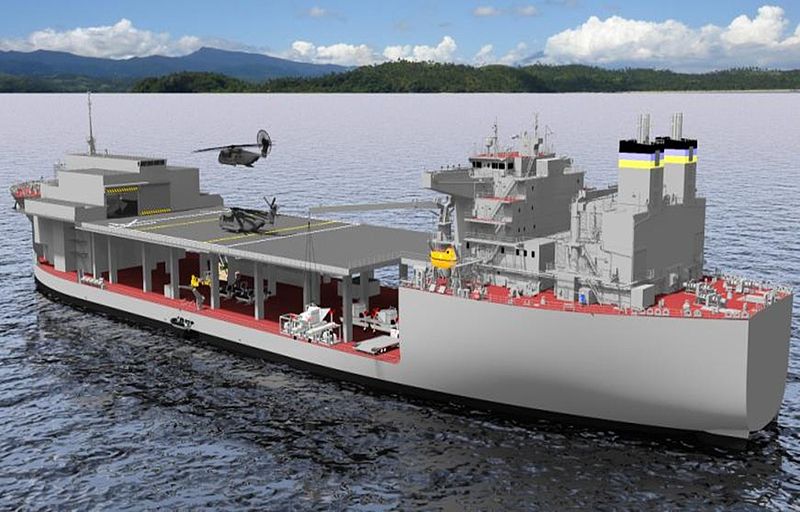
USNS_Lewis_B__Puller_(MLP-3)_artist_impression
USNS Lewis B. Puller (MLP-3/AFSB-1) An artist’s conception of the Afloat Forward Staging Base. USMC Photo

Navy Times recently published an article “In war with drug trafficers, Coast Guard stretched thin.” There was a particular quote by the Commandant that caught my eye,

“Some 400 metric tons of cocaine cross U.S. borders every year — a drug trade valued at tens of billions of dollars, Zukunft said. Once upon a time, Coast Guard cutters would post a watch and wait for drug boats to get close, but now, there’s enough technology to detect them as they approach.

“The only problem: There aren’t enough ships and airplanes to catch them all.

“’We have an awareness of 80 percent, but we can only target 20 percent,’ Zukunft said. ‘We’re giving 60 percent of what we know, literally, a free pass.’”

This repeats similar comments we have heard from SouthCom. We have good information on drug trafficers, and we could catch a lot more if we just had more vessels available to respond. Note we need more vessels, not more highly capable vessels. This is part of what prompted my call for “Cutter X,” but there is another way. Instead of long endurance ships, perhaps, given support, shorter range assets could do the job.

Meanwhile, over in San Diego, NASSCO is building something that might make a useful contribution to addressing the need for more vessels by facilitating the use of less capable assets, a mothership, or Afloat Forward Staging Bases (AFSB).

“The design of the AFSB variant adds a flight deck, berthing, fuel storage, equipment storage, and repair spaces. With a rotating crew of civilian mariners and military personnel the ship can operate forward almost continuously, providing a base of operations for everything from counter-piracy/smuggling, maritime security, and mine clearing to humanitarian aid and disaster relief.”

With the exception of mine clearing, those missions are all in the Coast Guard’s wheelhouse. These or similar vessels could serve as mother ships or tenders for WPBs or WPCs extending their endurance and reach, supporting them far from their homeports and providing a base for supporting helicopters and UAVs.

We may be able to send only one or two large cutter at a time to the Eastern Pacific, but perhaps we could send six or so WPBs or WPCs.

They could also be used in responding to Natural disasters like Katrina or Sandy. They could be effectively a mobile Coast Guard group with both air and surface assets. If ice strengthened they could assume that role in the Arctic.

As big as they are, these ships have very small crews, and are relatively inexpensive to build–more than the OPC, but less than the Bertholfs. Certainly we should try the concept using Navy vessels first. In fact the first is expected to replace the USS Ponce, where it will presumably have some interaction with the six 110s serving with the Fifth Fleet.

Bering Sea Storm, One for the Record Books

gCaptain reports the Bering Sea has been hit by an unusual severe storm as a result of a rapidly forming record low.

An update at 1630 UTC Saturday said that Post-tropical Nuri remains a hurricane force low with winds ? 64 knots, a central pressure of 928mb, and significant wave heights of 31 to 48 feet in the Bering Sea. Remember, significant wave heights are calculated as the average height of the highest 1/3 of waves. Individual waves could be more than twice that size (that’s 100 feet!).

This is why we need truly substantial ships to operate in this area.

China Builds Patrol Ships–Lots of Patrol Ships

Type 056  corvette, credit  樱井千一

Type 056 corvette, credit 樱井千一

WantChinaTimes reports, “To defend its exclusive economic zone in the disputed East and South China Seas, China’s maritime law enforcement agencies have about 400 patrol vessels according to Asia Military Review, a magazine based in Bangkok…tonnages of the 400 vessels range between 1,150 and 3,400. The agencies are also set to receive 36 additional vessels.”

I would take this wit a grain of salt, but I think the real news was, “Eighteen Type 056 corvettes were constructed last year for the People’s Liberation Army Navy.”

To build 18 warships of a single class, even if they are sized between 210s and 270s is a remarkable achievement. These are assigned to the Navy, but they are used as backup for the Chinese Coast Guard.

Italy to build National Security Cutters

DefenseNews is reporting Italy will soon award a contract for new Patrol Ships.

While a bit longer, 135 meters in length compared to 127 for the NSC, the Italian ships will be the same displacement as the Bertholf class, 4,500 tons.

The initial contract will be for five ships in a “light” (patrol) configuration and one in “heavy” (frigate) configuration, with an option for four additional heavy versions.

There are a number of interesting things about this class.

The ships were designed in-house (I assume to the preliminary level) which appears to have it made quicker to get the ships into production. They expect to launch the first ships in 2016 or early 2017.

They are expected to have a top speed of 34 to 35 knots, so I presume they will have two gas turbine while the NSC has one. It is not clear if they will have a single complex gearbox like the NCSs that all allows any or all of her engines to power both screws or if they will go with a simpler arrangement with separate gear boxes for each shaft. It is also unknown how powerful their diesel cruise engines will be.

The radar will be fixed units. According to the manufacturer, Selex, “The KRONOS radar exploits Selex ES’s advanced Active Electronic Scanning Array (AESA) technology. It is able to perform surveillance, tracking, threat evaluation and fire control against multiple threats, simultaneously and automatically, at all altitudes.”

Even the “light” ships carry both a 5″ forward and a 76mm on the roof of the hangar. I would like to think that they have the 5″ for the reasons I outlined here, but the Italian 5″/64 has additional capability, the Volcano round. The two medium caliber guns also gives them a degree of redundancy.

They also have a degree of modularity.

“Both versions will offer two modular zones, one in the center of the deck and one underneath the rear flight deck. The central zone will be able to host vehicles or cargo containers that can be lifted aboard by on-board cranes. In a combat situation, that space can be used to carry large rigid-hull inflatable boats for special operations, the source said.”

Even the financing arrangements are innovative with bank loan to be repaid over 20 years.

Imbalance in the Arctic?

gCaptain reports a Reuters interview with former Commandant Admiral Papp, now U.S. special representative for the Arctic Region, on the need for a heavy icebreaker and additional infrastructure in the Arctic. We are much less capable there than we were in the 1950s.

Meanwhile on the other side of the pole, the Russians are investing heavily, if perhaps not wisely.

On 23 Oct. the German Navy blog Marine Forum reported, “Baltic Shipyard plans to complete the world’s first floating nuclear power plant AKADEMIK LOMONOSOV in September 2016 … expected to provide power to Arctic cities.”

And the Russians tell us there is no need for NATO in the Arctic while reactivating Soviet era bases in the Arctic.