Document Alert–Howard Coble Coast Guard and Maritime Transportation Act of 2014 (H.R. 5769)

The MarineLog is reporting that the Coast Guard authorization bill is out of committee. Labeled the “Howard Coble Coast Guard and Maritime Transportation Act of 2014 (H.R. 5769),” it is certainly not the final word on the Coast Guard budget, but it is a start, and it contains some interesting provisions. The MarineLog story includes a link to the bill, by all means check it out, but I will briefly discuss some salient sections.

Improves acquisition activities: In order to save time and money, the legislation requires the Coast Guard to develop plans and use current authorities to reduce the cost and accelerate the delivery of new assets under its $25 billion major systems acquisition program.

I don’t see a lot that will accelerate delivery of new assets except that Sec. 220 “extends through fiscal year 2017 the authority of the Commandant of the Coast Guard to hire experienced acquisition personnel on an expedited basis,” and Sec. 223 again provides authority for multiyear procurement of the Offshore Patrol Cutter (OPC). It may be that they anticipate funding more than the two Webber Class the administration has requested–as has been done in previous years. Buying six rather than only two would add very roughly $240M.

Sec. 101. Authorization of Appropriations
This section authorizes $8.7 billion in discretionary funds for the Coast Guard for fiscal year 2015. This funding will support military pay raises for Coast Guard servicemembers at a level consistent with servicemembers of the other armed forces.

That is a 6.95% ($565M) increase if it in facts makes it through budget process.

Sec. 215. Mission Need Statement
This section directs the Coast Guard to submit to the Committee a single, new Mission Need Statement (MNS) covering all of its major acquisition programs with the submission of the budget request to Congress for fiscal years 2016 and 2019 and every four years thereafter. It further requires the Coast Guard to base the MNS on the funding provided in the Capital Investment Plan submitted for the fiscal year in which an MNS is required to be submitted. Finally, the Coast Guard is required to describe which missions it will not be able to achieve for any year in which the MNS identifies a gap between the mission hour targets and projected mission hours from new and legacy assets.

I found this a bit confusing, but it sounds like the report would only be required every four years. This would be an opportunity to highlight shortfalls in equipment.

Sec. 219. Active Duty for Emergency Augmentation of Regular Forces
Under current law, the Secretary of Homeland Security may call Coast Guard reservists to active duty to prepare for and respond to a natural or manmade disaster. The Secretary’s authority is limited to a call up of not more than 60 days in any four-month period and not more than 120 days in any two-year period. This limitation hampers the ability of the Coast Guard to respond to large-scale or multiple disasters. There is no similar limitation on other reserve components called up by the Secretary of Defense. This section would eliminate the “not more than 60 days in any four-month period” limitation on the call up of Coast Guard reservists

More movement toward making it easier to call on Reservists–for better or worse. Makes it easier to cut out any resiliency in the active forces.

Sec. 224. Maintaining Medium Endurance Cutter Mission Capability
This section requires the Secretary of Homeland Security to provide the Committee with a plan for decommissioning the 210-foot Medium Endurance Cutters (MEC), extending the life of the 270-foot MECs to ensure the Coast Guard can maintain mission capability through the OPC acquisition, identifying the number of OPCs necessary to maintain historical sea state five capability, and acquiring OPCs that maintain historical sea state five capability, as well as OPCs that do not maintain such capability.

I think they may be asking if all MECs really need to be replaced by OPCs (sea state five capability) or if some of them could not be replaced by something less capable and less expensive (like cutter X?). It also seems to say they do not believe they need a fleet more capable than the current (historical) one. If 210s and 270s do not in fact have sufficient life remaining to wait for the currently planned gradual replacement through 2034 (as I doubt they do), it might argue for accelerated procurement.

Sec. 226. Gaps in Writings on Coast Guard History
This section requires a report to Congress on any gaps that exist in writings on the history of the Coast Guard.

This ought to make Bill Wells heart glad, but I doubt he will be pleased with the official response.

Sec. 229. e-LORAN This section ensures certain navigation infrastructure is not dismantled until the Secretary of Homeland Security determines whether it is needed and authorizes the Coast Guard to enter into agreements with public and private entities to develop a GPS back-up system.

There is recognition of the potential vulnerability of GPS and a desire to keep options open for reestablishing loran as an alternative.

Sec. 230. Analysis of Resource Deficiencies with Respect to Maritime Border Security
This section requires a report to Congress on any deficiencies that exist in Coast Guard resources relating to maritime border security

Not sure why this is needed separately if you are going to have a Mission Need Statement (Sec. 215) but a lot of people seem to be very concerned about border security. For most this seems to be alien interdiction. I would point out how poorly prepared we are to actually stop a terrorist attack in progress once detected. The Coast Guard needs specific capabilities to deal with these threats that must be both highly effective and precise enough to avoid collateral damage including missiles for small fast targets and possibly light weight torpedoes for stopping large vessels. Machine guns or even 57mm guns do not answer the need.

Sec. 505. Icebreakers
This section requires the Coast Guard to provide Congress with a strategy to maintain icebreaking capabilities in the Polar Regions that includes an analysis of the cost effectiveness of acquiring or leasing new icebreaker assets. The section also prohibits the Coast Guard from spending any of its funds to pay for the capabilities of a new Polar Class icebreaker that are requested by other federal agencies. The Coast Guard is authorized to use funds transferred from other agencies pursuant to an agreement to address such requests. Finally, the section authorizes the Coast Guard to conduct a service life extension of the POLAR SEA after it provides a previously mandated report to Congress concerning the icebreaker.

It appears they are telling the Coast Guard not to do missions for other agencies without getting paid for it. So does the Coast Guard have an missions of its own that require Polar Icebreakers? There is SAR, fisheries, and MEP to be done in the Arctic, but do they require a heavy icebreaker? The authorization to do a life extension for the Polar Sea seems to be recognition that it seems to be the only option affordable in the near term. Hopefully they will think beyond restoring the problematic systems they have plagued this class.

Sec. 506. Icebreaking in Polar Regions
This section ensures that Coast Guard statutory missions are included as priorities when the administration budgets for activities in the Polar Regions.

Here I think the Committee is reminding the administration that the Coast Guard does in fact need to do missions like SAR, fisheries, and MEP in the Arctic and that necessary resources need to be provided.

Reorganization for Border Enforcement

DefenseDaily has a report of a pending reorganization of the Department of Homeland Security’s oversight of the border interdiction problem based on a 20 November memo from DHS Secretary Johnson. I was a bit surprised I did not see this reported anywhere else.

Johnson on Thursday directed the Coast Guard, Customs and Border Protection (CBP), Immigration and Customs Enforcement (ICE) and Citizenship and Immigration Services to stand up within 90 days Joint Task Force East, Joint Task Force West, and Joint Task Force Investigations, DHS said on Friday afternoon. In the memo Johnson said at the end of the 90 days each task force should have a headquarters and relevant personnel should be “realigned.”

There will be two geographically defined operational task forces and a supporting investigative task force headed by Immigration Customs Enforcement (ICE). It appears that the geographic divide roughly equates (but not exactly) to the split between the Atlantic and Pacific Areas. The Eastern Task Force (JTF-East) will be headed by the Coast Guard (presumably COMLANTAREA) and the Western Task Force (JTF-West) which apparently includes all the land border with Mexico, as well as he Pacific coast, will be headed by Customs and Border Protection (I presume COMPACAREA will be the Deputy).

Would be nice if all the Homeland Security agencies had common territorial divisions so that coordination could be simplified.

Thanks to Lee for the heads-up.

African Fisheries–Only Bad Choices

Offiziere.ch has an excellent post on the problems of managing fisheries off Africa. While they talk about illegal, unreported and unregulated (IUU) fishing, that is only the beginning.

Among other problems, there are so many countries in Africa (54 countries, at least 32 with coast lines) that their individual EEZs are too small to manage fishing stocks. If one country attempts to rebuild stocks by reducing fishing, a neighboring country may take advantage of their sacrifice and undo their efforts.

Drilling Beyond the 200 Mile EEZ

gCaptain has an interesting discussion of the potential economic consequences of offshore drilling beyond the 200 mile EEZ. It seems UNCLOS has a provision (Article 82) that a UN agency is owed a percentage of the revenue from such drilling.

There is apparently some ambiguity in the treaty, in that it is not clear if the fee is to be based on gross or net revenues, and it is also unclear where continental shelves end, but apparently the existing provisions make it possible to claim sea floor as deep as 5,000 meters, far deeper than what I thought of as continental shelf, and an area as large as Africa (which is really much bigger than it looks on a Mercator projection, roughly four times the land area of the United States).

There is also a chart (map) of where continental shelf claims are currently being made. There are number of potentially “interesting” (eg contentious) areas being claimed.

—There are claims off Antarctica.
—There are claims between Argentina and the Falklands.
—Claims in the Arctic.
—Claims in the South China Sea. I wonder if the Chinese don’t hope to avoid fees all together by claiming it is theirs under a different status.

NOAA Storm Surge Map

FierceHomelandSecurity reports that NOAA has created a new interactive map showing the possible effects of worst case storm surge for Categories one through five on the East and Gulf coasts.

It might be helpful for planning. Still, after what we saw with Sandy, I have to question why no potential for flooding is shown for New York/New Jersey, or anywhere North of North Carolina? It appears the data stops at the Virginia line, but that is not apparent reading the description.

We Need a Mother(ship)

USNS_Lewis_B__Puller_(MLP-3)_artist_impression
USNS Lewis B. Puller (MLP-3/AFSB-1) An artist’s conception of the Afloat Forward Staging Base. USMC Photo

Navy Times recently published an article “In war with drug trafficers, Coast Guard stretched thin.” There was a particular quote by the Commandant that caught my eye,

“Some 400 metric tons of cocaine cross U.S. borders every year — a drug trade valued at tens of billions of dollars, Zukunft said. Once upon a time, Coast Guard cutters would post a watch and wait for drug boats to get close, but now, there’s enough technology to detect them as they approach.

“The only problem: There aren’t enough ships and airplanes to catch them all.

“’We have an awareness of 80 percent, but we can only target 20 percent,’ Zukunft said. ‘We’re giving 60 percent of what we know, literally, a free pass.’”

This repeats similar comments we have heard from SouthCom. We have good information on drug trafficers, and we could catch a lot more if we just had more vessels available to respond. Note we need more vessels, not more highly capable vessels. This is part of what prompted my call for “Cutter X,” but there is another way. Instead of long endurance ships, perhaps, given support, shorter range assets could do the job.

Meanwhile, over in San Diego, NASSCO is building something that might make a useful contribution to addressing the need for more vessels by facilitating the use of less capable assets, a mothership, or Afloat Forward Staging Bases (AFSB).

“The design of the AFSB variant adds a flight deck, berthing, fuel storage, equipment storage, and repair spaces. With a rotating crew of civilian mariners and military personnel the ship can operate forward almost continuously, providing a base of operations for everything from counter-piracy/smuggling, maritime security, and mine clearing to humanitarian aid and disaster relief.”

With the exception of mine clearing, those missions are all in the Coast Guard’s wheelhouse. These or similar vessels could serve as mother ships or tenders for WPBs or WPCs extending their endurance and reach, supporting them far from their homeports and providing a base for supporting helicopters and UAVs.

We may be able to send only one or two large cutter at a time to the Eastern Pacific, but perhaps we could send six or so WPBs or WPCs.

They could also be used in responding to Natural disasters like Katrina or Sandy. They could be effectively a mobile Coast Guard group with both air and surface assets. If ice strengthened they could assume that role in the Arctic.

As big as they are, these ships have very small crews, and are relatively inexpensive to build–more than the OPC, but less than the Bertholfs. Certainly we should try the concept using Navy vessels first. In fact the first is expected to replace the USS Ponce, where it will presumably have some interaction with the six 110s serving with the Fifth Fleet.

Bering Sea Storm, One for the Record Books

gCaptain reports the Bering Sea has been hit by an unusual severe storm as a result of a rapidly forming record low.

An update at 1630 UTC Saturday said that Post-tropical Nuri remains a hurricane force low with winds ? 64 knots, a central pressure of 928mb, and significant wave heights of 31 to 48 feet in the Bering Sea. Remember, significant wave heights are calculated as the average height of the highest 1/3 of waves. Individual waves could be more than twice that size (that’s 100 feet!).

This is why we need truly substantial ships to operate in this area.

China Builds Patrol Ships–Lots of Patrol Ships

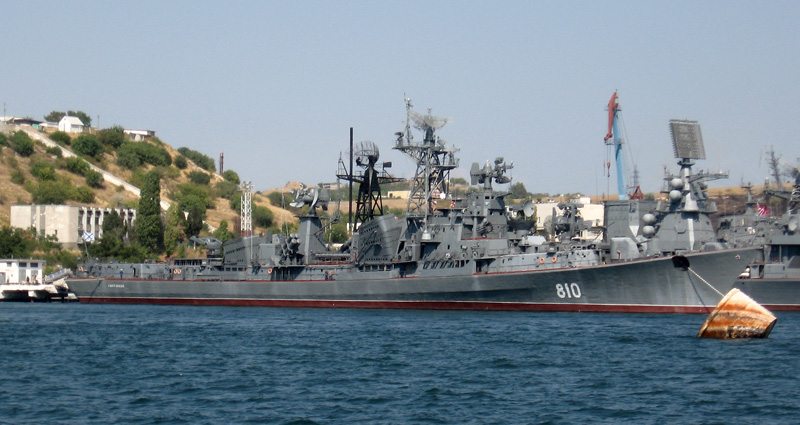
Type 056  corvette, credit  樱井千一

Type 056 corvette, credit 樱井千一

WantChinaTimes reports, “To defend its exclusive economic zone in the disputed East and South China Seas, China’s maritime law enforcement agencies have about 400 patrol vessels according to Asia Military Review, a magazine based in Bangkok…tonnages of the 400 vessels range between 1,150 and 3,400. The agencies are also set to receive 36 additional vessels.”

I would take this wit a grain of salt, but I think the real news was, “Eighteen Type 056 corvettes were constructed last year for the People’s Liberation Army Navy.”

To build 18 warships of a single class, even if they are sized between 210s and 270s is a remarkable achievement. These are assigned to the Navy, but they are used as backup for the Chinese Coast Guard.