NAVAIR and CG Work ISR Interoperability

Defense Industry Daily provided the video above with the encouraging news that NAVAIR and the Coast Guard are working together to develop an open architecture system that will permit real time data link of “video and metadata” including the ability of, what I believe is a Response Boat, Medium, to take control of the camera on the airborne Intelligence Surveillance and Reconnaissance (ISR) asset.

New Canadian Motor Lifeboat

gCaptain reports Canada is planning on acquiring some new self-righting motor surf boats (gCaptain has photos). These boats will be a good deal larger than our 47 footers, they are touted as having longer range. The 47 footer does still appear to have an advantage in the number of survivors it can take on board. Canada has bought 47 footers, perhaps if we have need for a larger MLB with longer range, say in Hawaii or Alaska, maybe these are worth a look.

The vessel’s particulars are as follows (as provided by gCaptain’s story, I did the conversion to English units):

  • Length overall – 19.0 metres (63.2 ft)
  • Length DWL – 17.5 metres (57.4 ft)
  • Beam, moulded – 6.3 metres (20.7ft)
  • Depth, moulded, at midship – 2.58 metres (8.5 ft)
  • Hull draft, nominal – 1.67 metres (5.5 ft)
  • Power – 2,400 kW (3,217 HP)
  • Speed – 23.5 kts

These are the specs for the 47 foot MLB as found in Wikipedia.

Length: 14.6 m (47 ft 11 in)
Beam: 4.27 m (14 ft 0 in)
Draught: 1.37 m (4 ft 6 in)
Propulsion: 2 × Detroit Diesel 6V92TA DDEC-IV engines, 435 hp (324 kW) each
1,500 liter (373 usable imperial gallons) fuel capacity
Speed: 25 knots (29 mph; 46 km/h) maximum
22 knots (25 mph; 41 km/h) cruising
Range: 200 nmi (370 km) cruising
Complement: 34 Persons, 4 crew, 30 passengers

How About a Little Protection?

The Coast Guard is still using a lot of crew served weapons on their ships. I remember doing LE boardings where only a single .50 was manned because manning our 5″ was considered too much trouble. None of the 210s or smaller cutters have any protection for even their main armament gun crews, other than possibly small gun shields. The gun tubs that were once common on US warships no longer exist.

The theory seems to be that if we show up and are armed, the the bad guys will immediately surrender. While that might work in most cases, sooner or later someone may decide to fight. Certainly any suicidal terrorists would fight rather than surrender. If that happens, wouldn’t it be prudent to provide a little protection for the guys behind the mounts? In most cases it seems they are easy targets standing proudly behind their weapons in full view of anyone who might choose to shoot. There are simple things we can do to protect our gunners and make sure they can continue to provide effective fire if they bullets start flying in their direction.
Shipboard Ballistic Weapon Mount

Modular armored security shields capable of defeating a .50 cal. rounds, that can replace existing tripod mounts and can be tailored to the application are in the GSA system. Looks like a typical system for a .50 would weigh about 800-1000 pounds. I don’t think this could cost too much and it might mean the difference between success and failure for an important mission.

Department of Homeland Security Secretary Resigns–Suggestions?

Navy Times is reporting the Secretary for the Department of Homeland Security, Janet Napolitano, has submitted her resignation. Can’t say I’m sorry to see her go.

Who will replace her? I have a couple of suggestions,

  • former Commandant Thad Allen we all know, and
  • my other candidate is Larry Korb, assistant secretary of defense (manpower, reserve affairs, installations, and logistics) from 1981 through 1985 under Reagan, a former naval aviator who retired from the Navy Reserve as a Captain, and a man with a long association with the Coast Guard including teaching at the Academy.

Promising Technology, Amphib Truck

I’ve come across an interesting innovation that the Coast Guard might want to take a look at. This could be very useful in responding to flooding emergencies that seem to be becoming more common and might be useful for SAR or AtoN support in some areas. They are apparently made in Michigan. They come in two sizes, 30 ft. (9.15 meter) and 21.9 foot (6.7 meter) They are a good deal faster than the WWII vintage DUKW. There is also a personal watercraft sized version.

Rewriting the Strategy

Information dissemination has been doing a series on the Naval Strategy that emerged during the 1980s and recently he has contrasted it to “A Cooperative Strategy for 21st Century Seapower (pdf), commonly referred to as CG21, noting the specificity of the earlier document strategy, compared with the relatively nebulous wording of the current strategy. The timing is relevant because reportedly CS21 is being rewritten.

This is an extract of what the current strategy says about homeland defense (from CS21 p. 15):

“Homeland defense is the most obvious example of the requirement for greater integration. It is not sufficient to speak of homeland defense in terms of splitting the responsibilities and authorities between the Navy and the Coast Guard along some undefined geographic boundary. Rather, the Sea Services must—and will—work as one wherever they operate in order to defend the United States. Consistent with the National Fleet Policy, Coast Guard forces must be able to operate as part of a joint task force thousands of miles from our shores, and naval forces must be able to respond to operational tasking close to home when necessary to secure our Nation and support civil authorities. Integration and interoperability are key to success in these activities, particularly where diverse forces of varying capability and mission must work together seamlessly in support of defense, security, and humanitarian operations.”

Similar generalizations are found in the Naval Operations Concepts, 2010 and the description of the Global Maritime Operational Threat Response Coordination Center. which is collocated with the Coast Guard’s National Command Center.

Unfortunately, if everyone is responsible, no one is responsible.

I think the Coast Guard could benefit from more specificity in the nation’s maritime strategy beginning with a simple declarative statement that while the Navy is primarily responsible for protecting the nation from overt maritime threats, the Coast Guard is primarily responsible for interdiction of covert surface maritime threats in waters surrounding US territory, including territorial sea, contiguous zone, and the exclusive economic zone.

Some might consider this a radical change, but in fact it is just acknowledging the current reality. The Naval Sea Frontiers are no more. The flotillas of minor combatants that once teamed around every port no longer exist. The US Navy no longer makes regular patrols of US waters. Generally, the only times Navy units are in US waters are for training and transit. Otherwise they are either forward deployed or in a very small number of US ports, usually in a condition that would require substantial notice to get them underway.

I believe a quote from Robert Rubel in the comments section of the post reflects the Navy’s position,

“After 2001 the US found itself confronted with a trans-national terrorist network whose tentacles reached across the AoR boundaries. The nightmare scenario was terrorists sneaking WMD into the US. The Navy came to realize it could not by itself assure the country that it could interdict such smuggling; the seas were simply to large. The associated nightmare scenario for the Navy was that it would be chained to the North American littoral to conduct patrols.”

The US Navy does not, and does not want, to patrol the US coast. There is nothing wrong with the concept of meeting threats as far from the US as possible, and nothing in the statement would preclude cooperation between the Coast Guard and the Navy or other agencies, but acknowledgement of the Coast Guard’s role would clarify equipment requirements and eliminate the still natural assumption on the part of many of those individuals that effect the Coast Guard’s budget (including the leadership of Dept. of Homeland Security) that, “The Navy will take care of that.”

“When the Ice Melts,” USNI

The US Naval Institute Proceedings July 2013 edition has an article concerning US military policy in the Arctic, “When the Ice Melts,” written by three officers from the Navy, Air Force, and Army, which pays a lot of attention to the Coast Guard. Not much really new here and it appears a few months out of date, but still a good overview of the questions involved, if perhaps a bit too alarmist about the Chinese. It does advocate more Navy participation in the Arctic Shield Exercises.

Unfortunately the full article is only accessible to US Naval Institute members, but if you are a regular reader here, there is a good chance you should also be a USNI member.

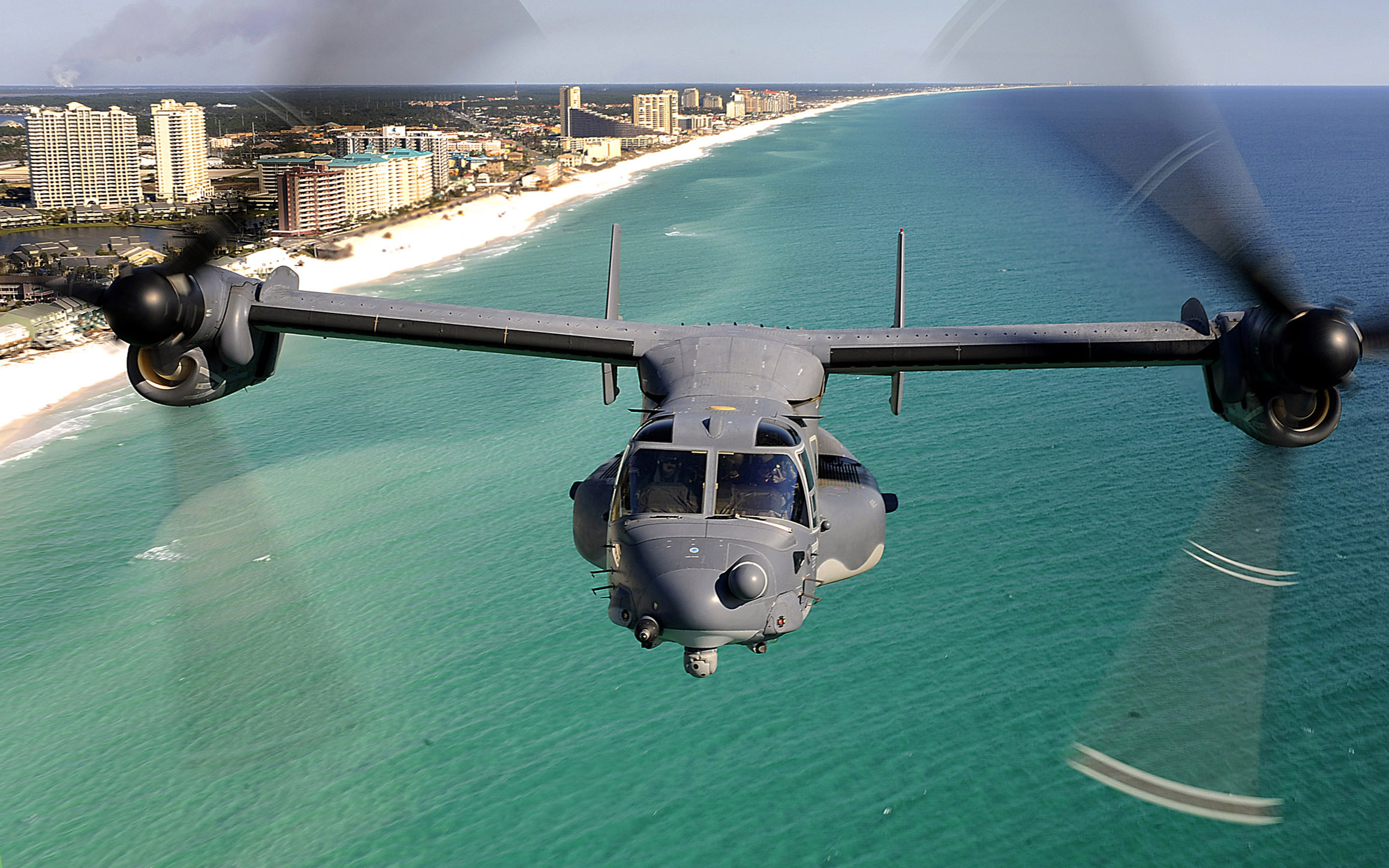
USAF May Use V-22 Osprey for SAR

File:CV-22 Osprey flies over the Emerald Coast.JPG

A CV-22 Osprey aircraft from the 8th Special Operations Squadron flies over the Emerald Coast outside Hurlburt Field, Fla., on Jan. 31, 2009. While over the water, the crew practiced using a hoist, which is used to rescue stranded personnel. DOD photo by Senior Airman Julianne Showalter, U.S. Air Force. (Released)

DefenseNews reports members of Congress are questioning an Air Force proposal to use the V-22 Osprey tiltrotar in addition to the HH-60 for Combat Search and Rescue.

Opponents site the very strong downwash from the aircraft and higher cost.

Proponents site the V-22s higher speed and range.

It appears politics may also be at work here, surprise, surprise.